

Disclosure: This post contains affiliate links to Pickleball Central. If you purchase through our links, FORWRD earns a small commission at no extra cost to you. We only link to products we'd recommend regardless.
Last updated: May 2026
The non-negotiables are four things: a fresh overgrip, sports-rated eye protection, spare balls, and a water bottle. Everything else on this list is a real upgrade — and some of what gets marketed as "essential pickleball gear" is a complete waste of money. Here's exactly what's worth carrying, what's worth adding once you're serious, and what you can skip entirely.
Quick story: I drove 20 minutes to an outdoor session at Highland Pickleball Park, reached into my bag at the parking lot, and found I'd left my overgrip at home. Wrapped my handle in athletic tape from the car's first aid kit. Held for two games, looked ridiculous, and I've never forgotten my overgrip since. The session checklist at the bottom of this article exists because of that afternoon.
The Non-Negotiables: Accessories Every Player Needs
These aren't suggestions. Miss any of them and you'll feel it before the end of your first session.
Overgrip
Your factory grip wears out in roughly 10–15 hours of play. It gets slick, loses its tack, and starts costing you control — usually before you even notice it's happening. An overgrip wraps over the existing grip and fixes that for $8.
Here's what most guides skip: a worn grip makes you squeeze harder to compensate. That chronic tension travels straight up your forearm. It's one of the top contributors to pickleball elbow — a repetitive stress injury that sidelines players for weeks at a time. An $8 overgrip roll is preventive maintenance, not a luxury accessory.
GAMMA Supreme Pickleball Overgrip ($7.99 for a 3-pack) is the most common choice at PPA and APP Tour events — tacky without being sticky, holds up for 15–20 hours of play per wrap. If you prefer a beefier feel, the GAMMA Pro Wrap is a thicker option at the same price point. Replace when the surface starts to feel slick on your first point of the day — don't wait until it's visibly shredding.
Sports-Rated Eye Protection
This is the most skipped accessory in the game, and the downside of skipping it is not minor. Emergency room data shows pickleball-related eye injuries rising sharply — corneal abrasions, orbital fractures, blunt trauma from errant paddles on crowded courts. Regular sunglasses don't meet the ASTM F803 impact standard that court sports require. Regular UV sunglasses are made to block light, not stop a ball moving at 40+ mph from 7 feet away. For more on court safety guidelines, see USA Pickleball's health and safety resources.
You don't need to spend $150. ONIX Eagle or Gearbox Vision glasses run $30–60 and meet the standard. Most players stop noticing them after two sessions. The adjustment period is about as significant as remembering to put on a hat.
3–4 Spare Balls
Outdoor pickleballs crack on hard concrete — it's a matter of when, not if. If you're always relying on whatever the open play organizer brought, you're depending on equipment that might have been rotating through someone's bag for six months. Carry your own. Indoor and outdoor balls are different constructions — make sure you're matching the ball to the court surface.
Water Bottle (32 oz Minimum, Insulated)
Not negotiable for summer outdoor play. Concrete courts radiate heat. Players who aren't hydrated make worse decisions, cramp faster, and — for what it's worth — lose more games. An insulated 32 oz bottle keeps water cold for 3+ hours of outdoor play. The disposable water bottle you grabbed at the gas station does not.
The Smart Upgrades: Accessories That Make a Real Difference
Everything in this section is optional for a casual first session. By month two, most serious rec players are using all of it.
Pickleball-Specific Socks
Regular athletic socks work fine until you've played 3+ hours on hard concrete and your feet want to have a serious conversation with you. Pickleball-specific socks add extra cushioning under the ball of the foot (where lateral movement concentrates impact), reinforced heel padding, and mesh ventilation panels that regular crew socks skip.
OS1st Pickleball Crew Socks ($18.99) are built with graduated arch compression that reduces foot fatigue on multi-hour sessions. For players with a wider forefoot — a common fit problem with socks borrowed from tennis — the OS1st WP4+ Wide Crew ($12.59) is one of the few socks actually designed for that foot shape.
Glove (If Sweat Is a Real Problem)
This one depends entirely on your physiology. If your grip consistently slips by game two, no overgrip in the world will fully fix it — you need a glove. The HEAD Airflow Tour Glove ($21.95) is the most breathable option at this price — open-mesh back panel, thin palm design, fits without the bulkiness that tennis gloves carry. If you're not naturally sweaty, skip it. If you are, this eliminates a real performance issue rather than just managing around it.
Ball Tube
Loose balls rolling around the bottom of your bag is one of those small-but-constant annoyances. A ball tube keeps your balls stacked, protected from paddle contact, and organized so you can pop one out one-handed. The GAMMA Pickleball Ball Tube ($34.99) holds 6 balls with a push-release bottom. It clips into most bag side pockets cleanly.
"The accessories that actually change how you play are the cheap, boring ones — a fresh overgrip and dry hands. Players spend $250 on a paddle and then play with a six-month-old overgrip that's lost 40% of its grip. Get the small stuff right first."
— Grub, FORWRD Co-founder
Small Court Towel
Wipe your hands between points. Dry the paddle handle when you're sweating. Use it on outdoor courts that got rained on before you arrived. Any quick-dry microfiber gym towel works perfectly here — this isn't a specialized purchase. Just make sure one is always in the bag.
Tournament-Specific Additions
At open play, you can get away with a sling bag and improvise. At a tournament — 4–6 matches over 6–8 hours with no time between rounds to run to your car — the stakes on being organized are higher.
A Proper Bag
Tournament-day gear includes: 2–3 paddles, 6+ balls, shoes, food, water, extra overgrip rolls, sunscreen, phone charger, and whatever your post-match recovery routine requires. A sling bag or tote can't organize that without turning into a search mission every time you need something.

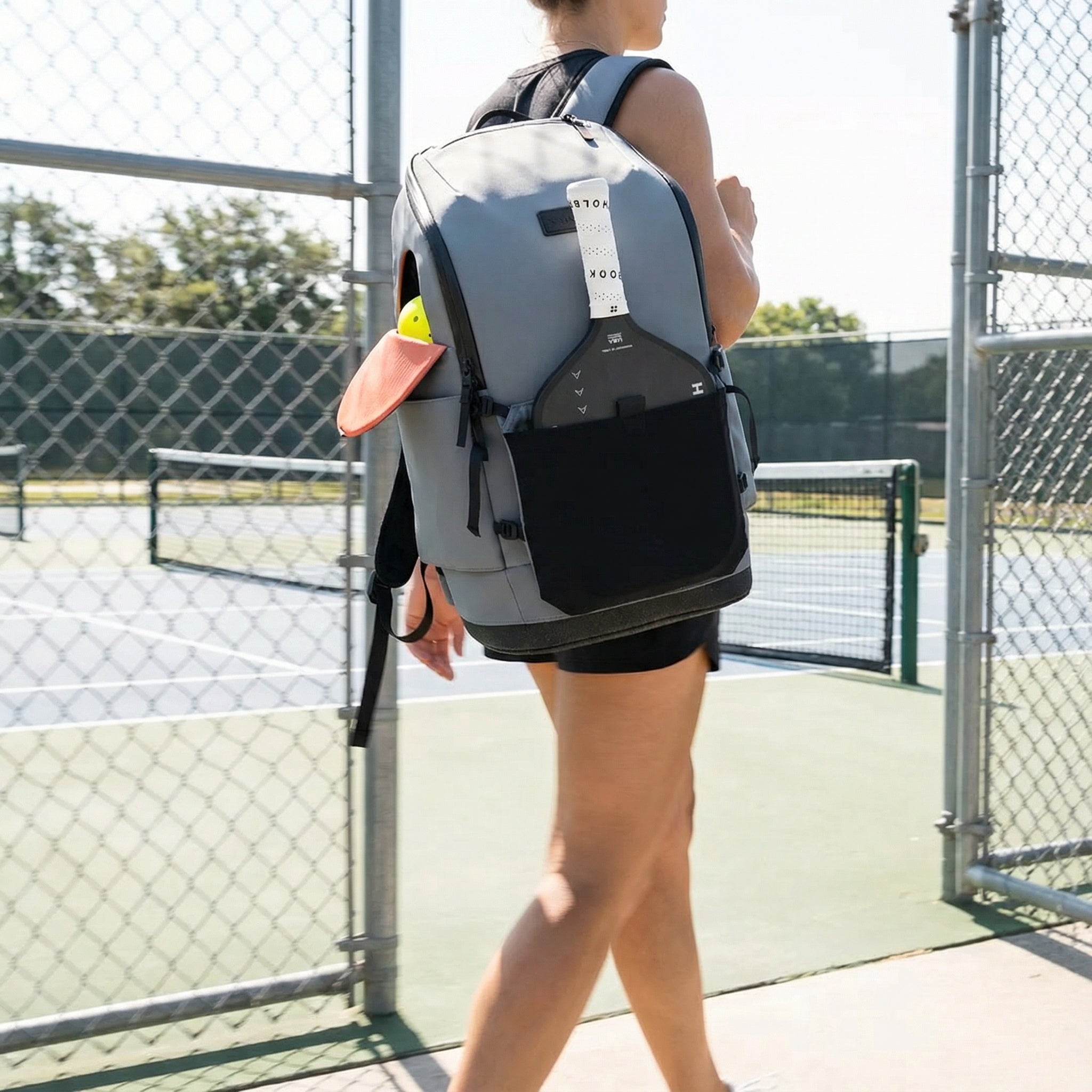
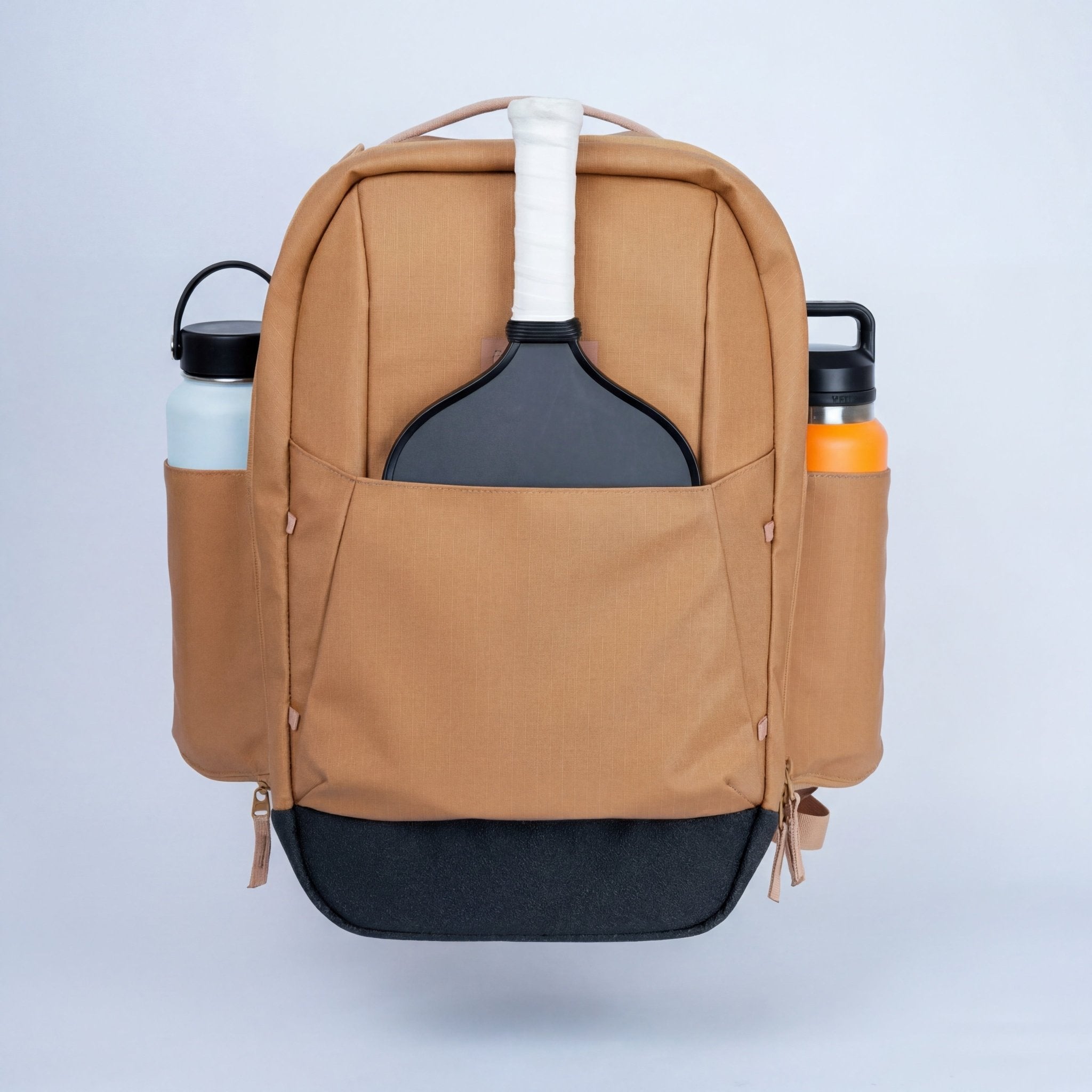
The FORWRD Court Caddy ($325) was designed with tournament use as the specific brief — 500+ competitive and rec players across PPA and APP events gave feedback on what they needed that their bags weren't delivering. The modular front sleeve holds 2–4 paddles with individual protection slots. A 15" padded laptop compartment doubles as a tournament document/tablet pocket. YKK AquaGuard zippers stay sealed through morning outdoor dew and court-side humidity. Lifetime warranty.
If budget is a constraint, the Court Ranger V2 ($195) handles everyday tournament organization with a 16" sleeve and the same weatherproof zipper spec — a strong option for players who compete occasionally rather than on a regular tournament schedule.
Extra Overgrip Rolls
Pack 2–3 fresh rolls for a full-day tournament. Most players swap grips after the first 3–4 matches — accumulated play, court heat, and morning moisture break down the initial wrap by midday. Having extras means you're not the person asking around at 1 PM.
Sunscreen + Headband + Hat
Outdoor tournament play from May through September means 6+ hours of direct sun exposure across multiple courts. SPF 50+, a moisture-wicking headband to keep sweat out of your eyes, and a hat or visor for glare management are safety items at that exposure level — not accessories.
Scoring App
PickleballBrackets (free) handles tournament bracket tracking. For round-robin club play, a physical score sheet still works — but know where it is before the match starts.
What You Don't Need (Save Your Money)
The pickleball accessories market has outgrown the actual need for most of it. Here's where to hold your wallet.
Paddle Vibration Dampeners
Vibration dampeners make sense for tennis rackets — the string bed creates a frequency that accumulates through extended sessions. Pickleball paddles are solid polymer-core constructions with no string bed. They don't vibrate the same way. The dampeners that exist for pickleball are largely a tennis-culture carryover. Test your paddle without one for a full session before deciding you need it — most players notice no difference.
Branded "Professional" Paddle Cleaners
A damp microfiber cloth and 90 seconds does the same job as a $15 branded cleaning solution for most paddle faces. The one exception: raw carbon fiber faces with textured grit surfaces can benefit from a carbon fiber cleaning block ($7.99) to restore spin texture — but that's a once-a-month maintenance item, not a session necessity.
Training Aids You Won't Actually Use
Ball machines, rebounder nets, and training cones are genuinely useful — for players who have a structured practice routine and stick to it. If you're playing open play twice a week and hoping the ball machine you bought in March will transform your game, it won't. Use that $150 on court fees or a lesson. The gear doesn't do the work.
Dedicated Paddle Covers
An old crew sock or a thin neoprene sleeve from any sporting goods store protects your paddle face from scratches as effectively as a $25 branded paddle cover. Unless you're protecting a $350+ sponsorship paddle for appearance purposes, save the money.
Accessories Checklist: Printable Session List
Use this before every session. Items marked ✓ are non-negotiables. ⊕ items are strong recommends for regular players.
| Item | Priority | Notes |
|---|---|---|
| Paddle + backup paddle | ✓ | Backup optional but worth packing |
| Fresh overgrip roll | ✓ | Replace if current grip has lost tack |
| Sports-rated eye protection | ✓ | ASTM F803-rated only |
| 3–4 balls (matched to court) | ✓ | Indoor vs outdoor construction differs |
| 32 oz insulated water bottle | ✓ | Non-negotiable for outdoor sessions |
| Court shoes | ✓ | No running shoes on hard courts |
| Quick-dry towel | ⊕ | Any microfiber gym towel works |
| Pickleball socks | ⊕ | Especially for 2+ hour sessions |
| Glove (sweat-prone players) | ⊕ | Only if grip slipping is a real issue |
| Ball tube | ⊕ | Keeps balls organized, not rolling loose |
| Sunscreen + hat (outdoor) | ⊕ | Non-negotiable for summer outdoor play |
| Extra overgrip rolls (tournament) | ⊕ | Pack 2–3 for full-day events |
✓ = non-negotiable | ⊕ = strong recommend for regular players and tournament competitors
For deeper gear coverage — paddles, shoes, balls, and beginner setups — see our Pickleball Equipment Guide 2026. If you're still building out your starter kit, the Pickleball Starter Kit 2026 covers the full gear progression from first session to 3-month upgrade.
FAQ: Pickleball Accessories
What accessories do pickleball players need?
The core four: overgrip (replace every 15–20 hours of play), sports-rated eye protection, a water bottle, and 3–4 spare balls. Everything else — socks, gloves, ball tube, tournament bag — is a quality-of-life upgrade that makes the game more comfortable and your gear more organized.
What should I bring to a pickleball session?
At minimum: your paddle with a fresh overgrip, eye protection, 3–4 balls matched to your court type, water, and court shoes. For sessions over 2 hours add a towel. For outdoor summer play, sunscreen and a hat are non-negotiable. For tournaments, 2–3 overgrip rolls and a properly organized bag.
Do I need wristbands for pickleball?
Most players don't — a fresh overgrip handles sweat management well enough. Wristbands help players with heavy forearm sweat who find it running down to their grip hand mid-game. If you already use them for tennis, bring them. Otherwise, try a fresh overgrip first and see if that solves the problem.
What is the best pickleball grip tape?
The GAMMA Supreme Pickleball Overgrip ($7.99 for a 3-pack) is the most-used overgrip on professional pickleball tours. Tacky without being sticky, lasts 15–20 hours per wrap, removes cleanly without residue. The GAMMA Pro Wrap is a thicker option for players who like a beefier handle feel at the same price.
How often should I replace my overgrip?
Every 15–20 hours of play, or when the grip feels slick on your first ball strike of the day. For players competing 3–4 times per week, that's roughly every 3–4 weeks. Keep a spare roll in your bag — swapping takes 3 minutes at the bench.
Can I use tennis accessories for pickleball?
Most of them transfer fine — court shoes, overgrips, towels, water bottles. Vibration dampeners are the exception: they're designed for tennis string beds and serve no practical purpose in pickleball. Eye protection should meet ASTM F803 for court sports — general UV sunglasses aren't the same standard.
Ready to carry all of this properly? The Court Caddy Backpack was built around exactly this checklist — designed with 500+ real players and built to last.

Leave a comment
This site is protected by hCaptcha and the hCaptcha Privacy Policy and Terms of Service apply.