

FTC Disclosure: This article contains affiliate links to Pickleball Central. If you buy through our links, FORWRD earns a commission at no extra cost to you. We only recommend products we'd actually play with.
Last Updated: August 2026
Six Zero Double Black Diamond Control 16mm Review 2026: The $180 Raw Carbon Paddle That's Been Through the Wars
The Double Black Diamond deserves a more honest review than it's been getting. Most write-ups either oversell the spin numbers or gloss over the elephant in the room — the delamination problems that hit early production runs. Here's what actually happened, what Six Zero fixed, and whether the current version is worth the $180 asking price when paddles like the JOOLA Perseus Pro V and CRBN 1 TruFoam Genesis are in the same conversation.
Short answer: yes, but with caveats that matter depending on your game.
Quick Verdict
Pros
- Top-tier spin generation from the Toray 700K raw carbon face — genuinely among the best in this price range
- Hybrid shape gives you more width than a typical elongated without sacrificing reach
- 16mm core delivers noticeably more control and dwell time than the 14mm version
- $180 undercuts competitors with similar raw carbon specs by $100+
- Post-fix paddles (current production) show no delamination issues
Cons
- Weight variance (7.9–8.3 oz) is wide — request a specific weight from the retailer if this matters to your swing
- The 4¼" grip circumference is a medium; players with smaller hands will want to re-grip
- No warranty card included — you're on Six Zero's 120-day policy communicated at purchase
- Early production delamination history lingers in the community's memory; some players remain skeptical
Price: $180.00 | Who it's for: 3.5–5.0 players who want elite spin in a non-elongated shape without spending $250–$300 | Who should skip: Players who need a longer grip (5.5" is on the short side for two-handed backhands), or anyone still nervous about the delamination chapter
Specs at a Glance
| Price | $180.00 |
| Weight | 8.1 oz average (7.9–8.3 oz range) |
| Core Thickness | 16mm (also available in 14mm) |
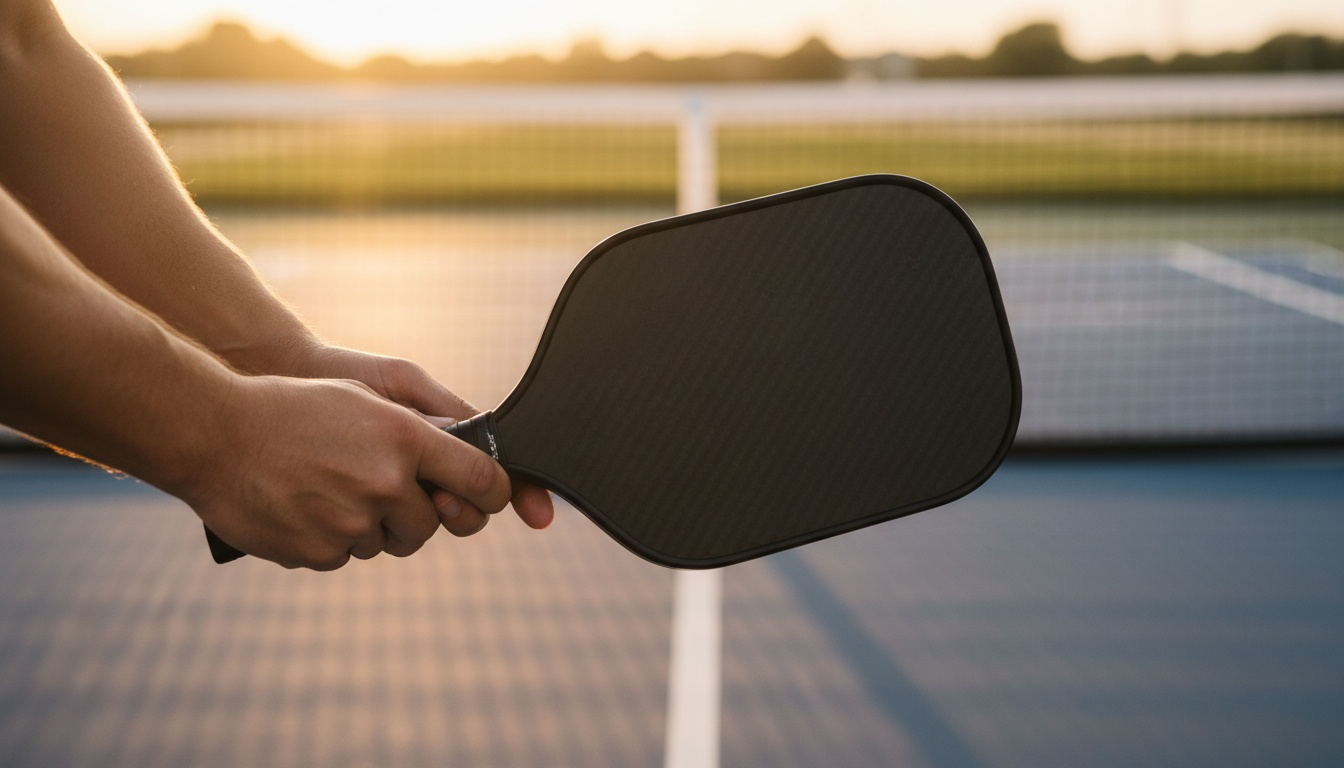
| Face Material | Japanese Toray 700K Raw Carbon Fiber |
| Core | Honeycomb polymer with foam edgewalls |
| Overall Length | 16.3" |
| Width | 7.7" (7.5" at throat) |
| Grip Length | 5.5" |
| Grip Circumference | 4¼" (Medium) |
| Edge Technology | Carbon Fusion Edge |
| Grip Material | Perforated leather |
| Warranty | 120 days |
Check Price at Pickleball Central →
Why Trust This Review
FORWRD designs pickleball bags — specifically, bags built around how serious players actually carry and organize their gear on court. That means we've tested gear from every major paddle brand. We've also collected feedback from over 500 players who contributed to our bag designs, which gives us a broader view of what 3.5–5.0 players think about their paddle choices than most review sites that just have one tester's opinion.
We've now written dedicated reviews of the Six Zero Ruby, the Coral, and the Black Opal. We're familiar with how Six Zero paddles play across the lineup — which makes us uniquely qualified to tell you exactly where the Double Black Diamond fits in, and where it doesn't.
The Delamination Story: What Happened and What Was Fixed
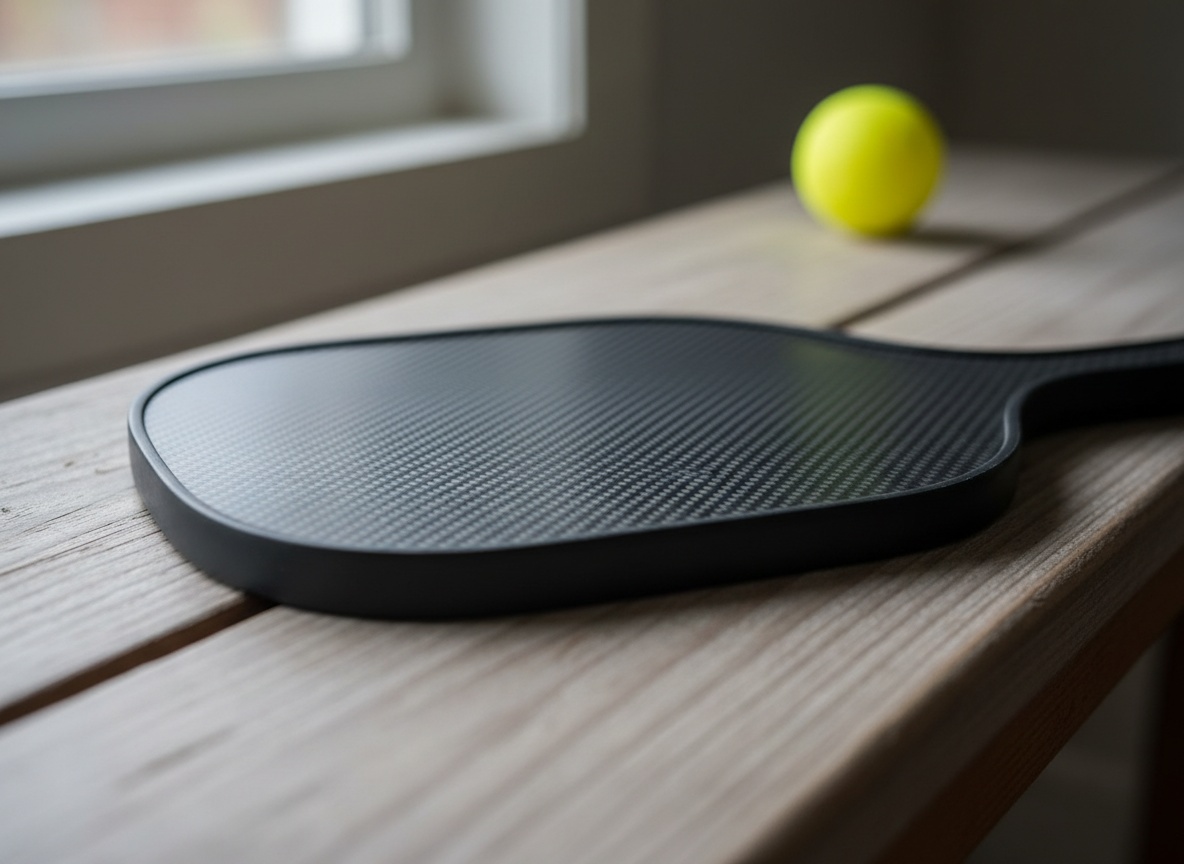
You can't write a fair Six Zero DBD review without addressing this. In 2025, a number of early-production Double Black Diamond paddles developed face delamination — the carbon fiber face beginning to separate from the core. It was real, it affected enough paddles to become a community conversation, and Six Zero acknowledged it.
What's less discussed: the fix. Six Zero made manufacturing adjustments to the bonding process between the face and the honeycomb polymer core. Post-fix production runs (which represent all currently available inventory) have been tested by multiple reviewers and show no delamination. Pickleheads, The Slice Pickleball, and Dinkologist have all noted this in their 2026 writeups.
Does that mean you're completely in the clear? Here's the honest take: the 120-day warranty is shorter than what JOOLA ($299.95 Perseus Pro V comes with more coverage) and Selkirk offer. If delamination durability is your primary concern, the Six Zero DBD at $180 is a calculated bet — great performance, shorter safety net. Keep your receipt and document the paddle's condition at purchase. Not because delamination is likely, but because peace of mind costs nothing.
The current Double Black Diamond earns its shot at your wallet. But you should know this history, not just stumble across it in a Reddit thread after you've already bought it.
Performance: What the 700K Carbon Face Actually Delivers
Spin
This is where the DBD's case is strongest. The Toray 700K raw carbon fiber face has the grit and surface texture to generate serious rotation on the ball — we're talking top-tier for this price class. Drop shots with topspin bite deep into the kitchen. Serve with sidespin and the ball moves laterally in a way that clearly unsettles opponents.
Compared to the Six Zero Ruby, which uses a Kevlar-kevlar face construction, the DBD generates more raw spin. The Ruby plays softer and more forgiving; the DBD grabs the ball harder. This isn't a subtle difference — if you're coming from a composite paddle, you'll notice it in the first rally.
Control
The 16mm core is the primary reason to choose the DBD over competing raw carbon paddles. That extra thickness versus the 14mm version adds dwell time — the ball stays on the face slightly longer at contact, giving you more feel and the ability to place drives and dinks with precision. On reset volleys at the NVZ line, the DBD behaves more predictably than many power-biased carbon paddles at this price.
Honest caveat: this is still a raw carbon face. If you're coming from a composite or fiberglass paddle expecting a soft, forgiving feel — that's not what this is. The DBD is precise, but the feedback is crisp, sometimes unforgiving. Mishits on the edge have a distinctly different feel than centered strikes.
Power
The DBD hits hard when you need it. With 8.1 oz average weight and the thermoformed construction, there's enough mass to drive through the ball at pace. It's not the hardest-hitting paddle in Six Zero's lineup — that's the Black Opal — but power isn't a weakness here. Players transitioning from a lighter composite who've been losing pace will find the DBD gives them room to attack third-shot drives without over-engineering their swing.
Sweet Spot and Forgiveness
The hybrid shape — 16.3" long, 7.7" wide — sits between a standard shape and an elongated. That gives you more surface area than a traditional elongated like the JOOLA Hyperion family, which means the sweet spot is more accessible. You're not fighting for a precise contact point on every ball; there's margin.
That said, the foam edgewalls are doing real work here. Six Zero's Carbon Fusion Edge technology integrates the edge guard into the face material rather than bolting on a separate guard, which maintains the paddle's structural integrity and extends the sweet spot closer to the edges. On wide balls that clip the edge of the face, the DBD recovers better than paddles with traditional edge systems.
Feel and Feedback
Dinking at the NVZ is where the 16mm core earns its keep. The ball doesn't just bounce off — you feel it, can redirect it, can vary pace. After extended kitchen play over several sessions, the DBD stops feeling like a "carbon paddle with raw grit" and starts feeling like an extension of your hand. That transition takes time. Plan for 3–5 hours of focused play before you've internalized the feedback loop.
14mm vs. 16mm: Which One Are You Actually Buying?
Both versions come in at $180, so this is a decision about your game, not your budget.
Choose the 16mm if: You want more control and dwell time. You play doubles and spend significant time at the NVZ. You're a 4.0+ player who relies on placement and spin more than raw power. Your third shot is a drop, not a drive.
Choose the 14mm if: Power and pop matter more. You drive third shots frequently. You play singles more than doubles. You want a snappier, quicker response at contact. You're between 3.0–3.5 and still building your game — the extra pop can cover some technical gaps.
Most serious doubles players will be happier with the 16mm. Most reviewers lead with the 14mm because it's more immediately impressive, but the 16mm is the better long-term tool for precision play.
Where the DBD Sits in Six Zero's Lineup
FORWRD has reviewed all four Six Zero paddles now, which puts us in a position most review sites can't match. Here's the honest internal comparison:
- DBD Control ($180): Best spin in the lineup, solid control, hybrid shape. The all-rounder. This is the paddle most players should buy first from Six Zero.
- Ruby ($199): Softer feel, more forgiving Kevlar face, better for players who want touch over spin. The DBD outperforms it for spin-dependent play; the Ruby edges it for feel and dinking comfort.
- Coral ($200): Available in hybrid, elongated, and widebody shapes. If shape preference is your primary decision driver, start with the Coral. If you know you want the standard hybrid shape, the DBD's lower price wins.
- Black Opal ($220): Maximum power in the lineup. If you want to drive the ball hard and you're a 4.5+ player with the technique to control it — the Black Opal. Everyone else, start with the DBD.
Six Zero Double Black Diamond vs. the Competition
vs. Six Zero Ruby 16mm ($199)
The Ruby costs $19 more and plays differently enough that it's a real choice. The Ruby's Kevlar face is noticeably softer at contact — the ball feels absorbed, redirected, vs. the DBD's grippier, more aggressive bite. For dink battles, the Ruby has a slight edge. For attacking from mid-court and generating spin on drives and serves, the DBD wins.
If you're a control-first player who lives in the kitchen: Ruby. If you're a player who attacks, drives, and serves with heavy spin: DBD. Buy the DBD if you're undecided — it's the more versatile tool.
vs. JOOLA Perseus Pro V Ben Johns 16mm ($299.95)
This is the honest comparison Six Zero wants you to make. The Perseus Pro V costs $119.95 more — essentially two DBDs. Is it worth it?
At 16mm, the Perseus Pro V has more refined dwell time and a slightly more predictable feel at the NVZ. Ben Johns built his game on control, and that philosophy shows up in how the paddle behaves under pressure. The KineticFrame construction distributes weight around the perimeter more evenly than the DBD, which creates a larger effective sweet spot.
Where the DBD wins: spin output from the Toray 700K face is comparable (both are raw carbon, both generate elite spin). At $180 vs. $299.95, you're paying a significant premium for incremental refinement on the Perseus Pro V. For 4.0 and below players, the DBD is the smarter buy. For 4.5+ players where small differences in feel and consistency show up in results — the Perseus is worth considering.
The Weight Variance Problem (and How to Solve It)
The 7.9–8.3 oz range on the DBD is unusually wide for a premium paddle. That 0.4 oz gap can meaningfully affect swing speed and maneuverability, especially at the NVZ. A 7.9 oz paddle feels quick and maneuverable; the same paddle at 8.3 oz has noticeably more mass and pop on drives, but slower hand speed in fast exchanges.
The fix: when you order from Pickleball Central, note your weight preference in the order comments. Reputable retailers will pull a paddle from available inventory that matches your spec. If you're a kitchen player who values hand speed: request 7.9–8.0 oz. If you're a driver who wants mass behind the ball: request 8.2–8.3 oz. This isn't guaranteed, but it's worth the 30-second request.
Who Should Buy the Double Black Diamond
Buy it if: You're a 3.5–5.0 player who wants a raw carbon spin weapon without spending $250+. You play doubles in a hybrid shape. You want more control than a 14mm raw carbon gives you. You're stepping up from a composite face for the first time and want elite spin as a performance lever.
Look elsewhere if: You need a two-handed backhand and want more grip real estate than 5.5" provides — the DBD's grip is on the shorter end. You're still uneasy about the delamination history and want the peace of mind of a longer warranty from JOOLA or Selkirk. You're a beginner (3.0 and under) — the raw carbon grit is unforgiving of poor mechanics.
Complete Your Setup
Found your paddle. Now where does it go?
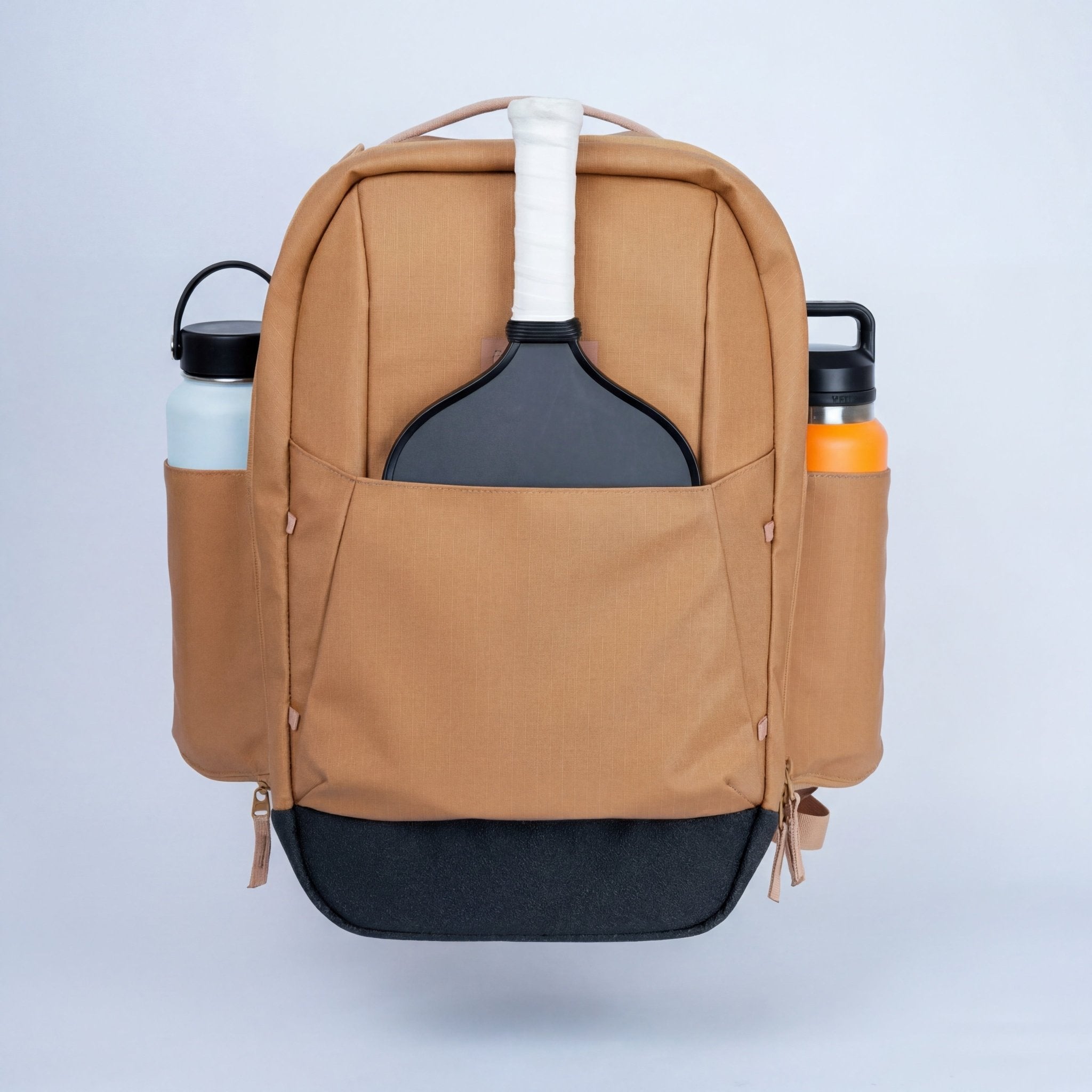
The FORWRD Court Ranger V2 ($195) fits up to 4 paddles in its modular sleeve system — including the DBD — plus a 16" laptop sleeve and dedicated water bottle pocket. Built with YKK AquaGuard zippers and designed with feedback from 500+ players.
Shop Court Ranger V2 →
Pricing & Availability
The Six Zero Double Black Diamond Control 16mm is currently $180.00 at Pickleball Central, in stock. Both the elongated and widebody shape variants are available. If you're buying the Control (standard hybrid shape), make sure you're on the correct product page — the shape designations matter on Six Zero's product lineup.
Buy at Pickleball Central — $180 →
Frequently Asked Questions
Is the Six Zero Double Black Diamond delamination problem fixed?
Yes, according to Six Zero and multiple independent reviewers who've tested current-production paddles. Six Zero acknowledged the early delamination issues and made manufacturing adjustments to the bonding between the Toray 700K carbon face and the polymer core. Paddles available through current retail inventory have not shown delamination in post-fix testing. The 120-day warranty applies if you do encounter issues.
Should I get the Six Zero Double Black Diamond in 14mm or 16mm?
For most doubles players at 3.5 and above, the 16mm version is the better choice. The thicker core adds dwell time, which translates to better control at the net and more predictable placement. Choose the 14mm only if you prioritize pop and raw power over touch and want a faster, snappier response. Both versions cost the same $180, so the decision is purely about play style.
How does the Six Zero DBD compare to the Six Zero Ruby?
The DBD uses a Toray 700K raw carbon face that generates more spin and has a grippier ball contact than the Ruby's Kevlar construction. The Ruby plays softer and more forgiving — better for touch-focused players who prefer feel over aggressive spin. The DBD is the better pick for players who attack, serve with heavy spin, or want to develop a spin-heavy game. The Ruby is better for players who prioritize dinking touch and a softer pop.
Is the Six Zero Double Black Diamond legal for tournament play?
Yes, the Six Zero Double Black Diamond is approved for play on the PPA Tour, where Six Zero is an official paddle sponsor. It's also compliant with USAPA/USA Pickleball approved paddle standards. Check the current USA Pickleball approved equipment list if you're entering a sanctioned tournament, as approval status can occasionally change with paddle updates.
What is the Six Zero Double Black Diamond warranty?
Six Zero offers a 120-day warranty on the Double Black Diamond. This covers manufacturing defects including delamination. It's shorter than what JOOLA ($299.95 Perseus) and some other premium brands offer, which is worth factoring into your decision if long-term durability assurance matters. Keep your proof of purchase and document the paddle's condition at purchase to make any warranty claim straightforward.
Can I request a specific weight when buying the Six Zero DBD?
Yes — the DBD ships in a 7.9–8.3 oz range, which is wider than most premium paddles. When ordering from Pickleball Central, include your weight preference in the order notes. Kitchen-focused players should request the lighter end (7.9–8.0 oz) for faster hand speed. Attack-focused players who want more mass on drives should request 8.2–8.3 oz. Retailers can often pull a specific weight from available inventory, though it's not guaranteed.
Final Verdict
The Six Zero Double Black Diamond Control 16mm is a genuinely excellent paddle at a price that makes the rest of the raw carbon field nervous. The Toray 700K face delivers elite spin, the 16mm core gives you real control for kitchen play, and the hybrid shape is forgiving enough for players who aren't playing at the 5.0 level.
The delamination chapter is real but closed — current production paddles are solid. The 120-day warranty is shorter than ideal. The weight variance is a known quirk, fixable with a weight request at purchase.
At $180, this paddle competes directly with products priced $100 more. If you're in the market for a raw carbon performance paddle and don't want to spend JOOLA Perseus money, the DBD is where you should start.

Leave a comment
This site is protected by hCaptcha and the hCaptcha Privacy Policy and Terms of Service apply.