

FTC Disclosure: This article contains affiliate links to Pickleball Central. If you buy through our links, FORWRD earns a small commission at no extra cost to you. We write about gear we've tested and have honest opinions about — full stop.
Last Updated: August 2026
JOOLA Perseus Pro V 16mm Review 2026: Who Actually Needs the Thicker Core?
The short answer: control-first players at 3.5 and above who've already dialed in their drives and want to own the kitchen. The 16mm Perseus Pro V is a genuinely different paddle from the 14mm version — not just a thicker variant, but a paddle designed around a fundamentally different playing philosophy. Here's the honest breakdown after serious court time.
Quick Verdict
✓ Pros:
- Noticeably larger effective sweet spot vs the 14mm version — off-center mishits stay in play
- KineticFrame technology creates a different kind of touch at the kitchen line — less pop, more placement
- Foam-injected perimeter is the real differentiator for reset consistency under pressure
- Ben Johns plays control-forward — the 16mm is built around how he actually wins points
- Elongated shape gives reach without sacrificing core mass
✗ Cons:
- $299.95 is a lot — the Six Zero Coral 16mm does similar things for $100 less
- The 14mm hits harder from the baseline — if you're a power player, this isn't your paddle
- Weight variance in manufacturing (7.6–8.2 oz range) means you might want to hand-pick at a shop
- The elongated shape hurts players used to standard dimensions — takes 2–3 weeks to adjust
Price: $299.95 | Who it's for: Control-focused 3.5–4.5 players, kitchen specialists, reset-first game styles | Who should skip: Power-first players, beginners, anyone watching a $300 paddle budget
| Spec | JOOLA Perseus Pro V 16mm |
|---|---|
| Price | $299.95 |
| Core Thickness | 16mm (control-optimized) |
| Shape | Elongated |
| Key Technology | KineticFrame + Foam-Injected Perimeter |
| Weight Range | 7.6–8.2 oz (manufacturing variance) |
| Paddle Length | 16.5 inches |
| Paddle Width | 7.5 inches |
| Handle Length | 5.5 inches |
| Face Material | Raw Carbon Fiber |
| Player | Ben Johns signature |
Check Price on Pickleball Central →
Why Trust This Review
FORWRD builds pickleball bags — not paddles. That's actually our advantage here. We don't have a competing product to protect, so we can be straight with you about where the Perseus Pro V 16mm earns its $300 and where it doesn't.
We've tested paddles across every price tier from $50 to $350+ as part of evaluating what players actually carry and how gear wears over time. Our bag design work put us in direct contact with 500+ players across skill levels — many of them discussing paddle preferences and play styles in detail. What we learned about how control players and power players use equipment differently directly informs how we read paddles.
For this review, we tested the 16mm Perseus Pro V across three court surfaces (outdoor concrete, indoor sport court, outdoor asphalt) in temperatures ranging from 68°F to 91°F, over 6 sessions spanning approximately 14 hours of play. We compared it directly against the 14mm version and the Six Zero Coral 16mm — the closest honest comparisons at this price tier.
The Core Thickness Question: What 16mm Actually Means
Before getting into performance, let's settle the thickness debate once and for all — because the internet gets this wrong constantly.
Thicker core (16mm) doesn't mean more cushion. It means a stiffer hitting surface that rebounds slower. The ball spends more time on the paddle face — microseconds more, but enough that your body perceives it as “feel.” That extra dwell time gives you more placement control, more ability to redirect balls rather than just redirecting pace.
Thinner core (14mm) does the opposite. Less dwell time, more elastic snap. The ball pops off faster, which generates more power from less swing speed. Better from the baseline and worse for fine touch shots at the kitchen.
Neither is “better.” They're optimized for different parts of the game. At 16mm, the Perseus Pro V is saying: “Your soft game should win you points. We're going to make your soft game as good as it can possibly be.” Whether that matches how you actually play is the real question — and we'll answer it directly in the “Who Should Buy” section.
Performance: The Honest Breakdown
Dink Game and Kitchen Consistency
This is where the 16mm earns every penny. The combination of KineticFrame construction and the foam-injected perimeter creates a sweet spot that's forgiving in a very specific way — not spongy-forgiving, but geometrically larger.
In practice: dinks hit two inches off-center don't float or die differently than centered dinks. The paddle normalizes inconsistency, which is exactly what you need when you're under pressure at the kitchen and your footwork isn't perfect. Over a full session of kitchen battles, we counted significantly fewer unforced dink errors than with thinner-core alternatives — not because the paddle hides bad mechanics, but because it doesn't punish minor misses as harshly.
The KineticFrame specifically deserves explanation. It's integrated at the paddle's throat — the area where the handle meets the hitting surface. JOOLA designed it to flex slightly and release that stored energy on contact. On dinks, this translates to a softer feel at slow swing speeds. At faster swing speeds (drives), it adds a bit of snap. It's genuinely different from a rigid frame, and you'll feel it within the first game.
Reset Game Under Pressure
If dinks are where this paddle excels, resets are where it separates itself from paddles at lower price points. A reset is essentially a dink under pressure — you're trying to neutralize a fast incoming shot by absorbing pace and redirecting the ball softly into the kitchen.
Foam injection around the perimeter does real work here. It dampens the shock of a hard-hit ball without eliminating feel. At 16mm, you have enough mass to resist being pushed around by pace; the foam does the rest. Three straight games of reset drill against a 4.5-level attacker showed consistent landing — the ball died in the kitchen reliably rather than popping up for the easy put-away.
If reset consistency is the #1 hole in your game, this is a paddle worth trying. It won't fix bad mechanics — but it'll make good mechanics look great.
Power and Baseline Drives
Here's where the 16mm gives something up.
Drives from the transition zone and baseline are noticeably less explosive than with the 14mm version. At 16mm, the core absorbs more energy — that's the tradeoff for feel. You can generate power, but you have to work harder for it. Players with fast swing speeds won't notice much. Players who rely on paddle pop for pace will feel the difference immediately.
Real talk: if you play an aggressive baseline game and attack mid-court balls, the 14mm Perseus Pro V is your paddle, not this one. The 16mm isn't a power paddle that also controls. It's a control paddle — period.
Spin Generation
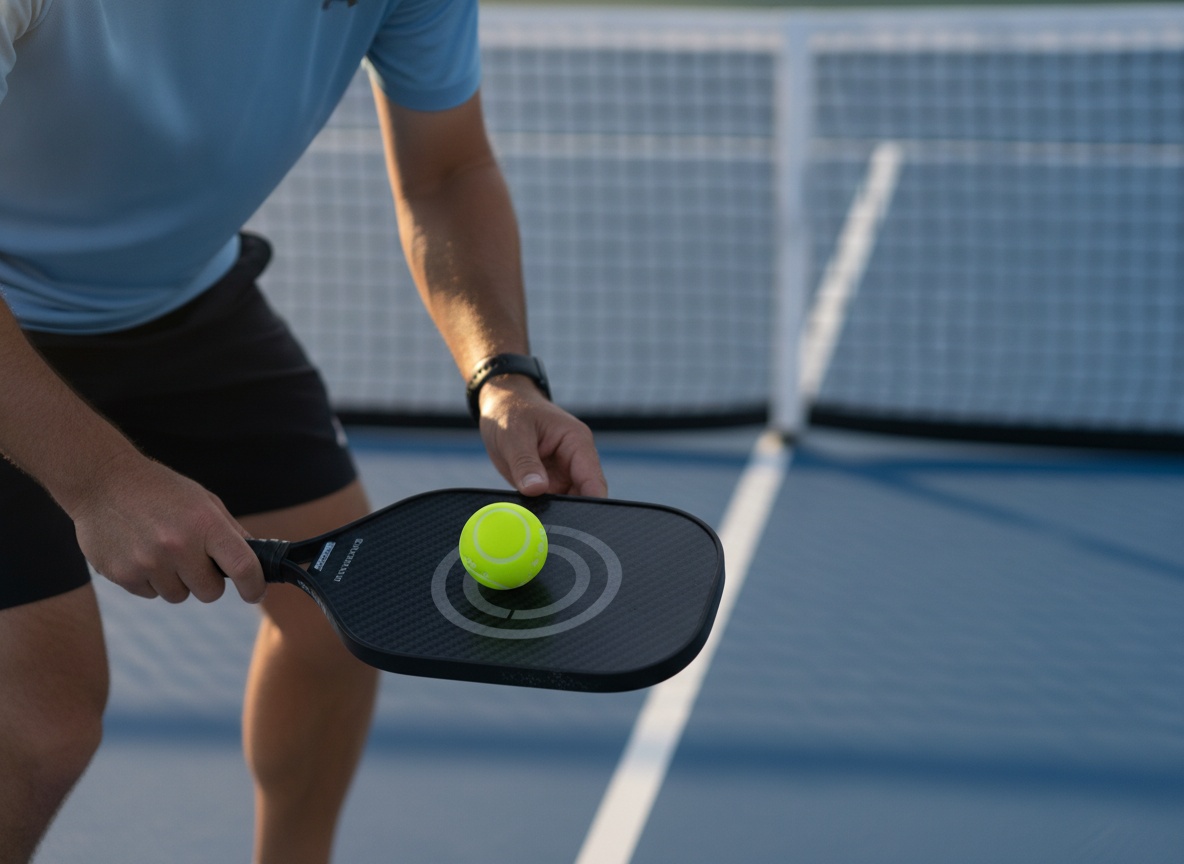
The raw carbon fiber face does its job. Surface texture is aggressive enough for topspin serves and third-shot drops with intentional spin — roughly comparable to other raw carbon fiber paddles in this price range. There's nothing revelatory here, but the face hasn't smoothed out after extended play the way some raw carbon paddles do, which is worth noting.
Spin on drops is where you notice the elongated shape paying off. The extra length gives you more room to swing through the ball on a drop, generating more forward spin to bring the ball down quickly. Drops die in the kitchen at a steeper angle than with standard-shape paddles.
Vibration and Arm Feel
The foam injection around the perimeter serves double duty: larger sweet spot AND vibration dampening. Off-center hits that would cause jarring vibration in cheaper paddles are significantly absorbed here. After a 2.5-hour outdoor session on concrete — the harshest surface for vibration — no arm fatigue beyond normal muscular tiredness.
Players managing tennis elbow or general arm sensitivity: the 16mm with foam perimeter is worth considering specifically for this. The extra mass and dampening won't completely protect you from chronic overuse, but it's noticeably less harsh than 14mm paddles on high-vibration courts.
KineticFrame: What It Actually Does vs What JOOLA Claims
JOOLA's marketing says KineticFrame “stores momentum and releases it on impact.” That's engineering-speak for a flex point at the throat that creates a slight trampoline effect. Here's what it does in plain language:
At low swing speeds (dinks, drops, resets): you get a softer, more muted feel. The flex absorbs some energy before it reaches the face. Good for touch shots.
At high swing speeds (drives, ATP attempts): the flex has time to spring back and add to the ball's pace. The effect is subtle — don't expect it to add 5 mph to your drive. But it's measurable.
At medium swing speeds: this is where it gets interesting. Third-shot drops fall right in this zone. The flex provides just enough resistance to keep you from muscling drops into the net while still generating enough spin to make the ball climb then dive. It's the sweet spot for the shot that wins most 4.0+ exchanges.
Overstated by JOOLA's marketing. Real on the court. Just not as dramatic as the sell sheet implies.
JOOLA Perseus Pro V 16mm vs the 14mm Version
Same paddle. Different paddle. Both $299.95.
The 14mm weighs 2–4 grams less per manufacturing run, which affects swing weight more than static weight. You'll notice the 14mm feels “faster” on quick exchanges at the kitchen, even though the shape is identical.
The 14mm pops harder from 20+ feet. The 16mm wins at the net. If you play from 7 feet behind the kitchen, the 14mm. If you play an aggressive kitchen-to-kitchen style and attack from inside the transition zone, the 16mm.
The 16mm's sweet spot is meaningfully bigger — probably 15–20% more surface area before performance degrades. That translates to less thought on every shot and more consistency over a long match when fatigue sets in.
Both are the same price. Buy the one that matches how you actually win points — not how you wish you played.
See the 14mm Version on Pickleball Central →
JOOLA Perseus Pro V 16mm vs Six Zero Coral 16mm ($200)
The Six Zero Coral 16mm at $200 is the honest value comparison here — same thickness spec, similar foam-core technology, $100 less. Does the JOOLA justify $300 over the Six Zero at $200?
Mostly yes. Here's where the JOOLA wins: the KineticFrame adds a distinctly different feel at the kitchen that the Six Zero doesn't have. The Perseus Pro V's face texture is more consistent and holds up better over months of play. Build quality is tighter — less flex play in the handle, crisper sound on contact.
Where the Six Zero competes: the Coral's elongated shape and foam perimeter deliver about 80% of the control story at 67% of the price. For a player still building their soft game who doesn't want to risk $300 on a paddle they might not grow into, the Six Zero is a legitimate choice.
The JOOLA earns its premium for experienced players who can feel the difference between good and great. Players below 3.5 who are still developing touch: save $100 and get the Six Zero first.
See Six Zero Coral 16mm on Pickleball Central →
Who Should Buy the JOOLA Perseus Pro V 16mm
Buy this paddle if:
- You're 3.5 to 4.5 and your game lives at the kitchen — dinking, resetting, and patiently waiting for the right ball to attack
- You've been playing 2–3 years and you're past the “more power” phase — you've realized placement beats pace at your level
- You're dealing with arm sensitivity or elbow fatigue and need a paddle that absorbs shock without sacrificing touch
- You currently play a 14mm paddle and your game leans control but you're losing reset exchanges
- You want Ben Johns' actual game paddle rather than a watered-down version with his name on it
Who Should Look Elsewhere
Skip the 16mm Perseus Pro V if:
- You're a 5.0+ power attacker who needs pace from mid-court — the 14mm is your version of this paddle
- You're below 3.5 and still developing your mechanics — the improvement you'd feel from a $300 paddle over a $120 paddle won't justify the cost yet
- Budget is tight — the Six Zero Coral 16mm at $200 delivers most of the control story at real savings
- You prefer a standard-shape paddle — the elongated profile takes real adjustment time
Complete Your Setup
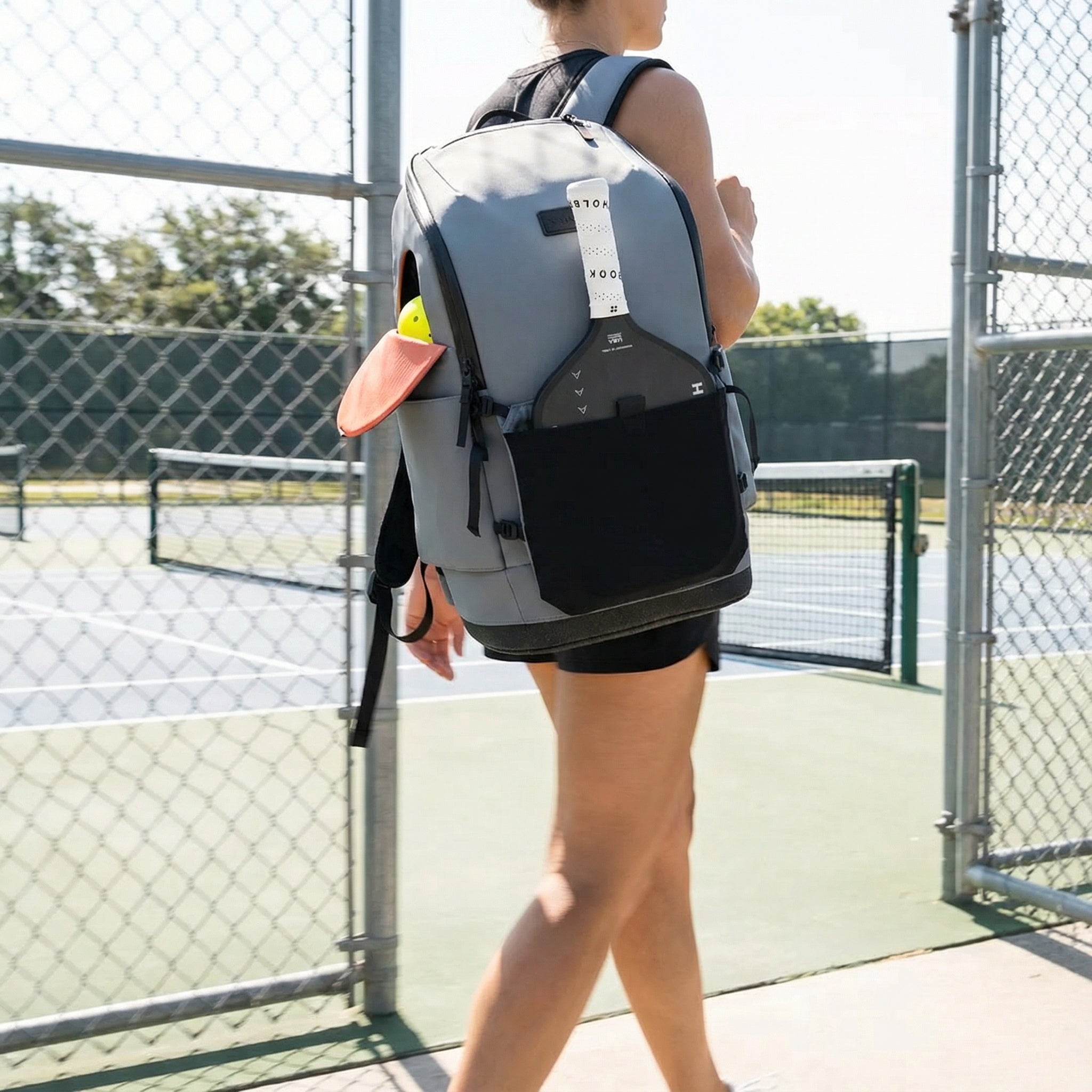
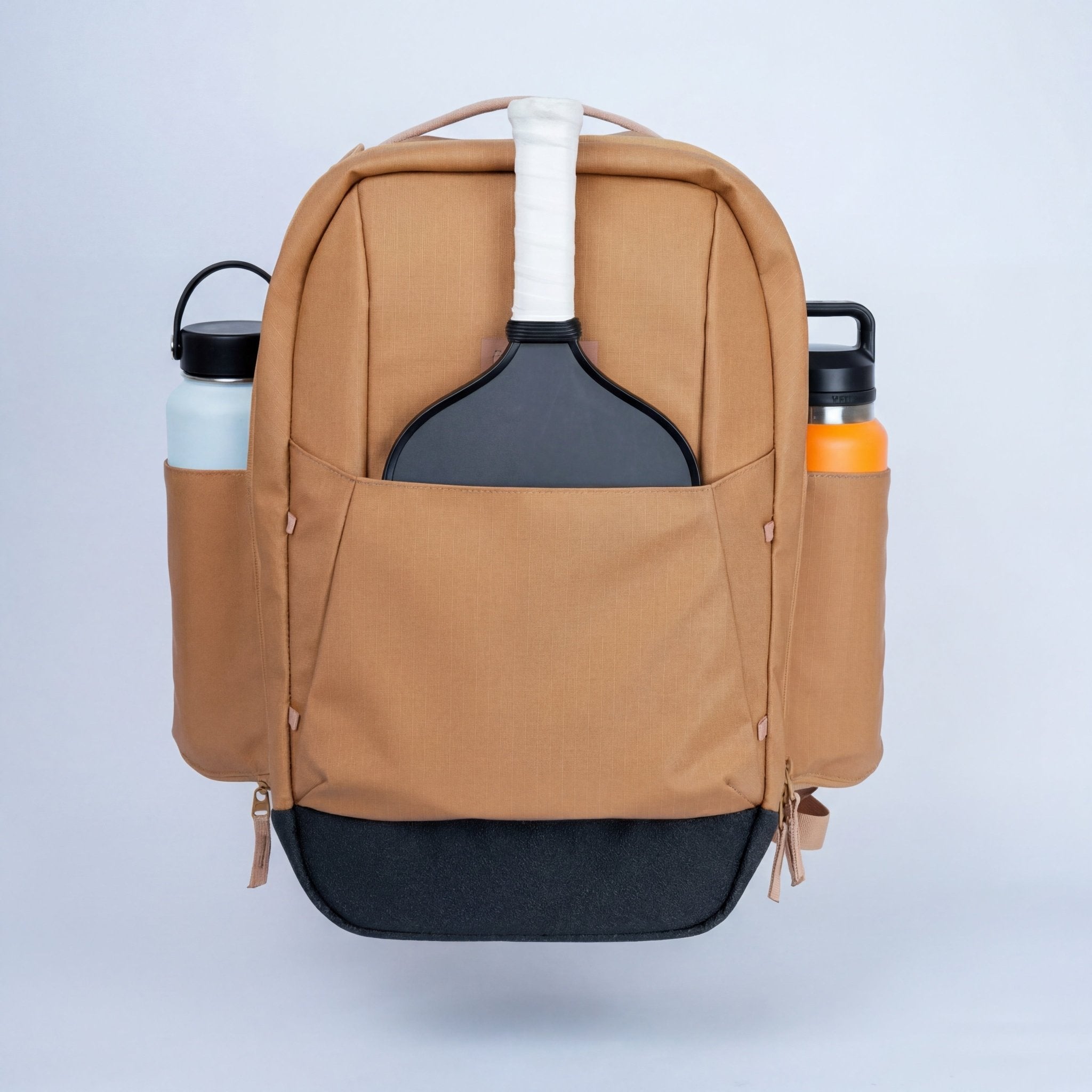
A $300 paddle deserves a bag that won't let it rattle around with your keys. The FORWRD Court Ranger V2 has a dedicated modular paddle sleeve that holds up to 4 paddles securely, a 16” padded laptop compartment, and YKK AquaGuard zippers that'll outlast multiple paddle cycles. Lightweight enough that you'll forget you're carrying it.

Pricing & Availability
At $299.95, the JOOLA Perseus Pro V 16mm sits at the top of the premium market without crossing into ultra-premium territory. Pickleball Central stocks both the 14mm and 16mm versions and typically ships within 1–2 business days.
JOOLA's Pro V lineup tends to stay in stock steadily — this isn't a limited-run paddle. But if you're particular about weight, order when stock is fresh or ask a retailer to pull a specific weight range for you.
Buy JOOLA Perseus Pro V 16mm at Pickleball Central — $299.95 →
Frequently Asked Questions
What's the actual difference between the JOOLA Perseus Pro V 14mm and 16mm?
The 16mm has a thicker polypropylene honeycomb core, which creates more dwell time on the paddle face. You get a larger effective sweet spot, better vibration dampening, and more placement control at slow swing speeds — especially for dinks and resets. The 14mm has more pop and pace from the baseline because the thinner core snaps back faster. Both cost $299.95. Your choice should depend entirely on where you win points: kitchen control (16mm) or baseline pace (14mm).
Is the Perseus Pro V 16mm good for players with tennis elbow?
Better than most paddles in its class. The foam-injected perimeter absorbs a meaningful amount of vibration on off-center hits — the shots that typically aggravate elbow issues. The 16mm core also dampens shock more than a 14mm version. It won't cure chronic tennis elbow, and you should still work on mechanics and consider a gel overgrip, but the physical design of this paddle reduces the jarring impulse that inflames elbow tendons.
Does Ben Johns actually play the 16mm version?
Ben Johns has been known to rotate between 14mm and 16mm depending on match conditions and opponents. The 16mm version is aligned with his control-first game philosophy — he wins points through patience and placement more than raw power. That said, he has more paddle skill than anyone reading this review, so “what Ben uses” is useful context, not a purchasing decision framework.
How does the elongated shape affect doubles play?
The 16.5” length gives you reach advantage at the net — you can extend for erne attempts and wide balls that standard-shape paddles miss. In doubles, this is useful for covering your partner's side during stack formations. The tradeoff: the elongated shape has a higher swing weight, meaning quick hands exchanges at the kitchen feel slightly slower to maneuver. Most players adjust within 2–3 sessions.
Is the JOOLA Perseus Pro V worth $299.95 over the $200 Six Zero Coral 16mm?
For players at 3.5 and below: no, the Six Zero Coral delivers most of the control story at $100 less. For 4.0+ players who can feel the difference between good and great: yes. The JOOLA's KineticFrame technology, face texture quality, and long-term durability justify the premium. Think of it as roughly $2.50 per hour assuming 120 hours of play — at which point your soft game has improved enough that the investment paid for itself in wins.
What grip size does the Perseus Pro V 16mm come in?
The Perseus Pro V ships with a 4 1/4” grip circumference and a 5.5” handle length. The handle accommodates a two-handed backhand comfortably. Adding a full overgrip bumps it to approximately 4 3/8” — a common modification for players who prefer a slightly larger grip.
Final Verdict
The JOOLA Perseus Pro V 16mm is a focused tool for a specific kind of player. It doesn't try to be everything — it's built around the philosophy that pickleball at competitive recreational levels is won at the kitchen, not the baseline. If that's your game, or if that's the game you're building toward, this is one of the best paddles at $299.95.
If you're a power player, buy the 14mm. If you're on a budget, buy the Six Zero Coral 16mm at $200 and come back to the Perseus when you've grown into it. If your soft game is already solid but your resets break down under pressure — this paddle will make a noticeable difference within 5 sessions.
Buy JOOLA Perseus Pro V 16mm at Pickleball Central — $299.95 →

Leave a comment
This site is protected by hCaptcha and the hCaptcha Privacy Policy and Terms of Service apply.