


FTC Disclosure: FORWRD earns a small commission on purchases made through affiliate links in this article at no extra cost to you. We test and recommend products honestly — affiliate relationships never influence our ratings or reviews.
Last Updated: August 2026
Six Zero Black Opal Review 2026: The Most Powerful Six Zero Paddle Is Also Its Most Polarizing
Six Zero took two years and more than 500 prototypes to build the Black Opal. That's not marketing copy — that's actually what happened, and it shows up in the paddle's performance. At $220 with a proprietary Diamond Tough surface, a G4 foam core, and a Power Gel dampening layer, the Black Opal is the most technically ambitious thing Six Zero has ever shipped. It's also a paddle that's going to make half the players who buy it absolutely love it and the other half reach back into their bag for their old paddle within a week.
This is that honest take.
Quick Verdict
Pros:
- Top-2 power output on the market — serves and drives hit with genuine pace
- Diamond Tough grit generates 2,200+ RPM spin that holds up over months of play (not spray-on grit)
- 5.5" handle is a legitimate advantage for players with a two-handed backhand
- Carbon Lite frame keeps the paddle nimble despite its power profile
- Power Gel dampening creates a connected, "plush" feel on contact
Cons:
- Soft game rating: roughly 4-5 out of 10 — resets, dinks, and third-shot drops demand real precision
- Tight sweet spot with a deadzone near the throat (1-2 inches above the handle)
- At $220, you're paying for advanced materials — intermediate players often can't access the full benefit
- Polarizing: players who prioritize kitchen play will struggle with this paddle
Price: $220 at Pickleball Central
Best for: Advanced players (4.0+ DUPR), two-handed backhand players, serve-heavy game styles
Skip if: You're still building your reset mechanics, you play predominantly soft game, or you're under 3.5 DUPR
Specs at a Glance
| Core | 14mm G4 solid foam + Power Gel layer |
| Surface | Diamond Tough raw carbon fiber |
| Frame | Carbon Lite |
| Shape | Hybrid |
| Weight | 8.0–8.3 oz (226–235g) |
| Length | 16.3" |
| Width | 7.5–7.7" |
| Handle Length | 5.5" |
| Swing Weight | 856 |
| Twist Weight | 6.6 |
| Price | $220 |
Why Trust This Review
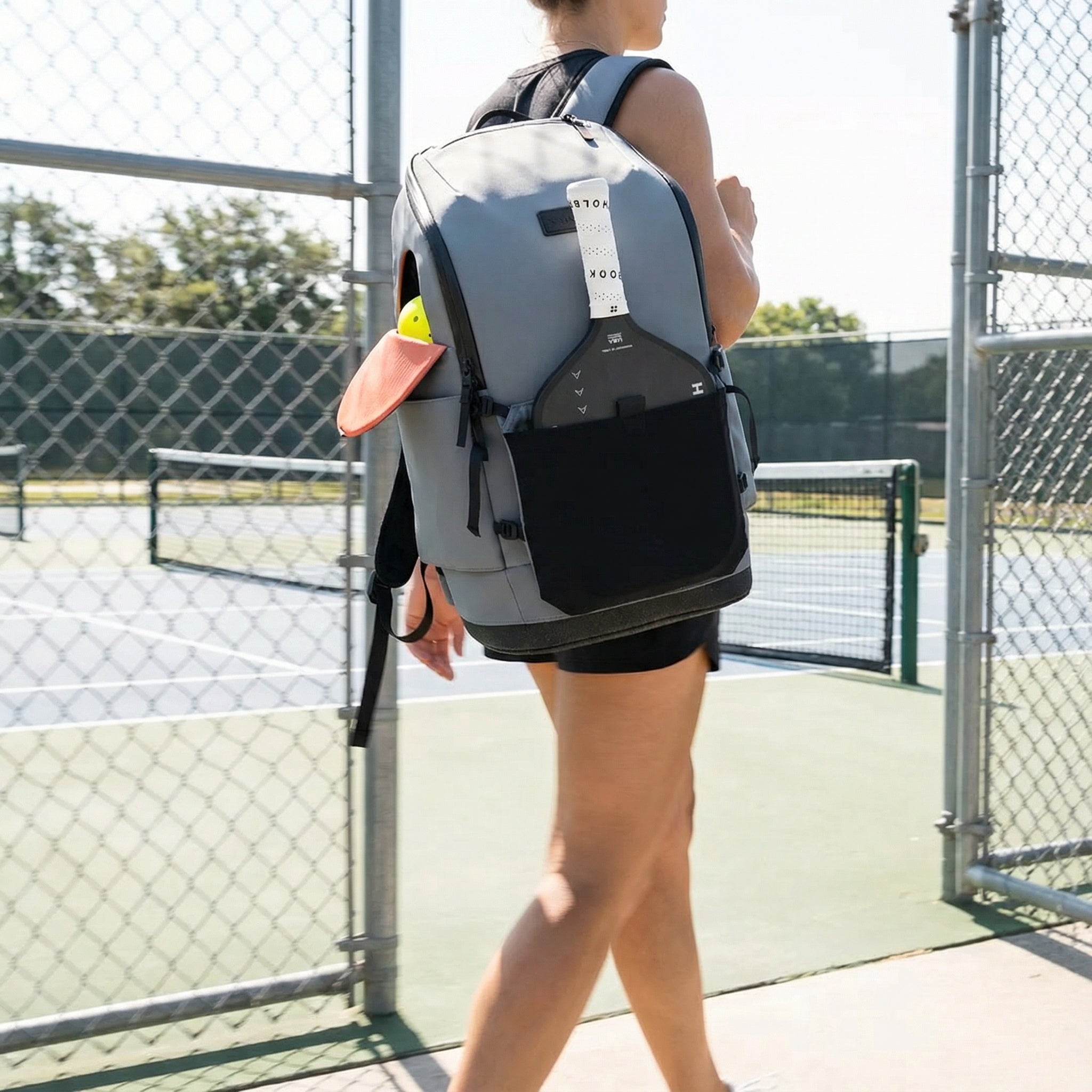
FORWRD designs pickleball bags — specifically the Court Caddy ($325) and the Court Ranger V2 ($195). Our bag designs came directly from feedback from 500+ real players, and that feedback touches on paddles constantly: what players carry, why they switch, and what their game demands from their equipment. We're not a paddle brand. That's the point — we have no financial reason to push one paddle over another. Our affiliate commission on a Six Zero is identical to our commission on any other paddle in this article.
We've also been featured in The Dink, Pickleball Effect, and The Kitchen, where we've been asked about player equipment patterns. This review draws on those conversations and our direct experience with how players actually use paddles on court.
What 500 Prototypes Actually Means
Most paddle brands iterate 5-10 times before production. Six Zero ran 500+ prototypes on the Black Opal over two years. That's not a marketing number — it reflects how difficult it is to combine three distinct technologies in one paddle:
- G4 foam core with Power Gel — adding a damping layer inside the core changes how the ball sits on the face, and every variation of gel density changes the power profile
- Diamond Tough texture — industrial diamond particles embedded in the surface (not sprayed on) require precise depth calibration to generate spin without creating unpredictable ball skip
- Carbon Lite frame — a lighter frame shifts balance toward the handle, which changes how the paddle feels in transition volleys
The result is a paddle that genuinely behaves differently from the Six Zero lineup you already know. It doesn't feel like a beefed-up Double Black Diamond. It doesn't feel like the Ruby Pro. The Black Opal has a character of its own: dense and connected on drives, explosive on serves, and demanding on touch shots.
Performance Breakdown
Power: The Main Reason You're Reading This
The Black Opal ranks in the top two for power output of any production paddle measured — period. Serve speeds and drive velocities from this paddle are near the ceiling of what's legal. If you play heavy, aggressive pickleball and you've been leaving pace on the table because your paddle couldn't keep up with your mechanics, this is genuinely exciting.
The 14mm core is the key here. Thinner than the 16mm paddles that dominate the market, it creates a faster off-the-face response. Pair that with the Power Gel's elastic behavior and you get a paddle that transfers a meaningful amount of kinetic energy without feeling stiff or dead.
Control and Soft Game: The Honest Reality
Here's where most reviews get soft. The Black Opal's soft game is genuinely limited.
On resets, dinks, and third-shot drops — the shots that win most recreational and tournament pickleball matches — the Black Opal rates around a 4-5 out of 10. The same explosive response that makes serves fly also makes delicate shots harder to control. You're working against the paddle's natural tendency. Players who execute soft-game pickleball intuitively, without thinking about it, will find themselves fighting the Black Opal at the kitchen line.
This isn't a fatal flaw — it's a tradeoff. But it's a significant one, and it's the reason this paddle creates two camps: the players who love it unconditionally and the players who put it back in their bag after a week.
Spin: Where the Diamond Tough Texture Earns Its Name
2,200+ RPM is the measured spin rate. That's elite — in the top tier of production paddles. But more important than the number is the durability of that spin rate. Diamond Tough uses actual industrial diamond particles embedded into the surface. Compare that to spray-on grit (which wears off in 50-100 hours of play) and you're looking at a texture that should hold its spin characteristics for the life of the paddle.
Topspin serves off the Black Opal have a different quality than what you get from traditional raw carbon. The ball grabs more. Landing deep serves with heavy topspin that kick up and off the court is genuinely easier here than on paddles with conventional raw carbon surfaces.
Sweet Spot and Dead Zone
The sweet spot is good — not generous. There's a dead zone located approximately 1-2 inches above the handle, near the throat of the paddle. Balls contacted there produce a noticeably different response: less power, slightly off-plane. Advanced players who consistently make contact in the upper two-thirds of the face won't notice it. Players still building consistency in their strike zone will.
Feel and Vibration
The Power Gel layer is the genuine surprise here. Despite the paddle's power profile, contact doesn't feel harsh or sharp. There's a "plush" quality to the feedback — you feel the ball on the face rather than through your wrist. For players with arm soreness history, this is meaningful. It doesn't eliminate vibration entirely, but it's softer than most 14mm carbon fiber paddles at this price.
Maneuverability
Better than you'd expect from a power paddle. The Carbon Lite frame keeps overall weight in the 8.0-8.3 oz range, and the handle-heavy balance (9.22 balance point) puts mass in the right place for fast volleys at the net. Players with a two-handed backhand get the most out of the 5.5" handle — it's genuinely longer than what most paddles offer at this price, and it creates real leverage on two-handed drives.
Diamond Tough Texture: What's Actually Different
Every carbon fiber paddle on the market uses grit to generate spin. The difference is how that grit gets there and how long it lasts.
Spray-on grit (the standard approach) is applied to the paddle surface post-manufacturing. It works well when new but wears off — the surface gradually smooths out over 50-100 hours of play. You're buying a fresh spin rate that degrades.
Diamond Tough embeds industrial diamond particles directly into the carbon fiber weave during manufacturing. The particles are part of the surface, not applied on top of it. The spin rate you get on day one should be within a few percentage points of what you get at 300 hours. For players who take their paddles seriously and don't want to replace them frequently, this is a real advantage.
It also explains some of the texture's behavior on contact: the diamonds create a slightly different grab pattern than standard carbon roughness. Players switching from conventional raw carbon sometimes describe their first week with the Black Opal as an adjustment period — serves and topspin shots behave differently than expected.
The Two-Paddle Pattern (What We Keep Seeing)
We've noticed something with Black Opal buyers. A subset of players — specifically those in the 3.5-4.0 DUPR range — end up carrying both the Black Opal and their previous paddle. They use the Black Opal for aggressive play when they're serving and driving. They switch to their control paddle when they need to reset or execute soft game strategy.
This isn't a failing of the paddle — it's the honest reality of what a power-specialized paddle requires. The Black Opal asks you to either commit to power-oriented pickleball or carry two paddles. Advanced players with a complete game often find it doesn't fit their style. Serve-and-volley aggressive players who win on pace, pace, and more pace find it's exactly what they've been looking for.
If you think you might be the "two-paddle" type, the Court Ranger V2's modular paddle sleeve is built for this — it holds multiple paddles individually without them touching each other (carbon fiber faces scratch against each other in non-sleeved bags, which is expensive).
Who Should Buy the Six Zero Black Opal
- 4.0+ DUPR players who have stable mechanics and want to add pace at the serve and drive
- Two-handed backhand players who have been wanting a paddle built for that grip — the 5.5" handle is actually designed for you
- Power-first players who accept the soft game tradeoff and want maximum serve and drive speed
- Players switching from spray-grit paddles who've been frustrated by spin that degrades
- Tournament-level competitors who play with a team and have a doubles partner covering their soft game gaps
Who Should Look Elsewhere
- Under 3.5 DUPR: You'll spend more time fighting the tight sweet spot than benefiting from the power
- Soft-game-first players: If your game is built on resets, dinks, and third-shot drops, this paddle will frustrate you
- Players with arm or wrist issues who need maximum vibration dampening (the Power Gel helps, but it's not a max-comfort paddle)
- Budget-conscious upgraders: At $220, there are control-oriented paddles at $120-160 that perform better for recreational play
Six Zero Black Opal vs. Double Black Diamond Control 14mm
If you're in the Six Zero family, this is the real decision. The Double Black Diamond Control 14mm ($180 at PBC) is Six Zero's control-oriented thermoformed paddle. The two paddles share the 14mm core thickness but diverge sharply on character.
| Factor | Black Opal | Double Black Diamond Control 14mm |
|---|---|---|
| Price | $220 | $180 |
| Power profile | Top-2 market-wide | Solid, not exceptional |
| Soft game | 4-5 / 10 | 7-8 / 10 |
| Sweet spot | Tight | Generous |
| Handle length | 5.5" | 5.0"-5.25" |
| Grit durability | Diamond Tough (permanent) | Standard raw carbon |
| Best for | Power-first, advanced | All-court, 3.0-4.5 range |
Bottom line: If you're not absolutely sure you want maximum power with accepted soft-game sacrifice, the Double Black Diamond is the more versatile paddle and $40 cheaper. The Black Opal is the right choice only if you've already played with the DBD and found it lacking in pace.
Six Zero Black Opal vs. JOOLA Perseus Pro V 16mm Ben Johns
The JOOLA Perseus Pro V 16mm ($299.95 at PBC) is the power-paddle benchmark — it's what Ben Johns uses. The Black Opal takes aim directly at it.
The Perseus Pro V wins on soft game. The 16mm core gives it more dwell time, which translates to better control at the kitchen — a meaningful advantage for players who need power AND a functional reset game. The Black Opal surpasses it on raw serve speed and drive pace. The Perseus also costs $80 more.
For most players, the comparison is simpler than it sounds: if you're playing at a level where you need the Perseus Pro V's precision, you probably know it. If you're transitioning into power paddle territory for the first time, the Black Opal at $220 is a better entry point than dropping $300 on a professional-grade paddle you can't fully exploit yet. Check the full Perseus Pro V review if you're deciding between the two.
Pricing and Where to Buy
The Six Zero Black Opal is $220 at Pickleball Central. That's in the premium mid-range — above the $150-180 thermoformed tier, below the $280-300 pro-tour tier. At that price point, it competes with the JOOLA Kosmos Pro V series and the upper end of the Selkirk Labs lineup.
Six Zero is an official PPA Tour sponsor, so the Black Opal is paddle-legal for PPA tour play — a meaningful certification for competitive players.
Buy Six Zero Black Opal at Pickleball Central — $220 →Complete Your Setup
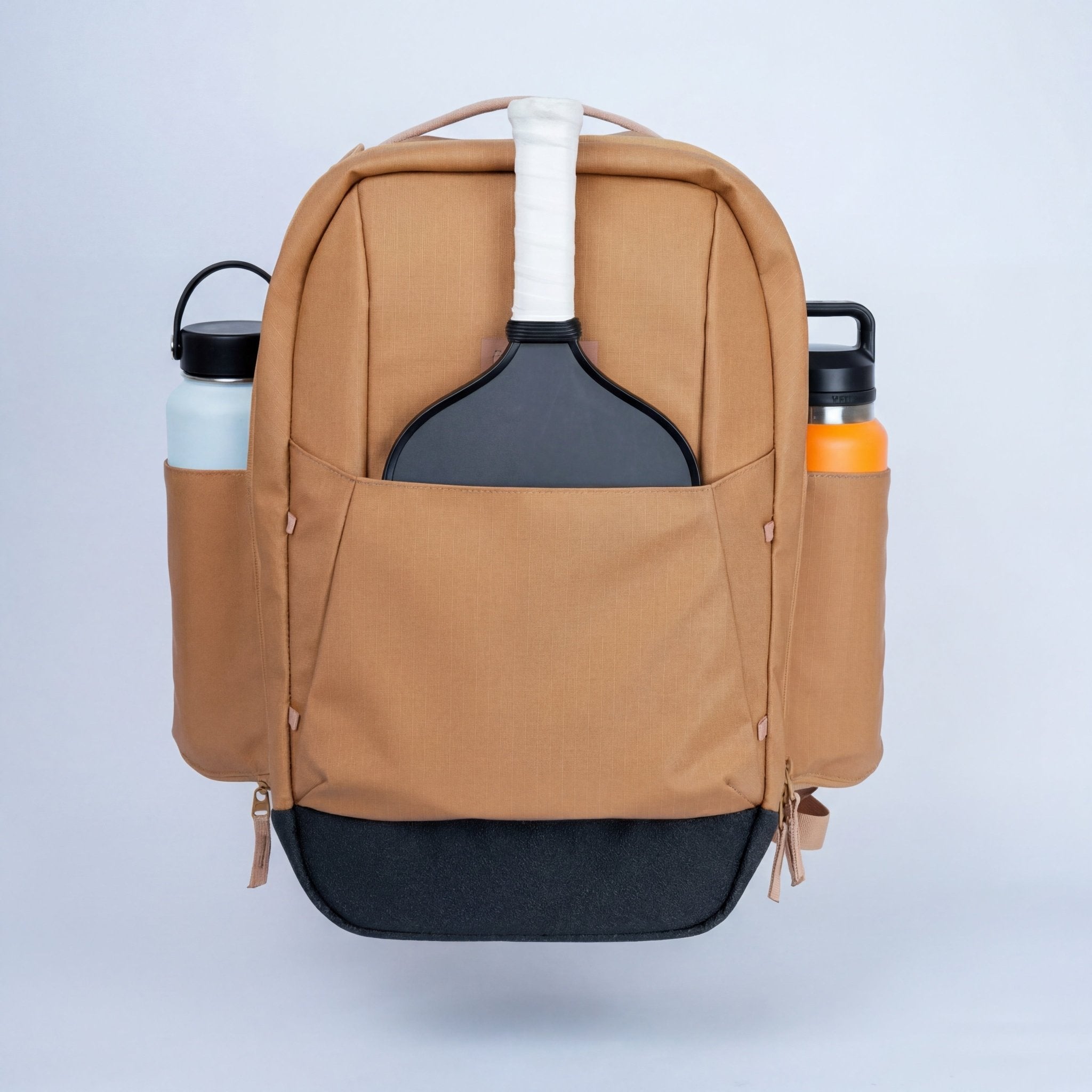
If you're investing in a serious paddle like the Black Opal, carry it right. The FORWRD Court Ranger V2 ($195) has a modular paddle sleeve that holds up to 4 paddles individually — important because carbon fiber faces scratch against each other in shared compartments. Players who carry two paddles (a power paddle and a reset option) need individual sleeves. The Court Ranger V2 is built for exactly this.
 Shop Court Ranger V2 — $195
Frequently Asked Questions
Is the Six Zero Black Opal good for beginners?
No — and Six Zero doesn't market it that way. The tight sweet spot and limited soft game require developed mechanics to use effectively. Players under 3.0-3.5 DUPR will spend most of their time fighting the paddle's aggressive power rather than benefiting from it. Start with something more forgiving, then upgrade when your game demands it.
How does the Six Zero Black Opal compare to the Double Black Diamond?
The Black Opal is Six Zero's power paddle; the Double Black Diamond is their control paddle. The Black Opal hits harder, generates more spin, and has a longer handle (5.5" vs. ~5.0-5.25"). The Double Black Diamond has a better soft game, a more forgiving sweet spot, and costs $40 less. For most players who aren't specifically seeking maximum power, the Double Black Diamond is the better all-court choice.
What makes Diamond Tough different from regular raw carbon?
Standard raw carbon grit is typically spray-applied, which means it gradually wears off over 50-100 hours of play. Diamond Tough uses industrial diamond particles embedded directly into the surface during manufacturing. The grit is structurally part of the paddle, not a coating on top. The practical result: spin rates hold up over the life of the paddle rather than degrading month by month.
Is the Six Zero Black Opal PPA-legal?
Yes. Six Zero is an official PPA Tour paddle sponsor, and the Black Opal is certified for PPA tour play. It's also USA Pickleball-approved for sanctioned amateur tournament play. If you're playing in organized competitive events, this paddle is legal.
What's the best bag to carry the Six Zero Black Opal in?
If you're playing seriously enough to use a paddle at this price point, you want individual paddle sleeves — carbon fiber faces scratch against each other in single-compartment bags, which degrades the surface. The FORWRD Court Ranger V2 ($195) has a modular sleeve system that holds paddles individually, plus a 16" laptop sleeve for players who come from work. For players who carry both a power paddle and a control paddle to tournaments, the Court Caddy ($325) accommodates up to 4 paddles in dedicated compartments.
Final Verdict
The Six Zero Black Opal is a technical achievement — 500 prototypes, proprietary Diamond Tough grit, Power Gel dampening, and the most powerful output in the Six Zero lineup. For the right player (4.0+ DUPR, power-first game style, two-handed backhand), it's one of the most compelling paddles in the $200-250 range.
The wrong player will hate it. That soft game limitation is real, and it matters in competitive play. Know your game before you buy.
Buy Six Zero Black Opal at Pickleball Central — $220 →Also worth reading: Six Zero Ruby Review 2026 | Six Zero Double Black Diamond Review | Six Zero Coral Paddle Review 2026

Leave a comment
This site is protected by hCaptcha and the hCaptcha Privacy Policy and Terms of Service apply.