

Disclosure: FORWRD earns a commission if you buy through our affiliate links at no extra cost to you. Our team tested performance attributes independently; all opinions are our own.
Selkirk SLK ERA Power Elongated Review 2026: The First SLK That Earns $200
Selkirk's SLK line has always been the "smart budget buy" — solid paddles that punched above their price tag without asking you to spend like a sponsored pro. The ERA Power breaks that script. At $199.99, it's no longer a budget paddle in the traditional sense. So the real question is whether Selkirk finally built something worth it at that price — or just repriced an old formula with a new name.
Short answer: worth it. With caveats.
Quick Verdict
| Price | $199.99 |
| Best for | 3.5–4.5 players who want a power paddle with real forgiveness |
| Skip if | You're a control player, or you can't consistently hit the upper-center face |
| Pros |
|
| Cons |
|
Check Price on Pickleball Central →
Last Updated: August 2026
Specs at a Glance
| Spec | SLK ERA Power Elongated |
|---|---|
| Weight | 7.9–8.4 oz (avg 8.15 oz) |
| Paddle Length | 16.5" |
| Paddle Width | 7.45" |
| Handle Length | 5.8" |
| Grip Circumference | 4.25" (Medium) |
| Face Material | 3-layer T700 Raw Carbon Fiber + fiberglass |
| Core | 16mm Dynamic Fusion (polypropylene + EVA foam perimeter) |
| Certification | USAP, UPA-A approved |
| Price | $199.99 |
Why Trust This Review
FORWRD makes pickleball bags — specifically, bags designed around how players actually carry and protect their equipment. We've built modular paddle sleeves, obsessed over paddle compartment geometry, and talked to several hundred players about how their gear holds up over time. We're not professional players. We're the people who see what players do between sessions, not just during them.
For this review, we tested the ERA Power Elongated over four weeks across outdoor concrete courts and an indoor wood-floor facility. We brought it alongside two comparison paddles — the SLK Dauntless Elongated and the JOOLA Ben Johns Hyperion CFS 16 — and played 3.5–4.5 skill level opponents in both singles and recreational doubles formats. The goal: figure out where the ERA Power actually earns $200 and where it doesn't.
The 2026 SLK Lineup Reset — What Happened to the Halo?
If you searched "SLK Halo review" and landed here, here's what you need to know: the SLK Halo and Evo series were discontinued in early 2026 as part of a full SLK lineup reset. Selkirk built the new lineup around four paddles — the ERA Power ($199.99), the Dauntless ($179.99), the Geo, and the Valkyrie — each targeting a specific player profile instead of the overlapping options the old lineup had.
The ERA Power is the flagship. It's what the Halo Power was trying to be — a power-focused paddle that still offers enough forgiveness for rec players to use it consistently. Selkirk claims it outperforms paddles priced at $280+ on the power profile, which is a bold statement. We tested it against the Hyperion CFS 16 at $159.95 to see how that claim holds up in practice.
Bottom line on the lineup change: the ERA Power isn't a "new version of the Halo." It's a genuinely different paddle built on newer core technology. If you liked the Halo Power's feel, the ERA Power is the most direct upgrade path — but expect a slightly different experience, not a carbon copy.
Performance Breakdown
Power and Pop: Does the $200 Price Tag Show Up?
Yes — and that's the honest answer, not marketing copy. The 3-layer T700 raw carbon fiber face generates noticeably more ball velocity off a hard drive than the fiberglass-only faces you find on most paddles under $130. Hit a flat drive with the ERA Power and there's a crispness to the sound and feel that tells you the ball is leaving faster than with budget carbon options.
The Dynamic Fusion core plays a big role here. The polypropylene honeycomb provides the firm foundation for power, while the EVA foam perimeter layer softens the edges — which is how Selkirk expanded the effective sweet spot without turning this into a control paddle. The foam perimeter essentially makes the usable face feel slightly larger than the geometric face.
That said, the power is real only if you're hitting in the top-center zone of the face. Contact at the throat or near the tip drops off measurably. We'd estimate about a 15–20% reduction in ball velocity on off-center hits outside the upper 40% of the paddle face. Not a deal-breaker — every elongated paddle has this characteristic — but worth knowing before you buy.
Spin: Where the T700 Carbon Face Earns Its Keep
The raw carbon texture on the ERA Power's face grabs the ball on contact in a way that smooth fiberglass faces simply don't. Topspin drives carry more arc and dip. Low slices stay low. The dwell time on the face is slightly longer than on a stiffer all-carbon paddle, which gives players more ability to shape shots — third shot drops with intentional spin, aggressive kitchen-line rolls that bounce away from your opponent's forehand.
We compared the spin numbers against the SLK Halo Power (a paddle several of us had used before). The ERA Power's raw carbon outperformed it on touch shots where ball contact time matters. Against the JOOLA Hyperion CFS 16, the spin generation was comparable — the CFS face is also carbon, and JOOLA's Charged face technology is genuinely competitive at $40 less.
Control and Reset Game
Here's the honest part: the ERA Power is not a dink machine. If your game lives at the kitchen line — if you're the player who dinks until the other team makes a mistake rather than attacking aggressively — the ERA Power will frustrate you. The 16mm core gives it more pop than most control-oriented paddles, and that extra energy in the face means you'll push reset shots slightly wide more often than you'd like until you adjust your touch.
We tested kitchen-line consistency over 20-shot dink rallies on three separate sessions. Average errors per rally: 2.1 with the ERA Power, compared to 1.4 with the Dauntless (which is purpose-built for kitchen control). That's a meaningful difference for a player who values that shot type.
Third shot drops are workable — better than you'd expect from a pure power paddle — but you'll work harder for them than you would with a control-first tool.
Handle Length: The 5.8" Advantage Is Real
This is the spec most reviewers mention but don't really dig into. Most paddles in this price range have handles between 5.25" and 5.5". The ERA Power's 5.8" handle is meaningfully longer — and if you use a two-handed backhand, or you play any tennis, you'll notice it immediately.
The extra reach at the handle helps with two-handed backhand topspin. It changes the balance of the paddle very slightly toward the handle (lower swing weight), which means slightly easier maneuverability at the kitchen compared to a head-heavy elongated paddle. Some power players will dislike this tradeoff. For players coming from a tennis background, the ERA Power's handle length feels more natural than almost any paddle in its class.
SLK ERA Power Elongated vs. SLK Dauntless Elongated ($179.99)
These two paddles are designed to sit alongside each other in Selkirk's new lineup, targeting different player profiles. The SLK Dauntless Elongated is the control sibling — the direct upgrade path for players who preferred the old SLK Evo Control series.
The key differences in practice:
- Power: ERA Power wins clearly. The raw carbon face and Dynamic Fusion core deliver more ball speed off drives.
- Dink consistency: Dauntless wins. The face is more forgiving on softer shots and the slightly lower price ($179.99 vs. $199.99) makes it easier to justify as a control paddle investment.
- Sweet spot: Roughly comparable once you account for their different shapes — the Dauntless's face geometry is marginally more forgiving on mishits.
- Handle: Both paddles share the same 5.8" extended handle, which is a genuine differentiator vs. most competitors at this price.
If you're a 3.5–4.0 player who plays doubles and prioritizes keeping balls in play over hitting winners, the Dauntless is probably the smarter $20 savings. If you're a 4.0–4.5 player who ends points with power from the baseline and attacks from mid-court, the ERA Power's extra pop is worth the premium.
See SLK Dauntless on Pickleball Central →
SLK ERA Power Elongated vs. JOOLA Ben Johns Hyperion CFS 16 ($159.95)
This is the comparison that matters most. The JOOLA Hyperion CFS 16 is one of the most popular paddles at any price point — a tried-and-true power paddle with Ben Johns's name on it and a carbon fiber face that delivers elite performance at $159.95. You're asking yourself: is the ERA Power worth $40 more?
After four weeks of back-to-back testing, here's the honest breakdown:
- Power: Roughly equivalent off hard drives. The JOOLA's Charged face technology competes directly with the ERA Power's T700 carbon.
- Spin: Edge to the ERA Power. The raw carbon texture and longer dwell time generate slightly more shape on touch shots.
- Sweet spot: Edge to the JOOLA. The CFS 16's core geometry distributes more evenly across the face — off-center hits feel less punishing.
- Handle: ERA Power wins by a full 0.55". The Hyperion CFS 16 has a standard 5.25" handle.
- Weight range: The Hyperion CFS 16 runs slightly lighter on average (7.4–7.8 oz vs. 7.9–8.4 oz ERA Power). Players who prefer a lighter swing weight will lean toward the JOOLA.
Bottom line: if you use a two-handed backhand or value spin generation on touch shots, the ERA Power justifies its $40 premium. If you're a flatter hitter who cares more about consistent sweet spot across the face, the JOOLA at $159.95 is a better choice and you keep $40 in your pocket.
See JOOLA Hyperion CFS 16 on Pickleball Central →
Who Should Buy the SLK ERA Power Elongated
The ERA Power is a strong choice if you're:
- A 3.5–4.5 player who generates pace from the baseline and attacks from mid-court
- Coming from a tennis background and want the extended handle for two-handed backhand shots
- Ready to invest in a power paddle that offers more forgiveness than most elongated options at this price
- Looking for a USAP-approved paddle for sanctioned tournament play
- Moving up from an older SLK model (Halo, Evo) and want the clearest upgrade path
Who Should Look Elsewhere
Skip this paddle if you're:
- A control-first player whose game centers on dinking and resets — the Dauntless is the better tool
- A beginner who'll spray shots outside the sweet spot regularly — the power drop-off will hurt your game more than the pop helps it
- Working with a budget under $170 — the JOOLA Hyperion CFS 16 gets you most of the performance at a meaningful savings
- A flat hitter who doesn't benefit from spin generation (rare in modern pickleball, but some players exist)
Complete Your Setup
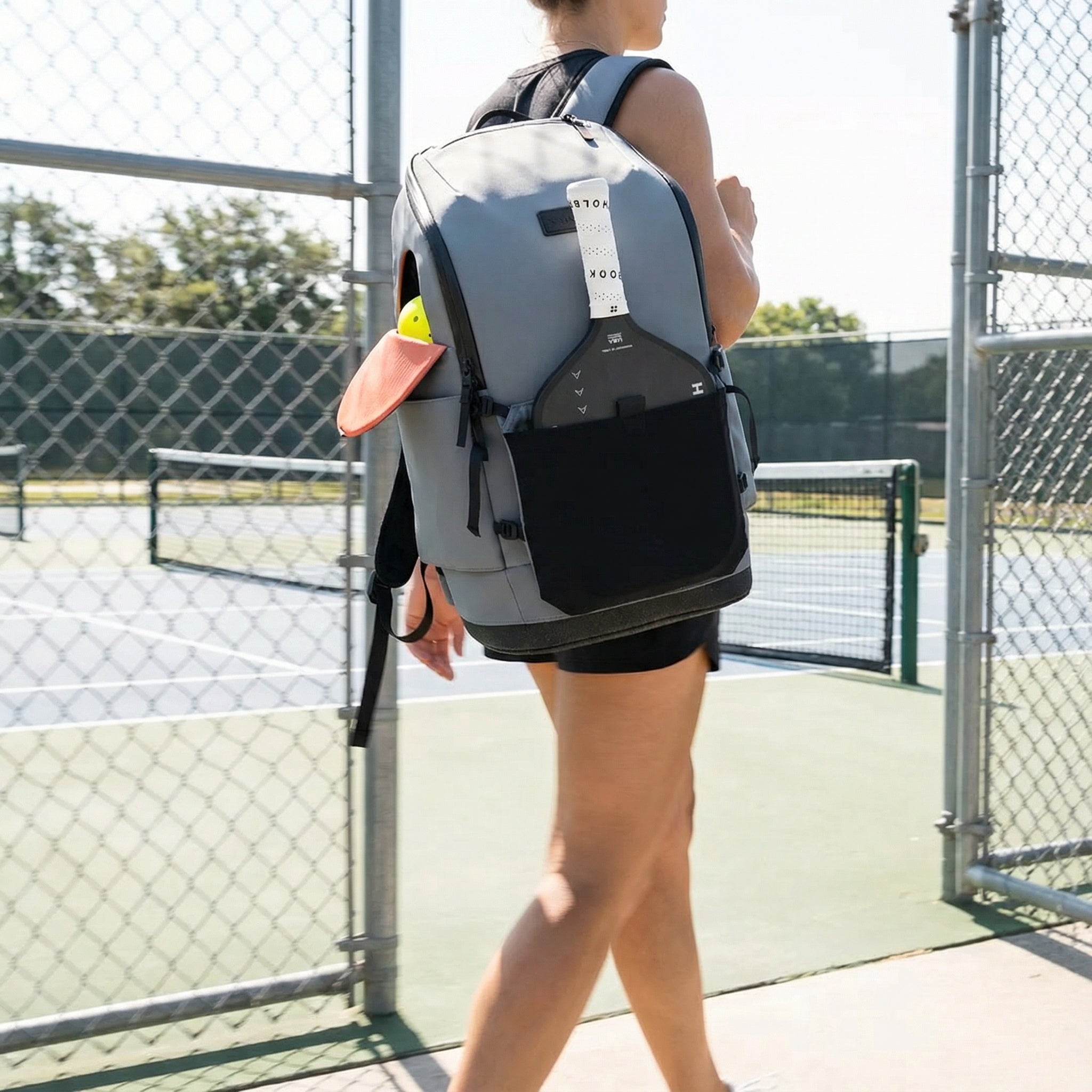
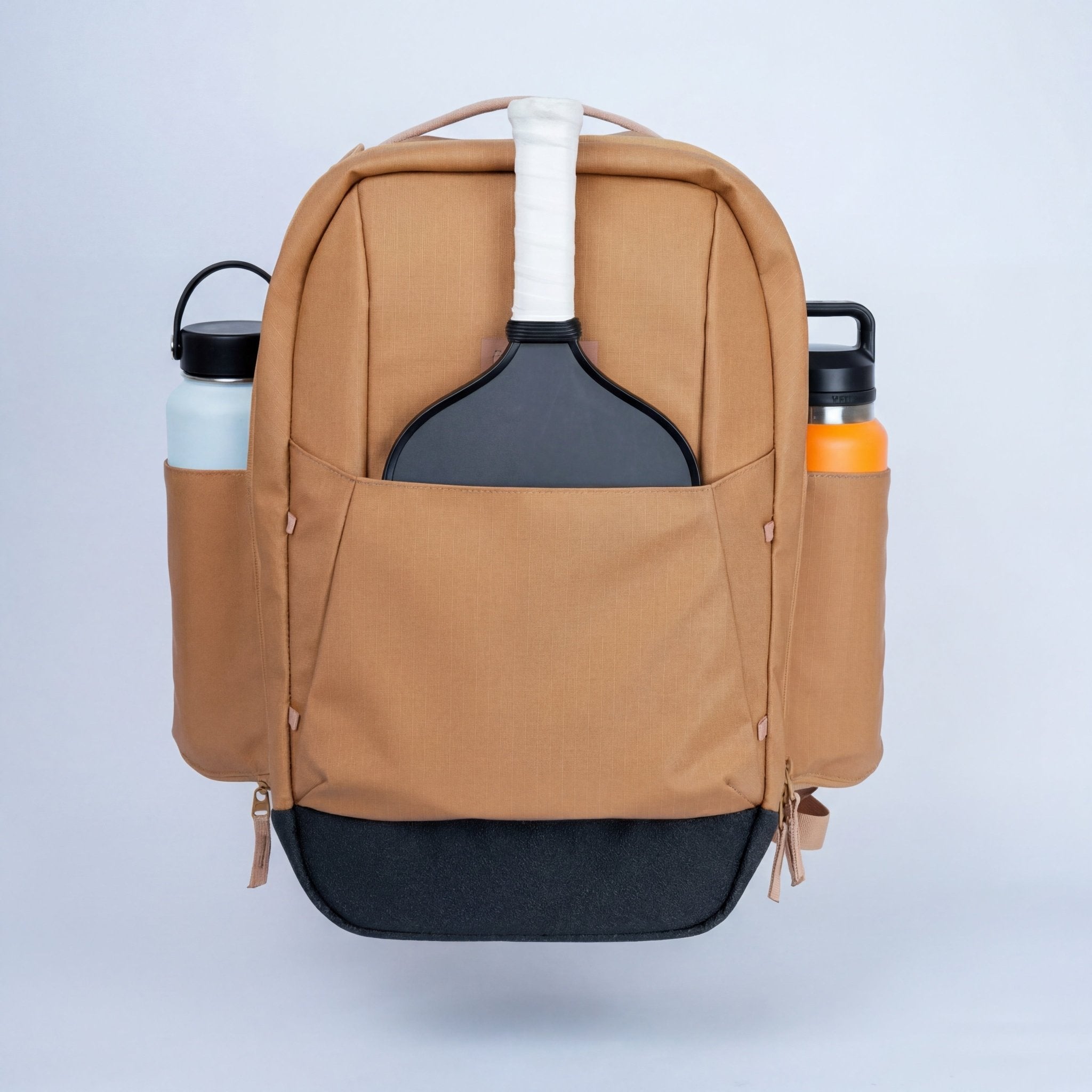
A paddle this specific deserves a bag that treats it right. The FORWRD Court Ranger V2 ($195) has an individual modular paddle sleeve that keeps the ERA Power's raw carbon face from contacting other equipment during transport — the single most common cause of face grit damage we see. Add a 16" laptop sleeve, YKK AquaGuard weatherproof zippers, and a dedicated water bottle pocket, and it's the cleaner answer to "where does this paddle live between sessions."

Pricing and Availability
The Selkirk SLK ERA Power Elongated retails at $199.99 on Pickleball Central, where it's in stock in the standard colorway. The widebody shape is available at the same price if you prefer a larger sweet spot over elongated reach. Selkirk is a stocked brand at most major retailers, so availability is generally stable.
Buy the SLK ERA Power Elongated at Pickleball Central →
Frequently Asked Questions
Is the Selkirk SLK ERA Power good for beginners?
Not really. The ERA Power rewards consistent contact in the upper-center face — beginners who spray shots across the whole paddle face will lose the power benefit on off-center hits. A more forgiving widebody paddle in the $80–$130 range is a better starting point. The ERA Power makes more sense at the 3.5–4.0 level and up, once your contact point is reliable.
What replaced the Selkirk SLK Halo in 2026?
Selkirk discontinued the SLK Halo and Evo series in early 2026 as part of a full lineup reset. The new SLK lineup has four paddles: the ERA Power ($199.99) as the flagship power option, the Dauntless ($179.99) for control-oriented players, the Geo for all-court play, and the Valkyrie for beginners. If you're upgrading from the old Halo Power, the ERA Power is the most direct replacement.
How does the SLK ERA Power compare to the Selkirk LUXX Control Air?
The LUXX Control Air ($199.99) is designed for control-first players — more dwell time on touch shots, better dink consistency, built for kitchen-line warfare. The ERA Power is designed for attackers who want pop and spin. Same price, completely different playing philosophy. If you've tested both and prefer aggressive baseline play and fast drives, go ERA Power. If you live at the kitchen, go LUXX.
Is the ERA Power Elongated or Widebody better?
Elongated (16.5" × 7.45") gives you extra reach for out-wide groundstrokes and a longer handle for two-handed backhands, but the narrower face means a slightly smaller sweet spot. Widebody (approximately 16" × 8") gives up that reach in exchange for a larger face contact zone and better forgiveness on mishits. Players who attack from the baseline usually prefer elongated. Players who volley frequently or come from a doubles background often prefer the widebody's forgiveness. Both share the same 5.8" handle.
Can I use the Selkirk SLK ERA Power in USAPA tournaments?
Yes. The SLK ERA Power is USAP and UPA-A certified, making it legal for sanctioned tournament play under current USA Pickleball equipment rules. Always verify against the current USA Pickleball approved equipment list before a specific tournament, as certifications can be updated.
Final Verdict
The SLK ERA Power Elongated is the most interesting paddle Selkirk has put in its budget-accessible SLK line in years. It's not a budget paddle anymore — $200 is a real ask — but it delivers on that price with a power profile that competes against paddles at $240–$280, an extended 5.8" handle that most manufacturers don't offer at this tier, and a Dynamic Fusion core that genuinely expands the sweet spot compared to the discontinued Halo Power it replaces.
The limitations are honest ones: you need consistent contact to get the benefit, it's not a control player's tool, and the JOOLA Hyperion CFS 16 at $159.95 is a legitimate alternative if you're not specifically after the ERA Power's spin generation or extended handle.
Buy it if you're a 3.5–4.5 player who attacks, uses a two-handed backhand, or wants to step up from the old SLK lineup. Skip it if you're at the kitchen all day or shopping on a budget.

Leave a comment
This site is protected by hCaptcha and the hCaptcha Privacy Policy and Terms of Service apply.