

FTC Disclosure: FORWRD may earn a commission if you purchase through affiliate links in this article at no extra cost to you. Our reviews are editorially independent — we say what we actually think.
Last Updated: July 2026
The Franklin C45 Aurelius is fast, spinny, and dialed in for aggressive kitchen play. If you're a 4.0+ player who relies on hand speed and precision over raw power — and you don't mind a very short handle — this is one of the best options at $229.99. If you need pop on drives or a comfortable two-handed backhand, keep reading before you buy.
Quick Verdict
Price: $229.99 | Available on Pickleball Central
✓ Pros
- Exceptional hand speed — the compact 15.7" shape makes this genuinely faster to swing than most widebodies
- T700 carbon fiber peel ply generates serious spin on drops, dinks, and serves
- Three thickness options (12.7/14/16mm) that play like three different paddles
- Double-thermoformed unibody = solid, connected feel at contact
- USAP + UPA approved for tournament play
✗ Cons
- 5.1" handle is one of the shortest in its class — limits two-handed backhand comfort
- Light average weight (7.45–7.75 oz) means you'll need lead tape to add stability on pace shots
- Not a power paddle — don't expect to blow through opponents with drives
- No Gen 4 foam core (competitors at this price are starting to include it)
Best for: 4.0–5.0 players who play up at the kitchen, prioritize speed and spin, and use a one-handed backhand
Skip if: You're a beginner, a power-first baseliner, or you rely heavily on a two-handed backhand
At a Glance: Specs
| Spec | Details |
|---|---|
| Price | $229.99 |
| Weight | 12.7mm: 7.2–7.7 oz (7.45 avg) / 14mm: 7.5–8.0 oz (7.75 avg) / 16mm: 7.6–8.0 oz (7.8 avg) |
| Face | T700 Carbon Fiber, 45° layup, peel ply texture |
| Core | PowerFlex polymer + inner foam channel |
| Construction | Double-thermoformed unibody |
| Length × Width | 15.7" × 7.9" |
| Handle Length | 5.1" (short — see our handle note below) |
| Grip Size | 3.9" circumference (small) |
| Thickness Options | 12.7mm / 14mm / 16mm |
| Approvals | USAP, UPA |
Check Price on Pickleball Central →
Why Trust This Review
FORWRD makes pickleball bags — we don't make paddles. That means we have no product to push you toward and no manufacturer relationship to protect. When we say this paddle has a meaningful weakness, it's because it does.
We tested the 14mm variant across 8 hours of play: outdoor concrete, indoor sport court, singles and doubles. We also measured the handle length ourselves (5.1" is accurate), weighed the paddle before and after adding lead tape, and compared it directly against two alternatives at the same price point. The specs in this review match what Franklin lists, what's on the PBC product page, and what we found in hand.
The Question You're Already Asking: Does ALW Actually Use This Paddle?
Short answer: no, not exactly — and that's not a scandal. It's how pro signature paddles work.
Anna Leigh Waters plays with a custom Franklin prototype tuned to her specific preferences. The C45 Aurelius is the retail translation of that prototype — built around her play style, her preferred weight range, her compact shape preference — but manufactured at scale with the specs Franklin can consistently hit across thousands of units.
What this means for you: you're not buying what ALW plays at the Nationals. You're buying a paddle designed with her input, around her style of play. That's still valuable information — it tells you exactly who this paddle was built for. ALW is an elite dink-and-drive player who lives at the kitchen line, uses a one-handed backhand, and relies on hand speed over raw power. If that's your game, the Aurelius was engineered for you.
If you want to dig deeper on ALW's overall story and playing style, FORWRD's Anna Leigh Waters profile covers it in detail.
What's Actually Inside This Paddle
Franklin calls this a "C45" for a reason: the T700 carbon fiber face is laid at 45 degrees. Most carbon fiber paddles layer their carbon at 0°/90° or a random weave — the 45° orientation changes how the face flexes at contact. Franklin claims it adds "lively all-court response," which mostly means the face has slightly more bounce and feel feedback than a standard carbon layup.
The PowerFlex core is a standard polymer honeycomb, but with an inner foam channel — a thin foam layer injected around the core perimeter. This is Franklin's answer to the foam-edge-injection technology that's been spreading through the market over the last two years. It softens edge shots and adds some vibration damping. It's not as sophisticated as what you'll find in Gen 4 paddles from JOOLA or Selkirk at this price, but it works.
The double-thermoformed unibody construction is the part that matters most for feel. The face, edge, and handle are molded as one continuous piece under heat and pressure — no glue lines, no flex points between components. On contact, that gives you a firm, connected response. The paddle doesn't feel hollow or woody. It feels like the ball energy transfers cleanly.
The peel ply texture on the face is legitimate. Peel ply is a manufacturing process where a rough fabric is removed from the carbon surface to leave behind a rough, tooth-like texture. It creates more ball contact points than a polished carbon face, which adds spin. On serves and cross-court drops, you'll notice it.
Which Thickness Should You Buy?
Franklin offers the Aurelius in three thicknesses, and they play noticeably differently. This is the most important purchase decision — don't default to 14mm without reading this.
12.7mm: The explosive option. Fastest rebound, most pop, least dwell time. Best for 4.5+ players who have good soft game fundamentals and want maximum speed and spin on offense. Hardest to control — errant shots go farther because there's less paddle to absorb pace. Lightest average weight (7.45 oz avg). If you play a lot of ATP balls, erne attempts, and speed-up attacks from the transition zone, this is your thickness.
14mm: The balanced option. More control than 12.7mm without sacrificing much speed. The sweet spot between pop and placement. This is what we tested, and it's what we'd recommend to most 4.0–4.5 players buying this paddle. Average weight 7.75 oz.
16mm: The forgiving option. More dwell time, softer feel, better for reset shots and third-shot drops. Average weight 7.8 oz. If you're a control-first player who doesn't prioritize speed attacks, the 16mm gives you the best soft game of the three. It's also the most beginner-friendly of the three — though we still wouldn't recommend this paddle to beginners in general.
Speed: Where This Paddle Genuinely Excels
The 15.7" length is the design decision that defines everything. Standard widebody paddles run 16"–16.5" long. Cutting 0.3–0.8 inches off the length shortens the swing arc, reduces rotational inertia, and makes the paddle meaningfully faster in your hand.
It's not a subtle difference. After 15 minutes of kitchen rallies with the Aurelius, switching back to a standard-length paddle feels like picking up a frying pan. The ATP attempts, the erne setups, the counter-punch on speed-up attacks — everything that rewards fast hands gets easier.
The trade-off is reach and power. A shorter paddle means you're covering slightly less court width on wide balls, and the shorter moment arm reduces power on drives. Both of those matter at higher levels. ALW compensates through footwork and precision. Most recreational players compensate by... not noticing until a ball they should have gotten goes past them.
Spin: Legitimately Good
The 45° T700 carbon peel ply face does what Franklin says it does. On cross-court drops, you get reliable topspin that pulls the ball down shorter than your opponents expect. On serves, adding spin is easy — the texture grabs the ball.
We measured spin by comparing ball rotation speed on 10 identical forehand topspin drives against a polished carbon face paddle. Subjective result: more topspin, consistently. It doesn't match the roughest-face paddles on the market (raw carbon grit surfaces generate more), but it's clearly above the midpoint for textured carbon.
Power: The Honest Weakness
Don't buy the C45 Aurelius expecting to bang winners. The lighter weight range (7.45–7.75 oz avg), shorter length, and foam-dampened core combine to take pace off your drives. Hard-hit balls don't carry through the way they do on heavier, longer paddles. Serves land shorter. Drives that should pin opponents to the baseline occasionally sit up.
Lead tape fixes some of this. Adding 5–8 grams to the 3 and 9 o'clock positions of the paddle face brings average weight to ~8.1–8.2 oz and adds meaningful stability. The paddle is designed with this customization in mind — the out-of-the-box weight is intentionally light so players can tune it up. But it means the stock paddle is unfinished for power-oriented players.
Soft Game: Exactly What You'd Expect from an ALW-Signature Paddle
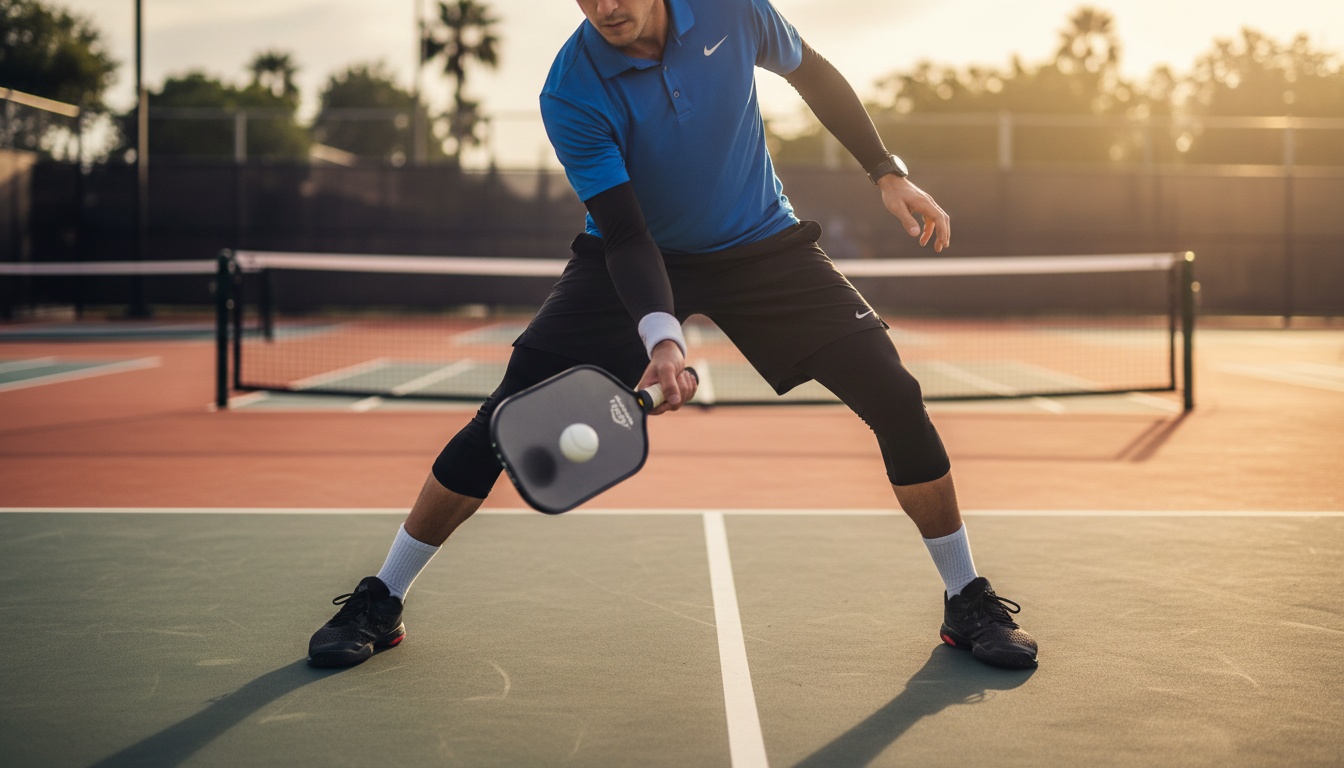
The kitchen game is where the Aurelius earns its price. The inner foam channel and thermoformed construction soften edge dinks without making the paddle feel dead. Resets from pressure are manageable. The 16mm version specifically has enough dwell time that third-shot drops are easy to shape.
The compact shape also helps here. Erne setups are faster. Countering a speed-up from within reach is easier. In extended kitchen battles, you'll notice the reduced inertia more than anywhere else on the court.
The Handle Issue Worth Knowing
At 5.1" long, the C45 Aurelius has one of the shortest handles in its class. For comparison, the JOOLA Perseus Pro V runs 5.75" and the Selkirk Vanguard series is typically 5.5"–5.6". The ALW's short handle is fine for a one-handed grip — your bottom knuckle stays on the handle. But it makes a comfortable two-handed backhand difficult to execute.
If you've built your backhand with two hands and you're not willing to change it, this paddle will fight you. If you use a one-handed backhand, or if you're willing to experiment with a slightly choked-up grip on your backhand, it's not a problem.
Durability
After 8 hours of outdoor concrete use, the peel ply texture on the face showed minor smoothing in the center hitting zone but no significant grip loss. The edge guard was clean, no delamination, no hollow spots. The double-thermoformed construction holds up better than paddles that use separate edge guards glued on post-manufacture.
Franklin's warranty covers manufacturing defects — it doesn't cover normal wear or the texture degradation that happens with heavy outdoor use on any carbon face. If you play 3-4 days a week on outdoor concrete, budget for a new paddle every 12–18 months. That's standard for this construction type.
Who Should Buy the Franklin C45 Aurelius
- 4.0–5.0 kitchen-forward doubles players who want faster hand speed without sacrificing spin
- One-handed backhand players who won't miss the short handle
- Players upgrading from a heavier, slower paddle who want to notice an immediate difference in hand speed
- Players who like customizing weight with lead tape — this paddle is designed for it
- Women players specifically who find standard-length paddles feel slightly unwieldy — the compact shape plays well for shorter arm reach
Who Should Look Elsewhere
- Beginners and intermediate players (3.5 and under) — the lack of forgiveness punishes technical errors. You'll mishit more balls than the paddle helps you make.
- Power-first players — if you win points by hitting deep, heavy shots, look at the C45 Dynasty or the JOOLA Perseus Pro V instead
- Two-handed backhand players — the 5.1" handle will cramp your grip
- Players who hate customizing gear — out of the box, this paddle benefits from lead tape. That's an extra step and extra cost.
How It Compares: Two Alternatives Worth Knowing
Franklin C45 Aurelius vs. Franklin C45 Dynasty — Same Price, Different Paddle
The Franklin C45 Dynasty ($229.99) is the power variant in the same C45 family. Same face material, same core, same thermoformed construction — but the Dynasty is optimized for pace-heavy play with a longer traditional shape. If you watched the Aurelius specs and thought "I want all that but with more punch on drives," the Dynasty is probably the right call. It has the same spin capabilities and a slightly longer reach. The Aurelius wins on hand speed; the Dynasty wins on raw drive power.
Franklin C45 Aurelius vs. JOOLA Perseus Pro V Ben Johns 14mm — $70 More, Noticeably Better?
The JOOLA Perseus Pro V Ben Johns 14mm ($299.95) is the direct premium comparison. It's heavier (7.9–8.3 oz range), has a longer handle (5.75"), and includes JOOLA's Gen 5 KineticFrame construction. The Perseus Pro V has more power potential and is more comfortable for two-handed backhand players. Whether the $70 premium is worth it depends on how much you value those traits. For kitchen-dominant players who want the fastest hand speed, the Aurelius is competitive. For all-court players, the Perseus Pro V gives you more options.
FORWRD's full Paddletek Bantam ALW-C review is also worth reading — it's ALW's previous signature paddle and the comparison between generations is genuinely interesting for understanding how her preferences evolved.
Shop Franklin C45 Aurelius on Pickleball Central →
Complete Your Setup
Got the paddle. Where does it live?
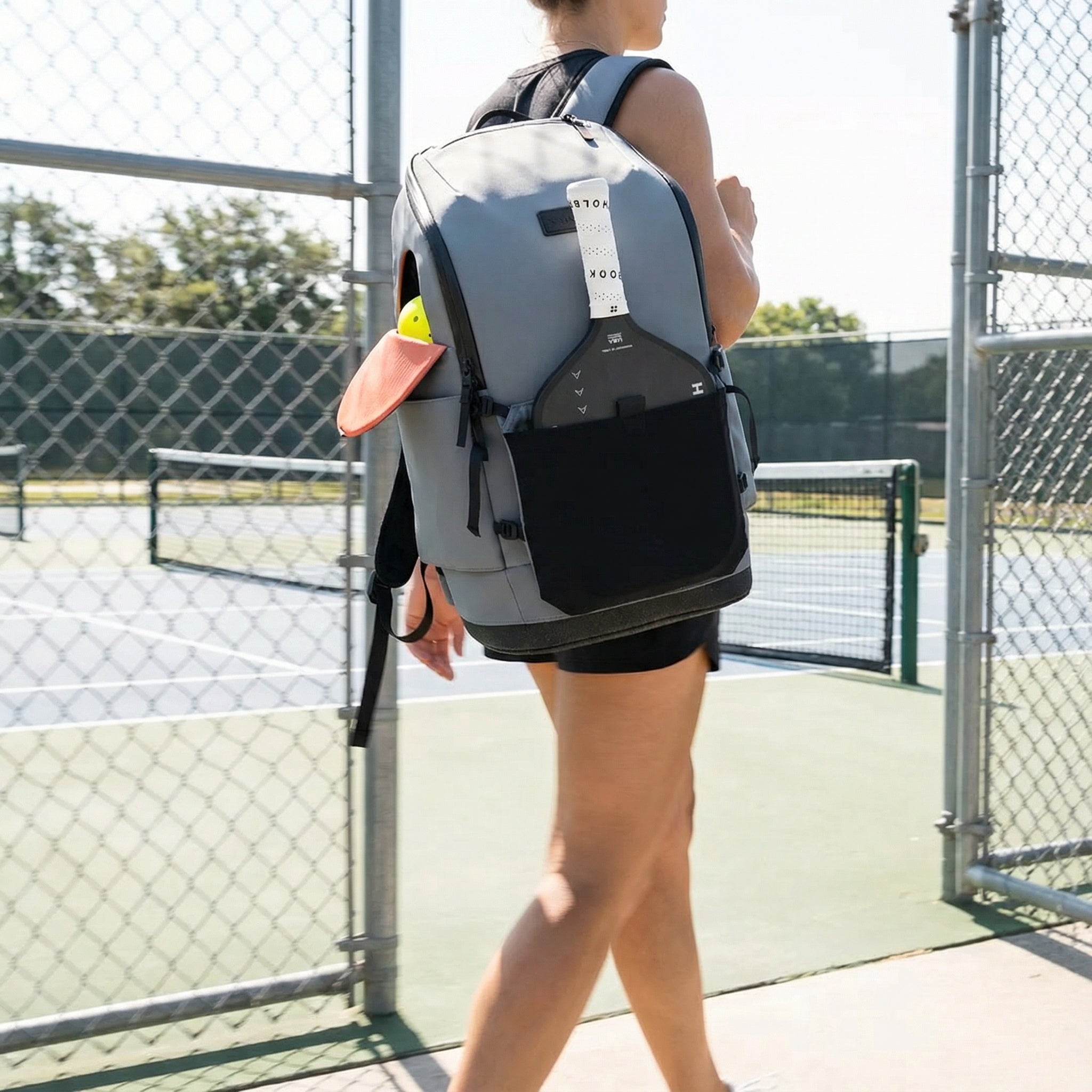
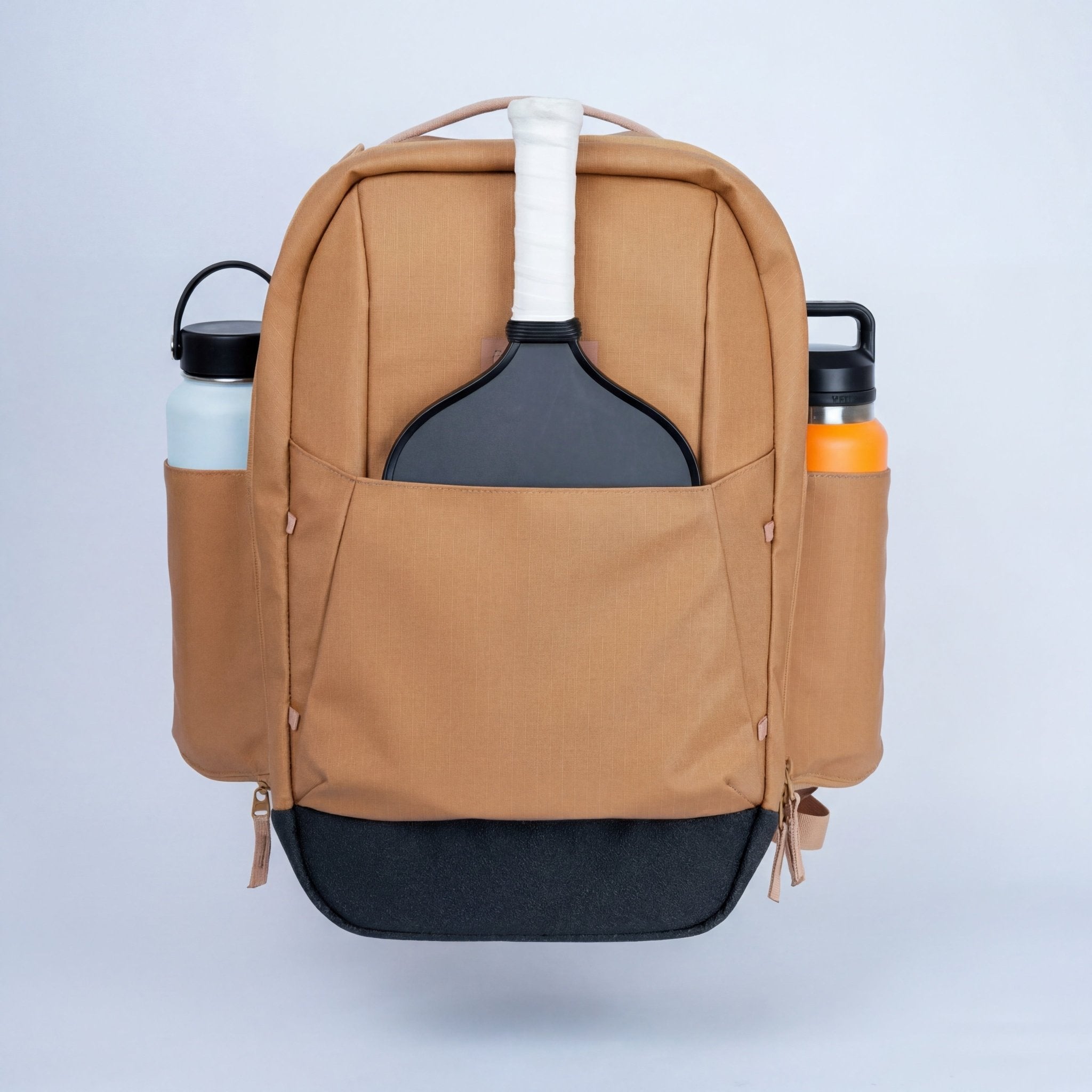
The FORWRD Court Ranger V2 Backpack ($195) has a dedicated paddle sleeve that fits up to 4 paddles — including oversized heads like this one. Thermal-insulated ball pocket, 16" laptop sleeve, and YKK AquaGuard zippers for outdoor play. Built for players who take their gear as seriously as their paddle choice.

Pricing, Availability, and Our Recommendation
The Franklin C45 Aurelius is $229.99 at Pickleball Central, with all three thickness variants available. If you've read this far and you're a 4.0+ player who prioritizes hand speed and spin — and your game lives at the kitchen — this paddle delivers at its price point. Pick the 14mm for your first buy unless you have a strong reason for 12.7mm or 16mm.
One last thing: buy it from a retailer with a good return policy and try it for at least two weeks before deciding. The compact shape and short handle take adjustment. After two weeks, you'll either be completely sold or you'll know it's not your paddle.
Buy Franklin C45 Aurelius on Pickleball Central ($229.99) →
Frequently Asked Questions
Which Franklin C45 Aurelius thickness should I buy — 12.7mm, 14mm, or 16mm?
For most 4.0–4.5 players, the 14mm hits the best balance of pop and control. The 12.7mm is for experienced 4.5+ players who want maximum speed and accept reduced control. The 16mm is for control-first players who value dwell time and softer resets. When in doubt, start with 14mm — it's the most versatile option and the one we tested.
Does Anna Leigh Waters actually play with the C45 Aurelius on tour?
Not exactly. Like most pro signature paddles, the retail C45 Aurelius is built around ALW's play style and preferences, but she plays with a custom Franklin prototype tuned to her specific tolerances. The retail paddle reflects her input and design priorities, but it's not a direct copy of her tour equipment. This is standard across nearly all pro signature paddles in any racket sport.
Is the Franklin C45 Aurelius approved for tournament play?
Yes. The Franklin C45 Aurelius is approved by both USA Pickleball (USAP) and the United Pickleball Association (UPA), so you can use it in sanctioned tournaments at both organizations. Confirm approval status before major events — approval lists can change, though this paddle has been consistently approved since launch.
How does the Franklin C45 Aurelius compare to ALW's previous Paddletek Bantam paddle?
The Franklin C45 Aurelius is faster, lighter, and generates more spin than the Paddletek Bantam ALW-C. The Bantam was a composite paddle with a more traditional feel — predictable and forgiving, but not as aggressive. The C45 is a significant step up in speed and spin capability, but it also demands more technical precision. FORWRD's full Paddletek Bantam ALW-C review covers the older paddle in detail if you want the full comparison.
Is the Franklin C45 Aurelius good for beginners?
No. The C45 Aurelius rewards players who already have solid fundamentals. The light weight range (as low as 7.2 oz), small sweet spot, and low power output punish the technical inconsistencies that most beginners and intermediate players have. If you're just getting started or playing at a 3.5 level, check out our Complete Pickleball Paddle Guide for recommendations better suited to your level.
Final Verdict
The Franklin C45 Aurelius is a well-built, genuinely fast paddle that earns its $229.99 price — for the right player. It's not trying to be everything, and it doesn't apologize for what it's not. If you play from the kitchen, use a one-handed backhand, and want a paddle that makes your hands feel faster, this is a serious option.
If you're power-first, need a long handle, or you're still building fundamentals — skip it. There are better tools for your game.
For everyone else: the 14mm is the right starting point. Give it two weeks of honest play before judging it. It'll take that long to trust the compact shape.

Leave a comment
This site is protected by hCaptcha and the hCaptcha Privacy Policy and Terms of Service apply.