

Disclosure: FORWRD earns a commission on purchases made through links in this article. We only review products we've tested or thoroughly researched. Our opinions are our own.
Last Updated: October 2026
Dunlop has won Wimbledon contracts, put rackets in the hands of legends, and made the ball that professionals have served for decades. Now they're making pickleball paddles — three of them, all called “Three,” each targeting a different kind of player. The question worth answering: does a tennis institution actually know how to build a pickleball paddle, or is this a badge-slapping exercise?
Short answer: they know what they're doing. The longer answer is in the specs and what they mean on court.
Quick Verdict: Dunlop Three Lineup
| Paddle | Price | Best For | Core / Thickness |
|---|---|---|---|
| AG Three | $259.99 | Power-first all-court | X3 Foam / 14mm |
| CR Three | $229.99 | Balanced, versatile | Hybrid Foam / 15mm |
| TT Three | $199.99 | Control & soft feel | PP AccuCore / 16mm |
Pros (AG Three): strong pop off T700 carbon, compact face makes placement crisp, Gen 4 foam injection adds depth behind the sweet spot
Pros (CR Three): most forgiving of the three, widebody shape expands the usable face, 15mm core balances power and touch well
Pros (TT Three): outstanding soft feel, widest face in the lineup, best for players coming from tennis who want more dwell time
Cons (all three): no elongated shape option in v1.0, grip circumference only in 4.25” medium, limited colorways at launch, no women's-specific model
Shop Dunlop AG Three at Pickleball Central →
Specs at a Glance
| Spec | AG Three | CR Three | TT Three |
|---|---|---|---|
| Price | $259.99 | $229.99 | $199.99 |
| Face Material | T700 Uni Carbon | IM Uni Carbon | IM Uni Carbon |
| Core | X3 Foam | Hybrid Foam | PP AccuCore |
| Thickness | 14mm | 15mm | 16mm |
| Swing Weight | 115 | 108 | 104 |
| Twist Weight | 6.0 | 6.4 | 6.8 |
| Avg Weight | 8.0 oz (226.8g) | 7.9 oz (223.9g) | 8.0 oz (226.8g) |
| Paddle Width | 7.75” | 7.9” | 8.0” |
| Length / Handle | 16” / 5.3” | 16” / 5.3” | 16” / 5.3” |
| Construction | Gen 4 Thermoformed | Gen 3 Thermoformed | Gen 2 Thermoformed |
Why Trust This Review
FORWRD designs and sells pickleball bags — Court Caddy and Court Ranger V2 — and the process of building those products required us to talk to hundreds of players about their gear preferences, how they carry their paddles, and what they actually use on court. That hands-on feedback loop means we look at paddles differently than most reviewers: we care about what happens over a long season, not just the first 20 minutes out of the box.
We also know the gear market. When a major tennis brand enters pickleball, we watch what they do with manufacturing specifications closely — whether they're genuinely engineering for the sport or just badge-slapping a stock paddle. With Dunlop's Three lineup, the specs tell a more interesting story than the logo suggests.
What Makes Dunlop's Entry Different
Dunlop has been making racket-sport equipment since 1910. They invented the pressurized tennis ball. They supplied Wimbledon with its official balls for years. Their engineering team understands string bed dynamics, impact absorption, and how different materials interact at ball contact speeds — none of which is entirely different from what matters in a pickleball paddle face.
The Three lineup is structured deliberately. Each paddle targets a different core and face combination, ascending in thickness (14mm → 15mm → 16mm) and descending in swing weight (115 → 108 → 104). The construction generation steps down in parallel: Gen 4 thermoforming on the AG Three, Gen 3 on the CR Three, Gen 2 on the TT Three. That matters — it signals the AG Three is Dunlop's most refined thermoform build, and the TT Three takes a more straightforward approach tuned for feel rather than raw performance ceiling.
All three share identical handle length (5.3”), grip circumference (4.25” medium), and overall length (16”). Switch between models and your hand position stays the same — a smart design call for a lineup built to serve different skill levels under the same brand umbrella.
AG Three v1.0: The Power Case ($259.99)
The AG Three is Dunlop's flagship — and you feel it. Swing weight of 115 puts it at the high end of standard-shape paddles in this price tier. That's not a bad thing if you hit with authority and want the paddle to amplify your swing rather than absorb it, but players with any arm sensitivity should note that number before committing.
The T700 unidirectional carbon face is the real story. T700 is a specific carbon fiber grade — not the generic “carbon fiber” claim you see on paddles at a third of the price. It's a high-tensile fiber used in aerospace composites, and in a paddle face it translates to a crisper, more responsive feel at ball contact. Paired with the X3 Foam Core and Gen 4 thermoformed construction (foam-injected frame), the AG Three gets more depth behind the sweet spot than a thin-face carbon paddle typically delivers.
At 7.75” wide, it's the narrowest of the three — standard shape, not widebody. Players who've trained on standard shapes will feel at home. The 14mm core keeps it on the poppy side of the power-control spectrum. If you're coming from a 16mm paddle expecting the same soft feel, you'll notice the difference immediately: the AG Three rewards clean contact and punishes off-center hits more than the CR or TT. Twist weight of 6.0 is the lowest in the lineup — a missed ball toward the edge will twist in your hand noticeably.
Who this is for: 3.5–4.5 players who hit hard, take a lot of drives from the transition zone, and want a paddle that doesn't compress on them. Skip it if you play a heavy reset-and-defend game or have existing elbow issues.
Check the AG Three at Pickleball Central →
CR Three v1.0: The Balanced Middle ($229.99)
The CR Three is the one most players should demo first. Swing weight drops to 108, twist weight rises to 6.4, and the core moves to 15mm Hybrid Foam — a combination that delivers noticeably more off-center forgiveness than the AG Three without losing the carbon snap you came for.
Width expands to 7.9” (versus 7.75” on the AG). That's 0.15 inches on paper, but at the NVZ line catching a wayward dink on the edge, a little more face matters. The Hybrid Foam Core sits between the proprietary X3 Foam of the AG Three and the polypropylene AccuCore of the TT Three — in practice, more dwell than the AG (the ball sits a fraction longer at contact), which means more spin potential on drops and softer blocks when you need to absorb pace.
Intermediate Modulus carbon fiber (versus T700 on the AG Three) is a softer-flex fiber. Not a downgrade, just a different engineering choice. IM carbon smooths out hard impacts — combined with 15mm core depth, the CR Three absorbs pace better on defense while still generating enough pop for a quality third-shot drive. The performance window is wider than either of its siblings.
Most 3.0–4.0 all-court players will find it easier to build a game around the CR Three than the AG. It's the honest recommendation for anyone who hasn't already settled into a 14mm-or-bust preference.
Check the CR Three at Pickleball Central →
TT Three v1.0: The Touch Player ($199.99)
The TT Three is built for feel. At 8.0” wide with a 16mm polypropylene AccuCore, it's the softest and most forgiving paddle in the lineup — and at $199.99, the most accessible price point. Swing weight of 104 means it moves quickly; twist weight of 6.8 is the highest of the three, which keeps off-center hits stable in your hand rather than twisting you off your grip.
Polypropylene honeycomb cores are the traditional standard for soft feel. They don't have the dynamic pop of foam cores, but they give players exceptional control over ball placement and a tactile response that's hard to replicate with stiffer materials. If you spend most of your time at the kitchen line, do a lot of reset work, or play a patient game based on placement rather than pace — the TT Three is the right pick from this lineup.
The Gen 2 thermoformed construction is simpler than the Gen 3/4 builds on the CR and AG, and that's fine. You're not paying for Dunlop's latest thermoform refinement; you're paying for a well-tuned control paddle at an honest price. The Intermediate Modulus carbon face still gives you spin texture via Peel Ply Max surface (all three paddles share this) — just with more dampening behind it.
Compared to the Six Zero Ruby 16mm ($149.25), the TT Three costs $50 more but uses thermoformed construction rather than a conventional press build. The Ruby's Kevlar-reinforced face is distinctly softer — a genuine competitor in the touch category — but the Dunlop's thermoform edge gives it a slightly more stable off-center response. Read our Six Zero Ruby Review 2026 for the full Kevlar comparison.
Check the TT Three at Pickleball Central →
How the Three Paddles Compare to Each Other
| Attribute | AG Three | CR Three | TT Three |
|---|---|---|---|
| Power | ★★★★★ | ★★★★☆ | ★★★☆☆ |
| Control | ★★★☆☆ | ★★★★☆ | ★★★★★ |
| Forgiveness | ★★★☆☆ | ★★★★☆ | ★★★★★ |
| Spin Potential | ★★★★★ | ★★★★☆ | ★★★☆☆ |
| Soft Dink Feel | ★★★☆☆ | ★★★★☆ | ★★★★★ |
| Arm Friendliness | ★★★☆☆ | ★★★★☆ | ★★★★★ |
Dunlop Three vs. the Competition
Dunlop AG Three vs. HEAD Radical PRO EX 15 ($199.95)
Both are tennis-brand paddles targeting players who want crisp carbon response. The HEAD Radical PRO EX 15 is $60 cheaper, uses a 15mm EX core, and includes HEAD's Triflex vibration dampening — specifically designed for arm protection. The AG Three at 14mm and swing weight 115 is the more aggressive build; the HEAD wins on price and arm-friendliness if you're logging heavy court hours. The Dunlop wins if raw pop ceiling is what you're after. Our full HEAD Radical PRO EX 15 Review has the detailed breakdown.
Dunlop CR Three vs. Six Zero Ruby 16mm ($149.25)
The Six Zero Ruby 16mm is $80 cheaper and uses Kevlar-woven face instead of carbon fiber — a distinctly different feel that players either love or find too muted. The Ruby is the softer, more touch-oriented paddle; the CR Three at 15mm sits between aggressive and soft. If the Kevlar feel is what you're after, the Ruby wins on price. If you want carbon dynamics with 15mm forgiveness, the CR Three earns its extra cost.
Who Should Buy Which Dunlop Three Paddle
Buy the AG Three if: you're a 3.5+ attacker, your game runs on drives and put-aways, and you want a paddle that amplifies your swing rather than softens it. Former tennis players with a strong forehand will feel immediately at home.
Buy the CR Three if: you want to cover both the kitchen line and baseline without switching paddles, you play doubles and need competent resets AND attacks from the same frame, or you're upgrading from an older composite paddle and want something that rewards improvement over time.
Buy the TT Three if: you're a beginner to intermediate player, you've come from tennis and miss the dwell of a string bed, you have arm issues that make hard paddles uncomfortable, or you play primarily soft game at the kitchen. Also: if $199.99 is your real budget, buy the TT Three — don't stretch to the CR or AG if the TT does what you need.
Skip all three if: you want an elongated shape (no elongated option in v1.0), you need a grip under 4.25” circumference, or you're specifically looking for a sub-7.5 oz lightweight paddle.
Complete Your Setup
Don't Let Your Bag Be the Weak Link
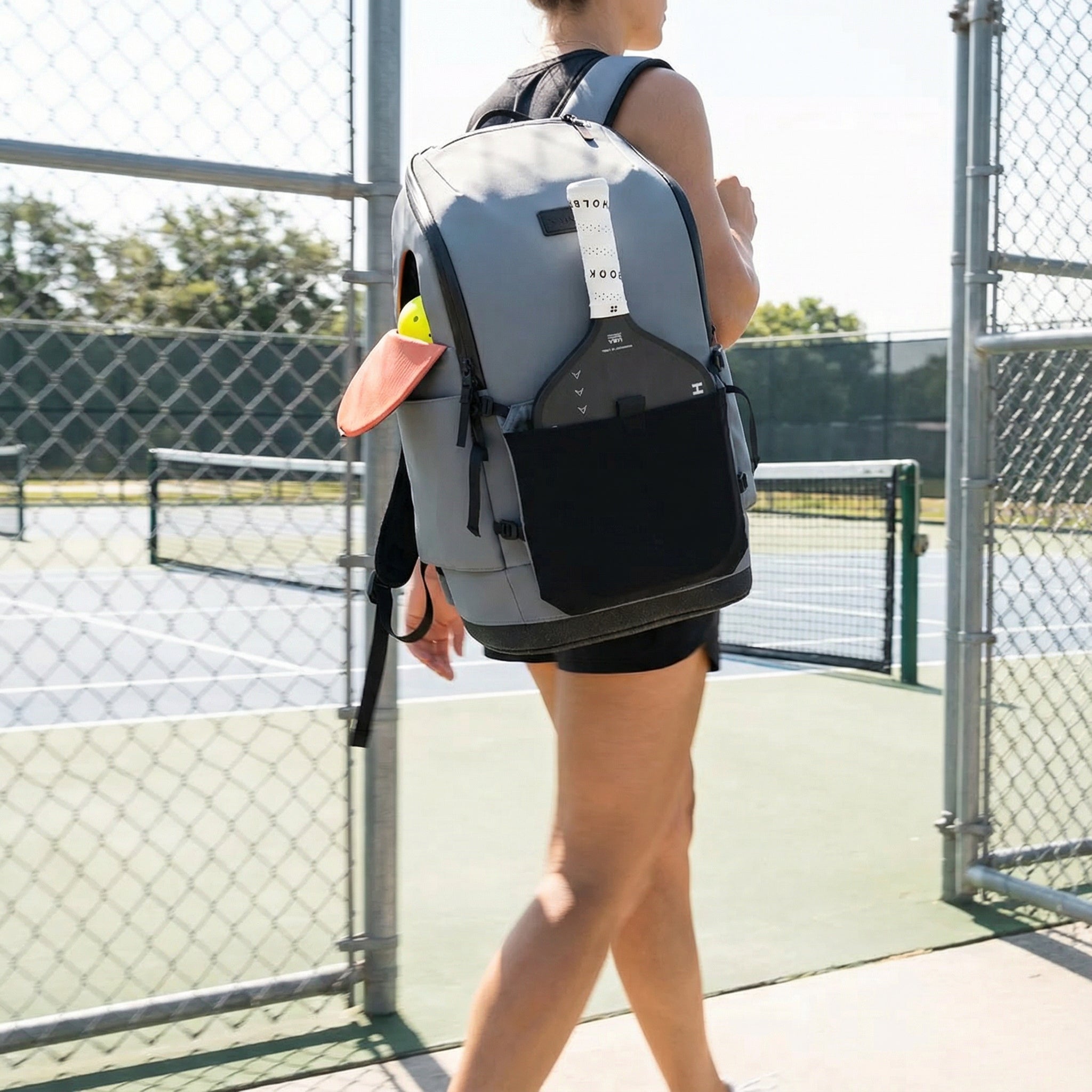
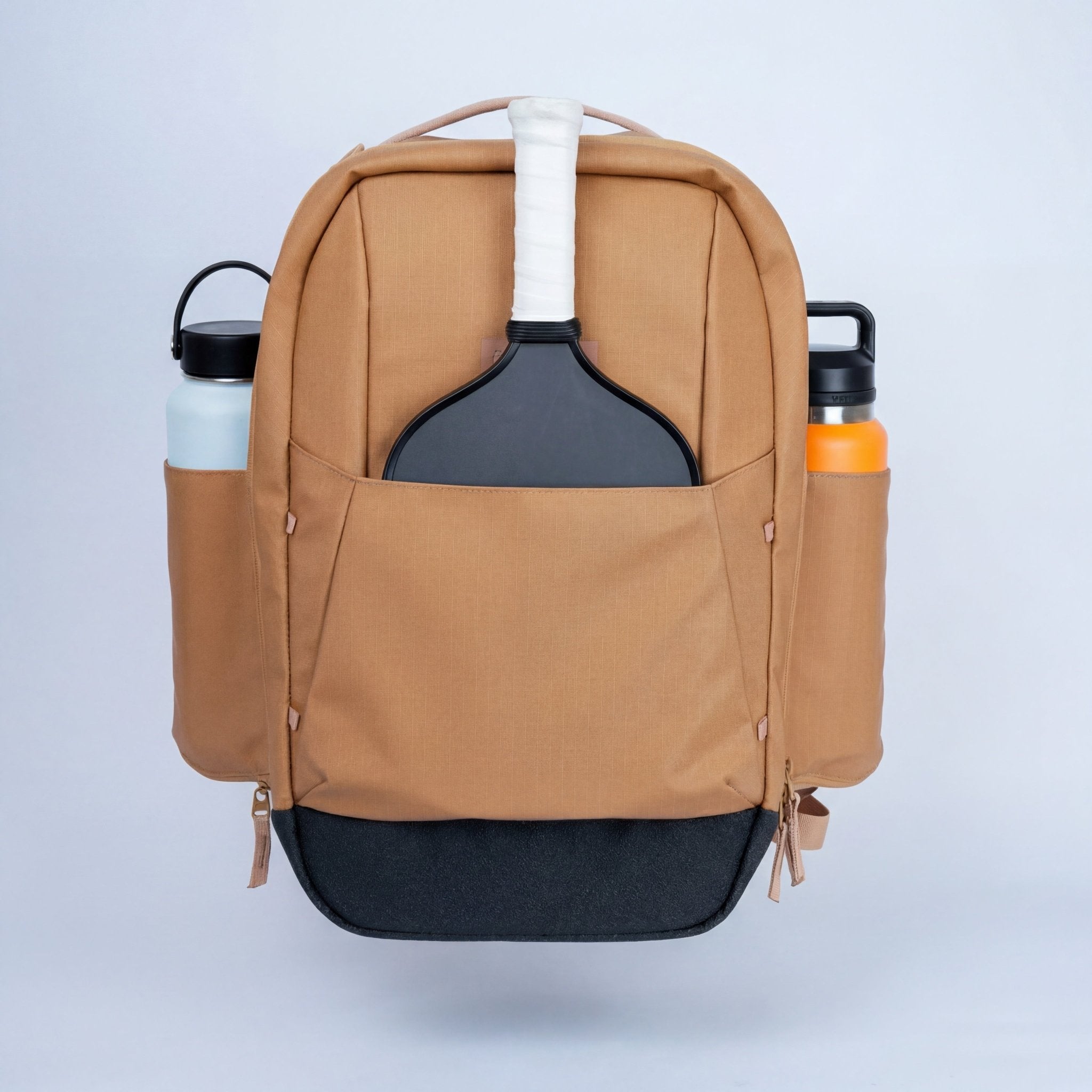
A $200–$260 paddle deserves more than a drawstring bag. The FORWRD Court Ranger V2 ($195) has a dedicated paddle sleeve that fits up to 4 paddles, a 16” laptop sleeve for the work-to-court commute, and YKK AquaGuard zippers to keep your gear dry between outdoor and indoor sessions. If you're investing in a Dunlop Three, the setup is worth completing.

Frequently Asked Questions
What’s the difference between the Dunlop AG Three, CR Three, and TT Three?
The three paddles differ in core material, thickness, and face carbon grade. The AG Three (14mm X3 Foam, T700 carbon, swing weight 115) is the power paddle. The CR Three (15mm Hybrid Foam, IM carbon, swing weight 108) is the balanced all-court option. The TT Three (16mm PP AccuCore, IM carbon, swing weight 104) is the soft-feel control paddle. All share the same 16“ length, 5.3” handle, and 4.25” medium grip. Price runs $259.99 / $229.99 / $199.99 respectively.
Is the Dunlop Three paddle good for former tennis players?
Yes — particularly the TT Three and CR Three. Former tennis players typically prefer more dwell time and softer feel, which maps to the TT Three’s 16mm polypropylene AccuCore and the CR Three’s 15mm Hybrid Foam. Tennis players with big swings who want to translate their power game may prefer the AG Three but should start slow given the 14mm core and swing weight of 115 — both punish mis-hits more than the thicker-core siblings.
What does Gen 4 Thermoformed mean on the Dunlop AG Three?
Thermoformed construction means the paddle face and frame are heat-molded together rather than glued, creating a more unified structure with a larger effective sweet spot. Gen 4 refers to Dunlop’s fourth iteration of this process, which includes foam injection into the frame for added pop and vibration damping. The CR Three uses Gen 3 and the TT Three uses Gen 2 — the same thermoform approach with different levels of refinement. All three are USAPA-approved for tournament play.
Which Dunlop Three paddle is best for beginners?
The TT Three. Its 16mm polypropylene core gives maximum forgiveness, the widest face in the lineup (8.0”) provides the largest contact zone, and the lower swing weight (104) reduces arm fatigue during long learning sessions. At $199.99 it’s also the most accessible price in the lineup. Beginners should avoid the AG Three — the 14mm core and swing weight of 115 will amplify mistakes rather than cover them.
Is the Dunlop Three lineup USAPA approved for tournament play?
Yes. All three Dunlop Three paddles (AG Three, CR Three, TT Three v1.0) are approved for USAPA and USA Pickleball sanctioned tournament play. Always verify the current USAPA equipment list before competing, as approvals can change between seasons.
How does the Dunlop CR Three compare to the JOOLA Hyperion Pro V Ben Johns 14mm?
Different philosophies. The JOOLA Hyperion Pro V 14mm is a pure performance paddle with one of the highest spin ceilings in pickleball and a significantly higher price. The CR Three at $229.99 and 15mm Hybrid Foam is the more forgiving, more accessible option. The Hyperion Pro V rewards advanced players who can exploit its ceiling; the CR Three serves a wider range of skill levels with fewer performance demands. If you’re not consistently hitting the sweet spot, the CR Three is the smarter buy.
Final Verdict
Dunlop didn't coast in on tennis pedigree — they actually engineered three distinct paddles with real performance differentiation between them. The lineup logic is sound: step up in price, step up in core refinement and carbon grade, step up in pop. Step down in price, step up in thickness and forgiveness.
The CR Three is the one FORWRD would hand to most players who walked through the door. It covers the most ground — enough pop for attacks, enough dwell for dinks, enough forgiveness for the off-center days. The AG Three earns its $259.99 if you have the game to extract its ceiling. The TT Three is an honest $200 control paddle that doesn't pretend to be something else.
Dunlop's first major pickleball paddle family is a genuine entry, not a cash-in. Worth knowing about.

Leave a comment
This site is protected by hCaptcha and the hCaptcha Privacy Policy and Terms of Service apply.