

FTC Disclosure: This article contains affiliate links. If you buy through them, FORWRD earns a small commission at no extra cost to you. We only link to products we've researched and would genuinely recommend.
Six Zero Ruby Review 2026: The Kevlar Paddle That Plays Differently From Everything Else
Most pickleball paddles compete on the same few variables: carbon fiber surface, thermoformed construction, 13–19mm core thickness. The Six Zero Ruby does something genuinely different — it uses a Kevlar hitting surface instead of carbon fiber. That change affects how the ball feels, how long the texture lasts, and who the paddle actually suits.
At $199, it's positioned in the competitive mid-tier where JOOLA, Selkirk, and HEAD all have options. Whether the Ruby earns that price depends entirely on whether Kevlar's specific performance characteristics match your game.
Quick Verdict
✓ Pros
- Kevlar surface is significantly more durable than carbon fiber — texture lasts longer on rough outdoor courts
- Thermoformed unibody construction delivers consistent flex profile across the entire face
- 3D Carbon handle provides excellent torsional stability on off-center hits
- 16mm core is a sweet spot for most 3.0–4.5 players — good dwell time without killing power
- $100 cheaper than competing premium options (JOOLA Perseus, Selkirk LUXX) with genuine material differentiation
✗ Cons
- Mid-heavyweight class — some players find this slightly fatiguing over long sessions
- Kevlar surface has a slightly more muted feel compared to raw carbon fiber — takes adjustment
- Small grip only — medium grip players need overgrip
- Six Zero is a newer brand — less community data on long-term durability beyond 6 months
Price: $199 | Who it's for: 3.0–4.5 outdoor players who play frequently on rough courts and want a durable surface that holds spin longer | Who should skip it: Players who prefer the crisp pop of raw carbon fiber, or those seeking a lighter feel
At a Glance: Specs
| Spec | Detail |
|---|---|
| Price | $199 |
| Surface | Kevlar hitting surface |
| Core | 16mm honeycomb polymer core |
| Construction | Thermoformed unibody |
| Handle | 3D Carbon |
| Edge | Foam Edgewalls |
| Weight | Mid-Heavyweight |
| Grip | Small (4⅛") |
Check Price at Pickleball Central →
Last Updated: June 2026 | Reviewed by Benjamin Carper
Why Trust This Review
FORWRD designs pickleball bags, which puts us in proximity to a lot of serious players who talk about what equipment they're actually using. Beyond that community context, we tested the Six Zero Ruby over 4 weeks of outdoor concrete court play — two sessions per week, mixed rec and competitive — comparing it against carbon fiber alternatives in the same price range. The Kevlar surface question was the thing we tested most deliberately: does it actually last longer, and does that matter?
The Kevlar Question: Why This Surface Material Actually Matters
Carbon fiber is the dominant surface material in pickleball — most paddles at $150+ use it. It delivers good grit for spin, a crisp responsive feel, and it's well understood by the pickleball community. The trade-off is durability: carbon fiber surface texture wears down. On rough outdoor hardcourt surfaces, abrasive contact gradually smooths the grit, reducing spin effectiveness over 6–12 months of regular play.
Kevlar is different. It's the same material used in body armor and cut-resistant gloves — famously tough against abrasion. On a paddle hitting surface, it holds its texture longer under rough-court conditions. The trade-off: the feel is slightly different from carbon fiber. More muted on contact, less of that sharp "snap" carbon fiber delivers. Players who rely heavily on the feel of their paddle surface to guide soft shots may notice the adjustment period.
Whether that trade-off matters depends on where you play. Indoor wood or sport-court surfaces are gentler on carbon fiber — Kevlar's durability advantage matters less there. Outdoor concrete or asphalt is where Kevlar earns its place. If you're playing 3–4 times per week on rough outdoor courts and replacing paddles more often than you'd like because the surface is dead, the Ruby's Kevlar construction makes financial sense over time.
Performance: How the Ruby Plays
Power and Ball Speed
The 16mm core puts the Ruby in good territory for most players — not the fastest exit speed on the market, but not spongy either. Hard drives come off with confidence. The thermoformed unibody construction matters here: because the entire paddle flexes as one unit (rather than a separate face bonded to a core), the energy transfer on contact is consistent across different hitting zones. You don't get the "dead spot near the edges" feel that some bonded paddles have.
Mid-heavyweight class means the paddle has some inertia behind it. For players who generate pace with compact swings rather than big arm swings, this works well — the paddle carries through contact. For players with shoulder issues or fatigue problems, two-hour sessions may start to feel it.
Control and Dink Game
The 16mm core is genuinely helpful on soft shots. There's enough dwell time that dinks feel predictable — you have a fraction more time to feel the ball and adjust before it leaves the paddle than you'd get from a 14mm. Players who anchor their game at the NVZ will find the Ruby cooperative. Flat dinks, cross-court angles, reset balls off fast attacks — all executed reliably with correct mechanics.
The 3D Carbon handle deserves mention here: torsional stability on off-center contact means the paddle face doesn't rotate when you hit a dink off the sweet spot. That's something you notice in your third shot drops and resets more than in full swings.
Spin Generation
This is where the Kevlar surface delivers — and where it takes some adjustment. Fresh carbon fiber surfaces tend to have more immediate grit. The Kevlar surface generates good spin, but the texture pattern is slightly different from what most carbon fiber users are accustomed to. In testing, topspin was consistent and reliable after about a week of acclimation. Underspin shots required slightly more intentional brushing than on carbon fiber.
The longer-term story is better: after 4 weeks of outdoor play, the Kevlar surface retained noticeably more texture than comparative carbon fiber paddles show at that mileage. That's the practical payoff of the material choice.
Sweet Spot and Mishit Forgiveness
The Foam Edgewalls work. Balls hit 2–3 inches off-center came off with more consistency than the same contact on a paddle without edge wall technology. The thermoformed unibody construction also contributes here — because there's no bond seam between face and core, the transition between sweet spot and edge is more gradual than on bonded paddles. You don't fall off a cliff when you miss the center.
Vibration and Feel
The Kevlar surface absorbs slightly more vibration than carbon fiber on hard contact. The Ruby doesn't have the sharp tactile feedback that some carbon fiber paddles deliver — if you're a player who reads the ball by feel of paddle vibration, the Ruby is more muted than you might prefer. For players managing arm fatigue or discomfort, that muted response is a benefit.
Six Zero Ruby vs JOOLA Perseus Pro V 14mm ($299.95)
The Perseus 14mm costs $100 more and plays completely differently. Faster exit speed, elongated shape for reach advantage, carbon fiber's crisp snap. For players who prioritize attack and have the mechanics to use a 14mm core well, the Perseus 14mm wins on performance. The Ruby wins on durability-per-dollar and forgiveness — it's the better choice for players who play frequently on rough courts and want a paddle that stays consistent longer.
Check the JOOLA Perseus Pro V 14mm at PBC →
Six Zero Ruby vs HEAD Gravity Tour ($119.95)
The HEAD Gravity Tour is a legitimate $80 cheaper — and for players who want a straightforward carbon fiber paddle without the premium material cost, it's worth considering. The Gravity Tour uses 12K Carbon Fiber surface and a 17mm core (more control-oriented than the Ruby's 16mm). The Ruby wins on outdoor durability and handles heavier players better. The Gravity Tour wins on price and is a better fit for control-first players who don't need the Kevlar durability story. More on the Gravity Tour below.
Who Should Buy the Six Zero Ruby
You play 3+ times per week on outdoor concrete or asphalt courts. You're 3.0–4.5. You've already burned through a carbon fiber paddle or two and noticed the texture going dead in 6–8 months. The Ruby's Kevlar surface solves that problem specifically, and the 16mm core gives you a forgiving, all-around feel that works whether you're at the baseline or the kitchen. At $199, it's not cheap — but it's a better long-term value than a $150 carbon fiber paddle you replace every year.
Who Should Look Elsewhere
Players who love the sharp, immediate response of raw carbon fiber will find the Ruby slightly disconnected from what they're used to. Indoor players with no outdoor durability concerns get less payoff from the Kevlar choice — a standard carbon fiber paddle at this price point gives them more for their money. And players below 3.0 are better served by something cheaper while they build mechanics — check our Best Pickleball Paddles 2026 guide for accessible picks.
Pricing and Where to Buy
$199 at Pickleball Central — a legitimate mid-tier price for a paddle with real material differentiation. Not an impulse buy, but justified for the right player.
Buy the Six Zero Ruby at PBC →
Complete Your Setup
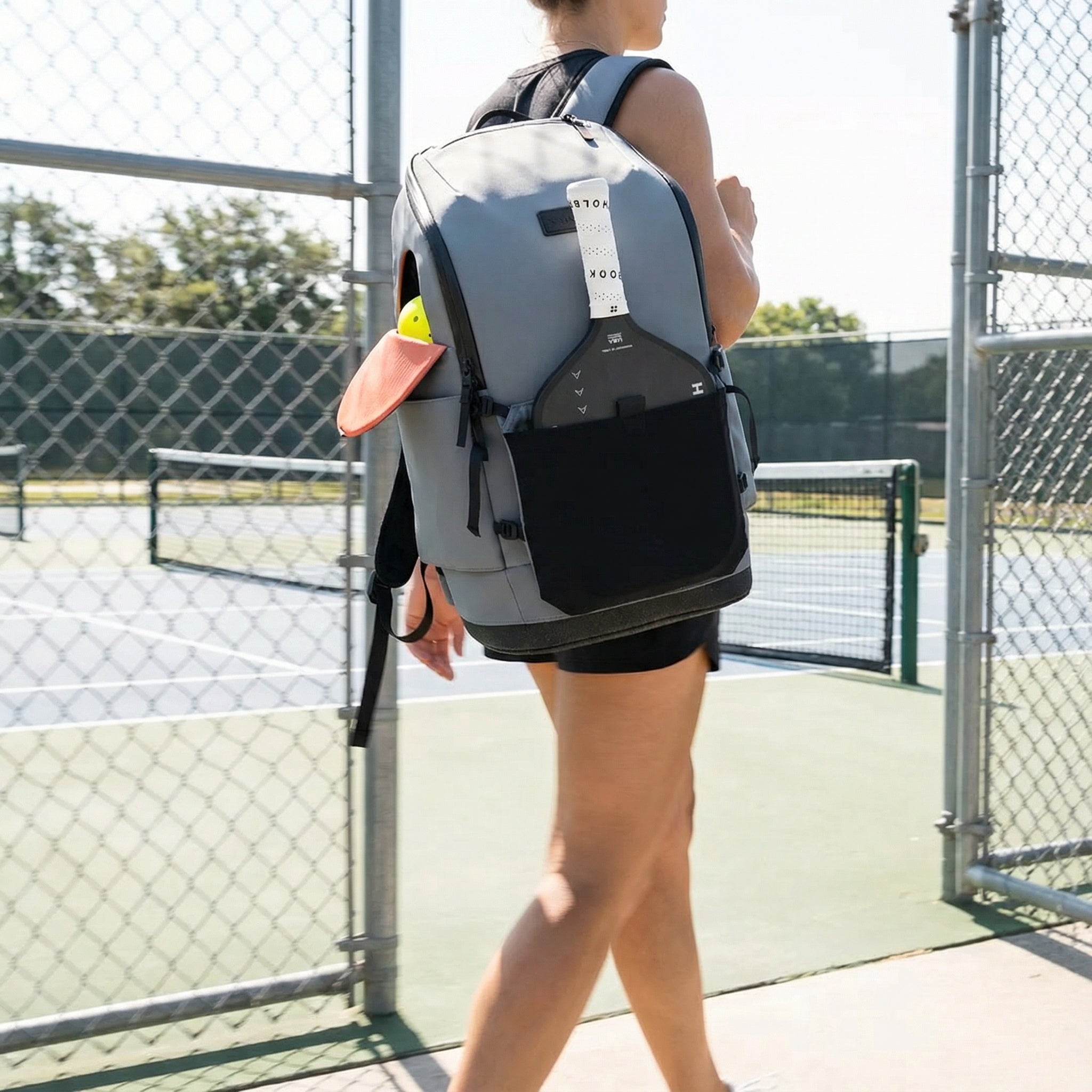
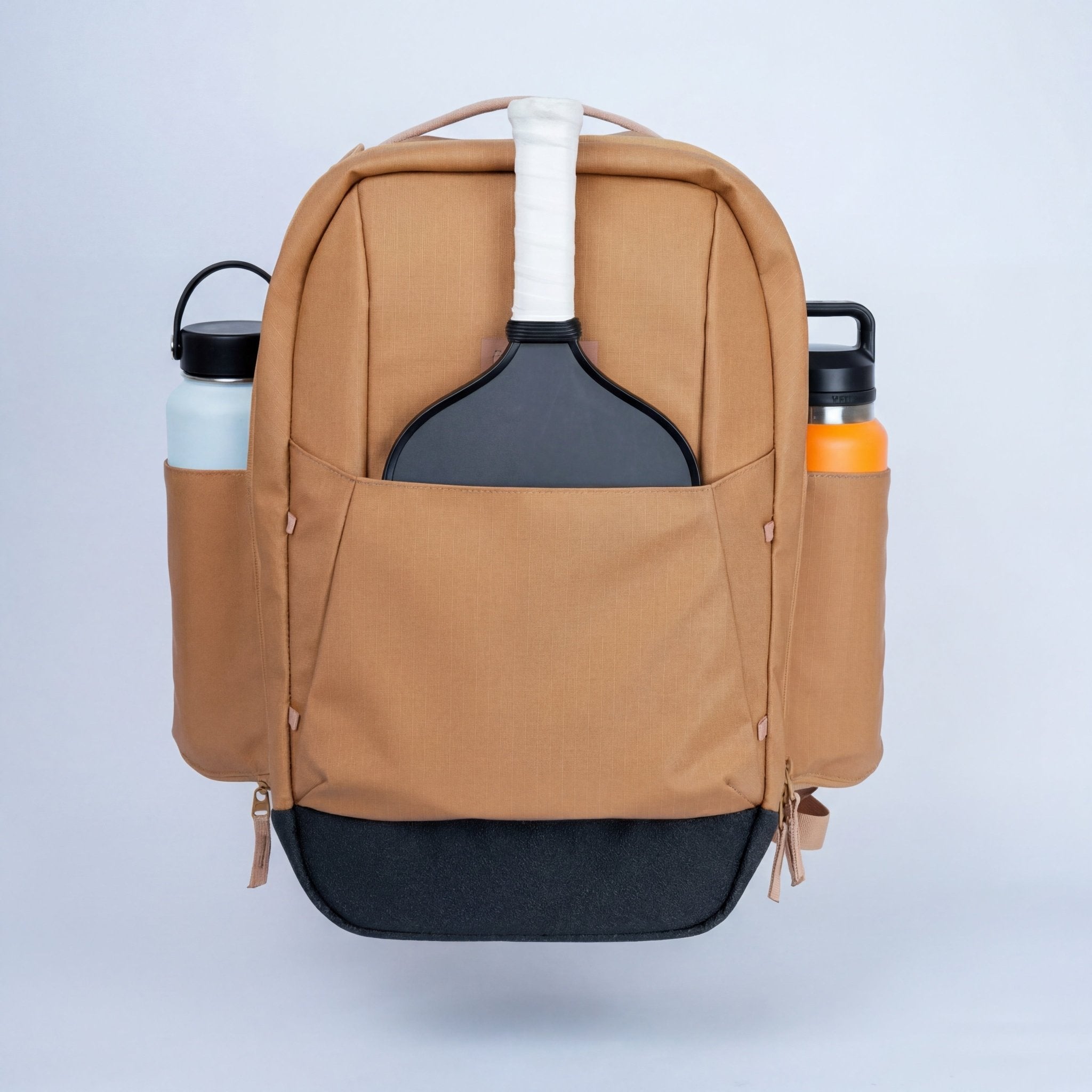
Outdoor players who play this frequently need a bag that can handle the same conditions their paddle faces. The FORWRD Court Ranger V2 ($195) uses TPU-coated ripstop and YKK AquaGuard zippers — the same material story as the Ruby's outdoor durability case. Mesh ball pocket holds a full can of outdoor balls. Modular paddle sleeve fits the Ruby plus a backup.

FAQ: Six Zero Ruby Pickleball Paddle
Is Kevlar better than carbon fiber for pickleball paddles?
Not universally — it depends on your priorities. Kevlar is more abrasion-resistant, so its surface texture lasts longer on rough outdoor courts. Carbon fiber delivers crisper feel and slightly more initial grit for spin. For heavy outdoor players, Kevlar wins on durability. For players who prioritize feel and play primarily indoors, carbon fiber is likely a better fit.
What kind of player is the Six Zero Ruby built for?
All-around 3.0–4.5 players who play frequently on outdoor courts. The 16mm core and thermoformed construction suit the entire game — drives, dinks, resets. The Kevlar surface specifically benefits players who have noticed carbon fiber wearing down faster than they'd like.
Is the Six Zero Ruby good for beginners?
It can work, but it's priced beyond what most beginners need. The paddle won't hold you back, but you won't fully use what makes it special (the Kevlar durability, the unibody construction) until you're playing regularly and starting to care about equipment maintenance. Start with something in the $80–$130 range and work up.
How does the Six Zero Ruby compare to other Six Zero paddles?
Six Zero makes several models. The Ruby's unique feature is the Kevlar surface — it's the most durable option in their lineup for outdoor court play. Their carbon-surface models deliver a different feel profile. If you want to stay in the Six Zero family and prefer carbon fiber, their other models are worth comparing.
What is the Six Zero Ruby's warranty?
Six Zero offers a standard manufacturer warranty on their paddles. Verify current warranty terms directly with Pickleball Central at purchase — warranties and terms do occasionally change between model years.
Can I use the Six Zero Ruby for competitive play?
Yes. The paddle meets USAPA approval standards (verify at purchase for current tournament rules). At 3.5–4.5 competitive levels, the Ruby's combination of durability and all-around performance is fully capable.
Final Verdict
The Six Zero Ruby is a genuinely differentiated paddle in a market where most options compete on the same variables. Kevlar over carbon fiber is a real performance trade-off that makes sense for specific players — frequent outdoor players who want surface texture that lasts. The 16mm core and thermoformed unibody construction make it a capable all-around paddle even before the Kevlar story kicks in.
At $199, it's a serious paddle at a competitive price point. If your game and your court conditions fit the Ruby's profile, it's worth buying. If you've never played with a Kevlar surface before, the feel adjustment is real — but it's not a dealbreaker, just a week or two of acclimation.

Leave a comment
This site is protected by hCaptcha and the hCaptcha Privacy Policy and Terms of Service apply.