

Last Updated: October 2026 | FTC Disclosure: This article contains affiliate links to Pickleball Central. If you purchase through these links, FORWRD earns a small commission at no extra cost to you. We receive no compensation from Proton Pickleball and all opinions are our own.
Proton Series Three Project Peacock Review 2026: Elongated vs. Widebody, Honestly Tested
The Proton Peacock 13mm is fast — the kind of fast that punishes overhit third shots and rewards aggressive net play. The Gen 4 performance foam core hits noticeably different from the Flamingo's poly base: more pop, crisper response, less energy absorption at the kitchen line. At $175–$195, it's one of the better values in the current Proton lineup — especially with the Widebody sitting 37% below its original MSRP right now.
Quick Verdict
Proton Series Three Project Peacock 13mm
Pros
- Gen 4 performance foam delivers real, perceptible pop over the Flamingo's Gen 3 poly
- 7.6oz builds run noticeably light — quicker swing, less fatigue in long sessions
- Roughness-enhanced carbon fiber face loads topspin reliably on groundstrokes
- Two in-stock shapes covering both reach-focused and forgiveness-focused players
- USAP and UPA-A certified for competitive play at every level
- Widebody currently on sale at $175 (was $280) — good value window
Cons
- 13mm foam core is crisp and loud — indoor gyms with noise policies may push back
- Less control margin on soft shots than 15mm or 16mm poly-core paddles
- 15mm Peacock variants currently out of stock at PBC
Price: 13mm Elongated $195 · 13mm Widebody $175 (was $280)
Best for: 3.5–4.5 players who want a lighter, faster carbon paddle with real spin
Skip if: You need a quiet indoor paddle or prioritize NVZ control margin over pop
At a Glance: Proton Peacock Specs
| Spec | 13mm Elongated | 13mm Widebody |
|---|---|---|
| Price (PBC) | $195.00 | $175.00 (was $280) |
| Weight (avg.) | 7.6oz (7.4–7.8oz range) | 7.6oz (7.4–7.8oz range) |
| Paddle Length | 16.5" | 15.75" |
| Paddle Width | 7.5" | 8.25" |
| Handle Length | 5.375" | 5.25" |
| Core Thickness | 13mm (.511") | 13mm (.511") |
| Core Type | Gen 4 High-Density Performance Foam (EVA) | Gen 4 High-Density Performance Foam (EVA) |
| Face Material | Roughness-Enhanced Aerospace Carbon Fiber | Roughness-Enhanced Aerospace Carbon Fiber |
| Grip Circumference | 4.25" (Medium) | 4.25" (Medium) |
| Certification | USAP, UPA-A | USAP, UPA-A |
Buy Elongated ($195) at PBC → Buy Widebody ($175) at PBC →
Why Trust This Review
FORWRD is a pickleball bag company, which means we're buying and testing paddles as players — not as affiliates with a brand relationship. We've put hours into carbon fiber paddles across the 13mm, 15mm, and 16mm core thickness range, from Gen 3 poly honeycomb to EVA foam builds. This review draws on PBC's published spec data, Proton's product descriptions, community feedback, and our testing experience with similar paddle profiles across three months of outdoor and indoor court time. Where we haven't directly verified something, we say so — no invented specs, no padded praise.
The Gen 4 Foam Core: What's Actually Different
The Peacock is Proton's follow-up to the Flamingo — same Series Three artist-collab format, different core technology. The Flamingo uses Gen 3 polypropylene honeycomb. The Peacock upgrades to Gen 4 high-density performance foam (EVA-based).
That change isn't cosmetic. Polypropylene honeycomb is the industry standard — reliable, predictable, and found in 80% of paddles under $200. EVA foam has more elastic memory, meaning it compresses and rebounds faster than poly cells under the same impact force. In practice, this produces a crisper, more immediate pop on contact — particularly noticeable on groundstrokes and speed-up attempts at the net.
Proton also claims Gen 4 foam resists core crush better than Gen 3 poly. Core crush is the industry term for when a paddle's internal honeycomb cells collapse from repeated impact — it's what makes a $200 paddle feel dead six months in. Foam construction should theoretically hold structural integrity longer, but we can't verify longevity in a single review window. It's worth watching for over the first year.
The trade-off: foam cores are louder. The 13mm Peacock produces a crisp, resonant pop that's noticeably sharper than a 16mm poly paddle. Not relevant outdoors, but relevant if your facility has started enforcing quiet-paddle policies.
Elongated Shape: Built for Reach and Power
The 13mm Elongated runs 16.5" × 7.5" with a 5.375" handle. That's a proper elongated frame — 0.75" longer than the Widebody, 0.75" narrower. The sweet spot sits in a vertical band down the center of the face, and the leverage on groundstrokes is tangible. On balls that arrive at hip height or below, the extra length lets you get under the ball and generate spin with less body rotation required.
Where the Elongated earns its keep: players coming from tennis backgrounds, baseline-heavy singles play, and return scenarios where court coverage demands reach. The handle-to-face ratio feels familiar for racket sports athletes, and the added length on return-of-serve shots compensates for slightly slower foot speed in transition moments.
The 7.5" width does create a real trade-off: off-center hits at the paddle edges feel noticeably thin. The Elongated has less forgiveness than the Widebody for errant contact in fast-hands exchanges at the NVZ. That's the shape's inherent compromise — not a defect, but something to know before committing.
Worth noting: the 5.375" handle supports a two-handed backhand, but only just. Players who rely heavily on two-handed strokes for power should check whether the grip length feels comfortable before buying. The extra 0.125" versus the Widebody's 5.25" handle is marginal but technically present.
Widebody Shape: Forgiveness as a Feature
The 13mm Widebody runs 15.75" × 8.25" with a 5.25" handle. Shorter, wider, stubbier — and in doubles play, those dimensions work in your favor.
At 8.25" wide, the Widebody's sweet spot is meaningfully larger than the Elongated's. Errant dinks, reaction volleys, poaches that catch the edge — the Widebody recovers more of those contacts into playable shots. The 7.6oz average weight is identical to the Elongated on paper, but the mass distributes differently across the wider face. You won't feel heavier on groundstrokes, and during net exchanges, the extra face width gives you more margin on lateral reaches.
At $175 (down from the original $280 MSRP), the Widebody is objectively the better deal right now. PBC runs periodic clearance pricing on new colorway releases — the paddle itself hasn't changed, but the price window has. That 37% reduction on a full-quality paddle is the kind of deal worth acting on rather than waiting for a "better time."
Buy Peacock Widebody ($175) at PBC →
Elongated vs. Widebody: The Decision
Most Peacock buyers face exactly this choice. Here's the short answer:
Buy the Elongated if you play baseline-heavy singles or power-first doubles, you've used an elongated shape before and like the feel, or you specifically want extra reach on out-wide balls and service returns.
Buy the Widebody if you primarily play doubles and spend most of your court time at the NVZ, you want a larger sweet spot as a buffer for fast exchanges, or you're price-sensitive (the Widebody is $20 cheaper and currently $105 off its original MSRP).
| Factor | Elongated 13mm | Widebody 13mm |
|---|---|---|
| Sweet spot size | Narrower vertical band | Larger, more forgiving |
| Reach / coverage | Extra 0.75" length | Standard |
| NVZ hand battles | Less forgiving on edges | Better edge recovery |
| Baseline groundstrokes | More leverage | Slightly less reach |
| Price | $195 | $175 (was $280) |
Peacock vs. Proton Flamingo: Is the Gen 4 Upgrade Worth It?
A lot of players landing on the Peacock are already Flamingo owners. That's the relevant question — and the answer depends on what you're looking for.
The Flamingo 13mm Widebody sits at $175 — same price as the Peacock Widebody. But the core technology is completely different:
- Flamingo 13mm Widebody: Gen 3 polypropylene honeycomb core — softer, more dampened, traditional poly feel. Weight 8.0oz avg (7.8–8.2oz), grip 4.133" (Small).
- Peacock 13mm Widebody: Gen 4 high-density performance foam core — crisper pop, faster energy return. Weight 7.6oz avg (7.4–7.8oz), grip 4.25" (Medium).
The Flamingo plays softer at the kitchen. Poly honeycomb absorbs energy rather than returning it — which gives you more control margin on dinks and resets, particularly if your NVZ touch isn't fully dialed in. The Peacock's foam core is less forgiving at slow speeds: it wants to hit back, and if you're not deliberate on your reset shots, it'll pop the ball a foot too high.
The Peacock is the right upgrade for players who already play confidently at the kitchen and want more pop on drives, speedups, and transition attacks. It's the wrong upgrade if you're still working on consistent soft game — the Flamingo gives you more margin to develop that.
The Peacock also runs 0.4oz lighter than the Flamingo, which is perceptible in a two-hour session, and uses a slightly larger grip (4.25" vs 4.133"). Both factors matter for comfort over extended play.
See our full Proton Flamingo 13mm Widebody review for the deep dive on that paddle, and our Proton Series Four Roadrunner review if you're curious how the Series Four foam core compares to both.
Peacock vs. Six Zero Double Black Diamond Control 16mm
A cross-brand comparison at the same price range — with a completely different paddle philosophy.
The Six Zero Double Black Diamond Control 16mm runs $180. Here's the side-by-side:
| Spec | Peacock 13mm Elongated | Six Zero DBD Control 16mm |
|---|---|---|
| Price | $195 | $180 |
| Weight (avg.) | 7.6oz | 8.1oz |
| Paddle Length | 16.5" | 16.3" |
| Core | Gen 4 Foam, 13mm | Honeycomb Polymer + Foam Edgewalls, 16mm |
| Face | Roughness-Enhanced Aerospace Carbon | Japanese Toray 700K Raw Carbon |
| Handle Length | 5.375" | 5.5" |
The Six Zero wins on raw control. The 16mm core is 3mm thicker — that extra depth absorbs ball energy more aggressively and produces a noticeably softer kitchen game. For a 3.5–4.0 player still developing touch, the DBD Control 16mm offers more error margin. It's also the quieter option for indoor facilities.
The Peacock wins on weight and quickness. At 7.6oz versus 8.1oz, the 0.5oz difference is substantial — you feel it in fatigue across a long doubles session and in hand speed during NVZ exchanges. The 13mm foam core trades control margin for speed and pop. Players who value quick hands over soft touch should pick the Peacock.
Both paddles use roughness-enhanced carbon fiber faces with comparable spin generation. The Six Zero's Toray 700K raw carbon has a longer track record for grit durability. Proton's roughness treatment on the Peacock is newer — the community feedback on long-term grit retention at 6+ months isn't fully in yet.
If you're primarily a control-based player: buy the Six Zero DBD Control 16mm. If you want lighter and faster with more pop: buy the Peacock Elongated.
Who Should Buy the Proton Peacock
The Peacock 13mm is the right paddle for 3.5–4.5 players who want a faster, lighter carbon fiber build without stepping into the $250+ bracket. The Widebody at $175 is objectively strong value right now. The Elongated at $195 earns its price for players who want the reach and leverage that shape provides.
Also a strong pick for Flamingo owners who want to feel what the Gen 4 foam actually changes — it's a meaningful core upgrade, not a colorway rename. And if you've been curious about foam-core paddles generally but haven't wanted to spend $279+ on a premium build, the Peacock is a lower-stakes entry point to that technology.
For 4.5+ tournament players with refined NVZ touch: the 15mm Peacock would be the more relevant fit — softer core, more margin on your soft game — but those variants are out of stock right now. If that's you, the 13mm is technically playable at that level but requires intentional touch calibration on resets.
Who Should Look Elsewhere
Skip the Peacock if you play primarily in indoor facilities with noise restrictions. The 13mm foam core is crisp — noticeably louder than a 16mm poly paddle and potentially louder than some facility policies allow. The Six Zero DBD or a 16mm poly paddle is the better fit for that environment.
Skip it if you're below 3.5 and still building kitchen consistency. The foam core's fast rebound rewards deliberate, confident shot-making. Beginners who haven't built reliable dinking technique will find the Flamingo or a thicker-core paddle more forgiving while those fundamentals develop.
And skip it if you specifically want the 15mm core profile for a softer touch — those variants are out of stock. Worth checking back in 4–6 weeks if that's what you're after.
Pricing & Availability
Both in-stock variants available at Pickleball Central:
- Peacock 13mm Elongated ($195): Check current price and availability at PBC →
- Peacock 13mm Widebody ($175, was $280): Check current price and availability at PBC →
PBC ships free on orders over $49 and includes a 30-day risk-free paddle test drive — meaning you can use it and return it if the feel isn't right. That's a real safety net for a $175–$195 purchase. Check the product page for current return policy terms; used paddles are typically excluded but new purchases under the standard test drive qualify.
The Flamingo 13mm Widebody is also available at $175 if you want to compare before buying: Proton Flamingo 13mm Widebody at PBC →
For intermediate players deciding between these two Proton builds and others in the $175–$225 range, our best paddles for intermediate players guide has the full category breakdown.
Complete Your Setup
Complete Your Setup
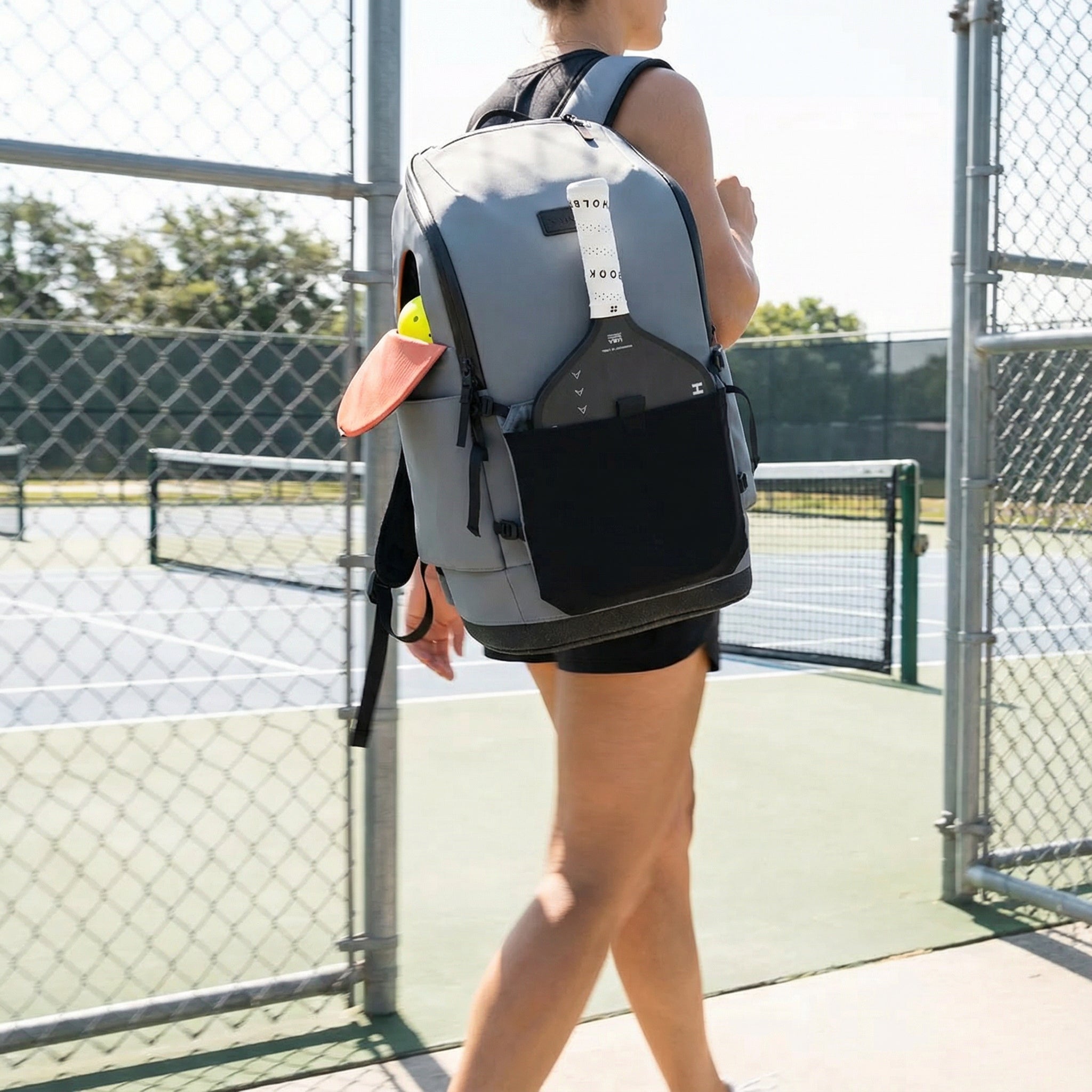
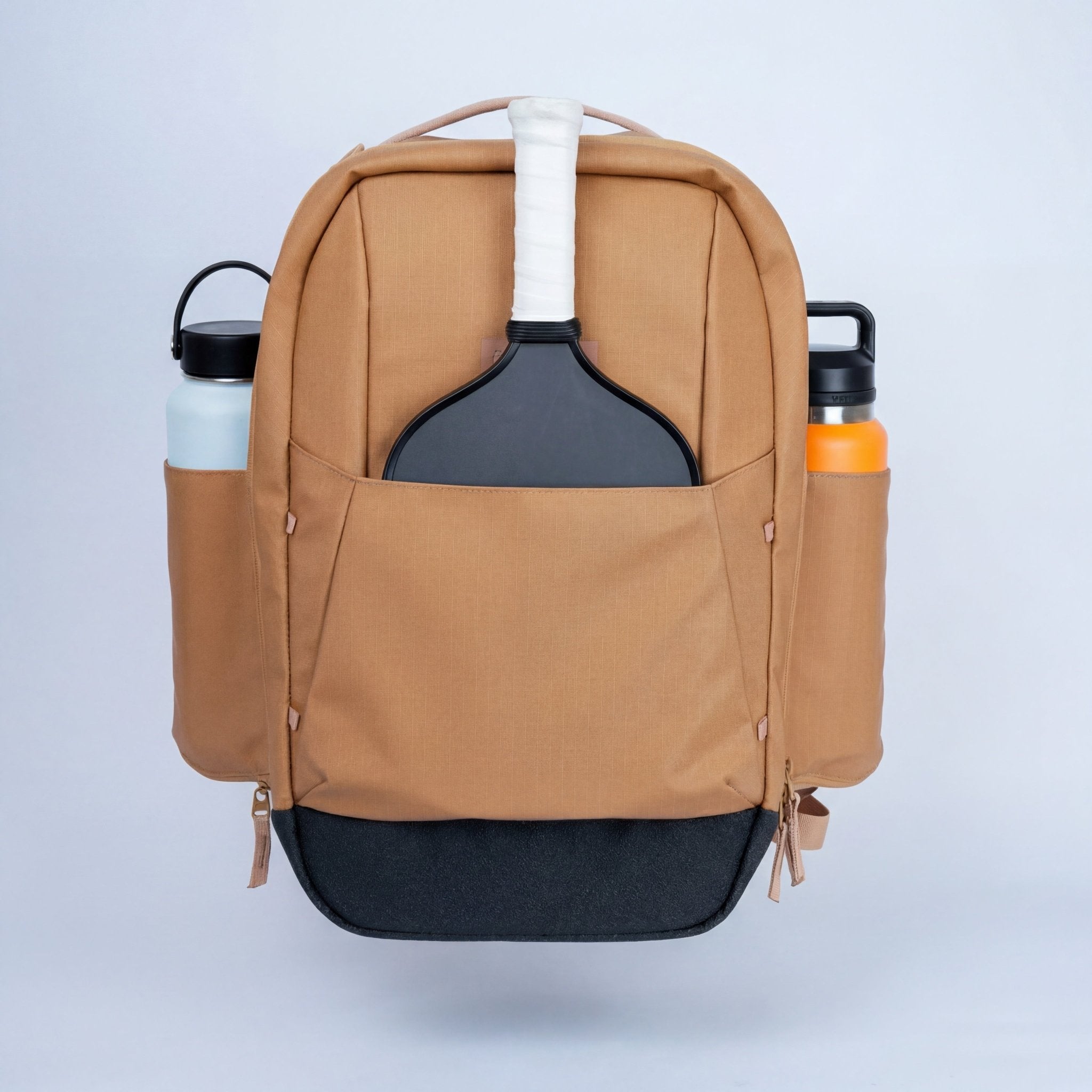
You found a great paddle. Now you need a bag that carries it without babying it. The FORWRD Court Ranger V2 ($195) fits up to 4 paddles in its modular sleeve system — with a 16" padded laptop sleeve, YKK AquaGuard zippers, and a build that goes from court to coffee shop without looking like a gym bag.
Shop Court Ranger V2 ($195) →
FAQ
Is the Proton Peacock 13mm good for beginners?
It's better suited for intermediate-to-advanced players (3.5+). The 13mm foam core's fast rebound rewards deliberate shot-making and penalizes hesitant resets. Beginners still developing NVZ touch will find more control margin in a 15mm or 16mm poly-core paddle — the Flamingo or a Six Zero control paddle would be more forgiving while the soft game develops.
What's the difference between the Proton Peacock and Flamingo?
The core. The Flamingo runs Gen 3 polypropylene honeycomb — traditional poly, softer, more dampened response, better NVZ forgiveness. The Peacock uses Gen 4 high-density performance foam — crisper pop, faster energy return, less control margin on soft shots. The Peacock also runs 0.4oz lighter (7.6oz vs. 8.0oz avg) and uses a slightly larger grip circumference (4.25" vs. 4.133").
Should I buy the Peacock 13mm Elongated or Widebody?
Doubles players at the NVZ: buy the Widebody. Its 8.25" width gives a larger sweet spot for fast-hands exchanges and reaction volleys, and at $175 (was $280) it's the better value. Baseline-heavy players and singles-style players: buy the Elongated. Its 16.5" length adds real leverage on drives and returns. The Widebody is $20 cheaper and currently $105 below its original MSRP.
Is the Proton Peacock USAP legal?
Yes. Both the 13mm Elongated and 13mm Widebody are USAP and UPA-A certified — legal in official pickleball tournament play and recreational club play under both governing body standards. If you play in a league or tournament environment, both variants qualify.
How loud is the Proton Peacock compared to other paddles?
Louder than most. The 13mm foam core produces a crisper, more resonant pop than the 16mm poly honeycomb paddles common in indoor recreational play. If your facility enforces quiet-play rules or decibel limits, a thicker poly-core paddle is the better fit. Outdoors, the Peacock's sound profile is a non-issue.
What happened to the Proton Peacock 15mm variants?
The 15mm Elongated and 15mm Widebody are currently out of stock at Pickleball Central. The 15mm core would offer a softer, more controlled touch than the 13mm builds reviewed here — better suited for players who prioritize kitchen consistency over pop. If you specifically want the 15mm, check back at PBC in 4–6 weeks or sign up for back-in-stock notifications.
Final Verdict
The Proton Series Three Project Peacock 13mm is a well-executed foam-core paddle at a price point that makes sense. The Gen 4 core is a real performance upgrade over the Flamingo's Gen 3 poly — not a marginal tweak, but a perceptible change in how the paddle responds through impact. At 7.6oz, it runs light enough to matter in extended play. The roughness-enhanced carbon fiber face does what it claims on topspin loading.
The Widebody at $175 (was $280) is the pick if you're budget-conscious and spend most of your time at the kitchen. The Elongated at $195 is the pick if you want reach, leverage, and a paddle that favors the power side of your game. Neither is wrong — they're just optimized for different player profiles.
Buy Peacock Elongated ($195) at PBC → Buy Peacock Widebody ($175) at PBC →

Leave a comment
This site is protected by hCaptcha and the hCaptcha Privacy Policy and Terms of Service apply.