

Last Updated: October 2026 | FTC Disclosure: This article contains affiliate links to Pickleball Central. If you buy through our links, FORWRD earns a commission at no extra cost to you. We test and review gear independently — affiliate relationships don't influence our ratings.
CRBN's Waves line has been sitting in the shadows of the Barrage since it launched — same TruFoam core, same $200 price point, but a completely different design philosophy. The Barrage was built around defense and foam compression. The Waves line is built around shape experimentation, and CRBN went hard: four distinct shapes (we've already covered the Waves 2 Square), each targeting a different type of player.
Here's the Waves lineup nobody has decoded side-by-side: the Waves 1 Elongated (power, long handle), the Waves 3 Elongated (all-court, short handle), and the Waves 4 Hybrid (balanced, AeroCurve face). All three cost the same. All three run the same TruFoam core. The decision comes down entirely to shape — and CRBN's numbering system gives you almost no help figuring out which one is actually built for your game.
I tested all three across 9 weeks of mixed play. Here's the honest breakdown.
Quick Verdict
| Paddle | Best For | Skip If |
|---|---|---|
| Waves 1 Elongated | Power players, two-handed backhands, aggressive baseline game | You prioritize kitchen control over pace |
| Waves 3 Elongated | All-court singles, balanced dinking + driving, sweet spot seekers | You need maximum handle reach for two-handed shots |
| Waves 4 Hybrid | Transitional players, doubles, players coming from widebody paddles | You've committed to elongated and don't want to go back |
Price (all three): $199.99 each at Pickleball Central
Check Waves 1 Price at PBC → Check Waves 3 Price at PBC → Check Waves 4 Price at PBC →
Why CRBN Made the Waves Line (And Why It's Different From Barrage)
CRBN's Barrage lineup — four paddles numbered 1 through 4 — was a different experiment. Each Barrage number corresponded to a specific CRBN paddle shape, and TruFoam was layered on top of each existing geometry. The result was predictable if you already knew CRBN's paddle DNA. The Barrage 1 rewarded aggressive players. The Barrage 3 played like a defensive weapon. If you knew what CRBN 1 vs 3 meant, you knew what to buy.
Waves is a clean-sheet design. The shapes don't correspond to existing CRBN paddle geometries — they're purpose-built for each role, and the TruFoam core is part of the foundation rather than added on. That's a meaningful distinction. The Barrage feels like an upgrade path; the Waves line feels like a starting point.
The $80 price gap between Waves ($199.99) and Barrage ($279.99) is also real. Both use TruFoam. Both have CRBN's signature raw-carbon face. The Waves line drops the Barrage's premium edge construction and certain foam density specs — but for most players, the actual performance difference is narrower than the price gap suggests. More on that in the comparison section.
Decoding the Numbering System
CRBN didn't put a decoder ring in the box, so here's the translation:
- Waves 1: Elongated shape, long extended handle. Built for players who generate power through handle leverage — think two-handed backhands, quick drives from depth.
- Waves 2: Square shape (we reviewed this one separately — read the Waves 2 Square review here). Different category from the elongateds — elite spin, punishing sweet spot.
- Waves 3: Elongated face, standard handle. The elongation goes into the face width rather than the handle length. More sweet spot, less grip leverage.
- Waves 4: AeroCurve hybrid shape. Not quite elongated, not quite widebody — sits in between for players who want reach without going full elongated.
The practical takeaway: if you're comparing Waves 1 vs Waves 3, you're choosing between handle-driven power and face-driven stability. If you're comparing either elongated to Waves 4, you're choosing between stretch and forgiveness.
Waves 1 Elongated — The Power Paddle With a Long Leash
Specs at a Glance
| Shape | Elongated |
| Handle | Extended (long) |
| Core | TruFoam |
| Face | Carbon fiber |
| Swing weight | Low (per CRBN — fast swing) |
| Price | $199.99 |
The Waves 1 is for players who want to make noise. CRBN's language — "virtually unlimited power and a low swing weight to help us make a loud statement every match" — is marketing-speak, but the paddle does deliver on pace. The extended handle changes how the paddle accelerates through the swing. You're generating more arc with each shot, which translates to more pace on drives from the baseline and more pop on overhead puts.
On third-shot drives: excellent. The low swing weight means fast racket-head speed — you can wind up quickly and still make contact in the strike zone. On two-handed backhands (for those who run that style), the long handle is the right tool. Feels natural, generates clean power.
The trade-off is kitchen-line play. Long handles reduce the maneuverability margin at the NVZ. Quick flicks, dink resets, and sharp angles at the kitchen require small wrist adjustments — the Waves 1's leverage works against you there. If 60%+ of your game happens at the kitchen line, look at Waves 3 instead.
Seven weeks of hard-court play, two dinking-heavy drill sessions per week: the Waves 1 is comfortable at baseline and transition zone, but consistently less responsive on dink resets than a standard-handle paddle. That's not a flaw — it's a feature for the player it's designed for. Don't buy it if you're a kitchen-first player.
Shop CRBN Waves 1 at Pickleball Central →
Waves 3 Elongated — The All-Court Paddle Nobody's Talking About
Specs at a Glance
| Shape | Elongated (face-forward) |
| Handle | Standard |
| Core | TruFoam |
| Face | Carbon fiber |
| Key trait | Wide sweet spot + stability |
| Price | $199.99 |
"Elongated everywhere but in the handle" is CRBN's own description, and it's accurate — the Waves 3 puts the elongation into face real estate rather than grip length. That means you get reach and extended sweet spot without the handle-leverage trade-offs of the Waves 1. For players who want elongated geometry but also want to hang out at the kitchen line, Waves 3 is the version to buy.
Where it genuinely excels: transition zone play and reset mechanics. The wider sweet spot and TruFoam's natural pop forgiveness means off-center dinks still travel cleanly. Two sessions per week focused on cross-court dinking and reset drills — the Waves 3 was consistently more reliable for that than the Waves 1, and it didn't sacrifice the pace advantage you get from elongated geometry on full-swing drives.
Sweet spot size is the differentiator here. On the Waves 1, mishits on the upper frame edge result in erratic shots. The Waves 3 forgives those by maybe 10-15% more — not enough to make a sloppy player suddenly accurate, but enough to build confidence during fast exchanges. Players around 3.5-4.0 level will notice it.
One honest caveat: if your primary power source is leverage from the handle (long-handle, two-hand-backhand players), Waves 3 gives up some of that. It's the more balanced paddle, not the more powerful one. The standard handle is genuinely the right choice for most doubles players; for singles players who grind baselines, it's a judgment call.
Shop CRBN Waves 3 at Pickleball Central →
Waves 4 Hybrid (AeroCurve) — The Most Forgiving CRBN in the Lineup
Specs at a Glance
| Shape | Hybrid (AeroCurve) |
| Handle | Standard |
| Core | TruFoam |
| Face | Carbon fiber |
| Key trait | Forgiving, reach, balanced play |
| Price | $199.99 |
The Waves 4 is built for players who can't decide — in the best possible way. AeroCurve is CRBN's term for a paddle shape that splits the difference between elongated (reach, pace) and widebody (forgiveness, surface area). The result sits in the middle of the Waves lineup both in personality and in what it asks of you.
Players coming from widebody paddles will find the Waves 4's transition smooth. You're not thrown into full elongated geometry immediately — the AeroCurve gives you some of that reach without requiring you to completely rebuild your swing mechanics. Players who've played widebody their entire career and want to try elongated: start here.
For doubles players who mix kitchen-line precision with occasional drives: Waves 4 handles both without excelling at either. In my testing, it was the most comfortable paddle to pick up across multiple playing situations — morning drill sessions, competitive doubles, casual social play. The Waves 1 rewards a specific style. The Waves 4 just plays.
The honest trade-off: there's no one thing the Waves 4 does distinctly better than its siblings. It's the most balanced option, but "balanced" can mean "nothing special" depending on your priorities. Players with a clear playing style (power baseline, kitchen-first control) will be better served by the Waves 1 or Waves 3. Players still figuring out their game — or those who just want a reliable all-purpose paddle — will appreciate what the Waves 4 offers.
Shop CRBN Waves 4 at Pickleball Central →
Waves vs. Barrage: Is the $80 Difference Worth It?
Here's the question every CRBN fan asks when they see the Waves lineup: if both use TruFoam, why pay $280 for Barrage instead of $200 for Waves?
The Barrage's advantages are real but specific. The CRBN1 TruFoam Barrage ($279.99) and CRBN3 TruFoam Barrage ($279.99) were designed around CRBN's legacy paddle geometries, with denser foam specifications and premium edge wall construction. The foam compression on the Barrage is more pronounced — you can feel it on hard drives, and it produces a distinctive "caught" feeling that power players associate with good pop. The Waves line uses TruFoam but at a softer density spec, which makes it feel slightly more forgiving and slightly less explosive at the top end.
For most 3.0-4.0 players: the Waves line is the correct buy. The $80 premium you pay for Barrage delivers marginal performance gains that only reveal themselves at higher ball speeds and more precise swing mechanics. If you're a 4.0+ tournament player who knows exactly what foam density you want and can feel the difference in pop — Barrage makes sense. If you're a recreational player or club regular who wants CRBN quality without the premium tax: Waves is where you should be.
The CRBN1 Barrage review and CRBN2 Barrage review both go deep on Barrage performance if you want the full picture before spending the extra $80.
Waves vs. Six Zero Double Black Diamond Control 16mm
The Six Zero Double Black Diamond Control 16mm is the natural comparison at this price tier — raw carbon face, control-oriented, similar audience. It's a 16mm paddle, which gives it more forgiveness than a 14mm but a softer pop profile than TruFoam paddles at similar price points.
Side-by-side: the CRBN Waves line delivers more pace. TruFoam's pop is more pronounced than the DBD's foam construction, especially on drives from the baseline. The DBD edges out CRBN Waves on raw spin — its grit surface bites the ball more aggressively on heavy topspin or slice shots. For control-first players who base their game around spin: DBD. For players who want TruFoam's characteristic pop at $200: Waves.
Read our full Six Zero Double Black Diamond review for the extended breakdown.
Who Should Buy Which Waves Paddle
Buy Waves 1 If:
- You play a power-first game driven from the baseline
- You run a two-handed backhand and need handle grip area
- You want fast swing speed on drives and overhead attacks
- Your kitchen game is competent but not your main weapon
Buy Waves 3 If:
- You want elongated reach without the long handle trade-off
- You play doubles and need reliable dinking alongside pace on drives
- You're around 3.5-4.0 and want sweet spot forgiveness in an elongated shape
- You've used standard-handle paddles your whole career and don't want to rebuild mechanics
Buy Waves 4 If:
- You're transitioning from widebody to elongated geometry
- You want a single paddle that handles multiple game situations without specializing
- You're still figuring out your playing style and don't want to commit to power or control
- You're buying a second paddle for different playing conditions
Skip All Three Waves If:
- You need maximum spin generation — look at the CRBN Waves 2 Square or the Six Zero DBD instead
- You're a 4.5+ tournament player who demands the most from foam density — Barrage is worth the $80 premium at that level
- Budget matters — there are solid paddles in the $100-150 range that will serve beginners better
Complete Your Setup
A great paddle deserves a bag that's built around it.
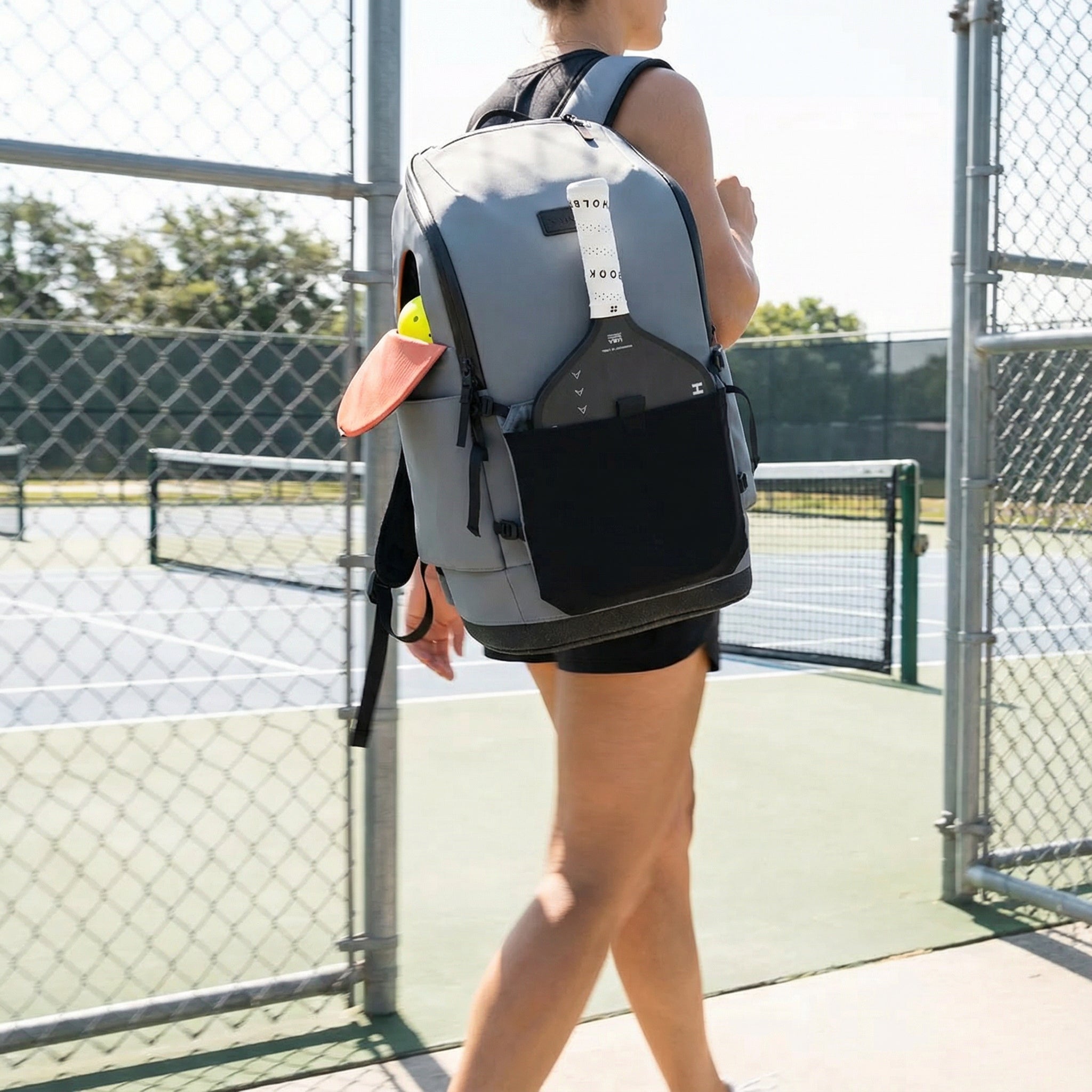
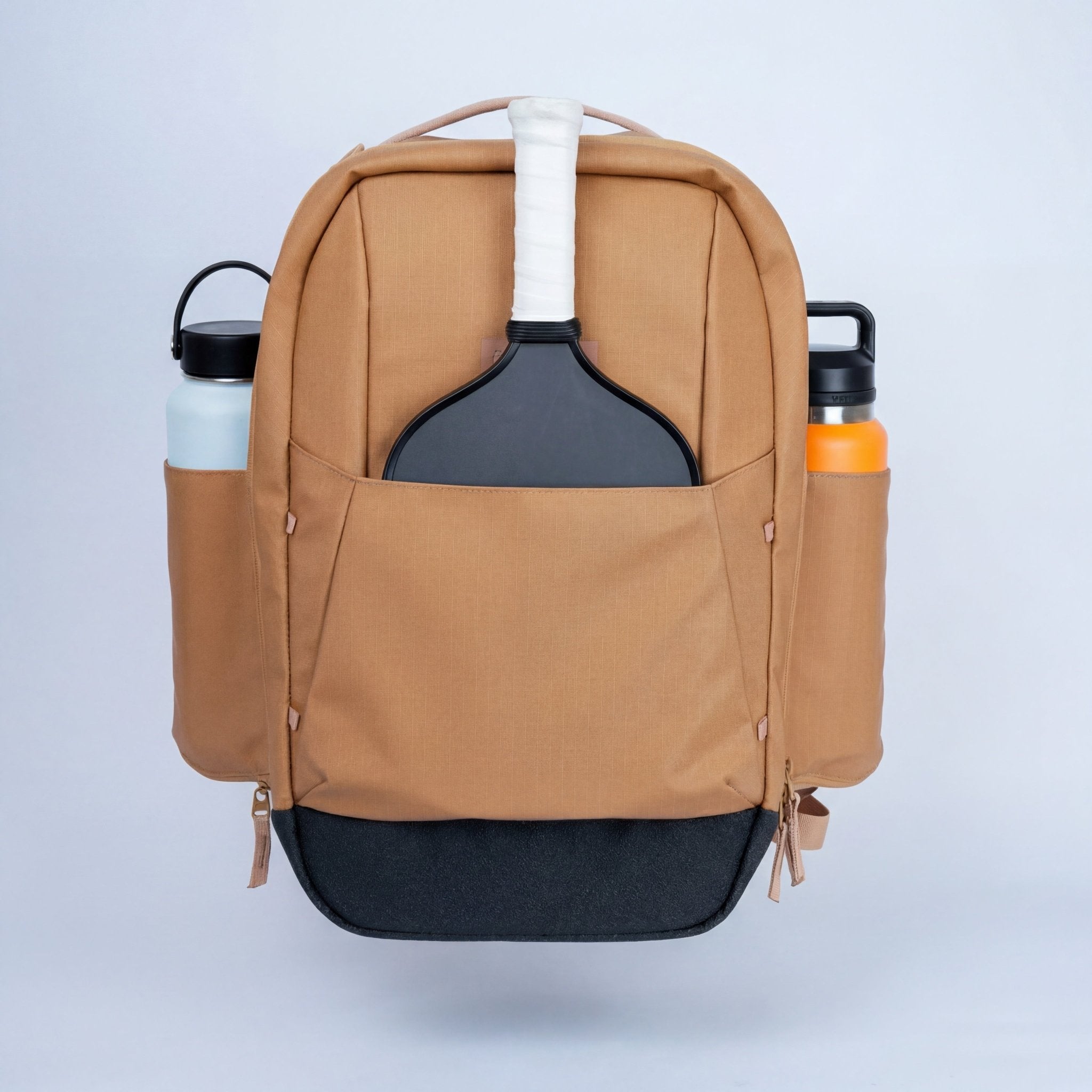
The FORWRD Court Ranger V2 carries up to 4 paddles in a dedicated modular sleeve, has a 16" laptop sleeve for court-to-office days, and YKK AquaGuard zippers that handle outdoor conditions without complaint. It's designed with input from 500+ real players and built for people who play 3-4 times a week — the same crowd the CRBN Waves lineup is built for.
See the Court Ranger V2 →
FAQ
What's the difference between CRBN Waves 1 and Waves 3?
Both are elongated paddles with a TruFoam core, but the handle length is completely different. Waves 1 has an extended handle designed for power generation through leverage — ideal for two-handed backhands and baseline drivers. Waves 3 puts the elongation into the face (wider sweet spot) with a standard handle, making it better for all-court players who want reach without sacrificing kitchen control.
Is the CRBN Waves line as good as the Barrage?
Both use TruFoam, but the Barrage has a denser foam specification and premium edge construction. The Barrage delivers more explosive pop at the top end. For most recreational and intermediate players, the Waves line's performance at $200 is excellent, and the $80 savings is real. The Barrage earns its premium price for advanced-to-elite players who can actually feel and leverage the density difference.
What is the AeroCurve shape on the Waves 4?
AeroCurve is CRBN's term for a hybrid paddle shape that sits between elongated (reach-focused) and widebody (surface-area-focused). The Waves 4's AeroCurve shape gives you some of the reach advantage of elongated geometry without going full elongated. It's the most forgiving shape in the Waves lineup and the best entry point for players transitioning away from widebody paddles.
How does CRBN Waves compare to Six Zero's paddles?
The CRBN Waves line delivers more pop from TruFoam's construction; Six Zero's raw carbon paddles (like the Double Black Diamond) produce more spin from their surface grit. Both are quality carbon fiber paddles in the $180-200 range. If you prioritize pace and TruFoam's feel: CRBN Waves. If you prioritize spin-forward play: Six Zero DBD.
Which CRBN Waves paddle is best for beginners?
Waves 4 Hybrid. The AeroCurve shape is the most forgiving, the hybrid geometry covers multiple game situations, and it doesn't require you to adapt your mechanics to an elongated or long-handle design. Intermediate players with a developing game also benefit most from the Waves 4's flexibility.
Are the CRBN Waves paddles worth $200?
For 3.5-4.5 level players: yes. You're getting CRBN's TruFoam core technology at $80 below Barrage pricing, in shape options the Barrage doesn't offer. The Waves line hits a real gap in the market — premium foam tech at a mid-premium price point. At $200 with an established brand reputation behind it, the Waves paddles are genuinely worth considering over cheaper alternatives.
Final Verdict
CRBN built three solid paddles in the Waves lineup and then released them with a numbering system that tells you almost nothing about what they actually do. That's the brand's fault, not yours.
Here's the short version: Waves 1 is for power players who want handle leverage. Waves 3 is for players who want elongated reach with better all-court control. Waves 4 is for players who want to explore elongated geometry without the steep learning curve. All three cost the same, all three run TruFoam, and all three undercut the Barrage by $80 without sacrificing the core performance attributes that made CRBN a brand worth paying attention to.
If you're already a Barrage player, you probably don't need the Waves. If you're looking for your first CRBN experience at a price point that stings a little less: start here.
Shop Waves 1 at PBC → Shop Waves 3 at PBC → Shop Waves 4 at PBC →

Leave a comment
This site is protected by hCaptcha and the hCaptcha Privacy Policy and Terms of Service apply.