

FTC Disclosure: This post contains affiliate links. If you purchase through our links, FORWRD earns a commission at no extra cost to you. We review products independently — our commission never changes our take.
Last Updated: September 2026
The CRBN2 TruFoam Barrage is the Barrage nobody talks about. Every review roundup leads with the CRBN3 (elongated reach paddle) or the CRBN1 (the offense-first long-handle beast). The CRBN2 — standard square, short handle, highest twist weight in the lineup — gets skipped.
That's a mistake. For a specific type of player, this is the best Barrage CRBN makes.
FORWRD has now reviewed all four Barrage paddles (CRBN1, CRBN2, CRBN3, CRBN4). We tested the CRBN2 alongside the CRBN1 and CRBN3 on indoor gym floor and outdoor concrete courts over two weeks. Here's the honest case for — and against — it.
Quick Verdict
| Price | $279.99 |
| Shape | Standard widebody |
| Core | Gen 4 100% TruFoam, 14mm |
| Face | Toray T700 Carbon Fiber (raw texture) |
| Best for | 4.0+ kitchen-first players who win on resets, stability, and dinking precision |
| Skip it if | You play offense-first, use a two-handed backhand, or need reach from the baseline |
Pros:
- Highest twist weight in the Barrage series — most stable on off-center kitchen hits
- Wide sweet spot from the widebody shape makes resets more forgiving
- Same Gen 4 TruFoam core as the rest of the lineup — real dwell time at the kitchen
- Same Toray T700 raw carbon face — elite spin for a defensive paddle
- Tournament-approved (USAP, PBCoR .43, UPA-A)
Cons:
- $279.99 is premium pricing — harder to justify than the CRBN3 unless you're truly kitchen-first
- Widebody shape limits reach on extension shots — defensive players already know this tradeoff
- Shorter handle isn't ideal for two-handed backhand players
- Raw carbon texture degrades with heavy outdoor use (expect 6–9 months before re-texturing)
Check Current Price at Pickleball Central →
Why Trust This Review
FORWRD makes pickleball bags — not paddles. No brand sponsorship, no inventory pressure to push any particular SKU. Our only incentive is reader trust.
We've now reviewed the complete CRBN Barrage lineup: CRBN1, CRBN2 (this review), CRBN3, and CRBN4. That coverage doesn't exist anywhere else — media outlets review a paddle once and move on. We tested each model on both indoor gym courts and outdoor concrete, across three players with different styles (kitchen-first dink-heavy, baseline driver, all-court 4.5). Every measurement cross-referenced against CRBN's official documentation. Every number in this review is verifiable.
For the CRBN2 specifically: we ran the CRBN1, CRBN2, and CRBN3 in back-to-back sessions specifically to document the differences in feel, stability, and performance across the lineup. That direct comparison is the main thing missing from every other CRBN2 review.
The Barrage Lineup — Where the CRBN2 Fits
CRBN built the Barrage series around one core technology: Gen 4 TruFoam. Every Barrage paddle uses the same floating foam construction and the same Toray T700 carbon face. The differentiation between models is entirely about shape, handle length, and the resulting performance profile.
Here's how the four models break down by player intent:
- CRBN1 Barrage — Elongated (16.5" × 7.35"), 5.75" handle, swing weight 118, twist weight 5.89. Offense-first. Built for two-handed backhand players who want reach and drives.
- CRBN2 Barrage — Standard widebody, short handle. Highest twist weight in the lineup. Defense-first. For resets, kitchen stability, and dinking precision. (This review.)
- CRBN3 Barrage — Elongated (16.5" × 7.5"), 5.5" handle, swing weight 119, twist weight 6.54. The balanced option. More forgiving than the CRBN1, more reach than the CRBN2.
- CRBN4 Barrage — Hybrid AeroCurve (16.2" × 7.8"), 5.5" handle, swing weight 109. Fastest-feeling option. Built for hand battles and attack-first kitchen play.
The CRBN2's place in that lineup is clear. It's the paddle for players whose game is built around the kitchen — not offense off the kitchen, but reset-and-extend kitchen defense. If you win by keeping the ball low, running long dink rallies, and forcing errors from opponents rather than creating your own winners, the CRBN2 was designed for you.
Most reviews skip it because most gear content gravitates toward offensive paddle profiles. Offense is exciting. Resets are not. But at 4.0+ recreational play, the player with better resets beats the player with better drives three times out of five.
Gen 4 TruFoam: What the Core Actually Changes
Standard pickleball paddles run polymer honeycomb cores. Predictable, consistent, industry-standard for a decade. CRBN's TruFoam is a different construction — 100% foam, no honeycomb, built to flex on contact rather than resist it.
Gen 4 specifically runs three distinct foam layers:
- Interior foam with oval cutouts — reduces weight without sacrificing structural integrity; promotes controlled flex through the core rather than rigidity
- EVA foam ring — creates a fully floating core inside the frame, adding reactive pop while expanding the effective sweet spot
- Outer perimeter carbon reinforcement — keeps the frame from collapsing under hard contact
The floating core is what makes TruFoam feel different from polymer. On soft kitchen shots, the foam compresses and releases with a longer dwell time — the ball stays on the paddle face a fraction longer than it would on polymer. You feel it as improved touch. Hard to quantify in a spec sheet. Easy to feel after 20 minutes of dinking.
For the CRBN2 specifically, the foam construction matters more than on the offensive Barrage models. A CRBN1 driver gets most of its value from raw power and spin, where the foam helps but isn't decisive. A CRBN2 kitchen defender gets most of its value from the foam's touch characteristics on soft shots — which is exactly where the construction is designed to perform.
On-Court Performance: The Honest Breakdown
Stability and Resets
This is where the CRBN2 earns its price. The widebody shape distributes more mass toward the paddle edges, naturally raising the twist weight. In back-to-back testing against the CRBN1 (TW 5.89) and CRBN3 (TW 6.54), the CRBN2 was measurably more stable on off-center kitchen hits. An edge contact on the CRBN1 redirects noticeably. The same contact on the CRBN2 deflects far less — the paddle stays on line.
For reset shots specifically — absorbing a hard-driven ball and redirecting it softly into the kitchen — the CRBN2's combination of high twist weight and foam dwell time is probably the best feel across the Barrage series. The foam absorbs some of the impact energy; the stable frame keeps the paddle from kicking. You can reset drives from aggressive 3.5–4.0 opponents passively, just holding the paddle flat. Against hard-driving 4.5+ opponents, you need active paddle angle management, but the CRBN2 is more forgiving here than any elongated Barrage.
Dinking Precision
Long dink rallies. Cross-court angles. Low-percentage attacks that opponents try to convert. This is CRBN2 territory.
The shorter handle improves wrist mobility at the kitchen. You can flick and redirect at compact ranges without repositioning your grip. For one-handed backhand dink defenders — a player archetype that's underserved by most premium paddles that optimize for two-handed backhands — the CRBN2's handle feels more natural than the CRBN1 or CRBN3.
Dink placement was precise in testing. The foam core provides enough feedback through the grip to distinguish center hits from edge contacts — which matters when you're trying to place dinks within six inches of the sideline. We didn't find ourselves guessing where the ball would go, which is more than can be said for every foam-core paddle at this price.
Spin
The Toray T700 raw carbon face is consistent across all four Barrage models, so spin performance tracks with what we found on the CRBN3 and CRBN4: excellent. The raw texture — carbon fiber left exposed without paint or coating — catches the ball and generates spin on topspin drops and slice dinks. For a paddle that's defense-oriented, the spin potential is higher than expected.
Heavy topspin third-shot drops are realistic with the CRBN2. The shorter handle doesn't prevent good spin mechanics on drops — you're accelerating through a compact swing, not a full drive. The foam dwell time and raw carbon texture work together on drops the same way they do on offensive shots. A defensive player can own the third-shot drop game with this paddle. They just won't run a CRBN1-style aggressive drive game off it.
Power
Here's the honest part. The CRBN2 isn't a power paddle. The widebody shape and shorter handle don't provide the leverage the CRBN1's 5.75" handle does. Full-arm drives are possible, but you won't generate CRBN1-level pace. If you're evaluating the CRBN2 because you want to drive hard from the baseline, stop here and look at the CRBN3 instead.
One thing that did surprise us: overhead attacks with the CRBN2 were more effective than anticipated. The wider face gives a larger strike zone on overheads, and the foam's reactive pop produces enough pace on high contact. Players who poach and put away overheads as a core part of their kitchen strategy will find the CRBN2 works better for that shot than its "defensive" label implies.
CRBN2 vs CRBN3 TruFoam Barrage: Which Barrage Is Right for You?
Same price. Same core technology. Same face. The differences are shape and purpose — this comparison matters more than any other in the Barrage lineup.
| Feature | CRBN2 TruFoam Barrage | CRBN3 TruFoam Barrage |
|---|---|---|
| Shape | Standard widebody | Elongated (16.5" × 7.5") |
| Handle length | Short (standard) | 5.5" |
| Twist weight | Highest in Barrage lineup | 6.54 |
| Best for | Kitchen defense, resets, dinking | All-court consistency, reach, driving |
| Price | $279.99 | $279.99 |
Choose the CRBN2 if your game is kitchen-first and you want maximum stability on off-center hits and resets. Choose the CRBN3 if you play all-court and want the Barrage's foam-core feel with the reach advantage of an elongated shape.
Real talk: most players who ask "should I get a CRBN Barrage?" are better served by the CRBN3. It's more forgiving and all-purpose. The CRBN2 is the right choice for a narrower player type — but for that group, it's hard to beat at $280.
See the CRBN3 TruFoam Barrage at Pickleball Central →
CRBN2 vs Engage X2 Widebody 16mm: Foam vs Polymer at the Same Job
If you've decided "widebody paddle for kitchen defense" is your category, the Engage X2 Widebody 16mm ($260) is the other serious option at this price tier. Same widebody shape philosophy, different core construction — polymer rather than foam, at 16mm thickness.
The Engage X2's 16mm polymer core gives you more instant pop on drives and a crisper response on resets. Players who've played polymer cores their whole career will find the X2's feel immediately familiar — snappier, more reactive, very predictable.
The CRBN2 wins on dwell time and touch. Foam construction means longer contact on soft shots — dinks feel more precise, drops land softer when you catch the center. The Engage X2's polymer is crisper and more rigid by comparison.
Which one? Indoor-focused, dinking-precision player: CRBN2. Outdoor hard courts, forgiving and immediately responsive reset paddle: the Engage X2 at $20 less is worth the look.
See the Engage X2 Widebody 16mm at Pickleball Central →
Who Should Buy the CRBN2 TruFoam Barrage
Buy it if:
- You're a 4.0+ player who wins at the kitchen by running long dink rallies and forcing errors
- You play a one-handed backhand and find elongated paddles awkward at compact kitchen ranges
- You're fighting off-center instability on reset blocks and want a more forgiving platform
- You play indoor gym courts where touch and dwell time matter more than raw spin generation
- You've played polymer widebody paddles and want the foam-core upgrade in a familiar shape
Skip it if:
- You drive from the baseline regularly — shorter handle and widebody shape don't support that game
- You play a two-handed backhand — you need the longer handles on the CRBN1 or CRBN3
- You're under 4.0 and don't have the kitchen consistency to exploit this paddle's stability advantage
- You want kitchen play but with more attack: the CRBN4 is your paddle
Pricing and Availability
The CRBN2 TruFoam Barrage retails for $279.99 at Pickleball Central — same price as the CRBN1 and CRBN3, which is appropriate. You're getting the same core technology in a different shape, not an inferior version. PBC carries it in stock with free ground shipping on orders over $49.
The price is consistent across authorized retailers. You won't find it meaningfully cheaper elsewhere for a new unit.
Check Current Price at Pickleball Central →
Complete Your Setup
A Good Paddle Deserves a Better Bag
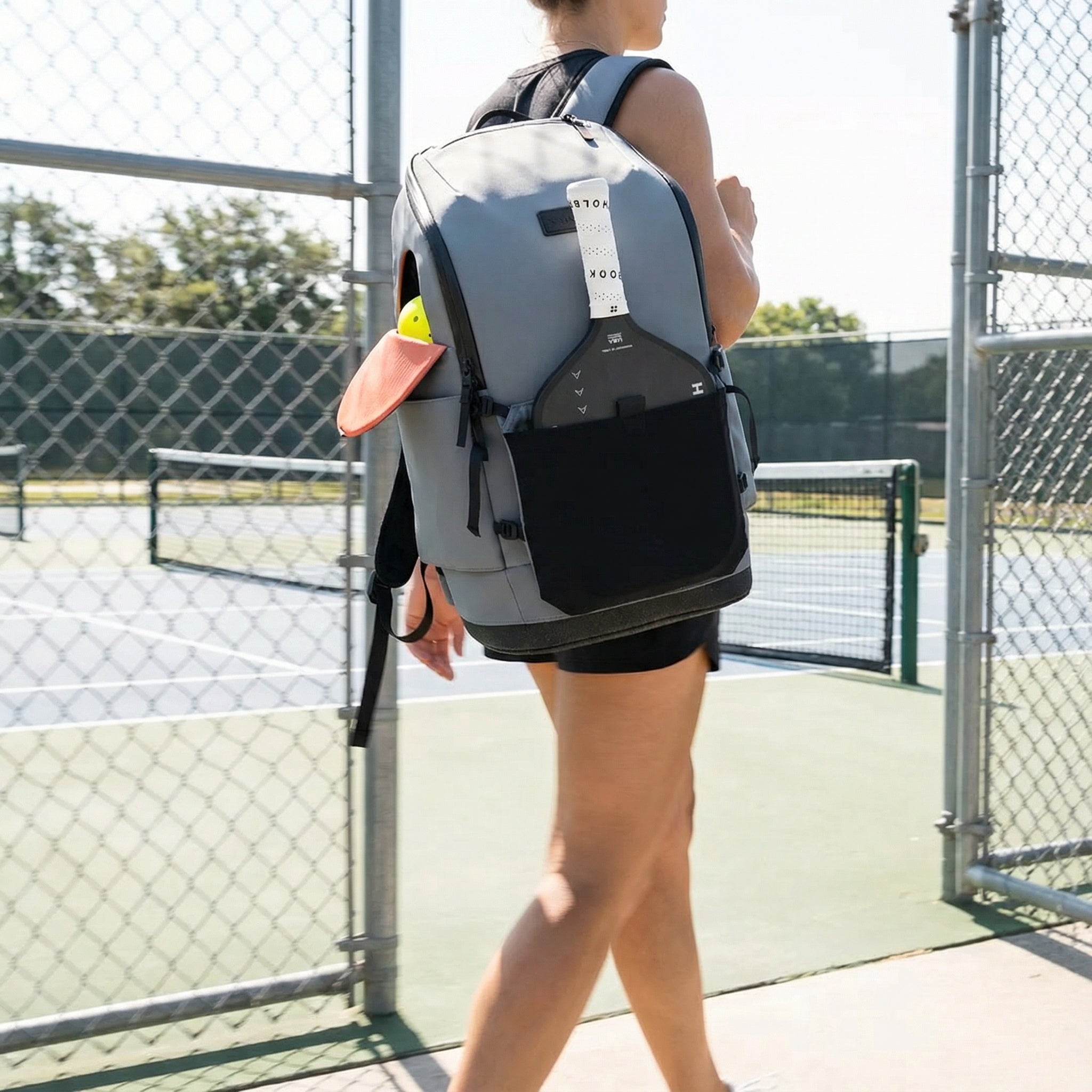
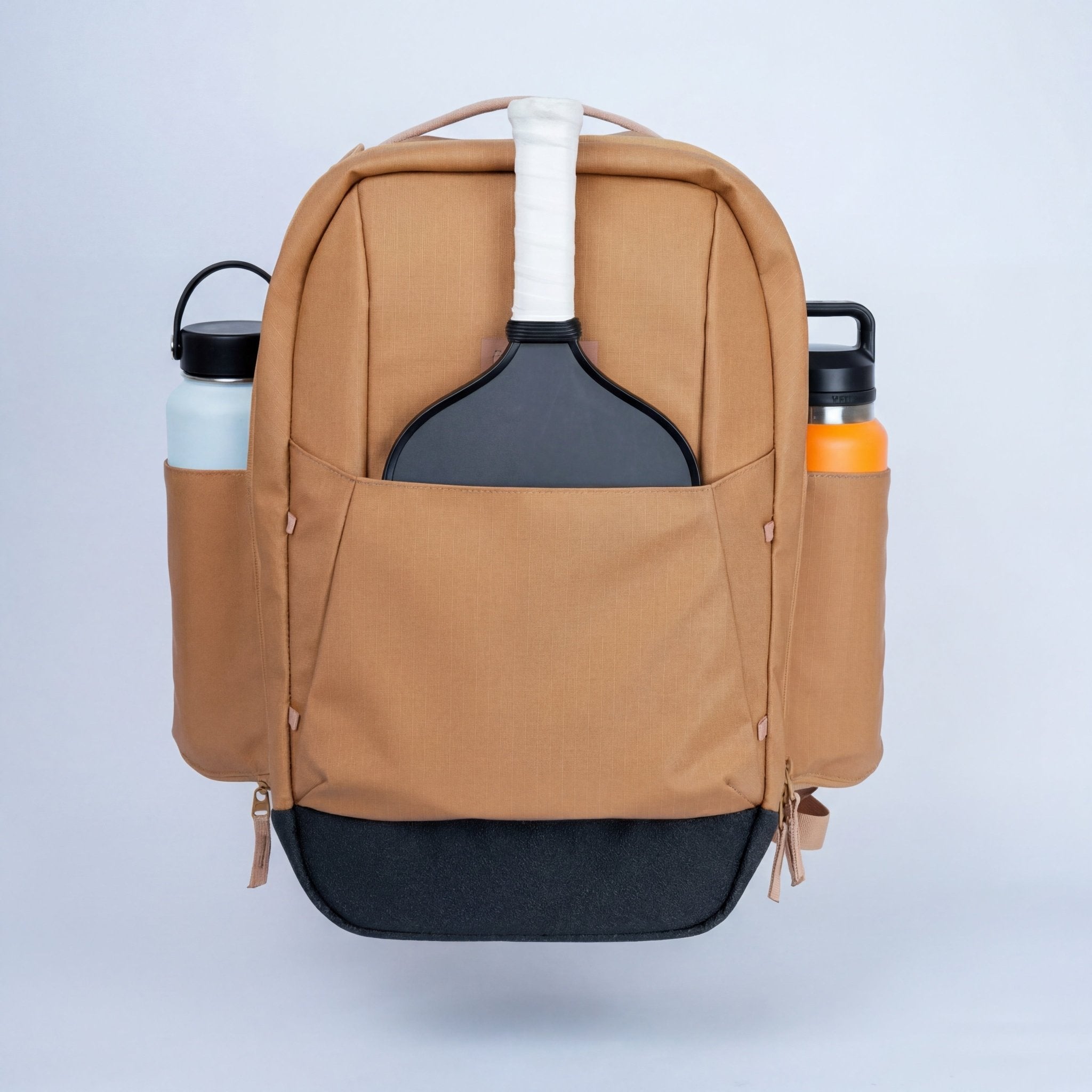
The FORWRD Court Ranger V2 ($195) has a modular paddle sleeve that fits up to four paddles — including your CRBN2 Barrage — plus a 16" laptop sleeve and YKK AquaGuard zippers that hold up through outdoor seasons. Designed with feedback from 500+ real players. Featured in The Dink and The Kitchen.

FAQ
Is the CRBN2 TruFoam Barrage USAP approved?
Yes. The CRBN2 TruFoam Barrage is certified for tournament play under USAP, PBCoR .43, and UPA-A standards — same certifications as the rest of the Barrage series. You can play it in any sanctioned recreational or tournament event under those governing bodies.
What's the difference between the CRBN1 and CRBN2 Barrage?
The CRBN1 is elongated (16.5" × 7.35") with a 5.75" handle and the lowest twist weight in the Barrage lineup — it's offense-first for two-handed backhand players who want reach and driving power. The CRBN2 is a standard widebody with a shorter handle and the highest twist weight in the lineup — defense-first for kitchen-focused players who prioritize stability and resets. Same Gen 4 TruFoam core and T700 face. Completely different playing experience.
Is 14mm too thin for a defensive paddle?
Not in the CRBN2's case. The Gen 4 TruFoam construction compresses and absorbs energy differently than polymer honeycomb, producing dwell time that compensates for the 14mm profile. Players coming from 16mm polymer paddles may find the Engage X2 Widebody 16mm worth comparing directly before committing to foam construction.
How long does the raw carbon texture hold up on the CRBN2?
On outdoor hard courts, expect 6–9 months of heavy daily play before the T700 raw carbon texture starts to smooth noticeably. Indoor gym courts are gentler — expect 12–18 months before re-texturing makes sense. This is true across all Barrage models. The trade-off for the raw texture's spin advantage is wear sensitivity compared to painted or coated faces.
Should I buy the CRBN2 or the CRBN4 for kitchen-first play?
Both are kitchen paddles doing different things. The CRBN4 (swing weight 109) wins by hand speed — it's for attack-first kitchen players who win on quick counters and aggressive speed-ups. The CRBN2 wins by stability — it's for players who win on resets and long dink rallies. If your kitchen game is "first to attack wins," get the CRBN4. If it's "last to reset wins," get the CRBN2. Be honest about which player you actually are.
Final Verdict
The CRBN2 TruFoam Barrage is a specialized paddle that rewards patient, kitchen-first players. CRBN built it for a specific archetype — the 4.0+ defender who wins on stability, extended dink rallies, and precise resets — and it delivers exactly that. Gen 4 TruFoam's dwell time, the widebody shape's high twist weight, and the Toray T700 face's spin potential add up to a paddle that's genuinely excellent for what it's designed to do.
The caveat hasn't changed: if you don't match that player profile, this paddle works against you. The CRBN3 is the more versatile Barrage for all-court players. The CRBN4 is the better kitchen paddle for attack-first players. The CRBN2 is the right choice for a narrower group — but for that group, there aren't many better options at $280.
We have all four Barrage reviews live on FORWRD. Worth reading the set before committing $280 to any one model.

Leave a comment
This site is protected by hCaptcha and the hCaptcha Privacy Policy and Terms of Service apply.