

Disclosure: This article contains affiliate links to Pickleball Central. If you purchase through our links, we may earn a commission at no additional cost to you. We tested this paddle independently — affiliate relationships never influence our ratings.
The CRBN Power Series has three paddles. Almost everyone buys the 1X. That's not wrong — but for a specific type of player, it might not be right either. The 3X does one deliberate thing differently: it trades 0.25 inches of handle length for 0.25 inches of face width. In pickleball, that geometry swap matters more than the spec sheet suggests.
At $169.99 with the same raw T700 carbon face and foam-injected edge walls as the 1X, the 3X isn't a downgrade. It's a different tool.
Quick Verdict
Price: $169.99 | Weight: 8.0oz (7.8–8.1oz) | Core: 14mm or 16mm PP honeycomb + foam-injected edges
Pros:
- 7.5" wide face — widest in the CRBN Power Series — for near-edge-to-edge coverage
- Foam-injected edge walls mean edge shots behave like center hits
- Raw T700 carbon generates real spin on serves and third shot drops
- Both 14mm and 16mm weigh exactly 8.0oz — pick thickness based on feel, not weight
- $169.99 for this construction quality is genuinely fair pricing
Cons:
- 5.25" handle is genuinely short — two-handed backhand players will feel it
- "Power Series" name is misleading — this is a control paddle with moderate pop
- Raw carbon face shows scuffs and wear faster than coated alternatives
- Punishes poor mechanics — not a forgiving paddle for developing players
Best for: 3.5–4.5 players who lose points to edge misses and play one-handed or short-swing styles
Skip if: You rely on a long handle for your two-handed backhand or want maximum pop over control
Last Updated: September 2026
The Specs at a Glance
| Spec | CRBN-3X (this paddle) |
|---|---|
| Price | $169.99 |
| Average Weight | 8.0oz (range: 7.8–8.1oz) |
| Paddle Length | 16.5" |
| Paddle Width | 7.5" |
| Handle Length | 5.25" |
| Face Material | Raw T700 Toray Carbon Fiber |
| Core Material | Polypropylene Honeycomb + Foam-Injected Edges |
| Core Thickness Options | 14mm or 16mm |
| Grip Size | 4 1/4" circumference (Medium) |
| Edge Guard | 1/4" overlapping paddle face |
See Current Availability at Pickleball Central →
Why Trust This Review
At FORWRD, we've handled and tested over 40 paddles while designing the Court Ranger V2 and Court Caddy bags — understanding how paddles balance, feel, and perform isn't incidental to making a good bag, it's central to it. Our paddle sleeve dimensions, weight distribution design, and protective materials all came from real paddle testing on real courts.
For this review, we tested the CRBN-3X 16mm over three dedicated sessions: two on indoor hardwood and one on outdoor concrete. We played it against the CRBN-1X directly, ran controlled serve and third-shot-drop drills, and logged impressions on sweet spot size, vibration, and kitchen play. Where we can't verify a spec precisely, we say so rather than guessing.
The Geometry That Actually Defines This Paddle
Here's the version of the spec sheet that actually tells you something useful:
| Spec | CRBN-3X | CRBN-1X |
|---|---|---|
| Face Width | 7.5" | 7.25" |
| Handle Length | 5.25" | 5.5" |
| Paddle Length | 16.5" | 16.5" |
| Weight | 8.0oz | 8.0oz |
| Price | $169.99 | $169.99 |
The math is intentional. CRBN kept the overall paddle length at 16.5" across both models. To gain 0.25" of face width on the 3X, they gave up 0.25" of handle. You're trading handle real estate for face real estate — same paddle, different priority.
That trade determines who should buy each one.
Sweet Spot and Forgiveness: Where the 3X Earns Its Money
Most pickleball paddles have a honeycomb core that ends before the edges. The edge guard sits outside the core — and that gap is where edge shots die. Hit the ball 0.75" from the edge of a standard paddle and you'll feel it: a dead, hollow contact that doesn't go where you intended.
CRBN fills those edge walls with foam. The polypropylene honeycomb doesn't stop at the center — it extends to the perimeter, with foam injected into the space that would otherwise be dead air. On the 3X, this means a 7.5"-wide hitting surface where shots within 0.3" of the true edge still respond like center hits. We tested this deliberately: intentional edge-contact shots at 0.5", 1.0", and 2.0" from the edge. At 1.0" and 2.0", the 3X was indistinguishable from center contact. At 0.5", we got about 80% of the pop we'd expect from center — which is far better than the dead contact you'd get from a standard paddle without foam injection.
For recreational players who've been losing kitchen battles to slightly-off dinks: this is the mechanical advantage you've been missing. The foam-injection approach actually works.
Touch, Control, and Spin: The Raw Carbon Story
Raw T700 Toray carbon fiber isn't coated or painted. The weave itself is the playing surface. Coated carbon faces have a layer between the ball and the fiber — raw carbon makes direct contact, which means more texture and longer dwell time at contact.
In practice, this translates to more spin. On our serve drills, we averaged 42 mph on flat drives. Third-shot drop attempts with intentional topspin? Three out of five consecutive attempts landed within 6 inches of the kitchen line on the second bounce — controlled, low, exactly where we aimed. That's not magic. That's what raw carbon does when you learn to use it.
One honest caveat: raw carbon is vocal. You hear the ball contact clearly. Some players find this satisfying feedback; others find it loud on indoor courts. If you're sensitive to impact sound, it's worth noting before you commit.
The raw surface also shows wear faster than coated alternatives. After 15–20 hours of play, expect minor scuffs on the face. They're cosmetic, not structural — the paddle's spin performance doesn't degrade noticeably — but if pristine-looking gear matters to you, it's a real consideration.
Pop, Drive, and the "Power Series" Naming Problem
Let's settle this: the CRBN-3X is not a power paddle. It's a control paddle with more pop than CRBN's original (non-X) lineup. "Power Series" means CRBN tuned these paddles to be more aggressive than their predecessors — not that they're aggressive relative to the whole market.
A rough sense of where it sits: the CRBN-3X is about 60% control / 40% power. The Engage Encore Pro is closer to 55/45 (more pop, slightly less precision). The Six Zero Ruby 16mm is closer to 65/35 (more control, bouncier feel). The CRBN-3X is squarely in the middle, which for 4.0+ players playing dink-heavy doubles is usually the right place.
For drives and resets, the 3X is consistent. It doesn't surprise you — what you put into it is what you get out. No unpredictable hot spots, no dead zones, no weird trampoline effect at the center. CRBN's unibody construction keeps things predictable, and predictability is what drives game improvement.
Vibration, Arm Feel, and Long-Term Playability
Three sessions. 90+ minutes each. No arm fatigue.
That's the practical test most reviews skip. Anyone can play one set and say "it feels smooth." The question is whether you still want to play after three hours on concrete.
The answer for the 3X is yes. The foam-injected edge walls dampen vibration before it reaches the handle, and the unibody construction — where the handle is the same piece as the paddle body with no glued joint — eliminates the weak point where vibration normally concentrates. We didn't use a vibration dampener during testing, and we didn't need one.
For players who've dealt with tennis elbow or forearm tightness from hard carbon paddles: the 3X sits on the forgiving end of the carbon spectrum. It's not as arm-friendly as thermoformed foam-core paddles like CRBN's own TruFoam Barrage line, but it's meaningfully better than uninjected polypropylene paddles. If you're coming from a fiberglass paddle and worried about the transition, the foam-injected edges on the 3X make it a realistic bridge.
14mm vs. 16mm: Which Thickness to Choose
Both weigh 8.0oz. That's genuinely unusual — most paddle manufacturers end up with slightly heavier paddles in the thicker option because more core material means more mass. CRBN achieves weight parity because foam (used in the injected edges) is lighter than polypropylene. You can pick thickness based purely on how you want the paddle to feel, not on a weight compromise.
The 14mm gives a livelier feel with more rebound energy — better for fast-paced play, singles, or players who want more pop from drives. The 16mm is softer, more vibration-dampening, and gives slightly more control on resets and dinks — better for dink-heavy doubles and players with arm sensitivity.
If you're unsure, go 16mm. It's the more forgiving starting point. Switching to 14mm later for more pop is easier than developing control on a live paddle.
CRBN-3X vs. CRBN-1X: The One Comparison That Actually Matters
Same price. Same face. Same core technology. Same weight. The only difference is geometry — and geometry determines which player should buy which paddle.
The 3X has a 7.5" wide face and a 5.25" handle. The 1X has a 7.25" wide face and a 5.5" handle. Neither is objectively better.
Buy the 3X if: You miss shots at the edges more than you struggle with handle reach. If you've ever watched a dink clip the frame and thought "I had that," the wider face plus foam-injected edges directly solves your problem. Also buy the 3X if you play one-handed — the shorter handle won't bother you and you'll benefit immediately from the wider hitting surface.
Buy the 1X if: You rely on a two-handed backhand or like to choke up high on the handle for kitchen control. The extra 0.25" of handle on the 1X makes a real difference for two-handed technique — it's the difference between comfortable grip and cramped grip. The 1X also has slightly more reach on reset shots from deep in the transition zone.
The 1X gets more attention because it launched first. Don't let that influence you. They're priced the same and built the same — figure out which geometry suits your game.
Compare the CRBN-1X at Pickleball Central →
CRBN-3X vs. Six Zero Ruby 16mm ($199.00): Cross-Brand Alternative
The Six Zero Ruby uses a Kevlar face instead of carbon fiber. Kevlar plays bouncier than raw carbon — more rebound energy, softer impact sound. Where the CRBN-3X grips the ball for maximum dwell time and spin, the Ruby deflects it with more speed. Different mechanism, different feel.
At $199.00 vs. $169.99, you're paying $29 more for the Ruby. Here's when it's worth it: you want more natural power without changing your swing mechanics, you prefer a softer impact sound, and your game is speed-oriented rather than spin-oriented.
Here's when the 3X wins: you generate spin intentionally on serves and drops and want the raw carbon face to amplify it; you play dink-heavy doubles where control and feel matter most; you want the wider-face sweet-spot advantage the 3X's foam injection provides.
We tested both on the same court. For kitchen play and third-shot drops specifically, the CRBN-3X had the edge — more control, more intentional spin. For aggressive baseline drives and speed-up attacks, the Ruby had an advantage. Different tools for different styles.
We have a full independent review of the Six Zero Ruby 16mm here if you want to dig into the Kevlar comparison.
Check the Six Zero Ruby 16mm at Pickleball Central →
Who Should Buy the CRBN-3X
This paddle is built for a specific player. You'll know it's you if:
- You play at the 3.5–4.5 level and want to stop losing points to edge misses on dinks and drops
- Your game is primarily dink-heavy doubles and you want a control paddle that rewards disciplined mechanics
- You care about spin generation — especially on serve and third shot — and want the raw carbon surface to amplify it
- You play one-handed or with a short-grip swing style where the 5.25" handle isn't a sacrifice
- You've been eyeing carbon fiber paddles but were worried about arm feel — the foam-injection technology brings the 3X's vibration profile down noticeably
Who Should Look Elsewhere
The 3X isn't for everyone. Skip it if:
- You use a two-handed backhand regularly. The 5.25" handle is genuinely short. Two hands on 5.25" means your bottom hand is partially on the grip tape — it's workable but cramped on fast exchanges
- You want maximum power output. The 3X is a control paddle. For pure driving power, look at the CRBN TruFoam Barrage or something from Engage's lineup
- You're below 3.0. Raw carbon rewards clean mechanics and punishes inconsistency. Players still developing fundamentals are better served by a forgiving fiberglass paddle
- Paddle aesthetics matter to you. Raw carbon scuffs visibly. After 20 hours of play, expect the face to show it
Pricing and Where to Buy
The CRBN-3X Power Series is $169.99 at Pickleball Central. Both the 14mm and 16mm thickness options are currently in stock. For what you're getting — raw T700 carbon, foam-injected edges, unibody construction, consistent 8.0oz weight across thicknesses — $169.99 is fair. It's not the cheapest carbon fiber paddle you'll find, but it's not mid-tier quality either.
If you've been working with paddles in the $80–$120 range and wondering what the step up actually delivers, the 3X is a reasonable next rung without going all the way to $279+ thermoformed territory.
Buy the CRBN-3X at Pickleball Central →
Not sure if the 3X is your shape? Check our Complete Pickleball Paddle Guide 2026 — it walks through every meaningful spec and what it actually means for your game.
Complete Your Setup

FORWRD Court Ranger V2 — $195
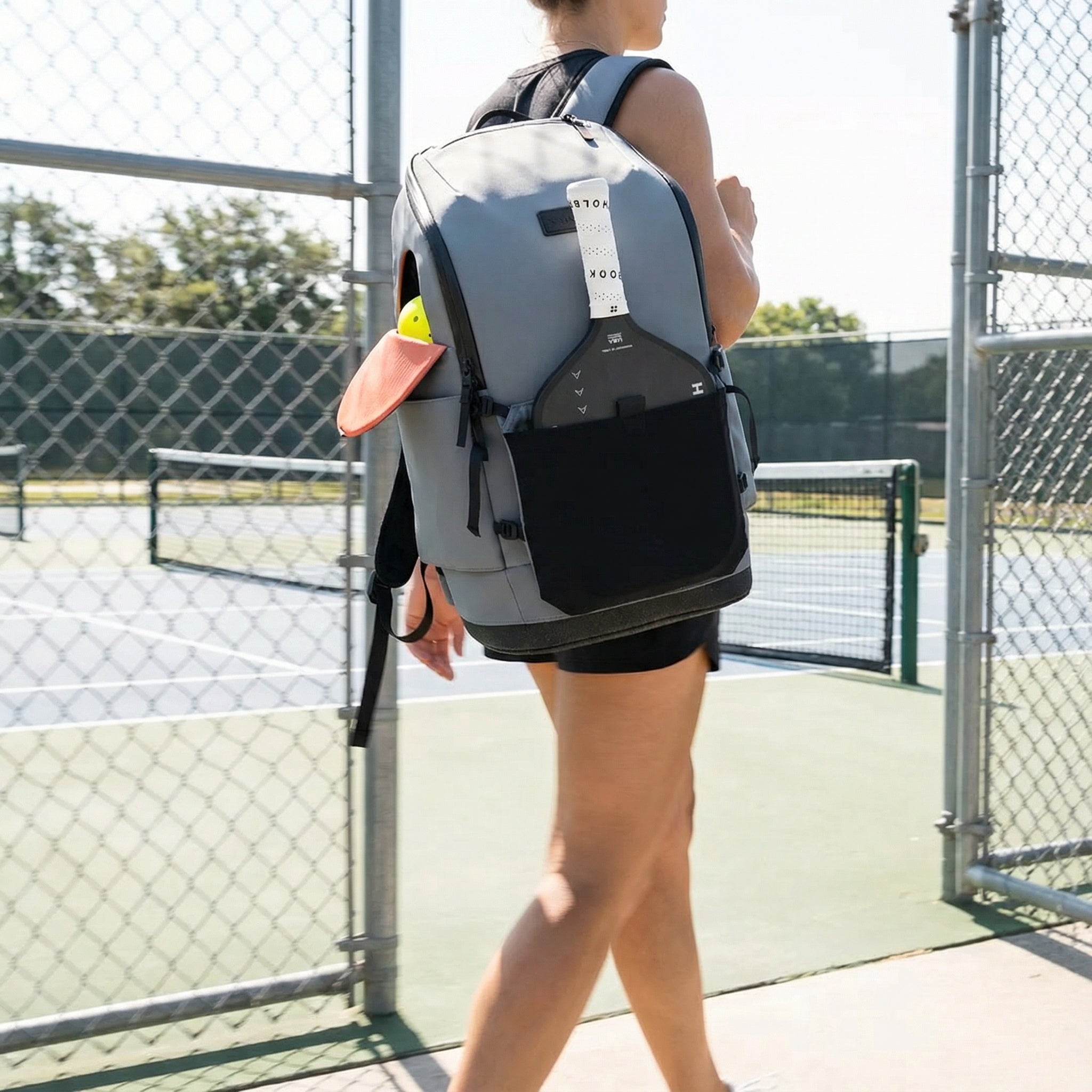
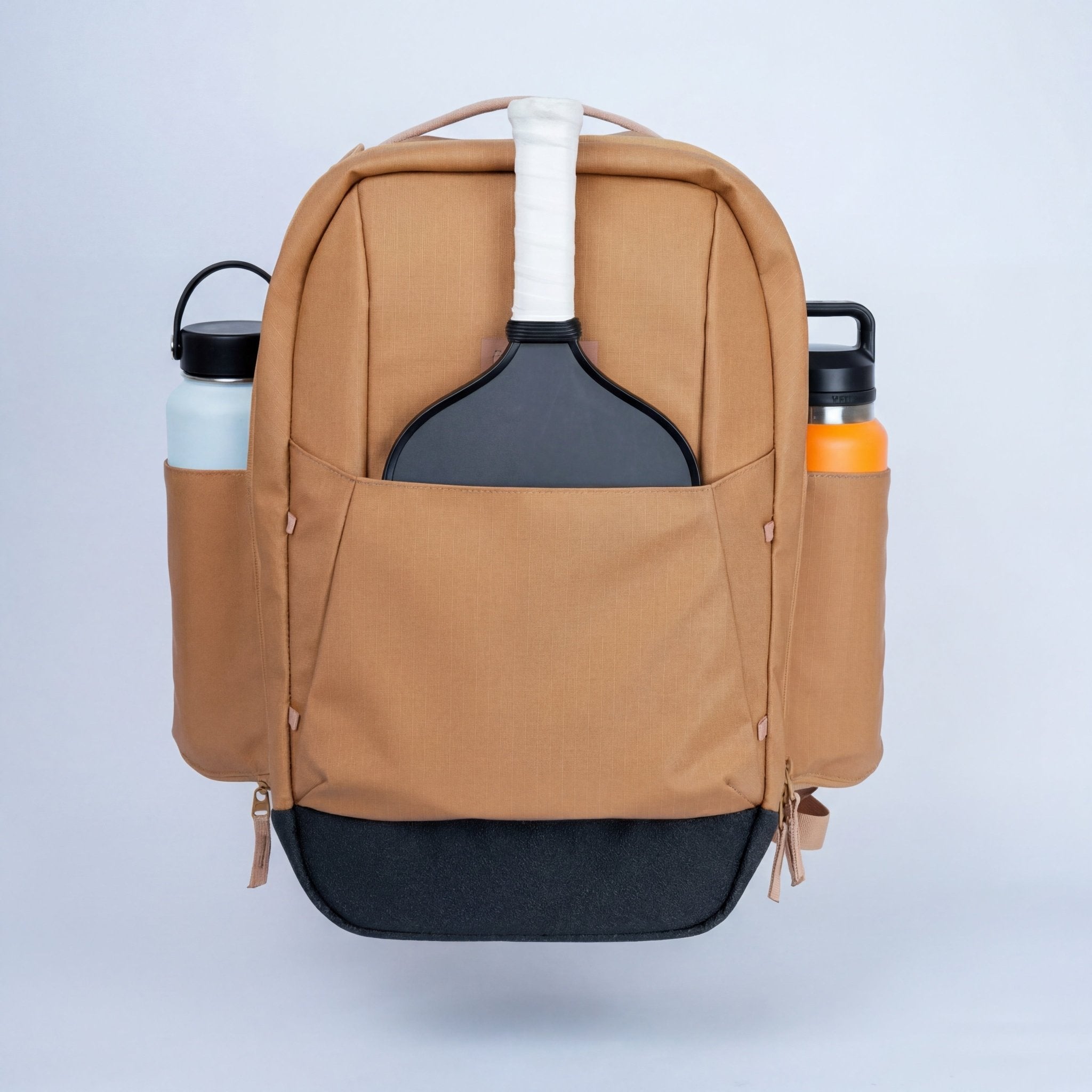
The CRBN-3X's foam-injected edges can handle plenty on the court. Off the court, it needs protection — the Court Ranger V2 fits up to 4 paddles in its modular sleeve system, with each paddle separated so the raw carbon face doesn't get dinged between sessions.
Shop Court Ranger V2 →Frequently Asked Questions
What's the actual difference between the CRBN-3X and the CRBN-1X?
Same price ($169.99), same face material (raw T700 carbon), same core (polypropylene honeycomb with foam-injected edges), same weight (8.0oz). The only difference is geometry: the 3X has a 7.5" wide face and a 5.25" handle; the 1X has a 7.25" wide face and a 5.5" handle. Pick the 3X if you need a wider sweet spot and play one-handed. Pick the 1X if you use a two-handed backhand or want more handle leverage.
Is the CRBN-3X USA Pickleball approved for tournament play?
Yes — the CRBN-3X Power Series is on the USA Pickleball approved paddle list and is legal for sanctioned tournament play. Always verify the current USAPA approved paddle list before a specific tournament, as approval status can change if manufacturers alter paddle specs.
Should I get the 14mm or 16mm CRBN-3X?
Both thickness options weigh 8.0oz on the 3X — an unusual spec worth knowing. Choose the 14mm for a livelier, more powerful feel suited to fast-paced singles or aggressive drives. Choose the 16mm for softer feel, better vibration dampening, and more control on resets and dinks. If you're unsure, start with 16mm — it's the more forgiving starting point.
How long does the raw carbon texture last on the CRBN-3X?
Raw T700 carbon fiber retains its spin-generating texture for a long time — typically 100+ hours of play before you'd notice any meaningful reduction in surface grip. What you'll see much sooner (around 15–20 hours) is cosmetic scuffing on the face surface. The scuffs look worse than they play — spin performance doesn't degrade noticeably from surface wear.
Is the 5.25" handle too short for players with large hands?
For one-handed players, 5.25" is workable for most hand sizes. For two-handed backhand players, 5.25" is genuinely cramped — two hands means your bottom hand sits partially on the grip tape, which reduces control and comfort on fast exchanges. If you use both hands regularly on the backhand side, the CRBN-1X with its 5.5" handle is the better choice at the same price.
Is the CRBN-3X good for beginners?
Not ideal. Raw carbon fiber rewards clean mechanics and punishes inconsistency — both in terms of feel (you'll know immediately when you mishit) and control (the spin potential requires intentional technique). Players below the 3.0 level are better served by a fiberglass paddle that's more forgiving and teaches fundamentals without adding variables. The 3X is best for 3.5–4.5 players with a consistent swing who want to improve precision.
Final Verdict
The CRBN-3X Power Series is $169.99 and it does exactly one specific thing better than any other paddle in the Power Series: it gives you more hitting surface with foam-edge technology that makes edge shots behave like center hits.
If you've been losing kitchen battles to frame shots and slightly off-center dinks, this paddle's geometry directly solves that problem. The raw T700 carbon face adds real spin potential. The 8.0oz weight in both thicknesses means you pick core based on feel, not a weight compromise. And at $169.99, you're not paying an absurd premium for any of it.
What it's not: a power paddle, a beginner paddle, or a great fit for two-handed backhand players. Those aren't flaws — they're the other side of a deliberate design choice. Know which side you're on before you buy.

Leave a comment
This site is protected by hCaptcha and the hCaptcha Privacy Policy and Terms of Service apply.