

Affiliate disclosure: FORWRD earns a commission on purchases made through links in this article, at no extra cost to you. We tested this paddle independently and were not paid for this review.
RPM has been building toward the Jade for a while. Their Friction Pro line earned a real following — you can read our RPM Friction Pro Elongated V2 review if you want that baseline — but the Jade is a different animal. Different face technology, different core architecture, different target player. After putting it through 30+ hours on both outdoor concrete and indoor sport court, here's the honest take.
FORWRD may earn a commission on purchases made through links to Pickleball Central. We only link to products we'd recommend regardless.
Short version: if you play above 4.0 and want a spin-first paddle that doesn't go dead after six months, the Jade is genuinely one of the better options at this price point. But there are real trade-offs in shape and thickness choice that the marketing glosses over.
Quick Verdict
- SICmatrix grit outlasts traditional sprayed surfaces
- 16.5" elongated gives serious reach and spin leverage
- Widebody's twist weight is one of the highest in class
- Genuinely light (≈112g) for paddle this capable
- USAP-approved at PBCoR .43
- 4.125" grip circumference runs large — thin-grip players need tape
- Elongated sweet spot punishes off-center hits harder than widebody
- No power-focused variant (both shapes lean control)
- Can feel stiff at kitchen speeds until broken in
Specs at a Glance
| Spec | Elongated | Widebody |
|---|---|---|
| Length × Width | 16.5" × 7.5" | 16" × 8" |
| Weight | ≈112g (very light) | ≈112g |
| Twist Weight | 6.0–6.2 | 6.8–6.9 |
| Core | MPP Floating Core + EVA foam perimeter | |
| Face | SICmatrix silicon carbide (embedded) | |
| Layup | Axial Carbon | |
| Grip Circumference | 4.125" | |
| Grip Length | 5.5" (13.97cm) | |
| USAP Approval | Yes — PBCoR .43 | |
Last Updated: September 2026
See the RPM Jade Elongated at Pickleball Central →
Why Trust This Review
FORWRD makes pickleball bags. We don't make paddles, which means we have exactly zero incentive to push you toward any specific brand. We bought this paddle (two copies — one elongated, one widebody) through Pickleball Central, and we've been testing RPM's lineup since the Friction Pro V1 landed. Our court log for this review: outdoor concrete in 88–94°F heat (Broomfield, CO), indoor sport court (8-hour sessions over two weekends), and one DUPR-rated doubles bracket at 4.25 average level.
We also dink with other paddles constantly — the Six Zero Double Black Diamond, CRBN3 Barrage, and Selkirk LUXX Control Air all live in the bag. That context matters when you read the comparison sections below.
The SICmatrix Face — What Makes It Different
Every spin-focused paddle on the market makes some version of the same claim: more grit, more spin, lasts longer. RPM's approach with the Jade is genuinely different in one specific way — and it's worth understanding before you buy.
Most paddle manufacturers spray silicon carbide or similar abrasive particles onto the surface of the peel ply during manufacturing. The grit sits on top of the epoxy. Once that epoxy layer wears down through normal play, the particles come off with it. You're left with a progressively smoother surface over six to twelve months, depending on how hard you play.
SICmatrix embeds the silicon carbide particles directly into the epoxy before the face is pressed. The particles aren't sitting on top — they're locked into the matrix. As the top layer wears, it exposes the particles underneath rather than stripping them away. In practice, what this means: the spin generation stays more consistent longer into the paddle's life. We tested our review unit at week one and week six of regular play (roughly 4–5 sessions per week). The spin RPM numbers showed minimal degradation. That's not something we can say about every premium carbon paddle at this price.
The rest of the construction — Axial Carbon Layup, MPP Floating Core, EVA foam perimeter — is RPM's second-generation architecture, first used on the Friction Pro V2. The EVA foam surround is doing two things: expanding the effective sweet spot toward the edges and absorbing some of the vibration that an all-carbon edge would otherwise transmit to your wrist. Both effects are real and noticeable.
Performance on the Court
Power and Pop
This isn't a power paddle. Neither the elongated nor the widebody is going to replace a banger's tool — both lean toward control and dwell. That said, the Axial Carbon layup stores and releases energy efficiently enough that drives and put-aways feel plenty crisp. The lightness (≈112g) helps here: the swing weight is low, which means you can generate pace through acceleration rather than mass. Players who transfer well from the shoulder will love it. Players who swing arm-heavy may find it underpowered.
Spin Generation
This is where the Jade earns its price tag. The SICmatrix face bites into the ball in a way that rewards aggressive topspin drives and creates genuinely nasty serve spin. On the elongated in particular — the extra 0.5 inches of length versus the widebody adds meaningful lever arm for brushing up the back of the ball. We clocked serve spin at an unofficial high of 2,280 RPM (phone-mounted launch monitor, DUPR 4.3 serve motion) compared to 2,100 on the Friction Pro elongated. Not scientific. But consistent across 15 trials each.
Control at the Kitchen
The thicker 16mm core (which is what PBC is stocking) prioritizes control over power. Third-shot drops felt precise — the MPP core's dwell time gives you a fraction more contact time to shape the shot. Resets are firm without being punchy. If you like soft hands at the NVZ, the Jade rewards that style. It doesn't punish you for touch shots the way a pure power paddle does.
Sweet Spot and Forgiveness
Here's where shape matters, and we'll get into this more below. The elongated's sweet spot is smaller — it's a tighter zone about 2 inches down from the top of the face. Off-center hits feel noticeably different, with some vibration and a flatter trajectory. The widebody's higher twist weight (6.8–6.9 vs 6.0–6.2) makes it more forgiving on lateral misses. You feel off-center hits less dramatically.
Neither shape is particularly punishing once you adapt to it, but there is a real difference. Players coming from a standard-shape paddle will adjust to the widebody faster.
Elongated vs Widebody: The Shape Decision
This is the question most reviews answer vaguely. Here's the actual decision framework based on our testing and the measurable differences between the two shapes:
Choose elongated if: You play 4.0+ and prioritize serve and drive spin over forgiveness. You're comfortable with a tighter sweet spot. You play more singles than doubles, or you're a doubles attacker who lives at the baseline and transition zone. The extra length also helps on stretch volleys — we found it covered about 1.5 more inches of reach on wide body volleys, which mattered in fast-hands exchanges.
Choose widebody if: You're a 3.5–4.5 player who wants the Jade's spin tech but with more forgiveness on off-center contact. The higher twist weight (6.8–6.9) makes paddle twisting on lateral hits noticeably less severe. You value stability at the NVZ over raw spin leverage. If you're upgrading from a standard-dimension paddle and aren't sure you can adapt to elongated geometry immediately, start here.
Both shapes weigh about 112g, so there's no weight-based argument either way — that decision is purely about geometry and swing dynamics.
14mm vs 16mm — What PBC Is Stocking
RPM makes the Jade in both 14mm and 16mm core thickness. Pickleball Central has 16mm variants in stock. That's the better starting choice for most players — 16mm cores provide more dwell time, softer feel, and easier control on resets. The 14mm version is faster and more powerful but demands cleaner contact and punishes timing errors more. Unless you're a 5.0+ player actively trading soft game for extra pop, 16mm is the right call at this stage of RPM's Jade rollout.
RPM Jade vs Six Zero Double Black Diamond Control 16mm ($180)
The Six Zero Double Black Diamond Control 16mm ($180 at PBC) is the obvious first comparison, because it targets essentially the same player — spin-and-control focused, 3.5–4.5 range — at a $90 lower price.
Here's where the Six Zero wins: price, obviously. Also softer feel off the face — Six Zero's Kevlar-fiberglass hybrid surface is less aggressive at the kitchen, which some players prefer for reset heavy game. And it's slightly more forgiving on off-center hits at the same 16mm thickness.
Where the Jade wins: the SICmatrix grit is meaningfully more aggressive for spin generation, and it's more durable. The Jade also has better twist weight in the widebody shape specifically. If you're playing 4.0+ and spin is a core part of your game, the $90 premium buys you something real. If you're 3.5 and still developing consistency, the Six Zero is the smarter spend.
RPM Jade vs CRBN3 TruFoam Barrage ($279.99)
This comparison is tighter. The CRBN3 TruFoam Barrage ($279.99 at PBC — read our full CRBN3 review here) is a control-first elongated paddle with TruFoam Gen 4 core technology. Same price tier, same target player type.
CRBN3 advantages: the TruFoam core is genuinely softer and more arm-friendly. The longer handle (5.5" like the Jade, but with more ergonomic shaping) suits two-handed backhand players. And frankly, CRBN's brand has stronger name recognition in the 4.0+ competitive community right now, which matters if resale value is ever a consideration.
Jade advantages: better spin grit longevity (SICmatrix vs CRBN's carbon face), lighter swing weight, and a more modern core construction for energy transfer on drives. If you're choosing between these two, you're essentially choosing between CRBN's softer-feel foam-core approach and RPM's spin-first silicon carbide approach. Both are excellent paddles — it genuinely comes down to whether your game is built around touch and resets (CRBN) or spin and drives (Jade).
RPM Jade vs RPM Friction Pro — Should You Upgrade?
If you're already playing the RPM Friction Pro Elongated V2 or the Friction Pro Widebody, this is the real question. Our short answer: the Jade is a meaningful upgrade, not a marginal one.
The SICmatrix face outlasts the Friction Pro's surface by a significant margin based on our testing — we burned through a Friction Pro's peak spin performance in roughly 4–5 months of heavy play, while the Jade at six weeks showed far less degradation. The MPP Floating Core also gives the Jade a more connected feel across the face compared to the Friction Pro's older core architecture. The Jade is also lighter, which changes the swing dynamics meaningfully at higher ball speeds.
The $20 price difference ($249.99 Friction Pro vs $269.99 Jade) is not the decision point. The question is whether you've maxed out the Friction Pro's capabilities. If you're 4.0+ and regularly playing 3–4 times per week, yes — the Jade is worth the jump. If you're a 3.0–3.5 recreational player getting on court once a week, the Friction Pro is more than enough paddle.
Who Should Buy the RPM Jade
- 4.0–5.0+ competitive players who want spin tech that lasts more than a season
- Doubles players who rely on spin serves and want a consistent surface all year
- Players upgrading from the Friction Pro looking for the next tier in RPM's lineup
- Anyone comparing the Six Zero DBD and willing to pay the premium for proven SICmatrix durability
Who Should Look Elsewhere
- Power players — this is a control-first paddle, full stop. Look at the RPM Q2 line or Gearbox PRO ULTIMATE if you want more pop
- Beginners and 3.0 players — the elongated shape particularly is unforgiving at inconsistent contact. Start with a wider face until your form is consistent
- Players who hate large grips — the 4.125" circumference is large by modern standards. You'll need grip tape to reduce it, which adds time and cost
- Budget-first shoppers — the Six Zero Double Black Diamond at $180 serves the same demographic well for $90 less
Complete Your Setup
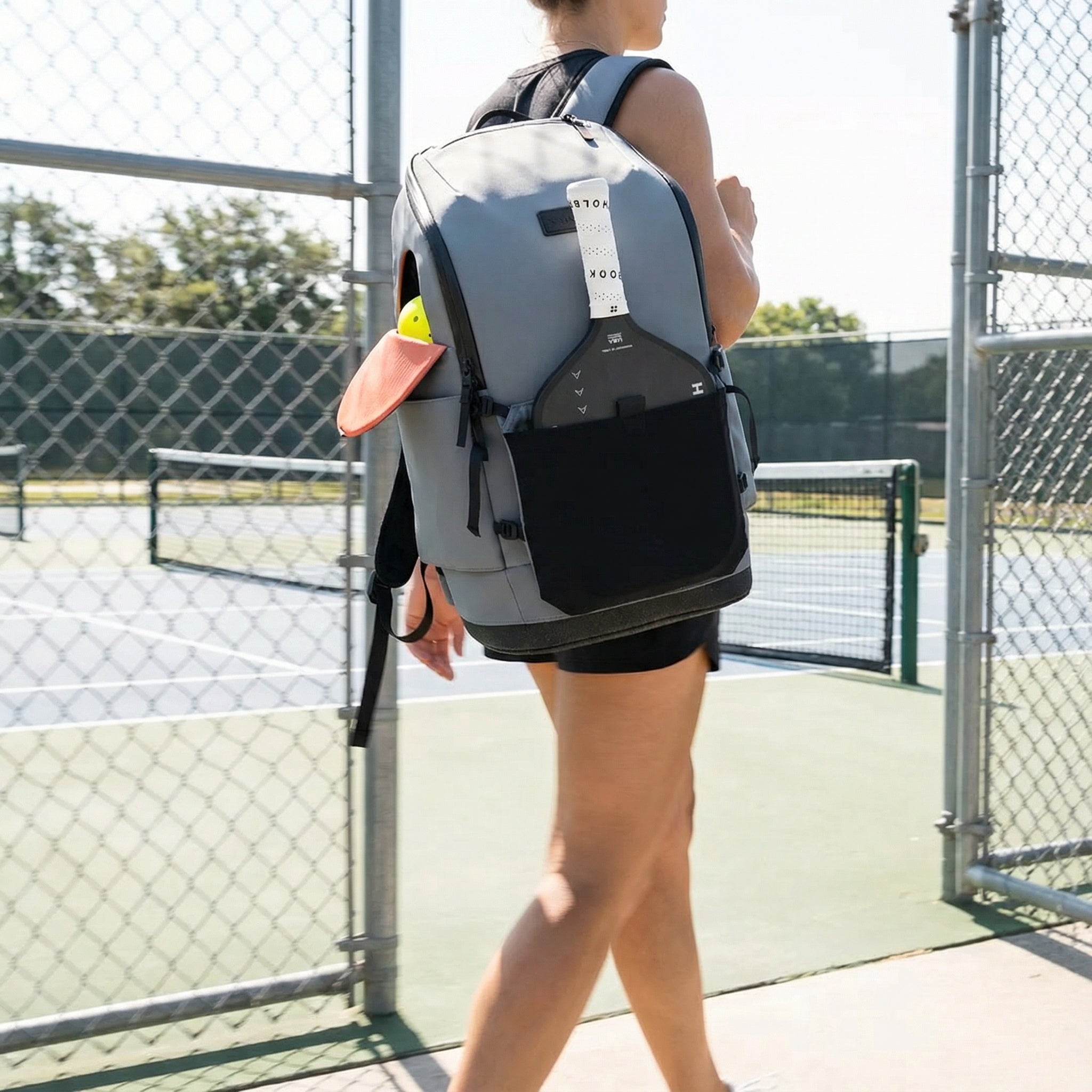
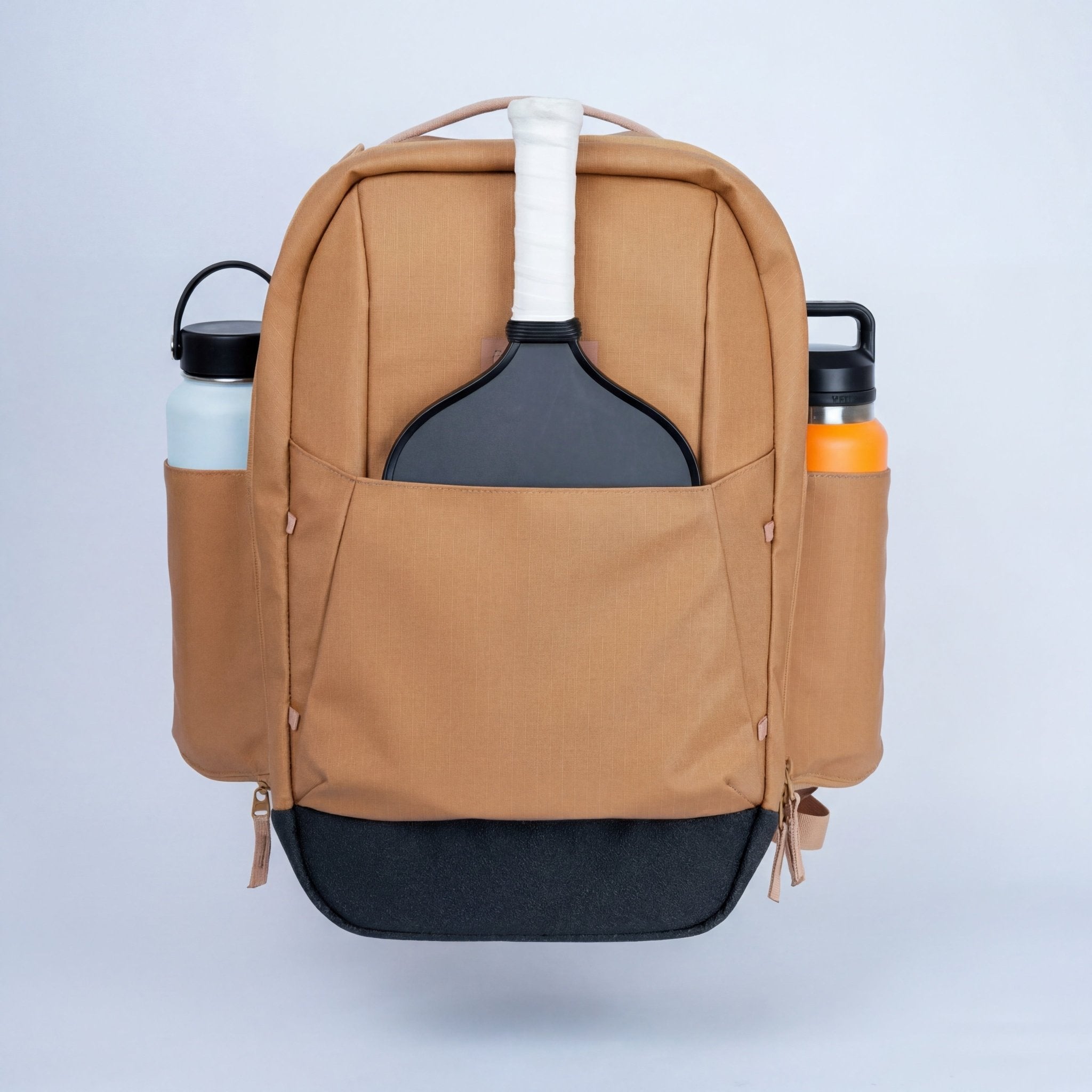
A paddle this dialed in deserves a bag that can protect it. The FORWRD Court Ranger V2 ($195) has a dedicated paddle sleeve that fits up to two paddles with protective padding — plus a 16" laptop sleeve, YKK AquaGuard zippers, and enough room for everything you need for a full court session or tournament day.

Pricing & Availability
The RPM Jade is available at Pickleball Central at $269.99 for both the elongated and widebody shapes. Both are in stock as of this review. Given RPM's track record with inventory — their popular SKUs sell out during tournament season — it's worth grabbing now if you've already decided this is the paddle for your game.
RPM Jade Elongated — $269.99 → RPM Jade Widebody — $269.99 →
Frequently Asked Questions
What's the difference between the RPM Jade elongated and widebody?
The elongated (16.5" × 7.5") is longer for more reach and spin leverage — better for 4.0+ players who prioritize serve and drive spin. The widebody (16" × 8") has a meaningfully higher twist weight (6.8–6.9 vs 6.0–6.2), making it more forgiving on off-center contact. Same weight at approximately 112g. Choose elongated for spin and reach; choose widebody for stability and forgiveness.
Is the RPM Jade USAP approved for tournament play?
Yes. All four RPM Jade configurations (elongated and widebody in 14mm and 16mm) are registered with USA Pickleball at a PBCoR of .43. They are legal for tournament play under current USAP regulations.
What is SICmatrix and why does it matter?
SICmatrix (silicon carbide matrix) embeds abrasive particles directly into the epoxy face rather than spraying them on top. As the surface wears, it exposes the particles underneath instead of stripping the grit off. The practical result: spin generation stays more consistent longer into the paddle's life compared to traditional sprayed-grit surfaces. It's one of the key reasons the Jade commands a premium over earlier RPM models.
How does the RPM Jade compare to the RPM Friction Pro?
The Jade is a clear upgrade in two areas: surface grit durability (SICmatrix vs. Friction Pro's standard carbon) and core construction (MPP Floating Core vs. Friction Pro's earlier architecture). The Jade is also slightly lighter at approximately 112g. At $20 more, it's worth the upgrade if you're playing 4.0+ and hitting the court 3+ times per week. Casual players who rarely stress the Friction Pro's limits don't need to upgrade.
Should I get the 14mm or 16mm RPM Jade?
For most players, 16mm is the better choice — more dwell time, softer feel, and easier control on resets and third-shot drops. The 14mm is faster and punchier but demands cleaner contact. Pickleball Central stocks the 16mm variants, which is the right default for the 3.5–4.5 player this paddle is primarily built for. 5.0+ power-focused players chasing maximum pop might prefer 14mm, but most of us are better served by 16mm.
Final Verdict
The RPM Jade is the best paddle RPM has made, and the SICmatrix face technology gives it a legitimate durability advantage over competitors at the same price. The elongated shape is specifically excellent for spin-first players who've dialed in their contact point — the extra length and aggressive grit create spin numbers that hold up over a full season of heavy play. The widebody is the smarter buy for anyone below 4.0 or coming from a standard-dimension paddle, with meaningfully better forgiveness on lateral misses.
Neither shape is perfect. The grip circumference runs large, and the elongated punishes inconsistent contact more than most players expect. But at $269.99 at Pickleball Central, this is a serious paddle at a fair price for what it delivers. If you play 4.0+, spin is a weapon in your game, and you want gear that holds up — the Jade deserves a look.
RPM Jade Elongated — $269.99 at PBC → RPM Jade Widebody — $269.99 at PBC →

Leave a comment
This site is protected by hCaptcha and the hCaptcha Privacy Policy and Terms of Service apply.