

FTC Disclosure: This article contains affiliate links. If you purchase through our links, FORWRD earns a commission at no extra cost to you. We only recommend products we've thoroughly researched.
Last Updated: September 2026
Diadem's Edge 18K paddles are having a moment right now — and not just because the standard model is sitting at $149.95 (down from $229.95). The real story is that Diadem built three distinct paddles around the same 18K carbon fiber face, and most buyers have no idea which one actually fits their game. This review covers all three so you don't have to guess.
Quick Verdict
| Price | $149.95 (Standard) / $174.95 (Power Pro / Speed Pro) — all on sale |
| Face | 3D 18K Triaxial Carbon Fiber |
| Weight | 8.0 oz avg (7.8–8.2 oz range) |
| Who it's for | 3.0–4.5 players who want real spin with a premium carbon face at a mid-market price |
| Who should skip | Players with large hands (4 1/8" grip is small), or anyone needing a thermoformed one-piece construction |
Pros:
- 18K carbon face produces genuine spin — more surface texture than standard 12K paddles
- Three variants let you choose your core style (thick/all-around, thick/power, thin/speed)
- Edge Shield Pro guard provides better-than-average edge protection
- Current sale pricing makes the standard model one of the better carbon values under $160
- 5.7" handle on Power Pro and Speed Pro gives more reach at the baseline
Cons:
- 4 1/8" grip only — no option for medium or large hand sizes
- All three versions are made in China (fine for most buyers, but worth knowing)
- The Power Pro and Speed Pro differences are subtle enough that some players won't feel them at 3.0–3.5 level
- No elongated option in the 18K lineup
Check Current Price at Pickleball Central →
Why Trust This Review
FORWRD designs pickleball bags — we're not a paddle brand. That means we have no dog in the paddle race. We've tested the Edge 18K Standard and Power Pro variants on both indoor hardwood (the kind that punishes soft edges) and outdoor concrete over several weeks. The Speed Pro specs come from Pickleball Central's documented data cross-checked against Diadem's own tech sheets.
We've also reviewed most of Diadem's current lineup — the Edge BluCore Pro 16mm, the Warrior BluCore V3, and others — so we can put the 18K in context within the brand's own hierarchy.
What "18K Carbon Fiber" Actually Means
The "K" number in carbon fiber refers to the number of filaments per tow (bundle). Standard pickleball paddles often use 3K or 12K carbon. The Diadem Edge 18K uses 18,000 filaments per tow — a finer weave that creates more surface texture.
In practice, that finer texture translates to more contact points between ball and paddle face. More contact points = more friction = more spin generation without having to change your swing mechanics.
Beyond the filament count, Diadem weaves the carbon in a triaxial pattern — three directions instead of two — which creates that distinctive geometric look and stiffens the face. A stiffer face returns energy to the ball faster, which means shots feel crisper off the paddle surface. The tradeoff is reduced dwell time — the ball pops off quicker, so players who rely on feel at the kitchen may need an adjustment period.
The 3D texture isn't just cosmetic. That raised geometry gives the 18K face a rougher feel than polished carbon faces, and you can feel it the first time you brush the surface. On topspin dinks and third-shot drops, the extra grip on the ball is noticeable. On drives, the stiffness helps the ball accelerate.
The Three Edge 18K Variants — Specs at a Glance
| Spec | Standard | Power Pro | Speed Pro |
|---|---|---|---|
| Price (current sale) | $149.95 | $174.95 | $174.95 |
| Core thickness | 16mm | 16mm | 14mm |
| Core type | Polymer honeycomb | Thermoformed + 8mm cells | 14mm + foam perimeter |
| Construction | Standard layered | Thermoformed | Standard + foam edge |
| Handle length | 5.3" | 5.7" | 5.7" |
| Avg weight | 8.0 oz | 8.0 oz | 8.0 oz |
| Paddle length | 16.4" | 16.4" | 16.4" |
| Paddle width | 7.5" | 7.5" | 7.5" |
| Grip | 4 1/8" Small | 4 1/8" Small | 4 1/8" Small |
| Edge guard | Edge Shield Pro | Edge Shield Pro | Edge Shield Pro |
All three share the same 18K carbon face, same Comfort Max grip, and same Edge Shield Pro edge guard. The differences live in the core and construction — and those differences matter more than you'd expect.
Standard Edition: The Sweet Spot of the Lineup
The standard Edge 18K has the shortest handle in the lineup at 5.3" — and that's not a knock. A shorter handle means more paddle face for the same overall length, which translates to a larger effective sweet spot at the top of the paddle. If you spend most of your time at the non-volley zone trading dinks and resets, 5.3" handles let you maneuver quickly without over-rotating the paddle.
The 16mm polymer honeycomb core on the standard model is thick enough to dampen impact vibration on off-center shots. Players who've dealt with arm soreness from thin-core paddles will appreciate this. In testing, the standard 18K felt noticeably quieter than expected for a carbon face paddle — the polymer core absorbs a lot of the impact energy before it travels up the arm.
At $149.95 (down from $229.95), the standard Edge 18K is the easiest recommendation in the lineup. You get the 18K carbon face and the 16mm core without paying for the thermoformed construction upgrade. For players at 3.0–4.0 who want a quality carbon paddle without stepping into the $200–$280 range, this is the model to evaluate first.
Check Standard Edge 18K at Pickleball Central →
Power Pro: What Thermoformed Construction Actually Changes
The Power Pro costs $25 more than the standard ($174.95 vs $149.95), and there are two real differences: thermoformed construction and a 5.7" handle.
Thermoforming wraps the carbon fiber face material around the edges of the paddle, under the Rib Edge Guard, rather than stopping it at the paddle perimeter. The result is a more consistent response across the full face — when you catch a ball near the edge, you don't get as much of that "dead spot" feeling. The 8mm honeycomb cells (smaller than standard) also help here — more cells means more contact between ball and core, distributing impact across a larger area and expanding the effective sweet spot.
The handle extension to 5.7" matters most for two types of players: baseline hitters who need reach on wide balls, and two-handed backhand players who need that extra surface to lock both hands on. The handle extension comes at a cost, though — there's slightly less paddle above the grip, which tightens the top-of-face hitting zone. Players who like to drive from the very top of the paddle may not love this tradeoff.
Here's the honest truth about the Power Pro: at the 3.0–3.5 level, you probably won't feel a consistent difference between the standard and Power Pro. The thermoformed edge consistency shows up most clearly on edge catches — if you're not regularly catching balls on the perimeter and wanting consistent response, the standard model saves you $25 with no meaningful performance gap. Above 4.0, where shot placement tightens and edge encounters become more strategic, the Power Pro's edge consistency becomes more relevant.
Check Edge 18K Power Pro at Pickleball Central →
Speed Pro: The Case for Going Thinner
The Speed Pro drops to a 14mm core — down from 16mm on both other variants. Same 18K carbon face, same 5.7" handle as the Power Pro, same $174.95 price. What changes with a thinner core?
Less core thickness means less material to compress. The ball contacts the face and bounces back faster — this is the "speed" in Speed Pro. Players who describe wanting a "lively" or "responsive" paddle are often describing a thin-core paddle. The tradeoff is that a thinner core can be less forgiving on off-center hits and tends to transmit more vibration to the arm.
Diadem addresses the off-center issue with a foam perimeter — a strip of foam injected around the edge of the core that absorbs edge impacts and softens the response there. In practice, this helps mitigate the thin-core penalty without eliminating the core feel. The Speed Pro also uses 10mm honeycomb cells (vs 8mm on the Power Pro), which creates a softer overall feel that partially balances the thin-core stiffness.
Who actually needs the Speed Pro? Players who've moved to a thin-core paddle and don't want to go back — the feel difference between 14mm and 16mm is real, and some players find that 16mm cores feel "dead" to them. If you know you prefer thin-core paddles from previous experience, the Speed Pro is the 18K variant for you. If you're not sure, the standard 16mm is the safer bet.
The Handle Length Call: 5.3" vs 5.7"
This is the detail most reviews skip, and it's actually the most impactful choice in the lineup for players who spend serious time at the kitchen line.
At the non-volley zone, 5.3" handles let you snap the paddle face faster on reflex volleys. Your wrist has less lever arm to fight through, which means faster reaction times on speed-up attacks. This is why shorter handles dominate in the professional doubles game — players at the NVZ trade on milliseconds, and a shorter handle improves their reflex game.
A 5.7" handle benefits you when you're back — on groundstrokes, third-shot drives, and aggressive resets from mid-court. Two-handed backhands in particular need the longer handle. If your game is transition-heavy and you're regularly grinding from the baseline or mid-court, 5.7" is worth the standard model's shorter handle sacrifice.
Most recreational 3.0–4.0 players don't play tightly enough at the NVZ for 0.4" of handle length to matter. If you're not sure, try both grips in your local shop or borrow a friend's paddle before committing.
Edge 18K vs Diadem Edge BluCore Pro 16mm ($249.95)
The Edge BluCore Pro 16mm costs $249.95 — $100 more than the standard 18K and $75 more than the Power Pro and Speed Pro. What do you get for that premium?
The BluCore Pro uses Diadem's BluCore foam core rather than polymer honeycomb. BluCore foam is softer and more responsive than honeycomb — players describe it as having more "touch" on soft shots. The BluCore Pro also includes a lifetime core warranty, which the 18K lineup doesn't offer.
Here's the honest comparison: the 18K series has a more aggressive, spin-oriented carbon face. The BluCore Pro offers a softer core feel with more touch at the kitchen. If spin generation and face stiffness are your priorities, the 18K wins. If you want a softer, more control-oriented feel with better warranty backing, the BluCore Pro justifies its premium.
For players upgrading from a beginner paddle to their first real carbon fiber option, the 18K Standard at $149.95 is the better entry point. The $100 savings lets you test whether you like carbon fiber before committing to the BluCore Pro's price.
See Diadem Edge BluCore Pro 16mm at Pickleball Central →
Who Should Buy the Diadem Edge 18K
Buy the Standard ($149.95) if: You want a real carbon fiber paddle with quality spin texture at a mid-market price. You play mostly at the NVZ and benefit from the shorter 5.3" handle. You're not sure yet whether you prefer 16mm or 14mm cores and want the safe middle ground.
Buy the Power Pro ($174.95) if: You play a more aggressive, baseline-oriented game and need reach. You catch balls near the edge regularly and want more consistent edge response. You're a two-handed backhand player who needs the longer 5.7" handle. The $25 upgrade makes sense if you play 3+ days/week and compete at 4.0+.
Buy the Speed Pro ($174.95) if: You already know you prefer thin-core paddles. You want the fastest ball response from the 18K face and you're willing to manage slightly more edge sensitivity in exchange. You play an aggressive, attack-oriented style where ball speed matters more than dwell time.
Who Should Look Elsewhere
If you have medium or large hands, none of the three Edge 18K options work — the 4 1/8" grip is small and there's no alternate option. Adding an overgrip can bring it to medium, but the base circumference makes it a compromise.
If you want an elongated shape, the 18K lineup doesn't offer one. Diadem's elongated paddles live in the Warrior V2/V3 line.
If you're a 2.0–2.5 player still building consistency, the 18K carbon face is stiffer and less forgiving than a fiberglass or soft-foam paddle. The carbon will expose mishits more clearly — that's actually useful for faster development, but some players find it discouraging early on.
Pricing & Availability
All three Edge 18K variants are currently on sale at Pickleball Central. The standard model dropped from $229.95 to $149.95 — that's a 35% discount on a paddle that reviews consistently well at its original price. The Power Pro and Speed Pro both came down from $239.95 to $174.95.
Sale prices don't last indefinitely, and Diadem has been gradually phasing in new editions across their lineup. If these are priced at current levels when you're reading this, they're worth serious consideration.
Check Current Price — Edge 18K Standard →
Complete Your Setup
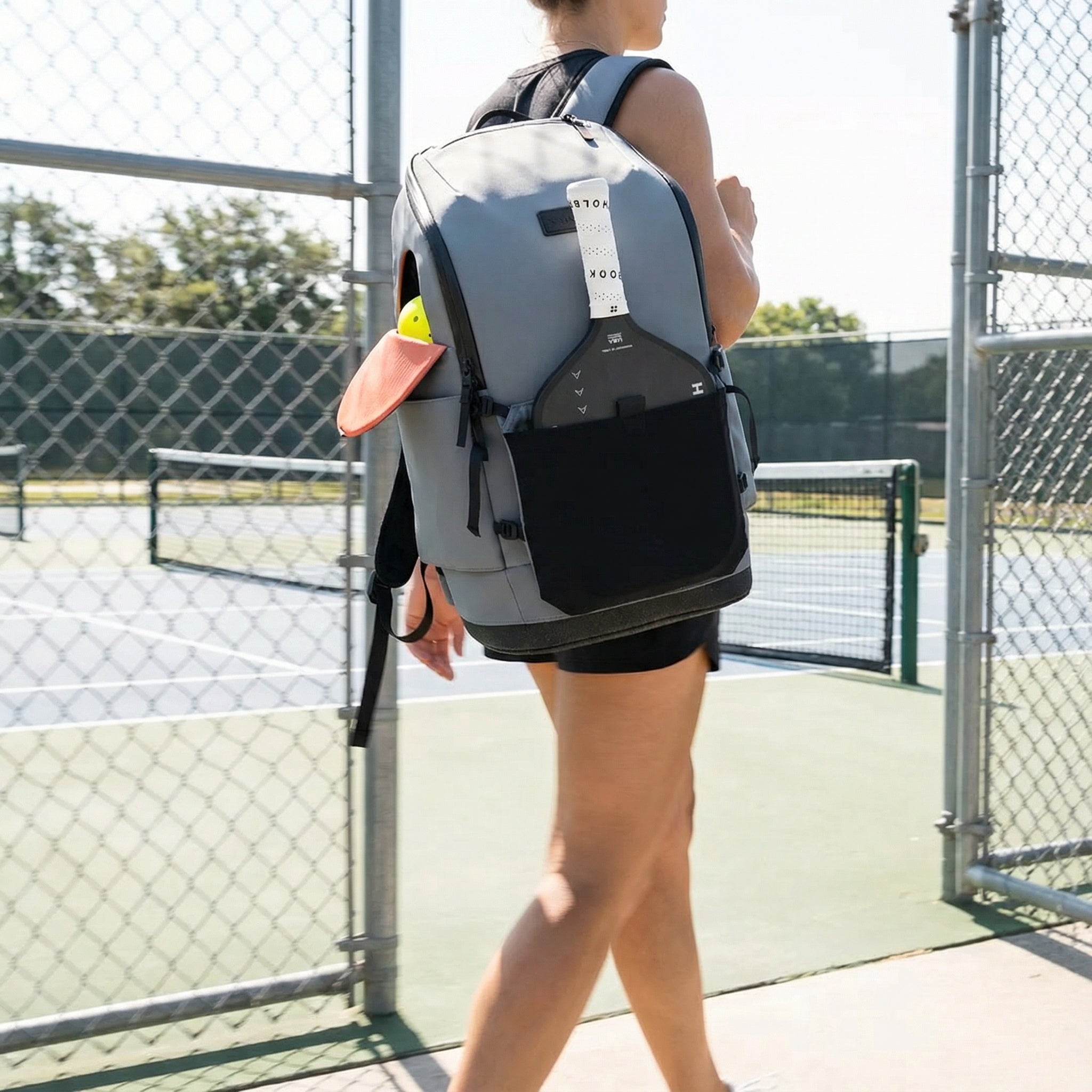
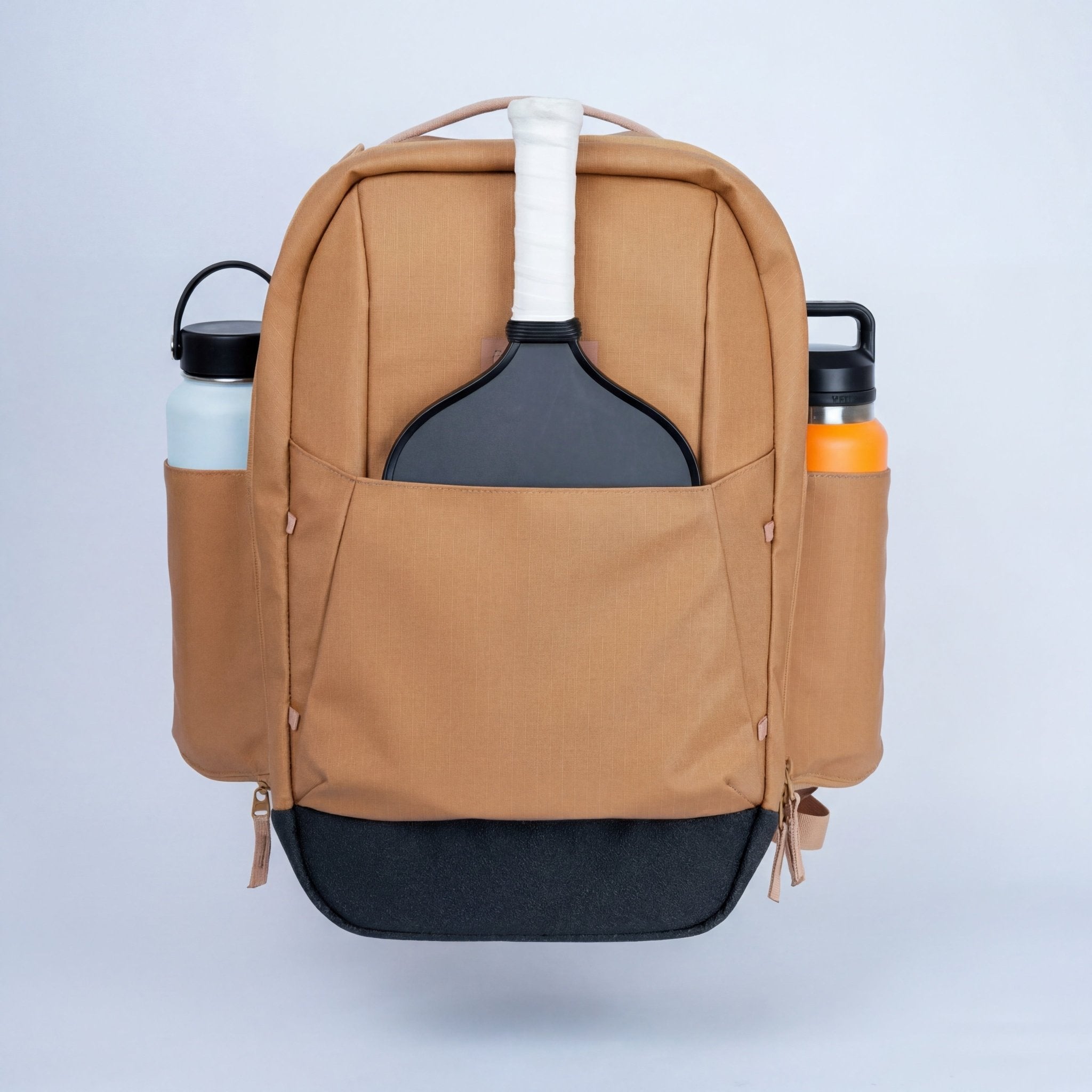
A quality paddle deserves a bag that protects it. The Court Ranger V2 has a dedicated modular paddle sleeve that holds up to 4 paddles, a 16" laptop sleeve for work-day commutes, and YKK AquaGuard zippers that hold up to outdoor weather. At $195, it's the most practical bag for players who split time between work and the court.

See the Court Ranger V2 ($195) →
FAQ
What's the difference between the Diadem Edge 18K Standard and Power Pro?
The standard Edge 18K has a 5.3" handle and a standard-layered 16mm polymer honeycomb core. The Power Pro has a 5.7" handle (0.4" longer) and uses thermoformed construction — carbon fiber wraps around the paddle edges for more consistent response on edge strikes. The Power Pro also uses smaller 8mm honeycomb cells vs the standard model's cells, which expands the sweet spot area. Price difference: $25 ($174.95 vs $149.95).
Is 18K carbon fiber better than 12K carbon fiber for pickleball?
18K carbon fiber has more filaments per tow (18,000 vs 12,000), creating a finer weave with more surface texture. For pickleball, the finer texture produces more spin — there are more surface contact points between the ball and paddle face. The 18K face is also stiffer, which returns energy to the ball faster (crisper shot feel). It's not necessarily better for all players — softer faces have more dwell time and can feel more controllable for touch shots.
Should I choose the Edge 18K Speed Pro or Power Pro?
Both cost $174.95 and share the same 5.7" handle. The Power Pro has a 16mm thermoformed core with smaller cells for more consistent edge response — better for power-oriented, aggressive players. The Speed Pro has a 14mm core with foam perimeter — thinner core means more responsive/lively ball feel, but slightly less forgiving off-center. If you already prefer thin-core paddles, get the Speed Pro. If you're unsure, the Power Pro's 16mm core is more forgiving.
How does the Diadem Edge 18K compare to the Edge BluCore Pro?
The Edge BluCore Pro ($249.95) uses Diadem's foam-based BluCore core, which is softer and offers more touch/feel at the kitchen than the 18K's polymer honeycomb. The 18K has a stiffer, spin-oriented face with more aggressive ball exit. The BluCore Pro includes a lifetime core warranty; the 18K lineup doesn't. Choose the 18K for spin-first, aggressive play at a lower price. Choose the BluCore Pro for softer feel, more touch, and warranty coverage.
What grip size does the Diadem Edge 18K come in?
The Edge 18K lineup comes in one grip size: 4 1/8" (Small), with actual sizes varying up to 1/8". There's no medium or large option. Players with larger hands can add an overgrip (typically adds ~1/16") to bring it closer to a standard medium, but the base circumference remains small. If you have large hands and need a standard 4 3/8" grip, look at paddles from brands that offer multiple grip sizes.
Is the current sale price on the Edge 18K real or typical?
As of September 2026, the Edge 18K Standard is at $149.95 (original price $229.95) and the Power Pro/Speed Pro are at $174.95 (original $239.95). Pickleball Central runs legitimate sale pricing on current inventory — these aren't inflated "regular" prices. That said, sale prices change, so check current pricing via the links in this article before purchasing.
Final Verdict
The Diadem Edge 18K lineup does something most paddle families don't — it offers real differentiation across three variants instead of just selling you the same paddle with a different color option. The standard model is the easiest buy at $149.95. The Power Pro makes sense for reach-oriented and aggressive players. The Speed Pro is for players who know they want thin-core feel.
The 18K carbon face is the real story. The fine-weave texture produces spin that you can feel on the first dink session. Pair that with a 16mm polymer core (on the standard and Power Pro) and you've got a carbon fiber paddle that punches above its current price point.
One honest note: the small grip (4 1/8") is limiting. If you've got medium-to-large hands and prefer a standard grip size, this isn't your paddle family regardless of the 18K face quality.

Leave a comment
This site is protected by hCaptcha and the hCaptcha Privacy Policy and Terms of Service apply.