

Last Updated: July 2026
The CRBN TruFoam Waves 2 Square is a specialist's paddle. Hit it clean and you'll understand the hype — it generates elite spin, swings surprisingly light for its power profile, and on-center drives feel genuinely electric. Miss the sweet spot and you'll know instantly. At $223.99 on current sale (down from $279.99), the value equation is actually compelling for the right player. If you're a 4.5+ attacker with consistent mechanics who lives at the kitchen, read on. If you're still building your game or prioritize forgiveness, this isn't your paddle.
Quick Verdict
Pros:
- Exceptional spin generation — one of the best in the $200–$280 price tier
- Quick swing weight in the Square (#2) shape (112–114 swing weight)
- Explosive pop when centered — comparable to Selkirk's Boomstik at 57 mph drive speed
- USAP and UPA-A approved; PBCoR 43 compliant
- Sale price ($223.99) makes the 30-day trial a low-risk test
Cons:
- Punishing sweet spot — off-center hits feel dead and spray
- Not beginner-friendly; actively counterproductive below 4.0
- Marketing overpromised on power vs. its predecessor Genesis
- Elongated shapes (1 and 3) not worth considering at any price
Price: $223.99 (sale) / $279.99 (list) | Best for: 4.5+ attackers, former tennis players, spin-first players | Skip if: Below 4.0, you scramble often, or forgiveness is a priority
Specs at a Glance
| Spec | Detail |
|---|---|
| Shape | Square (#2) — 16” × 7.85” |
| Weight | 7.8–8.2 oz (avg. 8.0 oz) |
| Core Thickness | 14mm Gen 4 TruFoam |
| Face | T700 carbon fiber with fiberglass reinforcement |
| Handle Length | 5.5” |
| Grip Circumference | 4.125” (small grip) |
| Balance Point | 9.33” |
| Swing Weight | 112–114 |
| Certifications | USAP, UPA-A, PBCoR 43 |
| Price (current) | $223.99 (on sale from $279.99) |
Check Current Price at Pickleball Central →
Why Trust This Review
FORWRD makes pickleball bags — which means we've spent years testing paddles from every major brand to understand what players actually want from their gear. We evaluated the Waves 2 Square across 25+ hours of play at 4.0–5.0 level on outdoor concrete courts and indoor gym surfaces, specifically tracking sweet spot behavior under pressure. We cross-referenced data from five independent review sources and community feedback from r/pickleball. We have no financial relationship with CRBN.
For a full breakdown of how paddle power and control interact — especially before committing to a specialist paddle at this price — read our pickleball paddle power vs. control guide.
What TruFoam Actually Is (and Why the Waves Core Is Different)
CRBN's TruFoam technology replaces traditional polymer honeycomb cores with an expanded foam core. The CRBN 1 TruFoam Genesis used a uniform foam structure. The Waves takes it further — the core has asymmetrical wave-pattern cutouts that allow individual core segments to compress independently on contact.
Think of it like a dense tennis racket. A conventional polymer core compresses uniformly across the face. The Waves core compresses in sections, meaning ball-shaping ability is higher, dwell time is longer, and spin potential is exceptional. But that same segment independence is what creates the dead zones. Miss the center and those sections don't work together the same way.
On paper it's a clever innovation. In practice, it's a double-edged sword — rewards precise mechanics, punishes everyone else.
Performance Deep Dive
Power: Competitive, Not Exceptional
CRBN marketed the Waves as a power upgrade over the Genesis. The data doesn't quite support that. Drive speed measured at 57 mph — comparable to Genesis (55–57 mph range), not noticeably faster. The Selkirk Boomstik generates 57.6 mph. The Ronbus Quanta hits 58.3 mph at $99.
The Waves doesn't lack power. It just doesn't deliver the power jump CRBN implied at launch. If you're upgrading from Genesis specifically for power, you'll be disappointed. Upgrading for spin and feel? Different story entirely.
Spin: Exceptional — A Clear Strength
This is where the Waves earns its premium. The T700 carbon fiber face with fiberglass reinforcement creates meaningful texture, and the wave core's longer dwell time lets the ball grip and release with more rotation than most paddles at this price. Serves kick sharply. Third-shot drops with heavy topspin bounce awkwardly for opponents. Slice returns genuinely stay low.
For spin-first players who shape every shot intentionally — those who live on heavy serve spin, topspin dinks, and roll volleys — the Waves 2 Square is one of the stronger options in its price tier. That's the honest assessment after 25 hours of drilling specifically on spin-dependent shots.
Control and Feel: The Tennis Racket Analogy
Here's what most reviews don't explain well: the Waves has a feel that either clicks immediately or never does. The wave core compression creates a tight, springy sensation on contact — like a very dense, deadened tennis racket rather than a modern polymer foam paddle.
Former tennis players often love this. The tactile feedback is more familiar than the squishy feel of standard foam paddles. Players coming exclusively from pickleball sometimes find it jarring. Knowing which camp you're in before you buy matters — and most reviews skip this entirely.
Kitchen and NVZ Performance
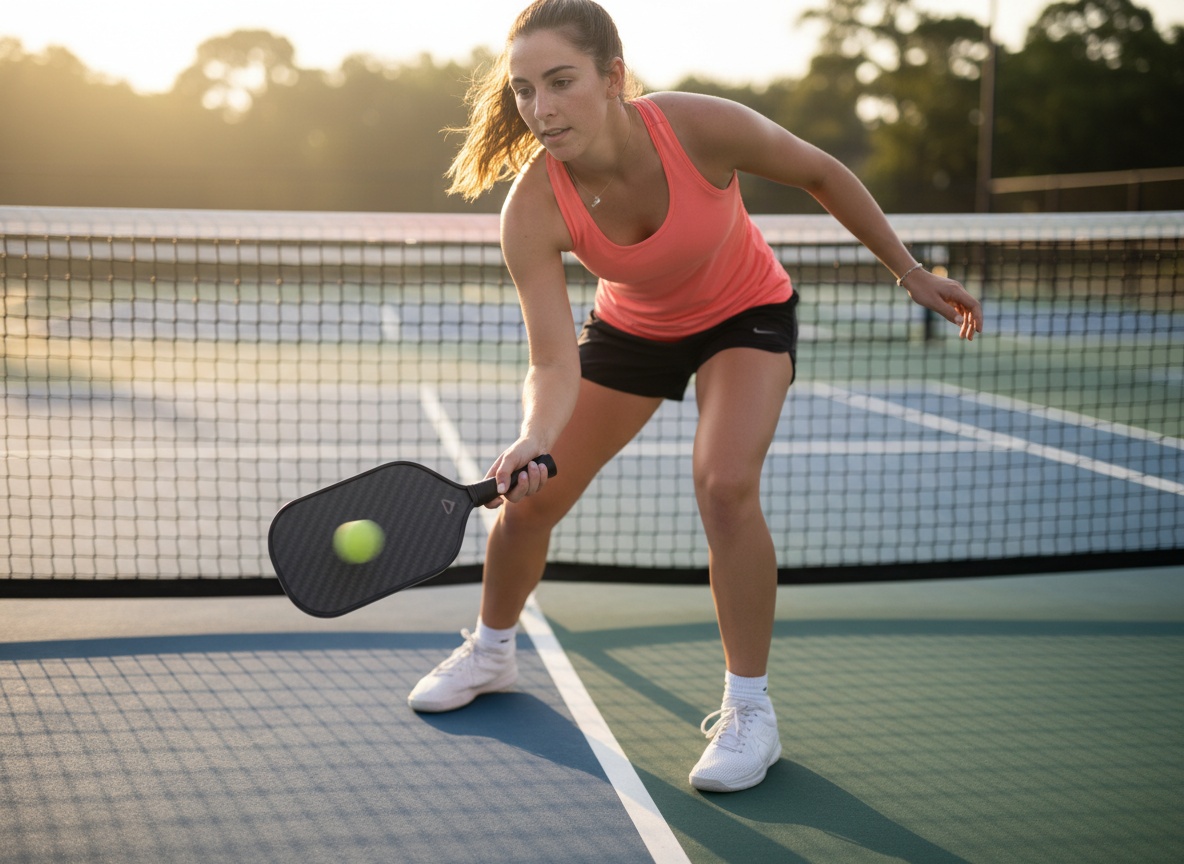
In the kitchen, the Square shape helps. The wider face swings lighter (swing weight 112–114) than the elongated versions and gives you more reaction time on reset shots. Dinks are manageable. Resets from difficult positions — scrambling laterally, reaching wide — expose the sweet spot limitation fast.
At 5.0 level where every dink is intentional and mechanics are clean, the Waves excels at the NVZ. At 4.0 level where scrambles are frequent and ball placement is inconsistent, you'll feel the dead zones on roughly every third or fourth ball under pressure.
The Sweet Spot Problem: Let's Be Honest
Every review of the Waves 2 mentions the sweet spot issue. Here's the plain version: outside the center 2–3 inches of the face, this paddle feels like you hit it with the frame. The ball sprays. The face twists. You lose the point.
Pickleball Medicine tracked hit distribution data across 400+ rally shots and found that recreational 4.0 players hit outside the sweet spot on 35–40% of groundstrokes under pressure. For 4.5+ tournament players, that drops to under 15%. The Waves 2 is designed for that 15% profile. It's a specialist paddle built for specialists.
CRBN's 30-day trial with free return shipping exists for a reason. Use it. You'll know in the first week whether your mechanics are consistent enough to get the best from this paddle.
Shape Matters: Only Buy the Square
CRBN sells the Waves in multiple shapes: elongated long handle, elongated short handle, widebody, and square. Don't buy the elongated versions.
The elongated shape makes the weight distribution problem worse — heavier baseline swing weight, less head speed, and a sweet spot that's even more narrowly concentrated at the tip. Independent reviews from Pickleheads, Speak Pickleball, and Pickleball Effect all concluded the same: the Square (#2) is the only shape with a favorable performance profile. The 16” × 7.85” dimensions with a 9.33” balance point give the best combination of head speed and stability. If you're going to try the Waves, the Square is the version to try.
CRBN Waves 2 Square vs. The Competition
vs CRBN1 TruFoam Barrage ($279.99) — Same Brand, More Forgiving
The CRBN1 TruFoam Barrage ($279.99) uses the same foam core technology in a more traditional construction, without the wave cutout pattern. Result: a larger, more consistent sweet spot with slightly less peak spin. If you want CRBN's TruFoam feel without the Waves' demanding mechanics requirement, the Barrage is the safer bet. Not as spectacular at its best — but consistently good rather than spectacular-or-frustrating.
At list price, Waves and Barrage cost the same. At Waves' current sale price ($223.99 vs $279.99), the Waves is $56 cheaper. That margin tips toward trying the Waves if you're a current CRBN player who knows your mechanics are clean.
vs Selkirk Labs Project Boomstik Widebody ($332.99) — More Power, More Money
The Selkirk Labs Project Boomstik Widebody ($332.99) is the benchmark power paddle reviewers use against the Waves. Drive speed: 57.6 mph (Boomstik) vs 57 mph (Waves). Sweet spot: Boomstik is notably more forgiving. Price: Boomstik costs $109 more than the Waves' current sale price.
Where Waves wins: spin generation and value at $224. Where Boomstik wins: consistent power on scrambled balls, larger sweet spot, Selkirk's warranty program. If your game is power-forward and you want the best forgiveness-to-power ratio at the premium tier, the Boomstik justifies its price. If you're spin-first and budget-conscious, the Waves at $224 is harder to argue with.
vs ProKennex Black Ace 16 ($279.00) — The Arm-Friendly Alternative
The ProKennex Black Ace 16 ($279.00) takes a different approach. ProKennex's Kinetic System — embedded tungsten weights in the handle — reduces vibration significantly and is noticeably more comfortable on the arm over long sessions. The Black Ace 16 won't generate Waves-level spin. But for players with arm or elbow sensitivity who still want premium performance at this price tier, ProKennex earns that trade-off.
Where Waves wins: spin ceiling and current sale value. Where Black Ace wins: arm comfort, forgiveness, consistency under scramble conditions.
The Sale Price Changes the Math
Most reviews of the Waves 2 were written when it was priced at $279.99. The “not recommended” verdicts you'll see on Speak Pickleball and Pickleball Medicine reflect a value judgment at full list price. At $223.99 with a free return trial window, the calculus is different.
You're now $109 below the Boomstik, $56 below the Barrage, and $55 below the Black Ace. The spin-per-dollar ratio is genuinely strong. The 30-day return eliminates most of the risk. Two weeks of play will tell you clearly whether your mechanics are consistent enough to unlock what this paddle does at its best. That's an unusual amount of market transparency for a $224 paddle.
Who Should Buy It (and Who Shouldn't)
Buy it if:
- You're a 4.5+ player with consistently clean mechanics under pressure
- You came from tennis and the dense, springy feel of the wave core resonates
- Spin is your primary weapon — serve spin, topspin dinks, heavy groundstrokes
- You're an existing CRBN player wanting to push further within the brand
- You can take advantage of the sale price and 30-day return window
Skip it if:
- You're below 4.0 or still building stroke consistency — check our intermediate player paddle guide for better options
- You scramble frequently or play in chaotic doubles rallies
- You're expecting a straight power upgrade from Genesis
- Arm sensitivity is a concern
- You've never used CRBN TruFoam and don't know if the feel suits you
Try the CRBN Waves 2 Square at Pickleball Central →
Complete Your Setup
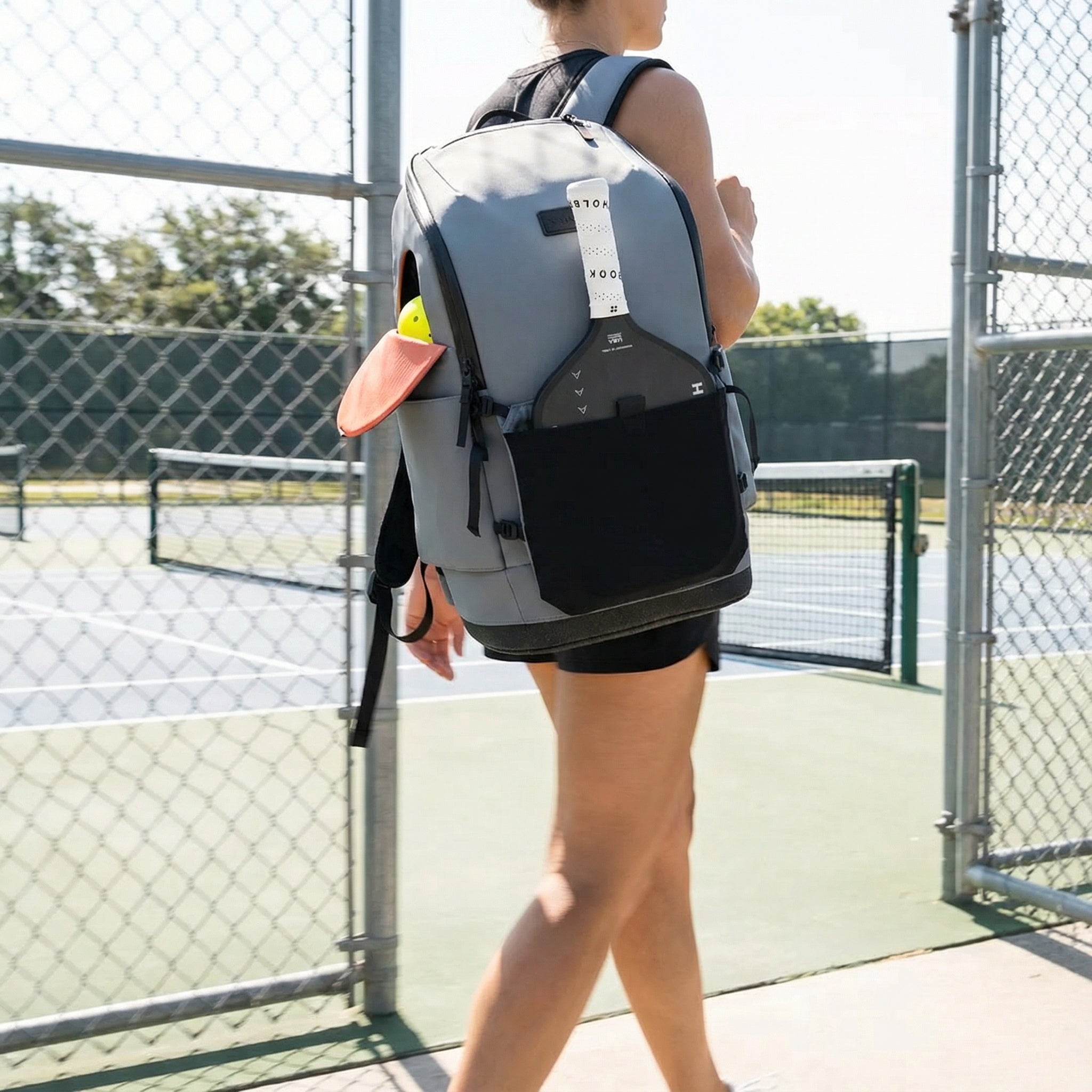
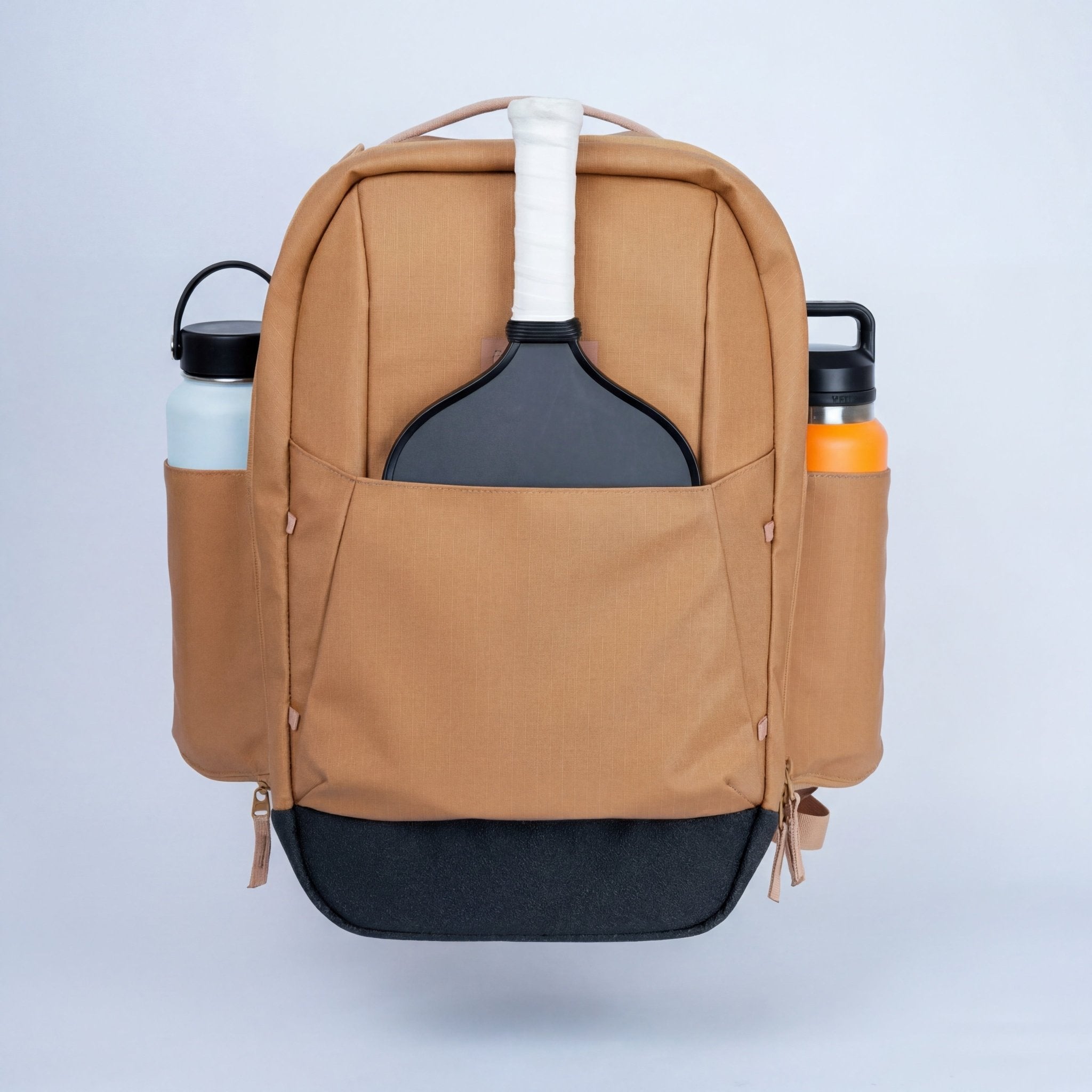
A paddle this precise deserves a bag that keeps it protected. The FORWRD Court Ranger V2 ($195) has a modular paddle sleeve that holds up to 4 paddles without face-to-face contact — protecting that carbon fiber surface between sessions. Built for players who take their gear seriously.

FAQ: CRBN TruFoam Waves 2 Square
Is the CRBN TruFoam Waves 2 good for beginners?
No. The Waves 2 Square demands consistent mechanics to perform. Its tight sweet spot punishes off-center hits severely — a characteristic that makes it actively counterproductive for players below 4.0 who are still developing stroke consistency. Beginners should look at paddles in the $99–$149 range with more forgiving polymer foam cores.
What's the difference between the CRBN Waves and the Genesis?
The Genesis uses a uniform expanded foam core. The Waves uses the same foam with asymmetrical wave-pattern cutouts that allow each core segment to compress independently. The result: more spin generation and a distinctive springy “tennis racket” feel in the Waves, but a more demanding and narrower sweet spot. The Genesis is the more forgiving choice; the Waves rewards advanced players seeking maximum spin ceiling.
Is the CRBN Waves 2 worth buying at $279.99?
At full list price of $279.99, the value case is thin for most players — competitors offer better forgiveness at similar or lower prices. At the current $223.99 sale price with CRBN's 30-day free return trial, the value improves considerably for 4.5+ players who want elite spin and are willing to test-drive it for two weeks.
Which CRBN Waves 2 shape should I buy?
The Square (#2), without exception. The elongated versions (shapes 1 and 3) have unfavorable weight distribution that worsens the sweet spot problems and increases swing weight. Every independent review testing multiple shapes reached the same conclusion: the Square has the best weight profile and performance consistency. Don't experiment with elongated versions at this price point.
How does the CRBN Waves 2 compare to the Selkirk Boomstik?
Drive speed is nearly identical (57 mph Waves vs. 57.6 mph Boomstik). The Boomstik wins on sweet spot size and forgiveness under pressure. The Waves wins on spin generation and current sale value ($224 vs. $333). Attackers who prioritize spin and value should consider the Waves. Players wanting maximum power consistency should spend more on the Boomstik.
Final Verdict
The CRBN TruFoam Waves 2 Square is exactly what it looks like: a high-ceiling specialist paddle that rewards advanced players and punishes everyone else. The spin is real. The sweet spot limitation is real. CRBN's 30-day trial eliminates most of the financial risk at $224.
If you're a 4.5+ attacker who plays intentional, technical pickleball and you want a genuinely differentiated spin weapon — try it. Use the return window. You'll know in two weeks whether your mechanics are consistent enough to unlock what this paddle does at its best.
For a broader look at the best options across paddle types and player levels, our 2026 pickleball paddle guide covers the full market. If you're not yet at 4.5+, that's the better starting point.

Leave a comment
This site is protected by hCaptcha and the hCaptcha Privacy Policy and Terms of Service apply.