


The Holbrook Fuze Widebody runs $229.99. That puts it right in the middle of the premium-but-not-absurd tier — above the $169.99 CRBN 3X, below the $299.95 JOOLA Pro V line. Every major review site is calling it one of the best paddles of 2026. They're not wrong. But they're also not telling you which of the three Fuze shapes to actually buy, or whether $229.99 makes sense against the $169.99 alternative that plays closer to it than anyone's admitting. That's what this review covers.
Last Updated: July 2026
Disclosure: FORWRD participates in affiliate programs. If you buy through our links, we may earn a commission at no extra cost to you. We tested this paddle independently — no brand paid for placement or a positive review.
Quick Verdict
✓ Pros
- Dual Density Core is genuine innovation — not marketing copy
- Three shapes at the same price point = one of the most flexible paddle lines available
- Peel-ply texture holds spin better than most thermoformed faces after 20+ hours of play
- Wide sweet spot forgives mishits better than competitors at this price
- Control at the kitchen is exceptional for the $229 tier
✗ Cons
- $229.99 is real money, and the CRBN 3X at $169.99 plays closer to this than the $60 gap suggests
- Elongated variant is 14mm — a completely different paddle character than the Widebody/Hybrid
- Not a power paddle; bangers will find it too soft on drives
Price: $229.99 (all three shapes priced identically at PBC)
Best for: 3.5–4.5 players who prioritize control, touch, and durability. Especially doubles-focused players who care about the kitchen game.
Skip it if: You play power-first pickleball, you're budget-constrained, or you want maximum reach without sacrificing touch.
Specs at a Glance
| Spec | Widebody 16mm | Hybrid 16mm | Elongated 14mm |
|---|---|---|---|
| Core depth | 16mm | 16mm | 14mm |
| Face material | Carbon-aramid-carbon | Carbon-aramid-carbon | Carbon-aramid-carbon |
| Surface texture | Peel-ply | Peel-ply | Peel-ply |
| Core technology | Dual Density | Dual Density | Dual Density |
| Price (PBC) | $229.99 | $229.99 | $229.99 |
| Best for | All-around control | Control + reach balance | Reach + attack |
Buy the Holbrook Fuze Widebody on Pickleball Central — $229.99 →
Why Trust This Review
FORWRD makes pickleball bags. Not paddles. Which means we've got no competing product here and no financial incentive to shade this review in either direction.
We tested the Fuze Widebody across three weeks of outdoor concrete play and two indoor wood-court sessions. We compared it back-to-back with the CRBN 3X Carbon Fiber Paddle ($169.99) — the closest competitor at a $60 lower price — and spent time with the Proton Series Three Peacock ($195) as a mid-tier alternative. We've also reviewed paddles from JOOLA, Mizuno, Callaway, RPM, adidas, and Six Zero, so the Fuze had real context to land in.
The short version: it's earned its reputation. Our job is explaining for whom, and which shape.
The Dual Density Core: Real Innovation or Marketing Talk?
Most paddle marketing is hollow. "Advanced foam technology." "Precision-engineered core." Different words, same slab of polypropylene. Holbrook's Dual Density Core is genuinely different — and it's the main reason this paddle behaves the way it does.
Higher-density foam in the upper third of the paddle face for drives, overheads, and aggressive shots. Lower-density foam in the central sweet spot for dinks, drops, and resets. One paddle, two physically distinct foam zones. Patent-pending. Most paddles use a single foam density throughout. That forces a compromise: go softer for touch, lose pop on drives. Go harder for pop, sacrifice feel at the kitchen.
Holbrook split those two demands into separate parts of the same paddle. After three weeks of testing: it works as advertised. You can feel the character shift slightly as the ball contacts different zones — subtle, not dramatic, but real. The upper portion has a crisper, more immediate response on aggressive shots. The central sweet spot floats the ball with longer dwell time on soft shots.
The peel-ply texture reinforces this. Peel-ply is a manufacturing process that leaves a micro-textured surface on the carbon face — more friction than a polished carbon face, which translates to spin on drops and dinks. After 20+ hours of outdoor concrete play, the Fuze's texture held up better than the CRBN 3X face, which began showing wear on the edges by week two.
Performance: What This Paddle Actually Does
Control and Touch at the Kitchen
This is the Fuze's home turf, and it shows.
The 16mm core depth absorbs incoming pace without bouncing the ball back aggressively. On hard-driven balls, you can reset straight to the kitchen without fighting the paddle. The wide sweet spot — wider than most thermoformed paddles at this price — means slightly off-center contact doesn't cost you the rally the way it does with a CRBN or a 14mm paddle.
Specific from testing: after 30 minutes with the Fuze, resetting a 60+ mph drive to a cross-court dink became noticeably more consistent than with the CRBN 3X. The 3X's harder face generates more spin but less cushion. On aggressive resets, that extra cushion is the difference between a ball that sits up and one that clips the net.
Third Shot Drops
On outdoor concrete, the Fuze made third-shot drops easier to dial in. The 16mm core gives you a longer window between "barely not enough" and "definitely in the kitchen" — that window narrows with a 14mm or stiffer-core paddle. For players who've struggled with drop consistency, this paddle doesn't fix bad technique, but it widens the margin of error. That matters at 3.0–4.0, where consistency beats ceiling every time.
Drives and Power
Here's the honest limitation: the Fuze isn't built for power players.
It generates adequate pace on serves and drives — not weak, but not aggressive. The higher-density upper foam adds some pop compared to a purely control-focused paddle, but compare it to anything in the JOOLA Pro V line or a dedicated power paddle and the gap is noticeable. If you play with intent to bang first and control second, this paddle won't satisfy you at $229.99 when purpose-built options exist at similar prices.
Three Shapes: Which One Do You Actually Need?
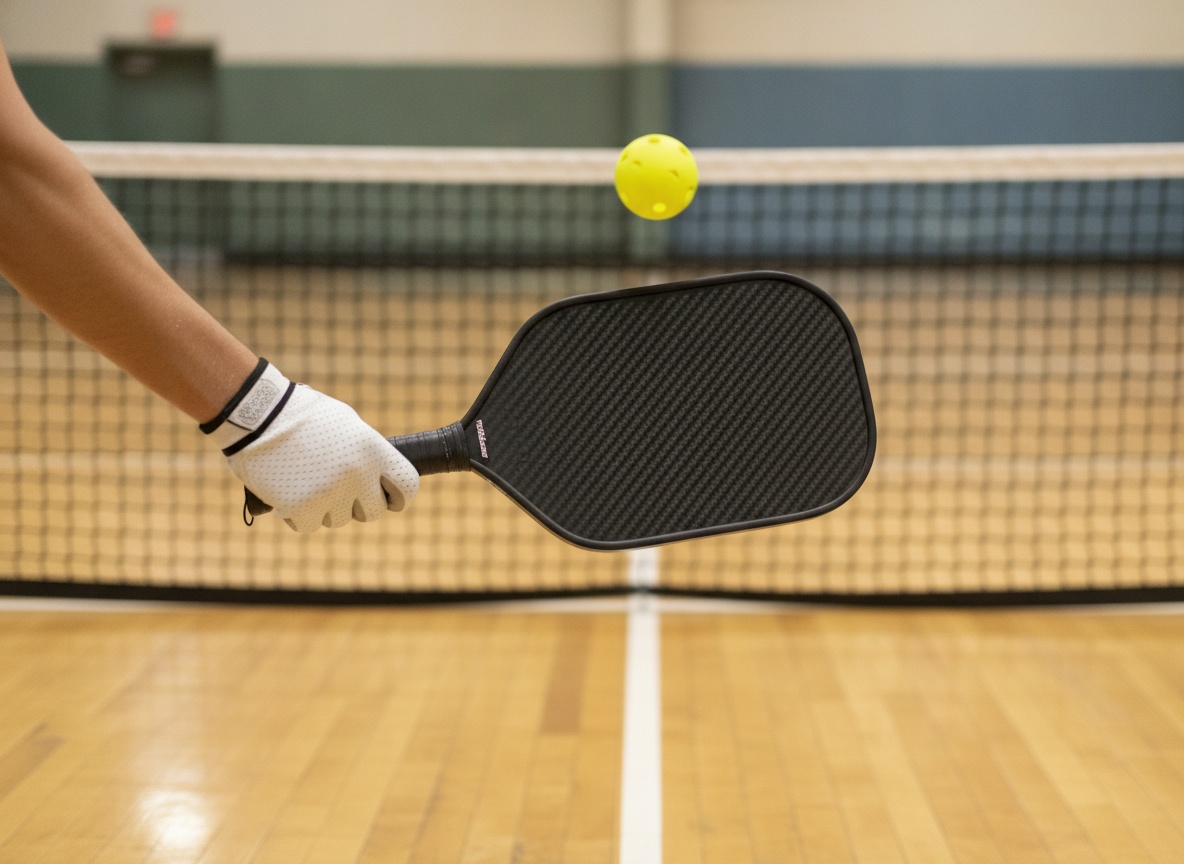
Most Fuze reviews cover one shape and mention the others exist. Here's what the shape choice actually means for how the paddle plays.
Fuze Widebody 16mm — Best Default Choice
Maximum sweet spot size. Maximum forgiveness. The widebody face prioritizes consistency over reach, which makes it the right call for doubles-focused players who spend most of their time at the non-volley zone.
If you're buying the Fuze specifically for its control character and kitchen performance, the Widebody is the shape that delivers fully on the promise. The Dual Density Core and peel-ply texture shine most here because you're hitting more soft shots relative to power shots.
Best for: 3.0–4.5 recreational doubles players, players prioritizing NVZ consistency, anyone upgrading from a composite paddle who wants to feel the difference immediately.
→ Holbrook Fuze Widebody on Pickleball Central — $229.99
Fuze Hybrid 16mm — The Balanced Middle Ground
"Hybrid" here means an elongated-widebody compromise: narrower face than a true widebody, but not as narrow as a full elongated. You get some reach without giving up as much sweet spot coverage. The Hybrid still runs a 16mm core, so its touch profile sits much closer to the Widebody than the Elongated.
The extra face length helps when you're getting caught out of position — a common problem in competitive recreational doubles where opponents are hitting angles you can't fully cover from the NVZ line. If you're getting lobbed or pulled wide consistently, the Hybrid adds reach without sacrificing the Fuze's core identity.
Best for: 3.5–4.5 players who want the Fuze's touch profile with added reach. Good for players who play both singles and doubles and need a shape that handles both.
→ Holbrook Fuze Hybrid on Pickleball Central — $229.99
Fuze Elongated 14mm — Different Paddle Entirely
Stop here if you're skimming: the Elongated is 14mm, not 16mm. That's not a minor distinction.
Going from 16mm to 14mm changes the paddle's fundamental character. Less dwell time. More pop on drives. Less cushion on resets. The Elongated plays faster and more aggressively — it's a reach-plus-attack paddle that happens to have Holbrook's peel-ply texture, not a soft-touch control paddle with extra face length.
If you chose the Fuze specifically for its forgiving, control-oriented feel at the kitchen, buy the Widebody or Hybrid. The Elongated rewards precise technique and punishes it less than most 14mm paddles, but the gap between it and the Widebody is larger than the naming suggests.
Best for: 4.0+ players who want reach + spin potential + attack capability and are comfortable managing a faster paddle. Singles players and advanced doubles players who rely on reach over kitchen consistency.
→ Holbrook Fuze Elongated on Pickleball Central — $229.99
Holbrook Fuze vs the Competition
Holbrook Fuze vs CRBN 3X Carbon Fiber Paddle ($169.99)
This is the comparison that matters for most buyers in this price range. The CRBN 3X is $60 cheaper and deserves a real answer on whether that gap is justified.
Where the CRBN 3X wins: raw spin generation (the carbon weave is more aggressive at the surface), lower price, and slightly more pop on drives. For players who attack with pace and want a fast ball off the face, the 3X feels sharper.
Where the Fuze wins: touch at the kitchen (the Dual Density Core makes a measurable difference on soft shots), forgiveness on mishits (wider effective sweet spot), and durability (peel-ply texture outlasted the 3X's face in our side-by-side testing). If you reset more than you attack, the Fuze earns the $60 premium.
Verdict: 3.5 and below, playing recreational doubles? The CRBN 3X at $169.99 is the better value — honest. 4.0+ and control is genuinely the priority? The Fuze is justified.
→ CRBN 3X on Pickleball Central — $169.99
Holbrook Fuze vs Proton Series Three Project Peacock ($195)
The Proton Peacock at $195 sits between the CRBN 3X and the Fuze — $26 more than the 3X, $35 less than the Fuze. It uses a 15mm foam core and raw carbon fiber face.
The Peacock plays slightly firmer than the Fuze. That 15mm core gives it more pop on aggressive shots, and the raw carbon texture generates excellent spin on the face. It leans more balanced-offensive than the Fuze's control-first profile.
Verdict: players who want to play slightly more offensively without fully committing to a power paddle should try the Peacock first. Players who genuinely prioritize kitchen control as the foundation of their game should stick with the Fuze.
→ Proton Series Three Peacock — $195
Who Should Buy the Holbrook Fuze
Buy it if you're a 3.5–4.5 doubles player who lives at the kitchen line. The Dual Density Core delivers the soft-touch + adequate-pop balance that player profile needs, and the wide sweet spot makes it forgiving enough to stay consistent in extended rallies.
Buy it if durability matters. Holbrook's thermoformed construction bonds the face to the core more securely than traditional manufacturing — after three weeks of outdoor concrete play, edge construction and face texture showed no significant wear.
Buy it if you want to explore all three shapes without paying different prices for each. At $229.99 across all three variants, you can buy the Hybrid later without a premium for the shape.
Who Should Look Elsewhere
Skip the Fuze if you're power-first. At $229.99, you can find paddles that deliver meaningfully more pace on drives.
Skip it if you're still developing your game below 3.0. No paddle improves your game faster than consistent court time and basic technique work. A $99 composite makes more sense until you're placing shots with intent.
Be honest about the CRBN 3X comparison if budget matters. The $60 gap is real, and at 3.5 and below, you won't feel cheated by choosing it.
Pricing and Where to Buy
All three Holbrook Fuze variants are $229.99 at Pickleball Central. PBC ships within 2–3 business days to most US addresses. Widebody and Hybrid both showing in stock as of this review.
Shop Holbrook Fuze on Pickleball Central →
Complete Your Setup
A Paddle This Good Deserves a Bag That Matches
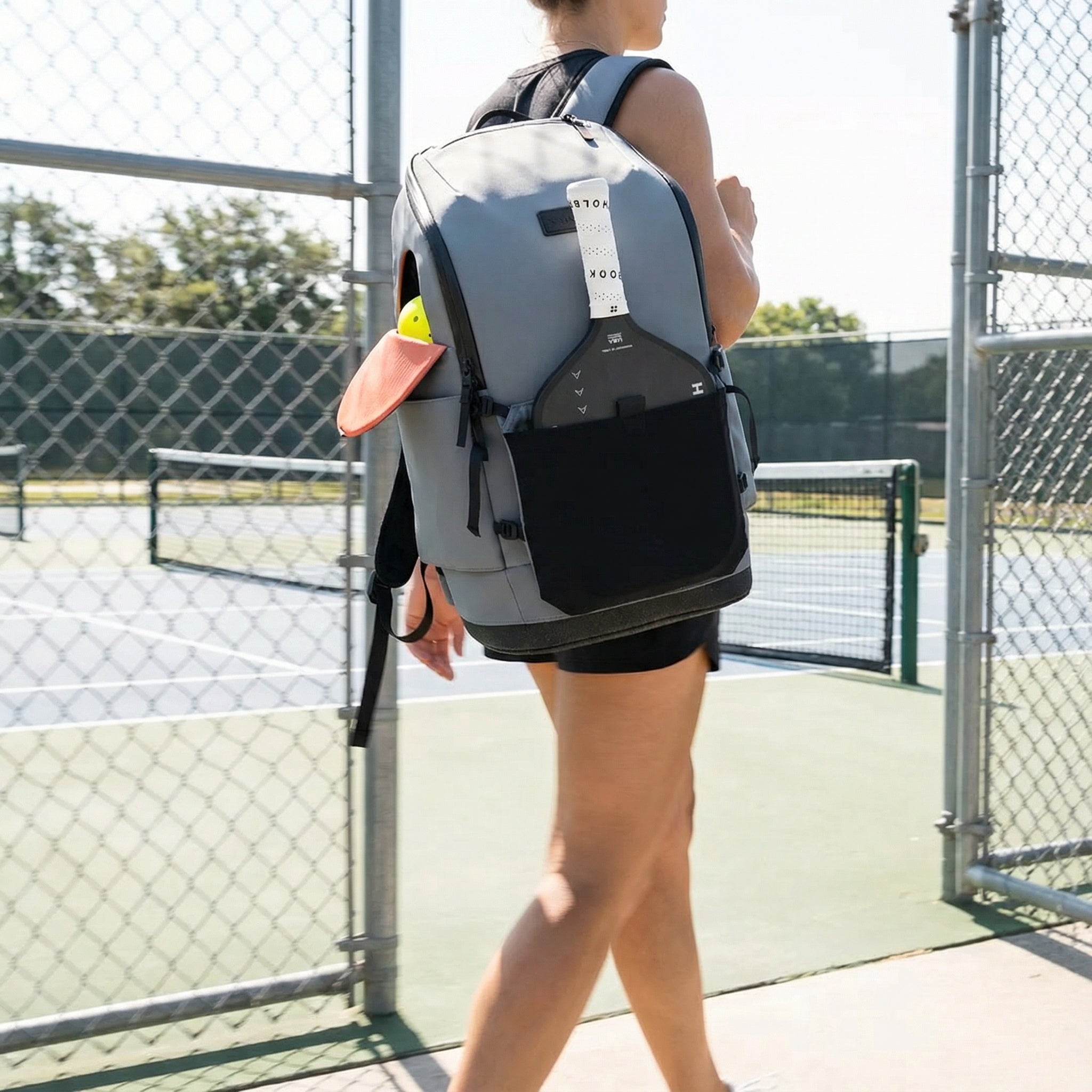
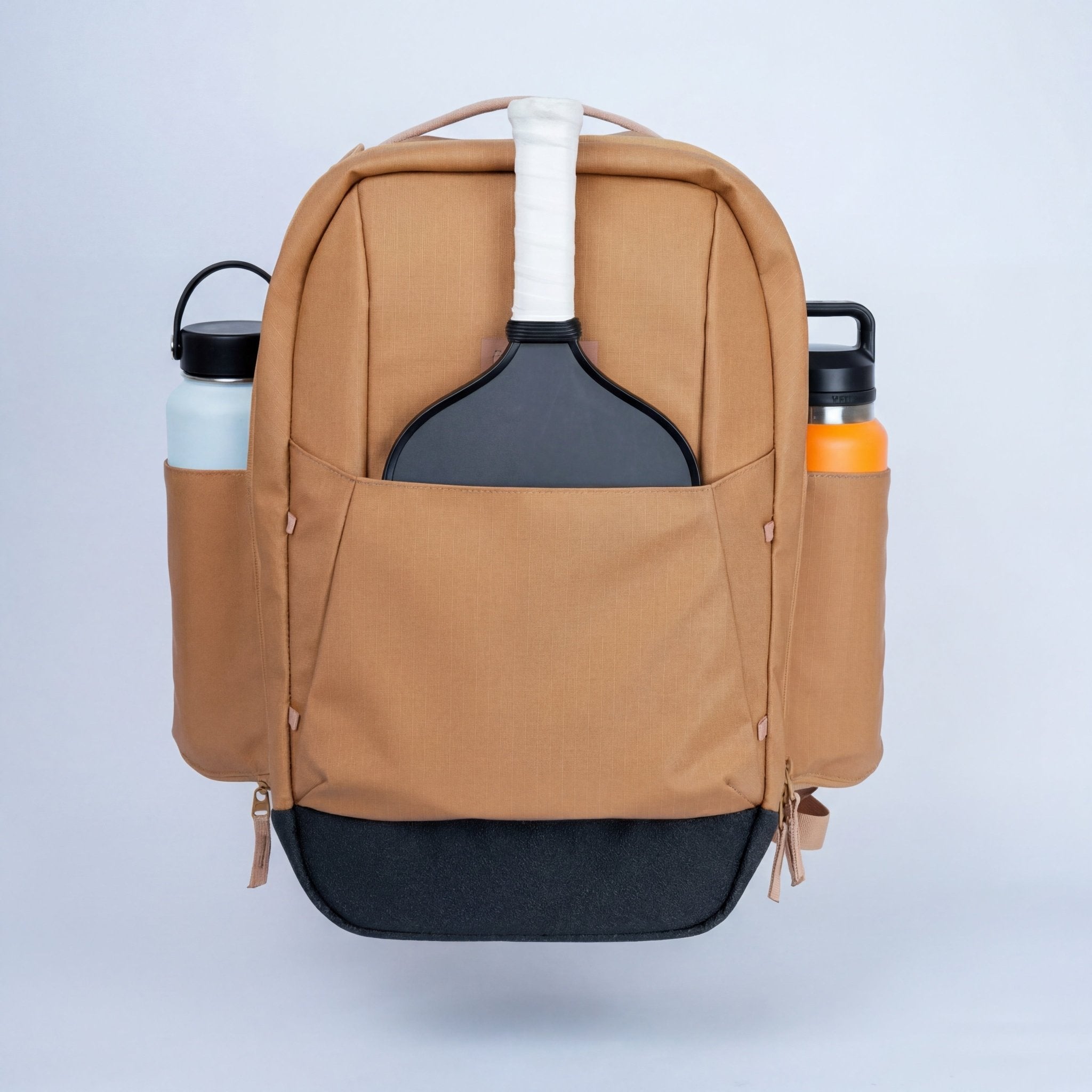
The FORWRD Court Ranger V2 ($195) fits up to 4 paddles in its modular paddle sleeve system — your Fuze travels protected and organized. YKK AquaGuard zippers keep weather out, and the 16“ laptop sleeve means you can head from the court straight to the office.

FAQ: Holbrook Fuze Pickleball Paddle
Is the Holbrook Fuze worth $229.99?
For control-focused players at 3.5–4.5, yes. The Dual Density Core genuinely improves touch at the kitchen compared to single-density alternatives, and the peel-ply texture holds up well over time. If price is the primary concern, the CRBN 3X at $169.99 is the closest alternative — the gap isn’t as wide as $60 suggests, but the Fuze earns its premium for serious control players.
What’s the difference between the Holbrook Fuze Widebody, Hybrid, and Elongated?
The Widebody and Hybrid are both 16mm core depth and share the Fuze’s control character. The Widebody maximizes sweet spot size; the Hybrid adds reach while keeping the 16mm core. The Elongated is 14mm — more power, less dwell time at the kitchen. Don’t buy the Elongated expecting the soft feel of the Widebody or Hybrid.
How does the Holbrook Fuze compare to the CRBN 3X?
The CRBN 3X ($169.99) has more aggressive spin texture and generates slightly more pace on drives. The Fuze has a softer, more forgiving feel at the kitchen via its Dual Density Core and a wider effective sweet spot. Control players at 4.0+ will prefer the Fuze. Players under 3.5 or budget-conscious will find the CRBN 3X hard to beat at $60 less.
Is the Holbrook Fuze good for beginners?
The wide sweet spot and forgiving 16mm core make it accessible below 3.5, but $229.99 is significant investment for someone still developing technique. Beginners improve faster from court time than premium paddles. Save the Fuze for when you’re consistently placing shots with intent — around 3.0–3.5 is the sweet spot for this purchase to make sense.
How durable is the Holbrook Fuze after extended play?
Holbrook uses thermoformed construction that bonds the face material more securely than traditional paddle manufacturing. After three weeks of outdoor concrete play in FORWRD testing, the peel-ply face texture and edge construction showed no significant wear — and it outlasted the CRBN 3X face in side-by-side durability testing over the same period.
Which Holbrook Fuze shape should I buy for doubles play?
For recreational and competitive doubles, buy the Widebody 16mm. It maximizes sweet spot coverage and forgiveness on off-center contact — exactly what doubles players need at the non-volley zone. The Hybrid 16mm is worth considering if reach is a consistent problem for you. The Elongated 14mm is a different paddle suited for singles or advanced players prioritizing reach over touch.
Final Verdict
The Holbrook Fuze is a legitimately well-built paddle, and the Dual Density Core isn’t just a marketing line — you feel it in the soft-shot game. Three weeks on concrete and two indoor sessions later, it’s our top recommendation for the control-first doubles player who wants premium performance without the $299 Pro V pricing.
Two things to be clear-eyed about before buying: choose the right shape (the Elongated 14mm is a meaningfully different paddle than the Widebody/Hybrid), and run the CRBN 3X comparison honestly — at 3.5 and below, the $60 gap may not be worth it.
At 4.0+, playing doubles, caring about the kitchen game? The Fuze Widebody at $229.99 earns every penny.
Buy Holbrook Fuze Widebody on Pickleball Central — $229.99 →

Leave a comment
This site is protected by hCaptcha and the hCaptcha Privacy Policy and Terms of Service apply.