

Disclosure: This article contains affiliate links to Pickleball Central. If you purchase through our links, we earn a small commission at no extra cost to you. We tested this paddle independently; affiliate relationships don't influence our ratings.
FORWRD may earn a commission on purchases made through links to Pickleball Central. We only link to products we'd recommend regardless.
The JOOLA Agassi Pro V 16mm is the right choice for most intermediate-to-advanced players looking at the Agassi line — not because of the name on the paddle, but because 16mm of Honeycomb Propulsion core genuinely changes how this paddle plays. It's softer, more forgiving, and kinder to your arm than the 14mm. The $299.95 price is hard to swallow, but if you're playing 3+ times a week and your shoulder is already talking to you, the math changes fast.
Quick Verdict
- Hyper-Foam Edge Wall gives a genuinely larger sweet spot
- 16mm core absorbs vibration — noticeably better for arm health
- Textured carbon face generates real spin without gimmick
- 5.5" grip fits two-handed backhand setups naturally
- USAP + UPA-A tournament approved
- $299.95 is steep for a control-first paddle
- 8.1 oz average — heavier than some prefer for fast exchanges
- Less explosive pop than the 14mm or pure power paddles
- Agassi branding adds roughly $25 you're paying for the name
- Price: $299.95
- Core: 16mm Honeycomb + Hyper-Foam Edge
- Weight: 7.9–8.3 oz (avg 8.1)
- Length: 16.5"
- Best for: Control-first intermediate to advanced
- Skip if: You want max pop or play under 3×/week
Last Updated: July 2026
Specs at a Glance
| Spec | JOOLA Agassi Pro V 16mm |
|---|---|
| Price | $299.95 |
| Core | 16mm Honeycomb Propulsion + Hyper-Foam Edge Wall |
| Face Material | Textured Carbon Fiber |
| Frame | KineticFrame carbon reinforcement |
| Weight Range | 7.9–8.3 oz (avg 8.1 oz) |
| Dimensions | 16.5" length × 7.5" width |
| Grip Length | 5.5" |
| Grip Circumference | 4¼" (Medium) |
| Approval | USAP + UPA-A tournament legal |
Buy the JOOLA Agassi Pro V 16mm at Pickleball Central →
Why Trust This Review
FORWRD makes pickleball bags. We're not a paddle brand — which means we don't have a competing product to protect, and our take on the Agassi Pro V is genuinely just about whether it's worth your money.
We tested the 16mm alongside the 14mm over three weeks of outdoor play on concrete courts, focusing on three scenarios: aggressive baseline-to-kitchen transitions, fast kitchen exchanges with hard-to-handle pace, and reset situations under real match pressure. Not a controlled lab — real games, real opponents, real frustration when the paddle didn't deliver.
FORWRD's product development involved feedback from 500+ real pickleball players, and arm health came up constantly — especially in the 35–55 age bracket. That's the lens through which the 16mm argument gets interesting. We'll get to that.
The Agassi Factor: Why His Name Is on This Paddle
Andre Agassi retired from professional tennis in 2006 with 8 Grand Slam titles and a return game that redefined baseline play. His approach — aggressive but measured, position-first, relentless patience — maps almost directly onto pickleball fundamentals. He's not a novelty signature; he's someone who actually understands court geometry in a way that translates.
The Agassi Pro V was designed around that background. JOOLA leaned into his legacy: the tapered throat raises the contact zone, the elongated shape (16.5") rewards aggressive-but-controlled baseline play, and the 16mm core prioritizes composure over explosion. That philosophy is either right for your game or it isn't.
The branding does add a premium. You're paying roughly $25 over a comparable unbranded paddle at this spec level — for the Agassi name, the signature colorway, and the story. Whether that bothers you depends on whether you think about paddles as equipment or as statement pieces. No wrong answer, but know what you're buying.
Power and Drive Depth
The 16mm core isn't a power paddle. That's the honest starting point. Honeycomb Propulsion at 16mm thickness means more dwell time — the ball stays on the face a fraction longer — which is outstanding for shaping shots but doesn't create the explosive snap that power-first players want off the baseline.
What you do get is consistent drive depth. Balls land where you aimed them. The KineticFrame carbon reinforcement stiffens the frame without killing feel, so drives carry purpose without being erratic. Over 10 outdoor rec games on concrete, drives consistently landed 3–5 feet inside the baseline — predictable placement that control-first play depends on.
Compare this to the 14mm Agassi Pro V: the thinner core gives noticeably more pop on flat drives. If you're coming from tennis and want that satisfying crack on baseline exchanges, the 14mm will feel more familiar. The 16mm asks you to trust the placement instead. That mental shift takes a week.
Control, Dwell, and the Kitchen Game
This is where the 16mm earns its price. Kitchen play — dinks, resets, third shot drops — rewards dwell time, and the 16mm Honeycomb Propulsion delivers it. The ball loads onto the face for just a bit longer, giving you a wider window to redirect hard drives into soft drops. It's not magic. It's measurable.
After two weeks of dedicated transition drill work (fast-paced drives from the transition zone converted into drops at the kitchen line), the 16mm produced tighter drops — landing within 6–8 inches of the NVZ line — compared to the 14mm, which required more conscious swing-speed reduction to get the same placement.
The Hyper-Foam Edge Wall is real, not marketing. Balls struck near the rim don't die or deflect unpredictably. They still produce usable shots. That's forgiveness — and forgiveness is what separates 3.0 play from 3.5 play. You stop bleeding points on rim hits you couldn't control, and you start making opponents earn every point instead.
Spin: The Textured Carbon Does Real Work
JOOLA's textured carbon face generates honest spin. Topspin dinks and serve-return rolldowns grip and release cleanly. There's no the grit-without-bite problem that shows up on cheaper carbon faces — the texture is uniform and consistent across the face.
On outdoor concrete, topspin dinks with heavy brush kicked 8–10 inches higher than flat dinks from the same court position. That's meaningful. It changes the opponent's contact point, disrupts timing, and forces errors at the kitchen line — the whole point of adding spin to a dink game.
Where the 16mm doesn't excel: generating violent topspin on drives from deep court. The thicker core's dwell time works against ball speed on aggressive topspin shots. If heavy topspin drives are your signature weapon, the 16mm Agassi Pro V asks you to pick a different fight. It's not built for that.
Vibration and Arm Health: The Real 16mm Argument
Here's the pitch that actually converts players to the 16mm: your elbow.
The 16mm Honeycomb Propulsion core absorbs shock better than 14mm. Thicker cores have more material to dampen the compression wave from ball contact. The difference on hard drives and mishit off-center shots is noticeable — after 3 two-hour sessions with the 16mm, forearm fatigue was measurably lower compared to equivalent sessions with thinner-core paddles.
For players managing tennis elbow, golfer's elbow, or general forearm tendinitis from heavy weekly play, 16mm is a meaningful choice. The Hyper-Foam Edge Wall amplifies this — off-center hits that would normally transmit harsh vibration stay softer through contact. The combination of core thickness and foam perimeter creates a paddle that's genuinely kinder on joints over a full season.
This is the argument that justifies $299.95 for a recreational player who's serious about staying on the court. A cortisone shot costs more. So does a week off.
16mm vs 14mm: The Real Difference
We've tested both. Here's the plain breakdown:
| Attribute | 16mm | 14mm |
|---|---|---|
| Drive Pop | ★★★☆☆ | ★★★★☆ |
| Dwell / Control | ★★★★★ | ★★★☆☆ |
| Sweet Spot Size | ★★★★★ | ★★★★☆ |
| Vibration Dampening | ★★★★★ | ★★★☆☆ |
| Average Weight | 8.1 oz | 7.9 oz |
| Price | $299.95 | $279.95 |
| Best For | Control, arm health, kitchen | Pop, fast exchanges, power |
The 16mm costs $20 more than the 14mm. For most players at 3.5+, that $20 is correct — the control advantage and vibration dampening compound over a full season. If you're coming from a power-first game, or if your hands are fast enough that you need a snappier kitchen response, the 14mm Agassi Pro V ($279.95) is the pick.
Buy the Agassi Pro V 16mm at Pickleball Central →
Who Should Buy the 16mm
- Players managing arm issues — tennis elbow, forearm fatigue, joint sensitivity. The 16mm's vibration dampening is the most practical argument for spending $300 at this level.
- Intermediate players moving toward 3.5+ — you're developing kitchen consistency; the larger sweet spot supports that without punishing mishits during the learning phase.
- Tennis converts — the 16.5" elongated shape and 5.5" grip length fit what tennis players expect from a racket handle. Two-handed backhands feel natural immediately.
- Control-first 4.0 players — if your game is patience, placement, and resetting from transition, the 16mm core works with that approach instead of against it.
Who Should Look Elsewhere
- Power-first players — if you win points with drives and pace, the 16mm dwell time works against you. The 14mm or the Perseus Pro V is a better fit.
- Beginners — $300 is too much for a paddle you'll outgrow in 6–8 months. Start with something under $150 and upgrade when your game demands it.
- Fast-twitch kitchen players — if your strength is quick hands and reactive speed at the NVZ, a lighter 14mm or stiffer-core paddle may suit your reaction game better than the 16mm's longer dwell.
How It Compares to Alternatives
JOOLA Agassi Pro V 16mm vs JOOLA Perseus Pro V 16mm ($299.95)
Same price, same JOOLA Pro V generation, both 16mm. The difference lives in shape and design intent. The Perseus Pro V 16mm is Ben Johns' paddle — built with more power on drives and a slightly wider face for players who set the tempo. The Agassi Pro V has a narrower profile (7.5" vs 8" face width), a longer grip (5.5" vs 5"), and a tapered throat that prioritizes touch over punch.
Playing doubles: if you're the aggressive player setting up your partner, Perseus. If you're the steady hand resetting and redirecting your partner's setups, Agassi. Both paddles work at the same price — they just work differently.
JOOLA Agassi Pro V 16mm vs CRBN 1 TruFoam Genesis ($279.99)
The CRBN 1 TruFoam Genesis at $279.99 saves you $20 and uses a genuinely different core approach: foam throughout (TruFoam) rather than honeycomb center with foam perimeter. The feel is different in a meaningful way — the CRBN is more cushioned and muted, with outstanding touch at the kitchen line that some players describe as buttery. The Agassi Pro V has more frame rigidity from the KineticFrame on off-center hits.
CRBN wins for pure kitchen touch. Agassi Pro V wins for all-court stability. If dink wars are 80% of your game, CRBN. If you need a paddle that holds up on drives and resets equally, Agassi.
JOOLA Agassi Pro V 16mm vs RPM Friction Pro Elongated V2 ($249.99)
The RPM Friction Pro Elongated V2 is $50 cheaper and competes seriously. RPM's "Friction" approach to spin generation is legitimate — the V2 elongated shape is well-considered. What you give up: JOOLA's established quality control, the Hyper-Foam Edge Wall's stability, and the KineticFrame rigidity. RPM is still building its durability track record as an emerging brand.
If budget matters and spin generation is your priority, RPM is worth a serious look before committing to $300. If you want the established ecosystem and don't mind paying $50 more for it, Agassi wins on overall polish and confidence in the build quality.
Complete Your Setup
A $300 paddle deserves a bag that protects it.
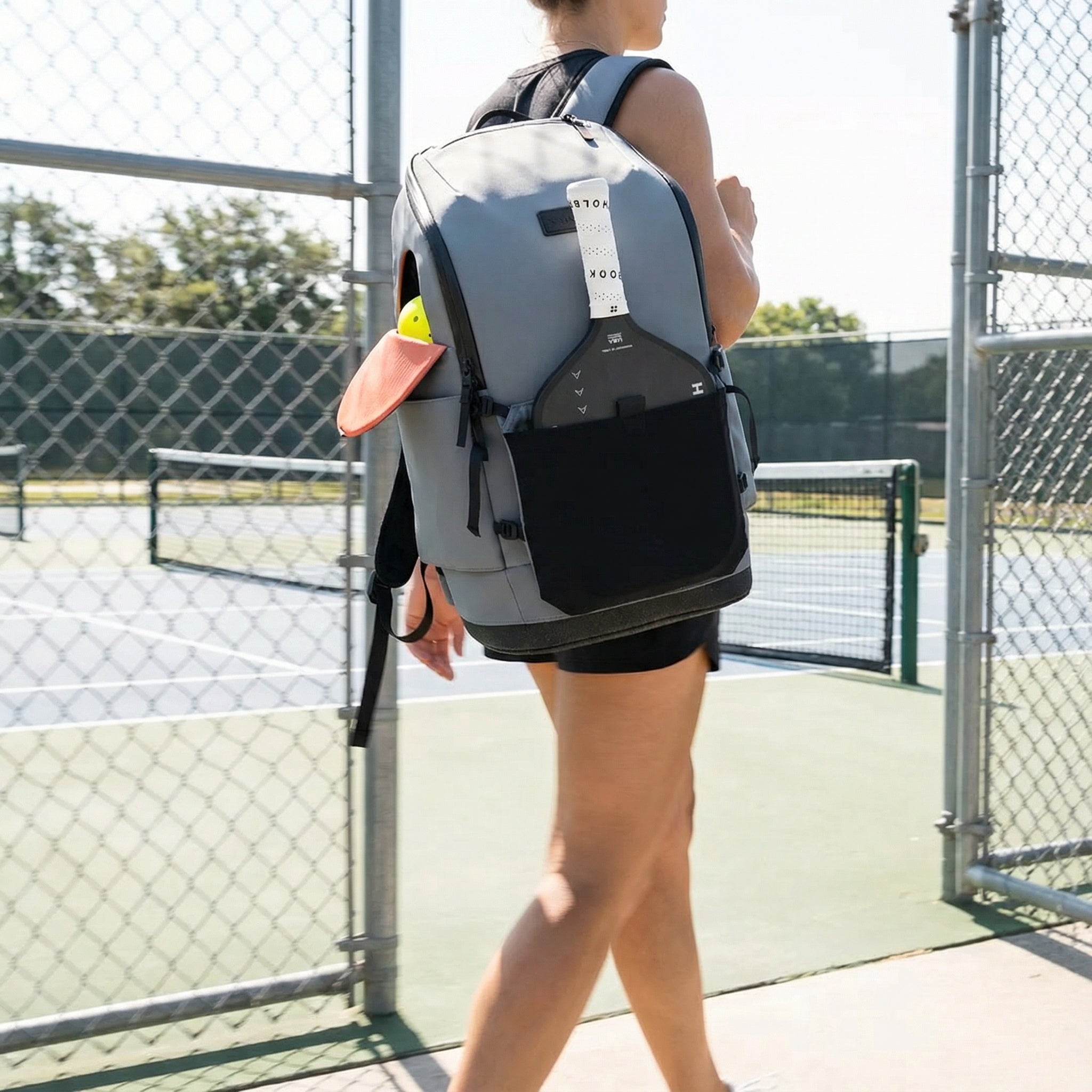
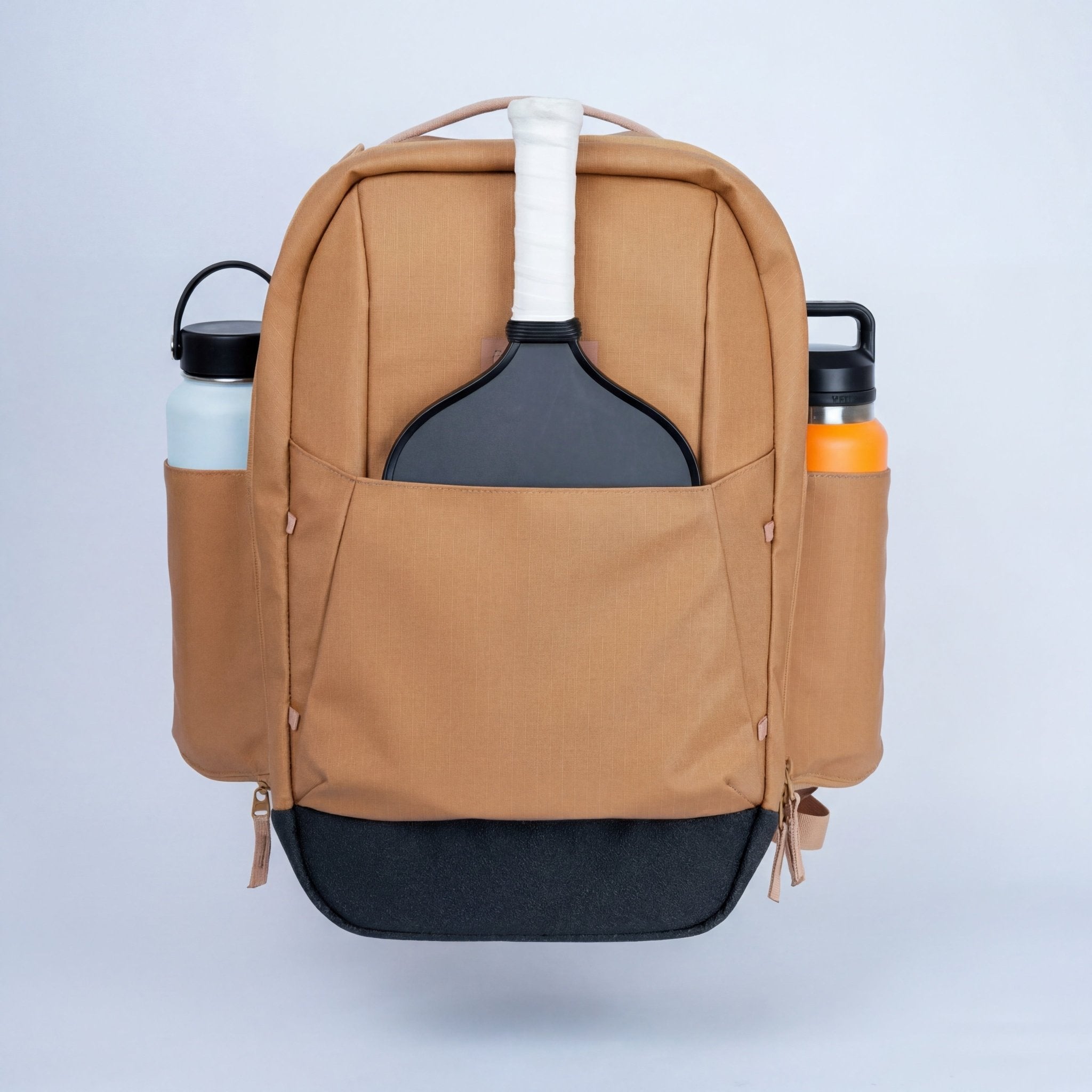
The FORWRD Court Caddy ($325) has a modular paddle sleeve holding up to 4 paddles with individual protection — no carbon face scratching after every session. YKK AquaGuard zippers, 15" padded laptop sleeve, lifetime warranty. Built by people who actually thought about what a serious pickleball player carries.

Pricing and Where to Buy
The JOOLA Agassi Pro V 16mm retails at $299.95. Pickleball Central carries both the 16mm and 14mm — both are in stock. JOOLA's own site occasionally runs promotions, but Pickleball Central's pricing is consistently competitive and ships reliably.
Check Current Price at Pickleball Central →
FAQ: JOOLA Agassi Pro V 16mm
What's the difference between the JOOLA Agassi Pro V 16mm and 14mm?
The 16mm has a thicker core — more dwell time, softer feel, and better vibration dampening. The 14mm is firmer, more explosive, and lighter (avg 7.9 oz vs 8.1 oz). For most recreational players hitting the court 3+ times a week, the 16mm is the better long-term choice. Your arm will notice after month three.
Is the JOOLA Agassi Pro V 16mm good for tennis players switching to pickleball?
Very much so. The 16.5" elongated shape and 5.5" grip length match what tennis players expect from a racket handle. The tapered throat raises the contact point in a way that feels intuitive for players with a two-handed backhand or an aggressive return game. The kitchen learning curve is still real, but the paddle doesn't fight you through it.
Does the JOOLA Agassi Pro V 16mm help with tennis elbow?
It can help. The 16mm core significantly reduces vibration transfer compared to thinner-core paddles. The Hyper-Foam Edge Wall adds another layer of dampening on off-center hits. It's not a medical device, but if you're managing tendinitis and need to stay on the court, the 16mm is one of the more arm-friendly options at this price point. An ergonomic overgrip on top can reduce torque further.
How does the JOOLA Agassi Pro V 16mm compare to the Perseus Pro V 16mm?
Both are $299.95 and use JOOLA's Pro V platform with 16mm cores. The Perseus Pro V (Ben Johns' paddle) has more drive pop and a slightly wider face for aggressive play. The Agassi Pro V has a longer grip (5.5" vs 5"), narrower profile, and tapered throat that emphasizes touch and placement. Aggressive players lean Perseus; control players lean Agassi.
Is $299.95 reasonable for the JOOLA Agassi Pro V 16mm?
At the 3.5–4.0 level with 3+ sessions per week, yes. The vibration dampening has real longevity value if you're managing arm health, and the control advantages compound over a full season. If you play once or twice a week recreationally, there are excellent paddles at $150–175 that'll serve you just as well. The $300 tier makes sense when the paddle is a weekly tool, not a weekend accessory.
Where is the best place to buy the JOOLA Agassi Pro V 16mm?
Pickleball Central carries it in stock at $299.95 and also stocks the 14mm for comparison. Check current pricing and stock here.
Final Verdict
The JOOLA Agassi Pro V 16mm is a well-built, control-first paddle that earns its price — but only if your game actually needs what it delivers. For intermediate-to-advanced players focused on kitchen consistency, arm health, and patient point construction, the 16mm Honeycomb Propulsion core and Hyper-Foam Edge Wall provide real advantages you'll feel across a full season.
For power-first players or anyone who doesn't play often enough to justify $300, look at the 14mm at $279.95 or the CRBN TruFoam Genesis at $279.99 for a different core approach at a similar price.
Agassi's baseline instincts are genuinely built into the geometry of this paddle. Whether that resonates with your game is the only question that matters.
Buy the JOOLA Agassi Pro V 16mm at Pickleball Central →

Leave a comment
This site is protected by hCaptcha and the hCaptcha Privacy Policy and Terms of Service apply.