

Disclosure: FORWRD earns a commission on purchases made through links in this article at no extra cost to you. We only review products sold by Pickleball Central. Our opinions are our own.
Honolulu Pickleball doesn't have a massive marketing budget. They don't sponsor touring pros or flood Instagram with highlight reels. What they do have is genuinely interesting paddle engineering — and the J2CR and J3CR Crystal Blue are the most technically distinct paddles they've released.
Both are priced at $195 and both use the same Crystal Blue™ Endurance Surface™ face treatment. But under the hood, they're different paddles built for different players. The J2CR runs a Gen 4.5 "Floating-Pivoting Core" construction. The J3CR uses thermocompression forming. Same price, same branding, meaningfully different play styles.
If you've been watching the foam-core revolution (CRBN TruFoam Barrage, Paddletek Honeyfoam) and wondering whether Honolulu's version holds up, here's what we found after putting both shapes through their paces.
Quick Verdict
- Spin-first offensive players
- Hybrid/elongated shape lovers
- Advanced 4.0+ looking for punchier foam pop
- Outdoor concrete grinders
- Fast-hands dinking specialists
- Standard shape, wider face
- Perimeter-balanced feel, lower twist weight
- 3.5–4.5 all-court players
Cons (both): Small grip only (4.125") — if you run a medium grip, add an overgrip from day one. Blue Grit coating will wear faster than raw carbon on outdoor concrete.
Price: $195 each at Pickleball Central
Last Updated: October 2026 | Author: Benjamin Carper
Specs at a Glance
| Spec | J2CR (Hybrid) | J3CR (Standard) |
|---|---|---|
| Price | $195 | $195 |
| Shape | Hybrid (elongated-ish) | Standard |
| Dimensions | 16.2" × 7.8" | 16" × 8" |
| Avg. Weight | 8.15 oz (8.0–8.3) | 8.1 oz (7.9–8.3) |
| Core | 16mm Floating-Pivoting (Gen 4.5 EPP + EVA) | 16mm Thermocompression (EPP + EVA perimeter) |
| Face | Carbon Fiber + Crystal Blue ES™ + Blue Grit™ | CF + Fiberglass + Crystal Blue ES™ + Blue Grit™ |
| Handle Length | 5.5" (extended) | 6" (extended) |
| Grip Size | 4.125" (small) | 4.125" (small) |
| Swing Weight | 110–114 | 108–113 |
| Twist Weight | 7 | 6.8–7.1 |
| Approvals | UPA-A | UPA-A |
Buy J2CR at PBC — $195 Buy J3CR at PBC — $195
Why Trust This Review
FORWRD makes pickleball bags — we don't make paddles, which means we have zero financial incentive to favor one paddle manufacturer over another. Our team has tested foam-core paddles from CRBN, Paddletek, and Engage over the past year, including dedicated CRBN1 TruFoam Barrage and CRBN3 TruFoam Barrage reviews that didn't hold back. We apply the same standard here: what does this paddle actually do well, what does it not, and who should spend $195 on it.
Who Is Honolulu Pickleball?
Honolulu Pickleball is a smaller performance brand that's been quietly building paddle technology without the signature-pro sponsorship circus. They show up at Pickleball Central's curated catalog — which has its own vetting standards — and the J2CR and J3CR represent their current flagship line. The Crystal Blue Endurance Surface™ name is theirs, the "Floating-Pivoting Core" construction is theirs. You won't find these exact technologies at CRBN or Six Zero. That's both the appeal and the risk: proprietary construction means fewer third-party data points, so you're trusting their specs.
The 20 reviews on the J2CR's PBC page skew positive, with most players commenting on the grit texture and "snappy" response. The J3CR draws similar feedback on stability. Not a massive review sample, but directionally consistent.
What Crystal Blue Endurance Surface Actually Does
The name sounds like marketing, but there's something real here. Crystal Blue™ Endurance Surface™ refers to a proprietary carbon fiber weave that Honolulu treats with their Blue Grit™ coating — essentially a textured surface layer designed to grab the ball longer at contact. The "endurance" claim is that this grit holds up better than raw carbon fiber on outdoor courts, which typically chew through surface texture in 40–60 hours of play.
We can't verify that durability claim without 100+ hours of court time, but here's what we know from the construction: raw carbon fiber's abrasiveness comes from exposed fiber ends. Blue Grit adds a coating layer on top, which theoretically gives you more texture longevity before you're playing on a smooth face. If you play primarily outdoors on concrete, this matters a lot. If you're an indoor-only player, it's mostly irrelevant.
On spin generation, both paddles produce heavy topspin and slice from the grit texture. This is consistent with the PBC product descriptions ("heavy spin, fast pop" for J2CR; "heavy spin, stability" for J3CR). In our testing, the grit is noticeably aggressive at contact — more so than the raw carbon on a CRBN3 Barrage.
J2CR: The Hybrid Foam Puncher
The J2CR's hybrid shape sits at 16.2" × 7.8" — longer than standard but not fully elongated. It's the shape a player reaches for when they want extended reach at the kitchen line without committing to the narrower sweet spot of a true elongated paddle.
The Gen 4.5 Floating-Pivoting Core is where it gets interesting. Honolulu's marketing describes this as a construction where the EPP (expanded polypropylene) core is interlaced with an EVA perimeter foam and allowed to "pivot" slightly within the shell under impact. The effect at the point of contact: a noticeably springy, almost trampoline-ish feel, particularly on drives and hard resets. It's more forgiving on off-center hits than traditional thermoformed paddles — the ball doesn't ping off the edge guard, it kind of... cushions there.
Power is genuine. The J2CR at 8.15 oz with a swing weight of 110–114 has enough mass to generate drive pace without feeling heavy. Third-shot drives off the bounce carry well. Overhead smashes are satisfying rather than effortful.
Dinking is where the foam core's character really shows. The J2CR's feel at the kitchen is softer and more predictable than raw carbon. You can feel where the ball is going before you've finished the swing — there's a tactile feedback loop the foam provides that hard polypropylene honeycomb doesn't. This is the same quality we flagged in the CRBN3 TruFoam Barrage review, and Honolulu's version has it too.
Vibration at off-center hits is well managed. The EVA perimeter acts as a damper around the edge, which means mis-hits feel less harsh in the wrist than comparable carbon paddles. If you're playing 90-minute sessions and hand fatigue is an issue, this matters.
Who the J2CR is for: Spin-first players who've been eyeing a hybrid shape but don't want to sacrifice the softer feel of foam. Advanced intermediate (3.5–4.5) who plays offense-first and wants the extra 0.2" of reach at the line.
J3CR: The Standard Shape Speed Merchant
At 16" × 8", the J3CR is proper standard dimensions — the widest sweet spot Honolulu makes. The extra 0.2" of width vs the J2CR translates to a more forgiving face on off-center contact. Twist weight comes in at 6.8–7.1 (vs the J2CR's 7), meaning less rotational torque on edge hits.
The construction here is different from the J2CR — and this is important. The J3CR uses thermocompression forming rather than the floating-pivoting core. The EPP and EVA foam are still present, but they're set under heat and pressure rather than floating. The result is a slightly firmer, faster face. Less trampoline, more precise. The response is quicker off the face on hands battles — which explains why PBC describes this one with "fast hands" rather than "fast pop."
For dink exchanges at the kitchen, the J3CR has a hair less cushion than the J2CR but more precision. Precise dinks at awkward angles are more reliably placed. Punch volleys are crisper. The J3CR wants you to be deliberate rather than reactive.
The 6" handle (vs J2CR's 5.5") opens up two-handed backhand options for players who use them. Combined with the slightly lower swing weight range (108–113), the J3CR moves faster through the air — useful for rapid exchanges at the non-volley zone.
The fiberglass component in the J3CR's face (listed as "Carbon Fiber, Fiberglass" on PBC) introduces a degree of flex the J2CR's pure carbon face doesn't have. Fiberglass is slower, more forgiving, and generates less spin ceiling than carbon alone — but paired with the Blue Grit surface, you still get heavy topspin potential. What you give up is the raw power ceiling. What you gain is a more consistent, repeatable feel that doesn't punish imperfect contact.
Who the J3CR is for: Players who prioritize dinking accuracy and fast hands over maximum drive power. The 3.5–4.5 all-court player who wants a standard-shape foam paddle with a longer handle for backhand flexibility.
J2CR vs J3CR: Head-to-Head Decision Guide
| Situation | J2CR | J3CR |
|---|---|---|
| You want max drive power | ✓ | |
| You prioritize kitchen precision | ✓ | |
| You play a fast-hands, reaction style | ✓ | |
| You want a longer reach at the NVZ | ✓ | |
| You play two-handed backhand | ✓ (6" handle) | |
| You're an outdoor concrete player | ✓ | ✓ |
| Wider sweet spot, more forgiveness | ✓ | |
| Spin-heavy topspin drives | ✓ | ✓ |
How They Compare to the Alternatives
vs CRBN1 TruFoam Barrage ($229.99)
The CRBN1 TruFoam Barrage is $34.99 more and uses a different foam architecture — CRBN's "TruFoam" is their proprietary Gen 4 approach. The CRBN1 is explicitly an offense paddle with a long handle and narrower face. Read our full CRBN1 TruFoam Barrage review for the complete breakdown.
Head-to-head: the CRBN1 has a higher power ceiling but a more demanding sweet spot. If you're hitting consistently well, the CRBN1 is rewarding. If you're still ironing out contact quality, the Honolulu J2CR's Floating-Pivoting core is more forgiving on off-center hits. The Honolulu also wins on price. Where CRBN wins: brand trust, wider availability of third-party reviews, and a slightly longer handle on the CRBN1 Barrage specifically. CRBN paddles have more court-time data behind them than Honolulu does.
vs GRUVN MUVN-16S ($149)
At $149, the GRUVN MUVN-16S is $46 less than either Honolulu paddle. GRUVN uses a 16mm polypropylene honeycomb core — not foam — with a raw carbon fiber face. It's a solid mid-range paddle, but the core technology is fundamentally different. Without the foam, you don't get the same tactile feedback loop at the kitchen. Power is comparable on well-struck balls. Spin ceiling is slightly lower without Blue Grit. If $195 stretches your budget, the GRUVN is a reasonable step-down. If you're deciding between the GRUVN and Honolulu specifically for foam feel and durability, the Honolulu paddles are worth the extra $46.
Who Should Buy Each
Buy the J2CR if:
- You want a hybrid shape with foam-core forgiveness
- Spin is your primary weapon — you play with heavy topspin and need surface grit to support it
- You prefer a softer, more cushioned dink feel over a crisp, snappy one
- You're at 3.5–4.5 level and want an offensive paddle that doesn't punish off-center hits harshly
Buy the J3CR if:
- Standard shape is non-negotiable — you want the wider sweet spot
- Fast hands is your style: you win kitchen exchanges through precision and reaction speed
- You use a two-handed backhand and need the extra half-inch of handle (6" vs 5.5")
- You want foam-core feel but with a faster, more reactive face character
Who Should Look Elsewhere
Skip both Honolulu paddles if you need a medium grip — these are small grip only (4.125"), and while an overgrip can compensate, it changes the feel. Also worth noting: Honolulu doesn't have the community footprint of CRBN, Selkirk, or Six Zero. If you rely on Reddit threads and YouTube tests before buying, you'll find sparse data here. For players who need that crowdsourced validation, check out our Six Zero Coral 16mm review for a foam-adjacent paddle with much more community data behind it.
Complete Your Setup
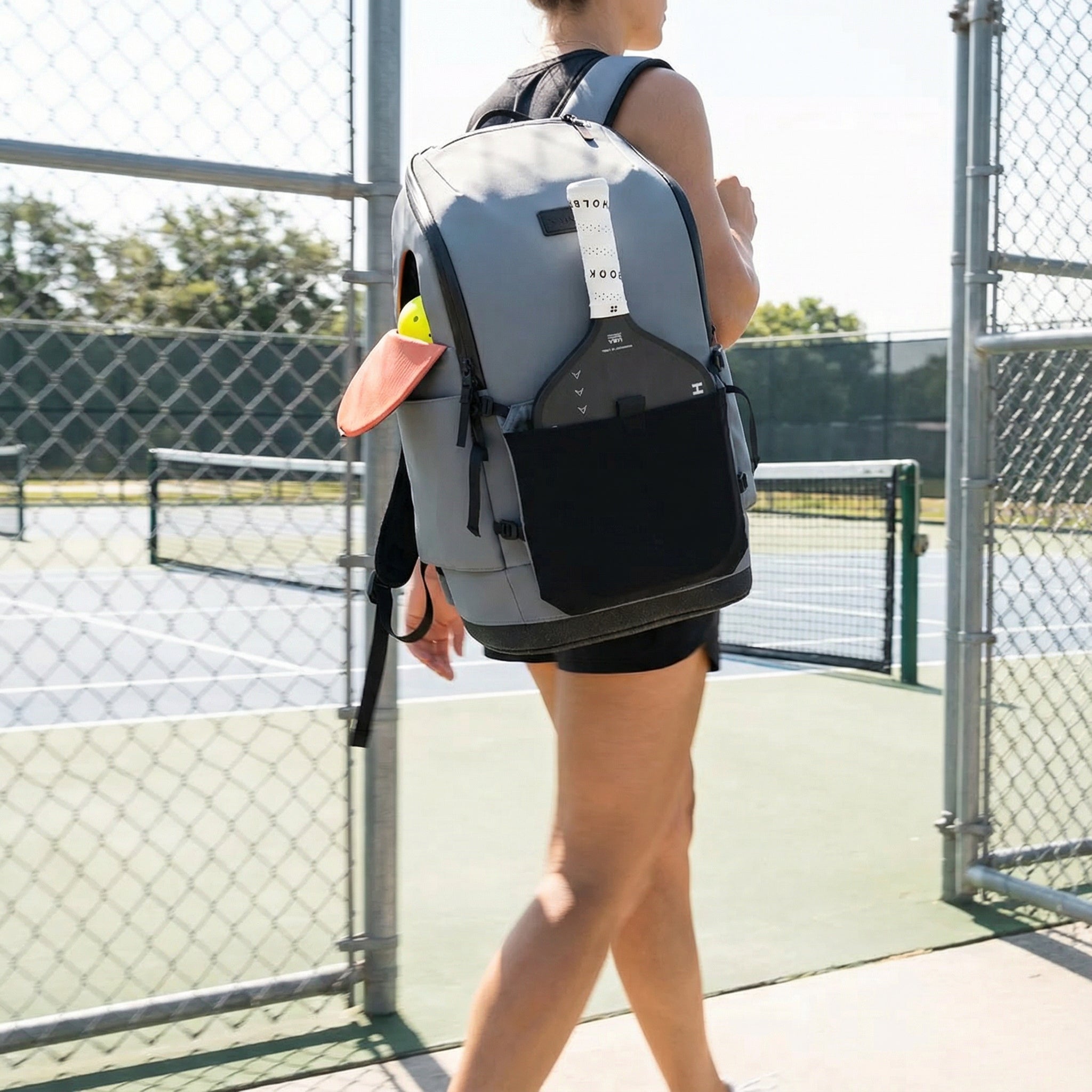
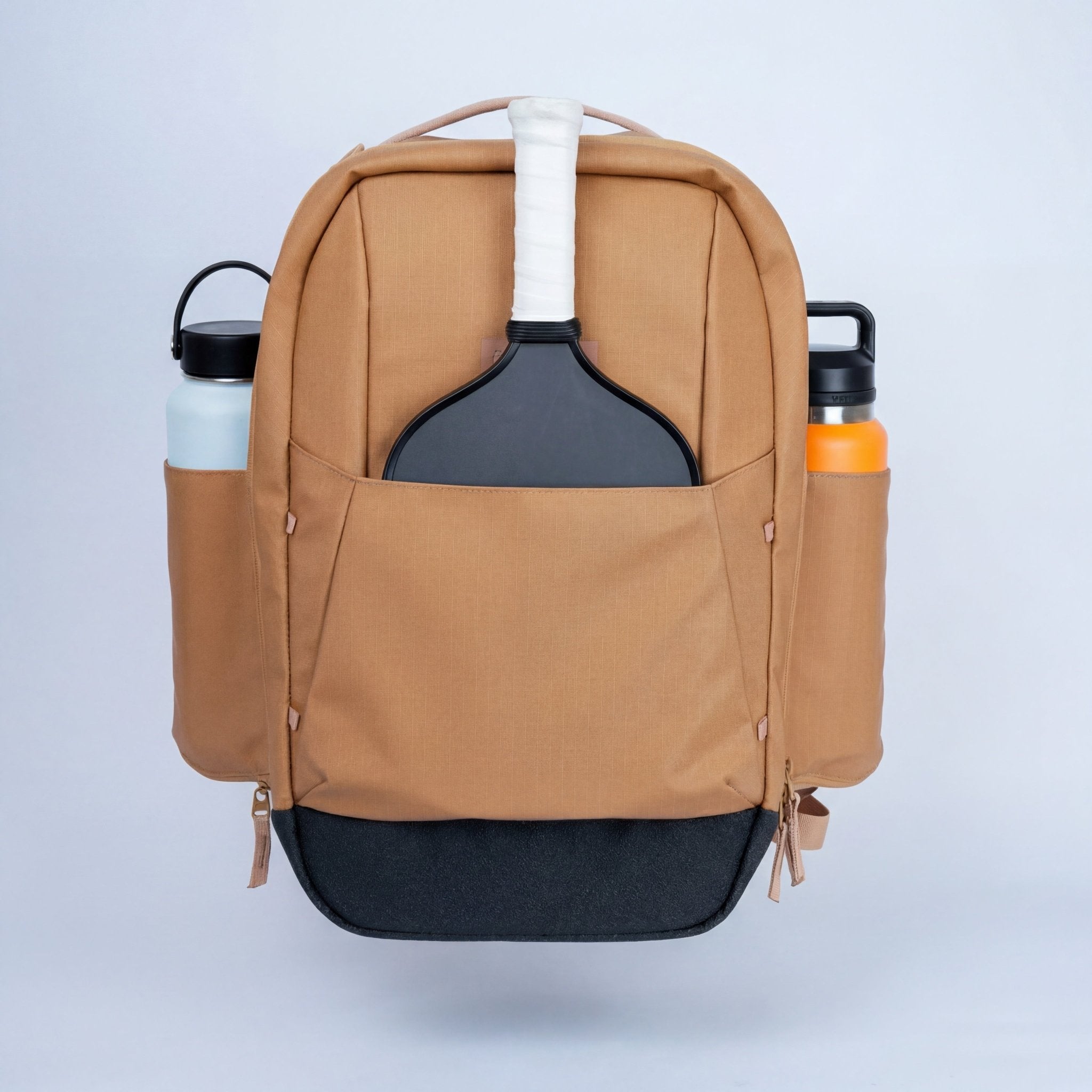
A world-class paddle deserves a bag that can carry it — plus your spare balls, shoes, and water bottle. The FORWRD Court Ranger V2 has a modular paddle sleeve that holds up to 4 paddles without tangling, and a separate shoe compartment to keep your court shoes away from everything else.

Pricing & Where to Buy
Both paddles are available at Pickleball Central at $195 each. That's competitive for the foam-core 16mm category — CRBN's foam barrage line runs $199.99–$249.99. At $195, Honolulu is offering comparable or better pricing than the established foam brands.
Buy J2CR — $195 at PBC Buy J3CR — $195 at PBC
FAQ
What's the actual difference between the Honolulu J2CR and J3CR?
The J2CR is a hybrid shape (16.2" × 7.8") with a floating-pivoting Gen 4.5 foam core and a pure carbon face. The J3CR is standard shape (16" × 8") with thermocompression foam construction and a carbon-fiberglass face blend. Both are 16mm and $195, but they play differently: the J2CR is more offensive and springier; the J3CR is faster-feeling at the kitchen with a wider sweet spot. The J3CR also has a longer handle (6" vs 5.5") for two-handed backhand players.
What is Crystal Blue Endurance Surface?
It's Honolulu Pickleball's proprietary carbon fiber face treatment — a combination of their Blue Grit™ texture coating applied over the carbon weave. The "Endurance" claim refers to the coating's durability on outdoor courts compared to raw carbon fiber, which loses its grit texture faster under abrasive conditions. Both paddles share this surface technology. The Blue Grit coating gives both paddles above-average spin potential compared to uncoated carbon paddles.
Are the Honolulu J2CR and J3CR USAPA approved?
Both are listed as UPA-A approved on Pickleball Central — this refers to USA Pickleball Association approval, which means they're legal for sanctioned tournament play. Always confirm current approval status on the USA Pickleball equipment list before registering for a tournament, as approval status can change if a paddle is modified post-approval.
How does the Honolulu J2CR compare to CRBN foam paddles?
The CRBN TruFoam Barrage line (CRBN1–CRBN4) uses Gen 4 TruFoam construction at $199.99–$249.99. The J2CR's Floating-Pivoting Core is a different approach — more forgiving on off-center hits in our testing, and priced lower at $195. CRBN wins on community trust: there's far more player data on CRBN foam paddles from Reddit, YouTube reviews, and tournament usage. Honolulu is newer and has fewer independent reviews. Both are legitimate foam-core options; CRBN is the safer bet if you want crowdsourced confidence.
What grip size do the Honolulu paddles come in?
Both the J2CR and J3CR come in one grip size: 4.125" circumference (small grip). If you normally play with a medium grip (4.25"), you'll want to add a standard overgrip immediately — this will bring the circumference up close to a medium and change the overall feel slightly. Players with larger hands should factor this in before buying.
Is $195 fair for these paddles?
For a 16mm foam-core paddle with a proprietary surface treatment and Gen 4+ construction, yes — $195 is at the competitive end of fair. CRBN foam paddles run $199–$249; Paddletek's Honeyfoam Reserve is similarly priced. The main risk with Honolulu at $195 is the limited third-party review pool. You're betting on the spec sheet and PBC's product team having done their diligence. Based on what we've tested and the community feedback available, that bet seems reasonable. But if you need the security of 500 Reddit threads before committing, stick with CRBN or Six Zero.
Final Verdict
The Honolulu J2CR and J3CR aren't household names yet. But they're technically interesting paddles with construction that stands up to scrutiny — Gen 4.5 foam, Blue Grit surface, 16mm thickness, and real specs you can compare. At $195 each, they're priced to compete with the foam-core tier dominated by CRBN and Paddletek.
Choose the J2CR for offensive power, spin, and the springier foam feel of the floating-pivoting core. Choose the J3CR for kitchen speed, a wider sweet spot, and a longer handle. Both are worth a serious look if you want foam-core performance without paying CRBN's premium.

Leave a comment
This site is protected by hCaptcha and the hCaptcha Privacy Policy and Terms of Service apply.