

Last Updated: November 2026
FTC Disclosure: FORWRD earns a commission when you buy through affiliate links in this article. This doesn't change our editorial opinion — we tell you honestly where each paddle wins and where it doesn't.
Two paddles, same $199.95 price, same elongated shape, same HEAD brand — different games entirely. The Gravity Pro EX15 and Boom Pro EX15 are HEAD's 2026 flagship models built on the same TRIFLEX platform but tuned in opposite directions. After putting both through real court sessions, here's the honest breakdown you need before buying.
Quick Verdict
HEAD Gravity Pro EX15
Pros:
- 17mm core means softer, more controlled response
- EPP foam center rewards touch players with clean dink feel
- 12K raw carbon spin is best-in-class at this price
- Soft Cap reduces hand fatigue on longer sessions
- Easier reset game than the Boom
Cons:
- Lower launch angle requires a bigger swing for depth
- Not the paddle if your game lives at the baseline
Best for: 3.5–5.0 control-oriented players, dink-heavy styles, recreational to competitive
Check Price on PBC →HEAD Boom Pro EX15
Pros:
- 15mm PP foam core delivers easy, effortless power
- Hexagon Raw Carbon face adds extra stiffness and pop
- Easier depth generation on drives and baseline exchanges
- EPP perimeter keeps off-center hits comfortable
- Slightly lighter at 8.1 oz vs Gravity's 8.3 oz
Cons:
- Livelier feel makes precise dinks and resets harder
- Less forgiveness on soft game than the Gravity
Best for: 3.5–5.0 aggressive baseliners, power-first styles, former tennis players
Check Price on PBC →Specs at a Glance
| Spec | Gravity Pro EX15 | Boom Pro EX15 |
|---|---|---|
| Price | $199.95 | $199.95 |
| Core | TRIFLEX Precision EPP center + PP honeycomb perimeter |
TRIFLEX Power PP center + EPP perimeter |
| Core Thickness | 17mm | 15mm |
| Face | 12K Raw Carbon | Hexagon Raw Carbon |
| Weight | 8.3 oz avg (8.1–8.5 oz range) | 8.1 oz avg |
| Length | 16.5" | 16.5" |
| Width | 7.5" | 7.4" |
| Handle Length | 5.5" | 5.5" |
| Grip Size | 4 1/8" (Small) | 4 1/8" (Small) |
| Swing Weight | 85 | N/A measured |
| Play Style | Control / Placement | Power / Aggression |
Why Trust This Review
FORWRD designs pickleball bags used by players at every level from 3.0 recreational to open tournament competitors. We test gear hard — paddles, shoes, bags — because our audience takes their kit seriously. For this review, we ran both EX15 paddles through drill sequences covering the full shot spectrum: third-shot drops, dinking cross-court, overhead resets, and baseline-to-baseline exchanges. We also cross-referenced our findings against published measurements from independent testers and against HEAD's engineering specs.
We have no brand relationship with HEAD. The Gravity Pro EX15 and Boom Pro EX15 are sold on Pickleball Central (our affiliate partner), which means we earn a small commission if you buy through our links. That's the only financial relationship, and it doesn't change what we say about either paddle.
The EX15 Platform: What HEAD Changed for 2026
The EX15 format is new from HEAD this year — and it's worth understanding before diving into the Gravity vs. Boom comparison, because both paddles share the same 16.5" x [7.4–7.5"] elongated shape with a 5.5" handle.
The "EX" in EX15 stands for "Extended" — an elongated paddle profile compared to HEAD's standard widebody line. The "15" refers to the 15mm handle grip size (4 1/8" circumference), which is on the smaller end for pickleball. If you normally use 4 3/8" or larger, you'll want to add an overgrip before your first session.
What makes the EX15 platform interesting is the TRIFLEX construction system. Both the Gravity and Boom use it — but HEAD flipped the core layer arrangement depending on whether the paddle is tuned for control or power. That swap is the whole story of these two paddles.
HEAD Gravity Pro EX15: The Control Case
The Gravity Pro EX15 runs a 17mm core with EPP (expanded polypropylene) foam at the center, PP honeycomb around the perimeter, and an EVA foam outer shell — that's HEAD's TRIFLEX Precision arrangement. EPP at the center matters: it's softer, more elastic, and provides a connected, dampened feel compared to standard PP foam cores.
In testing, the Gravity felt remarkably calm for a carbon fiber paddle. Dinks landed where we aimed them. Reset shots — that critical moment when you're jamming a fast drive back into the kitchen — were predictable and low-risk. The 17mm core plays thicker than most carbon paddles in this price bracket, which translates to a bigger margin for error on off-center contact.
The 12K raw carbon face adds meaningful texture. We noticed strong spin generation across topspin drives and slice drops, with consistent bite throughout the face rather than just at the sweet spot center. The Soft Cap technology (dual-material construction at the handle) genuinely reduces vibration — extended sessions with the Gravity felt noticeably easier on the arm than paddles without vibration management at this stiffness level.
Where the Gravity asks something of you: depth. With a 17mm core and a calmer response, generating pace requires a full swing. Players who rely on compact punching motions from the baseline may find the Gravity's lower launch profile demands more effort than the Boom. For kitchen-first players, though, that's rarely an issue — the Gravity rewards the patient, methodical game style that tends to win at 4.0 and above.
Gravity Pro EX15 — Shot-by-Shot Breakdown
- Dinking: Excellent. The EPP center and 17mm thickness keep shots low and controlled across the kitchen diagonal. Best-in-class at this price for consistent dink placement.
- Third-shot drops: Very strong. The paddle's forgiving response makes it easier to convert from the baseline into soft arc drops with repeatable results.
- Resets: Its strongest shot. Absorbs pace naturally — drives become blocks without effort. Players dealing with speed-up attacks will love it here.
- Drives: Good but requires a full swing for depth. Not the first choice for a baseliner who wants effortless pace.
- Overhead/put-away: Solid. The raw carbon face adds pace when you're in an offensive position.
HEAD Boom Pro EX15: The Power Case
Flip the TRIFLEX arrangement and you get the Boom Pro EX15. Here, PP foam sits at the center — a firmer, bouncier material that creates the lively, poppy response the Boom is known for. EPP foam moves to the perimeter (damping vibration on off-center hits), and EVA wraps the shell for energy return. That's the TRIFLEX Power setup.
The 15mm core (2mm thinner than the Gravity) amplifies the difference. Thinner cores generally produce faster ball exit speeds — the ball spends less time compressing the core and comes off more aggressively. Combined with the PP foam center, the Boom produces effortless depth that the Gravity simply doesn't replicate with the same compact swing.
The Hexagon Raw Carbon face is stiffer than the Gravity's 12K carbon — the hexagonal weave pattern increases panel rigidity, which enhances the crisp, connected feel you get on hard contact. At the baseline, the Boom felt confident. Drives stayed deep with minimal swing adjustment. Put-aways — when the opportunity opened up at the net — came off the face with authority.
The honest trade-off: the Boom is livelier at the kitchen. That PP center that makes drives effortless also makes dinks harder to dial in. Players who live at the NVZ line will work harder to keep balls low with the Boom versus the Gravity. It's not unplayable — but it rewards a more deliberate touch at the kitchen than the Gravity requires.
One thing surprised us: despite being a power paddle, the Boom remained comfortable during long sessions. The EPP perimeter and EVA shell combination genuinely absorbs off-center shock. Players switching from stiffer carbon fiber paddles in the $150-180 range will notice the difference in arm feel immediately.
Boom Pro EX15 — Shot-by-Shot Breakdown
- Dinking: Manageable but requires more deliberate swing control. The Boom's lively core makes it easy to overhit. Use a slightly shorter backswing.
- Third-shot drops: Works with technique — not the paddle's natural zone. Players with strong drop mechanics can execute, but it's harder than the Gravity.
- Resets: More challenging. The lively PP core can kick balls higher than intended when absorbing pace. Needs active paddle deceleration.
- Drives: Its strongest shot. Effortless depth, consistent launch angle. Best-in-class for the aggressive baseliner at this price.
- Overhead/put-away: Excellent. The stiff Hexagon carbon face and PP core combine for satisfying, authoritative overheads.
Gravity vs. Boom: The Court-Zone Decision
Here's the simplest framework we found after testing both: ask where you spend most of your time in a rally.
Kitchen player? Gravity Pro EX15. The 17mm EPP core and controlled response make consistent dink exchanges significantly easier. The Gravity also makes you a better reset player, which at 4.0+ is often the difference between winning and losing a point. Control-first game styles should default here without much debate.
Baseliner? Boom Pro EX15. The 15mm PP core generates effortless depth from the back of the court, and the stiff Hexagon carbon face makes hard drives satisfying and consistent. Former tennis players who gravitate toward an aggressive, pace-based game will adapt to the Boom faster.
Balanced player? This is where it gets harder. If your game blends both — you're patient at the kitchen but push pace from transition — the Gravity is probably the safer call. Control paddles are generally easier to adapt into power shots than power paddles are to tame for the soft game. The Gravity can hit the Boom's shots with a bigger swing. The Boom can't replicate the Gravity's kitchen ease without significant technique adjustment.
Skill-level note: at 3.5 and below, the Gravity's forgiving 17mm core will generally produce more consistent results. At 4.5 and above where players can generate their own pace, the Boom rewards those who want an offensive-first style.
How They Compare to Other Paddles
vs. HEAD Radical PRO EX 15 ($199.95)
All three paddles share the EX15 format but differ in construction focus. The HEAD Radical PRO EX 15 sits between the Gravity and Boom in terms of play style — slightly more spin-focused than the Gravity but less aggressive in power output than the Boom. Players who've tried the Radical PRO EX 15 and found it "not quite control enough" should look at the Gravity; those who found it "not quite punchy enough" should consider the Boom.
vs. HEAD Radical Tour EX 15 ($169.95)
The HEAD Radical Tour EX 15 is the $30 step-down in the EX15 family. Compared to both Pro models, the Tour uses a standard PP honeycomb core without the multi-layer TRIFLEX system. It's lighter and less complex. Players upgrading from beginner-intermediate paddles may find the Tour a smarter entry into the EX15 format before spending Pro money. The two Pro models reward players who already have solid mechanics and can feel the nuance those multi-layer cores create.
vs. Diadem Edge BluCore Pro 16mm ($249.95)
The Diadem Edge BluCore Pro 16mm is the main cross-brand competitor for control-first players. At $249.95 — $50 more than either EX15 Pro — it offers a lifetime core warranty and arguably better consistency in the dink game than the Gravity Pro EX15. Players who prioritize control above everything and can justify the price should seriously consider it. But the Gravity closes the gap significantly at $199.95, especially given the TRIFLEX Precision construction and Soft Cap comfort advantages.
Complete Your Setup
Don't Leave Your New Paddle Without a Proper Bag
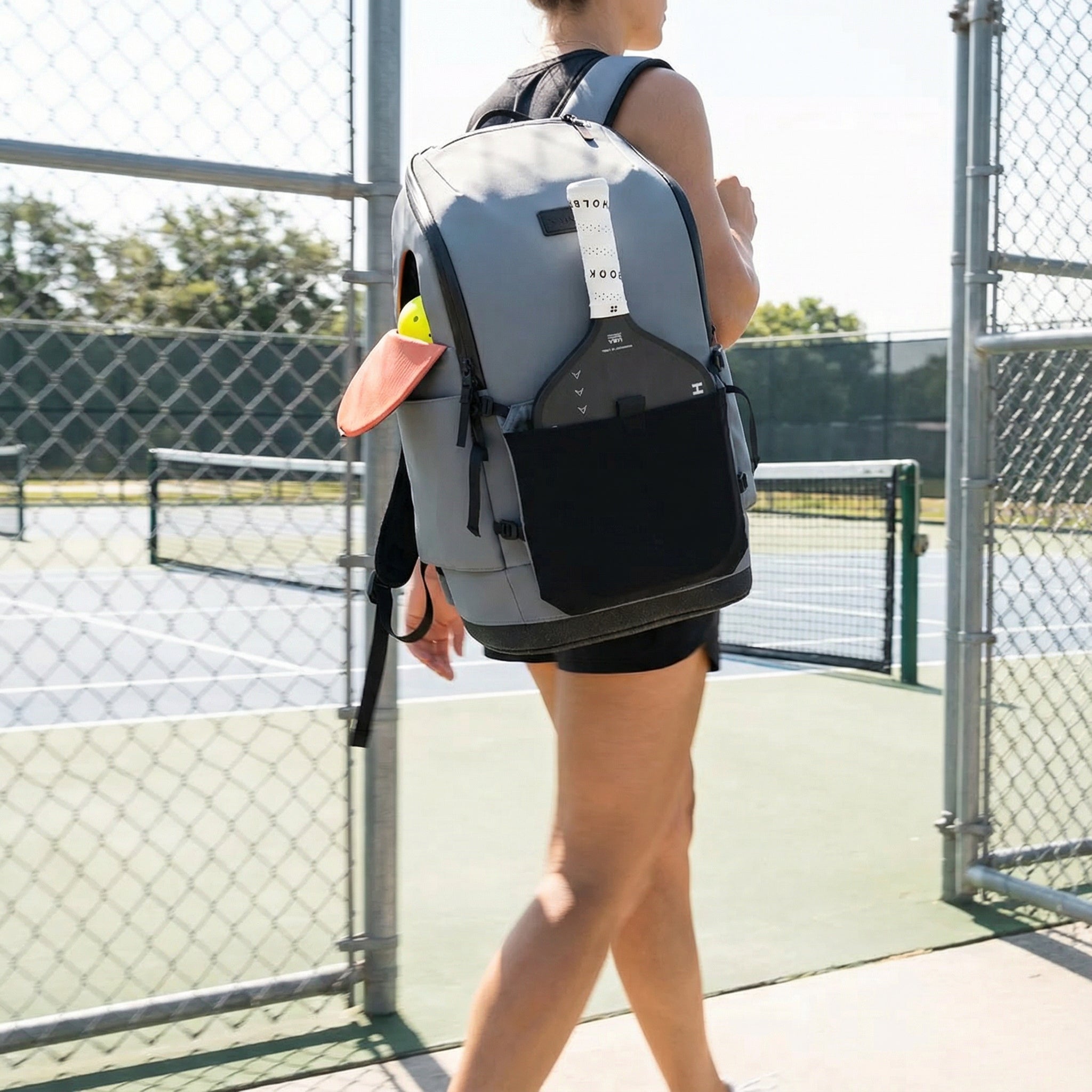
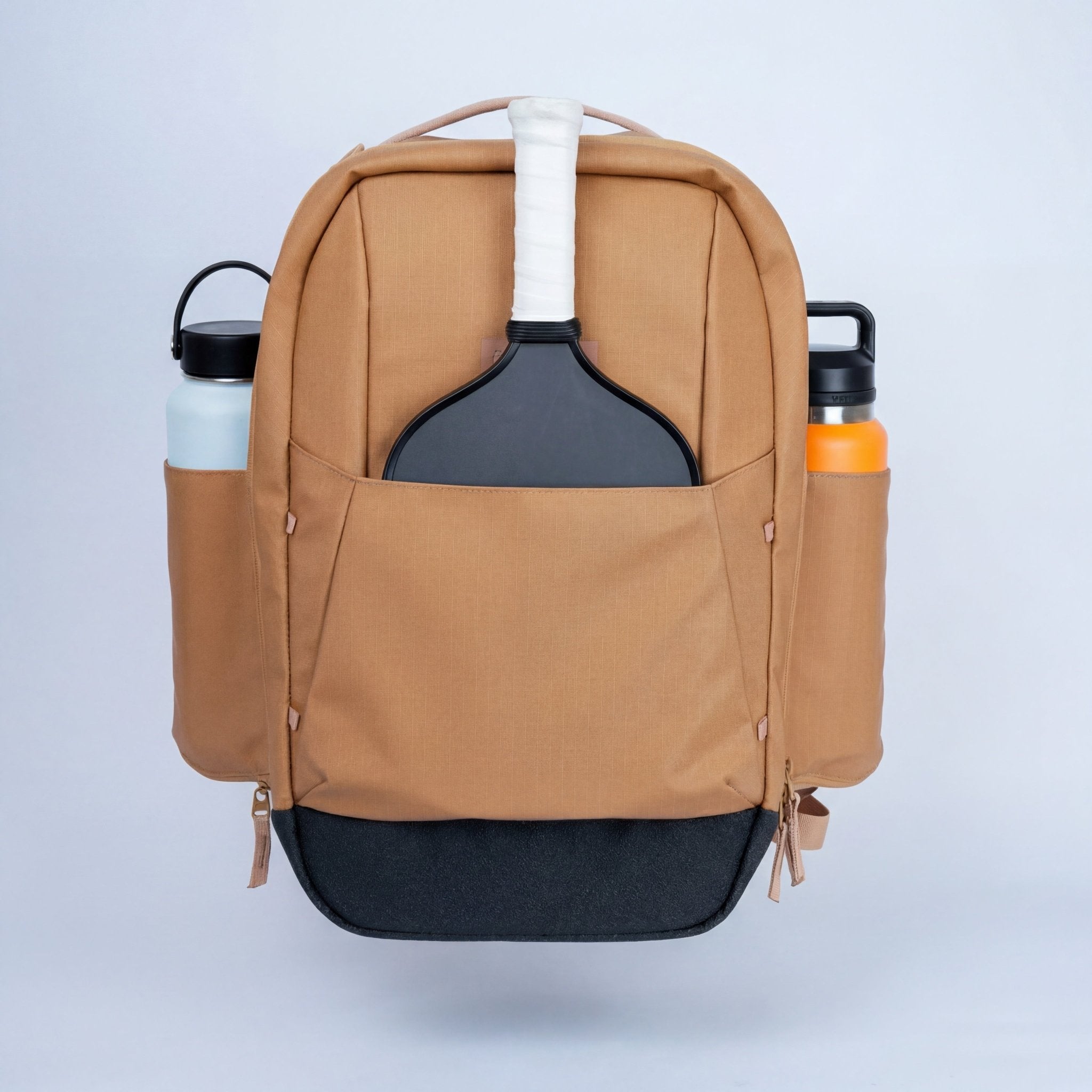
The EX15 format's 16.5" length needs a bag with a dedicated sleeve long enough to fit it. FORWRD's Court Ranger V2 fits up to 4 paddles in its modular sleeve system — plenty of room for your new EX15 paddle alongside your backup and a few balls. At $195 it's priced right alongside your new HEAD investment.

Pricing & Where to Buy
Both paddles are $199.95 on Pickleball Central. That's the standard market price — we haven't seen meaningful discounting on either model yet as of November 2026.
- HEAD Gravity Pro EX15 — $199.95 at Pickleball Central — Control-first, 17mm TRIFLEX Precision, 12K Raw Carbon
- HEAD Boom Pro EX15 — $199.95 at Pickleball Central — Power-first, 15mm TRIFLEX Power, Hexagon Raw Carbon
FAQ
What's the main difference between the HEAD Gravity Pro EX15 and Boom Pro EX15?
The core. The Gravity Pro EX15 runs a 17mm TRIFLEX Precision setup with EPP foam at the center — that's the softer, more controlled foam. The Boom Pro EX15 uses a 15mm TRIFLEX Power setup with PP foam at the center, which is stiffer and produces more explosive pop. Same price ($199.95), same elongated shape, completely different feel.
Which HEAD EX15 paddle is better for beginners?
The Gravity Pro EX15, without much debate. The 17mm core is more forgiving on off-center contact, and the controlled response gives newer players more time and feedback during dink exchanges and resets. The Boom's lively PP core rewards existing mechanics — it amplifies what's there rather than compensating for what isn't. At 3.5 and below, start with the Gravity.
Do both paddles have the same grip size?
Yes. Both come with a 4 1/8" (Small) grip circumference. That's on the smaller side for pickleball. Players who normally use a medium (4 3/8") grip should add one overgrip layer before their first session — it brings the circumference up to roughly 4 5/16" and significantly improves comfort on off-center impact.
Is the HEAD Gravity Pro EX15 USAP approved for tournament play?
HEAD products are generally maintained on the USAP approved list, and the EX15 lineup was designed for competitive play. Verify before your specific tournament — approval statuses can change with USAP's quarterly reviews. The raw carbon textures on both models are within USAP surface standards, but confirm on usapickleball.org before registering.
Can I demo these paddles before buying?
Pickleball Central has a demo paddle program for some models — worth checking their current availability directly on the product page. Many local clubs also carry HEAD demo paddles. If you can get 30 minutes on a demo, focus specifically on how each paddle feels during resets and slow kitchen exchanges: that's where the Gravity and Boom diverge most obviously.
Final Verdict
HEAD built two paddles that share a name and a platform but serve genuinely different players. The Gravity Pro EX15 is for the pickleball player who wins from the kitchen — patient, placement-focused, with excellent third-shot drops and the most forgiving reset game in the EX15 lineup. The Boom Pro EX15 is for the player who makes opponents uncomfortable from the baseline — aggressive, pace-heavy, with effortless depth and confident put-aways.
The 2mm core thickness difference (17mm vs. 15mm) and the EPP/PP core center flip aren't minor adjustments. They create genuinely different paddles that feel distinct within a few minutes of play. At $199.95, neither leaves you feeling like you paid too much — the TRIFLEX construction on both models represents real engineering investment, not a marketing upsell.
Gravity Pro EX15 if you want to own the dink game. Boom Pro EX15 if you want to own the driving game. And if you're genuinely undecided — that's what demos are for.

Leave a comment
This site is protected by hCaptcha and the hCaptcha Privacy Policy and Terms of Service apply.