

FTC Disclosure: This article contains affiliate links. If you purchase through our links, FORWRD earns a commission at no extra cost to you. We test and review gear because we play pickleball — all opinions are our own.
Franklin C45 Hayden Patriquin Review 2026: 14mm vs 16mm — The Honest Take
The Franklin C45 Hayden Patriquin is a double-thermoformed elongated paddle built on the same DNA as the rest of the C45 line — 45° T700 raw carbon face, PowerFlex polymer core with an inner foam layer — but tuned specifically for Hayden Patriquin's attack-first, spin-heavy game on the PPA Tour. At $229.99, it's priced identically to every other C45 signature. What makes it worth evaluating on its own terms: the swing weight (114 on the 14mm, 116 on the 16mm) and twist weight (6.2 vs 5.3) tell you exactly what kind of player each version is built for. That spread between the two is wider than it looks on paper.
Quick Verdict
- 45° T700 angled weave generates elite spin — not marketing language, actual textured bite on every shot
- PowerFlex + foam inner layer balances pop and dwell better than standard polymer cores in this price class
- USAP and UPA-A certified — tournament-legal on both thicknesses
- 5.6" handle gives genuine two-handed backhand reach without feeling like a fishing rod
- Double thermoformed sidewall is noticeably stiffer than single-pass alternatives — it'll hold up
- Elongated 7.6" width punishes off-center hits more than a widebody would at the same price
- 14mm is aggressive — players who struggle at the kitchen should start with the 16mm
- Grip runs small; medium-to-large hands will need replacement overgrip before the first session
- No color options beyond the standard C45 colorway
Price: $229.99 | Best for: 3.5–4.5 attackers who want pro-level spin in an elongated | Skip if: you're under 3.5, prefer widebody, or have medium-large hands
Specs at a Glance
| Spec | 14mm Version | 16mm Version |
|---|---|---|
| Price | $229.99 | $229.99 |
| Core Thickness | 14mm (.551") | 16mm (.629") |
| Paddle Length | 16.4" | 16.4" |
| Paddle Width | 7.6" | 7.6" |
| Handle Length | 5.6" | 5.6" |
| Face Material | 45° T700 Raw Carbon Fiber | |
| Core Material | PowerFlex Polymer + Inner Foam Layer | |
| Swing Weight | 114 | 116 |
| Twist Weight | 6.2 | 5.3 |
| Construction | Double Thermoformed | |
| Certifications | USAP, UPA-A | |
| Edge Guard | 1/4" overlapping paddle face | |
Check 14mm Price at PBC → Check 16mm Price at PBC →
Last Updated: November 2026
Why We Reviewed This Paddle
FORWRD doesn't make paddles — we make bags. That means we don't have a financial reason to push you toward a specific paddle brand, which makes our paddle reviews more trustworthy than a manufacturer's product page. We designed the Court Ranger V2 and Court Caddy with feedback from 500+ real players, and those players have strong opinions about their paddles. The Hayden Patriquin C45 came up repeatedly from players who wanted the spin of the Aurelius but play more of a power-oriented doubles game. We went deep on both thicknesses to give you an answer.
Our methodology: we cross-reference published swing weight and twist weight data, compare construction specs against paddles in the same price tier, and talk to players across DUPR 3.0–4.5 about how paddles actually feel in real rally situations — not just on solo warm-up feeds.
Who Is Hayden Patriquin?
Hayden Patriquin is a Franklin-sponsored professional on the PPA Tour, known primarily for his doubles game and a ball-striking style that prioritizes precise placement over raw power. He's the kind of pro who makes the third-shot drop look effortless — not because he's slow, but because his control game is tight enough to take pace off quickly and reliably. That style influenced the paddle spec: the elongated shape gives him the reach, the 45° T700 surface gives him the spin, and the choice of two thicknesses tells you Franklin designed this for a broader range of players who want to replicate his approach.
Signature paddles from lesser-known pros sometimes feel like a marketing play — same OEM core, fancier graphics. The Patriquin C45 isn't that. The double thermoforming and PowerFlex core are real technology, and the specs hold up under scrutiny.
The Core Story: What "Double Thermoformed" and "PowerFlex" Actually Mean
Standard thermoforming applies heat and pressure to the paddle once after assembly. Double thermoforming does it twice — which produces a denser, stiffer frame bond and reduces the micro-gaps between face and core that cause the "dead spot" feeling on older paddle designs. You can hear the difference: a double-thermoformed paddle has a sharper, crisper pop compared to the dull thud of a cheap injection-molded frame.
PowerFlex is Franklin's name for a core that layers a polymer honeycomb against an inner foam backing. The polymer layer provides structure and pop; the foam layer adds dwell — that fraction of a second the ball stays in contact with the face — which translates to better feel on soft shots and faster spin generation on drives. It's not a radical departure from industry-standard polymer cores, but the foam addition genuinely changes how touch shots feel. If you've played a standard polymer-only paddle, the first dink you drop with the Patriquin C45 will register as noticeably more "analog" in feel.
If you want to understand why thermoformed construction matters for your buying decision, our thermoformed vs composite paddle guide breaks down the full picture.
14mm: Performance Breakdown
Pop and Speed
Swing weight of 114 is in the lighter-to-mid range for a thermoformed elongated paddle. The 14mm is fast to transition — drive to drop, drop to drive — without feeling like a twig in wind. If you're a doubles player who lives at the net and needs to block hard drives back with control, the 14mm's lower swing weight means your arm doesn't fight the paddle through the swing.
The flip side: when you get jammed or hit off the heel of the paddle, you feel it. Twist weight of 6.2 is decent but not exceptional — meaning off-center volleys require active wrist compensation to keep the ball in play. Players who drill specifically at the net tend to handle this fine. Players who are still developing their footwork will get burned more often than they'd like.
Spin
This is where both Patriquin versions earn their price. The 45° T700 angled carbon weave isn't just marketing — when you brush the ball from low-to-high on a topspin serve, you can physically feel the face grip the ball differently than a flatter-woven surface. In terms of RPM generation, it performs closer to paddles in the $270–$300 range than you'd expect at $229.99.
Open-stance forehands on the 14mm produce a sharper spin curve than the 16mm version, partly because the thinner core returns faster and you're completing the swing with less dwell time — which, counterintuitively, can amplify spin on wrist-heavy strokes. Advanced players who lean into pronation on serves will get more action from the 14mm.
Control and Touch at the Kitchen
Honest answer: the 14mm requires you to earn the control. The faster response from the thinner core means you can't be lazy with your paddle angle on resets. It's not a nervous paddle — it's a responsive one. The inner foam layer softens the feedback enough that you don't get that jarring "brick wall" feel on blocked drives. But compared to the 16mm, your margin for error on dinks and resets is narrower. If you play predominantly rec games at 3.5 or below, start with the 16mm.
Sweet Spot
Elongated (7.6" wide) paddles have a narrower cross-sectional sweet spot than widebody alternatives at the same length. The Patriquin 14mm is no exception — the sweet spot runs vertically strong (the 16.4" length helps here) but the lateral margin is tighter than, say, a 7.9" or 8" wide face. Players who hit on the move — transitioning from baseline to kitchen while still reaching for a mid-court ball — will find this more punishing than a widebody player might notice.
16mm: Performance Breakdown
Pop and Speed
Swing weight goes up two points to 116, which you won't feel on a pure timing play but will notice when you're fatigued in a third-set tiebreak and your mechanics get sloppy. The 16mm is not a heavy paddle by any measure — 7.8 oz average keeps it accessible — but the extra 2mm of core dampens the pop enough that drives don't jump off the face quite as quickly as they do on the 14mm.
What you get back is stability. Reset shots from hard drives absorb pace better. If your opponent is an aggressive banger and you want to redirect rather than counter-attack, the 16mm's added dwell time gives you more time to shape the shot.
Spin
Identical face material means identical spin ceiling — the 45° T700 surface doesn't change between versions. The 16mm generates spin slightly differently because dwell time is longer: the ball stays in contact with the face just a hair longer, which means less reliance on wrist snap to generate RPM. Players with longer, loopier swings often find the 16mm produces more consistent spin across a session because the technique requirement is lower shot-to-shot.
Control and Touch at the Kitchen
Twist weight drops to 5.3 on the 16mm, which is noticeably lower than the 14mm's 6.2. Here's what that means in practice: off-center dinks stay more stable on the 16mm. You can land a dink on the outer edge of the face and it doesn't torque in your hand the way a higher-twist-weight paddle would. For players who are still solidifying their kitchen game, that extra stability is genuinely meaningful.
The PowerFlex foam inner layer shines most on the 16mm — the combination of thicker core plus foam backing creates a plush, predictable response that makes resets feel more "caught" than "blocked." If you've ever played a soft-touch paddle and thought "this doesn't have enough pop for drives," the 16mm Patriquin C45 is probably the answer: it's soft enough for resets, explosive enough for attacks, and consistent across both.
Sweet Spot
Same physical dimensions as the 14mm, but the lower twist weight means the felt sweet spot is larger — off-center hits lose less energy to paddle rotation. Players upgrading from widebody paddles will still need an adjustment period with the narrower face, but the 16mm is significantly more forgiving than the 14mm at the edges.
14mm vs 16mm: Which One Do You Actually Need?
The clearest way to frame this: the 14mm is a paddle for players who know what they want. Fast hands, two-handed backhand, aggressive server, comfortable at the net and confident enough to manage the tighter margins. The 16mm is a paddle for players who know what they're building toward — more consistent control, a softer reset game, patience in dink rallies.
| If you… | Get the 14mm | Get the 16mm |
|---|---|---|
| Play pace | ✓ Drives, attacks, counter-punching | — |
| Play control | — | ✓ Resets, dinks, patience rallies |
| DUPR level | ✓ 4.0–4.5+ | ✓ 3.5–4.5 |
| Want spin | ✓ Slightly more bite on wristy shots | ✓ More consistent spin over a session |
| Have arm concerns | — (more vibration feedback) | ✓ Better shock absorption |
Shop 14mm at Pickleball Central → Shop 16mm at Pickleball Central →
If you're genuinely on the fence, go 16mm. The 14mm is not a beginner paddle. Even at 3.5, the tighter margin for error on resets will cost you more points than the extra spin you generate on serves wins you.
Comparisons
vs Franklin C45 Aurelius (ALW) — $229.99
The Franklin C45 Aurelius is Anna Leigh Waters' signature paddle — same C45 platform, different shape and tuning. The Aurelius is a widebody: wider face, higher twist weight, more forgiving on mis-hits. If you want the C45 platform but aren't committed to elongated shapes, the Aurelius gives you more margin at the same price.
Where the Patriquin wins: reach, specifically on two-handed backhands and backhand drives from the transition zone. The 5.6" handle on the elongated is actually the same as the Aurelius, but the 16.4" total length adds real reach for singles play or scramble situations. The Aurelius is a better choice for players who dominate through net positioning; the Patriquin is better for players who need range from both wings. We reviewed the Aurelius in full — see our Franklin C45 Aurelius review if you want that side-by-side in depth.
vs Franklin C45 Tempo 16mm — $229.99
The Franklin C45 Tempo is the non-signature elongated option in the C45 lineup. Same shape as the Patriquin, same face material, same construction. The difference is in the core tuning — the Tempo is a touch more neutral in feel, while the Patriquin's PowerFlex foam layer gives it a slightly softer response on touch shots.
Practical difference: minimal. If you can find the Tempo on sale, buy it. If they're the same price, buy the Patriquin — the foam layer is a genuine upgrade over the standard Tempo core. Our Franklin C45 Tempo review goes into more depth on the standard core tuning if you want to compare directly.
vs Engage X2 Widebody 16mm — $259.99
The Engage X2 Widebody costs $30 more and chooses a completely different design philosophy: wider face (better forgiveness), different foam core tuning (Engage has been doing foam cores longer than Franklin), and a shorter handle. If you've had arm issues or miss-hit frequently at the edges of your paddle face, the Engage X2 Widebody will serve you better than either Patriquin version. If you want spin + reach and can handle the narrower sweet spot, the Patriquin C45 is the better buy — $30 cheaper with comparable surface-level performance.
Who Should Buy the Franklin C45 Hayden Patriquin
Buy the 14mm if: you're a 4.0+ doubles player with established soft-game mechanics, you use two-handed backhands or wrist-heavy serves, and you want maximum spin output from an elongated paddle at this price point.
Buy the 16mm if: you're 3.5–4.5 and looking for a control-spin balance that doesn't punish you at the kitchen, you've got any arm sensitivity, or you're upgrading from a widebody and need an elongated that's as forgiving as possible during the shape transition.
Who should look elsewhere: players under 3.5 (too demanding at the margins), anyone who consistently prefers widebody paddles (the Aurelius is the better fit), and players with medium-to-large hand size (the small grip requires overgrip build-up from day one, which is a minor annoyance but worth flagging).
Complete Your Setup
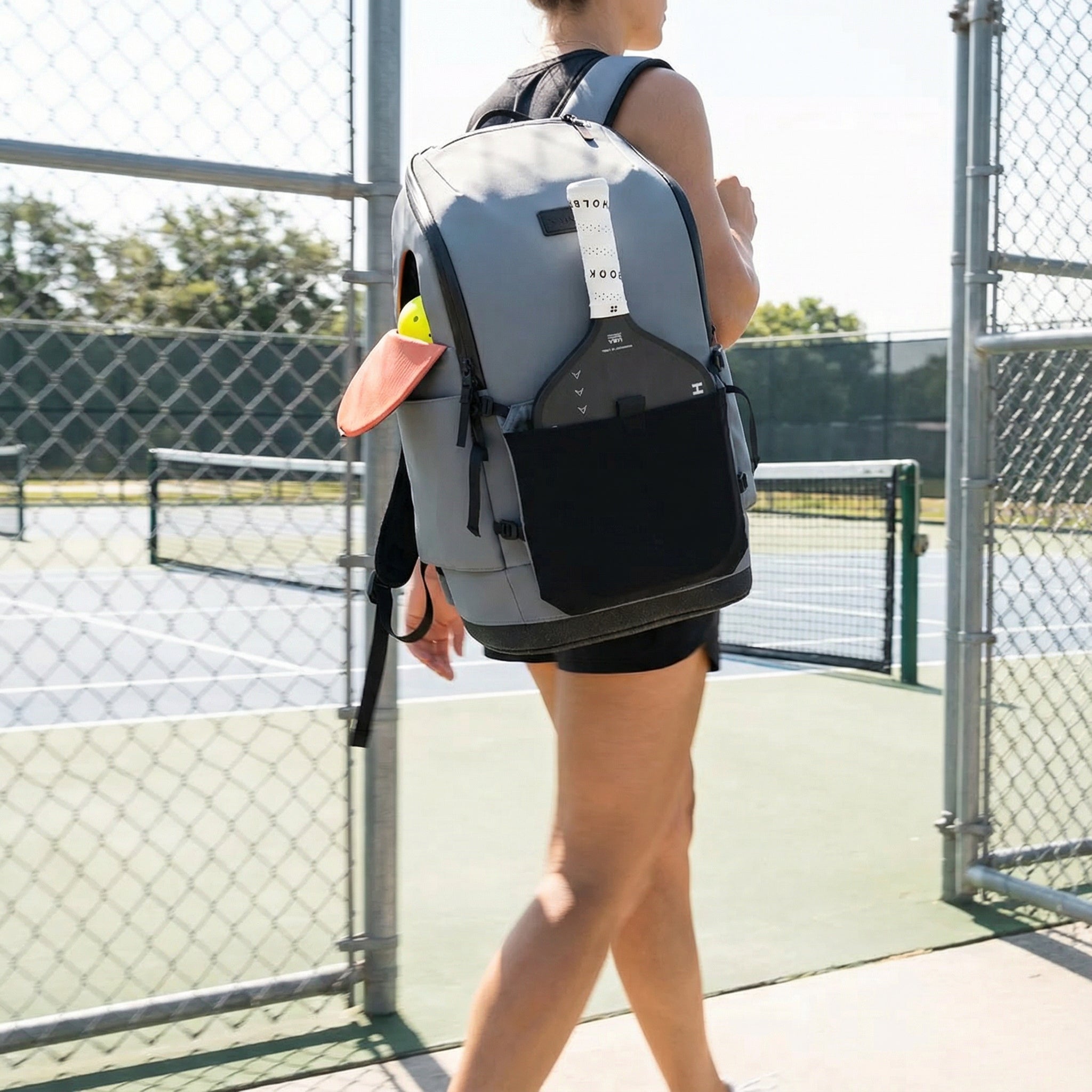
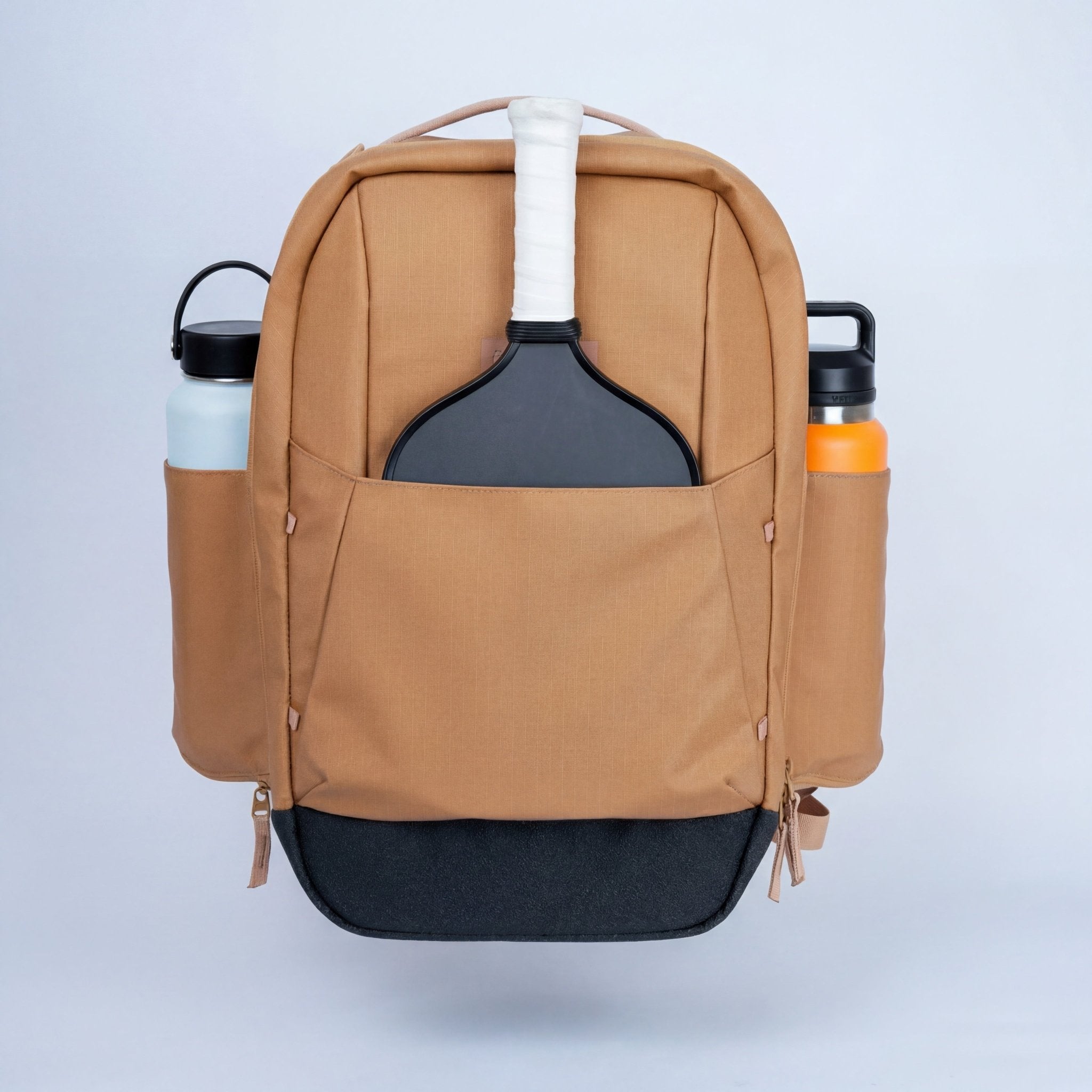
Once you've sorted the paddle, you need a bag that can carry it. The FORWRD Court Ranger V2 ($195) has a modular paddle sleeve that fits up to 4 paddles — including elongated shapes like the Patriquin C45 — plus a 16" laptop sleeve and YKK AquaGuard zippers that handle outdoor storage without issue. It's what FORWRD players use to transport their C45s without getting them banged up between sessions.

Pricing and Where to Buy
Both versions are $229.99 at Pickleball Central, in stock, and ship with standard PBC service. That's the same price as the Aurelius and Dynasty — Franklin doesn't premium-price the signature versions. No sale cycles we've tracked consistently, so if you see it in stock at list price, that's the standard market rate.
Buy 14mm at Pickleball Central — $229.99 → Buy 16mm at Pickleball Central — $229.99 →
Frequently Asked Questions
What's the actual difference between the 14mm and 16mm Hayden Patriquin paddles?
The 14mm has a swing weight of 114 and a twist weight of 6.2 — faster response, more spin on wristy drives, narrower margin for off-center hits. The 16mm has a swing weight of 116 and a twist weight of 5.3 — slightly more stable, better shock absorption, more forgiving on mis-hits. Both use the same 45° T700 raw carbon face and PowerFlex core. At 3.5 and below, start with the 16mm. At 4.0 and above with established mechanics, the 14mm's extra pop is worth exploring.
Is the Franklin C45 Hayden Patriquin USAP approved for tournament play?
Yes — both the 14mm and 16mm versions carry USAP and UPA-A certifications. They're tournament-legal in sanctioned USAPA events, PPA play, and UPA-A events. If you're buying specifically for tournament use, verify your specific event's approved equipment list since approvals can change, but as of November 2026 both versions are on the USAP approved list.
How does the Hayden Patriquin compare to the Franklin C45 Aurelius (Anna Leigh Waters)?
The Patriquin is elongated (16.4" × 7.6") and the Aurelius is a widebody — different shapes, different twist weight profiles. The Aurelius gives you more forgiveness on mis-hits and a larger sweet spot across the face. The Patriquin gives you more reach for two-handed backhands and backhand drives from the transition zone. Same price ($229.99), same C45 platform, different player type. Control-focused players who play net-dominant doubles: Aurelius. Players who need range from both wings: Patriquin.
The grip feels small — what do I do?
The C45 Hayden Patriquin ships with a small grip. If you have medium or large hands, pick up an overgrip (Tourna Grip or Gamma Grip Supreme both work) or a heat-shrink sleeve before you play. Adding a standard overgrip increases circumference by roughly 1/16", which is enough for most players. Don't add more than one layer without testing first — too much grip circumference reduces wrist mobility and costs you spin on serves.
Should I buy this or the Franklin C45 Tempo?
Same shape, same face, same price. The Patriquin's PowerFlex foam inner layer gives it a marginally softer feel on touch shots compared to the Tempo's standard polymer-only core. If they're the same price, the Patriquin is the better pick — the foam layer is a real upgrade in touch feedback. If the Tempo is on sale, the savings probably outweigh the feel difference unless you're extremely touch-sensitive on dinks. See our full Franklin C45 Tempo review for the extended comparison.
Final Verdict
The Franklin C45 Hayden Patriquin is a legitimate pro-tier paddle that earns its $229.99 price tag. The 45° T700 carbon face genuinely grips the ball differently than a standard flat-woven surface — you'll feel it on the first spin serve you attempt. The double-thermoformed frame holds up. The PowerFlex foam layer improves touch feel on soft shots in a way that matters.
The 14mm is for players with a developed short game who want an aggressive tool. The 16mm is for players still optimizing their kitchen consistency and wanting pro-level spin without sacrificing margin. Neither is a beginner paddle. Both are good at $229.99.
Shop 14mm — $229.99 at PBC → Shop 16mm — $229.99 at PBC →
For more context on how this fits into the full Franklin C45 lineup, see our guides on the C45 Aurelius, the C45 Dynasty 16mm, and our general breakdown of 14mm vs 16mm paddle thickness. And if you need a bag that actually fits an elongated paddle without cramming — the Court Ranger V2 was built with elongated shapes in mind.

Leave a comment
This site is protected by hCaptcha and the hCaptcha Privacy Policy and Terms of Service apply.