

Disclosure: This post contains affiliate links to Pickleball Central. If you purchase through our links, FORWRD earns a small commission at no extra cost to you. We tested this product independently and were not compensated by JOOLA.
Last Updated: October 2026
16mm core paddles offer more dwell time — the ball stays on the face slightly longer, giving you better control over soft shots and resets. 14mm paddles have less dwell time but faster response, making drives and speed-up attacks feel crisper. If you prioritize kitchen play and placement: 16mm. If you win through pace and aggressive driving: 14mm.
That's the short answer. If you want to understand why — and make sure you're actually choosing the right one for how you play — keep reading.
Core thickness is the most misunderstood variable in paddle buying. Everyone talks about it in reviews, but almost nobody explains the mechanics clearly. Players get told "16mm is for control" without understanding what that means in practice, or how it interacts with other paddle specs they may not have considered. This guide fixes that, using the JOOLA Perseus Pro V (available in both 14mm and 16mm at the same $299.95 price) as our primary comparison example — the cleanest possible apples-to-apples test because every other variable between those two paddles is identical. We've put both through dink sessions, third-shot drop drills, and transition zone exchanges to give you a real feel for where the difference actually shows up.
What Core Thickness Actually Does
Every pickleball paddle has a core — usually a polymer honeycomb structure sandwiched between two face sheets. The thickness of that core directly determines one key physics property: dwell time.
Dwell time is how long the ball stays in contact with the paddle face during impact before bouncing off. It sounds like an abstract spec, but it's the most direct driver of how a paddle feels in play.
Here's the physics, without the textbook version:
When a pickleball hits a paddle face, it compresses against the core material. A thicker core has more material to compress into — it acts like a slightly deeper cushion. That extra compression takes a fraction of a millisecond longer to play out before the ball rebounds. That fraction of a millisecond is dwell time, and it gives your hand more opportunity to make directional corrections, apply angle adjustments, and absorb pace before the ball leaves the face.
A thinner core (like 14mm) has less material to compress into. The rebound happens faster. Less time in contact means less opportunity to redirect or absorb — but also means faster ball speed, because less energy is dissipated in the compression cycle. More energy goes directly into the ball.
Put simply: thicker core = more control, slower response. Thinner core = faster response, less control margin.
This isn't unique to paddles — the same physics show up in tennis racquet string tension, squash racquets, and table tennis rubber thickness. More "give" in the hitting surface creates more dwell time and more control. Less give means faster, more direct energy transfer.
One important nuance: dwell time differences between 14mm and 16mm paddles are small in absolute terms. We're talking fractions of a millisecond. The reason they matter is that pickleball shots — particularly kitchen shots — are an accumulated precision game. Each dink in a 20-shot rally compounds the effect. A paddle that gives you slightly more control margin on each shot makes a real difference over the course of a point.
The 16mm Case: Who Should Choose It
A 16mm core paddle is the right choice for players whose game is built around the kitchen.
Play style indicators:
- You win points through dink placement and forced errors at the kitchen line
- Third-shot drop is your primary transition strategy (rather than third-shot drive)
- You rely on reset ability when pulled out of position
- You play long dink rallies and need consistent touch shot after shot
- You're 3.5 to 4.5 and focused on improving your soft game
What 16mm core actually gives you:
- More forgiving resets — the extra dwell time absorbs pace better, so off-balance or defensive shots still come out controlled
- More consistent third-shot drops — you can execute the same physical motion with slightly less-than-perfect timing and still get the ball to dip into the kitchen
- Better dink cross-court control — you feel the ball staying on the face long enough to aim
- Slight dampening at impact — the paddle doesn't "fight back" on hard-hit shots the same way a thin-core paddle does
What 16mm core costs you:
- Drive pace — drives are less explosive because more energy is absorbed in the core
- Speed-up attack sharpness — your speed-up shots at the kitchen line have slightly less urgency
- Some players describe it as "heavier" feel — not in weight, but in how the paddle tracks through quick exchanges
The JOOLA Perseus Pro V 16mm is one of the best examples of this category: the dwell time is real and measurable in play, the kitchen control is notably better than thinner alternatives, and the elongated 16.5" shape adds reach without sacrificing stability. At $299.95, it's priced as a premium, but the performance matches.
Shop JOOLA Perseus Pro V 16mm →
The 14mm Case: Who Should Choose It
A 14mm core paddle is the right choice for players who attack.
Play style indicators:
- You win points through pace, drives, and speed-up attacks
- You like to take the ball early and go on offense from mid-court
- Third-shot drive is your primary transition strategy
- You have quick hands at the net and rely on fast exchanges
- You have smaller hands — important if the paddle you're considering comes in a small grip (like the Perseus Pro V 14mm)
What 14mm core actually gives you:
- Faster ball response off the face — drives feel crisper and more explosive
- Quicker speed-up attacks — less dwell time means the ball leaves the face faster, giving opponents less reaction time
- Snappier feel on ATPs and erne shots where swing speed is high
- Slightly lighter swing weight in practice (less core material in the paddle)
- Faster transition from defense to offense — when you decide to go, the paddle responds immediately
What 14mm core costs you:
- Reset margin — less dwell time means less forgiveness on defensive shots; you need better mechanics to keep resets low
- Third-shot drop consistency — harder to get the same depth on drops with slightly imprecise mechanics
- Dink control over long rallies — the accumulated effect of less forgiveness shot-to-shot shows up in extended exchanges
The JOOLA Perseus Pro V 14mm fits this profile precisely: crisper response, more drive pop, same elongated shape for reach, and the KineticFrame construction that keeps energy transfer consistent across the face.
Shop JOOLA Perseus Pro V 14mm →
Side-by-Side: JOOLA Perseus Pro V 14mm vs 16mm
This is the cleanest comparison available in pickleball right now: two paddles with identical specifications in every category except core thickness, at the same price.
| Spec | Perseus Pro V 14mm | Perseus Pro V 16mm |
|---|---|---|
| Core Thickness | 14mm Honeycomb Propulsion | 16mm Honeycomb Propulsion |
| Shape | Elongated 16.5" | Elongated 16.5" |
| Edge Wall | Hyper-Foam | Hyper-Foam |
| Frame | KineticFrame | KineticFrame |
| Grip Size | Small | Medium |
| Weight Class | Middleweight | Middleweight |
| Price | $299.95 | $299.95 |
| Drive Response | Crisper / Faster | More Dampened |
| Reset Margin | Less Forgiving | More Forgiving |
| Dink Control | Good | Better |
| Speed-Up Attacks | Sharper | Slightly Softer |
| Who It's For | Pace / Aggression | Touch / Control |
Note the grip size difference — the 14mm comes in Small, the 16mm in Medium. Players with medium or large hands who want the Perseus Pro V should default to the 16mm for grip fit alone.
Both paddles are available at Pickleball Central: Perseus Pro V 14mm — $299.95 | Perseus Pro V 16mm — $299.95
What Other Specs Interact With Thickness
Core thickness doesn't operate in isolation. Several other paddle specs interact with it in ways that affect your final feel.
Weight. A heavier paddle generally absorbs more pace on impact — it moves less on contact. Combined with a 16mm core, heavier paddles feel particularly stable and controlled. Combined with a 14mm core, heavier paddles can feel powerful without being unstable. A very light paddle with a 16mm core might still feel somewhat lively; a very heavy paddle with a 14mm core might feel more controlled than you'd expect from the thickness alone.
Face material. Carbon fiber faces are stiffer than fiberglass faces, which typically means faster response regardless of core thickness. A 14mm carbon paddle will feel faster than a 14mm fiberglass paddle. A 16mm carbon paddle will feel crisper than a 16mm fiberglass paddle. When comparing paddles across brands, always note face material — two "16mm" paddles from different brands can feel quite different if one is carbon-faced and one is fiberglass.
Face texture. This primarily affects spin, not the core thickness equation. But heavily textured surfaces create more friction on contact, which can slightly affect how the ball dwells on the face. More friction means marginally more dwell. Players optimizing for spin might find a textured 14mm paddle feels somewhat more controlled than a smooth 14mm paddle — though the effect is secondary to the core thickness difference.
Edge design. Foam-injected edge walls (like JOOLA's Hyper-Foam Edge Wall on the Perseus Pro V) add a dampening effect at the paddle's perimeter. This partially offsets the liveness you'd expect from a 14mm core on off-center hits. So the Perseus Pro V 14mm doesn't feel as unforgiving on edge mishits as a thin-core paddle without foam edges would. Edge design is worth paying attention to when comparing paddles across brands.
Grip circumference. Grip size doesn't affect how the ball feels on the face, but it affects how reliably you execute your mechanics — which shows up in your ability to take advantage of whatever core thickness you've chosen. A grip that's too small encourages a tight, wristy hold that inhibits touch. A grip that's too large creates difficulty on wrist-snap shots. Getting your grip size right is underrated in its effect on how well you use your paddle.
Common Mistakes Players Make When Choosing Thickness
Choosing 16mm because "control sounds better." Control is better — if your game is kitchen-dependent. If you're a pace player choosing 16mm because you think it makes you "more precise," you're adding a tradeoff (less drive pop) without getting the benefit (you weren't running long dink rallies anyway). Match the thickness to your actual game, not to an idealized version of your game.
Choosing 14mm because "power sounds better." Same logic in reverse. Plenty of 3.5 players buy thin-core paddles because they want to hit harder, then struggle with consistency in the soft game. More reset errors isn't a performance upgrade. Know how you actually win points before choosing.
Ignoring the grip size difference. For the Perseus Pro V specifically: the 14mm and 16mm have different grip sizes. This isn't a minor detail. Choosing the 14mm because you want faster response and then discovering the small grip doesn't fit your hand is a $299.95 mistake.
Over-indexing on what the pros use. Ben Johns has publicly expressed preference for the 16mm version. That doesn't mean 16mm is better — it means 16mm suits his playing style. If your game is built around power and pace rather than Johns's patience-and-precision approach, the 14mm is probably better for you even though the tour player prefers the other one.
Not accounting for skill development. If you're currently a 3.0 player planning to reach 4.0+ in the next year, think about which thickness serves your goal game rather than your current game. Players often find they want to shift from control (16mm) to a more balanced feel as they develop more reliable touch — or shift the other way as they learn that resets require more margin than they thought.
Expecting the difference to be transformative. Two millimeters of core is a tuning decision, not a personality transplant. Players who switch from 16mm to 14mm expecting dramatically more power are sometimes disappointed. The difference is meaningful but not dramatic — it's a refinement of your existing paddle feel, not a complete overhaul.
Complete Your Setup
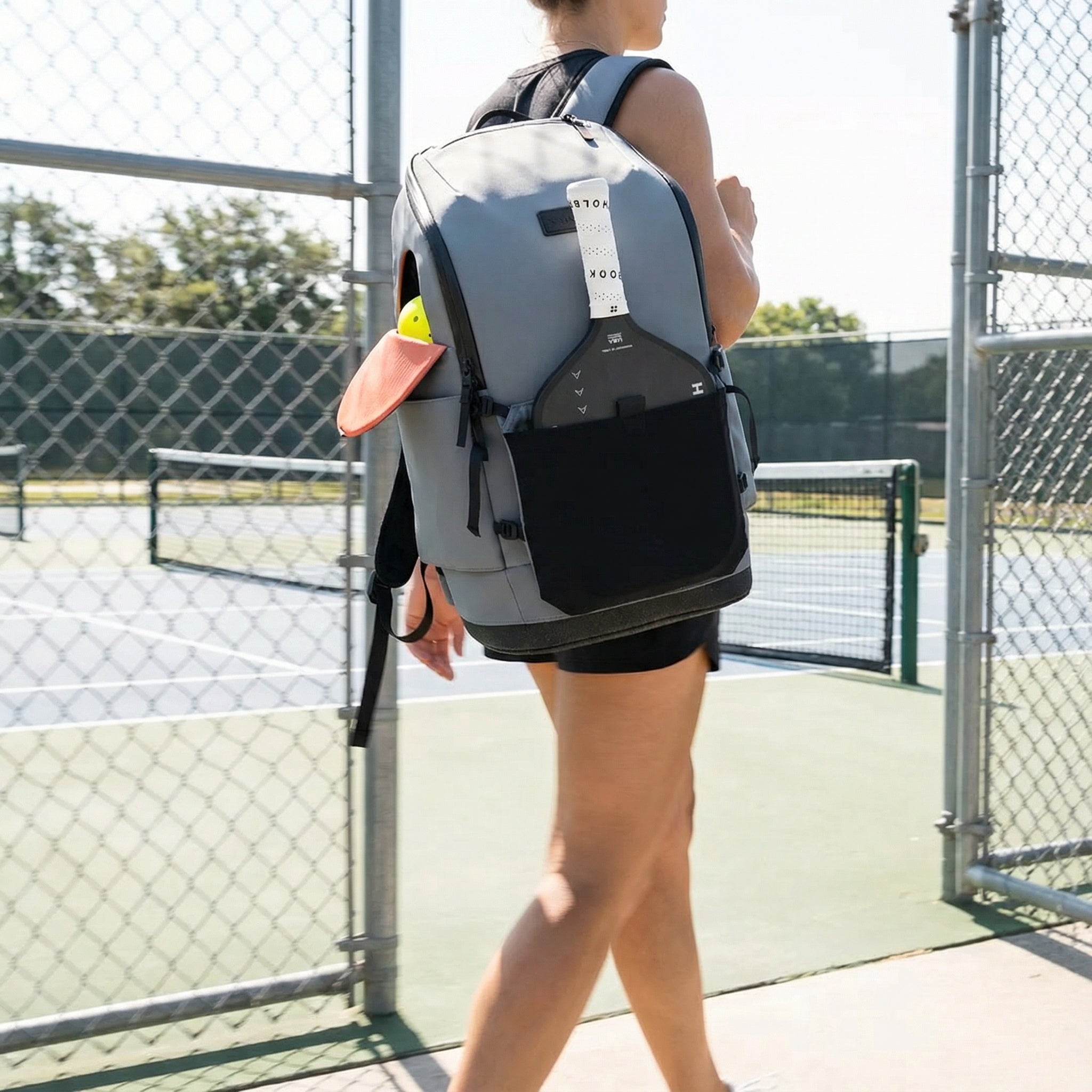
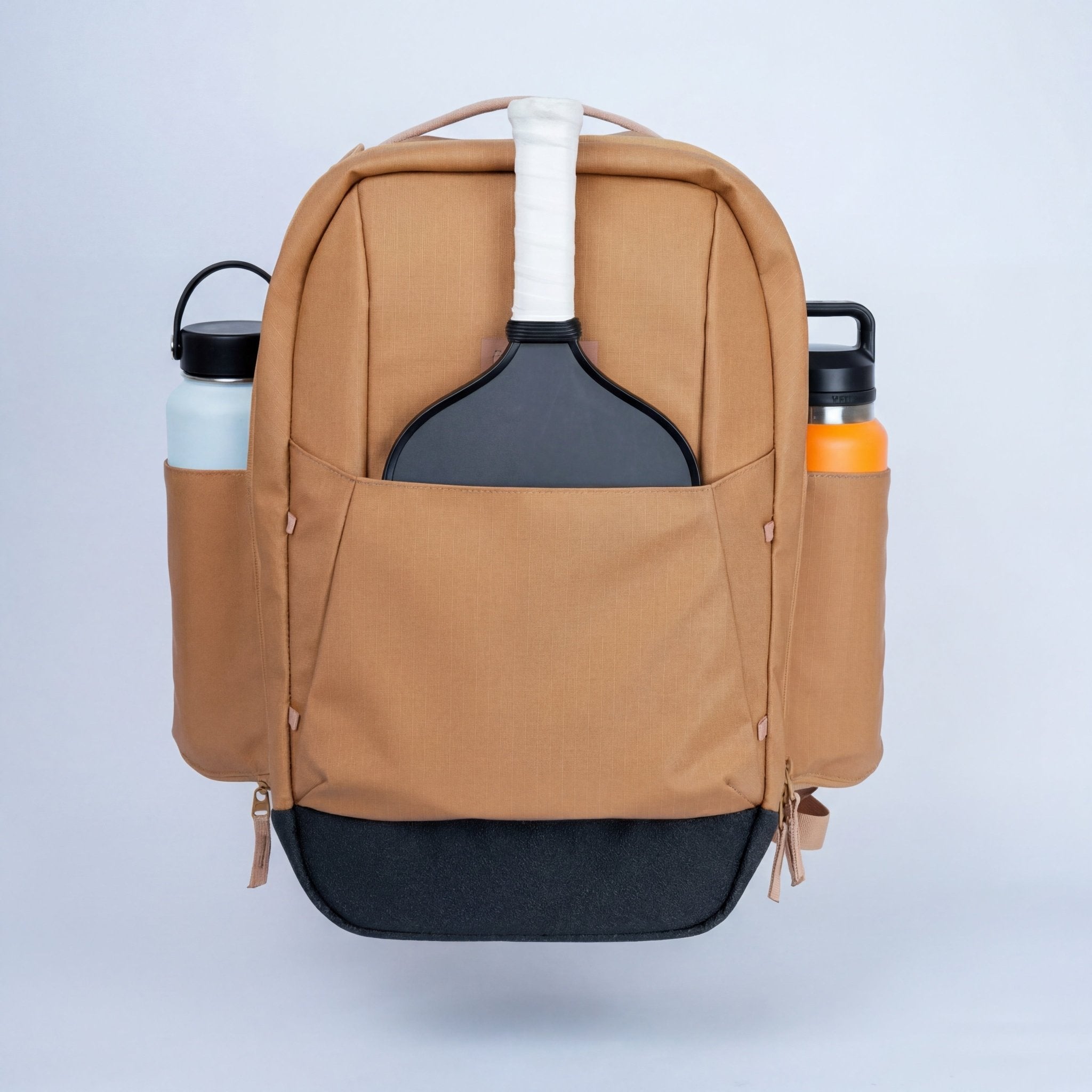
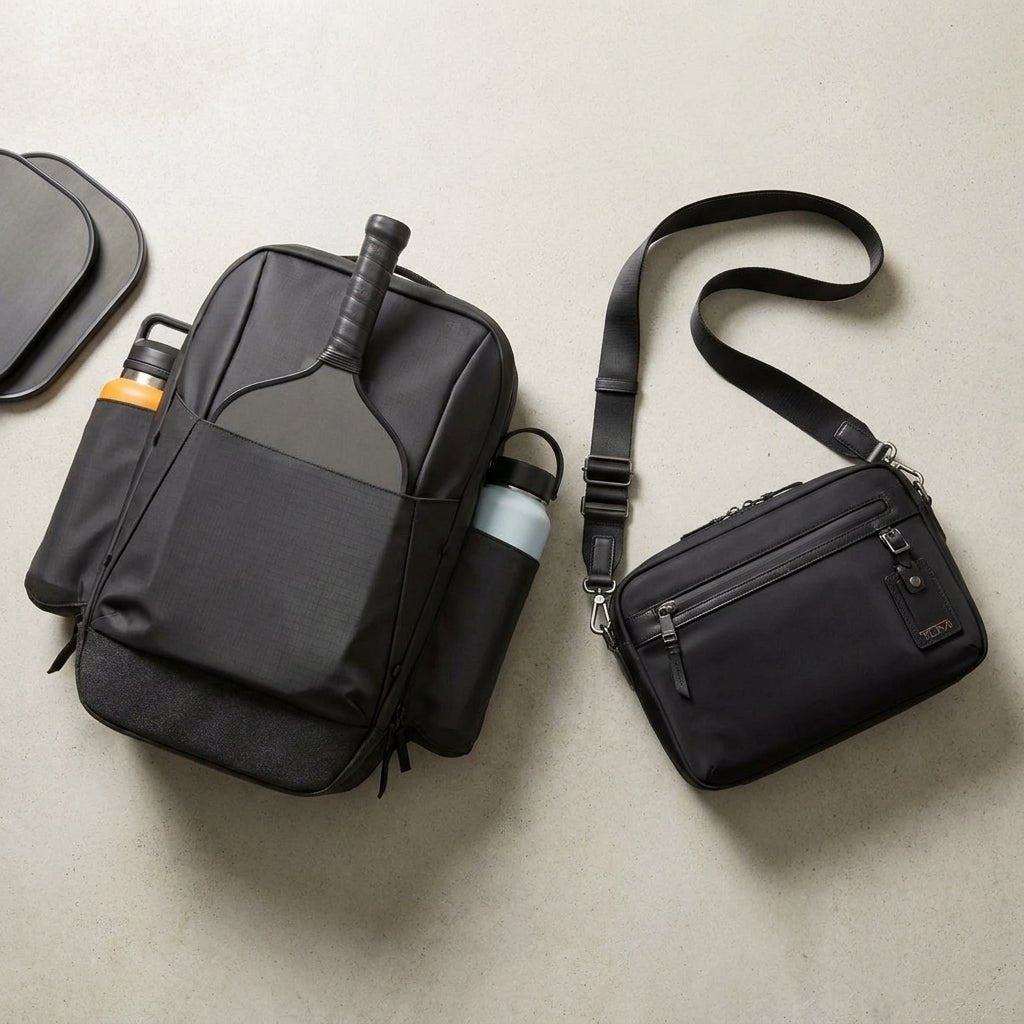
Whatever thickness you land on, your paddle deserves a bag built to protect it. The FORWRD Court Ranger V2 ($195) is the go-to for most players: dedicated paddle sleeve with impact-resistant padding, 16" laptop sleeve, thermal ball pocket, and enough room for a full kit change. For players who carry multiple paddles or need a larger laptop sleeve, the Court Caddy ($325) steps up with a modular layout and premium YKK AquaGuard zippers designed for long tournament days.

FORWRD Court Ranger V2 — $195
Built with feedback from 500+ real players. Paddle sleeve, thermal ball pocket, 16" laptop sleeve — everything you need for a serious session, in one organized bag. Designed for exactly the player who takes gear decisions as seriously as paddle decisions.
Shop Court Ranger V2 — $195 →"Our playtesters are split right down the middle on this one. The guys who live at the kitchen line love 16mm — they'll tell you the extra control margin is real. The pace players reach for 14mm every time. The honest advice: if your club has a demo program, spend 20 minutes with each in a dink rally before you buy. The difference is immediate."
— Grub, FORWRD Co-Founder
FAQ
Is 14mm or 16mm better for pickleball?
Neither is objectively better — they're suited for different playing styles. 16mm core paddles offer more dwell time and control, making them better for kitchen-heavy play and reset-dependent games. 14mm paddles have faster response and more pop, making them better for aggressive, pace-oriented play. The right choice depends entirely on how you win points. Pace and drives: 14mm. Touch and placement: 16mm.
Does paddle thickness affect spin?
Indirectly, and less than most people think. Spin is primarily determined by face surface texture and player technique — not core thickness. However, thinner-core paddles tend to have slightly faster response, which can amplify topspin mechanics if you have good technique. For maximum spin generation specifically, the face material and texture matter far more than whether you choose 14mm or 16mm.
Should beginners use 14mm or 16mm paddles?
Most beginners benefit more from a 16mm core. More dwell time means more margin for error, which helps while developing mechanics. That said, beginners probably shouldn't be choosing between the Perseus Pro V 14mm and 16mm at $299.95 each — entry-level paddles at $70 to $130 make more financial sense before you know what playing style you're developing. Once you're consistently playing 3.5+ level games, the 14mm vs 16mm decision becomes meaningful.
Do pro pickleball players use 14mm or 16mm paddles?
Tour players are spread across both thicknesses, and their choices are informed by playing style rather than any consensus that one is better. Ben Johns has expressed preference for the 16mm Perseus Pro V, consistent with his control-and-patience style. Other tour pros who play a more aggressive, pace-heavy game often use thinner-core paddles. Following tour pros' choices is a reasonable heuristic only if your playing style closely matches theirs.
Can I test paddle thickness without buying two paddles?
Yes — and you should before committing $299.95 to either option. Most pickleball clubs have demo programs. Try each thickness in actual play — specifically, spend time at the kitchen line in dink rallies and also run some third-shot drop drills. The difference in feel will be immediately apparent when you know what to pay attention to. Don't choose based on feel in your hand at a store — choose based on how it performs in the situations that actually decide points in your game.
Final Verdict + Both Options
The 14mm vs 16mm choice is ultimately a play-style question, not a quality question. Both thicknesses represent legitimate engineering decisions for different types of players. The JOOLA Perseus Pro V (available in both) is one of the few paddles where you can make a direct, apples-to-apples comparison because nothing else changes between the two versions.
Choose 16mm if you're a kitchen player who wins through dink placement, reset ability, and third-shot drops. The JOOLA Perseus Pro V 16mm delivers on that promise cleanly.
Choose 14mm if you're a pace player who wins through drives, speed-up attacks, and offensive pressure — and if you have smaller hands that fit the small grip.
Once you've got your paddle sorted, make sure your bag is game-ready too. The Court Ranger V2 from FORWRD ($195) is what most of our testers carry — room for 2 paddles, all your accessories, and a 16" laptop for the work-to-court crowd. Tournament players who need more often step up to the Court Caddy ($325).
Shop Perseus Pro V 16mm → Shop Perseus Pro V 14mm →
If you're still deciding, pair this guide with our individual reviews and our best pickleball shoes for men guide to complete your kit.

Leave a comment
This site is protected by hCaptcha and the hCaptcha Privacy Policy and Terms of Service apply.