

Disclosure: This post contains affiliate links to Pickleball Central. If you purchase through our links, FORWRD earns a small commission at no extra cost to you. We tested this product independently and were not compensated by JOOLA.

Two millimeters. That's the only difference between the JOOLA Perseus Pro V 14mm and the 16mm version sitting next to it on the shelf at the same $299.95 price point. But those two millimeters flip the paddle's personality entirely. The 16mm is a control specialist. The 14mm wants to go on offense.
If your game relies on pace, quick hands at the net, and winning points through pressure rather than patience, the 14mm is the right call. It's faster off the face, more explosive on drives, and snappier on speed-up attacks. The soft game is still there — it's not a powerhouse-only paddle — but you're accepting less margin for error on resets in exchange for more threat when you go on offense.
The other thing to know before reading further: the 14mm Perseus Pro V comes with a small grip. That single detail rules out a large chunk of potential buyers immediately, and we'll cover it in detail.
Who the JOOLA Perseus Pro V 14mm Is For (and Who It Isn't)
The 14mm version is the aggressive version of the Perseus Pro V. Same shape, same frame, same price — different game plan.
This paddle is for you if:
- You're a 3.5+ player who wins through pace and pressure rather than touch-and-patience
- You have smaller hands — the small grip actually fits you, rather than forcing an uncomfortable squeeze
- You play an all-court style and want a paddle that transitions from defense to offense quickly
- You want the fastest possible response off the face in the Perseus Pro V family
- You prefer a lighter feel with quicker swing weight (thinner core shaves meaningful grams from the overall paddle feel)
This paddle probably isn't for you if:
- You have medium or large hands (the small grip is a genuine problem, not just preference)
- Your game is primarily kitchen-heavy control play (the 16mm version gives you more margin where you need it)
- You're still developing touch — the 14mm is less forgiving on mishits
- You want maximum spin generation (neither version is a spin-first paddle)
One thing to note: this isn't a dramatically different paddle from the 16mm. You're not picking between "control paddle" and "power paddle" — you're choosing where you want 2mm of core thickness to go. Players switching between the two often describe the difference as "noticeable but not dramatic." It's a tuning decision, not a fundamental pivot.
Specs at a Glance
| Spec | JOOLA Perseus Pro V Ben Johns 14mm |
|---|---|
| Shape | Elongated, 16.5" |
| Core Thickness | 14mm Honeycomb Propulsion Core |
| Edge Wall | Hyper-Foam Edge Wall |
| Grip Size | Small |
| Weight Class | Middleweight |
| Price | $299.95 |
Check Price at Pickleball Central →
Power and Drive Performance: The 14mm Advantage
Less core thickness means less energy absorption. When you drive through a ball with the 14mm, more of that kinetic energy transfers directly into the ball — less dwell time, faster response, more pop off the face.
In actual play, this shows up most clearly in three areas:
Third-shot drives. The 14mm gives you a noticeably crisper, faster ball when you decide to drive rather than drop. Transition zone exchanges feel more threatening. If you're the type of player who switches between third-shot drop and third-shot drive to keep opponents guessing, the 14mm's drive response gives you a sharper weapon there.
Speed-up attacks. When you attack from the kitchen line on a high ball, the 14mm's faster response means your opponent gets less reaction time. The difference isn't massive, but in fast exchanges it's perceptible — the ball comes off the face with slightly more urgency.
ATP and erne shots. Both of these around-the-post plays benefit from crisp, fast response. The 14mm delivers that more reliably than the 16mm when you're swinging through an ATP from wide.
The KineticFrame throat construction keeps the frame rigid under load, which prevents the energy-absorbing flex you'd get from a flimsier paddle. That stiffness amplifies the 14mm's natural tendency toward faster response — you get clean energy transfer without frame wobble.
"I've hit the 14mm version a handful of times now. If you're a pace player — and I mean genuinely driving balls and looking to speed up — you'll feel it immediately. The response off the face is snappier. The thing people miss is the grip size warning though. Small grip is real. Measure your hand before you pull the trigger on this one."
— Grub, FORWRD Co-Founder
Soft Game and Resets: The Honest Tradeoff
Here's where we tell you what the 14mm costs you: reset margin.
A 14mm core has less dwell time than a 16mm. That means the ball spends less time in contact with the face before rebounding, giving you less opportunity to absorb pace and redirect softly. On straightforward dinks in calm rallies, this difference is minimal — both paddles are controlled enough for clean kitchen play.
Where it shows up is under pressure. If you're jammed on a speed-up attack and need a clean reset, the 14mm requires slightly more precise mechanics to keep the ball low. You can absolutely execute clean resets with the 14mm — good players do it constantly — but you have a smaller margin for error compared to the 16mm.
Third-shot drops are similarly affected. With the 14mm, you need a touch more discipline in your stroke to get consistent depth and arc. Players with ingrained drop mechanics won't notice. Players still developing consistency on the drop might find the 16mm more forgiving while they dial in the shot.
None of this is a fatal flaw. It's just the honest physics of the choice. If you've played with thin-core paddles before and feel comfortable with the mechanics they demand, the 14mm's tradeoffs won't bother you. If you've primarily used thicker-core paddles and are switching, expect a brief adjustment period.
Reach and Elongated Shape: Still the Same 16.5"
The 14mm Perseus Pro V shares its shape spec with the 16mm — 16.5" elongated. Everything that applies to the elongated shape in the 16mm review applies here equally.
That extra length is genuinely useful. Erne coverage at the kitchen line is better. ATP shots from wide positions benefit from the reach. Wide balls at the hip that you'd normally have to lunge for can often be handled with just an arm extension.
The maneuverability adjustment is also the same as with any elongated paddle: body shots and fast exchanges at your hip take a session or two to feel natural. Players coming from standard-length paddles should know that going in.
One thing specific to the 14mm version: the slightly lower swing weight (compared to the 16mm, due to less core material) can make the elongated shape feel more maneuverable. That's not a dramatic difference, but players who found elongated paddles sluggish in the past might find the 14mm version tracks better through quick exchanges.
Grip Size Reality: Why the Small Grip Matters More Than You Think
This is the section most reviews bury or skip. It shouldn't be buried.
The JOOLA Perseus Pro V 14mm comes with a small grip. That's not a default you can easily walk back. Adding an overgrip adds roughly 1/16" of circumference — sometimes enough to bridge the gap if you're on the border, but not nearly enough if you have medium or large hands.
Playing with a grip that's too small creates a cascade of problems: you compensate by gripping too tightly, which kills touch and fatigues your forearm faster. Over a two-hour session, that muscle fatigue becomes noticeably worse — and tight-grip mechanics are associated with elbow strain over time.
Who the small grip fits: Players with 4.0" to 4.125" measured grip size, which roughly corresponds to smaller male hands or most female hands. If you already play with small-grip paddles and like them, you're fine.
Who should be cautious: Players with 4.25"+ measured grip size. You can add an overgrip layer to get to roughly 4.1875", but you won't get to 4.25" or above without multiple wraps that add too much bulk and change the feel of the handle entirely.
The test: measure the distance from the middle crease of your palm to the tip of your ring finger. Under 4.0" — small grip. 4.0" to 4.25" — medium grip. Above 4.25" — large grip. If you're in the medium-grip zone, the 16mm Perseus Pro V (which comes with a medium grip) is probably your cleaner choice in this paddle family.
JOOLA Perseus Pro V 14mm vs JOOLA Ben Johns Hyperion CFS 16
The Hyperion CFS 16 is an interesting comparison because it represents an earlier generation of JOOLA's Ben Johns line — and understanding the differences clarifies what the Perseus Pro V 14mm is trying to accomplish.
Our full review of the JOOLA Ben Johns Hyperion CFS 16 goes deep on that paddle. For comparison purposes:
Price. The Hyperion CFS 16 comes in around $159.95, making it roughly $140 cheaper than the Perseus Pro V 14mm. That price gap is real and worth acknowledging.
Core thickness. The Hyperion CFS 16 is — as the name says — 16mm. So you're comparing a 14mm paddle (Perseus Pro V 14mm) against a 16mm paddle (Hyperion CFS 16). The Hyperion will be softer, more control-focused, and more forgiving on resets. The Perseus Pro V 14mm will be crisper, more explosive on drives.
Surface and spin. The Hyperion CFS is known for serious spin generation — the Carbon Friction Surface is one of the grippier surfaces JOOLA makes. If spin is your primary weapon, the Hyperion CFS 16 actually gives you more texture to work with despite being a cheaper paddle.
Frame technology. The Perseus Pro V 14mm has the newer KineticFrame and Hyper-Foam Edge Wall construction. The Hyperion has JOOLA's older frame approach. The Perseus Pro V is the newer, more refined design — and it shows in the energy transfer and edge stability.
The honest take: If budget matters and you prioritize spin-heavy kitchen play, the Hyperion CFS 16 at $159.95 is compelling. If you're a pace-oriented player who wants the newest Perseus Pro V construction and have smaller hands, the Perseus Pro V 14mm at $299.95 justifies the premium through its crisper response and more advanced frame technology. You can also find the Hyperion at Pickleball Central to compare.
For our full read on the complete Perseus Pro V line, see the JOOLA Perseus Pro V overview review.
Complete Your Setup
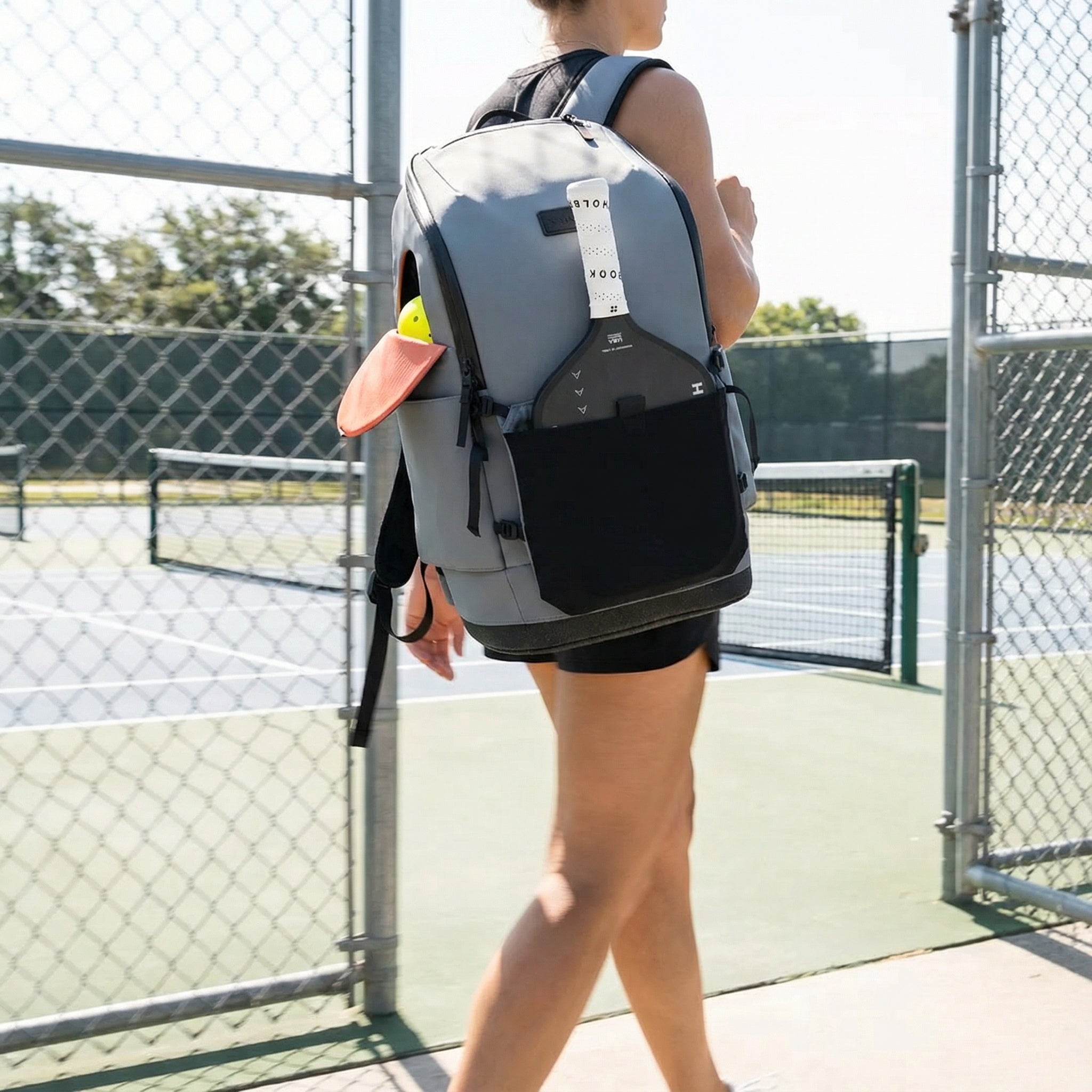
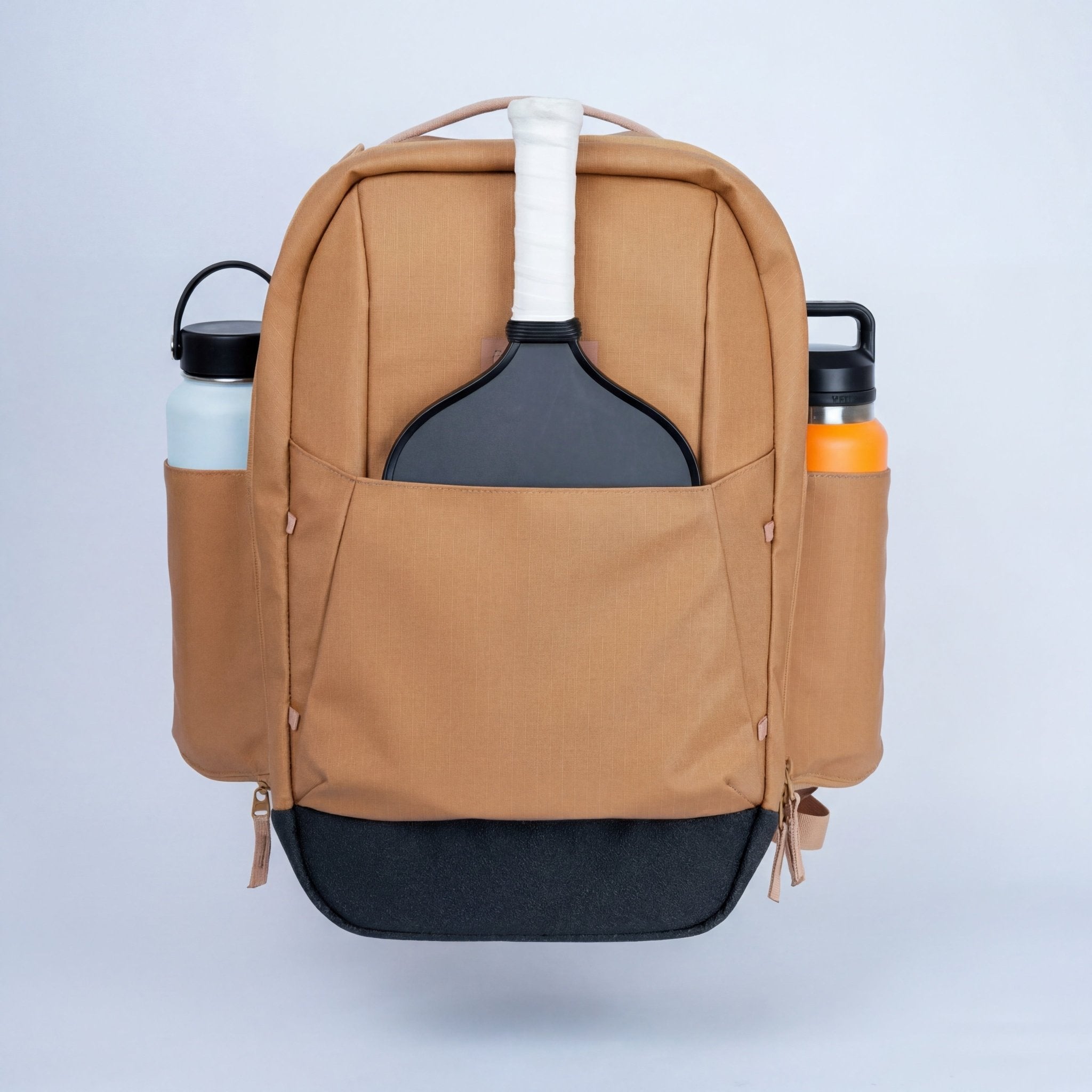
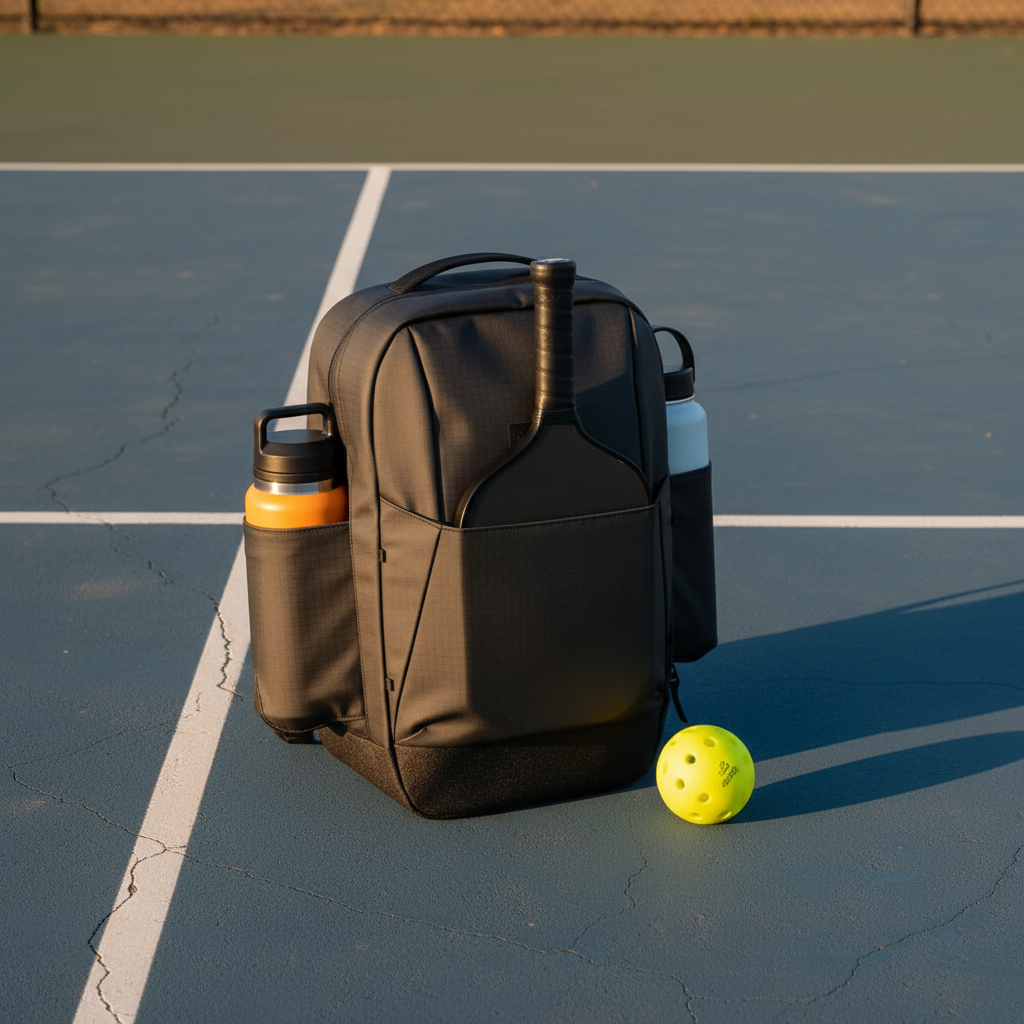
A $299.95 paddle should go in a bag built to protect it. The FORWRD Court Ranger V2 ($195) is what most pace-oriented players carry — dedicated paddle sleeve with impact-resistant padding, thermal ball pocket, 16" laptop sleeve. It's built for the player who plays 3+ days a week and takes gear as seriously as paddle selection. Players who carry multiple paddles or need room for longer tournament days often step up to the Court Caddy ($325), with a modular layout and YKK AquaGuard zippers designed for premium protection.

FORWRD Court Ranger V2 — $195
The Perseus Pro V 14mm is a serious paddle. It deserves a bag to match. Court Ranger V2 has padded paddle sleeves, a thermal ball pocket, and enough compartments for a full kit. Designed with feedback from 500+ real players — built for players who play 3+ days a week.
Shop Court Ranger V2 — $195 →FAQ
Is the 14mm Perseus Pro V better for aggressive players?
Yes — in the context of the Perseus Pro V family. The 14mm core's faster response and crisper drive performance suit players who pressure opponents through pace and speed-up attacks. If you're comparing across all paddles rather than just within the Perseus Pro V line, "aggressive" players might also look at purpose-built power paddles. But within this paddle family, the 14mm is clearly the version for attack-oriented play.
Can I use the 14mm Perseus Pro V if I have medium or large hands?
Technically yes, practically problematic. The small grip that comes standard on the 14mm version will feel too narrow for medium or large hands. You can add overgrip wrap to add circumference, but you'll max out around 4.1875" — which still falls short of a true medium-grip range. If you have medium or large hands and want a Perseus Pro V, the 16mm version comes with a medium grip and is the cleaner fit.
How does the 14mm Perseus compare to the Ben Johns Hyperion?
The Hyperion CFS 16 is a 16mm paddle, so you're comparing a thinner, crisper paddle (Perseus Pro V 14mm) against a thicker, softer one (Hyperion CFS 16). The Hyperion wins on spin generation and soft-game forgiveness. The Perseus Pro V 14mm wins on drive response and frame technology. The Perseus Pro V is also $140 more expensive. See our full Hyperion CFS 16 review for the deeper breakdown.
Is the JOOLA Perseus Pro V 14mm approved for tournament play?
Yes. The Perseus Pro V 14mm is USA Pickleball approved and legal for sanctioned tournament and recreational league play. Check the USA Pickleball approved paddle list before any specific tournament if rules have changed, but as of 2026 it's on the approved list.
How long does the Perseus Pro V 14mm last before losing pop?
For recreational players at 3x/week play: expect 12 to 18 months before you notice meaningful core compression. The 14mm starts with less core material than the 16mm, so compression may be somewhat more noticeable over time — but in practice, most recreational players replace their paddle for other reasons before compression becomes the primary issue. Tournament players playing 5+ days a week should plan for a refresh at 8 to 12 months.
Final Verdict
Once you've landed on your paddle, make sure your bag is sorted too. The Court Ranger V2 ($195) is what most of our players in this profile carry — organized, protective, 16" laptop-ready. The Court Caddy ($325) is there when you need to carry more.
The JOOLA Perseus Pro V 14mm is the right paddle for a specific player: 3.5+ skill level, smaller hands that actually fit the small grip, and a playing style built on pace and pressure rather than touch-heavy kitchen games. The 14mm core delivers what it promises — faster response off the face, crisper drives, quicker speed-up attacks — and the KineticFrame construction makes that feel consistent across the full face.
The tradeoffs are real: less reset margin than the 16mm, and a small grip that rules out a significant portion of potential buyers. Neither of those is a flaw if you fit the profile. They're just constraints that determine whether this is your paddle or not.
If you're in the right profile, it's an excellent choice. If you're not certain about the small grip — try before you commit, or choose the 16mm and stay in the Perseus Pro V family.
Buy JOOLA Perseus Pro V 14mm at Pickleball Central →
Last updated: June 2026

Leave a comment
This site is protected by hCaptcha and the hCaptcha Privacy Policy and Terms of Service apply.