

Disclosure: This post contains affiliate links to Pickleball Central. If you purchase through our links, FORWRD earns a small commission at no extra cost to you. We tested this product independently and were not compensated by JOOLA.
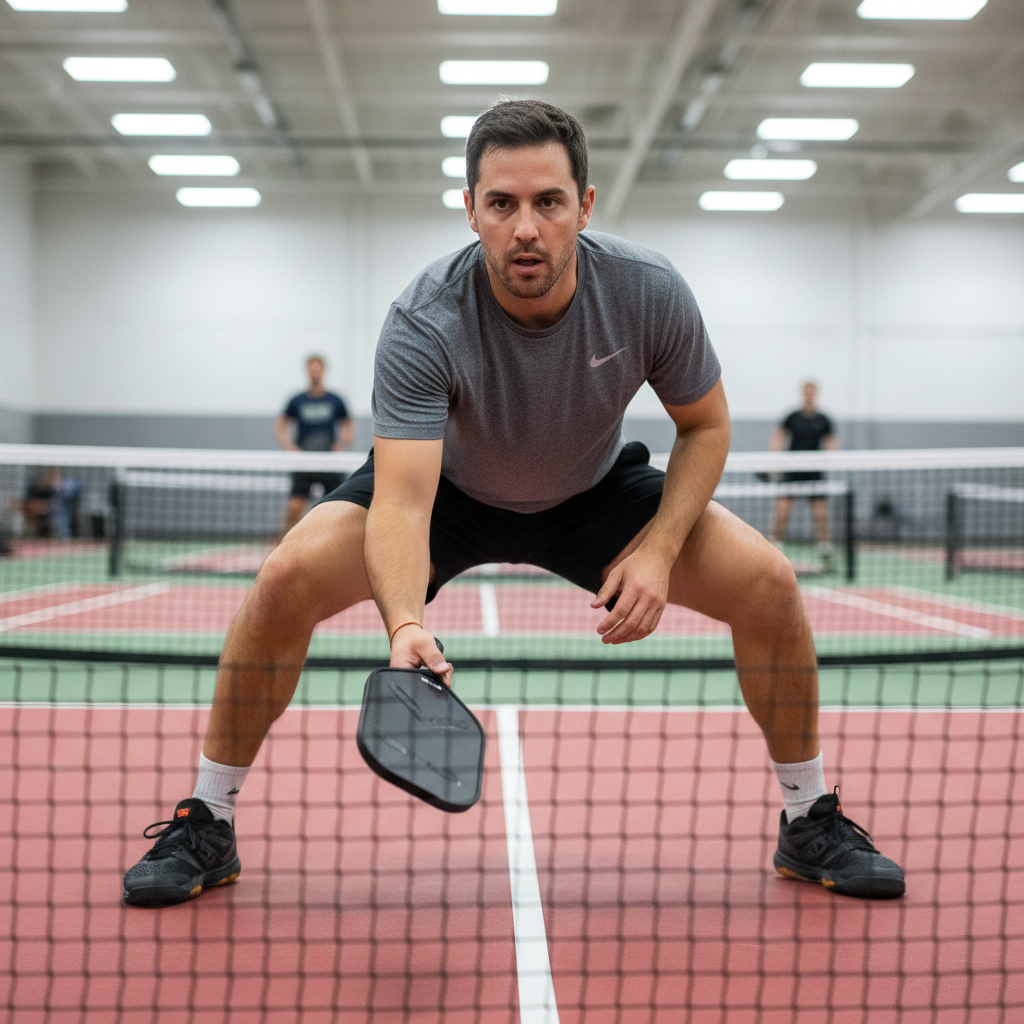
The JOOLA Perseus Pro V Ben Johns 16mm isn't for everyone. At $299.95 it's a serious investment, and the 16mm core is a deliberate choice that trades raw drive power for something more valuable at the kitchen line: dwell time. If you play in dink rallies, reset under pressure, and win points through placement over pace, this paddle was built for how you play.
If you win by blasting through opponents, the 16mm version probably isn't your paddle. That's not a knock — it's just the honest layout of the territory.
We've spent extended time with both versions of the Perseus Pro V. This review covers the 16mm specifically: what it does better than almost anything else in its price range, where it asks you to accept tradeoffs, and exactly which player profile it fits.
Who the JOOLA Perseus Pro V 16mm Is For (and Who It Isn't)
The 16mm version of the Perseus Pro V was designed around Ben Johns's actual preference in high-level play. If you play control-first pickleball and care as much about your gear setup as your paddle choice, a bag like the Court Ranger V2 pairs naturally with this style of play — organized, protective, built for the player who plans ahead. Johns is the definition of a control-first player — his game is built on reset ability, deep dink exchanges, and forcing errors through patience rather than power. The 16mm core supports all of that.
This paddle is for you if:
- You're a 3.5 to 4.5 player who prioritizes kitchen control over raw pace
- You regularly find yourself needing clean resets from mid-court pressure
- You struggle with a thin-core paddle going hot on you in long rallies
- You have medium hands and prefer a comfortable medium grip
- You want elongated reach (16.5") without sacrificing stability
This paddle is probably not for you if:
- You win points primarily through drives and speed-up attacks
- You're a beginner still developing basic stroke mechanics (the premium price isn't justified)
- You have small hands — the medium grip may feel slightly oversized
- You want the fastest possible ball response off the face
The honest version of that last point: if you're a banger who loves a thin-core pop, the JOOLA Perseus Pro V 14mm is probably a better fit. Same price, same shape, totally different feel.
Specs at a Glance
| Spec | JOOLA Perseus Pro V Ben Johns 16mm |
|---|---|
| Shape | Elongated, 16.5" |
| Core Thickness | 16mm Honeycomb Propulsion Core |
| Edge Wall | Hyper-Foam Edge Wall |
| Grip Size | Medium |
| Weight Class | Middleweight |
| Price | $299.95 |
Check Price at Pickleball Central →
Dink and Reset Performance: Where the 16mm Core Earns Its Money
This is the section where the 16mm genuinely separates itself from thinner-core paddles, and it's worth understanding why — not just that it feels better on soft shots, but mechanically what's happening.
A 16mm core creates more dwell time. The ball sits on the face slightly longer before rebounding. That fraction of a second gives your hand time to make micro-corrections, so the ball lands where you intend it rather than where the paddle happens to be facing. At the kitchen line during a 20-shot dink rally, that adds up to a lot more balls that die in the corner and a lot fewer unforced errors floating into the middle.
In practice: cross-court dinks feel planted. Roll dinks respond cleanly. Third-shot drops — the shot most mid-level players struggle with — are noticeably more forgiving on the Perseus Pro V 16mm than on a 14mm or 13mm paddle. You can execute the same physical motion with slightly imperfect timing and still get a ball that dips into the kitchen.
Resets under pressure are similarly strong. When you're pulled wide or jammed and need to absorb pace, the 16mm core doesn't fight the ball. It softens it. Players coming from harder-faced thin-core paddles will feel an immediate difference in their ability to reset from defensive positions.
The Hyper-Foam Edge Wall contributes here too. JOOLA's foam-filled edge construction adds a slight dampening effect at the perimeter, which keeps off-center hits from going dramatically wide. You'll notice it most on mishits — balls that clip the edge of the face at the kitchen line often stay in play rather than popping up or going sideways.
"The 16mm Perseus Pro V is what we'd hand to a 3.5-4.0 player who asks 'what should I use to get better faster?' The extra dwell time is genuinely forgiving — you can focus on footwork and positioning instead of babying your touch shots. For kitchen-heavy play, it's one of the best things JOOLA has built."
— Topher, FORWRD Co-Founder
Power Play: The Honest Tradeoff With 16mm Core
Here's the part of the review most competitors won't write plainly: the 16mm version costs you something on drive shots.
More dwell time means more energy absorption. When you load up on a drive and swing through, the 16mm core is dissipating some of that energy rather than springing the ball off the face. The difference isn't enormous — you're not picking up a dead paddle — but in direct A/B comparisons with the 14mm version, drives are measurably less explosive.
How much does this matter? Depends entirely on your game. For a player who wins through pace, drives, and ATP shots, it's noticeable and it matters. You'd prefer the 14mm, or a different paddle entirely. For a player whose game is built around dink-and-reset sequences, it's a non-issue — you're not trying to blast through people anyway.
One area where the power tradeoff is less critical: third-shot drives. Even with the 16mm core, the Perseus Pro V has enough pace to execute a credible third-shot drive if you want to run that play. You won't overwhelm a top-level defender with it, but you'll put the ball where you want it at a speed that creates problems. The elongated shape helps here — the extra reach lets you contact the ball earlier with better leverage.
The KineticFrame throat integration (JOOLA's term for the reinforced carbon fiber around the throat junction) adds stiffness to the frame itself, which maintains pop consistency across the entire face. You don't get dead zones near the throat or edges. That helps on power shots more than you'd expect from a control-oriented paddle.
Reach and Kitchen Coverage: Why the 16.5" Matters
Elongated paddles have been gaining share at every level for a reason: the extra length gives you reach advantage that compounds over a full game.
At 16.5", the Perseus Pro V is on the longer end of standard elongated paddles. That translates to meaningful differences at the kitchen line — specifically, your ability to cover more of the kitchen without having to lunge. Erne shots become more accessible. ATP attempts from wide positions benefit from the extra extension. When your opponent tries to push you off the line with a wide ball, you can often get paddle on it without conceding position.
The tradeoff with elongated paddles is generally maneuverability. A longer paddle requires slightly more arm adjustment for body shots and fast exchanges at your hip. Players coming from standard-length paddles should expect a brief adjustment period — usually a session or two before it feels natural. After that, most players don't want to go back.
For doubles players specifically: the elongated shape is strong for poaching at the net. You can cut off more angles with less movement, which makes you a harder target to pass.
Durability and Longevity
The Perseus Pro V 16mm is built to last, but like any performance paddle, it has wear patterns worth knowing about.
Face texture retention. The surface grit that generates spin on the face holds up well through normal play — typically 6 to 9 months of 3x/week recreational play before you notice any meaningful texture loss. Players who play daily in tournament conditions may see that compress to 4 to 5 months. The grit isn't dramatic to begin with on this paddle — it's dialed for control, not maximum topspin — so degradation is less dramatic than on paddles with aggressive surface textures.
Grip replacement timing. The stock grip is adequate but not exceptional. Medium-handed players will find it comfortable out of the box. If you sweat heavily or play outdoors in heat, plan on replacing the grip within 3 to 4 months of regular play. A fresh overgrip dramatically extends the effective life of the paddle and costs about $5 — worth doing before the original grip gets slick rather than after.
Edge wall integrity. The Hyper-Foam Edge Wall holds up well to normal court contact. Avoid face-first drops on hard surfaces — direct strikes to the face can create micro-fractures in carbon fiber paddles at any price point. The foam edge provides some protection against rim-first impacts.
Core compression. One thing to watch: over time, any polymer honeycomb core compresses slightly with repeated use. On a 16mm paddle, this can gradually shift the feel toward a 14mm feel as the core thins. Most players won't notice this for 12+ months of recreational use, but competitive players who play 5+ days a week may want to plan for a paddle refresh at 12 to 18 months.
JOOLA Perseus Pro V 16mm vs Selkirk LUXX Control Air
These two paddles are the most direct competitors in the control-first category at similar price points, and the comparison is genuinely useful because they make different choices.
The Selkirk LUXX Control Air is also built for kitchen play and reset performance. Its foam-injected core creates a similarly soft dwell experience. Both paddles are elongated. Both are priced as premium options.
Where they differ:
Feel. The LUXX Control Air has a slightly more muted, dampened feel — almost cushioned. The Perseus Pro V 16mm feels more connected, like you can sense the ball better on contact. Some players love the LUXX's feel; others find it too dead. It's genuinely a preference question.
Face texture. The Perseus Pro V has a textured carbon surface that gives slightly better topspin access. The LUXX's InfiniGrit surface is more aggressive — better for heavy spin players, but also can feel harder to control for players focused on flat placement.
Power ceiling. The Perseus Pro V has a higher power ceiling when you need it. The LUXX is more consistent in the soft game but gives up more on the occasions when you need pace.
Bottom line: If spin is your primary weapon, the Selkirk LUXX Control Air is worth considering. If you want a more complete paddle that leans toward control but can still threaten when needed, the Perseus Pro V 16mm has the edge.
For our full breakdown of the Perseus Pro V across both thicknesses, see our JOOLA Perseus Pro V review.
Complete Your Setup
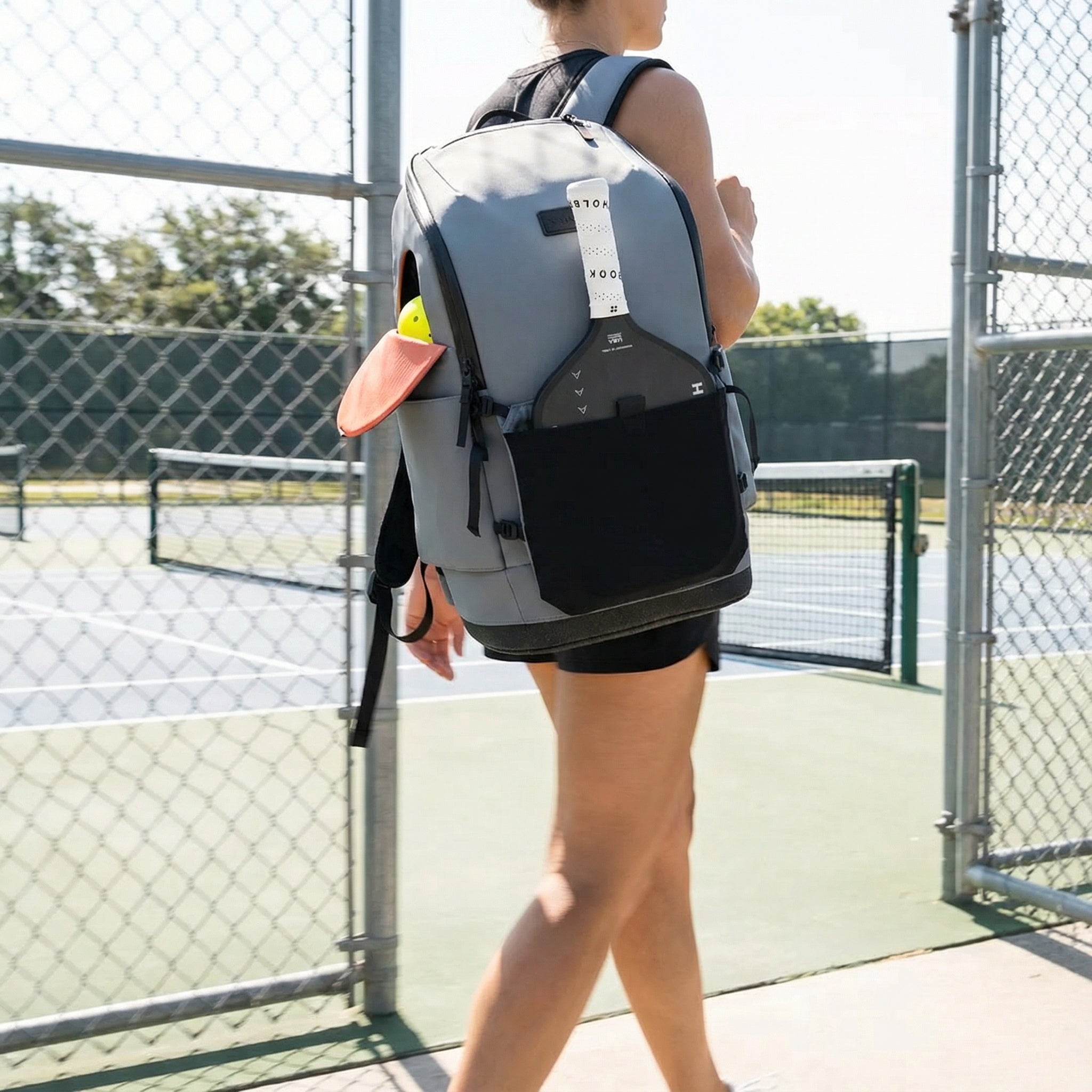
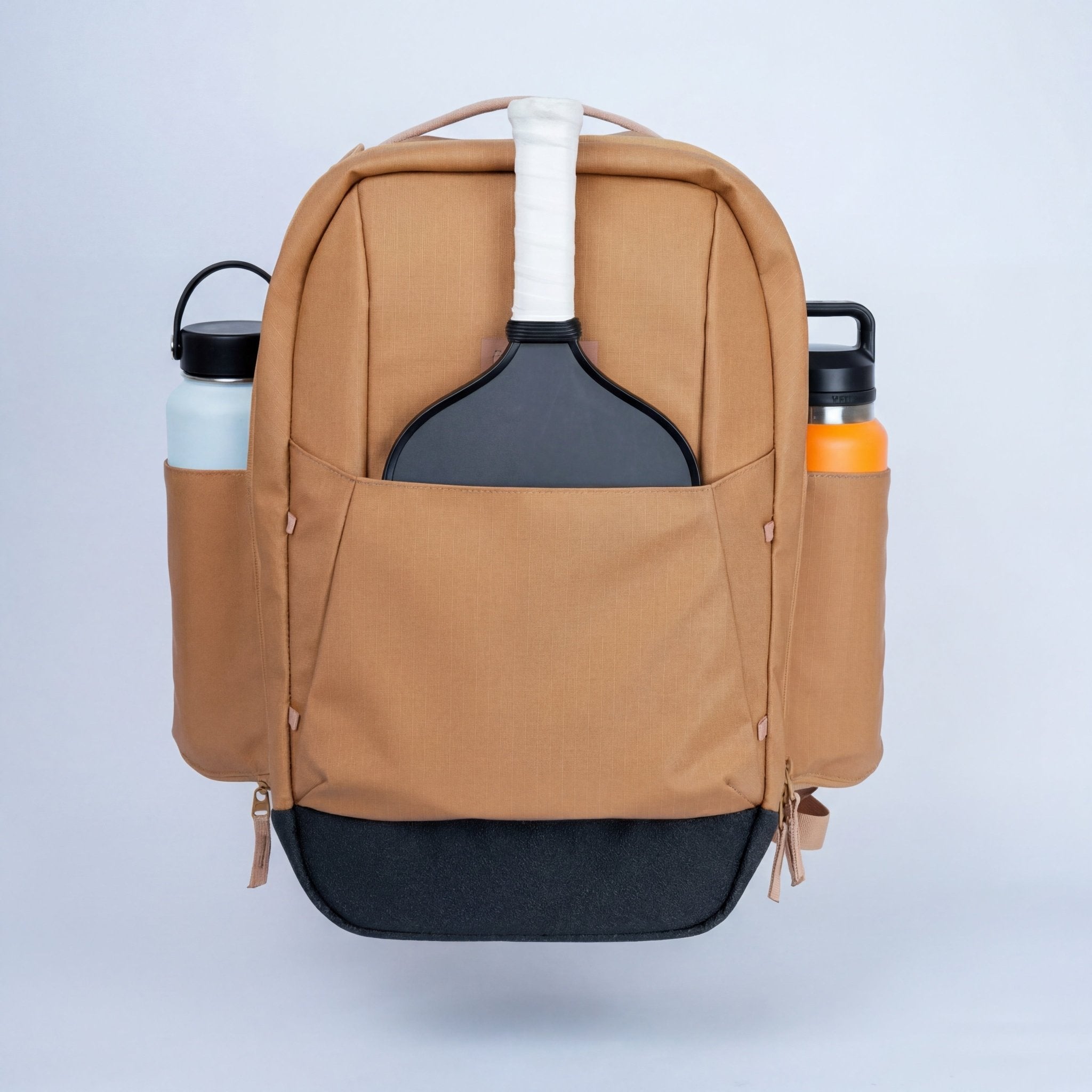
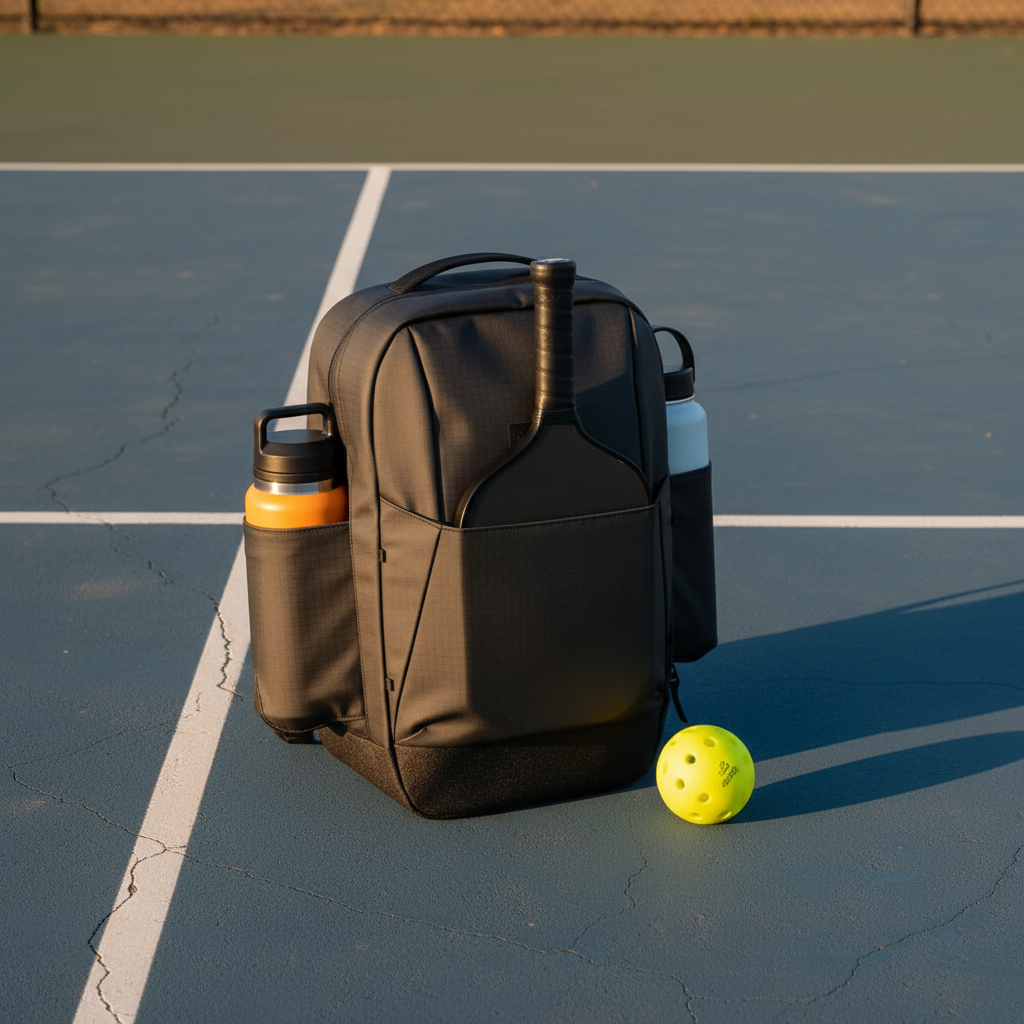
A $299.95 paddle deserves a bag that keeps it protected. The FORWRD Court Ranger V2 ($195) is what most serious players carry — dedicated paddle sleeve with impact-resistant padding, thermal ball pocket, and a 16" laptop sleeve for the work-to-court crowd. Players who prefer to carry two paddles or need more gear for long tournament weekends often upgrade to the Court Caddy ($325), with a modular layout and YKK AquaGuard zippers. Both are designed with feedback from 500+ real players.

FORWRD Court Ranger V2 — $195
The Perseus Pro V 16mm deserves a bag built to the same standard. Court Ranger V2 has a dedicated paddle sleeve with impact-resistant padding, a thermal pocket for balls, and enough room for a full kit change. Built for players who take their gear as seriously as their paddle.
Shop Court Ranger V2 — $195 →FAQ
Is the JOOLA Perseus Pro V 16mm good for beginners?
Technically it works, but it's probably not the right entry point. At $299.95, you're paying for a premium that beginners won't fully access yet. The 16mm core's control advantages are most noticeable once you have enough touch to run dink rallies — beginners are still developing those mechanics. A mid-range paddle at $80 to $130 is a better investment until you're consistently playing 3.5+ level points. The Perseus Pro V will be waiting for you when you get there.
What's the difference between the Perseus Pro V 14mm and 16mm?
The core thickness is the only difference. Same shape (16.5" elongated), same KineticFrame construction, same Hyper-Foam Edge Wall, same $299.95 price. The 16mm core creates more dwell time — better control, softer touch, more forgiving resets. The 14mm version gives you faster response off the face and slightly more pop on drives, at the cost of some kitchen forgiveness. The choice is entirely about how you win points.
Is the Perseus Pro V the same paddle Ben Johns uses in competition?
Ben Johns does use the Perseus Pro V and has publicly stated his preference for the 16mm version. That said, tour players often have custom specs and prototype versions that differ from retail paddles. What you're buying at retail is the same paddle design and construction as what Johns uses — the performance characteristics are the same even if the exact unit might differ in minor ways.
Does the 16mm Perseus Pro V have good spin?
Yes, though "good" here means controlled topspin rather than elite spin. The textured carbon face generates enough grit to put meaningful topspin on drops and dinks. It's not an aggressive spin paddle — it won't match something like the Ben Johns Hyperion CFS 16 (reviewed here) for pure spin generation. But it's more than adequate for a player whose game is built around placement and control rather than heavy ball.
How does the 16mm Perseus compare to the Selkirk LUXX Control Air?
Both are control-first paddles at similar price points. The main differences: the Perseus Pro V has a more connected, feedback-rich feel while the LUXX Control Air feels more dampened and cushioned. The LUXX has a more aggressive surface texture (InfiniGrit) if spin is your priority. The Perseus Pro V has a slightly higher power ceiling. If you play a touch-heavy kitchen game without heavy spin: Perseus Pro V. If you generate heavy topspin and want maximum friction: give the LUXX Control Air a close look.
Final Verdict
The JOOLA Perseus Pro V Ben Johns 16mm is the best control-first paddle in the sub-$300 market for players who prioritize touch over power. The 16mm Honeycomb Propulsion Core delivers exactly what it promises: more dwell time, more feedback at the kitchen line, more forgiveness on reset shots. The elongated 16.5" shape adds reach without sacrificing stability. KineticFrame construction keeps the response consistent across the face.
The tradeoffs are real: you give up something on drives and speed-up attacks compared to thinner-core options. If those shots are your primary weapons, the 14mm version serves you better. But for the player who wins through dink-and-reset sequences, third-shot drop consistency, and kitchen placement? This paddle rewards exactly how they play.
At $299.95, it's a real commitment. For the right player profile, it's worth every dollar.
Buy JOOLA Perseus Pro V 16mm at Pickleball Central →
Last updated: June 2026

Leave a comment
This site is protected by hCaptcha and the hCaptcha Privacy Policy and Terms of Service apply.