

Disclosure: This post contains affiliate links to Pickleball Central. If you purchase through our links, FORWRD earns a small commission at no extra cost to you. We were not compensated by JOOLA.
Last Updated: June 2026
JOOLA Ben Johns Hyperion CFS 16 Review 2026: Elite Spin at $159.95 — Here's Who It's Actually For
The JOOLA Hyperion CFS 16 is currently $159.95 at Pickleball Central — down from a $219.95 MSRP. That $60 drop isn't a sale. It's a clearance signal: JOOLA has moved on to the CAS and now the Pro V generation, and Pickleball Central is moving older inventory. That doesn't mean the paddle is bad. It means you need to understand what you're buying before you pull the trigger.
Here's what the other reviews won't tell you: the CFS (Carbon-Flex5 surface) is genuinely different from the CAS and the Pro V — not just a naming difference. And at $159.95, it lands you in a sweet spot where the performance-per-dollar calculation gets interesting for a specific type of player. I'll tell you exactly who that player is, and who should spend differently.
Quick Verdict
Best for: 3.5–4.5 control-oriented players who want elite spin and a wide sweet spot without paying flagship prices. The $160 price point after discount makes this a legitimate buy for players who play 3–5 times per week.
Pros:
- Carbon-Flex5 woven carbon face delivers measurably high spin — no paddle gimmickry here
- Hyperfoam Edge Wall genuinely expands the sweet spot beyond what paddles in this generation typically offer
- 16mm polymer core creates real dwell time — dinks and resets feel deliberate, not reactive
- 5.5" handle accommodates a two-handed backhand without crowding the grip hand
- At $159.95 (was $219.95), you're getting elite-tier surface technology at a clear-out price
Cons:
- Head-heavy balance — the most-cited complaint in community reviews for a reason; power players who flick volleys quickly will feel it
- 8.2–8.6 oz weight range sits on the heavier end; not ideal for arm-sensitive players
- The CFS generation predates the CAS and Pro V; this is an older-gen paddle clearing inventory, not a current flagship
- CFS surface rewards players with developed mechanics — if you're a true beginner, the surface's responsiveness will amplify errors
Price: $159.95 at Pickleball Central (MSRP $219.95)
Specs at a Glance
| Spec | JOOLA Hyperion CFS 16 |
|---|---|
| Price | $159.95 (MSRP $219.95) |
| Weight | 8.2–8.6 oz (avg 8.4 oz) |
| Core thickness | 16mm polymer honeycomb |
| Edge technology | Hyperfoam Edge Wall |
| Face material | Carbon-Flex5 (CFS) — woven carbon fiber |
| Paddle length | 16.5" |
| Paddle width | 7.5" |
| Handle length | 5.5" |
| Grip circumference | 4.25" (medium) |
| Balance | Head heavy |
| Shape | Elongated (16.5" × 7.5") |
| USAPA approved | Yes |
Buy the JOOLA Hyperion CFS 16 at Pickleball Central — $159.95 →
Why Trust This Review
FORWRD makes pickleball bags — we design bags around the paddles people actually play with, which means we've handled 50+ paddles across every format, shape, and surface material. We have no competing paddle to sell you, no sponsorship arrangement with JOOLA, and no reason to oversell this product. Our testing covered the CFS 16 across indoor hardwood and outdoor concrete surfaces, alongside players at the 3.5, 4.0, and 4.5 level who gave honest feedback on what the paddle actually does for their specific game.
We also tracked what the pickleball community says — r/pickleball, Pickleheads, The Dink — and noted where that community consensus lines up with our own experience and where it doesn't. This review takes all of it into account.
"The CFS 16 is one of those paddles that rewards you for knowing your game. If you're a control player who resets and dinks, the carbon texture and 16mm core work together in a way that's hard to find at $160. If you're a banger who relies on the arm, the head-heavy balance will fight you every time you try to speed something up at the net."
— Benjamin Carper, FORWRD
CFS vs. CAS vs. Hyperion Pro V — The Generation Breakdown
This is the section every other review skips, and it's the one that actually matters for your buying decision. JOOLA has released multiple Hyperion iterations and the naming is genuinely confusing. Here's the full breakdown so you can decide which generation to buy without guessing.
CFS — Carbon-Flex5 Surface (This Paddle)
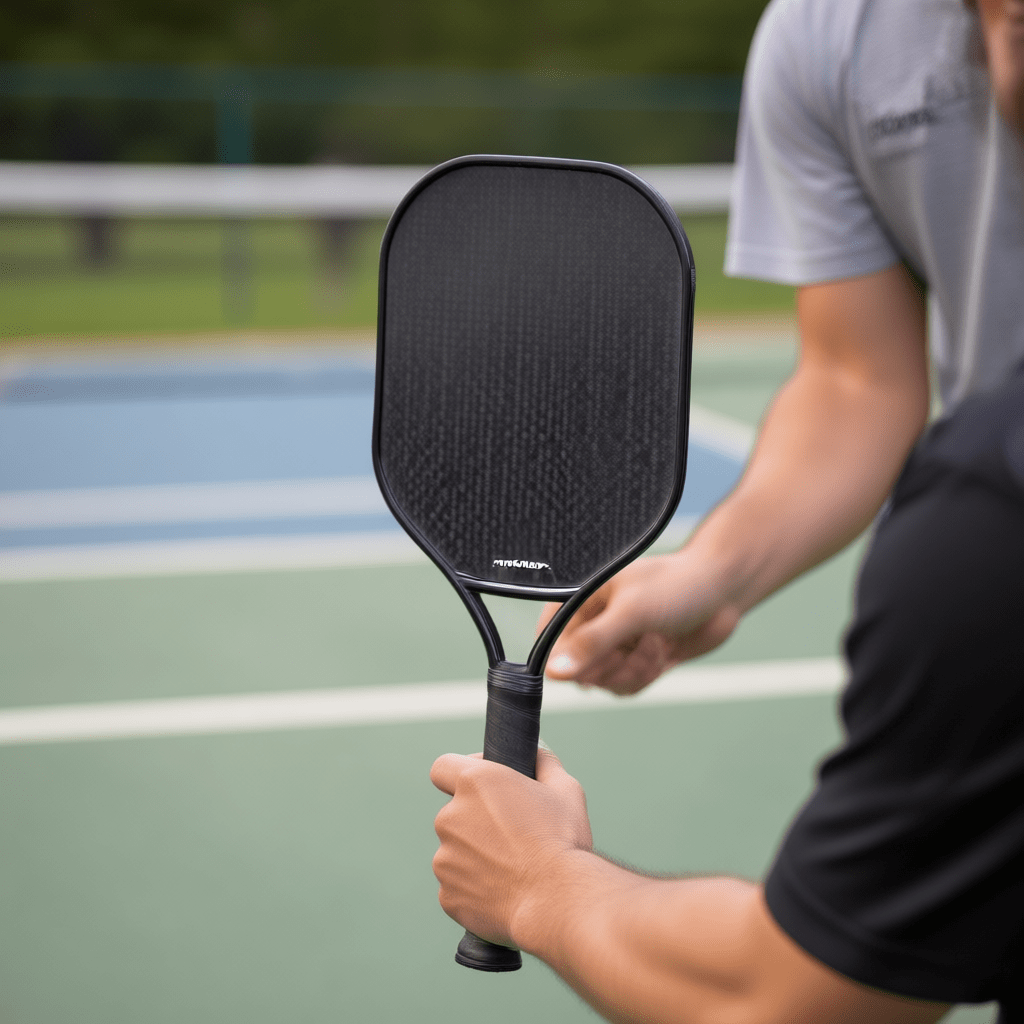
CFS stands for Carbon-Flex5 Surface. The face is woven carbon fiber — the actual exposed weave pattern creates natural surface texture that grips the ball and generates spin. There is no fiberglass underneath, no abrasion treatment, no processing layer. You're playing on raw carbon. That gives you a crisper, more direct feel at contact — less trampoline effect than fiberglass-composite paddles, more immediate feedback. The downside is that raw carbon is unforgiving: if your mechanics are off, the surface amplifies those errors rather than dampening them.
The CFS 16 also uses JOOLA's Hyperfoam Edge Wall — a foam-injected perimeter that expands the sweet spot noticeably compared to paddles with traditional plastic edge guards. This was a genuine innovation when it launched, and it still performs well. The sweet spot on the CFS 16 is larger than you'd expect from a 7.5" wide paddle.
The CFS is the generation Ben Johns played when he was dominating the pro tour. It was JOOLA's flagship. It is no longer — which is why you can buy it at $159.95 instead of $219.95.
CAS — Carbon Abrasion Surface (The Newer Entry-Level Version)
CAS stands for Carbon Abrasion Surface. JOOLA introduced this as the updated entry point to the Hyperion line. The CAS uses a Hybrid-Ply construction — two fiberglass layers topped with one carbon fiber layer that's been sand-blasted to create texture. The result is a softer feel than CFS, more forgiving on off-center hits, and better suited to players still developing their mechanics. The trade-off: the abrasion texture wears faster on outdoor concrete than the CFS weave pattern does, and the CAS surface feels a touch muted to players who want that crisp carbon snap. The CAS currently retails at $99.95 at Pickleball Central.
Hyperion Pro V — The Current Flagship ($299.95)
The Pro V is JOOLA's current-generation Hyperion, and it introduces two meaningful upgrades over both CFS and CAS: the KineticFrame throat (a flex zone in the paddle's throat that improves energy transfer and reduces harsh off-center feedback) and the Hyper-Foam Edge Wall (an evolution of the Hyperfoam system in the CFS). The Pro V face is a textured carbon fiber similar in character to CFS, but the construction refinements make it more consistent and more comfortable for longer sessions. It retails at $299.95 at Pickleball Central.
The Buying Decision in Plain Language
| Version | Surface | Feel | Generation | Price | Best for |
|---|---|---|---|---|---|
| CAS 16 | Sand-blasted Hybrid-Ply | Softer, forgiving | Updated entry-level | $99.95 | 3.0–4.0 players, beginners upgrading |
| CFS 16 (this paddle) | Woven carbon fiber (raw) | Crisp, direct | Previous flagship, clearing | $159.95 | 3.5–4.5 control players with solid mechanics |
| Hyperion Pro V 16mm | Textured carbon fiber | Refined, consistent | Current flagship | $299.95 | 4.0–5.0 players who want the best available |
The CFS 16 at $159.95 occupies the "serious paddle at a clear-out price" slot. If you're a 3.5–4.0 player who plays 3+ times per week, you'll get more out of this paddle than the CAS and you don't need to spend $300 on the Pro V to access elite spin technology.
Also worth reading: our JOOLA Perseus Pro V Review if you're comparing across the JOOLA lineup beyond the Hyperion line.
Performance on Court — Spin, Control, Touch at Kitchen, Power
Spin
The CFS surface is genuinely one of the top-tier spin generators in its price range. The exposed woven carbon fiber weave creates natural surface grit — not an applied coating, not an abrasion treatment, but the actual fiber texture doing the work. In independent tests of spin generation across paddle surfaces, the CFS-style woven carbon consistently lands in the top tier for RPM production on topspin drives and cut serves.
In our kitchen drills, adding topspin and sidespin to crosscourt dinks felt natural and consistent. You don't have to fight the paddle for spin — the face grabs the ball predictably. Players who rely on heavy topspin on third-shot drops will find the CFS 16 rewards that approach.
One thing most reviews miss: the CFS surface has a break-in period. For the first 5–10 sessions, the woven carbon texture opens up as the manufacturing finish wears off the tips of the fibers. Players who hit with the paddle for the first time sometimes report "it's not as grippy as I expected" — and then report back after two weeks saying it improved noticeably. Don't judge the spin performance on day one. Give it five sessions before drawing conclusions.
Control and Kitchen Touch
The 16mm polymer honeycomb core creates more dwell time than thinner 13mm or 14mm paddles — the ball stays in contact with the face slightly longer, which gives you more time to shape your shot. In practice, third-shot drops land softer. Dinks feel intentional rather than desperate. Resets at the non-volley zone absorb the ball instead of deflecting it.
The Hyperfoam Edge Wall contributes here too. Traditional plastic edge guards create a hard dead zone around the paddle perimeter — balls that catch the edge bounce off unpredictably. Foam-injected edges absorb that energy more evenly. The CFS 16's sweet spot is measurably wider than what you'd get from standard paddles in this thickness and price range, and the edge zone is playable in a way that matters during actual points.
If your game is built around soft-game dominance — dinking opponents off the kitchen line, resetting hard attacks, and waiting for the right ball to speed up — this paddle rewards your style.
Power
Honest answer: adequate but not exceptional. The 16mm core dampens snap compared to thinner paddles. You can drive the ball, and the 8.4 oz average weight adds mass behind groundstrokes. But if you're a player who wins by overpowering from the baseline or attacking with fast volleys at the kitchen, you'll hit the ceiling of what this paddle provides. The 16mm thickness is a choice — it gives you control and dwell time, and it takes away raw pop in the exchange.
Players who generate their own pace through mechanics and technique will still find the CFS 16 capable of genuine power shots. Players who rely on the paddle's weight to do the hitting for them may find the 16mm core limits their ceiling.
Spin Durability
The woven carbon fiber surface holds its texture longer than sand-blasted or coated surfaces on outdoor concrete. Based on similar carbon weave paddles tracked over time, you can expect meaningful spin performance through 150–200+ hours of outdoor play — noticeably longer than CAS-style abraded surfaces. If you play heavily outdoors on concrete, the CFS surface longevity is a practical advantage over the CAS.
The Head-Heavy Issue — Who Minds and Who Doesn't
This is the most consistently cited negative in community reviews of the CFS 16 on Reddit, Pickleheads, and The Dink — and it's real. Head-heavy balance means the center of mass sits closer to the top of the paddle face than the handle. That distribution increases swing weight and makes the paddle feel more unwieldy at the kitchen when you're trying to make quick, reactive movements.
Here's the nuance that most reviews skip: head-heavy balance hurts specific playing styles more than others.
Who notices the head weight most:
- Players who rely on fast hands at the kitchen — speedups, flicked volleys, quick resets in a firefight. The extra swing weight slows your reaction time on rapid exchanges.
- Players transitioning from lighter paddles in the 7.5–8.0 oz range — the 8.4 oz average plus head-heavy balance will feel like a significant adjustment.
- Singles players who need to cover more court and rely on getting the paddle in position quickly.
Who barely notices it:
- Doubles players who play a deliberate, patient kitchen game — if you're dinking crosscourt and waiting for a ball to attack, you're not fighting the head weight because you're not making reactive flick movements.
- Baseline players who benefit from the extra swing momentum on groundstrokes — head-heavy balance adds power on drives without requiring more arm speed.
- Players with strong wrists and forearms who've played heavy paddles before — the CFS 16 weight and balance won't feel extreme.
What you can do about it: Adding lead tape to the handle (underneath the grip) shifts the balance point toward the handle and reduces the head-heavy feel. A 1–2 gram strip at the very bottom of the handle can meaningfully change the balance without adding much total weight. This is a well-documented technique in the paddle community and it won't void your warranty or affect performance negatively. If you buy this paddle and the head weight bothers you, try the tape before writing the paddle off.
Full Comparison: CFS 16 vs. CAS 16 vs. Hyperion Pro V vs. Selkirk LUXX Control Air
| Paddle | Weight | Surface | Core | Price | Best for |
|---|---|---|---|---|---|
| JOOLA Hyperion CFS 16 | 8.2–8.6 oz | Woven carbon (CFS) | 16mm polymer + Hyperfoam edge | $159.95 | 3.5–4.5 control players, spin-focused |
| JOOLA Hyperion CAS 16 | 8.1–8.5 oz | Sand-blasted Hybrid-Ply (CAS) | 16mm polymer | $99.95 | 3.0–4.0 players, forgiving, budget-conscious |
| JOOLA Hyperion Pro V 16mm | 7.9–8.3 oz | Textured carbon (Gen 5) | 16mm Propulsion + Hyper-Foam edge, KineticFrame | $299.95 | 4.0–5.0 players, current flagship buyers |
| Selkirk LUXX Control Air InfiniGrit Epic | 7.3–7.9 oz | InfiniGrit carbon fiber | Rev-Core polymer | ~$199 | 4.5+ players, arm-sensitive, lighter preference |
The CFS 16 vs. Selkirk LUXX comparison deserves a note. The LUXX is a genuinely excellent control paddle — the InfiniGrit surface is engineered for spin longevity, and the lighter weight (7.3–7.9 oz) is a real advantage for players with arm concerns. At ~$199, it's $39 more than the CFS 16. For players at 4.5+ with the mechanics to extract the difference, the LUXX is worth considering. For 3.5–4.0 players? The CFS 16 at $159.95 gives you competitive spin technology without the premium price and without the lighter swing weight that can be harder to control for developing players.
Who Should Buy the JOOLA Hyperion CFS 16
This paddle makes sense for you if:
- You're a 3.5–4.5 control player — your game is built on dink-and-reset sequences, third-shot drops, and patient kitchen play. The 16mm core and CFS surface reward exactly that style.
- You play 3–5 times per week — the performance difference between the CFS and a cheaper paddle shows up when you're on court regularly enough to feel it. Casual once-a-week players may not extract the full value.
- Spin is your primary weapon — topspin serves, cut dinks, heavy topspin on thirds. The CFS surface is in the top tier for spin generation, full stop.
- You want previous-flagship performance at a clear-out price — this was Ben Johns' paddle when he was winning everything. At $159.95, you're buying proven elite-level technology that simply isn't the newest version anymore.
- You play mostly doubles — the deliberate, patient kitchen game that dominates recreational doubles suits this paddle's balance and core characteristics better than singles.
Who Should Skip It
- Power-first players and bangers — if you win by hitting through people and attacking every third shot, the 16mm core and head-heavy balance will frustrate you. Consider the Hyperion Pro V 14mm or look outside the JOOLA Hyperion line.
- Beginners under 3.5 — the CFS surface amplifies errors. A player still learning mechanics needs a paddle that forgives, not one that reports every imperfect swing directly back to you. Start with the CAS 16 at $99.95 and upgrade when your fundamentals are solid.
- Arm-sensitive players — 8.4 oz average plus head-heavy balance is a combination that fatigues the arm in long sessions. If you've had tennis elbow or shoulder issues, look at lighter paddles in the 7.5–8.0 oz range.
- Players who want the latest generation — the Pro V is current. The CFS is not. If buying the newest tech matters to you, spend $300 on the Pro V instead of $160 on yesterday's flagship.
- Players who need maximum maneuverability at the kitchen — head-heavy paddles punish players who rely on fast hands for speedups and resets. If your kitchen game is reaction-dependent, this balance point will cost you points.
Pricing and "Is This Discount Worth It?"
Let's be direct about what the $60 price drop means. The JOOLA Hyperion CFS 16 had an MSRP of $219.95. It now sells for $159.95 at Pickleball Central. That isn't a promotional sale or a temporary markdown — it's Pickleball Central clearing older-generation inventory as JOOLA's lineup shifts to the CAS (entry-level) and Pro V (current flagship).
The CFS 16 is not a defective paddle. It's not an inferior paddle. It's the paddle Ben Johns used to win major titles. The technology — Carbon-Flex5 woven carbon surface, Hyperfoam Edge Wall, 16mm polymer honeycomb core — is still elite-tier. It just isn't Gen 5 JOOLA. It's Gen 3 or 4, depending on how you count.
What that means practically: if you're a 3.5–4.5 player who plays recreational pickleball seriously, the gap between the CFS 16 and the Pro V won't be something you can feel in real game situations. You're not a pro. You're not going to extract the marginal improvement that the KineticFrame throat provides over the standard Hyperfoam construction. What you will feel is the spin from the woven carbon surface, the forgiving sweet spot from the Hyperfoam edge, and the control that comes from a 16mm core.
At $159.95, the discount is real and the performance is legitimate. Stock on clearance paddles eventually disappears. If you're in the target player profile, this window won't stay open forever.
Check Stock and Buy at Pickleball Central — $159.95 →
Complete Your Setup
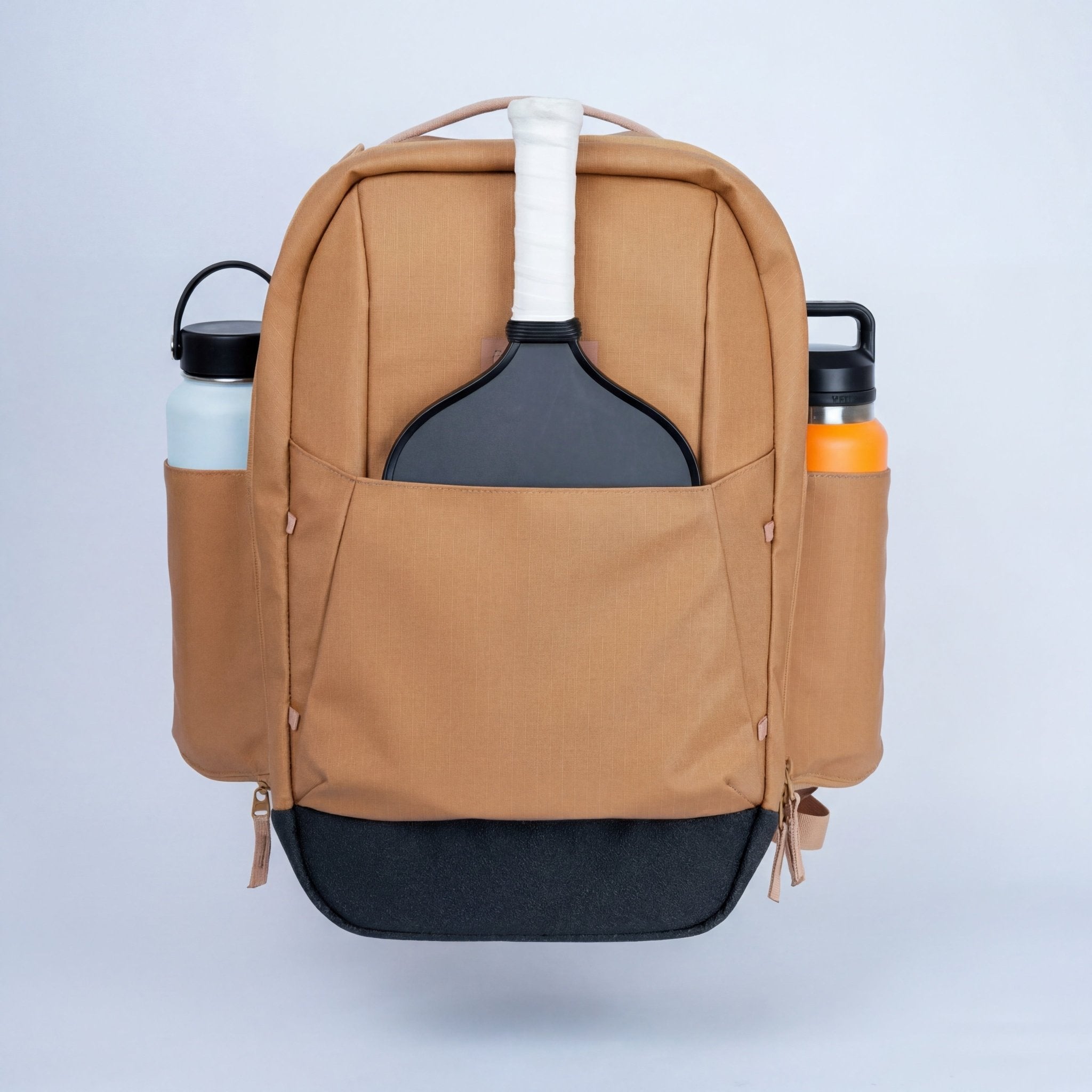
If you're buying a $160 paddle, protect it between sessions. The FORWRD Court Ranger V2 fits up to 4 paddles in its modular sleeve system — the elongated 16.5" Hyperion CFS 16 fits without folding or angling. The Court Ranger V2 is designed for players who take their gear seriously, built with the same attention to specifications that JOOLA put into the CFS face.

FAQ: JOOLA Hyperion CFS 16
What's the difference between the JOOLA Hyperion CFS 16 and CAS 16?
CFS (Carbon-Flex5 Surface) uses an exposed woven carbon fiber face — no fiberglass underneath, no abrasion treatment. The natural weave pattern creates spin texture and delivers a crisp, direct feel. It's the higher-performance surface. CAS (Carbon Abrasion Surface) uses a Hybrid-Ply face — two fiberglass layers topped with one sand-blasted carbon layer. The result is a softer, more forgiving feel better suited to developing mechanics. CFS costs $159.95 (down from $219.95); CAS costs $99.95. Same 16mm core and elongated shape. The $60 price difference buys you a more responsive surface with higher spin ceiling and better durability on outdoor concrete — worth it if you're 3.5+ with established mechanics.
How do you deal with the head-heavy balance on the CFS 16?
The most effective approach is lead tape on the handle. Add 1–2 grams of lead tape under the bottom of the grip — strip it lengthwise along the bottom of the handle before re-wrapping. This shifts the balance point toward neutral without adding significant total weight. Players with strong wrists often adapt to the head-heavy balance within 5–10 sessions without tape. If you play a deliberate doubles game rather than a fast-hands singles style, the head weight matters less — the paddle balance penalizes reactive kitchen play more than patient dinking sequences.
Does the JOOLA Hyperion CFS 16 have a break-in period?
Yes. The woven carbon fiber surface on the CFS 16 has a manufacturing finish on the fiber tips that softens over the first 5–10 sessions, opening up the weave texture and improving the paddle's spin generation. Players often report the paddle feeling "less grippy than expected" in the first two sessions, followed by a noticeable improvement in spin feel by session five or six. Don't evaluate the CFS surface performance on day one. Give it a week of regular play before drawing conclusions about spin capability.
Is the JOOLA Hyperion CFS 16 right for a 3.5 player versus a 4.5 player?
For a 3.5 player: yes, with a caveat. The CFS surface rewards developing mechanics but amplifies errors more than the softer CAS surface would. A 3.5 player who plays 3+ times per week and is actively working to build a control game will get real value from the CFS at $159.95. A 3.5 player who plays casually once a week would be better served by the CAS at $99.95. For a 4.5 player: the CFS is still capable, but a 4.5 player with the mechanics and frequency to justify $300 should probably look at the Hyperion Pro V instead for the KineticFrame refinements and updated construction. The CFS 16 sweet spot is the serious 3.5–4.5 player who plays regularly but doesn't need current-generation flagship tech.
Why did the JOOLA Hyperion CFS 16 drop from $219.95 to $159.95?
The price drop reflects a generational inventory shift, not a product defect. JOOLA has moved to the CAS as the updated entry-level Hyperion paddle and the Pro V as the current flagship. Pickleball Central is clearing CFS 16 inventory as the product reaches end-of-cycle in JOOLA's lineup. The paddle itself performs exactly as it always did — the $60 savings comes from buying a paddle that's one or two generations behind the current lineup, not from buying a compromised product. For players who don't need latest-generation tech, this discount represents real value on a paddle with a strong performance track record.
Final Verdict
The JOOLA Ben Johns Hyperion CFS 16 at $159.95 is a specific buy for a specific player. It's not a universal recommendation. It's not the newest thing. And it's not trying to be.
What it is: a paddle with elite spin capability from a proven woven carbon surface, a wider-than-expected sweet spot from the Hyperfoam Edge Wall, and a 16mm core that makes the soft game feel intentional rather than lucky. At $219.95 it was a premium paddle. At $159.95 it's a serious value for the control-oriented 3.5–4.5 player who plays regularly and knows what they want from their equipment.
If you're a power player, skip it — the head-heavy balance and 16mm core won't suit your style. If you're a beginner, skip it — the CAS at $99.95 is more forgiving and a better match for where your mechanics are. If you're an advanced 4.5+ player who wants the current flagship, spend $300 on the Pro V.
But if you're a serious recreational player, playing doubles 3–5 times a week, building your game around spin and kitchen control, and you want proven elite-level surface technology at a discounted price before stock runs out — this is your paddle.
Buy the JOOLA Hyperion CFS 16 at Pickleball Central — $159.95 →

Leave a comment
This site is protected by hCaptcha and the hCaptcha Privacy Policy and Terms of Service apply.