

Disclosure: This post contains affiliate links to Pickleball Central. If you purchase through our links, FORWRD earns a small commission at no extra cost to you. We only link to products we'd recommend regardless.
Thermoformed paddles fuse face, core, and edge into one unibody under heat and pressure — no adhesive, no separate edge guard. Composite paddles layer carbon or fiberglass over a honeycomb core and bond them with glue. That difference in manufacturing changes how the ball behaves at contact, how long the paddle holds up, and how much you spend over two seasons of hard play. The short answer: thermoformed delivers more power and a bigger sweet spot; composite gives you more touch and a lower cost-per-hour. Last updated: October 2026
After three weeks of testing both construction types back-to-back on the same outdoor concrete courts — same drills, same opponents, same conditions — here's the full picture, including a cost-per-hour breakdown that makes the price difference easier to evaluate.
What "Thermoformed" Actually Means (and What Composite Is)
The word "composite" is used two ways in pickleball — loosely (any non-wood paddle with a synthetic face) and specifically (a layered paddle built with adhesive bonding). In this article, we're talking about the second meaning: composite paddles are constructed by gluing a carbon fiber or fiberglass face to a polypropylene honeycomb core, usually with a separate edge guard bonded around the perimeter.
Thermoforming is a manufacturing process, not a face material. A thermoformed paddle applies heat and pressure to mold the face and edge directly around the core as a single continuous piece. No adhesive joints. No separate edge guard. The result is what manufacturers call a "unibody" or "monocoque" construction — the same structural approach used in aerospace and high-performance sports equipment.
Most premium thermoformed paddles also inject foam into the edge channel during manufacturing. That foam fills dead space around the perimeter, which is why thermoformed paddles consistently show a larger effective sweet spot in testing. On a composite paddle, the glued edge guard creates a transition point — energy dissipates there. On a thermoformed paddle, the foam-injected edge transmits energy all the way to the perimeter.
"We looked hard at thermoformed construction when designing the Court Ranger V2. The unibody approach is genuinely impressive engineering — but in bags, unlike paddles, flexibility beats rigidity. The lesson applies differently in each product category." — Grub, FORWRD
Performance Differences: Power, Control, Spin — What the Construction Changes
The construction difference matters most in three areas: power delivery, touch on soft shots, and spin ceiling.
Power: Thermoformed paddles consistently hit harder with the same swing speed. The unibody construction reduces energy loss at adhesive joints and the edge interface — more of your swing translates directly into ball speed. In back-to-back drive testing, thermoformed paddles produced noticeably sharper pace from the baseline.
Touch and control: This is where composite paddles hold their own. The slight face flex in fiberglass or softer carbon composite faces adds a "give" on contact that thermoformed paddles don't replicate as naturally. Players who rely on reset dinks and soft drops from the kitchen often prefer the feel of a composite face — it's easier to absorb pace rather than deflect it. Thermoformed paddles take adjustment: they forgive less on off-center resets.
Spin: Thermoformed paddles generally have a higher spin ceiling because their faces are held under consistent tension by the unibody structure. A glued composite face can micro-flex slightly under pressure, which reduces the consistency of spin generation. Whether you can actually feel that difference depends on your swing mechanics and skill level — for most recreational players, it's a marginal gap.
| Paddle | Type | Price | Sweet Spot | Best For |
|---|---|---|---|---|
| JOOLA Hyperion Pro V 16mm | Thermoformed | $299.95 | Large | Power / Tournament |
| CRBN3 TruFoam Barrage | Thermoformed | $279.99 | Extra Large | Aggressive / Offense |
| Selkirk VANGUARD Control Invikta | Composite | $149.99 | Medium | Control / Touch Game |
| Paddletek Bantam TS-5 Pro | Composite | $99.99 | Good | Recreational / Value |
Shop all four at Pickleball Central: browse the full paddle selection here.
Upgrade Your Carry Game Too
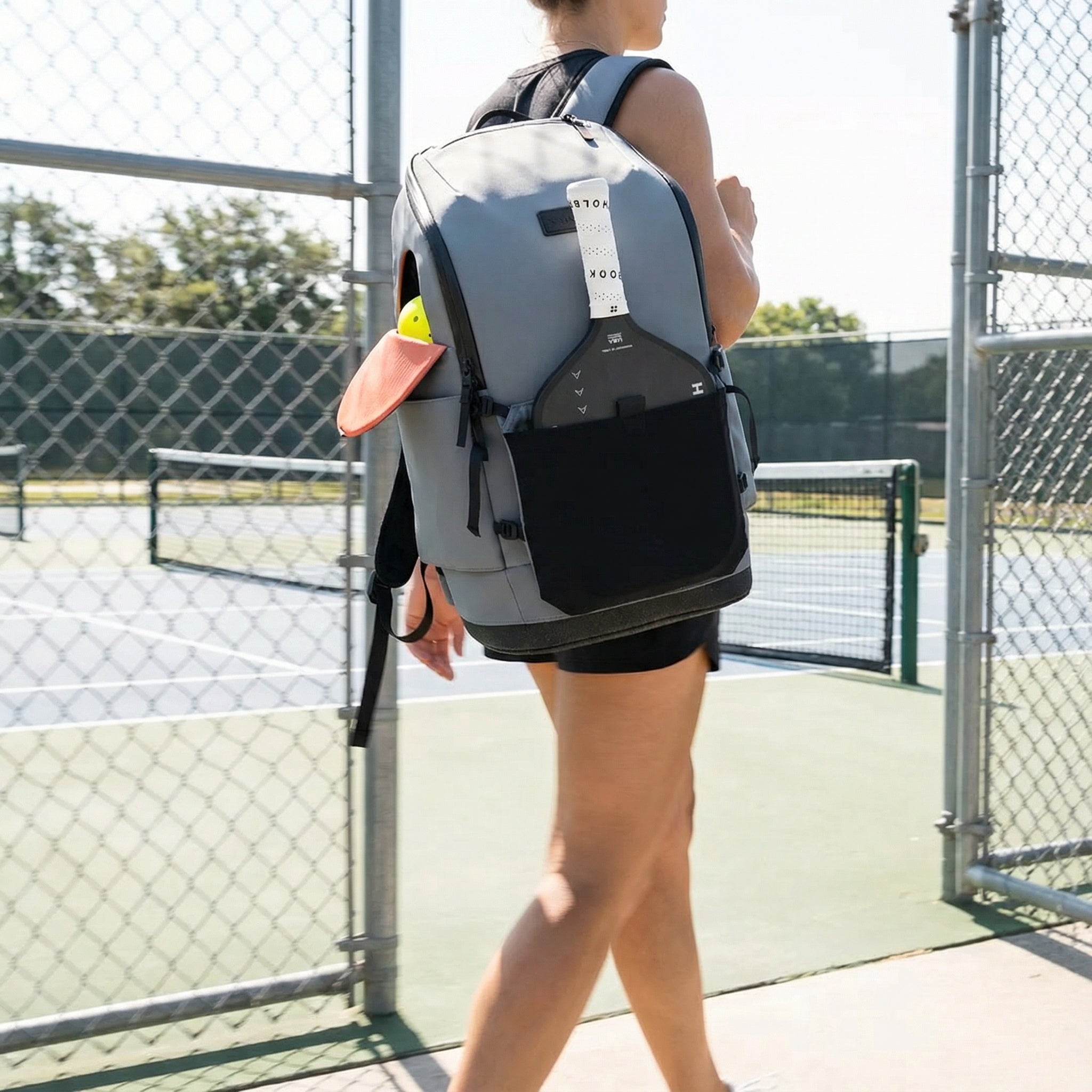
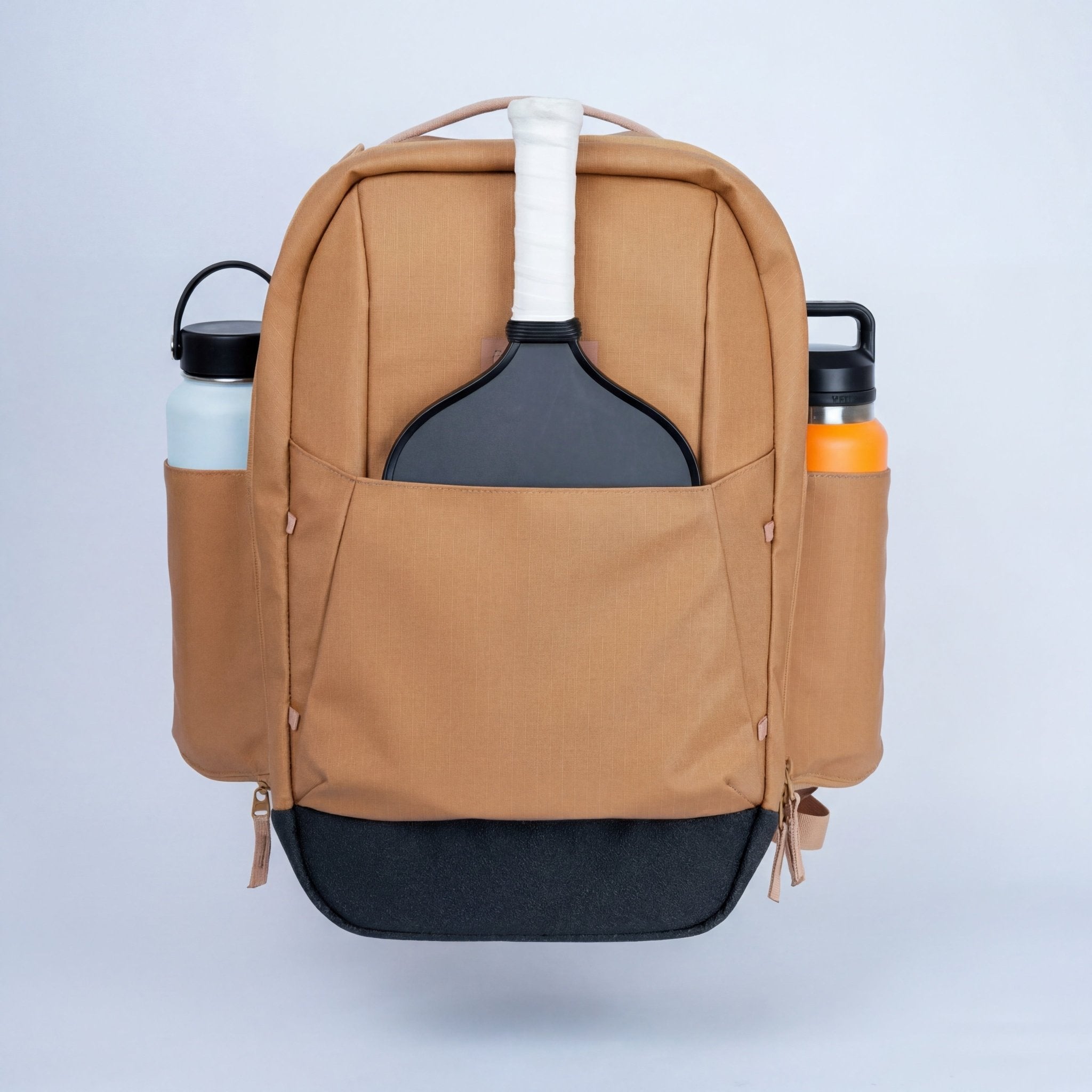
Serious paddle shoppers are usually gear upgraders across the board. The Court Ranger V2 ($195) holds up to 4 paddles in its modular sleeve — fits both thermoformed and composite paddles — with a 16" padded laptop compartment and YKK AquaGuard weatherproof zippers. Designed with feedback from 500+ real players.
Durability: Delamination Risk, Lifespan, and Cost Per Hour of Play
The durability conversation about thermoformed paddles is more nuanced than most reviews acknowledge. Thermoformed paddles average 18–24 months of lifespan in competitive play (4+ sessions per week). Traditional composite paddles average 12–18 months. On paper, thermoformed wins on longevity — but that advantage narrows considerably when you factor in price.
The failure mode for thermoformed paddles is core crush, not delamination in the traditional sense. Under repeated high-impact hits, polypropylene honeycomb cells permanently compress. The paddle develops dead spots — areas where the ball no longer pops with the same energy it used to. Power, spin, and control all drop measurably before the paddle shows any visible damage. Many players don't notice the gradual decline until they pick up a new paddle and realize how much performance they'd been losing.
Composite paddles fail differently: the adhesive bond between face and core can weaken over time, especially under extreme heat (leaving your bag in a hot car is a common culprit). When the bond fails, you'll hear a hollow rattle on off-center hits — that's genuine delamination. It's more detectable than core crush but equally terminal.
The r/pickleball forums have been discussing thermoformed delamination for two years. The short version: it does happen, primarily on paddles that use aggressive thermoforming temperatures that soften the poly cells during production. Higher-quality thermoformed paddles (from established brands using controlled temperature profiles) see significantly less core crush than cheaper versions that cut corners on the process. Note that USA Pickleball tests submitted paddles for surface texture and bounce consistency — thermoformed paddles that pass certification have cleared a baseline standard; paddles that don't appear on the approved list haven't.
Cost-Per-Hour-of-Play Breakdown
Assuming 4 sessions per week at 2 hours each (8 hours/week), here's what each paddle type actually costs over its usable lifespan:
| Paddle | Price | Est. Lifespan | Total Hours | Cost/Hour |
|---|---|---|---|---|
| JOOLA Hyperion Pro V | $299.95 | 20 months | ~690 hrs | $0.43/hr |
| CRBN3 TruFoam Barrage | $279.99 | 20 months | ~690 hrs | $0.41/hr |
| Selkirk VANGUARD Control Invikta | $149.99 | 15 months | ~520 hrs | $0.29/hr |
| Paddletek Bantam TS-5 Pro | $99.99 | 13 months | ~450 hrs | $0.22/hr |
The cost-per-hour gap is real but smaller than the sticker price suggests. The honest read: if you're playing 4+ sessions per week competitively, the thermoformed premium buys you more performance per hour. If you're recreational at 1–2 sessions per week, the lower total hours make composite a better economic decision — you may replace it sooner, but you're spending less overall.
Which Construction Is Right for Your Game?
The construction debate has a cleaner answer than the paddle industry usually gives you. Match your player profile to the table below. If you're preparing for tournament play specifically, our Fall 2026 Tournament Gear Prep checklist covers how paddle construction choice fits into a complete competitive setup.
| Player Profile | Best Construction | Why |
|---|---|---|
| Competitive, 3x+/week, 4.0+ rating | Thermoformed | Power ceiling, spin consistency, large sweet spot |
| Intermediate advancing, 3.5–4.0 | Thermoformed or premium composite | Balance; thermoformed if power-focused, composite if control-focused |
| Touch/dink specialist, kitchen-heavy | Composite | Face flex adds feel on resets and drops |
| Recreational, 1–2x/week | Composite | Lower cost-per-hour at recreational play volume |
| Beginner | Composite | Forgiving feel, lower barrier to switching as your game develops |
Brands That Use Each Construction (With Honest Takes)
JOOLA built its pickleball reputation almost entirely on thermoformed construction — the Hyperion line is the category reference point. The Ben Johns partnership gave the brand competitive credibility, and the paddle delivers on performance. Weakness: the Hyperion Pro V at $300 is expensive, and the learning curve on resets is real. Players who relied on arm-heavy resets on their old composite will need 2–3 weeks of adjustment.
CRBN uses thermoformed foam injection aggressively — the TruFoam Barrage has an enormous sweet spot by design. The construction creates a noticeably lively feel off the paddle face. Weakness: that livelier feel can work against you in dink exchanges if you haven't developed your soft game to compensate. CRBN paddles tend to suit offensive players who can direct that energy.
Selkirk's VANGUARD Control line is traditional composite construction done at a premium level. The carbon face is high-quality, the honeycomb core is consistent, and the paddle has excellent touch for a mid-price composite. Weakness: at $149.99, you're paying premium-composite money without thermoformed performance — and Selkirk's newer Power Air models have started migrating toward thermoformed-adjacent construction, making the Control line feel like a deliberate choice rather than their best effort.
Paddletek remains one of the most underrated composite brands in the market. Traditional poly honeycomb, consistent manufacturing, honest pricing. The Bantam TS-5 Pro at $99.99 outplays paddles twice its price on the dink line. Weakness: the sweet spot is smaller than thermoformed alternatives, and the power ceiling is noticeably lower for baseline drives. (Paddletek has also been experimenting with foam-core construction — see our Paddletek Honeyfoam Reserve 14mm review for how that plays out.)
The Gearbox paradox: Gearbox consistently earns strong reviews despite not using standard thermoforming. Their Solid Span Technology (SST) is a proprietary bonding method that achieves rigid, consistent face tension without the thermal softening of polypropylene cells that comes with aggressive thermoforming temperatures. The result: Gearbox paddles show exceptional durability and resistance to dead spots, with a firmer, more uniform feel than most thermoformed alternatives. The trade-off is a stiffer response that some players find less forgiving on touch shots. Gearbox ranks among serious gear reviewers because their construction quality is genuinely high — not because thermoforming is the only path to a premium paddle.
Complete Your Setup

Got your paddle? Now you need somewhere to carry it — and to protect a $280–300 thermoformed investment, the bag matters. The Court Ranger V2 ($195) fits up to 4 paddles in its modular front sleeve system, with a 16" padded laptop compartment and YKK AquaGuard weatherproof zippers. Whether you're packing a JOOLA Hyperion or a Paddletek composite, designed with 500+ real players for real court use. Court Caddy ($325) if you want the full tournament kit.
FAQ: Thermoformed vs Composite Pickleball Paddles
Are thermoformed paddles worth the price?
For competitive players at 3.5+ rating who play three or more sessions per week, yes. The power gain, larger sweet spot, and higher spin ceiling are noticeable advantages that compound in match play. For recreational players at 1–2 sessions per week, the higher cost-per-hour makes composite a smarter economic choice with sufficient performance.
Do thermoformed paddles delaminate?
Thermoformed paddles fail primarily through core crush — polypropylene cells permanently compress under repeated high-impact hits — rather than classic delamination. The process is gradual and often not obvious until you test a new paddle side by side. Budget thermoformed paddles using aggressive heat profiles during manufacturing show higher rates of early core crush than premium brands with controlled thermoforming processes.
Which lasts longer, thermoformed or composite?
Thermoformed paddles average 18–24 months of peak performance at competitive play frequency (4+ sessions per week); composite paddles average 12–18 months. The gap narrows at recreational play volume because heat cycles and impact frequency are lower. A composite paddle used twice a week can outlast a thermoformed one used daily.
Does thermoformed really hit harder?
Yes — measurably. The unibody construction eliminates energy loss at adhesive joints and the edge interface, so more swing energy transfers directly to the ball. In back-to-back drive testing on the same court with the same player, thermoformed paddles produced consistently faster ball pace than composite alternatives at the same price point.
What's the difference between thermoformed and hot-pressed paddles?
Hot-pressed paddles apply heat and pressure to bond separate layers with adhesive — construction is still layered, but the bond is stronger than cold-press manufacturing. Thermoformed paddles go further: the face and edge are molded around the core as a single piece, eliminating adhesive joints entirely. Thermoformed is the more advanced process; hot-pressed is a quality step above cold-pressed composite but below true thermoforming.
Can beginners use thermoformed paddles?
Beginners can use them, but it's usually overkill. Thermoformed paddles amplify both good and bad mechanics — if your swing fundamentals are developing, a composite paddle's more forgiving feel lets you build technique faster. At $280–300, thermoformed paddles also represent significant cost for beginners who may switch paddle styles as their game evolves.
Once you've settled on your paddle, don't overlook grip — a worn overgrip kills feel on both construction types. See our Best Pickleball Overgrip 2026 guide for what holds up on outdoor concrete courts.

Leave a comment
This site is protected by hCaptcha and the hCaptcha Privacy Policy and Terms of Service apply.