

Disclosure: This post contains affiliate links to Pickleball Central. If you purchase through our links, FORWRD earns a small commission at no extra cost to you. We only link to products we'd recommend regardless.
USA Pickleball Nationals opens October 31 in Mesa, Arizona. That gives most competitive players just under 4 weeks — and if you're reading this in late September, you're right on time to avoid the gear scramble that ruins otherwise well-prepared tournament players.
Most tournament prep articles hand you a packing list. This isn't that. This is a gear inspection and upgrade timeline, built week-by-week so you walk into the venue with zero equipment surprises: no zipper failures at check-in, no dead spots discovered during warm-ups, no shoe blisters by Match 2.
Last updated: September 2026
Table of Contents
- The Fall 2026 Pickleball Tournament Calendar
- Paddle Readiness: 5 Signs You Need to Gear Up Before Nationals
- Shoe Inspection: The Walk-Test Every Tournament Player Should Run Now
- Bag Audit: What Falls Short When the Stakes Are High
- 4-Week Fall Season Gear Prep Timeline
- FAQ: Common Questions About Fall Pickleball Tournament Prep
The Fall 2026 Pickleball Tournament Calendar: What's Coming and When
Fall is the most loaded stretch of the competitive pickleball calendar. Here's what serious players are targeting before winter:
- USA Pickleball Nationals — October 31 – November 9, 2026 | Mesa, Arizona. The marquee event. If you're registering, your gear window closes now.
- PPA Tour fall events — Multiple stops through October at venues across the South and Southwest. Check the PPA Tour schedule for exact dates and locations.
- Regional & state championship season — Most state pickleball associations hold fall championships in September and October. Gear requirements are identical to nationals — same USAPA-approved paddle rules, same court shoe requirements.
One thing most players don't think about: outdoor fall venues in Mesa average mid-80s in early November. Heat affects paddle grip and ball bounce. It also destroys shoes faster than you'd expect. Keep that in mind as you work through the inspection list below.
Paddle Readiness: 5 Signs You Need to Gear Up Before Nationals
Here's the thing about paddles: they fail gradually, then all at once. Players notice the degradation slowly — less pop, a slightly mushier feel at contact — and attribute it to their game dipping rather than their equipment aging. By tournament day, they're playing with a dead paddle and wondering why they're losing points they should be winning.
Run this check in the next 48 hours:
1. The Tap Test Reveals a Dead Spot
Hold your paddle still, face up. Use your knuckle to tap in a grid pattern across the face. A healthy thermoformed paddle sounds the same everywhere — a uniform, firm thwack. A delaminating paddle has at least one spot that sounds hollow, like tapping on an empty water bottle. If you find a dead spot: replace the paddle before Nationals. There's no fix. The delamination is permanent and will only spread.
2. Your Edge Guard Is Lifting
Run your finger around the entire perimeter. Any lifting, peeling, or soft spots where the edge guard has separated from the frame? Exposed frame edges chip fast on court surfaces. Edge guard tape is a cheap fix — but if the guard has been lifting for months, check underneath for frame damage before you tape over it.
3. Your Grip Has Never Been Replaced
If the grip on your primary tournament paddle is the factory grip and you've been playing weekly for more than 4 months, it's shot. Smooth grips cost you control, especially in hot conditions where your hands sweat. Tourna Grip Pickleball is the most popular moisture-control option for a reason — rough texture, absorbs fast, and costs less than $10. Replace the grip on both your primary and backup paddle this week.
4. Your Paddle Face Is Dirty or Scuffed
Grit buildup on a carbon fiber face measurably affects spin. Scuffs can too. A GAMMA Pickleball Paddle Cleaning Block costs under $15 and restores texture that smooth paddles lose over time. Use it before every tournament session.
5. Your Backup Paddle Is One You've Never Actually Practiced With
Every USA Pickleball Nationals player should carry at least two paddles — a primary and a backup. The backup means nothing if you've never hit with it under match conditions. Pull out your backup this week. Play a full session with it. If it feels foreign, you need to practice with it before October 31 — or reconsider which paddle is your actual primary.
Quick Grip Fix: Tourna Grip Pickleball
Moisture-absorbing, rough-textured replacement grip. Replace now, not the morning of your first match.
Shoe Inspection: The Walk-Test Every Tournament Player Should Run Now
Court shoes are the most underestimated gear failure point in pickleball. Nobody replaces them until they're in pain — which is usually Day 2 of a 3-day tournament. Don't be that player.
The walk-test takes 5 minutes. Do it today.
The Flat Surface Test
Set your court shoes on a flat table and look at them from behind. Do they sit flat, or do they tip inward or outward? Tipping means the lateral midsole is compressed. For pickleball — which involves constant quick lateral cuts to the kitchen line — a compressed lateral midsole is a rolled ankle waiting to happen.
Check the Lateral Forefoot
Pickleball destroys this part of the shoe faster than any other. The split-step, the kitchen lunge, the defensive scramble — all of it lands on the outer forefoot. Flip your shoe over and look at the tread pattern here. If it's smooth where it used to be textured, you've got traction loss on the surface that matters most in a tournament rally.
The Direction-Change Test
Lace up and do 10 sharp direction changes — left, right, split-stop, repeat. At tournament-level pace. Any heel slippage inside the shoe means the collar is blown. Any hot spots starting in the first 5 minutes mean the cushioning is compressed. Both are signs to shop for replacements now, not the week of Nationals.
If your shoes fail any part of this test, browse court shoes at Pickleball Central now. Ordering with 3 weeks left gives you time to break in a new pair before the tournament — ordering with 3 days left gives you blisters.
The "5 Match Days" Question
Nationals runs up to 5+ days of matches depending on your bracket. Ask yourself honestly: can these shoes handle that much court time without failing? If you're even slightly unsure, replace them.
Bag Audit: What Falls Short When the Stakes Are High
We've heard this from players in our design group more times than we can count: they buy a budget bag because it looks fine, it holds paddles fine, everything seems fine — until they're at a major tournament. Then the cracks show.
"The bag failures that really cost people are the quiet ones. Not a strap snapping dramatically — it's the zipper that gets stiff under tournament packing, or the paddle compartment that holds two paddles loosely and doesn't hold three at all. You reach for your backup in a timeout and it's tangled with your overgrip rolls and a protein bar. That's the moment you realize your bag is working against you." — Grub, FORWRD co-founder
Here's what to check in your current bag:
- Zipper integrity: Pack it fully — paddles, shoes, water bottles, snacks, clothes, a towel. Now unzip and rezip every compartment 5 times fast. Any resistance, sticking, or skipping means the zipper won't survive a 5-day tournament.
- Paddle organization: Can you reach your backup paddle in under 10 seconds without unpacking? At a tournament, you'll need to do this during a timeout.
- Shoe separation: Dirty court shoes mixed with clean gear is a tournament morning problem nobody thinks about until they're pulling a protein bar out of a shoe.
- Weather readiness: Mesa in early November has occasional rain. Is your bag water-resistant enough to protect a $300+ paddle in a surprise downpour?
If your bag fails two or more of those checks, you're carrying risk into the tournament.
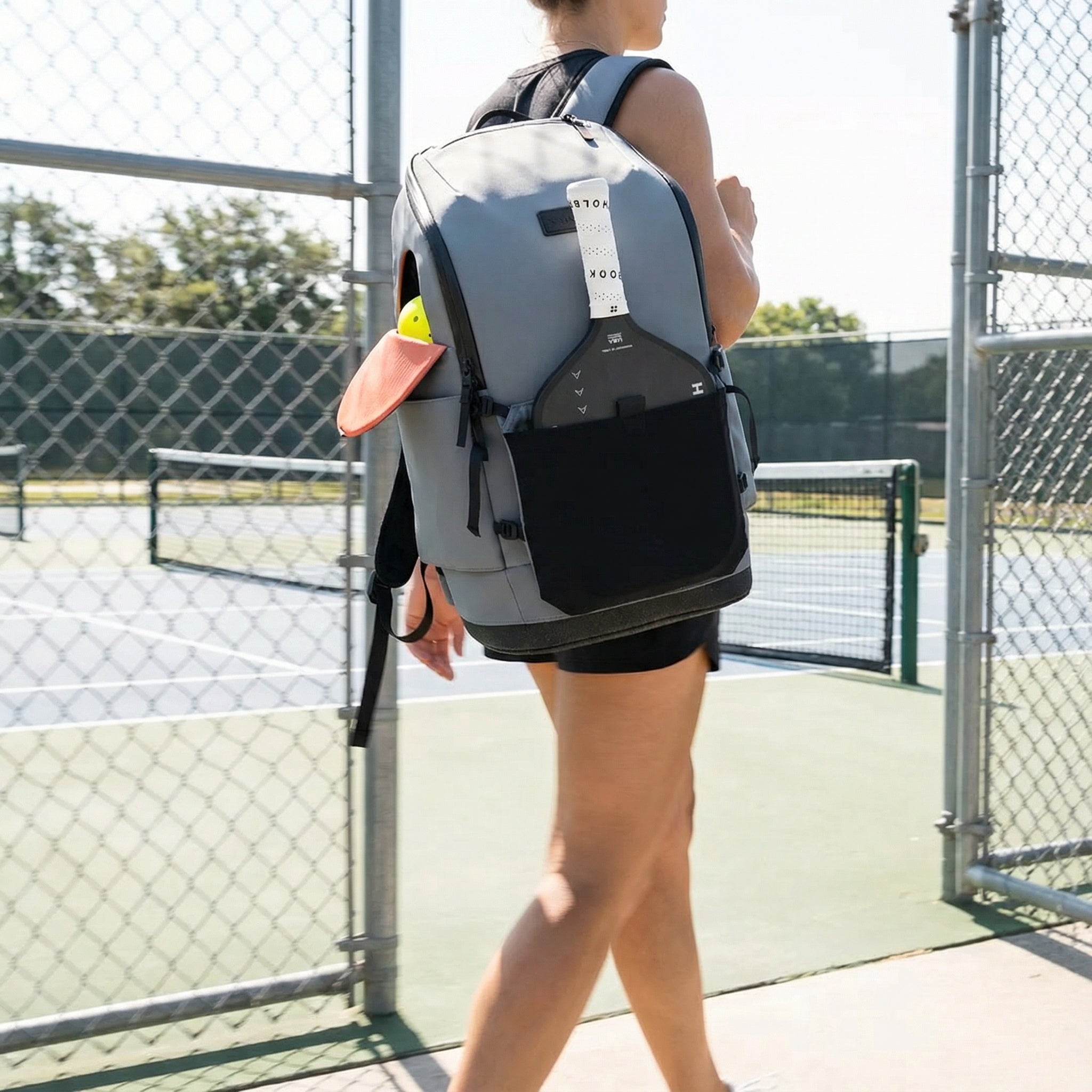
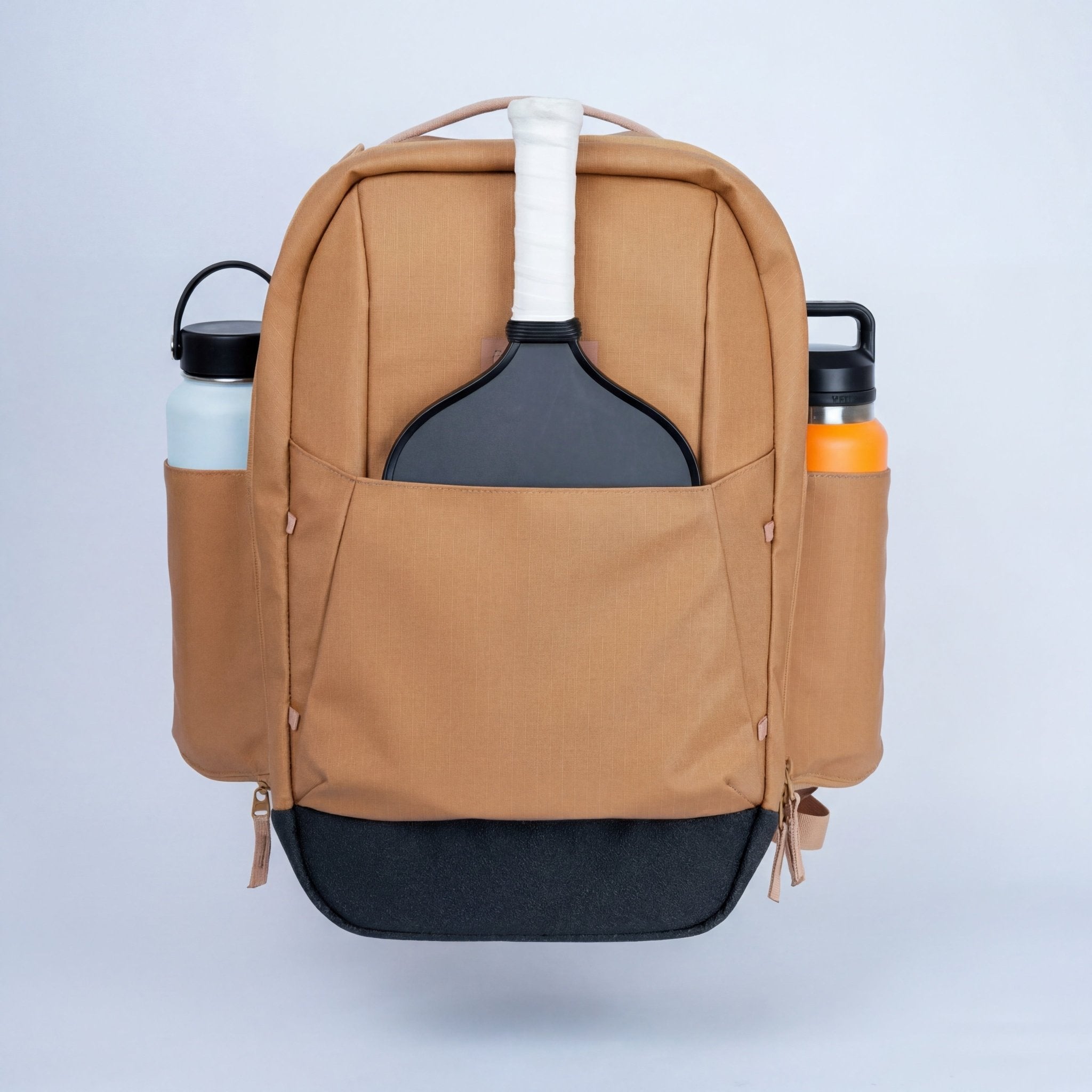
The FORWRD Court Caddy ($325) was designed around exactly these failure modes. It carries 4 paddles in a dedicated modular sleeve — accessible without unpacking the main compartment. YKK AquaGuard weatherproof zippers. A 15" padded laptop sleeve for the hybrid player who goes to the venue from the office. Built with feedback from 500+ players, many of them tournament regulars who'd been burned by cheaper bags at events like Nationals.

If you play regional tournaments and don't need the full 4-paddle capacity, the Court Ranger V2 ($195) covers the same weatherproofing and organization for a lighter carry. A 16" laptop sleeve, same AquaGuard zipper system, and it doesn't look like a pickleball bag — which matters if you're going from the venue to a dinner without changing bags.

Shop the Court Caddy → Shop the Court Ranger V2 →
4-Week Fall Season Gear Prep Timeline
This is the section no other tournament prep article has: a week-by-week gear countdown you can screenshot and actually follow. No training advice, no mental prep. Gear only.
| Week | Focus | Gear Actions |
|---|---|---|
| Week 4 Now — Late Sept |
Inspect & audit |
|
| Week 3 Early Oct |
Replace & break in |
|
| Week 2 Mid Oct |
Lock in your gear |
|
| Week 1 Oct 24–30 |
Final pack & confirm |
|
Screenshot that table. It's the only gear-specific week-by-week tournament countdown built for fall 2026 — we looked, nothing else like it exists.
Ready to upgrade your bag before Nationals? The Court Caddy ($325) handles 4 paddles, laptop, shoes, and a full week of tournament gear without blowing a zipper. Designed for players who've had enough of improvising at the venue.
FAQ: Common Questions About Fall Pickleball Tournament Prep
When should I replace my pickleball paddle before a tournament?
Replace your paddle if the tap test reveals any hollow spots (delamination), if the edge guard has significant separation, or if you've been playing more than 6–8 months with the same paddle at high frequency. Give yourself at least 2 weeks of practice with any new paddle before a tournament — never debut a new paddle at match play.
How do I check my pickleball shoes for wear before fall tournaments?
Place your shoes on a flat surface and check for lateral lean (midsole compression). Flip them over and inspect the outer forefoot tread — if it's smooth where it was once textured, traction is compromised. Run 10 sharp direction changes at match pace; heel slippage or immediate hot spots signal the shoes need replacing before Nationals.
What gear should I review before the fall pickleball tournament season?
Prioritize in this order: paddle face condition and grip freshness, court shoe lateral support, and bag zipper integrity under full tournament packing. Secondary checks include ball supply (6+ approved balls), spare overgrips, sunscreen, and confirm your paddle appears on the current USA Pickleball approved equipment list.
How far in advance should I prepare for a pickleball tournament?
Four weeks out for gear inspection and ordering. Three weeks for grip replacement, shoe break-in, and ball restocking. Two weeks for a full gear lock-in practice session using your exact tournament setup. One week before: pack. No new equipment in the final 10 days before match play.

Leave a comment
This site is protected by hCaptcha and the hCaptcha Privacy Policy and Terms of Service apply.