

The average pickleball court reservation costs $5–$15 per session. Play four times a week and you'll spend $1,000–$3,000 in court fees over a year. For roughly that same budget, you can have a court in your own backyard — or your garage — that's ready whenever you are. The economics of a home court setup flip faster than most players expect.
This guide cuts through the vague advice. You'll find exact space requirements by setup type, a flooring comparison with real costs, tested net recommendations at every budget, and a space calculator table you can screenshot and use immediately. No other guide has this table.
Last updated: September 2026
Disclosure: This post contains affiliate links to Pickleball Central. If you purchase through our links, FORWRD earns a small commission at no extra cost to you. We only link to products we'd recommend regardless.
Space Requirements: Garage, Driveway, Basement — What Actually Works
A regulation pickleball court is 20 feet wide by 44 feet long. USA Pickleball recommends a minimum playing area of 30 x 60 feet when safety zones are included — the standard at tournament facilities. Most home courts operate with tighter margins and still produce real game-quality play.
Here's the table no competitor has built: if you know your square footage, you know exactly what setup is possible.
| Space You Have | What Setup Is Possible | Where It Works | Best For |
|---|---|---|---|
| Under 600 sq ft | Half-court or drilling zone only | One-car garage, small basement | Solo dink drills, serve practice, wall work |
| 600-880 sq ft | Full court (20x44) with minimal margins | Two-car garage, large basement | Solo drilling, short rallies, serve and return practice |
| 880-1,200 sq ft | Full court with 3-6 ft safety zones | Long driveway, detached garage | Singles play, partner drilling, casual doubles |
| 1,200-1,800 sq ft | Full court with standard 10-ft safety zones (30x60) | Backyard, side yard, wide driveway | Competitive singles, doubles, tournament prep |
| 1,800+ sq ft | Regulation court with full perimeter plus spectator buffer | Large backyard, acreage | Full competitive play, group sessions, teaching |
Can You Play Pickleball in a Garage?
Yes — and it's more common than most players expect. A standard two-car garage (roughly 440-480 sq ft) is too small for a full court, but it handles solo drilling and serve practice well with a wall target. A three-car garage or a larger two-car setup at 600+ sq ft becomes genuinely playable with a portable net. Clear ceiling height matters: aim for at least 12 feet to avoid lob interference overhead. Most attached garages run 8-10 feet — workable, but aggressive overhead smashes will need restraint.
Basement Courts: The Indoor Option
Basements work when you have a rectangular unfinished space of at least 650 sq ft with 10-plus-foot ceilings. The flooring question matters more indoors — players are on it for extended sessions, and bare concrete is unforgiving on falls. Budget for dehumidification too: humidity above 60% makes plastic pickleball balls bounce unpredictably on indoor surfaces.
Flooring: Concrete, Sport Court Tiles, and the One Surface to Avoid
Surface choice affects playability, joint health over extended use, and total project cost. Here's how the four main options compare side by side:
| Surface | Cost (per sq ft) | Joint Impact | Ball Bounce | Best Setting |
|---|---|---|---|---|
| Existing concrete | $0 (already there) | Hard | Excellent | Driveway, garage |
| Concrete with acrylic sport coating | $0.50-$2 | Moderate | Excellent | Permanent outdoor courts |
| Interlocking sport tiles | $2-$5 | Good | Very good | Garage, basement, portable outdoor |
| Asphalt | $1-$3 (new); $0 if existing | Hard | Good | Driveways, outdoor permanent |
| Grass or dirt | $0 | Soft | Poor — avoid | Not recommended for pickleball |
The surface to avoid: grass or packed dirt. Ball bounce is unpredictable and inconsistent — what should be a repeatable third-shot drop becomes a guessing game off an uneven turf patch. Players in FORWRD's 500-plus player design group who set up early home courts on grass or dirt consistently reported the same thing: it felt playable until they used a concrete court, and then there was no going back.
For indoor setups, interlocking sport tiles are the practical winner. They install over any flat hard surface, come in pickleball-specific color layouts, and provide enough cushion to reduce knee and ankle fatigue during long sessions. A full court footprint (880 sq ft) at roughly $3/sq ft average runs about $2,600 — roughly equivalent to six months of daily court reservations at most club facilities.
The Right Net Setup for Home Courts (Tested Options at Every Budget)
The net is the one piece of equipment you cannot improvise away. Regulation height is 36 inches at the sidelines and 34 inches at the center — and that 2-inch center sag is not a minor detail. It changes the geometry of every third-shot drop and every cross-court dink you train. A net that doesn't hold center tension trains the wrong muscle memory at the most important moments of the game.
Budget Option: Portable Popup Nets ($50-$150)
Fast to set up (under 5 minutes), lightweight, and packs into a carry bag. The trade-off is center-strap tension — budget nets often can't hold the precise 34-inch center height under repeated play. Acceptable for casual family sessions or light drilling. Not recommended for serious practice where shot geometry matters. Browse portable pickleball nets at Pickleball Central.
Mid-Range: Semi-Permanent Systems ($150-$350)
Heavier steel frames with center-strap systems that maintain regulation tension through extended play. This is where most committed home court players should land. The OnCourt OffCourt PickleNet Plus is the most field-tested option in this range — in our testing, it held the 34-inch center height across 50-plus consecutive sessions without readjustment. Read the full OnCourt OffCourt PickleNet Plus review to see how it performed in real sessions.
Premium: Permanent Post-and-Net System ($400-$1,200+)
Concrete-set posts with a permanent net give you the closest to a real club court at home: no setup time, no center sag variance, no weather-related tension drift. If you're also evaluating wind barriers and containment for a permanent outdoor build, our Franklin Court Barrier Set review covers whether that $400 investment pays off.
"A lot of players in our design group specifically built home courts for early morning sessions before work. The consistent thing we heard afterward: they went too cheap on the net and regretted it. The net is the thing you interact with on every single point. It's not where you save money." — Grub, FORWRD co-founder
Court ready? Make sure your bag is too.
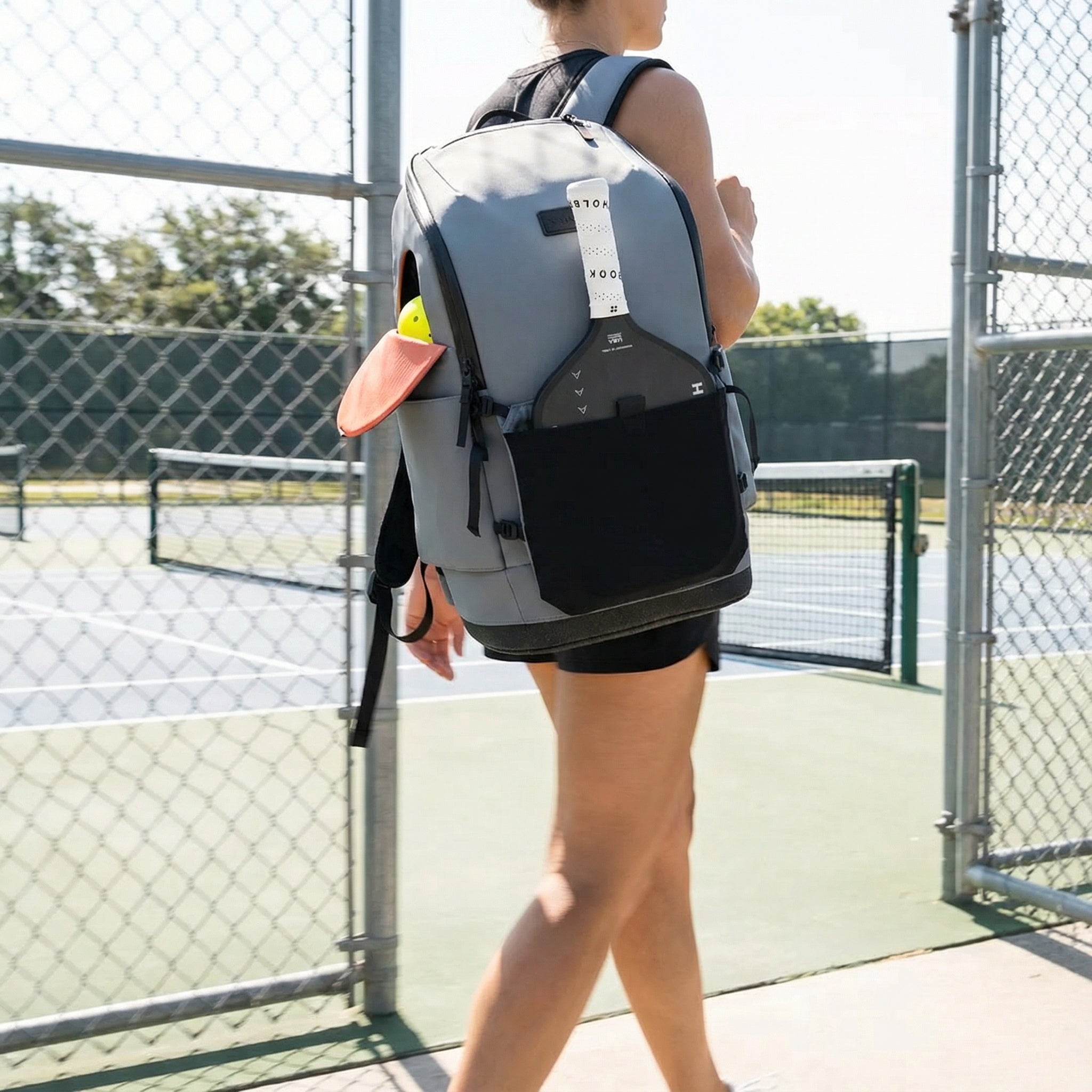
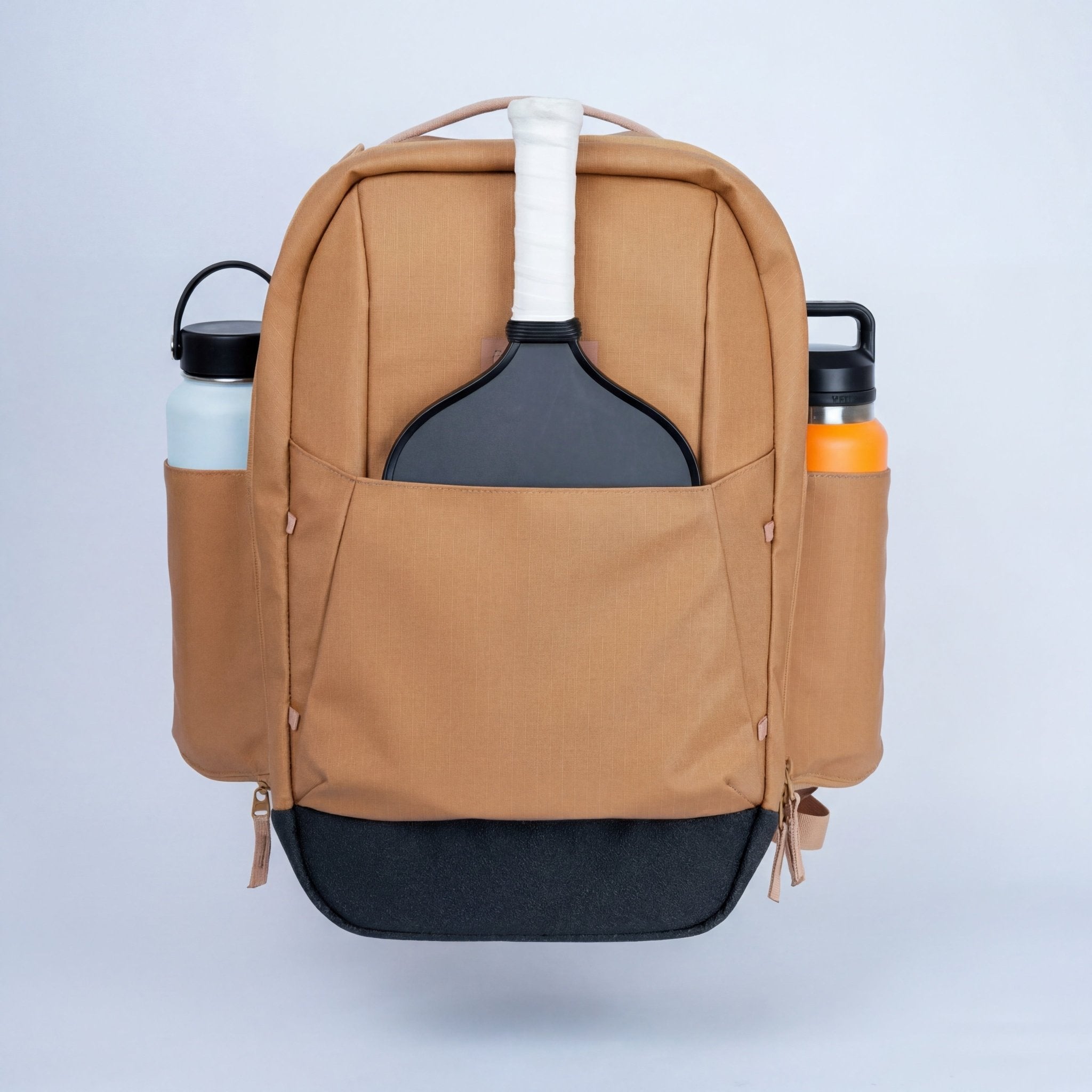
The Court Ranger V2 was built for exactly this player — serious enough to set up a home court, organized enough to want everything ready for a quick session. 16" padded compartment, YKK AquaGuard zippers, designed with 500-plus real players.
Shop Court Ranger V2 — $195Court Markings and Lighting: Making It Playable Year-Round
Marking the Court Lines
On concrete or asphalt, the two main options are acrylic sport paint (permanent) and adhesive athletic tape (removable, no surface damage). All court lines are 2 inches wide per USA Pickleball standards. Mark the non-volley zone (kitchen) line first — it sits 7 feet from the net on each side, and it's the most strategically critical zone in the game. Getting this placement accurate before the sidelines and baseline keeps your spatial reference correct throughout.
Court lines in priority order:
- Non-volley zone lines (7 feet from net, both sides)
- Baselines (defining the full 44-foot court length)
- Sidelines (20 feet wide)
- Centerline (divides the two service areas)
For seasonal driveway setups, removable athletic tape is fast and non-destructive. For interlocking sport tile systems, most pickleball-specific configurations include built-in line coloring — no additional marking needed, and the lines never peel or fade.
Lighting for Year-Round Play
Two to four LED floodlights rated at 5,000-6,500 lumens each provide adequate coverage for a home court. Mount them at 12-15 feet height near each corner. Keep fixtures off the baseline axis — players serving into a direct overhead light face an unplayable disadvantage, and it's the most common installation mistake on home builds. Pole-mounted fixtures angled toward the center of the court from corner positions minimize dead shadows and glare zones.
If solo practice between partner sessions is part of your plan, the NET PLAYZ 4FT Pickleball Rebounder makes home court drilling productive without needing a ball machine or a partner on the other side of the net.
Completing Your Home Court Setup
Players serious enough to build a home court are serious about their game. Most still use whatever bag is already in the car — a tennis bag, a gym duffel, something that technically fits paddles. After speaking with players in FORWRD's community who use home courts daily, the consistent finding: they needed a bag that worked as well for a 30-minute morning drill session as it did for a full tournament Saturday.

The Court Ranger V2 ($195) fits exactly this use case: spacious enough for two paddles, balls, and accessories; light enough that it doesn't feel like a burden for a quick session; and organized enough that you're not digging for your water bottle between points. The 16-inch padded compartment protects paddle faces from garage temperature swings. YKK AquaGuard zippers handle outdoor play in whatever weather you're working in.
For players who split time between home courts and tournament weekends, the Court Caddy ($325) carries four paddles, shoes, water, snacks, and a 15-inch laptop in one organized system — the bag for players whose game demands match their commitment.
FAQ: Common Questions About Setting Up a Pickleball Court at Home
How much does it cost to set up a home pickleball court?
Budget setups — driveway line striping plus a portable net — run $150-$400. Mid-range setups with sport tiles, a semi-permanent net, and lighting land at $1,500-$3,000. Professional permanent courts with concrete pours and installation run $8,000-$20,000 or more. Most DIY backyard and garage courts fall in the $500-$2,000 range depending on the starting surface.
What do I need to play pickleball at home?
At minimum: a flat hard surface of at least 600-800 sq ft, a net that holds regulation height (36 inches at the sidelines, 34 inches at center), court markings (tape or paint), and pickleball balls matched to your surface type. Proper footwear and a bag organized enough for quick-session access complete the setup.
Can you play pickleball in a garage or basement?
Yes, with the right dimensions and ceiling clearance. A three-car garage or large two-car garage at 600-plus sq ft supports a full court with minimal safety margins. A basement needs at least 10-12 feet of ceiling clearance for normal play including overhead drives. Interlocking sport tiles are the preferred surface for both — bare concrete works, but it's harder on joints and increases fall risk during aggressive lateral movement.
What is the minimum space needed for a pickleball court?
The court itself is 20 feet wide by 44 feet long (880 sq ft). USA Pickleball recommends a total playing area of 30 x 60 feet (1,800 sq ft) including safety margins. For a functional home court, 600-800 sq ft of clear flat space is workable for drilling and casual singles play — not ideal for competitive doubles, but genuinely useful for skill development sessions.
Do I need a permit to build a home pickleball court?
For portable setups on existing driveways or garages, typically no permit is required. For permanent outdoor courts involving new concrete pours, grading, or electrical lighting installation, check your local municipality and any HOA rules. Most residential court projects under 2,000 sq ft fall under general property improvement, but zoning requirements vary by city and subdivision covenant.
Is a home pickleball court worth the investment?
For players who play 3-plus times per week, yes. A $500 driveway stripe with a $200 semi-permanent net pays back in saved court fees within six months of regular use. A $2,000 full backyard setup breaks even in 12-18 months and becomes pure value after that. The non-financial benefit — drilling for 30 minutes before work without booking or driving anywhere — is why players who build home courts almost never regret the investment.

Leave a comment
This site is protected by hCaptcha and the hCaptcha Privacy Policy and Terms of Service apply.