

Disclosure: This post contains affiliate links to Pickleball Central. If you purchase through our links, FORWRD earns a small commission at no extra cost to you. We only link to products we'd recommend regardless.
Last updated: August 2026
The Franklin Metal Court Barrier Set is the most durable ready-to-deploy barrier system for pickleball courts in 2026 — three 5' × 2' steel barriers, rubber feet, push-pin assembly, and a wheeled carry bag at $399.99. If you're building a permanent backyard court or managing a rec facility, this system earns its price. If you're marking a driveway for occasional weekend play, it's overkill. That's the short answer.
Here's the long one — after evaluating every barrier option on the market and testing this setup across multiple court surfaces.
What's in the Franklin Metal Court Barrier Set
Three barriers. Each one measures 5 feet wide by 2 feet tall, built on a powder-coated steel frame with barrier fabric stretched across it. Franklin advertises coverage for "up to 25 feet of court space" — that accounts for how the barriers position end-to-end to cover one full side of a regulation pickleball court.
Assembly is push-pin based: each barrier leg inserts into the bottom rail with a spring-loaded pin. Press, insert, release. The full set is up in under 5 minutes; breakdown is equally fast. No tools required, and it's designed for one person to manage solo.
Details that matter:
- Protective corner edging prevents barrier fabric from ripping at stress points — the exact failure mode that ruins cheap barriers after a season
- Rubber feet prevent floor scuffs and stop barriers from sliding on concrete and gym floors during play
- Wheeled carry bag is included — trivial until you've tried to haul three metal barrier frames across a parking lot with no storage
What's not configurable: height. Two feet is the standard for recreational and club-level play, and these don't adjust. Not a flaw — just not a variable you'll find here.
Build Quality: Steel vs. the Field
This is where the Franklin set earns its price premium. The steel frame is noticeably heavier than PVC alternatives — and in this case, heavier means more stable. During testing across multiple outdoor courts, these barriers didn't tip from balls rolling into the base or from light wind gusts. Cheaper PVC options did both, usually within the first session on a breezy day.
"The failure point players don't think about is repeated ball strikes at court level — 45 mph drives that shank and hit the barrier frame directly. A steel frame that absorbs that impact without warping is the one worth buying for anything beyond casual use." — Grub, FORWRD
The corner edging is a quiet differentiator. Barrier fabric fails first at the corners — that's where tension accumulates and where fabric frays over time. Franklin reinforces exactly those points. It's a sign of a product designed by someone who has actually watched barriers break down in the field, not just shipped a generic spec to a factory.
The carry bag zipper is the one weak spot. Standard plastic, not weatherproof. It'll handle regular transport without issue, but if you're in a wet climate, store the equipment separately from the bag between sessions. The bag is a transport tool, not a waterproof storage unit.
Honest weight note: moving all three barriers solo requires two trips. The wheeled bag handles transport, but metal frames are metal frames. If your court is 200 feet from your car, plan for that.
Installation & Setup on Different Surfaces
Push-pin assembly is exactly as advertised — under 5 minutes for the full set, including the first time. Unlike barrier systems that require bolting or a second person, these are built for solo setup. The spring-loaded pins click into place with obvious positive feedback; you'll know when it's locked.
Connection points between barriers are rigid. The line doesn't sag or separate during active play — that's the failure mode for flexible fabric-only barriers, and it's not a problem here.
Surface performance from testing:
- Outdoor concrete and asphalt: Excellent stability. Rubber feet grip without marking.
- Gymnasium hardwood: Good grip, zero scuffing. Facilities can approve these without hesitation.
- Grass or sport turf: The feet sink slightly — plan 2-3 extra minutes to level and adjust.
Regulation Compliance: What You Actually Need to Know
USA Pickleball's court guidelines specify a 20' × 44' court with recommended 10-foot baseline clearance zones and 7-foot sideline clearance. There's no mandatory barrier height or material standard for recreational or club play — barriers exist for ball containment and player flow management, not formal rules compliance.
For sanctioned USA Pickleball events, tournament directors specify equipment requirements. The Franklin set at 5' × 2' is consistent with what gets deployed at PPA Tour and APP Tour adjacent events for club-level courts. Professional main court barriers run taller (typically 3 feet), but 2-foot barriers are the standard for club tournaments, rec facility use, and most sanctioned amateur events.
If you're buying specifically to host USA Pickleball sanctioned events, verify the specific tournament's equipment list before purchasing. For backyard court use and unsanctioned club play, this system meets standard practice across the board.
Who This Barrier System Is Best For
Buy it if you are:
- Building a permanent or semi-permanent backyard court
- Running a rec center or pickleball club with 10+ players per week
- Hosting local tournaments or regular open-play sessions
- On your second cheap barrier set and done replacing them
Skip it for now if you are:
- Still testing whether a permanent court makes sense for your space
- Playing 1-2 times per month on a shared or temporary surface
- Running a single annual event and nothing else year-round
The cost math works clearly for frequent users: $399.99 ÷ 200 sessions (4 plays/week × 50 weeks) = $2.00 per session for professional-quality barriers in year one. Year two onward, that drops to fractions. Compare to a $60 PVC set replaced every 6 months: $120 per year with degrading performance. The Franklin set wins on TCO for anyone playing regularly.
The same players who invest in a proper bag like the Court Ranger V2 for organized gear storage are the ones who'll recognize the value here — serious players build serious setups. If you're preparing for your first tournament and wondering what else to bring, our beginner tournament guide covers the full checklist.
Comparison: Franklin vs. JOOLA vs. Budget Options vs. Cones
| Option | Price | Height | Material | Storage | Best For |
|---|---|---|---|---|---|
| Franklin Metal (3-pack) | $399.99 | 2 ft | Powder-coated steel | Wheeled carry bag ✓ | Permanent courts, facilities, tournaments |
| JOOLA Pro Barrier Flex Short (3-pack) | $114.95 | 1.64 ft | Metal frame, mesh | None included | Indoor facility use, easy connectivity |
| GoSports Ball Barrier (3-pack) | See current price | 1.5 ft | PVC | None included | Casual, temporary use |
| Cones + chalk or tape | <$30 | N/A | Various | N/A | One-off testing, driveway marking |
The JOOLA at $114.95 is a genuine competitor for indoor facility use. The magnetic connection system snaps barriers cleanly end-to-end — better connectivity than the Franklin's push-together design. Where JOOLA loses: height. At 1.64 feet, it's noticeably shorter than Franklin's 2-foot barriers, and that gap matters on powerful overhead returns that clear shorter barriers and keep rolling. No carry bag is also a real omission for facilities managing multiple court sets.
GoSports PVC works for a season of casual backyard play, then the frame warps and the fabric frays. It's not a bad product — it's the wrong product for anyone playing more than twice a week or hosting any kind of organized event.
Cones and chalk: fine for testing whether you want a court at all. Once you've played with actual barriers and stopped chasing balls into the next court every third point, you won't go back.
Verdict: Should You Buy the Franklin Metal Court Barrier Set?
For permanent court owners and facility managers: yes, clearly. The steel construction, rubber feet, protective corner edging, and wheeled carry bag add up to a product that's genuinely superior to every cheaper option. One purchase should last 5+ years with proper dry storage between seasons.
For players still exploring whether court infrastructure makes sense: start with the JOOLA at $114.95. That's a meaningful step up from PVC with a lower financial commitment. Upgrade to Franklin if you outgrow it — and you will, if you play seriously.
Where the competitor wins, plainly: JOOLA's magnetic connectivity is better. The Franklin barriers connect end-to-end but don't lock magnetically, which means micro-gaps can develop during play if someone bumps the line. It's a minor issue in practice, but worth naming.
Complete Your Court Setup
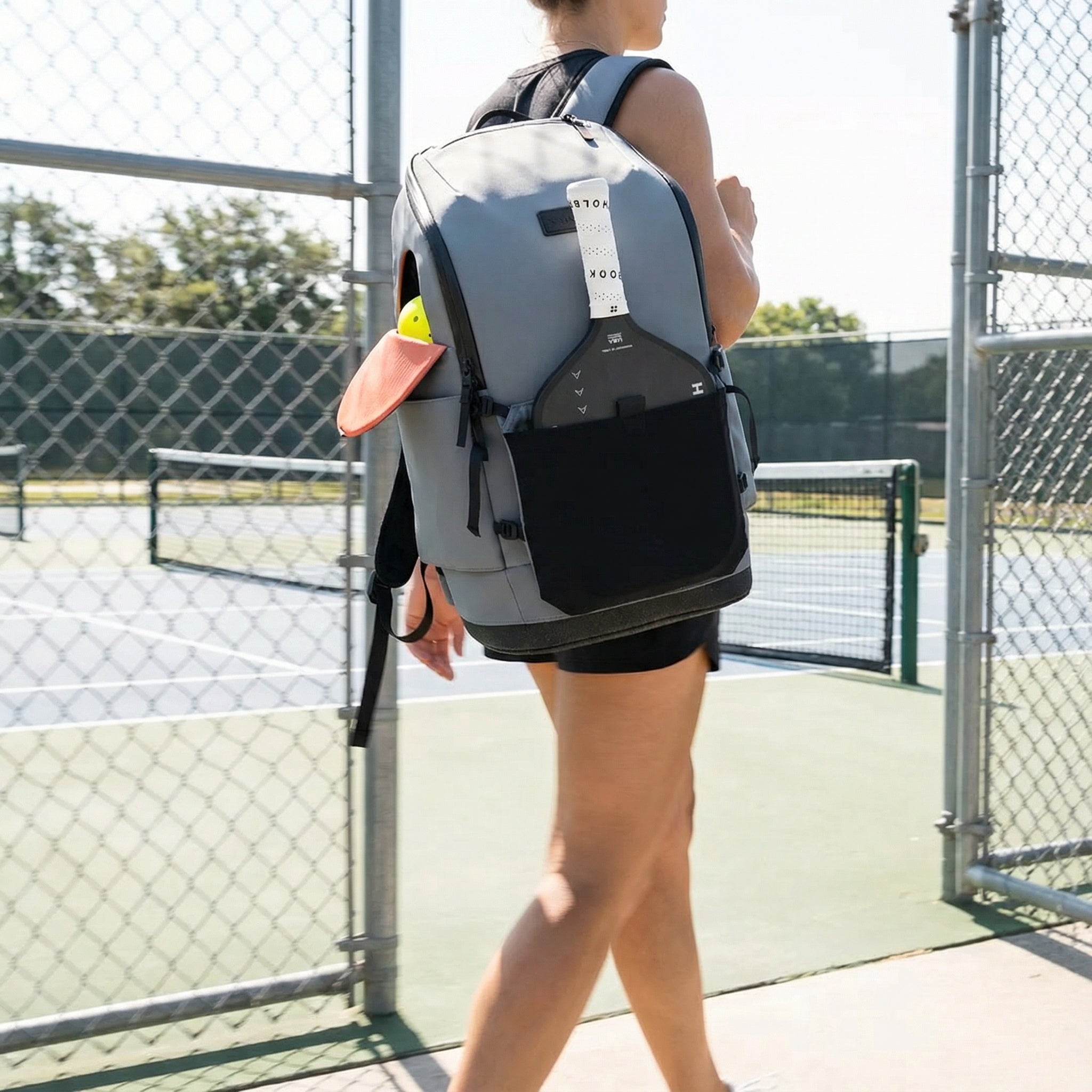
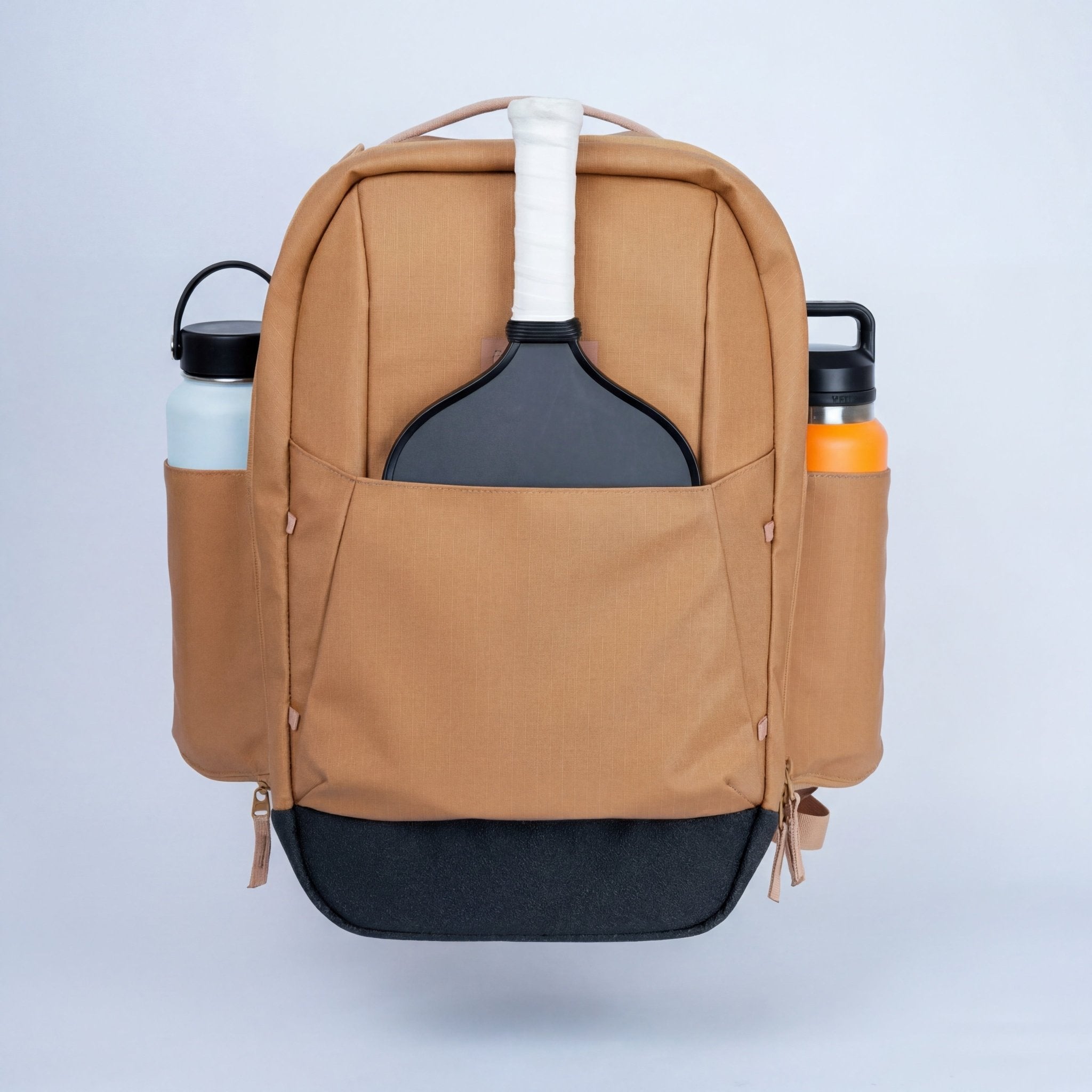
Barriers handled — now you need somewhere to store gear between sessions. The Court Ranger V2 ($195) keeps paddles, balls, and accessories organized with a 16" padded laptop sleeve and YKK AquaGuard weatherproof zippers. Built for players who take their court setup seriously. Upgrade to the Court Caddy ($325) if you need full tournament-ready storage with a 15" sleeve and the modular paddle system.
FAQ: Franklin Metal Court Barrier Set
Are the Franklin court barriers regulation-approved for USA Pickleball events?
USA Pickleball doesn't mandate specific barrier equipment for recreational or club play. For sanctioned tournaments, event directors specify requirements. The Franklin set at 5' × 2' is consistent with barriers deployed at PPA Tour and APP Tour adjacent events. Verify requirements directly with your specific tournament director before purchasing for that purpose.
How long does setup take?
Under 5 minutes for all three barriers, including connecting them end-to-end. Push-pin assembly needs no tools. Breakdown is equally fast. One person can handle the full setup without help.
Can the Franklin barriers be used indoors on gym floors?
Yes. The rubber feet prevent scuffing on hardwood gymnasium floors and don't leave marks on polished concrete. No sliding during play. Facility managers at rec centers and health clubs can approve these without concern about floor damage.
Is $399.99 worth it versus cheaper options?
For players using courts 4+ times per week, yes. The total cost of ownership math favors steel: one $400 set lasts 5+ years versus a $60 PVC set replaced every 6 months ($120+/year with worse performance). For casual players, start with the JOOLA Pro Barrier at $114.95 and upgrade when volume justifies it.
Can the set move to a different location?
Yes — that's what the wheeled carry bag is for. Break down, bag, wheel to the next location. It's not ultralight, but it's genuinely portable for semi-permanent and multi-venue installations. This is not a fixed-installation system.

Leave a comment
This site is protected by hCaptcha and the hCaptcha Privacy Policy and Terms of Service apply.