

Last updated: August 2026
Your first pickleball tournament will almost certainly use a round-robin format — you play every team in your pool, 3–4 guaranteed matches, rally scoring to 11, win by 2. You don't need a DUPR rating to enter. Entry fees at local events run $25–$45 per player. And the honest version: you will probably lose your first match. That's not a reason to wait.
Most players spend too long "getting ready." The problem is that tournament play is a different skill than open play — and you can't develop it by drilling at home. This guide gives you the format breakdown, a practical prep plan for the week before, and a minute-by-minute read of what tournament day actually looks like so nothing catches you off guard.
Is Your First Tournament Sooner Than You Think?
There's a version of "not ready" that's genuinely true — you've played twice, you're still learning the scoring, you can't reliably keep a third shot low. Wait a little longer if that's you.
But most players who hesitate have been playing for months. They show up to open play multiple times a week, understand the strategy, can dink crosscourt. The issue isn't skill — it's that they've decided they need to be better than they are right now before they "deserve" to compete. That's backwards.
Tournament play develops skills you simply can't get from recreational games: how to manage adrenaline, how to make line calls under pressure, how to reset mentally when the score is 6–9 against you. The only way to build those is to be in those situations. Beginner brackets exist specifically for players who've never been in them.
There's a practical reason to enter sooner too: beginner brackets fill faster than you'd expect. A local tournament drawing 80 players might have 8–12 teams in the 2.5–3.0 division. They cap out weeks before the event. Keep waiting for "one more month" and you'll spend a whole season watching the entry-confirmed emails from other people.
How Beginner Pickleball Tournaments Actually Work
The Format
Most beginner tournaments use round-robin pool play. Your pool has 3–4 teams. You play every other team once, guaranteed. After pool play, the top finishers advance to medal rounds — semifinals, then finals.
Scoring is rally scoring: every rally produces a point regardless of who served. Games go to 11, win by 2. (Some tournaments use traditional scoring in medal rounds — check the event page.)
Skill Divisions
Events divide players by skill level. Common beginner divisions:
- 2.5 — You understand the rules, can sustain a rally, working on shot consistency
- 3.0 — You understand the third shot drop and can dink crosscourt, working on positioning and strategy
- 2.5–3.0 combined — Standard at smaller local events
DUPR Ratings for Beginners
DUPR (Dynamic Universal Pickleball Rating) is the system most sanctioned events use. You do not need a DUPR rating to enter your first tournament — most events accept self-rated beginners. If you're unrated, you enter the division that matches your honest skill assessment.
If you do have a DUPR, here's the context: ratings below 3.0 are typical for 2.5–3.0 beginner brackets. A 2.5–3.0 DUPR after 6–12 months of regular play is completely normal. It's not a mark of weakness — it's where most players land before they've spent time in competitive environments.
Referees and Line Calls
At most local amateur tournaments, there are no refs. You call your own side of the court; your opponent calls theirs. The rule: if you're genuinely unsure whether a ball was in or out, it's in. Benefit of the doubt goes to your opponent. Simple, and it protects the integrity of the game.
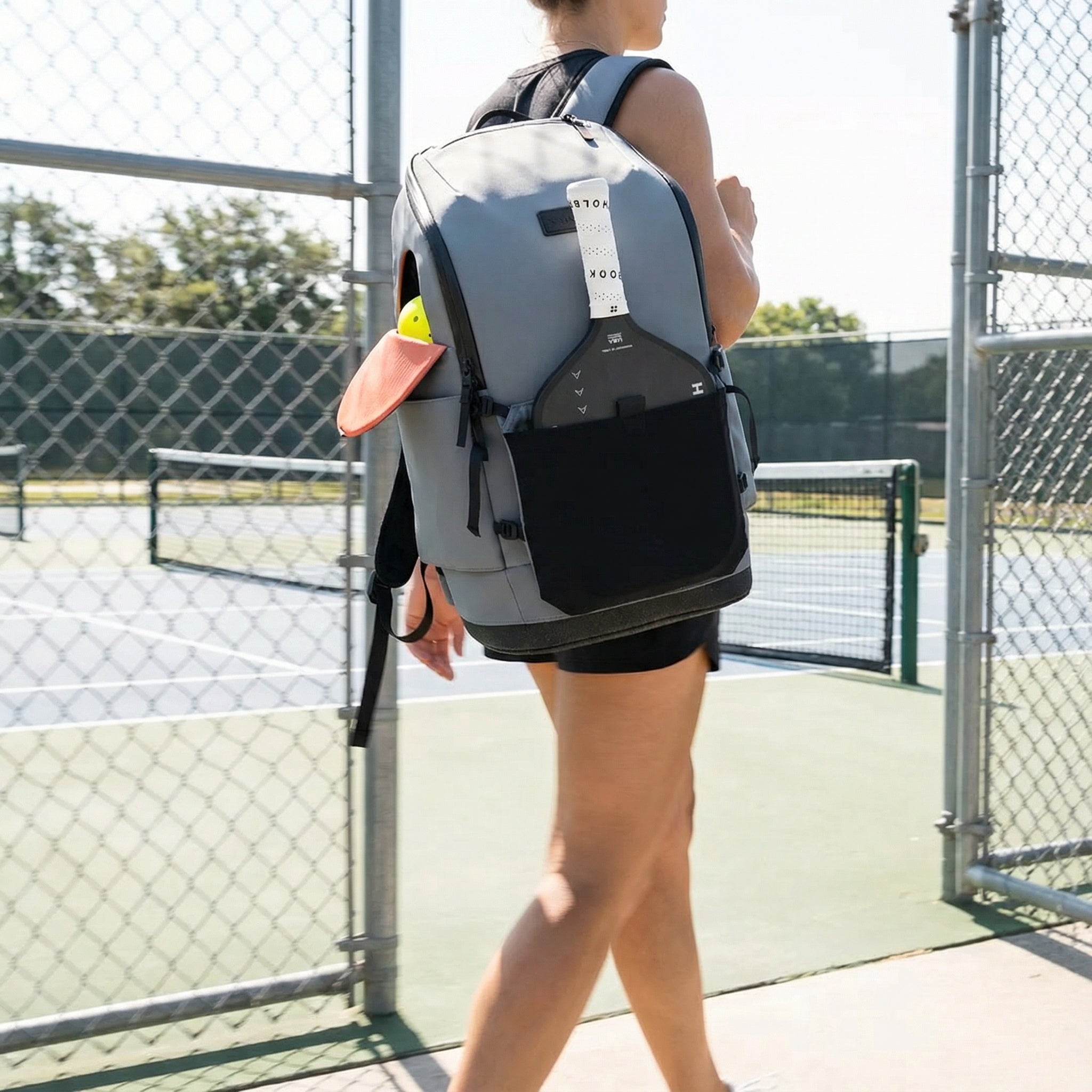
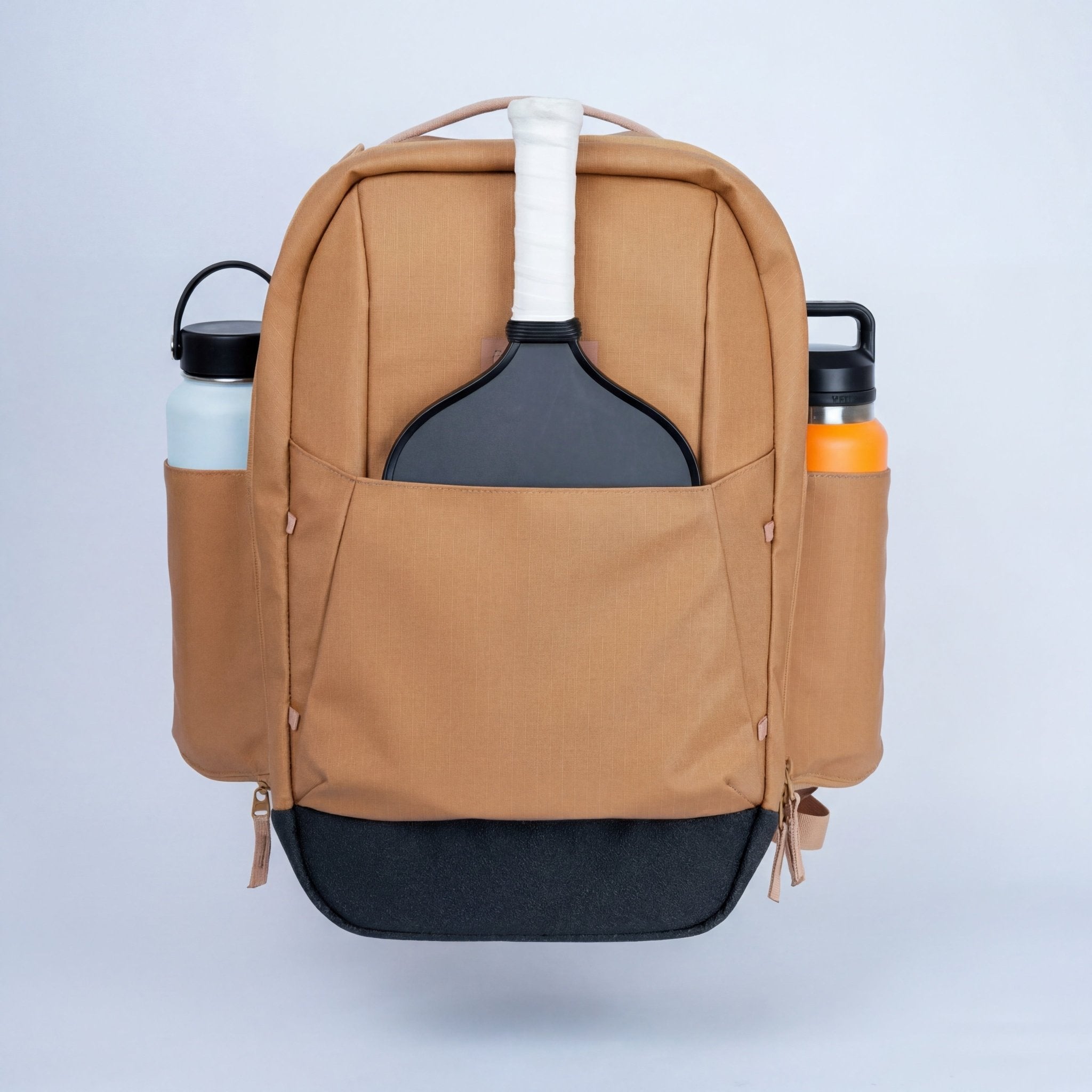
Entering your first tournament? The Court Ranger V2 carries your full tournament day — 2 paddles, change of clothes, water bottles, snacks, and a 16" laptop sleeve — in one organized bag.
The Week Before: How to Prepare Without Overthinking It
The biggest mistake players make before their first tournament: they try to fix everything. They drill their third shot drop, work on their backhand, watch technique videos until midnight. Don't.
Your tournament performance comes from the fundamentals you've already built — not mechanics you tried to rebuild in the last five days. Drilling the week before is fine. Changing your mechanics is not.
What actually helps:
- Play 2–3 regular sessions during the week, same as usual
- Sleep more than normal — tournament days start early and run 4–6 hours
- Confirm logistics: parking, check-in time, court assignments, whether there's food nearby
- Pack your bag the night before, not the morning of
- Know your first match time and plan to arrive 30–45 minutes early
One thing first-timers don't expect: official warm-up before your match is usually 5–6 minutes. You can't find your rhythm in 5 minutes. Arrive early enough to warm up on a side court or hit against a wall before your scheduled start time.
Tournament Day: What to Expect Hour by Hour
Here's what a typical 6-hour local beginner tournament actually looks like, from arrival to medal rounds:
7:30–8:00 AM — Arrival and check-in. Show up 45 minutes before your first match. Find the registration table, get your bracket assignment, locate your courts. Walk the playing surfaces — indoor courts with glossy floors play differently from what you've been practicing on.
8:00–8:30 AM — Warm-up window. Light hitting, not drilling. Get comfortable with the pace of the ball on these specific courts. Your first match starts at the scheduled time whether your rhythm is there or not.
8:30–9:30 AM — First match. You'll feel a surge of adrenaline that affects your timing. Serves you'd normally place will sail long. Dinks you'd normally control will pop up. This is universal and it fades by mid-match. The fix: slow your serve routine down, give yourself extra net clearance on groundstrokes, and breathe through it.
9:45–10:45 AM — Second match. By now the adrenaline is calibrated. Most players find this is their best performance of the day.
Between matches (15–30 minute gaps). Hydrate, eat a snack, stay warm. Don't sit for too long or you'll tighten up. Watch matches on adjacent courts — you'll start recognizing patterns.
11:00 AM–1:00 PM — Third and possibly fourth match. If your pool has a tiebreaker situation, you might play more than three. Fatigue shows here — staying mentally focused matters more than fitness at this level.
Medal rounds. Typically start an hour after pool play ends. If you advanced, you'll play 1–2 more matches. If you didn't, that's fine — stay and watch. What you observe after competing lands differently than what you observe from the sidelines.
On the Court: How to Handle Nerves, Line Calls, and Opponents Who Are Better Than You
Managing Nerves
Adrenaline physically changes your shot timing — your muscles activate faster, which means you need to slow your deliberate actions down to compensate. Don't fight it. Give yourself more margin: more net clearance, shorter backswings, slower serve routines. The players who struggle most in tournament environments try to play through adrenaline the same way they play in open sessions. The players who adapt fastest treat the first 5 minutes of a match as a calibration period.
Making Line Calls
Call your lines clearly and immediately. "Out" if it's out; nothing if it's in. Never delay hoping your opponent will call it. If you genuinely didn't see it, the ball is in — that's the rule, and it's not optional. Most disputes at the beginner level are resolved by replaying the point. Make your calls with confidence and move on.
When Your Opponent Is Better Than You
It happens at every skill level — you'll face someone clearly better than you in almost every first tournament. The instinct is to go for winners: rip something hard, try a shot you've been working on. Resist it.
At the 2.5–3.0 level, unforced errors end more rallies than winners do. The player who keeps the ball in play consistently almost always wins. If you're getting outplayed, reset. Dink crosscourt, slow the game down, make them work for every point. You can't outhit a better player. But a long rally they win 11–8 is better than a 11–2 game where you tried 40 risky shots and put 35 of them in the net.
After the Match: What to Do Win or Lose
Win: shake hands, mean what you say about your opponents (they showed up and competed, same as you), then enjoy it without dissecting every point. You played. That's the whole point of entering.
Lose: same handshake, same generosity. Then — and this is the only post-match analysis rule worth following — identify one specific thing you want to work on before the next event. Not five things. One. Write it down if you need to.
"The players who improve fastest from their first tournament are the ones who focus on understanding the situations they didn't know how to read — not the score, but the moments that felt uncomfortable. That's what transfers to the next event." — Grub, FORWRD co-founder
Stay and watch other brackets after your matches. The observations you make right after competing — when you still have the adrenaline context — are different from watching cold. You'll notice exactly what the better players are doing differently, and you'll actually remember it.
What to Pack for Tournament Day (The No-Overthink Checklist)
A 4–6 hour tournament day is different from a casual session. You'll go through clothes, water bottles, and snacks between matches. Pack for the full day.
Equipment: 2 paddles (primary + backup — grip failure happens at the worst moments), 3–4 balls for warm-up (the event provides match balls), court-appropriate shoes with a second pair if you have them.
Clothing: 2+ changes of clothes, at least 2 pairs of athletic socks. If you're playing outdoors: a hat, sport glasses or sunglasses, sunscreen.
Fuel: At least 32 oz of water (refill every chance you get), electrolytes — powder packets or pickle juice — real food snacks (banana, almonds, a sandwich), and a small towel.
This is where having a dedicated pickleball bag actually earns its place. Fishing through a gym duffel between matches to find your second grip wrap or your electrolytes is disruptive in a way that's hard to explain until you've done it. A bag with actual compartments — paddles here, clothes here, water bottles here — means you step onto each court focused on playing, not sorting.

The Court Ranger V2 ($195) fits 2 paddles in the modular sleeve, has compartments for clothes and shoes, water bottle pockets on both sides, and a 16" laptop sleeve. Designed with feedback from 500+ real players. If you're playing tournaments regularly, it's the bag that stops the between-match gear scramble.
FAQ: Beginner Pickleball Tournament Questions
How do I prepare for my first pickleball tournament?
Keep your regular practice schedule the week before — don't try to change your mechanics. Confirm logistics (parking, check-in time, court assignments), pack the night before, and arrive 30–45 minutes early so you can warm up before your first scheduled match. Mentally: decide in advance that losing matches is part of the process and not a sign you entered too soon.
What is the format of a beginner pickleball tournament?
Most beginner tournaments use round-robin pool play: you play every team in your group (typically 3–4 teams), guaranteeing 3–4 matches. Games use rally scoring to 11, win by 2. Top finishers from each pool advance to medal rounds. There are usually no referees — players call their own lines.
How much does it cost to enter a pickleball tournament?
Local and regional beginner events typically run $25–$45 per player, with partners sharing the cost for doubles. Larger sanctioned events (PPA or APP amateur brackets) can run $60–$100 per player. Most sanctioned events require a USA Pickleball membership, which runs $30/year.
Can I play doubles at my first pickleball tournament?
Yes — most beginner tournaments are doubles-only or offer both singles and doubles. You'll register with a partner and can self-rate together if neither of you has a DUPR. If you don't have a partner lined up, check whether the event offers partner matching — many local tournaments do for exactly this reason.
What DUPR rating do I need for a beginner tournament bracket?
You don't need a DUPR rating to enter your first tournament — unrated players are accepted at most events and self-rate based on skill level. If you do have a rating, beginner brackets typically cover 2.5–3.0 DUPR. A rating in that range after your first 6–12 months of regular play is normal and not a reason to skip the beginner bracket.
What should I bring to a pickleball tournament?
Two paddles, 3–4 warm-up balls, 2+ changes of clothes, at least 32 oz of water, electrolytes, real food snacks, a towel, and court shoes. If playing outdoors, add a hat, certified sport glasses, and sunscreen. A dedicated pickleball bag with separate compartments for gear, clothes, and food makes managing all of this between matches significantly easier.
Ready to stop waiting? See the Court Ranger V2 — the bag built for players who take their court time seriously, at $195.

Leave a comment
This site is protected by hCaptcha and the hCaptcha Privacy Policy and Terms of Service apply.