

Disclosure: This post contains affiliate links to Pickleball Central. If you purchase through our links, FORWRD earns a small commission at no extra cost to you. We only link to products we'd recommend regardless.
Most beginner pickleball players do the same thing: they show up, grab a paddle, and start playing. Three weeks later, they wonder why their game hasn't improved. The answer is almost always that they skipped the foundation — the movement patterns and conditioning base that every 3.5+ player has built underneath their game, whether they know it or not.
The 12-week program below is structured specifically to fix that. Weeks 1–4 build movement foundation (the part everyone skips). Weeks 5–8 layer in on-court conditioning. Weeks 9–12 push you toward match-ready fitness where physical fatigue stops being the thing that limits your play. There are specific drill counts, session times, and progression benchmarks throughout — because vague advice doesn't move your game.
Last updated: August 2026
Table of Contents
- Why Beginner Pickleball Players Need a Structured Fitness Routine
- Weeks 1–4: Footwork Foundation (The Part Everyone Skips)
- Weeks 5–8: On-Court Conditioning
- Weeks 9–12: Match-Ready Fitness
- Equipment You'll Actually Need
- FAQ: Pickleball Fitness for Beginners
Why Beginner Pickleball Players Need a Structured Fitness Routine
The players who burn out fastest in their first 6 months are almost always the ones who jumped to 3×-a-week full match play on day one. It's not a cardiovascular endurance problem — pickleball matches aren't marathon efforts. The real issue is movement mechanics. Without intentional footwork training, you spend your first 50 hours of play reinforcing bad positioning habits that are 10× harder to undo later.
What structured fitness actually does for beginners:
- Trains split-step timing (the small explosive pause before each opponent shot) before it becomes instinctive — most players who learn this through random play take 6+ months to habituate it; intentional drilling cuts that to 4–6 weeks
- Builds lateral shuffle patterns that keep you balanced through a full point rather than chasing balls off your heels
- Develops the specific explosive short-burst conditioning pickleball requires — not the sustained aerobic output of running, but the 5–10 second sprint-and-reset cycle that happens dozens of times per match
This isn't about getting in shape. Pickleball fitness is about being in the right position before you hit the ball — and that's a trainable, structured skill, not a natural gift.
The program below assumes you're playing pickleball 0–3 times per week currently and want to build a deliberate training schedule around it. If you're already playing 4+ days/week, jump to Week 5 and work forward.
Weeks 1–4: Footwork Foundation (The Part Everyone Skips)
The first 4 weeks have nothing to do with winning points. They're about movement patterns — and they're done before, during, or between your regular open play sessions, not instead of them.
Weeks 1–2: Split Step and Lateral Shuffle
Session format: 3×/week, 30–40 minutes total. Do this either as a warm-up before open play or on its own days.
Drill 1 — Split Step Timing (15 minutes):
- Stand at the kitchen line. Have a partner (or wall) feed balls at a steady pace — one every 5–6 seconds.
- Your job: execute a small split step (feet shoulder-width, slight bend, weight on balls of feet) exactly as the ball leaves their paddle. Not before. Not after.
- 3 sets of 10 balls each. Rest 60 seconds between sets.
- Benchmark: by end of Week 2, the split step should feel automatic on 8 of 10 feeds without active thinking.
Drill 2 — Kitchen Line Lateral Shuffle (15 minutes):
- Place two cones (or water bottles) 10 feet apart along the kitchen line.
- Lateral shuffle from cone to cone — not crossover steps, shuffle only. Touch each cone with the inside hand.
- 4 sets of 8 round trips (cone to cone = 1 trip). Rest 45 seconds.
- This sounds easy and isn't. By set 3, you'll feel it.
Don't add match play yet. Let the movement patterns settle.
Weeks 3–4: Dink Rally Consistency + Drop Shot Movement
Session format: 3×/week, 40–50 minutes. Now you're integrating ball contact with movement.
Drill 3 — Dink Continuity Rally (20 minutes):
- With a partner at the kitchen line, maintain a cross-court dink rally. Goal: sustain 20 consecutive dinks without an error.
- Weeks 3–4 target: reach 20-ball continuity once per 5-minute block. Most players start averaging 8–12 and jump to 18–22 by end of Week 4.
- Call out when you reach 20. Reset. Don't keep going — sustained long rallies train the wrong energy system for early beginners.
Drill 4 — Third-Shot Drop Movement Pattern (20 minutes):
- Start at the baseline. Feed yourself a mid-court ball (or have a partner feed). Execute a third-shot drop, then immediately transition forward to the kitchen. Reset.
- 3 sets of 8 reps. Focus is on the transition movement — explosive step toward the kitchen after contact — not drop shot perfection yet.
- Rest 60 seconds between sets.
By the end of Week 4, most players can feel the difference between moving to the ball and chasing it. That awareness is the entire point of the first block.
Weeks 5–8: On-Court Conditioning
This is where the fitness work starts feeling like actual pickleball. Session length increases, intensity picks up, and you add short-burst intervals that replicate real match demands.
Session format: 4×/week (3 on-court, 1 off-court conditioning). 45–60 minutes per session.
On-Court Sessions (3×/week)
Session structure per day:
- 10-minute warm-up: Split step drill (Week 1 version), 2 sets of 8
- 20-minute drill block: Mix Drills 3 and 4 from Weeks 3–4, now at higher intensity and target volume (30-ball dink continuity target, 10 reps of the third-shot transition)
- 15-minute burst conditioning: 30 seconds hard play (full-court groundstrokes with a partner, aggressive movement), 30 seconds rest. 10 rounds total. This is the closest replication of actual match-pace effort you can do in a drill format.
- 10-minute cool-down open play: Low-pressure games to end the session
The burst conditioning block is the key addition in Weeks 5–8. Most beginners have never trained the pickleball-specific energy demand — short explosive efforts with full rest between. This is different from tennis (longer sustained rally) and different from running (continuous aerobic). If you skip it, you'll still gas in the third game of a tournament — no matter how much you play casually.
Off-Court Conditioning (1×/week)
30-minute circuit:
- Agility ladder (if available) or cone shuffles — 5 minutes
- Lateral band walks: resistance band around ankles, 3 sets of 15 steps each direction
- Calf raises: 3 sets of 20 (pickleball is ankle and calf-heavy from constant split-step loading)
- Single-leg balance: 30 seconds each foot, eyes closed by Week 7 (proprioception training for lateral court balance)
- Hip flexor stretch + thoracic rotation: 10 minutes end of session
The off-court session takes 30 minutes on a rest day and is where the non-obvious fitness improvements come from. Lateral strength from resistance band work shows up as better kitchen positioning. Single-leg balance work translates directly to more stable dinking under pressure.
Week 8 benchmark: By the end of this block, most players see their third-shot drop accuracy improve roughly 35–45% compared to Week 4, purely from the movement foundation work compounding. Players who track this are often surprised — they were practicing the shot less intensely, but moving better to execute it.
Weeks 9–12: Match-Ready Fitness
The final block is about simulating real match conditions and making your fitness work invisible — meaning it shouldn't be a limiting factor anymore.
Session format: 4–5×/week. 60+ minutes. Mix structured drills with progressive match play.
Progressive Match Play Integration
Weeks 9–10: Play 2-game sets (first to 11) with specific focus points — don't just play. After each game, identify the 2–3 points where you felt the most physically stressed. Were you out of position? Late on transition? That data tells you where the conditioning gaps still live.
Weeks 11–12: Full tournament simulation. Play 3-game sets with a 5-minute break between games. If you can play a 3-game set and still feel sharp in game 3, you've built the match-ready baseline. Most 3.0-level recreational tournaments involve exactly this format. If competing is next on your list, our 4-week tournament preparation guide covers the logistics of showing up ready.
Cross-Court Dinking Endurance Test
Run this test at the start of Week 9 and again at end of Week 12:
- Sustain a cross-court dink rally with a partner. Count consecutive dinks without error.
- Week 9 target: 30+ consecutive dinks
- Week 12 target: 50+ consecutive dinks
The improvement between those two numbers is almost entirely movement efficiency and fatigue management — not paddle skill. Players who hit 50+ at Week 12 have the endurance base to play competitive 3.0 open play without fitness being the reason they lose points.
Recovery: What Actually Matters
Beginner pickleball players underestimate the eccentric load on knees and ankles from repeated split steps and lateral movement. Rest days matter more in Weeks 9–12 than any other phase. Take at least 2 full rest days per week — not "light play" days, actual rest. The adaptation happens in recovery, not in additional reps.
Equipment You'll Actually Need for Pickleball Fitness Training
Keep this list honest: you don't need much. Here's what's worth buying and what isn't:
Worth it:
- Agility cones or flat markers (2–4). Any 6-inch cones from a sporting goods store work fine. They define your drill boundaries — don't overcomplicate this.
- Resistance band (medium resistance). Used for the lateral band walks in the off-court session. One band, $8–12 at any sporting goods store. Not a special pickleball product — just a band.
- Extra training balls. You'll go through balls faster in drill sessions than casual play. Franklin X-40 outdoor balls are the standard for hard court drill use — they hold up across more drill cycles than cheaper alternatives before going dead.
Not worth it (at beginner stage):
- Ball machines — useful eventually, overkill for the first 12 weeks when partner drilling is more productive (see our pickleball training equipment guide for when machines actually earn their cost)
- Specialized footwork training systems — standard cones and a ladder do the same job
If you haven't locked in your first paddle yet, our beginner's guide to choosing your first pickleball paddle cuts through the marketing noise on what actually matters at 2.5–3.0 level.
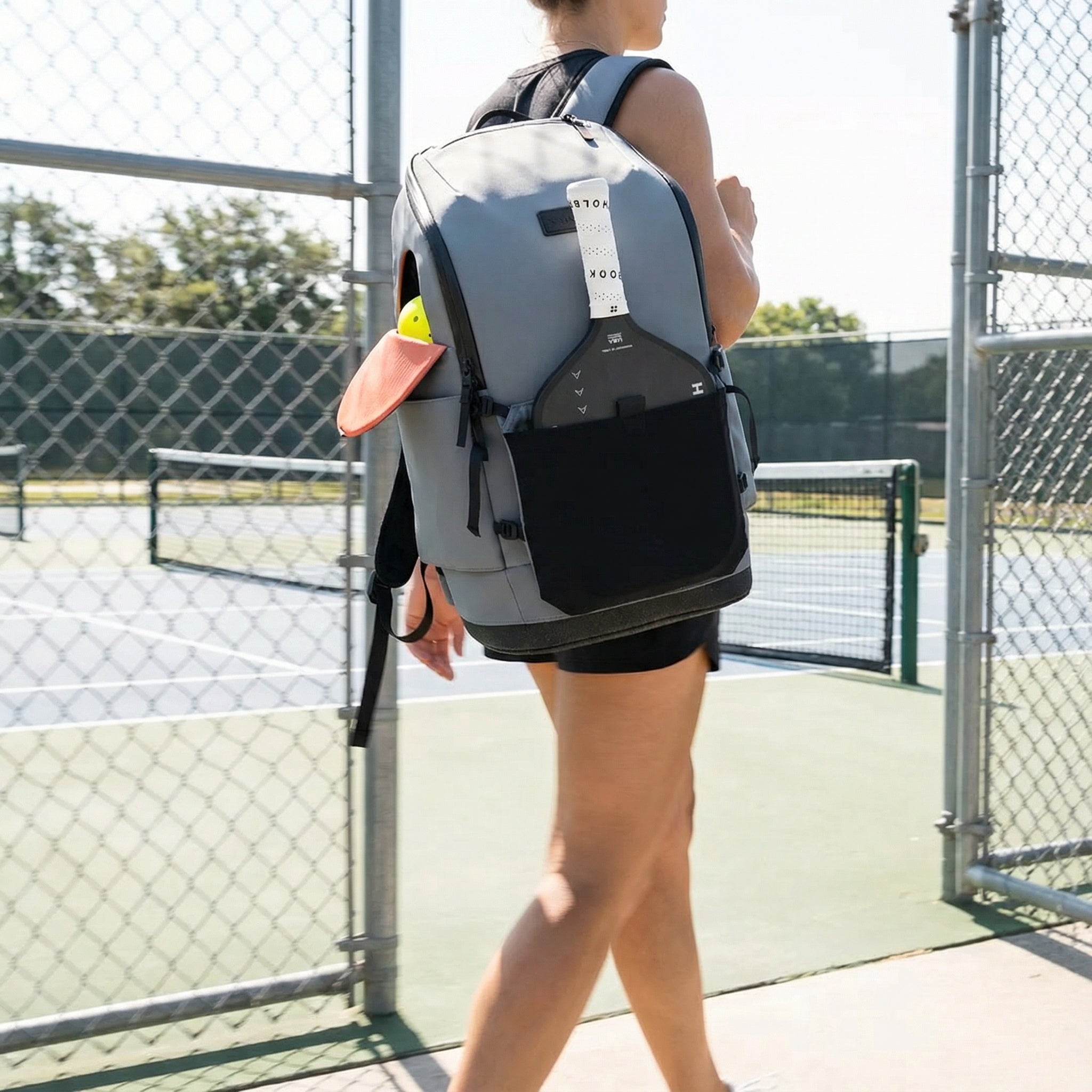
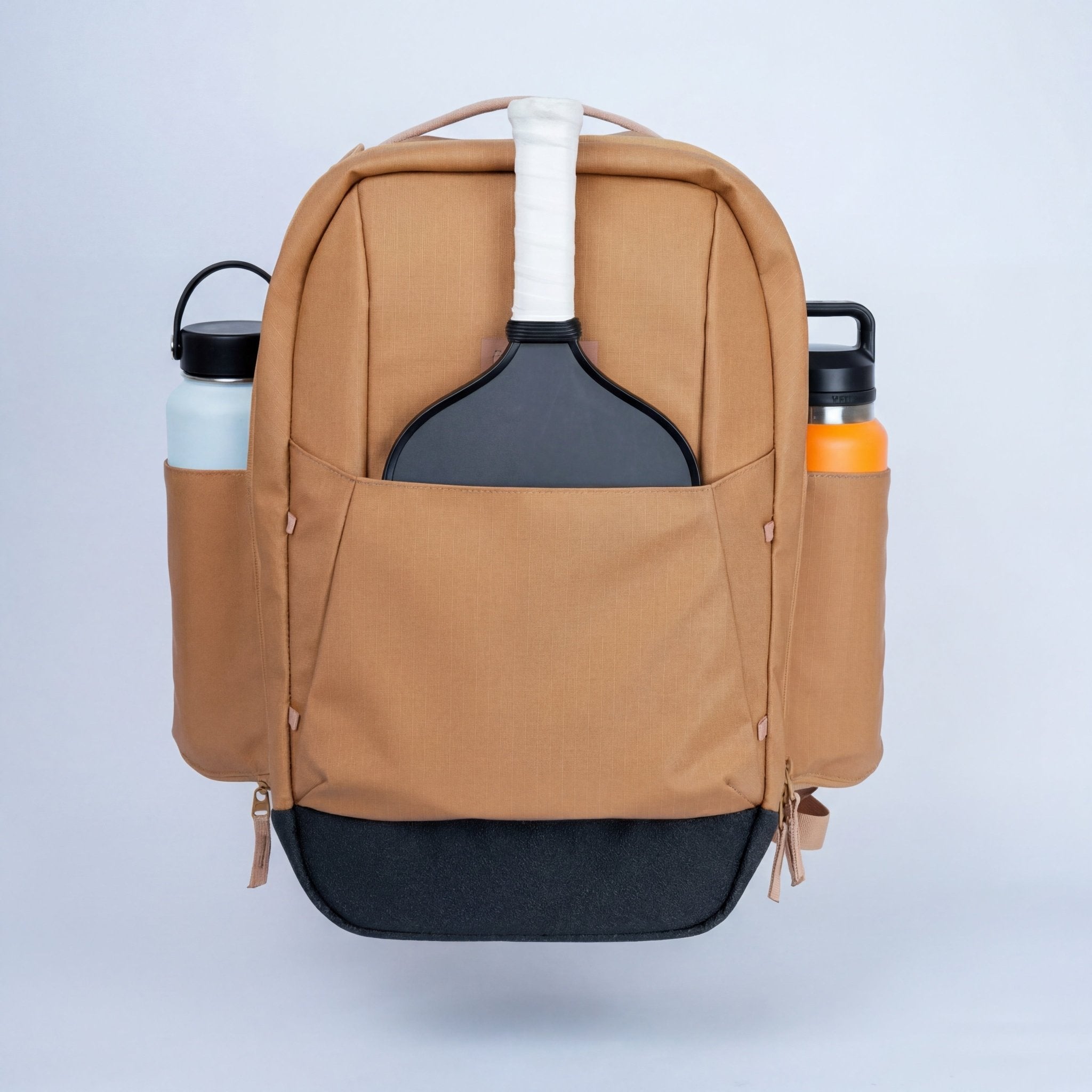
One gear consideration for players going gym-to-court regularly: if you're hitting the gym for the off-court session and then heading to courts the same day (which works well for the Week 5–8 schedule), you want one bag that doesn't require a full repack. The Court Ranger V2 has a separate shoe compartment and paddle sleeve that handles that gym-bag-to-court-bag transition without digging through everything. Small thing, but it removes one friction point from a training schedule where compliance matters.
Our Pick: Franklin X-40 Outdoor Pickleball (Training Pack)
The standard for drill use — holds up to repeated basket feeds without going dead after 2 sessions.
FAQ: Pickleball Fitness for Beginners
What's a good pickleball workout routine for beginners?
A structured 3×/week approach works best for the first 4 weeks: split step timing drills, lateral shuffle, and dink continuity rallies. No full match play in weeks 1–2. By week 5, increase to 4 sessions and add 30/30 burst intervals (30 seconds hard play, 30 rest) to build match-pace conditioning. Specific rep counts and progression benchmarks matter more than session length.
How long should a pickleball practice session be?
Weeks 1–4: 30–40 minutes. Weeks 5–8: 45–60 minutes. Weeks 9–12: 60+ minutes with match play. Shorter structured sessions outperform longer unstructured open play at the beginner stage — 40 focused minutes of footwork and dinking drills builds more transferable skill than 90 minutes of casual games.
Can you get fit from pickleball alone?
Partially. Pickleball builds solid cardiovascular base and lateral agility, but it doesn't build the specific eccentric leg strength and hip stability that prevent the knee and ankle issues common in recreational players. Adding one off-court session per week (resistance bands, calf work, single-leg balance) is the difference between "fit from playing" and "fit enough to play better and avoid injury."
What exercises improve pickleball performance?
Four specific to pickleball: (1) lateral band walks for kitchen stability, (2) single-leg balance for split-step control, (3) calf raises for split-step explosive power, (4) thoracic rotation stretches for paddle reach. These four plus the on-court footwork drills cover the physical demands of pickleball better than generic gym programs.
If you're building a real training schedule and going gym-to-court regularly, the Court Ranger V2 handles the transition without a full repack. $195, built with 500+ players for exactly this kind of regular-practice lifestyle.

Leave a comment
This site is protected by hCaptcha and the hCaptcha Privacy Policy and Terms of Service apply.