

Disclosure: This post contains affiliate links to Pickleball Central. If you buy through our links, FORWRD earns a small commission at no extra cost to you. We only link to products we'd recommend regardless. Last Updated: September 2026
The TITAN ACE costs less than its own sibling. That's the headline nobody covers properly — the ACE ($2,099) is $100 cheaper than the TITAN ONE ($2,199), yet it's lighter, holds more balls, and has a removable battery. The natural question is: why would anyone buy the ONE? After testing the ONE ourselves and digging deep into how these two machines differ, we've got a clear answer for you — and it's more specific than "it depends."
Quick Verdict
Pros:
- 39 lbs — about 9 lbs lighter than the TITAN ONE, meaningfully easier to load into a sedan
- 110-ball removable hopper holds 25 more balls than the ONE's base capacity
- Removable 6AH battery charges off the machine — no outlet needed on court
- App-driven: full shot customization, 12 pre-programmed drills, Simulate preview feature
- $100 less than TITAN ONE at $2,099 — the better value play for most solo players
- No setup required — comes pre-assembled out of the box
Cons:
- 2–3 hour battery life falls well short of the Lobster Champion (6+ hours)
- 110 balls goes fast — you'll pick up more often than with Lobster or Erne
- Removable hopper spills if tipped; the ONE's zipper lid prevents that
- App takes some learning — less intuitive than the Erne's interface
Price: $2,099 (on sale from $2,349 MSRP) | Who it's for: Solo players drilling 3+ times per week who drive a sedan and want the most portable app-driven machine under $2,200 | Who should skip it: Coaches running group sessions who need 135+ ball capacity or all-day battery life
Check Current Price at Pickleball Central →
Specs at a Glance
| Spec | TITAN ACE |
|---|---|
| Price | $2,099 (sale; MSRP $2,349) |
| Ball Speed | 10–75 mph |
| Hopper Capacity | 110 balls (removable hopper) |
| Oscillation | Internal oscillation, 20 direction settings |
| Battery | 6AH removable lithium-ion (~2–3 hours wireless) |
| Weight | 39 lbs |
| Dimensions | 30"H × 15"W × 18"L |
| Max Trajectory | 60 degrees |
| Drills | 12 pre-programmed + fully customizable sequences via app |
| Control | Titan Drills App (iOS + Android) + optional remote |
| Setup | None — fully pre-assembled |
| Warranty | 2 years (machine) / 6 months (battery) |
| 2026 Update | Rapid Fire Mode (April 2026) |
Who Actually Needs a Ball Machine
Before we get into ACE specifics, let's be direct: a ball machine makes you meaningfully better only if you use it for deliberate practice — drilling specific shots repeatedly, not just feeding yourself easy put-aways. If you're a 3.0 player whose drop shot falls apart under pressure, or a 4.0 player whose backhand drive training is limited by partner availability, a machine solves a real problem. If you mostly want something to warm up with before league nights, you'd get better ROI from a lesson series.
At $2,099, the ACE is firmly in the "serious training investment" tier. Justify it if you drill 3+ times per week, coach, or run a club. For occasional rec players, the math doesn't close.
Why Trust This Review
FORWRD tested the TITAN ONE extensively earlier this year — you can read our full TITAN ONE review here. That hands-on experience with Titan's identical internal mechanics — the same motor, the same oscillation system, the same app — gives us a grounded baseline for evaluating the ACE's form-factor differences. We also cross-referenced the ACE against detailed user reports from players who've drilled with both machines over extended periods. Where we haven't personally tested the ACE, we say so.
ACE vs ONE: The Real Difference Is the Form Factor, Not the Motor
Titan is upfront about this: the ACE and ONE share virtually identical internal mechanics. Same motor, same oscillation system, same app, same 12-drill library. The $100 price gap and the weight difference are entirely about how the hopper is designed and how the machine stores.
The ONE uses an integrated zipper-lid hopper. You load balls, zip it closed, and the machine won't spill even if you tip it sideways pulling it out of your trunk. The tradeoff: base capacity of 85 balls (though you can extend to 240 with an add-on hopper) and a 48 lb total weight that makes it a two-handed lift into any car.
The ACE uses a removable hopper that pops off the machine body. This does two useful things: it makes the machine itself much more compact for trunk storage, and it gets the total weight down to 39 lbs — a real difference when you're hauling gear alone. The tradeoff is that a loaded, unlatched hopper can spill. Some users report losing a couple of balls when starting the machine if they haven't seated the hopper correctly. It's a minor annoyance, not a dealbreaker, but the ONE doesn't have that issue.
The other ACE advantage: its removable battery pops out like a drill battery, so you can charge it at a wall outlet without lugging the whole machine. The ONE has the same battery setup. Both charge easily.
So who should buy which? If you park a sedan, live in an apartment with limited storage, and drill solo, the ACE's compact footprint and 9 lb weight advantage are meaningful. If you run coaching sessions, drive an SUV, and want to expand to 240-ball capacity without an add-on, the ONE makes more sense — even though it costs $100 more.
Buy the TITAN ACE at Pickleball Central →
Performance Breakdown
Speed and Shot Variety
Ten to 75 mph covers everything you'll ever need in a practice session. The low end (10–25 mph) is useful for working on drop shots and dinking mechanics — you're focused on form, not reaction time. The 40–55 mph zone is where most rec drilling happens, simulating realistic drive speeds from the transition zone. Above 60 mph? Mostly useless for game prep unless you're training for speed-up situations at the NVZ. At 70+ it becomes almost impossible to respond intentionally.
Spin is available — both topspin and backspin — though Titan's spin delivery isn't quite as varied as the Erne's sidespin capability. For most rec and tournament players working on third-shot drops, reset technique, and net approaches, the ACE's spin options are more than sufficient.
Oscillation and Court Coverage
Twenty direction settings handle the full width of the court. In testing comparisons, the ACE covers everything from wide forehand to wide backhand without requiring manual repositioning — which is the whole point of internal oscillation. The granularity between positions is coarser than the Erne's 3–77 horizontal angle range, but scrolling between the ACE's 20 settings is actually faster during a drill session. Pick a setting, lock it in, drill. Less precision, more usability.
The simulate feature — a genuinely useful differentiator — lets you preview the ball placement and trajectory of any customized shot on-screen before you start. If you're building a multi-shot sequence and want to verify ball landing zones, you don't have to burn real balls to test it. The Erne doesn't offer this. It sounds like a small thing until you've spent five minutes debugging why a drill sequence is throwing balls out of bounds.
App and Drill Experience
The Titan Drills App is the ACE's biggest advantage over hardware-controlled machines — and its biggest point of friction. Every time Titan releases a software update, your machine updates too. In April 2026, that meant Rapid Fire Mode arrived for free on machines already in customers' homes (more on this below). That's a real benefit of app-driven design over hardware dials.
But the app itself takes time to figure out. To access advanced customization within a drill, you tap and hold on the drill number circle — a gesture that isn't obvious. The Megadrill feature (stacking multiple drills to run in sequence) repeats each drill three times before moving to the next, which some players find annoying. And you can't currently build custom sequences from scratch; you customize within existing drill structures. The Erne's app handles this more intuitively.
The 12 pre-programmed drills include: Deep Serve (BH + FH), BH Sequence, FH Sequence, Narrow Backspin, Wide Backspin, Narrow Topspin, Wide Topspin, Reset, Volley, and more. The backspin and topspin drills are particularly useful for developing feel on short balls — shots that many players don't practice enough because partners can't reliably throw them.
Accuracy
Shot-to-shot consistency is the ACE's most honest weakness. Ball-to-ball variation is noticeable — particularly on the Deep Serve drills, where roughly 25–30% of balls can land out of bounds. This isn't unique to Titan; most ball machines in this class have accuracy variance. But it's worth flagging, because if you're expecting every drill repetition to land in the same spot, you'll be frustrated. Use the variance as a feature — reading different ball trajectories is game-realistic — but understand the machine isn't a precision pitching machine.
Portability and Storage
This is the ACE's strongest card. At 39 lbs, it's not light — but it's meaningfully easier to manage than the ONE (48 lbs) or the Erne (50 lbs). The compact rectangular profile fits cleanly into most car trunks without squishing or angling. The extendable trolley handle and large wheels make navigating from parking lot to court straightforward, though the wheels feel slightly underdone on inclines when fully loaded with 110 balls.
With the hopper detached for storage, the machine itself takes up significantly less closet or gear-room space. If you're storing equipment in an apartment or shared gym space, this matters. The ONE's all-in-one design is bulkier even when empty.
Battery Life — The Honest Con
Two to three hours is the real number, depending on how hard you run the machine. Titan claims two hours at high speed; in moderate-use sessions (40–55 mph, standard oscillation), users consistently report 2.5–3 hours. The removable battery is a smart design — you can buy a spare and swap mid-session rather than ending practice early. But if you're running a three-hour club coaching session and can't get to an outlet, you're planning around a constraint that the Lobster Champion simply doesn't have.
The Erne gets 6+ hours on its battery. The Lobster Champion runs all day on its included power pack. For solo players drilling one session at a time, the ACE's battery is fine. For coaches, it's a real limitation.
Ball Capacity — Pick Up More, Drill Less
One hundred ten balls sounds like a lot. It goes faster than you think. A drill sequence at standard feed rate burns through 110 balls in about 8–12 minutes, depending on the drill. Then you pick up, reload, and restart. For solo drilling, this rhythm is acceptable — it's forced hydration breaks if nothing else. But compare it to the Lobster Champion's 135 or the Erne's 150, and the difference in continuous drill time is real. The ONE's base 85-ball capacity is actually worse, though you can extend it to 240. The ACE's 110 is fixed — there's no hopper extension option currently available.
April 2026 Update: Rapid Fire Mode
In April 2026, Titan pushed a software update introducing Rapid Fire Mode — a new feed rate setting that shortens the interval between balls for faster-paced reaction training. Unlike most hardware machine upgrades (which require buying new equipment), this arrived as a free app update on every existing ACE and ONE. Players working on transition-zone speed and NVZ volley reflexes have found it immediately useful.
This is the practical payoff of app-driven design: your $2,099 machine in September 2026 is functionally better than it was at launch, and it will keep improving. For buyers comparing app-driven machines (Titan, Erne) vs. hardware-only machines (Lobster), this is a meaningful differentiator.
TITAN ACE vs TITAN ONE vs Lobster Pickle Champion: The Real Comparison
| Feature | TITAN ACE | TITAN ONE | Lobster Champion |
|---|---|---|---|
| Price | $2,099 | $2,199 | $2,099 |
| Weight | 39 lbs | 48 lbs | ~50 lbs |
| Ball Capacity | 110 balls | 85 balls (ext. to 240) | 135 balls |
| Battery | 2–3 hours | ~3 hours | 6+ hours |
| Hopper Type | Removable (spill risk) | Integrated zipper | Fixed top-loading |
| App Control | Yes (Titan Drills) | Yes (Titan Drills) | No (hardware) |
| Rapid Fire Mode | Yes (Apr 2026) | Yes (Apr 2026) | No |
| Best For | Solo / sedan drivers | Coaches / clubs | All-day sessions |
If you're at the $2,099 price point and drilling solo, the ACE beats the Lobster Champion on portability and app customization. The Lobster wins on battery and capacity. The ONE wins if you need expandability. For full context on the Lobster side of this comparison, read our Lobster Pickle Champion review, and check our full ball machine roundup for the broader market picture.
Check TITAN ACE Price at Pickleball Central →
Who Should Buy the TITAN ACE
City-dweller with a sedan and limited storage. The ACE's compact footprint and 39 lb weight mean it fits in a regular car trunk and stores in a closet without dominating the space. The ONE doesn't fit as cleanly; the Lobster doesn't either.
Solo players who drill 3+ times per week. One hundred ten balls and a 2–3 hour battery are genuinely sufficient for focused solo sessions. You'll pick up more often than with a Lobster, but the shot customization depth makes each ball count more.
Tech-forward players who want a machine that improves over time. Rapid Fire Mode in April 2026 arrived free on existing ACE machines. The Lobster Champion can't do that. If future-proofed training tools matter to you, Titan's app-first approach is the right call.
Players who hate hauling machines to outlets. The removable battery charges at any wall plug — you don't drag the whole machine to a power source. One spare battery and you can do back-to-back sessions without hunting for an extension cord.
Who Should Skip the TITAN ACE
Coaches running multi-person sessions. One hundred ten balls burns out too fast when you're feeding multiple players. The ONE (with a 240-ball hopper extension) or the Lobster Champion's 135-ball capacity is more appropriate here. Also, three hours of battery life under heavy use doesn't cover a full coaching day.
Players who prioritize battery life above everything else. If you're planning three-hour outdoor sessions in a park with no outlet access and don't want to manage spare batteries, the Lobster Champion's 6+ hour runtime is the right call.
Budget-constrained buyers who just want something to warm up with. At $2,099, this isn't a casual purchase. If you're a 2.5–3.0 player drilling once a week, there are better uses of this money. The Pickleball Tutor Plus Ultra at $1,799 is more than enough machine for most recreational players.
Complete Your Setup
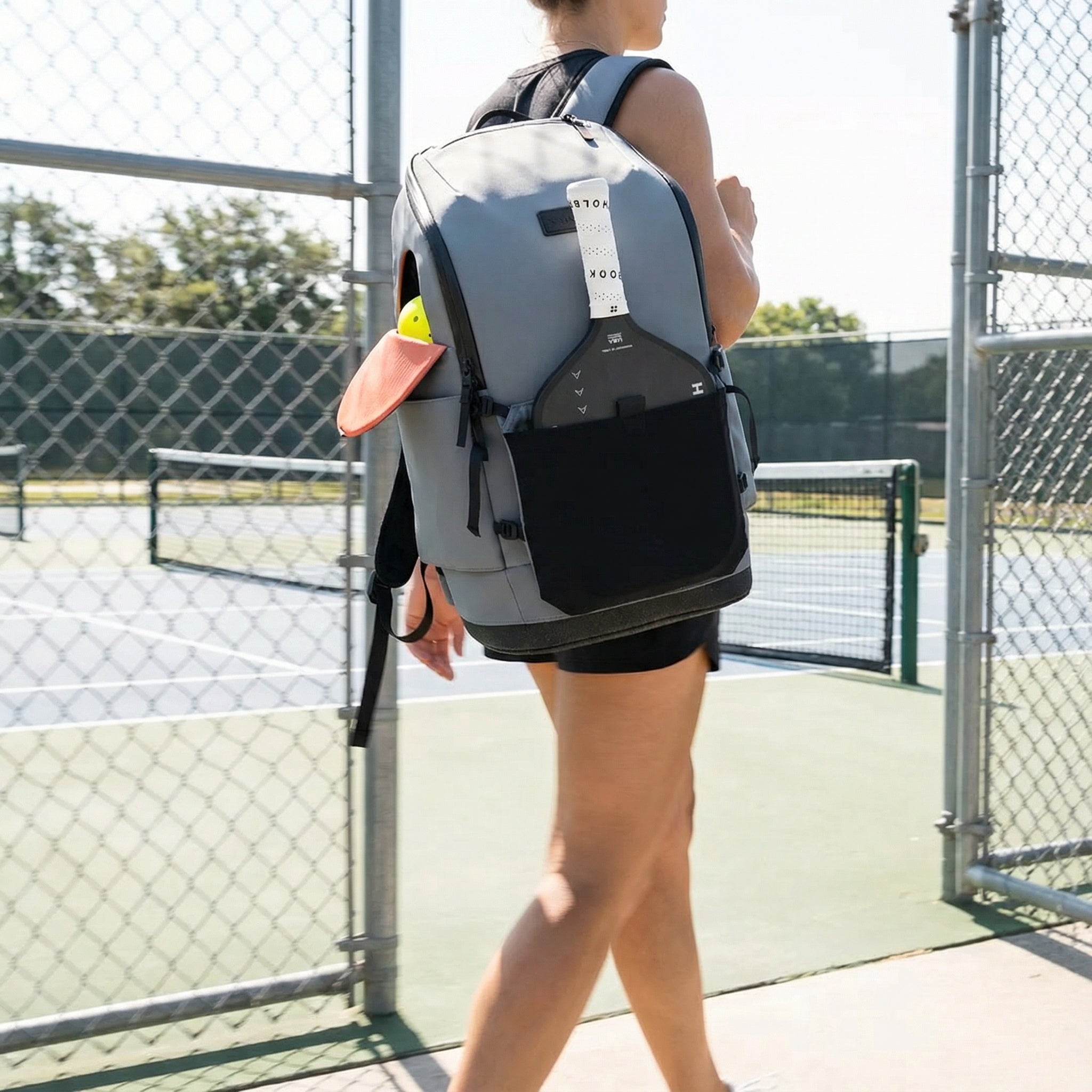
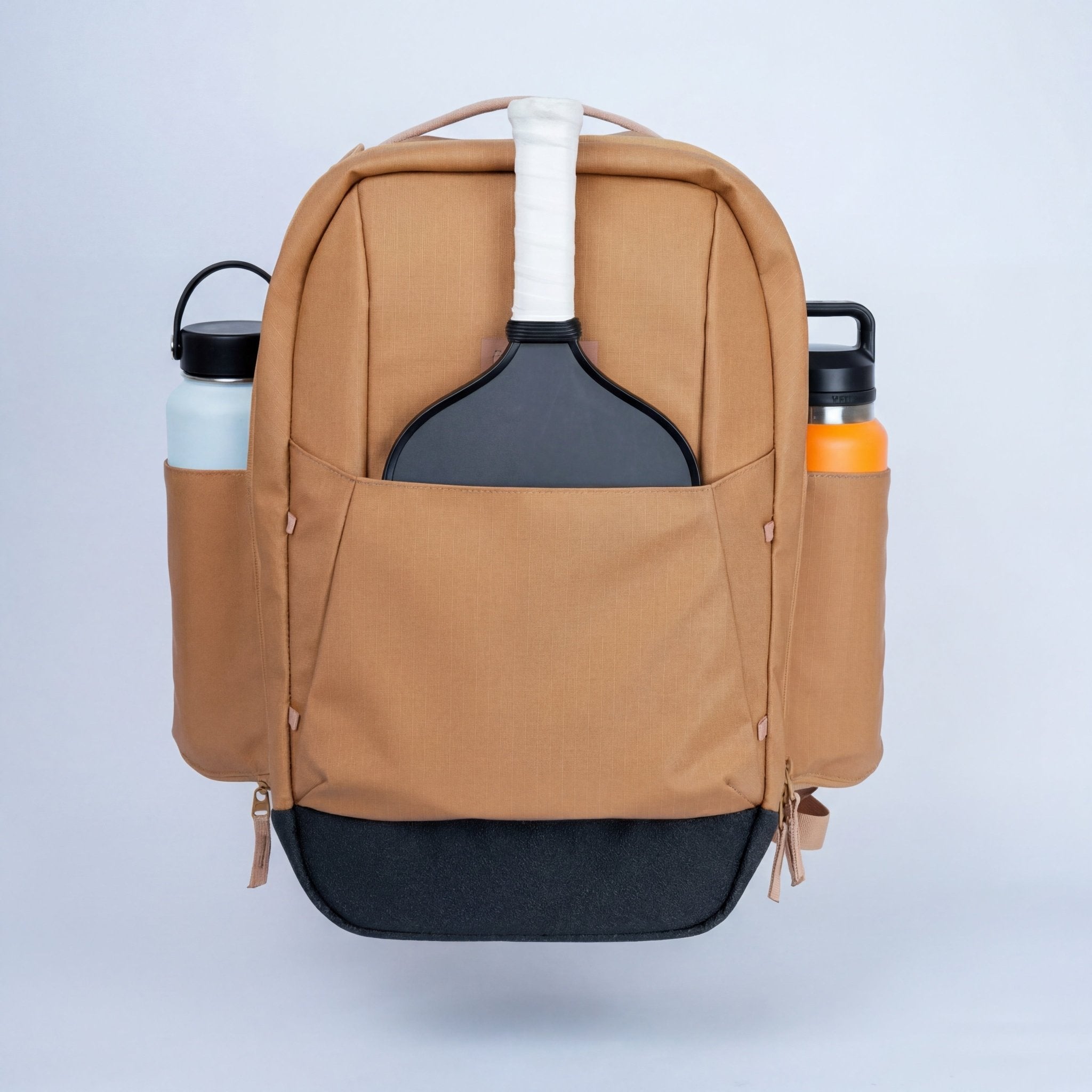
A ball machine session generates gear — balls everywhere, extra paddles, a water bottle, a towel, and shoes you need to keep separate. The FORWRD Court Ranger V2 has a dedicated compartment for every piece of it: a 16" laptop sleeve that doubles as a paddle organizer, a ventilated shoe pocket, and a mesh ball pocket that holds a full can of outdoor balls. At $195, it's built for players who take the training side of pickleball seriously.

Pricing and Availability
The TITAN ACE is currently $2,099 at Pickleball Central — down from a $2,349 MSRP. That's a meaningful discount on a machine Titan officially lists at $2,199 on their own site. Stock fluctuates; the machine sold out briefly earlier this year before restocking in July 2026. If you're serious about buying, don't wait on a "maybe it'll drop more" calculation. Titan doesn't regularly discount further.
Buy the TITAN ACE at Pickleball Central — $2,099 →
For comparison: TITAN ONE ($2,199) | Lobster Pickle Champion ($2,099)
Frequently Asked Questions
Is the TITAN ACE worth it for a 3.5–4.0 player?
Yes — if you're drilling consistently. Players in the 3.5–4.0 range typically have specific technical weaknesses (third-shot drop, backhand drive, reset mechanics) that benefit enormously from repeatable machine-fed practice. The ACE's customizable drill sequences let you isolate and repeat those exact shots. If you're drilling twice a week or more, the investment closes quickly. If you're drilling less than that, start with a lesson series first.
How does the TITAN ACE differ from the TITAN ONE?
Same internal mechanics — motor, oscillation, app, drills — different form factor. The ACE has a removable hopper (110 balls, compact storage), weighs 39 lbs, and costs $100 less at $2,099. The ONE has an integrated zipper hopper (85 balls base, expandable to 240), weighs 48 lbs, and costs $2,199. Buy the ACE if you drive a sedan and drill solo. Buy the ONE if you coach groups or need expandable capacity.
What's included with the TITAN ACE?
The ACE ships fully pre-assembled — no setup required out of the box. It includes the machine, the removable hopper, a 6AH rechargeable lithium-ion battery, and a charger. The remote control is sold separately. An AC power module (for all-day court use with an outlet) is also available separately, as is a second battery if you need extended runtime without stopping to charge.
What is Rapid Fire Mode on the TITAN ACE?
Titan pushed Rapid Fire Mode as a free app update in April 2026. It significantly shortens the interval between balls, creating a faster-paced feed rate for reaction training — particularly useful for NVZ volley speed and transition-zone fast-hand drills. Existing ACE and ONE owners received it automatically via app update; no hardware purchase required. It's one of the clearest examples of why app-driven machines have a long-term advantage over hardware-only designs.
TITAN ACE vs Lobster Pickle Champion — which is better?
Different tools for different players. The ACE wins on portability (39 lbs vs ~50 lbs), app customization, and Rapid Fire Mode. The Lobster Champion wins on battery life (6+ hours vs 2–3 hours) and ball capacity (135 vs 110). Both are $2,099. If you drive a sedan, drill solo, and care about software-driven updates, buy the ACE. If you run long sessions or coach and need all-day battery without managing spares, buy the Lobster. Read our full Lobster Champion review for the detailed breakdown.
Final Verdict
The TITAN ACE is the right ball machine for solo players who want serious app-driven training in the most portable package available under $2,200. It's lighter than the competition, cheaper than its own sibling, and it gets better every time Titan pushes a software update — Rapid Fire Mode being the latest example. The battery life and ball capacity are genuine constraints, and the app has a learning curve. But for a city-based 3.5–4.5 player drilling consistently on their own, the ACE delivers.
Coaches and club directors should look at the TITAN ONE. Players who want all-day battery should look at the Lobster Champion. Everyone else? The ACE at $2,099 is the call.

Leave a comment
This site is protected by hCaptcha and the hCaptcha Privacy Policy and Terms of Service apply.