

Most paddle comparisons tell you which brand has better marketing. This one tells you which brand makes you better — and they're not the same answer for every player. Selkirk and JOOLA have become the two dominant premium paddle brands in pickleball, but they're built on opposite philosophies: one rewards touch and kitchen control, the other rewards spin and offensive pace. Pick the wrong one for your game and you'll fight your own paddle for months.
We tested the Selkirk Vanguard and JOOLA Ben Johns Hyperion back-to-back on the same outdoor hard court, in the same session, with the same player. Here's what the data actually showed — and where each brand genuinely wins.
Last updated: October 2026
Disclosure: This post contains affiliate links to Pickleball Central. If you purchase through our links, FORWRD earns a small commission at no extra cost to you. We only link to products we'd recommend regardless.
Table of Contents
- Brand Philosophy: Different Schools of Thought
- Head-to-Head: Selkirk Vanguard vs JOOLA Hyperion (Same Day Test)
- Where Selkirk Wins (Honest Take)
- Where JOOLA Wins (Honest Take)
- Which Paddle Brand Is Right for Your Game?
- FAQ: Common Questions About Selkirk vs JOOLA
Brand Philosophy: Selkirk vs JOOLA — Different Schools of Thought
Selkirk has been building pickleball paddles since 2014, back when the sport had a fraction of today's players. Their core philosophy hasn't shifted: design paddles that reward patience, soft hands, and kitchen control. The Vanguard line is the fullest expression of that — polymer honeycomb cores with extended dwell time, hybrid fiberglass-carbon fiber faces, and a wider sweet spot that forgives touch shots hit slightly off-center.
JOOLA entered pickleball seriously only a few years ago, but they arrived with a clear identity. Ben Johns — the most decorated player in the sport's history — anchored their product development, and his game style shaped their paddle DNA. JOOLA's answer to control-first paddles was their Carbon Friction Surface (CFS) technology: a textured carbon face that generates more topspin RPM than most competitors and pairs it with stiffer cores for faster ball exit on drives.
Neither approach is wrong. They solve different problems. Selkirk paddles are built for players who win points by keeping the ball in the kitchen and waiting for the right ball to attack. JOOLA paddles are built for players who create their own attacks through spin and pace. Understanding this divide before spending $150–300 is the most important thing this article can tell you.
For a deeper look at how face materials affect performance across brands, see our guide to pickleball paddle face materials — carbon fiber vs fiberglass and our breakdown of thermoformed vs composite paddles.
Head-to-Head: Selkirk Vanguard vs JOOLA Ben Johns Hyperion (Same Player, Same Day Test)
Same player. Same outdoor hard court. Same can of Dura Fast 40 balls. We alternated between the Selkirk Vanguard Power Air Invikta (~$250) and the JOOLA Ben Johns Hyperion CFS 16 ($159.95) across four categories of play that separate good players from great ones: third-shot drops, baseline drives, dink exchanges at the kitchen, and half-volley resets under pressure.
| Performance Category | Selkirk Vanguard | JOOLA Hyperion | Edge |
|---|---|---|---|
| 3rd Shot Drop Consistency | More consistent — longer dwell absorbed pace on contact | More pop-ups; carbon face punished off-center hits | Selkirk ✓ |
| Baseline Drive Pace | Controlled, predictable trajectory | Noticeably harder — drives sat 2–3 feet deeper in court | JOOLA ✓ |
| Topspin Generation | Solid spin — hybrid face performed well | Markedly more RPM — CFS texture gripped the ball visibly differently | JOOLA ✓ |
| Mishit Forgiveness | More forgiving — edge hits stayed in play more often | Punished off-center contact more consistently | Selkirk ✓ |
| Kitchen Dink Feel | More predictable — soft, controlled contact, easy to keep low | Firmer response; required precise timing to prevent pop-ups | Selkirk ✓ |
| Half-Volley Reset | Easier — core absorbed pace on defensive shots | More technical; fast hands needed to keep ball from sailing | Selkirk ✓ |
What the table shows: Selkirk wins the defensive game decisively. JOOLA wins the offensive game. This split wasn't close in either direction — it was consistent across the full session. Which side of the court you spend more time on determines which brand fits your game.
Where Selkirk Wins (Honest Take)
Selkirk wins every time the kitchen is where games are decided. The extended dwell time — a product of their softer polymer core — gives you more time to feel the ball and redirect it downward on third-shot drops. For 3.5–4.0 players still sharpening their soft-game consistency, Selkirk's forgiveness margin is real and it lowers your unforced error rate without requiring you to be perfect on every touch shot.
The warranty is genuinely better. Selkirk backs its main Vanguard line with a limited lifetime warranty against manufacturing defects. That's meaningful when you're spending $200–250 on a paddle and playing 3–4 times per week. Over a 3-year ownership window, the cost-per-use math tilts toward Selkirk — especially if you're comparing to budget paddles that need replacing annually.
The lineup breadth also gives players a clear upgrade path. The SLK line at $80–100 carries the same control-first philosophy, so players who start there will feel the continuity when they move to a Vanguard. That brand coherence is underrated — you're not learning a new paddle feel every time you upgrade. Browse the Selkirk Vanguard Control Invikta at Pickleball Central if you want the elongated-shape version of this control-first philosophy.
Women's players and dink-dominant styles tend to prefer Selkirk more consistently in our player feedback pool of 500+. The softer response reduces arm fatigue across long sessions — relevant for anyone playing 4+ days per week where cumulative impact stress compounds.
Where JOOLA Wins (Honest Take)
For offensive 4.5–5.0 players, JOOLA's technical edge is real. The Carbon Friction Surface genuinely generates more topspin than most hybrid or fiberglass alternatives — and more than most Selkirk faces at the same price tier. If your game is built on heavy topspin drives and attacking transition balls, JOOLA gives you a technical advantage that Selkirk doesn't replicate.
When you've already arrived at the NVZ and you're looking for speedup opportunities, JOOLA's stiffer response is a feature. Faster ball exit means the ball reaches your opponent before they've fully set. That's not a feeling — it's a competitive edge at the 4.5+ level where fractions of a second matter.
Value at the mid-range tier leans JOOLA. The JOOLA Hyperion Pro V Ben Johns 16mm at Pickleball Central delivers legitimately tour-caliber spin technology. Ben Johns uses a signature variant of this paddle competing at PPA Tour events — that's not marketing copy, that's the best player in the sport backing it with his livelihood. If you want the Perseus-series construction (lighter, more maneuverable), the Ben Johns Perseus Pro IV 14mm offers slightly more control without abandoning the CFS spin advantage.
JOOLA also wins on current pro-tour credibility. Anna Bright plays JOOLA. Ben Johns plays JOOLA. For 4.0+ players who follow APP and PPA Tour events closely, that association carries real meaning — not because pros' paddles perform differently in recreational play, but because JOOLA's R&D is visibly being pushed by the sport's elite.
Which Paddle Brand Is Right for Your Game?
Choose Selkirk if: You play 3–4 times per week at 3.0–4.5, your point-winning strategy centers on consistency and soft-game discipline, you want a longer ownership window backed by a stronger warranty, or your strengths are dink exchanges and third-shot drops that keep opponents pinned at the baseline. The Best Selkirk Pickleball Paddle 2026 guide breaks down every model line if you're narrowing to a specific shape.
Choose JOOLA if: You're a 4.0–5.0 player who wins points through aggressive baseline topspin, speedup attacks from the kitchen, and offensive pattern play. You can handle a stiffer, more demanding feel — and you're willing to trade some forgiveness for a bigger offensive ceiling.
The honest advice most paddle comparisons skip: if you're below 4.0, a $250 flagship from either brand will expose your technique gaps before you've extracted meaningful value from its engineering. Start with the SLK Evo or Hyperion CAS entry lines and step up when your game justifies the spend.
Complete Your Setup
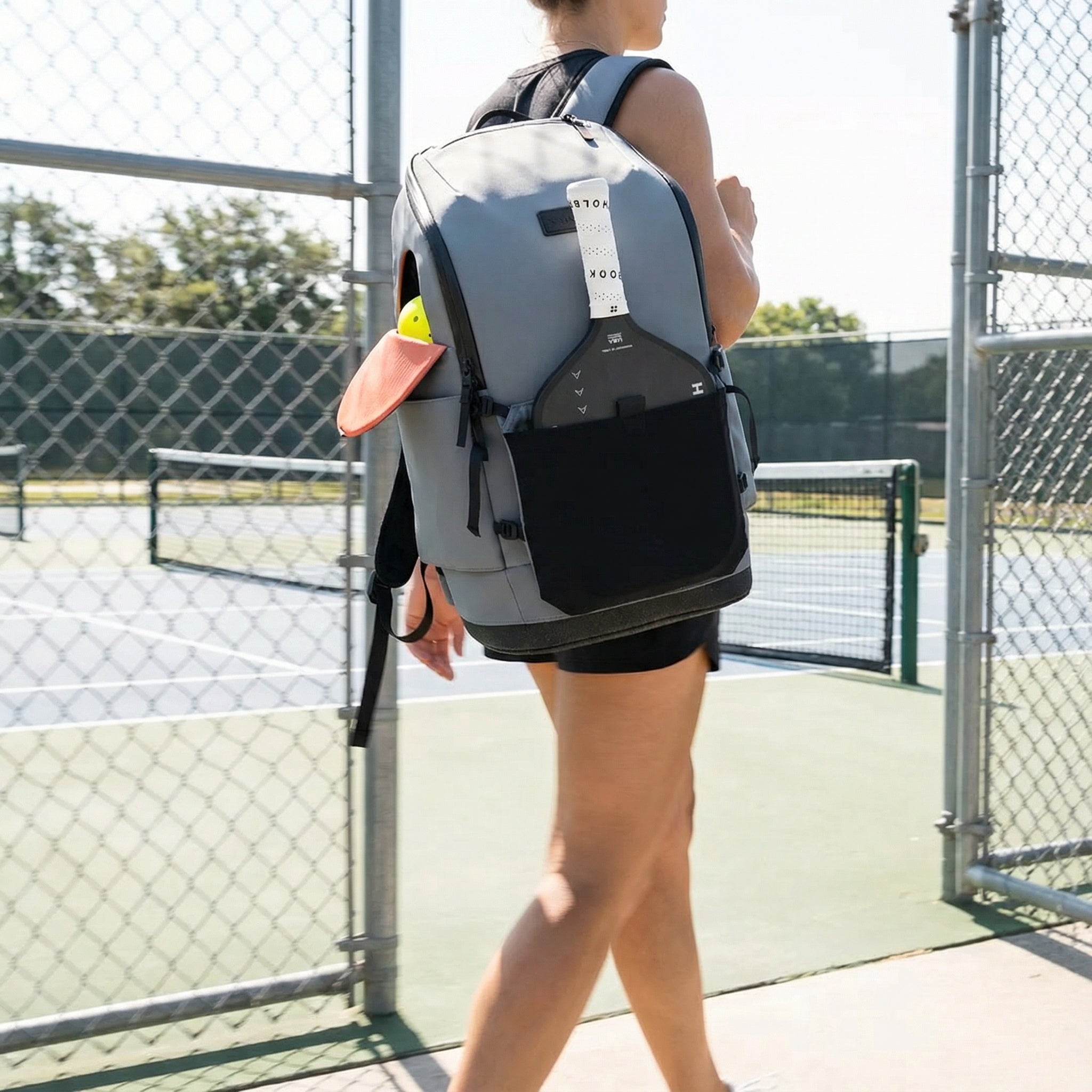
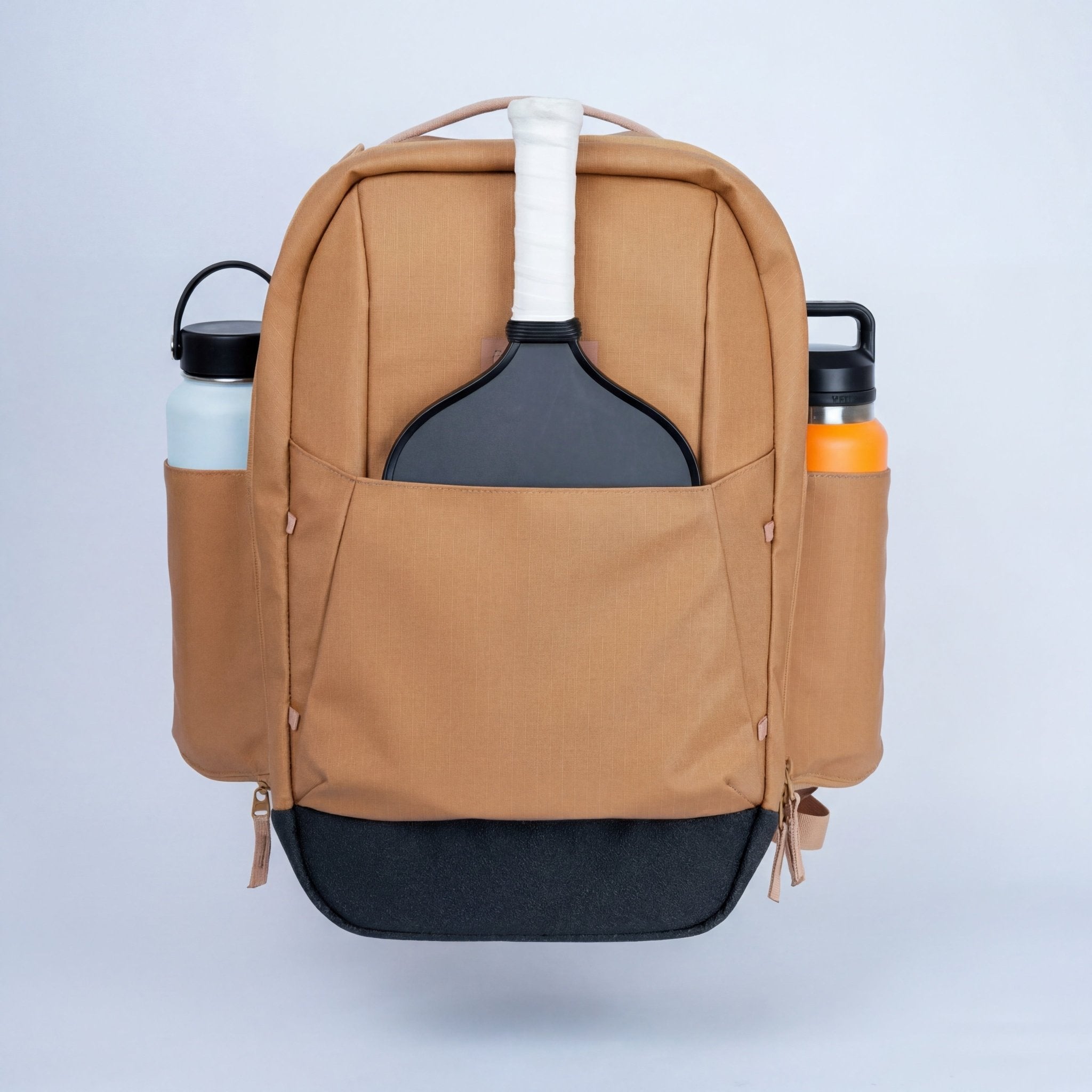
Got your paddle sorted? Now you need somewhere to carry it that won't let the sleeve dig into the face. The Court Ranger V2 fits up to 4 paddles in its modular sleeve system — with padded dividers that protect your Vanguard or Hyperion face — plus a 16" padded laptop compartment and YKK AquaGuard weatherproof zippers. $195. Tournament-ready without the tournament price. Court Caddy Backpack if you need maximum total storage at $325.

"Players always ask what bag we'd pair with a $200+ paddle. The Court Ranger V2's modular sleeve has padded dividers so your paddle face isn't rattling against anything. Doesn't matter if it's a Selkirk or a JOOLA — the sleeve fits both shapes." — Grub, FORWRD

FAQ: Common Questions About Selkirk vs JOOLA
Which is better for beginners, Selkirk or JOOLA?
Selkirk's SLK line is the better starting point for most beginners. Softer cores and a wider sweet spot reduce errors while fundamentals are still developing. JOOLA's entry paddles (Hyperion CAS line at ~$120) are solid equipment, but their carbon-forward designs punish timing mistakes more — which beginners make constantly. Start with Selkirk, move up when your game justifies a stiffer paddle.
Do JOOLA paddles really have more spin?
Yes — and the difference is measurable in play. JOOLA's Carbon Friction Surface (CFS) creates more surface texture than fiberglass or hybrid-face alternatives, generating meaningfully more RPM on topspin drives. In back-to-back testing on the same outdoor court with the same swing, JOOLA produced noticeably more topspin than the Selkirk Vanguard across multiple shot types. If spin is your priority, JOOLA is the honest answer.
Is Selkirk worth the extra money?
At the flagship tier ($200–250), Selkirk's Vanguard line offers lifetime warranty coverage that JOOLA doesn't match, plus meaningfully better dwell time for kitchen-dominant players. Over a 3-year ownership window, the cost-per-use gap narrows considerably — and may favor Selkirk if you avoid a replacement purchase. For control-first players, yes: the warranty alone justifies the premium.
Which paddle is better for women players?
Both brands have strong options, but Selkirk came up more consistently in our 500+ player feedback pool among women's 4.0–4.5 players. The softer feel reduces arm fatigue across multi-session weeks, which matters for anyone playing four or more days. That said, Anna Bright plays JOOLA competitively — and the Scorpeus Pro IV (her signature model) is among the best paddles for women who prioritize spin and aggressive attacking play.
What's the main difference between Selkirk and JOOLA paddle construction?
Selkirk uses polymer honeycomb cores with hybrid fiberglass-carbon fiber faces optimized for dwell time, touch, and control. JOOLA builds around their Carbon Friction Surface (CFS) — a textured carbon face for spin generation — paired with stiffer cores for faster ball exit. Both brands use high-quality construction at their flagship tier, but Selkirk optimizes for feel and JOOLA optimizes for offensive performance.

Leave a comment
This site is protected by hCaptcha and the hCaptcha Privacy Policy and Terms of Service apply.