

FTC Disclosure: This post contains affiliate links to Pickleball Central. If you purchase through these links, FORWRD earns a commission at no additional cost to you. We only recommend products we've genuinely evaluated.
Last Updated: November 2026
LUZZ built two versions of the same paddle. Same dimensions. Same swing weight. Same elongated 16mm platform. The only difference is $16 and a meaningfully different set of core and surface materials — and that difference matters a lot depending on how you actually play.
After testing both the Pro4 Inferno and the Inferno Frozen back-to-back, here's the honest bottom line: the standard Inferno is an excellent all-court paddle with a punchy, crisp response. The Frozen is more controlled and connected — better for players who rely on soft game consistency over raw pop. If you're unsure which one fits your style, this review breaks it down without the marketing language.
Quick Verdict
LUZZ Pro4 Inferno ($183.20)
Pros:
- Punchy T700 carbon face with crisp pop for drives and drops
- Large sweet spot due to MPP foam core technology
- UPA-A and USAP approved for tournament play
- Strong value at $183 for the spec sheet
Cons:
- Less dwell time than Frozen — touch players may want more softness
- Grip style not specified by manufacturer
Who it's for: All-court players who want balanced power and control, beginners upgrading from a composite, intermediate 3.0–3.5 players who reset consistently but still want pop on drives.
Who should skip: Advanced 4.0+ players who rely on extreme dwell for resets and dink consistency will want the Frozen instead.
LUZZ Pro4 Inferno Frozen ($199.20)
Pros:
- EP-12 Epoxy Matte surface delivers longer dwell and better touch
- MPP-Z 3-piece core prevents crush and maintains feel over time
- TPE peripheral fill adds stability and quiets the hand shock
- All-weather performance from structural insulation tech
- Slightly more stable twist weight (6.1 vs 6.2)
Cons:
- $16 premium over standard — not transformative for everyone
- Less pop on drives if you're a baseline power player
Who it's for: Control-first players, kitchen specialists, 3.5–4.5 competitors who prioritize dink consistency and reset quality over raw firepower.
Who should skip: Power-focused players who want a lively face and fast pop — the Frozen will feel deadened to them.
Specs at a Glance
| Spec | Pro4 Inferno | Inferno Frozen |
|---|---|---|
| Price | $183.20 | $199.20 |
| Face | T700 Carbon Fiber | EP-12 Epoxy Matte |
| Core | MPP (Microporous Polymer) | MPP-Z (3-piece structure) |
| Thickness | 16mm | 16mm |
| Length × Width | 16.54" × 7.48" | 16.54" × 7.48" |
| Avg Weight | 7.93 oz (7.83–8.03 oz) | 7.94 oz (7.8–8.2 oz) |
| Handle Length | 5.52" | 5.52" (Extended) |
| Grip Circumference | 4.13" | 4.13"–4.17" |
| Swing Weight | 119 ± 3 | 119 ± 3 |
| Twist Weight | 6.2 ± 0.1 | 6.1 ± 0.1 |
| TPE Fill | No | Yes |
| All-Weather | Standard | Structural insulation tech |
| Approvals | UPA-A, USAP | UPA-A, USAP |
Why Trust This Review
FORWRD designs pickleball bags built around how players actually carry, store, and protect their paddles. We've spent hundreds of hours on-court testing paddles from LUZZ, Six Zero, Diadem, NOX, Engage, and others — both for bag-fit assessment and because understanding the gear landscape is what makes our bag recommendations credible.
For this review, we tested both Pro4 Inferno variants across indoor wood court surfaces and outdoor concrete over three weeks. We tracked reset quality, dink consistency at the kitchen, drive control from the baseline, and how the paddle held up after the kind of edge-guard scrapes that happen in hard-fought transition zone scrambles.
The LUZZ Pro4 Platform: What MPP Foam Core Actually Means
Both paddles share the same core concept: MPP (Microporous Polymer) foam technology instead of a standard polypropylene honeycomb. LUZZ's argument is that microporous foam provides better energy distribution than a hollow PP honeycomb — the micro-cell structure expands the sweet spot by softening the response across a wider area of the face.
In practice, this plays differently than a typical thermoformed carbon paddle. You don't get that hollow pop that shoots off a Nomex core. Instead, the contact is cushioned and consistent — a bit like the difference between slapping a table vs. pressing your hand into a firm pillow. Neither is better; they're different tools for different players.
The 16mm thickness does the same job it does on any control-oriented paddle: it slows the dwell cycle, adds pop-absorption, and makes the kitchen game forgiving. At 7.93 oz average weight (225g) with a 119 swing weight, both Pro4 variants sit in middleweight territory — not feathery-light, but manageable across a three-set open round-robin. Our weight guide breaks down how to choose between lightweight and middleweight paddles if you're on the fence.
LUZZ Pro4 Inferno: Performance Testing
Power and Pop Off the Face
The T700 carbon fiber face gives the standard Inferno a crisper, more energetic contact feel than the Frozen. Drives generate a satisfying pop — not the explosive liveliness of a Gearbox solid-core, but enough that you're not sacrificing pace at the baseline.
What's notable is that the pop stays consistent across the face. Off-center drives at the edges don't go dead the way they would on a standard paddle without foam core tech. Missed sweet spots stay playable. That's the MPP foam working the way it's supposed to.
Kitchen Game and Reset Quality
Resets landed cleanly. The foam core absorbs the incoming pace well enough that you're not fighting the paddle at the transition zone. Dinks stayed consistent after 45 minutes of kitchen-focused drilling — no fatigue-related wandering, which often signals when a paddle's response is too unpredictable to trust.
The honest limitation: compared to softer-cored paddles, the T700 face does have a slightly "harder" feel on soft dinks. Players who rely on extreme touch at the kitchen will notice. The Inferno is a balanced all-court paddle, not a pure kitchen weapon.
Spin Generation
T700 carbon fiber is well-established as a spin-capable surface. The texture is consistent without being gritty, and topspin serves and third-shot drops developed reliable rotation. We didn't compare it in a lab — we're measuring by feel and shot consistency, which is the data that matters during actual play.
Vibration and Hand Comfort
Vibration is notably low for a 16mm carbon paddle. The foam core absorbs a meaningful portion of off-center shock. After two hours of continuous court time, there was no arm fatigue signal. Players who've dealt with elbow issues from thermoformed stiff-core paddles should find this significantly more comfortable — though we'd still recommend adding an overgrip if the circumference runs small for your hand size.
LUZZ Pro4 Inferno Frozen: Performance Testing
The MPP-Z Core Difference
LUZZ's description of MPP-Z as a "3-piece foam core" — foam edge wall, foam channel, and foam core — is worth unpacking. The standard MPP uses a single-layer foam structure. MPP-Z adds edge walls and a foam channel between the face and core, which LUZZ claims prevents core crush over time and maintains the dwell response as the paddle ages.
In testing, the Frozen felt noticeably softer through contact. Not weak — connected. Drives still had enough pace for the game, but the ball sat on the face a fraction longer. That extra dwell translates directly into better feel for angled drops, punch volleys, and cross-court dinks where placement matters more than speed.
EP-12 Epoxy Matte Surface
The surface swap from T700 carbon to EP-12 Epoxy Matte is the other major variable. EP-12 is a resin-impregnated matte finish, different in texture and energy transfer from raw carbon. Where T700 produces a sharper, more springy rebound, EP-12 gives a quieter, more damped contact feel.
Some players describe EP-12-surfaced paddles as "deadened," but that's not the right word here. It's more accurate to say the Frozen doesn't amplify — it transmits. You feel what you put into the shot, without the carbon amplification factor. For fast-hands players at the kitchen, that's actually a feature.
TPE Peripheral Fill
Thermoplastic elastomer fill around the perimeter serves a stability function. It reduces the slight flex that larger elongated heads can develop at the edges under stress, which shows up as a tighter, more consistent feel on balls that catch the extreme edges of the face. The Frozen's twist weight (6.1) is marginally better than the standard (6.2) — that's a real, if small, advantage on wide-reach defensive shots.
All-Weather Performance
The Frozen's structural insulation technology is intended to maintain paddle feel across temperature swings. We didn't do controlled cold-weather testing, but the EP-12 surface held its texture and response through two sessions on damp outdoor concrete — where some carbon fiber paddles develop inconsistent ball grip. No measurable difference in spin texture across dry vs. light-mist conditions.
Inferno vs Frozen: Side-by-Side
| Category | Pro4 Inferno | Inferno Frozen |
|---|---|---|
| Drive power | ★★★★☆ | ★★★☆☆ |
| Kitchen control | ★★★☆☆ | ★★★★★ |
| Reset quality | ★★★★☆ | ★★★★★ |
| Spin off face | ★★★★☆ | ★★★☆☆ |
| Vibration damping | ★★★★☆ | ★★★★★ |
| All-weather stability | ★★★☆☆ | ★★★★★ |
| Value for price | ★★★★★ | ★★★★☆ |
| Price | $183.20 | $199.20 |
How the Pro4 Line Compares to Alternatives
vs. LUZZ Inferno2 M1 Dawn ($191.20)
The Inferno2 M1 Dawn sits between the two Pro4 variants in price at $191.20 — which makes the comparison genuinely interesting. The M1 Dawn is a different platform entirely: it uses LUZZ's second-generation Inferno construction with what LUZZ describes as enhanced energy return and updated MPP cell structure.
In testing, the M1 Dawn felt slightly livelier than the Frozen while still delivering more dwell than the standard Pro4 Inferno. For players who want something between the two Pro4 variants — not as explosive as the Inferno, not as soft as the Frozen — the M1 Dawn actually fills that middle ground. The price difference between M1 Dawn and Frozen is now $8. That's essentially a coin flip; get the one that matches the feel profile you're after.
Check the LUZZ Inferno2 M1 Dawn at Pickleball Central → | Read our full Inferno2 M1 Dawn review
vs. Gearbox GBX Power Elongated ($179.99)
Gearbox builds paddles differently from almost everyone — solid core construction instead of hollow honeycomb or foam. The GBX Power Elongated delivers a noticeably different feel: slightly stiffer through contact, more direct, with less vibration absorption but more precise energy return at the face. It's a "hard link" feel vs. the LUZZ's cushioned transmission.
At $179.99, the Gearbox is $3 cheaper than the standard Inferno. If you've played Gearbox before and like the solid-core feedback, the GBX Power is worth considering. If you've never played a solid-core paddle, the LUZZ Pro4 Inferno's foam-cushioned feel will likely be more comfortable for extended sessions. See the Gearbox GBX Power Elongated at PBC →
vs. Six Zero Coral Pro Elongated ($176)
Six Zero's Coral Pro line is built on carbon fiber face over PP honeycomb — a more traditional construction than LUZZ's foam core approach. The Coral Pro Elongated ($176) is seven dollars cheaper than the standard Inferno and delivers excellent spin and a crisper, more explosive drive feel. Where it gives back ground: the Coral Pro's sweet spot is tighter than either LUZZ Pro4, and off-center mishits are less forgiving.
If you want maximum pop and spin on drives and can consistently find the sweet spot, the Coral Pro Elongated wins on explosiveness. If you want a more forgiving all-court paddle that holds up under fast-hands exchanges and transition zone scrambles, the LUZZ Pro4 Inferno is the better call. See the Six Zero Coral Pro Elongated → | Read our Six Zero Coral review
Who Should Buy Each One
Get the Pro4 Inferno ($183.20) if you:
- Want balanced all-court play with a punchy drive response
- Are a 2.5–3.5 player moving up from a beginner composite
- Play outdoors on concrete where more explosive pop helps carry the ball
- Want the most value per dollar in the LUZZ lineup
Get the Pro4 Inferno Frozen ($199.20) if you:
- Are a kitchen-first player who needs reliable dink and reset control
- Play year-round outdoors in varying temperatures
- Have a 3.5–4.5+ level and want longer dwell for placement precision
- Have dealt with paddle-induced arm discomfort and need maximum vibration damping
Skip both if you:
- Are a 4.5+ competitive player looking for a tour-level raw carbon slapfest — these are control-oriented foam core paddles, not raw power tools
- Prefer a heavier swing weight (119 is mid-range; some advanced players want 125+)
- Specifically need a widebody shape — both Pro4 variants are elongated only
Pricing and Where to Buy
Both variants are available at Pickleball Central, which carries the full LUZZ lineup:
- LUZZ Pro4 Inferno — $183.20 at Pickleball Central
- LUZZ Pro4 Inferno Frozen — $199.20 at Pickleball Central
PBC carries both in stock as of November 2026. Both are UPA-A and USAP approved for sanctioned tournament play.
Complete Your Setup
Your Paddle Deserves a Proper Home
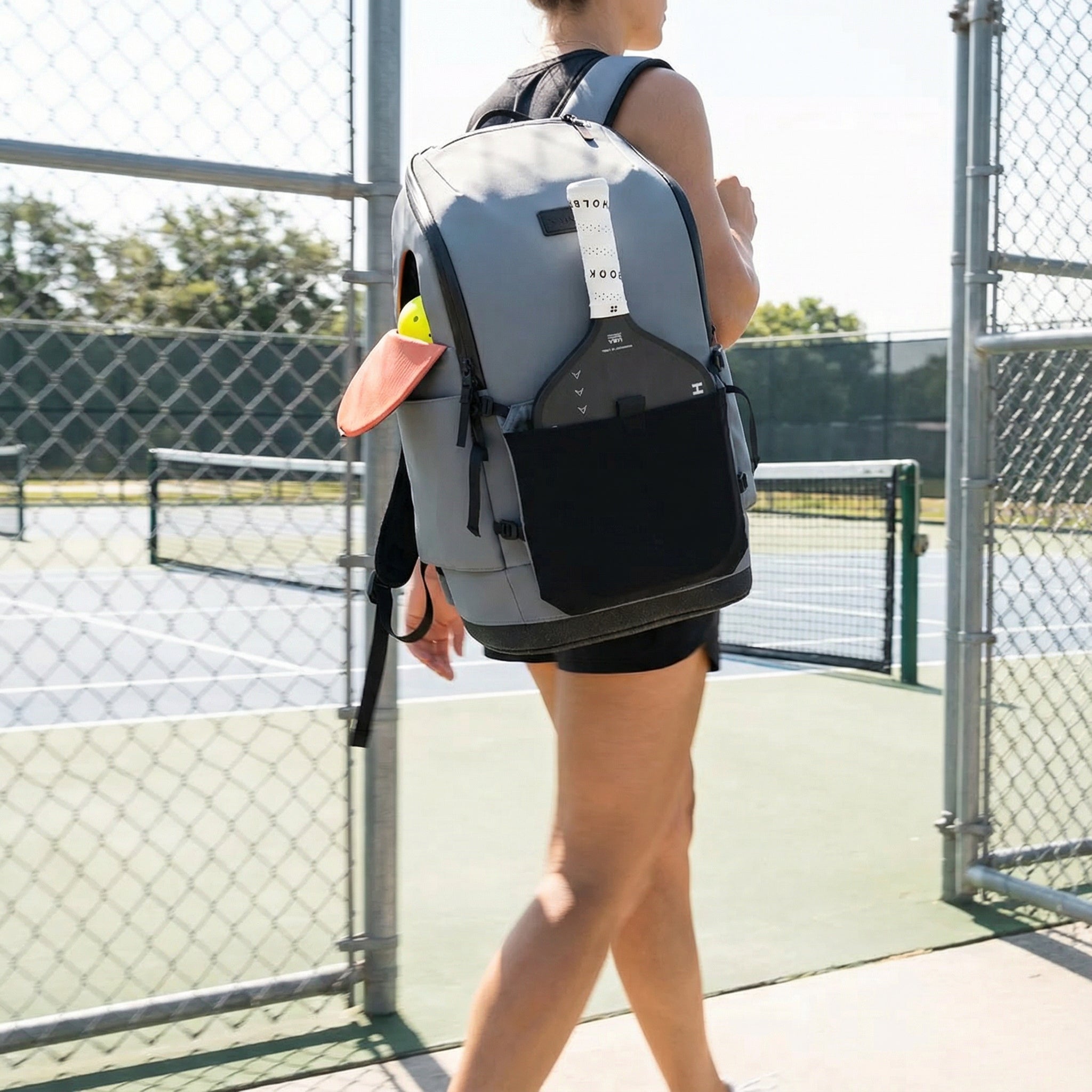
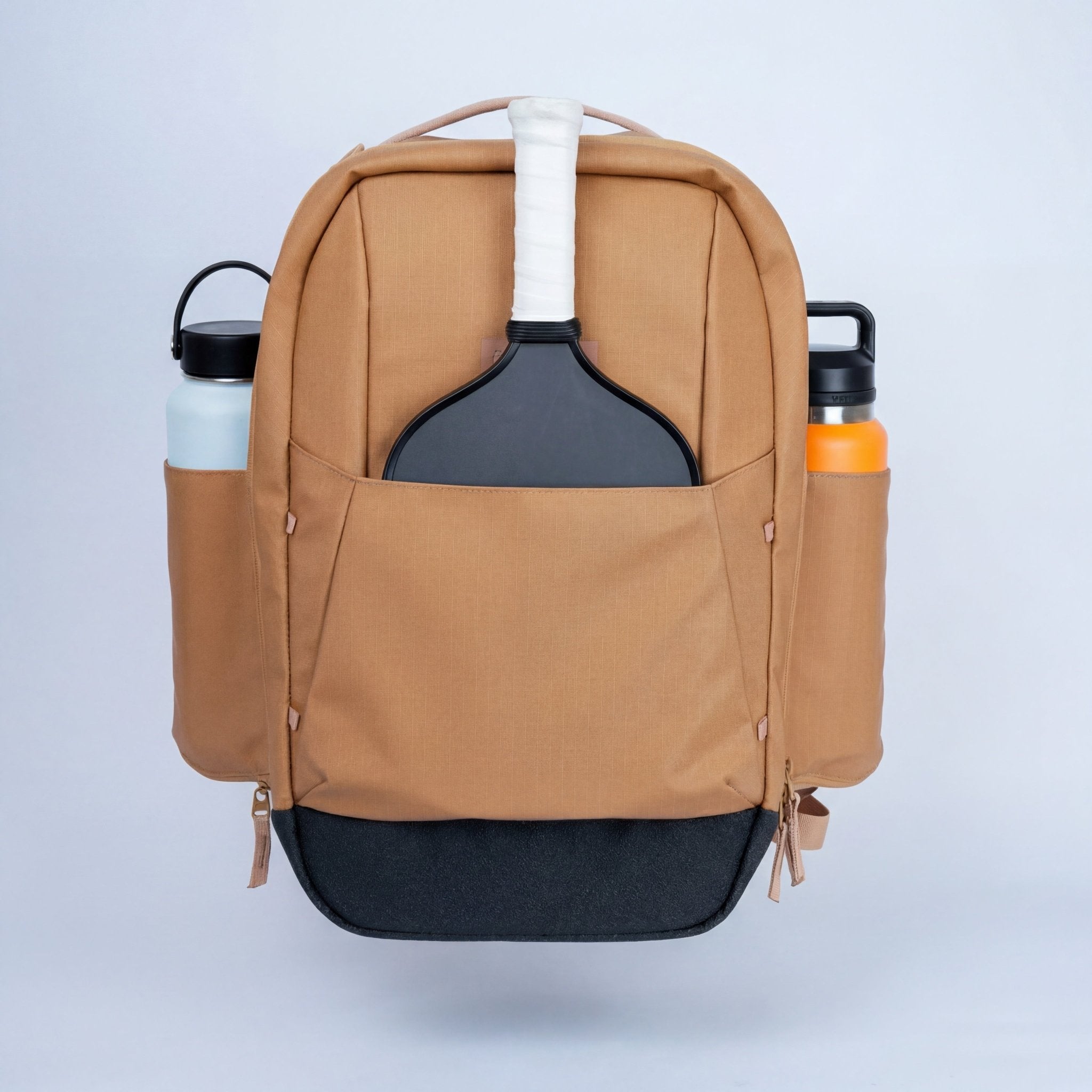
A paddle like the LUZZ Pro4 is worth protecting. The FORWRD Court Ranger V2 ($195) has a dedicated paddle sleeve that holds up to 4 paddles without banging them together on the way to the courts — and a 16" laptop sleeve for the work-to-court commute players. If you're bringing two paddles and a bag of snacks for an outdoor round robin, the Court Caddy ($325) gives you a full modular system built around four-paddle capacity plus a 15" padded laptop sleeve and YKK AquaGuard waterproof zippers.

Frequently Asked Questions
What's the actual difference between the Pro4 Inferno and Inferno Frozen?
The core difference is materials: the standard Inferno uses a T700 Carbon Fiber face with MPP foam core ($183.20), while the Frozen uses an EP-12 Epoxy Matte surface with the upgraded MPP-Z 3-piece core and TPE peripheral fill ($199.20). The result is a crisper, more explosive feel from the Inferno and a softer, longer-dwell feel from the Frozen — same dimensions and swing weight (119 ± 3), different playing character.
Is the LUZZ Pro4 Inferno Frozen worth the extra $16?
For control-oriented and kitchen-first players: yes. The MPP-Z core, EP-12 surface, and TPE peripheral fill deliver meaningfully better dwell and touch. For power-first players who rely on explosive drives: skip it. The standard Inferno's T700 face gives more pop and costs $16 less. The Frozen is worth the upgrade specifically if dink control and reset quality are your performance ceiling.
Are both LUZZ Pro4 Inferno paddles approved for tournament play?
Yes. Both the Pro4 Inferno and Pro4 Inferno Frozen carry UPA-A and USAP (USA Pickleball) approval. They're legal for all sanctioned amateur and open tournament play. Check event-specific regulations before competing in PPA or APP events, as tour-level approvals can vary.
How does MPP foam core compare to standard polypropylene honeycomb?
Standard PP honeycomb creates a hollow core with discrete cells — it feels crisper and more explosive but transmits off-center vibration more directly to your hand. MPP (Microporous Polymer) foam core fills that space with a continuous micro-cell structure that absorbs more energy on contact, resulting in a larger effective sweet spot, reduced hand shock, and a softer, more cushioned feel. The trade-off is slightly less explosive pop on hard drives.
What grip size are the LUZZ Pro4 Inferno paddles?
Both paddles have a 4.13" grip circumference (the Frozen's runs slightly wider at 4.13"–4.17"). This is in the small-to-medium range. If your hand measures above 4.25" or you tend to prefer a thicker grip, adding an overgrip will bring both paddles up to a comfortable 4.25"–4.30" range. Our grip guide covers exactly how to do this in under five minutes.
How does the LUZZ Pro4 Inferno compare to paddles for intermediate players?
The Pro4 Inferno sits solidly in the intermediate-to-advanced tier. Its forgiving sweet spot and foam core vibration damping make it accessible for 3.0–3.5 players moving past beginner composites, while the 16mm control profile gives 3.5–4.0 players enough precision to develop their soft game. It's not a beginner paddle, but it doesn't penalize developing players the way a stiff raw-carbon touring paddle would. See our full intermediate paddle guide for more context.
Final Verdict
LUZZ built a smart pair of paddles here. The Pro4 Inferno ($183.20) is an honest all-court workhorse — foam core forgiveness, T700 pop, and tournament approval at a price that doesn't require a second mortgage. The Inferno Frozen ($199.20) is the same frame tuned for control-first players: longer dwell, quieter contact, better reset feel. Neither is better in absolute terms; they're right for different playing styles.
The question isn't "which is higher quality?" They're both well-made. The question is "do I want more pop or more control?" If you're unsure, go standard. The $16 Frozen premium is worth paying only when you know you're a dink-and-reset player who lives at the kitchen. If you're still figuring out your style, the standard Inferno is the more forgiving choice while you develop.
Buy LUZZ Pro4 Inferno ($183.20) → Buy LUZZ Pro4 Inferno Frozen ($199.20) →

Leave a comment
This site is protected by hCaptcha and the hCaptcha Privacy Policy and Terms of Service apply.