

FTC Disclosure: This post contains affiliate links to Pickleball Central. FORWRD earns a commission if you click and purchase — at no extra cost to you. Our assessments aren't influenced by affiliate partnerships.
Last Updated: October 2026
Franklin built the C45 Tempo to go straight at the thermoformed paddle market — dual-foam perimeter construction, raw T700 carbon face, $229.99 for both thickness options. It works. The 14mm surprises with pop; the 16mm settles rallies better than you'd expect given its weight. But the real story is what these two versions have in common: almost everything, down to the gram.
Quick Verdict
Franklin C45 Tempo 14mm — $229.99
✅ Lively, poppy response off the face
✅ Big sweet spot for a 14mm paddle
✅ Lightweight (7.6–7.8 oz), confident feel
✅ USAP & UPA-A approved
❌ Demands active touch on resets — less forgiving in the kitchen
❌ Off-center hits sting more than the 16mm
Best for: 3.5–4.5 players who want offensive pop without completely abandoning control.
Franklin C45 Tempo 16mm — $229.99
✅ Exceptional feel on third-shot drops and resets
✅ Same swing weight as the 14mm (more on this below)
✅ Consistent, settled response across the entire face
✅ USAP & UPA-A approved
❌ Less pop than the 14mm, same price
❌ Not the pick if raw power drives your game
Best for: Control-first players at any level who prioritize the kitchen and consistent third-shot drops.
→ Check the C45 Tempo 14mm at PBC | → Check the C45 Tempo 16mm at PBC
Specs at a Glance
| Spec | 14mm | 16mm |
|---|---|---|
| Price | $229.99 | $229.99 |
| Weight | 7.6–7.8 oz | 7.6–7.8 oz |
| Core | POWERFLEX + Dual Foam Perimeter | POWERFLEX + Dual Foam Perimeter |
| Thickness | 14mm (.551") | 16mm (.629") |
| Face | 45° T700 Raw Carbon Fiber | 45° T700 Raw Carbon Fiber |
| Length × Width | 15.7" × 7.9" | 15.7" × 7.9" |
| Handle | 5.1" | 5.1" |
| Swing Weight | 98 kg-cm² | 98 kg-cm² |
| Twist Weight | 6.6 kg-cm² | 6.6 kg-cm² |
| Grip Size | 4 1/4" circumference | 4 1/4" circumference |
| Certifications | USAP, UPA-A | USAP, UPA-A |
Buy C45 Tempo 14mm — $229.99 Buy C45 Tempo 16mm — $229.99
Why Trust This Review
FORWRD designs pickleball bags. That means we're on courts constantly — talking to players at 3.0 through 5.0+, watching what paddles they're actually using two months after buying, and hearing what they'd buy again. The C45 Tempo came up enough times in conversations that we wanted to go deep: compare both thickness options, dig into what POWERFLEX actually delivers, and give you the honest answer on whether $230 is justified here.
Specs are sourced directly from Franklin's official product listing and Pickleball Central's product page. No sponsored arrangement with Franklin. If something in a competitor paddle is better, we say so.
What POWERFLEX Actually Means
Franklin calls the C45 Tempo's core "POWERFLEX with dual-foam perimeter construction." Here's what that actually means in practical terms.
Standard paddle cores use pure polypropylene honeycomb cells — the same basic construction that's been standard for years. POWERFLEX is Franklin's name for a poly/foam hybrid core: polypropylene honeycomb with foam elements integrated into the material. The foam component increases dwell time (ball-on-face contact duration) and cushions the response compared to straight-polymer paddles at the same thickness. You'll notice it on fast incoming drives — the ball doesn't ping back as sharply.
The "dual-foam perimeter" is what separates the C45 from older Franklin designs. That foam-filled edge zone acts as a secondary damping layer. Off-center hits get absorbed before they translate into wrist vibration. On outdoor concrete courts, where ball hardness tends to make vibration more pronounced, the C45 Tempo stays quieter on mishits than most paddles in this category.
It's a different feel than double thermoformed paddles, which tend to prioritize raw power. The POWERFLEX approach leans toward feel-first. You'll notice it most at the kitchen line — resets feel cushioned, not rubbery, and not explosive.
The Identical Swing Weight Situation
Here's the detail most reviews on this paddle skip: both the 14mm and 16mm C45 Tempo have identical swing weight (98 kg-cm²), identical twist weight (6.6 kg-cm²), and the same weight range (7.6–7.8 oz).
Identical. Every spec except core thickness is the same.
Why does that matter? In most paddle families, thicker means heavier. The 16mm version typically weighs 0.2–0.4 oz more than the 14mm, and that weight increase changes swing speed and through-contact feel. With the C45 Tempo, Franklin has engineered the 16mm to stay in the same weight window as the 14mm — which makes the comparison between them simpler than usual. You're not trading weight for control. You're trading pop for dwell time. A purer tradeoff.
If you're still working through where you land on the power-control spectrum, our full power vs control guide breaks down the decision by play style.
How Each Thickness Actually Plays
14mm — The Poppy One
The 14mm Tempo has a noticeably livelier response off the face. Drives come off with more pace. The raw T700 carbon fiber — cut with 45-degree stitching — bites into the ball aggressively, which means topspin serves and topspin drives generate real spin without requiring a dramatic stroke change.
Where you'll feel the thickness difference most: the kitchen line. The 14mm core's shorter dwell time means reset shots require more active dampening. You have to absorb the incoming ball with intention rather than just holding the paddle up and trusting the core to do the work. Players coming from a thicker paddle will notice this adjustment, especially on fast-paced resets from midcourt.
For an attacking 3.5–4.5 player who drives aggressively and looks for overhead opportunities, that tradeoff works. The pop on putaways is satisfying — the paddle rewards you for going after the ball.
16mm — The Settled One
Switch to the 16mm and drives feel more muted. Not dead — still faster than a budget composite — but the explosive pop of the 14mm is softened. What you get instead is a wider and more forgiving response window. The ball stays on the face longer, giving your wrist more time to micro-adjust during off-center contact.
Dinking is where the 16mm earns its $230. Third-shot drops feel consistent. Resets at the kitchen are easier to execute without accidentally accelerating the ball back over the net. On outdoor courts with aggressive ball bounce, the extra dwell time helps you absorb pace rather than redirect it.
The counterintuitive part: because swing weight is identical to the 14mm, the 16mm doesn't feel slow. Thicker paddles usually swing heavier — this one doesn't. Weight engineering keeps the swing speed comparable. You're getting a different feel on impact, not extra effort to generate it.
For more on what the T700 carbon face contributes, see our breakdown of carbon vs fiberglass vs composite face materials.
The 14mm vs 16mm Decision, Simplified
Stop thinking about it abstractly. Think about the specific moments where your game breaks down:
Your resets and drops go long more than you'd like: 16mm. The extra dwell catches fast-incoming balls and gives you more time to soften them.
You leave easy putaways on the table: 14mm. The pop is real and it rewards aggressive attacks on weak balls.
You're genuinely not sure: Default to the 16mm. It has a slightly wider margin for error across both offensive and defensive play.
Both paddles carry the same USAP and UPA-A certification, same grip size, same handle length. You can demo one and adapt to the other without relearning anything fundamental about your game.
Comparisons
Franklin C45 Tempo vs Six Zero Double Black Diamond Control 16mm ($180)
The Six Zero Double Black Diamond comes in $50 cheaper at $180 and is one of the most control-forward 16mm paddles on the market. Where the Six Zero wins: raw dwell time is higher, making it a better pick for pure kitchen specialists who rarely attack. Where the C45 Tempo 16mm wins: the POWERFLEX perimeter foam construction gives it a livelier edge response — players who occasionally attack from the transition zone get more from the Franklin. The Six Zero is calmer. Depends on how often you're willing to go on offense from midcourt.
Franklin C45 Tempo vs JOOLA Ben Johns Perseus Pro IV 16mm ($150)
At $150, the JOOLA Perseus Pro IV 16mm saves you $80. It's a proven paddle with high tournament usage and strong brand visibility. If budget is a real factor, the JOOLA is a serious contender. The Franklin C45 Tempo's advantage is the dual-foam perimeter construction, which handles vibration better on off-center hits. If you tend to strike the ball cleanly in the center of the face, the JOOLA may serve you just as well. If you hit off-center with any frequency — and most of us do — Franklin's perimeter foam earns its price premium.
Who Should Buy the Franklin C45 Tempo
The C45 Tempo is the right paddle if you're a 3.5–5.0 player who wants the feel of a thermoformed-style construction without committing to an ultra-aggressive power model. It's also right if you play mostly outdoors on concrete and want vibration damping without dead-feeling response, or if you're genuinely torn between power and control and want Franklin's middle-ground at each thickness point.
Tournament players will appreciate both USAP and UPA-A certification — no eligibility questions at sanctioned events.
Who Should Look Elsewhere
Skip the C45 Tempo if maximum raw pop is the priority — there are more explosive paddles in this price range. Skip it if budget is the real constraint — the JOOLA Perseus Pro IV does similar work at $150. And skip it if you want an elongated shape. Both C45 Tempos are standard shape at 7.9" wide; if reach on wide shots matters to your game, you'll want to look at Franklin's C45 Hayden Patriquin or Parris Todd elongated versions instead.
New to the sport and not sure what shape to prioritize? Start with our beginner's framework for choosing a first paddle before investing $230.
Pricing & Availability
Both the 14mm and 16mm C45 Tempo are priced at $229.99 at Pickleball Central — same price, different feel. PBC is an authorized Franklin retailer, which means warranty support is clean. They stock both options in the red colorway and ship fast.
Buy C45 Tempo 14mm — $229.99 Buy C45 Tempo 16mm — $229.99
Complete Your Setup
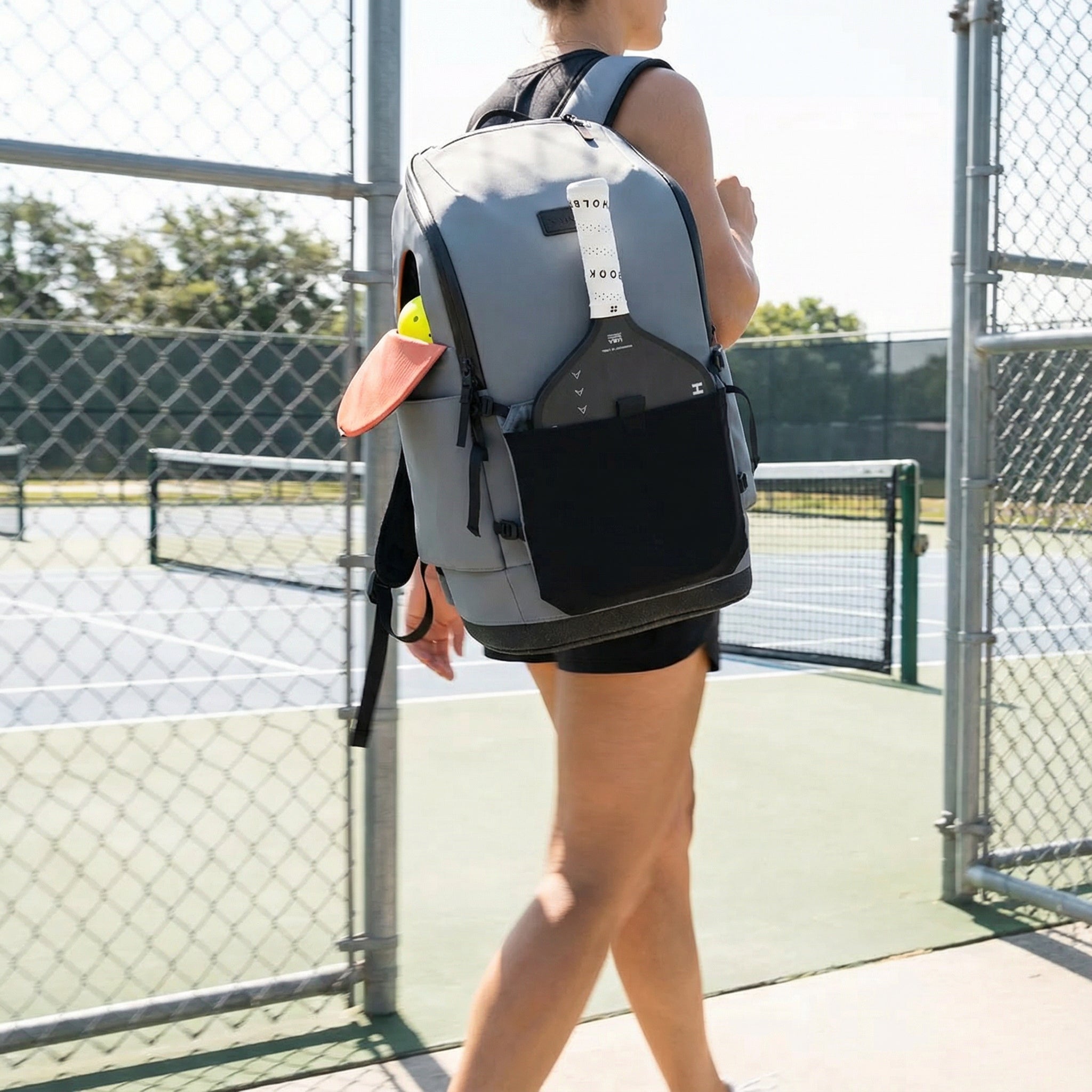
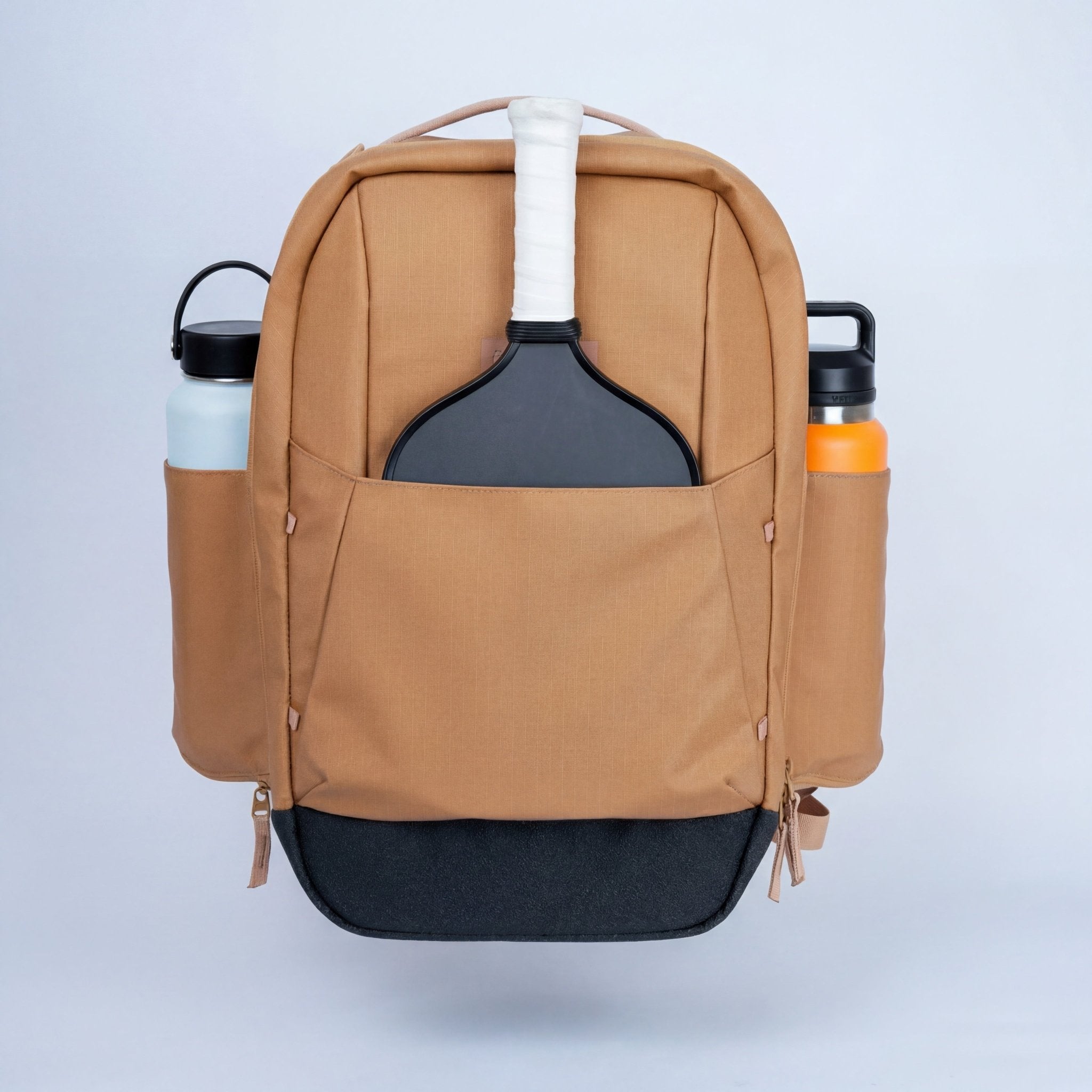
Paddle sorted — now the bag question. The FORWRD Court Ranger V2 ($195) fits paddles of every shape and size in its modular paddle sleeve system, with dedicated compartments for balls, shoes, and everyday carry. Standard-shape paddles like the C45 Tempo fit cleanly alongside your court gear without the awkward stacking that cheap bags require. Plus a 16" laptop sleeve if you're going straight from the court to work.

Frequently Asked Questions
What is the difference between the Franklin C45 Tempo 14mm and 16mm?
The core thickness — 14mm vs 16mm — is the only meaningful difference between the two paddles. Both share identical dimensions (15.7" × 7.9"), weight range (7.6–7.8 oz), swing weight (98 kg-cm²), twist weight (6.6 kg-cm²), face material, handle length, and grip size. The 14mm plays more aggressively with more pop off the face; the 16mm has more dwell time and a more forgiving, consistent feel on drops and resets.
Is the Franklin C45 Tempo USAPA approved for tournament play?
Yes. Both the 14mm and 16mm C45 Tempo carry USAP and UPA-A certifications, making them legal for sanctioned USA Pickleball tournament play at all levels. Franklin lists both certifications directly on the product page.
What skill level is the Franklin C45 Tempo designed for?
The C45 Tempo is best suited for 3.5–5.0 players. It's not an ideal starter paddle — the raw T700 carbon fiber face rewards consistent stroke mechanics, and the 14mm version demands active touch in the kitchen. The 16mm is slightly more forgiving for developing players. If you're still building fundamentals, check our beginner paddle guide before committing $230.
How does the POWERFLEX core compare to standard polypropylene honeycomb?
POWERFLEX is a poly/foam hybrid rather than pure polypropylene honeycomb. The foam component increases dwell time and dampens vibration compared to straight-poly cores, particularly at the paddle edges where the dual-foam perimeter adds a second damping layer. The result: a paddle that feels softer on off-center contact than its swing weight suggests, closer to a foam-core paddle's feel combined with a carbon paddle's spin generation.
Does the Franklin C45 Tempo come in an elongated shape?
No. Both the 14mm and 16mm C45 Tempo are standard shape at 15.7" × 7.9". Franklin does offer elongated options in other C45 lines — the C45 Hayden Patriquin and C45 Parris Todd use elongated shapes — but the Tempo line is standard-only. Players who rely on reach on wide shots should look at those elongated versions instead.
What grip size does the Franklin C45 Tempo come in?
The C45 Tempo ships with a 4 1/4" grip circumference (medium). Actual circumference may vary up to 1/8" between individual paddles. If you prefer a smaller grip, an overgrip layer is the easiest modification. Building up to a larger grip requires a full regrip — our grip replacement guide covers the process if you need it.
Final Verdict
The Franklin C45 Tempo isn't the most powerful paddle at $230. It's not the most control-focused either. It's Franklin's attempt at the most thoughtfully engineered middle-ground paddle in this bracket — and it mostly lands.
The identical swing weight between 14mm and 16mm is the design decision that makes this paddle family worth attention. You're choosing feel, not weight. The 14mm plays aggressive and poppy. The 16mm plays settled and consistent. Both are tournament-legal. Both spin the ball with the same gritty T700 carbon face. Neither surprises you in a bad way.
If you can only have one: 14mm if you play with intent to attack, 16mm if you play to stay in the rally and win on placement.

Leave a comment
This site is protected by hCaptcha and the hCaptcha Privacy Policy and Terms of Service apply.