

Last Updated: August 2026
Over 4.8 million Americans have discovered the joy of pickleball, making it the fastest growing sport in the country. If you’ve been curious about this unique paddle sport that combines elements of tennis, badminton, and ping pong, you’re in the right place. This guide covers everything you need to know about how to play pickleball — from basic rules to the strategic nuances that separate beginners from intermediate players.
Whether you’re a complete beginner or looking to refine your understanding of the game pickleball offers, this article covers all the essential information to get you started on the pickleball court with confidence.
Disclosure: This post contains affiliate links to Pickleball Central. If you purchase through our links, FORWRD earns a small commission at no extra cost to you. We only link to products we'd recommend regardless.
What is Pickleball?
Pickleball is a paddle sport that originated in 1965 on Bainbridge Island, Washington, when three families wanted to create a game that would entertain their children during summer. The sport combines the best elements of tennis, badminton, and ping pong, creating an accessible and engaging game for players of all ages and skill levels.
The game is played on a badminton sized court with a net slightly lower than tennis. What makes pickleball unique is its emphasis on strategy over power, thanks to specific rules like the double bounce rule and the non volley zone. These rules level the playing field, allowing players of different athletic abilities to compete fairly against each other.
Pickleball has become America’s fastest growing sport for several compelling reasons. The smaller court size means less running compared to tennis, making it easier on the joints. The underhand serving requirement eliminates the intimidation factor of powerful overhead serves, and the unique scoring system creates longer, more strategic rallies that keep players engaged.
The sport’s accessibility is perhaps its greatest strength. Unlike tennis, where beginners often struggle with serve receive and powerful shots, pickleball allows new players to have fun immediately while still offering plenty of room for skill development as they advance.
Court Setup and Essential Equipment
Understanding the pickleball court layout is essential before you play pickleball. The court measures 20 feet wide by 44 feet long, which is identical to a badminton court but significantly smaller than a tennis court. This compact size contributes to the sport’s accessibility and faster-paced rallies.
The net stands 36 inches high at the sidelines and 34 inches at the center, lower than a tennis net. The court features several important markings that define play areas and rules. The baseline runs along the back of the court, while the service area extends from the non volley zone line to the baseline.
The most distinctive feature is the kitchen, officially called the non volley zone. This 7-foot area extends from the net toward the baseline on both sides of the court. The kitchen line marks the boundary of this critical zone, and understanding its rules is fundamental to successful play.
Essential equipment for pickleball is relatively minimal and affordable. You’ll need a pickleball paddle, which is larger than a ping pong paddle but smaller than a tennis racket. For beginners, paddles weighing between 7.5 and 8.5 ounces provide a good balance of control and power. The ball itself is a wiffle-style plastic ball with holes, though indoor and outdoor balls differ slightly in construction and weight.
Indoor balls are lighter with larger holes to account for the lack of wind, while outdoor balls are heavier with smaller holes to maintain stability in outdoor conditions. Many facilities provide equipment for beginners, making it easy to try the sport before investing in your own gear.
Gear Storage: What to Carry It All In
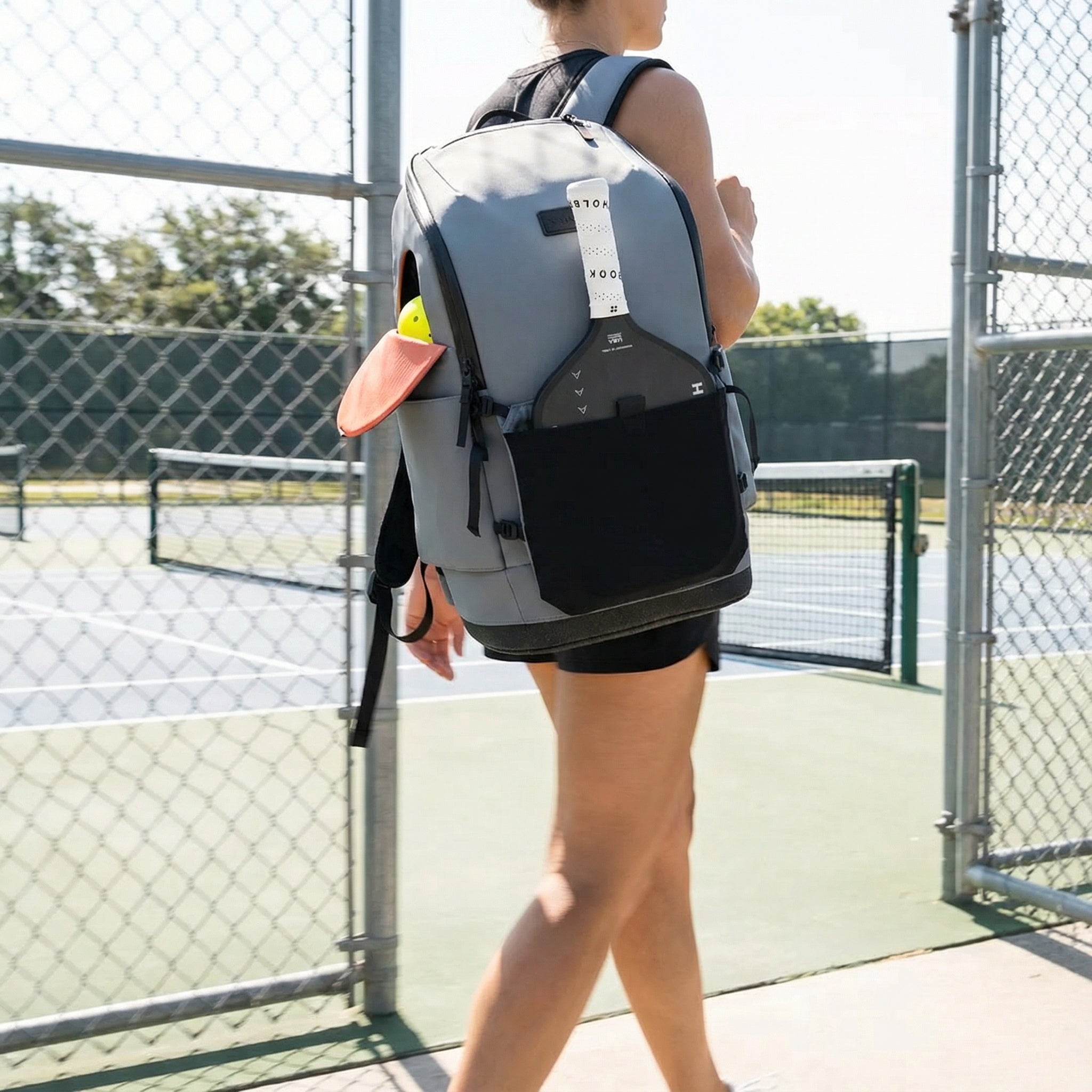
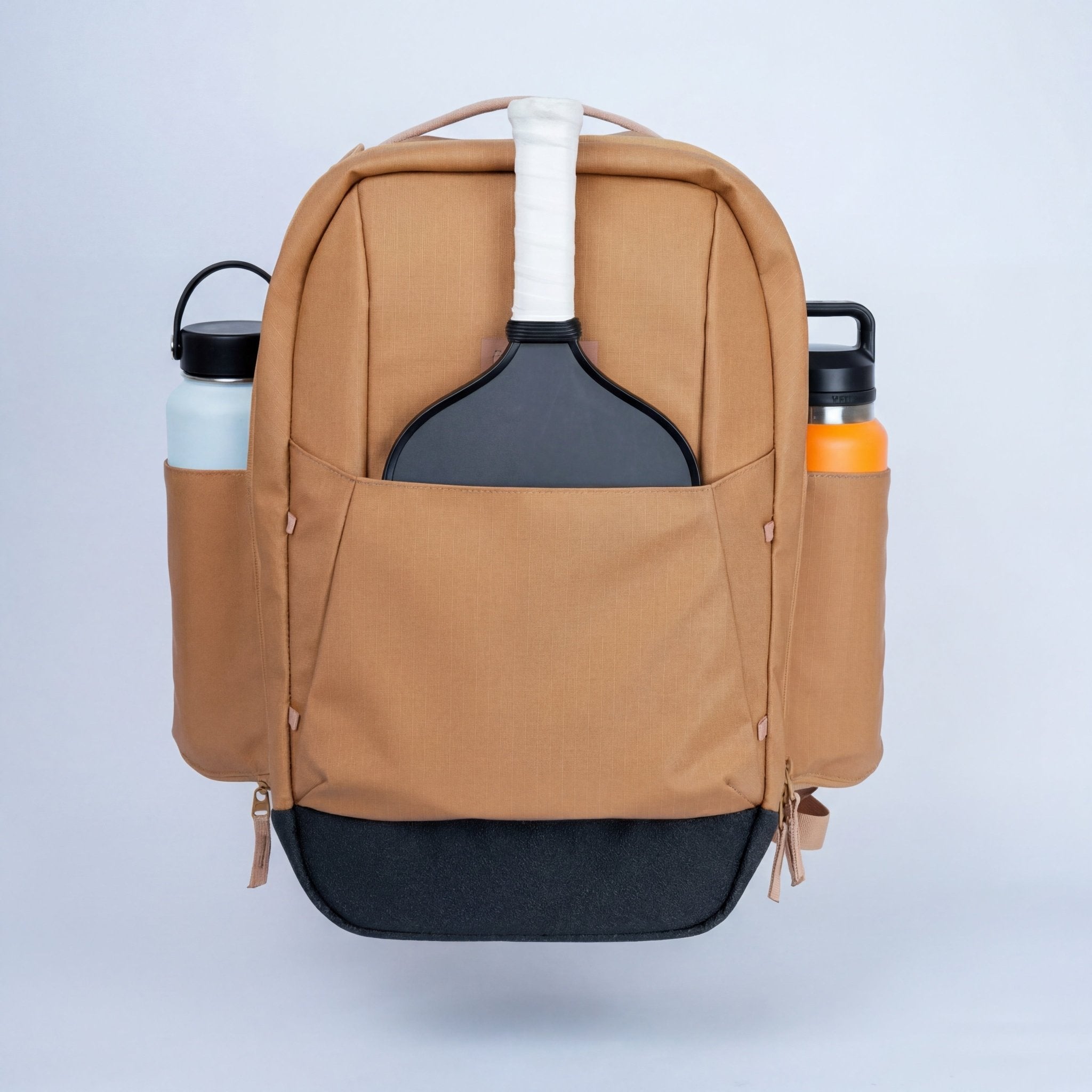
Once you own a paddle and a few balls, a dedicated pickleball bag makes the difference between showing up organized and showing up flustered. The FORWRD Court Ranger V2 ($195) holds two paddles, court shoes, a water bottle, and a 16" laptop — designed with input from 500+ real players, including plenty figuring out their first gear kit.

First-Time Player Gear Picks
Start with the essentials. A mid-weight paddle, the right balls for your court type, and a bag that grows with your game.
- Franklin X-1000 Composite Paddle ($34.99) — solid entry-level control, great for learning dinks and groundstrokes
- Franklin X-40 Outdoor Balls — the USA Pickleball-approved outdoor standard, durable on concrete
- FORWRD Court Ranger V2 ($195) — the bag that grows with your game instead of holding you back
Fundamental Rules of Pickleball
Learning the basic pickleball rules forms the foundation for enjoying this engaging sport. The game can be played in doubles format with two players on each team, or singles with only one player per side. Doubles is the most common format in recreational play and tournaments.
A rally begins with a serve and continues until a fault occurs. The serving team continues to serve and potentially score points until they commit a fault, at which point a side-out occurs and serve passes to the other team. This system means only the serving team can score points, creating unique strategic dynamics.
Most games are played to 11 points, and you must win by two points. Tournament games may be played to 15 or 21 points, but the win-by-two requirement remains consistent across all formats.
Serving Rules and Technique
The serve in pickleball follows specific mechanical requirements that distinguish it from tennis or other racket sports. All serves must be underhand, with the paddle making contact with the ball below the waist level (at or below the navel). The paddle head must be below the wrist at contact, and the serve motion must move in an upward arc.
Players serve passes diagonally crosscourt from the right service area to the opponent’s right service area, similar to tennis. The server must have both feet behind the baseline until the ball is struck, and at least one foot must remain on the court surface. The serve must clear the kitchen line and land within the designated service box to be legal.
There is only one serve attempt allowed per server in traditional play, though a “let” serve that touches the net but lands in the correct service area allows another serve attempt. The 2021 rules introduced an alternative drop serve method, where players can bounce the ball before hitting it, providing more serving options for players with mobility challenges.
The Two-Bounce Rule
The double bounce rule, also called the two-bounce rule, is fundamental to pickleball strategy. After the serve, the receiving team must let the ball bounce once before returning it. The serving team must then let the return bounce once before hitting their next shot. After these mandatory bounces have occurred on both sides, players may volley (hit the ball in the air) or continue playing off bounces.
This rule serves several important purposes. It prevents the serving team from rushing the net immediately after serving, eliminates powerful serve-and-volley tactics from tennis, and extends rallies to create more engaging gameplay. The bounce rule forces players to develop baseline skills before advancing to net play.
Understanding when the double bounce rule no longer applies is crucial. Once both teams have allowed their required bounce, the rule is satisfied for that point, and players can volley freely (except within the kitchen). This creates a natural progression from baseline rallies to more dynamic net play.
Kitchen (Non-Volley Zone) Rules
The kitchen, or non volley zone, extends 7 feet from the net on both sides and represents one of pickleball’s most distinctive strategic elements. Players cannot volley (hit the ball in the air) while standing in this zone or while touching the kitchen line. This rule prevents aggressive net play and maintains longer rallies.
The momentum rule is equally important: if you hit a volley and your follow-through causes you to step into the kitchen, it’s a fault. Players must maintain control after volleys to avoid kitchen violations. However, players can enter the kitchen at any time to hit balls that have bounced, making the zone fully accessible for groundstrokes and drop shots.
An interesting aspect of kitchen rules involves the airspace above the zone. While the court surface is off-limits for volleying, players can theoretically reach over the kitchen through the air to volley a ball, as long as they don’t touch the surface. This rarely occurs in practice but demonstrates the precise nature of the rules.
Scoring System and Score Calling
Pickleball scoring follows a unique three-number system in doubles play. The score is called as “serving team score - receiving team score - server number.” For example, “4-2-1” means the serving team has 4 points, the receiving team has 2 points, and the first server is serving.
Each team has two serving opportunities before a side-out occurs, except at the beginning of the game when the starting team gets only one server to prevent an unfair advantage. This is why the game begins with a score call of “0-0-2,” indicating the second server position.
When the serving team wins a point, teammates switch sides of the court, but opponents remain in their positions. This rotation continues as long as the serving team continues to win points. When a fault occurs, if it’s the first server, the second server takes over from the correct side of the court. If it’s the second server, a side-out occurs and serve passes to the other team.
Singles scoring simplifies to two numbers: your score and your opponent’s score. The server serves from the right side when their score is even and from the left side when their score is odd, creating a predictable pattern throughout the match.
Playing Doubles vs Singles
Doubles pickleball represents the most popular format, featuring two players per team and emphasizing teamwork and court positioning. Partners must communicate effectively and coordinate their movements to cover the court efficiently. The serving rotation in doubles means both players get opportunities to serve and score points before the serve passes to the opposing team.
Effective doubles strategy involves one player taking shots down the middle while the other covers their respective side. Partners should avoid both rushing to the same ball, which leaves court areas undefended. Communication becomes essential, with players calling shots and coordinating positioning throughout rallies.
The stacking strategy allows partners to ensure their stronger forehand or backhand sides face particular court positions, though this requires careful coordination during serve rotations and side changes.
Singles play follows most of the same rules but with important modifications. There is only one player per side, so court coverage becomes more demanding. The serving rules change to immediate side-out when a fault occurs, since there’s no second server. The server serves from the right side when their score is even and switches to the left side when their score is odd.
Singles requires greater fitness and court coverage but offers more individual control over strategy and shot selection. The game often features longer baseline rallies since reaching the net safely requires leaving the entire court undefended behind you.
Essential Shots and Techniques
Mastering fundamental shots is crucial for effective pickleball play. The drive represents a powerful groundstroke hit from the baseline, used to apply pressure and control court positioning. Drives should be hit with topspin when possible to keep the ball in bounds while maintaining pace.
The dink shot is perhaps the most important technique in pickleball. This soft shot lands in the opponent’s kitchen, forcing them to hit upward and creating opportunities for attacking shots. Dinks are typically hit with underspin and require precise touch and placement rather than power.
Drop shots serve as tactical weapons to draw opponents forward or change the pace of play. A well-executed drop shot from the baseline can land in the kitchen, forcing opponents to hit up and potentially setting up winning shots. The third shot drop is particularly important in doubles, as it allows the serving team to advance to the net after fulfilling the double bounce rule requirement.
Volleys, hit before the ball bounces, are crucial for net play but must be executed outside the kitchen. Good volley technique involves keeping the paddle face stable and using minimal backswing to maintain control. The highest point of contact helps direct balls downward into the opponent’s court.
Lobs can be effective defensive shots when opponents crowd the net, while overheads provide opportunities to finish points aggressively. However, the lower net height in pickleball makes overheads less dominant than in tennis, requiring precise placement rather than pure power.
Common Faults and Rule Violations
Understanding common faults helps players avoid point-losing mistakes. Serving faults include hitting the ball into the net, serving overhand instead of underhand, or committing foot faults by stepping on or over the baseline before ball contact. Only one serve attempt is allowed, making serve consistency crucial.
Kitchen violations represent frequent sources of faults. Volleying while any part of your body touches the kitchen or kitchen line results in a fault, as does stepping into the kitchen due to momentum carry from a volley. Players must control their follow-through to avoid these violations.
The double bounce rule creates faults when players volley before both required bounces have occurred. This often happens when players get excited and rush to the net too quickly after serving or receiving serve.
Out-of-bounds shots are faults, though balls landing on any court lines are considered in bounds. Players should let potentially out balls bounce rather than catching them or letting them hit their body, as this would result in a fault even if the ball was heading out.
Other common faults include hitting the ball twice in one motion, touching the net with your paddle or body while the ball is in play, and hitting the ball before it crosses the net. The ball must bounce twice on your side before you can hit it (a double hit), and players cannot reach over the net to hit balls unless the ball’s spin brings it back over the net after bouncing on your side.
Getting Started: Where to Play Pickleball
Finding places to play pickleball has become increasingly easy as the sport’s popularity grows. Over 17,000 courts now exist across the United States, with new facilities opening regularly. Many tennis centers have converted courts or dedicated specific times for pickleball play, offering a fair method for sharing facilities between sports.
Local parks and recreation centers often provide the most accessible and affordable options for beginners. Many facilities offer free court access and may provide equipment for new players to try the sport. Community centers frequently host beginner clinics and group lessons, providing instruction and equipment in a welcoming environment.
Online court finders help locate nearby facilities and provide information about court availability, fees, and amenities. Popular platforms like PlacesToPlayPickleball.com and USA Pickleball’s court locator make finding courts simple and efficient.
Pickleball clubs and leagues offer ongoing play opportunities and skill development. These organizations often welcome beginners and provide mentorship from experienced players. Many clubs organize social events, tournaments, and clinics that help newcomers integrate into the pickleball community.
Indoor facilities provide year-round play options and often feature multiple courts dedicated specifically to pickleball. While these venues may charge higher fees than outdoor courts, they offer consistent playing conditions and may include amenities like equipment rentals and professional instruction.
The pickleball community is known for being welcoming to newcomers. Most players are happy to offer tips, share equipment, and help beginners learn the game. This supportive environment makes getting started easier and more enjoyable than many other sports.
When starting out, focus on finding beginner-friendly environments where you can learn without pressure. Many experienced players remember being beginners themselves and are eager to help others discover the joy of this fantastic sport. Don’t hesitate to ask questions, request tips, or join pickup games – the pickleball community thrives on inclusivity and shared enthusiasm for the game.
Complete Your Setup
You've got the rules down. Now get the bag that carries everything to the court without making you dig through a gym bag every session. The Court Ranger V2 was built with 500+ real players — organized, durable, sized right for the player who's just getting serious.
Frequently Asked Questions About Playing Pickleball
What's the difference between indoor and outdoor pickleballs?
Indoor balls are lighter with larger holes (typically 26) — designed for low-resistance flight with no wind factor. Outdoor balls are denser with 40 smaller holes to maintain stable flight in wind. If your court is outdoor concrete, get outdoor balls. Most players eventually own both and swap based on where they're playing that day.
Can you hit the ball around the net post in pickleball?
Yes — as long as the ball lands in your opponent's court without touching the net or post. The ball doesn't have to go over the net to be legal. Around-the-post shots (ATPs) are rare but spectacular when they happen, and they're completely valid under USA Pickleball rules.
What happens if the ball touches the kitchen line on a serve?
It's a fault — the serving team loses that serve attempt. A legal serve must clear the kitchen line completely and land in the diagonal service area. Tipping the kitchen line is one of the most common serving faults for new players, so aim deeper into the service box when starting out.
How long does a typical pickleball game last?
A game to 11 points usually runs 15–25 minutes depending on skill level and competitiveness. Better players have longer rallies; beginners end points faster on unforced errors. Tournament games to 15 or 21 points take proportionally longer. Doubles rallies run longer than singles because of the extra court coverage involved.
Is there a time limit between points in pickleball?
Official rules allow 10 seconds between points, but recreational games rarely enforce this. Tournament referees may call players for delay, but casual pickleball runs on player etiquette — not a shot clock. Retrieve the ball, get positioned, and play at a reasonable pace. The community is generally patient with newer players finding their rhythm.
Ready to step on the court? Shop the Court Ranger V2 — built with 500+ real players to carry your full kit from your first session through your first tournament.

Leave a comment
This site is protected by hCaptcha and the hCaptcha Privacy Policy and Terms of Service apply.