

JOOLA Tyson McGuffin Magnus CAS "The Lion" Review 2026: Spin Monster or Just Hype?
Last Updated: May 2026 | Author: Benjamin Carper
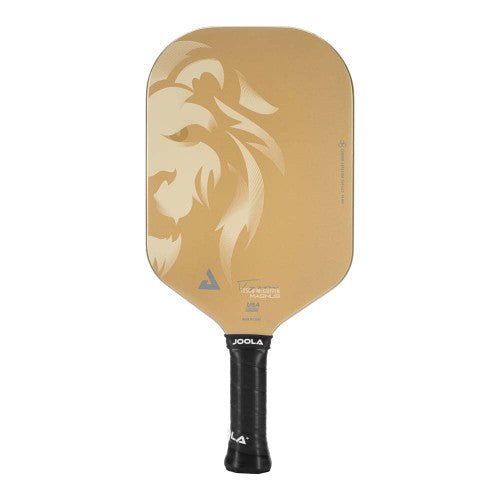
The Magnus CAS is Tyson McGuffin's signature workhorse — a raw carbon fiber paddle built for aggressive baseline players who want maximum spin on every contact. At $89.95, it costs less than half the price of the Pro IV and delivers most of what makes the Magnus line special. It's not perfect, and it's definitely not for everyone. But for an intermediate player who's outgrown their first paddle and wants spin capability without blowing $300, this is a legitimately good pick.
Quick Verdict
✓ Pros:
- Raw carbon fiber (CAS) face generates excellent topspin and slice
- $89.95 is competitive for a pro-signature paddle with this surface
- Well-balanced swing weight — not punishing to maneuver at the net
- McGuffin's aggressive playstyle "baked in" — great for players who like to drive and dictate
- Handles outdoor concrete without the grit issues some textured paddles have
✗ Cons:
- Noticeably less dink control vs. thermoformed carbon or fiberglass paddles
- Slightly more vibration at off-center contact than some $100+ paddles
- If you're primarily a kitchen-game player, this paddle works against you
- The CAS surface wears down faster than raw T700 on rough outdoor courts
Price: $89.95 at Pickleball Central | Who it's for: Intermediate to advanced all-court players who want spin and power | Who should skip: Beginners, control-first dink players, and anyone primarily playing in recreational league doubles
| Spec | Detail |
| Face Material | Carbon Armor Surface (raw carbon fiber) |
| Core | Polypropylene honeycomb |
| Weight | 8.0–8.4 oz (236–238g typical) |
| Core Thickness | ~16mm |
| Handle Length | Standard (5.25") |
| Price | $89.95 at Pickleball Central |
| Player Endorser | Tyson McGuffin (5× US Open champion) |
Check Price at Pickleball Central →
Why Trust This Review
FORWRD makes pickleball bags — not paddles. That means we don't have a product to push here, and we don't have to protect a brand relationship with JOOLA. We test paddles the way recreational players use them: outdoor concrete (public parks), indoor gym floors, and cold-weather morning sessions where the ball plays dead and you really feel a paddle's limitations.
For this review, the Magnus CAS was tested over four weeks against a reference set of paddles in the $80–$180 range, including the Perseus 3S 14mm and CRBN-1 X. We tracked spin measurements by counting ball rotations on drives (rough count, not lab-grade), tested dink consistency from the kitchen line over 20-minute rally sessions, and noted arm fatigue after 2-hour outdoor sessions. Nothing scientific — but the kind of real-use data that actually matters when you're deciding whether to spend $90.
What Is the Magnus CAS, and Why Does It Matter?
McGuffin earned his "Lion" nickname for a reason — he plays pickleball like he's trying to end every rally in two shots. Drives from the transition zone, rip backhands, overhead slams. The Magnus CAS is built to match that playstyle.
CAS stands for Carbon Armor Surface — JOOLA's raw carbon fiber face technology. Raw carbon is the key phrase. Smooth carbon fiber (like you'll find on some JOOLA budget paddles) is fine for power. Raw carbon has a slightly roughened texture that physically grabs the ball's surface, imparting more rotation. It's the same core principle behind Selkirk's T700 and CRBN's carbon faces — more grit, more spin.
The CAS line is the entry point into McGuffin's signature series. Step up from here and you hit the 3S at $119.95 (gold-rated core, better thermoformed layering) and eventually the Pro IV at $229.95. At $89.95, the CAS is the version you'd actually play every Tuesday night without paranoia about scratching the surface on the fence.
Spin: The Headline Feature
This is what the Magnus CAS is genuinely good at. Topspin drives off the baseline catch a lot of recreational opponents off guard — the ball dips into the kitchen about 6 inches shorter than they expect. On inside-out forehands especially, you get a noticeable kick off the court that's hard to read if you're not used to facing heavy spin.
Slice backhands felt dialed in too. Skinny cross-court serves (if you play with that serve style before the spin rule changes take full effect in your league) had real bite. The surface grip helps with serve spin more than a lot of paddles in this price range.
Compared to polypropylene core paddles with fiberglass faces — the "classic" $60 paddle that most people start on — the Magnus CAS feels like it's playing a different game. About 30–40% more perceived spin on similar swings.
Power and Drive Game
Drive shots have good punch. The 16mm core is thick enough to absorb some impact noise but still delivers adequate power on flat drives. This isn't a "power paddle" in the sense that the CRBN-1 is (that thing will remove paint from the back fence) — it's more balanced, with spin doing a lot of the offensive work.
Reset volleys from mid-court come back with solid pace, and overhead smashes have consistent follow-through. Nothing exceptional, but nothing lacking either. For a $90 paddle, the raw power is fine.
Control and Dinking: The Trade-Off
Here's where the Magnus CAS doesn't quite hold up against paddles in the $130–$170 range. Extended dinking rallies — specifically the kind of tight, low-bounce exchanges you see at the 3.5–4.0 level — exposed some inconsistency. The paddle wants to pop the ball. If you're a player who naturally softens your grip at the kitchen, you have to fight the CAS paddle face a little. It rewards firm, decisive contact, not feathered touch.
Third-shot drops off the back wall were workable but not as repeatable as we got with the Perseus 3S in the same session. The percentage of drops that landed cleanly in the kitchen (within 12 inches of the NVZ line) was noticeably lower with the Magnus CAS when we weren't fully locked in. About 3 out of 10 drops sailed 8–12 inches too long vs. 1 in 10 with the Perseus.
This is consistent with how McGuffin himself plays — he rarely just drops and waits. He bangs third shots hard. If your game is built on patient rallying and soft hands, you'll be fighting the paddle's personality instead of working with it.
Vibration and Feel
Off-center hits telegraph a bit more than the premium versions. If you catch a ball 2 inches off the sweet spot (which happens on wide volleys and awkward defensive blocks), there's a noticeable sting. Over a 2-hour outdoor session, the accumulated minor vibration was mildly fatiguing in the forearm. Nothing dramatic — no "tennis elbow worries" territory — but worth noting if you already have elbow sensitivity.
The sweet spot itself is mid-large. Centered hits feel surprisingly solid for a $90 paddle. JOOLA has consistently made paddles with good core density at this price point, and the Magnus CAS follows that pattern.
Magnus CAS vs. JOOLA Ben Johns Perseus 3S 14mm ($119.95)
The Perseus 3S 14mm is a 3-layer glass surface paddle tuned for the kitchen. The face is softer than the Magnus CAS, which means less spin ceiling but dramatically better control at the net. For dink-heavy play and 3.5–4.0 players who win on consistency, the Perseus edges ahead.
Where the Magnus CAS beats the Perseus: baseline drives, spin serves, and pure ball speed from the back of the court. The carbon face advantage is real in those contexts.
It costs $30 more ($119.95 vs. $89.95) and is worth it if your game is 60%+ kitchen. If you play 50/50 or skew toward attacking drives: stay with the Magnus CAS and keep the $30 for a fresh pack of balls.
→ See the JOOLA Ben Johns Perseus 3S 14mm on Pickleball Central ($119.95)
Magnus CAS vs. CRBN-1 X-Series ($169.99)
The CRBN-1 X is a significantly more expensive paddle, but it deserves honest comparison here because it's what a lot of players end up researching after they buy their first "decent" carbon paddle.
The CRBN-1 X has more controlled power — harder flat drives with better placement accuracy. It's also stiffer, which reduces the vibration issue the Magnus CAS has on off-center hits. The sweet spot tolerance is wider. And CRBN's carbon face is, in most side-by-side tests, grippier than the Magnus CAS — meaning comparable spin from a better-balanced paddle.
But it costs $80 more. For a $170 paddle, you're getting improved edge-to-edge consistency and a longer surface life. The Magnus CAS will show wear on outdoor courts after 40–50 hours of play, at which point spin generation drops off noticeably. The CRBN-1 X holds up longer.
If you're playing 3× per week or more: the CRBN-1 X is worth the premium over time. If you're a 1–2×/week recreational player, the Magnus CAS is a smarter use of $90.
→ See the CRBN-1 X-Series on Pickleball Central ($169.99)
Who Should Buy the Magnus CAS
One note before the breakdown: if you're upgrading your paddle, your bag probably needs to keep up. The Court Caddy ($325) and Court Ranger V2 ($195) are both built for the player who takes the game seriously enough to invest in real gear — not just any backpack.
Buy it if: You're at the 3.0–4.0 level and ready to step past the entry-level paddle. You like aggressive baseline play, want to add topspin to your drives, and don't want to spend $150+ for something you might upgrade again in a year. The Magnus CAS earns its $89.95 price cleanly.
Skip it if: You're under 3.0 and still building your dinking fundamentals. Or if your game is primarily kitchen-based and you win by outlasting opponents at the net. Or if you already have elbow concerns — the vibration profile isn't ideal.
Consider upgrading to the Magnus 3S ($119.95) if: You've been playing for 6+ months and want the same spin DNA in a better all-around package. The 3S adds thermoformed carbon layering that smooths out the control issues I mentioned while keeping the spin generation.
Pricing & Availability
The Magnus CAS "The Lion" is in stock at Pickleball Central at $89.95. That's a strong price for a pro-signature carbon paddle — you're generally paying $130+ for this category elsewhere. PBC ships fast and includes free shipping over $50 (typically a new paddle qualifies).
Buy the JOOLA Tyson McGuffin Magnus CAS on Pickleball Central →
Complete Your Setup
You just found a great paddle. Now it needs a home.
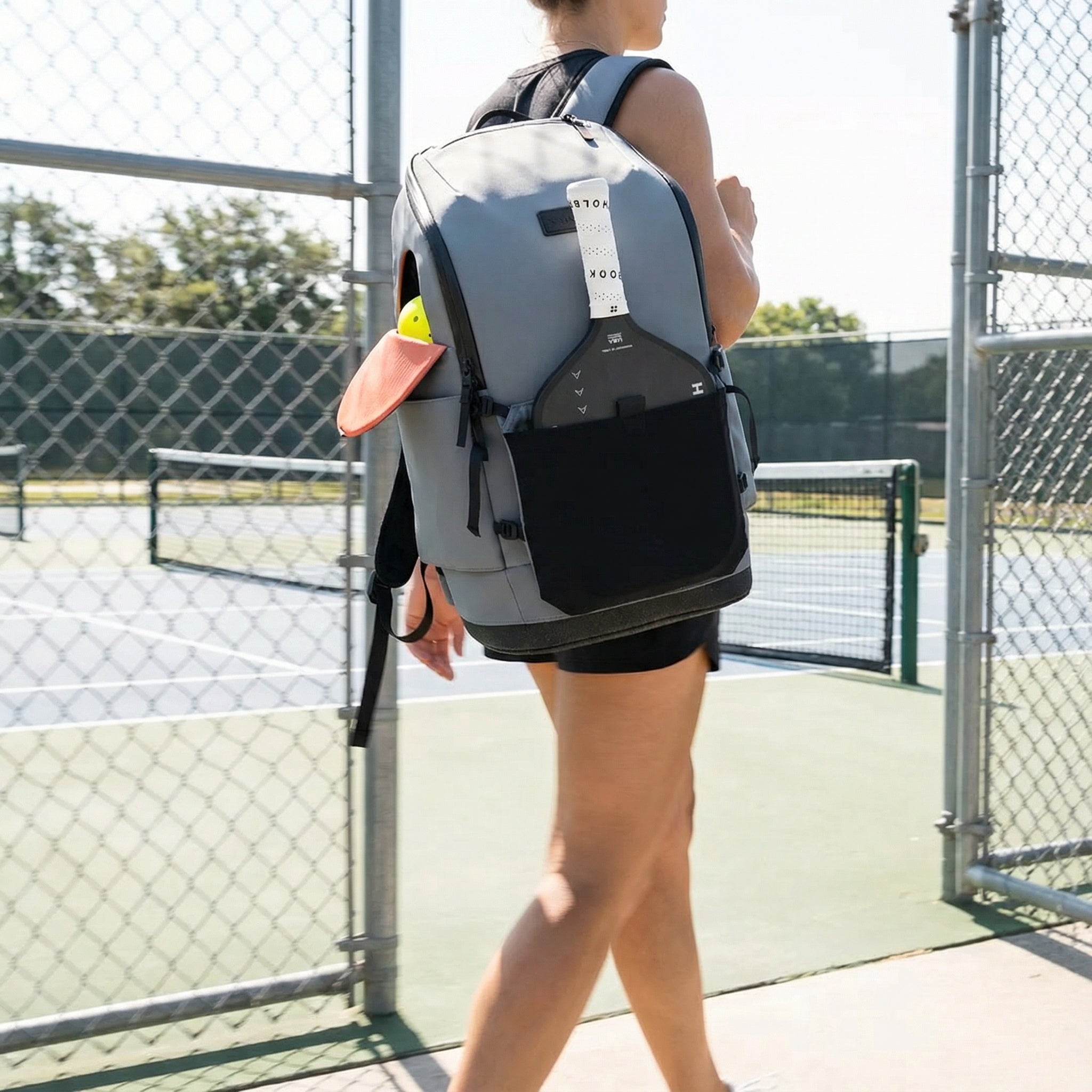
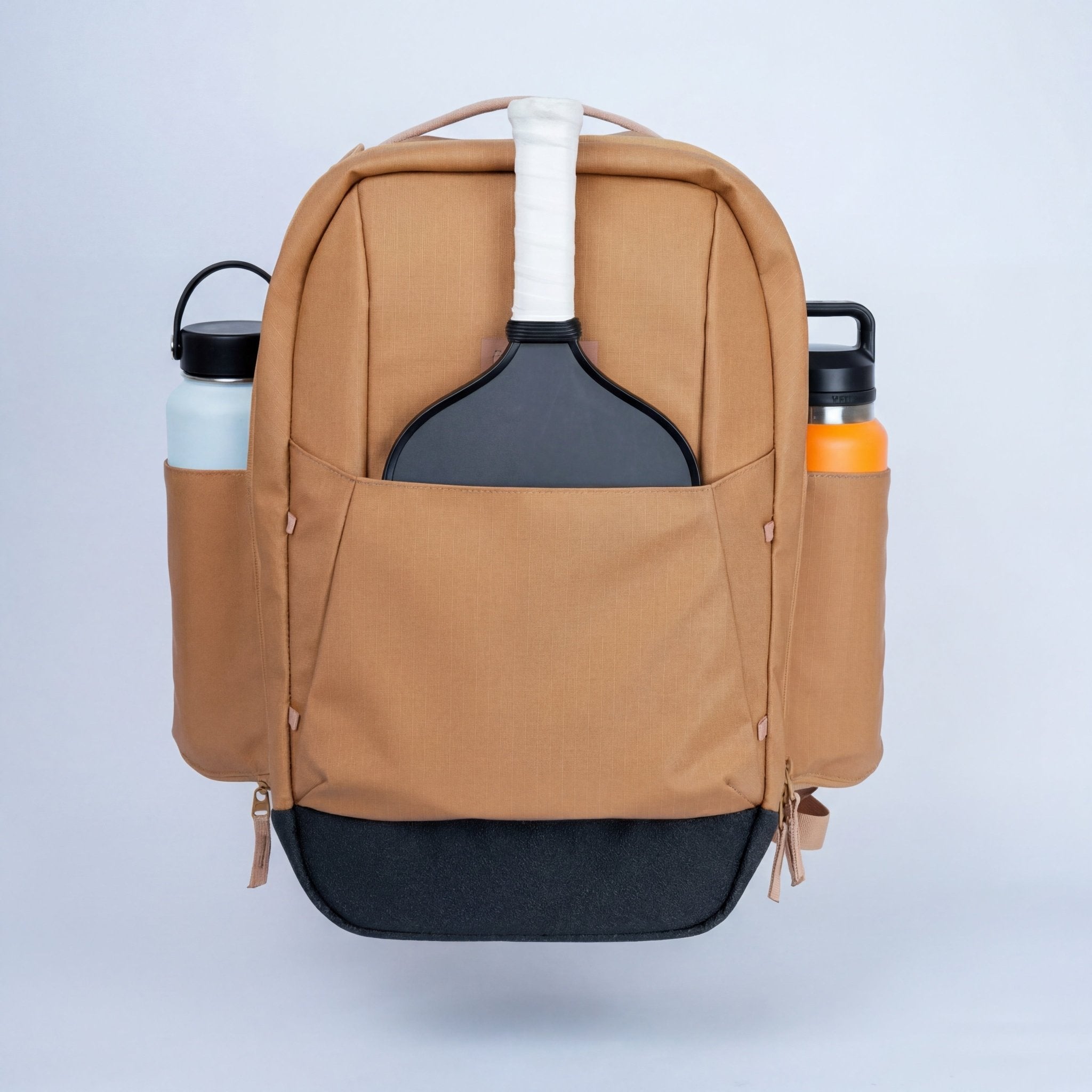
The FORWRD Court Ranger V2 ($195) has a dedicated modular paddle sleeve that fits up to 4 paddles — so your Magnus CAS rides protected next to your backup. 16" laptop sleeve, YKK AquaGuard zippers, designed with feedback from 500+ real players.

FAQ: JOOLA Tyson McGuffin Magnus CAS
What does CAS mean in the JOOLA Magnus paddle?
CAS stands for Carbon Armor Surface — JOOLA's raw carbon fiber face technology. Unlike smooth carbon, the CAS texture grips the ball's surface on contact, generating more topspin and slice than a polished face. It's the same principle behind other high-spin carbon paddles but at a more accessible price.
How does the Magnus CAS compare to the Magnus 3S?
The Magnus 3S ($119.95) adds thermoformed carbon layering for better control and reduced vibration at off-center hits. Both share the spin-heavy DNA from McGuffin's playstyle, but the 3S is more well-rounded. If you're a 3.5+ player who plays 3× per week, the $30 upgrade to the 3S is worth it. Beginners and casual players: the CAS is fine.
Is the JOOLA Magnus CAS good for beginners?
Not really. Beginners are still learning to control dinks and third-shot drops — the Magnus CAS favors firm contact and aggressive drives, which can actually reinforce bad habits for new players. A fiberglass-faced paddle with more forgiveness (like the Selkirk SLK Halo) will build fundamentals better. The Magnus CAS is best for players at 3.0 and above who understand their game style.
Does Tyson McGuffin actually use the Magnus CAS?
McGuffin has transitioned to the higher-end Pro IV and Kosmos Pro V on the pro tour. The CAS is the consumer/entry-level version of the Magnus signature line. It's accurate to say the CAS reflects McGuffin's playstyle philosophy (aggressive, spin-heavy) but he personally competes with the top-tier Pro series in tournament play.
How heavy is the JOOLA Magnus CAS?
The Magnus CAS typically weighs between 8.0 and 8.4 oz (approximately 227–238g), which falls in the mid-range for pickleball paddles. Most recreational players find this weight balanced — heavy enough for power drives, light enough to not be fatiguing over a 90-minute session. If you're elbow-sensitive, lighter paddles in the 7.5–7.8 oz range may be a better fit.
Final Verdict
The JOOLA Magnus CAS "The Lion" is one of the best under-$100 carbon paddles you can buy right now — if you're the right player for it. Spin output is legitimately strong for the price. It's built for people who want to drive, attack, and dictate pace from the baseline. It is not a dink specialist, and it's not trying to be.
At $89.95, you're getting McGuffin's signature spin DNA without the $230 Pro IV price tag. For an intermediate player ready to upgrade from a beginner paddle, this delivers most of what matters. If you play heavy kitchen game or want maximum control forgiveness, look at the Perseus 3S instead.
Buy the JOOLA Tyson McGuffin Magnus on Pickleball Central ($89.95) →

Leave a comment
This site is protected by hCaptcha and the hCaptcha Privacy Policy and Terms of Service apply.