

Last Updated: May 2026
Most pickleball players improve slowly not because they lack talent, but because they practice the wrong things. They show up, play games, lose to the same opponents, and wonder why nothing changes. The truth is direct: game play reinforces existing habits. Deliberate drilling builds new ones.
We designed the Court Caddy and Court Ranger V2 bags after working with 500+ real players across skill levels. What we kept hearing from the ones who were actually improving: they had a system. Not a complicated one—just consistent, targeted practice with specific goals.
This guide lays out that system. Whether you've got 20 minutes before work or two hours at the court on a Saturday, here's what to work on and why it actually moves the needle.
The four drills that matter most
Players waste time on shots they already do reasonably well. The fastest improvement comes from drilling the four areas where most rec players consistently lose points:
1. Dinking — the foundation of every good point
Dinking isn't the "boring" part of pickleball. It's where points are set up and won. A player who can dink consistently at 3.5 beats a 4.0 who can't.
The drill: Partner up and dink cross-court for 10 minutes, then switch to down-the-line for 10 more. The goal isn't to hit winners—it's to keep rallies going for 30+ shots without errors. Track your error rate. A 5% error rate (1 miss per 20 shots) is what you're aiming for before adding pace or angles.
The fix for most players: you're reaching for the ball instead of moving your feet to it. If your paddle is extended more than a foot in front of your shoulder, your body position is wrong. Move first, then hit.
2. Third-shot drop — the shot that unlocks the game
The third-shot drop is the most important shot in the game that most rec players never practice. It's what transitions you from the baseline into the kitchen rally. Get comfortable with it and your win rate climbs. Skip it and you'll always be playing from behind.
The drill: Stand on the baseline, have a partner or ball machine feed you balls from mid-court. Your job: land every shot softly in the kitchen—not on the net, not past the kitchen, in the kitchen. If you're popping balls up for easy volleys, your touch needs work. If you're hitting the net, you're hitting too early in your swing. Aim for 80% success rate before advancing to moving feet and hitting.
A clean release and consistent follow-through matter here more than power. This is a touch shot, not a drive.
3. Reset shots — stop attacking from bad positions
Here's what separates 3.5 players from 4.0: resets. When you're pulled wide or caught mid-court, the instinct is to attack. The right play is usually a defensive, slow ball back to the kitchen. The reset drill trains that instinct.
The drill: Stand mid-court. Partner drives balls at you from the non-volley zone. Your job: absorb pace and drop the ball back into the kitchen, not hard back at them. Focus on softening the contact—let the ball come to you rather than swinging at it. Ten minutes of this per session dramatically reduces the "unforced error when out of position" problem most players have.
4. Serve and return — the two most underrated strokes
Nobody practices serves because everyone can get the ball in play. But a consistent deep serve to the backhand corner, combined with a return that stays low and deep, wins more free points than any fancy third-shot drop combination.
Five minutes of serve practice per session to a specific target (cone at the backhand corner, 3 feet from the baseline). Five minutes of return practice, simulating a deep serve coming to your forehand and backhand. These two drills alone will improve your win rate against players at your skill level.
Building a daily practice routine
The mistake most players make is treating practice as "just playing more games." That's not practice—it's game play. Deliberate practice means structured time on specific skills.
Here's a 45-minute structure that works whether you're a 2.5 or a 4.0:
0-10 minutes: Dinking warm-up (cross-court, then down-the-line). Gets your hands warm, builds consistency muscle memory.
10-20 minutes: Third-shot drop drills from baseline. Focus on placement in the kitchen, not power.
20-30 minutes: Reset shots from mid-court under pressure. Have your partner drive at you; you practice absorbing and resetting.
30-40 minutes: Serve and return practice. Target specific zones. Count misses.
40-45 minutes: Mini-games to 7 with a specific rule: no attacking until you've worked your way to the kitchen. Forces you to use what you drilled.
Three times a week of this beats seven casual play sessions. Your practice partners will hate you for the structure—until they start losing to you regularly.
Solo drills for days without court access
Most improvement happens outside formal practice sessions. Wall work is underrated. A flat wall 14 feet away simulates kitchen dink exchanges with decent fidelity.
Wall dink drill: Stand 8 feet from the wall. Dink softly at the wall between knee and shoulder height for as long as you can. Count consecutive shots without a reset. Beat your record each session.
Paddle face awareness: Hold your paddle out in front of you and rotate slowly. Notice where your paddle face opens and closes. Most players don't realize how much their grip changes from backhand to forehand—consciously drilling this awareness stops mishits from unintended open faces.
Footwork patterns: Without a ball, practice the split step: move, stop, split step before the imaginary shot. Do this for 5 minutes. Sounds silly. Works. Most rec player errors happen because they're still moving when they hit the ball.
What to work on by skill level
Different problems need different fixes depending on where you are in the game. USA Pickleball's skill rating definitions give a solid framework if you're unsure where you fall.
2.5 players: fundamentals first
If you're newer to the game, spend 70% of your drilling time on two things: getting to the kitchen after the third shot, and not hitting into the net on dinks. Everything else—strategy, speed-ups, erne shots—is irrelevant until your error rate on basic exchanges drops. Our beginner pickleball guide covers the fundamentals to lock in first.
3.0-3.5 players: fix your third shot
The jump from 3.0 to 3.5 is almost entirely about third-shot consistency. Players at this level can dink reasonably well but keep getting caught mid-court because they can't transition effectively. Drill third-shot drops until hitting a consistent low, arcing shot becomes automatic.
4.0+ players: pressure and placement
At this level, you've got the basics. The improvement is in the nuance: where exactly you're placing dinks (targeting the opponent's hip, not just the kitchen), when to speed up (you need a clear pattern to detect, not just a "feeling"), and how you're exploiting your opponents' positioning. Film your matches. You'll see patterns you can't feel in real time.
Gear that doesn't get in the way
Your equipment shouldn't be a distraction. Losing a ball mid-rally because your bag is disorganized, or digging through clutter for your water bottle between points, breaks focus.
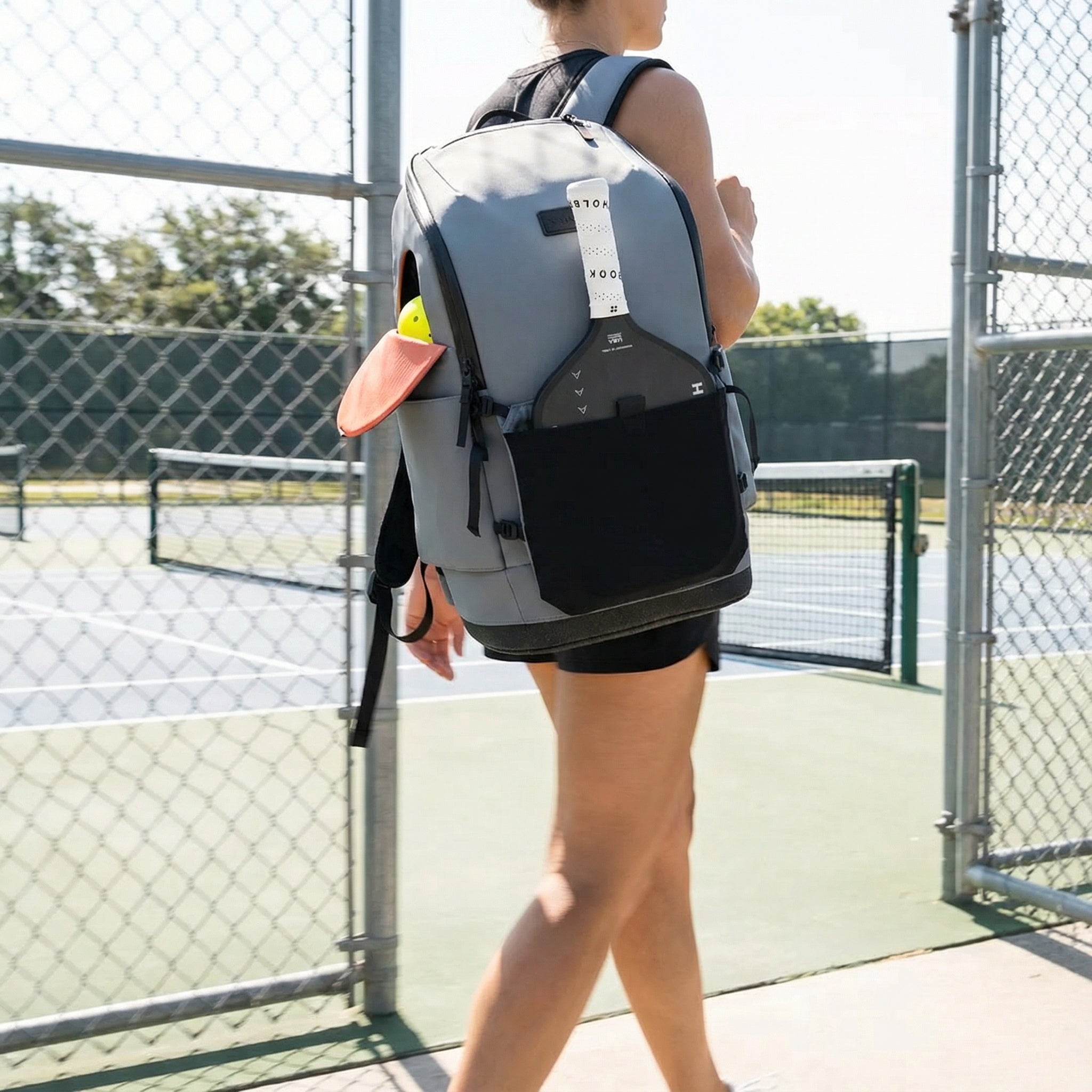
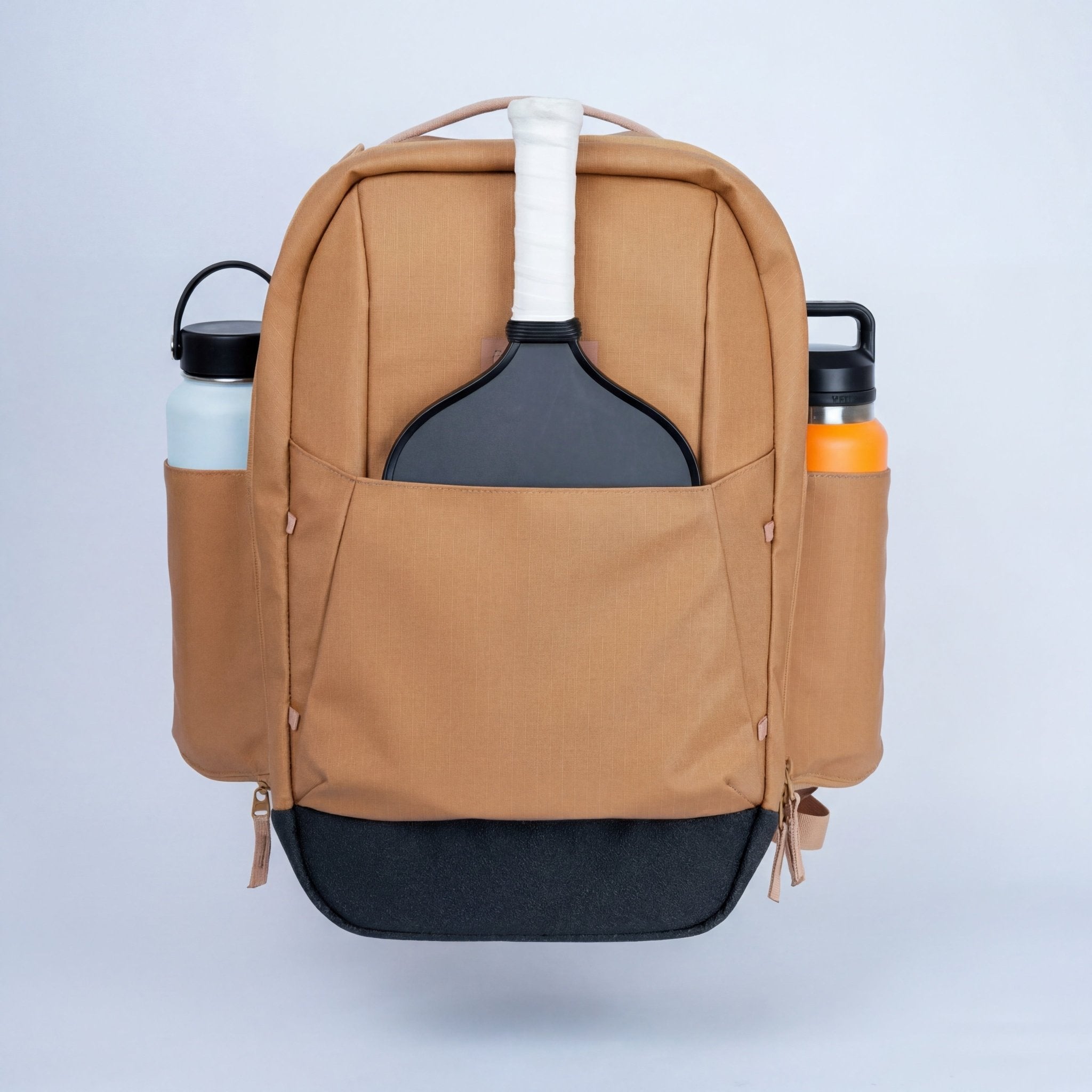
When we designed the Court Ranger V2 with input from 500+ players, organization came up constantly. Separate paddle sleeve so you're not scraping surfaces. Water bottle pocket on the outside, accessible without digging. 16" laptop sleeve for players who come straight from the office. YKK AquaGuard zippers that hold up in rain and court humidity.

The Court Caddy ($325) is for the player who wants maximum capacity: 4-paddle storage, modular sleeve layout, and a lifetime warranty. If you're hitting three sessions a week and taking the game seriously, that's the bag.
The mental side of daily practice
Here's something most drill guides skip: the mental component of improvement. Players hit a plateau not because they lack skill, but because they stop being uncomfortable.
Drill at the edge of your ability. If you're dinking and never missing, you're drilling too easy. The productive zone is about 70-80% success rate—hard enough to push you, easy enough to stay engaged.
Track one number per session. Not "how did I play"—that's too vague. One specific metric: dink errors per 100 balls, third-shot drop success rate, serves hitting the target zone. Tracking creates accountability and makes improvement visible.
And take rest days seriously. The players who improve fastest aren't the ones practicing every day—they're the ones who practice hard three to four days a week and recover on the others. Muscle memory consolidates during sleep, not during the next session.
Frequently asked questions
How often should I practice pickleball to improve?
Three focused practice sessions per week beats seven casual ones. An hour of deliberate drilling—dinking, third-shot drops, resets—produces faster improvement than the same time spent in open play. Even 15-20 minutes of solo wall work on rest days maintains muscle memory without burning out your body.
What drills should I do every day to improve at pickleball?
The four highest-leverage daily drills: dinking cross-court and down-the-line for consistency, third-shot drop from the baseline for soft hands, reset shots from mid-court to break the habit of attacking from bad positions, and serve-and-return practice for the two most underrated strokes in the game.
How do I improve my dinking in pickleball?
Consistent dinking comes from three habits: keeping the paddle in front of your body (not reaching), using shoulder and hip rotation rather than your wrist, and placing the ball low over the net at the opponent's feet. Drill cross-court dinks for 10 minutes per session until your error rate drops below 5%.
What is the most important shot in pickleball to practice?
The third-shot drop is the single most important shot to practice if you want to improve quickly. It bridges the serve rally and the kitchen rally—done well, it resets the exchange and gets you to the non-volley zone. Most recreational players skip this drill and pay for it in every match they play.
Ready to upgrade your gear as your game improves? Shop the Court Ranger V2—built with 500+ real players, designed to keep everything organized so your practice sessions stay focused on the drills that matter.

Leave a comment
This site is protected by hCaptcha and the hCaptcha Privacy Policy and Terms of Service apply.