

Last Updated: October 2026
Every pickleball player knows the smell. You've just finished a 2-hour session in 85-degree heat, your court shoes are soaked, your shirt could wring out, and now you have to drive home with all of it shoved into your bag. A sweat bag — a dedicated waterproof liner for wet gear — is the simple solution most players never think about until their expensive pickleball bag starts to smell like a locker room.
Disclosure: This post contains affiliate links to Pickleball Central. If you purchase through our links, FORWRD earns a small commission at no extra cost to you. We only link to products we'd recommend regardless.

What is a sweat bag — and why pickleball players need one
A sweat bag is a waterproof or water-resistant pouch designed to contain wet, sweaty items separately from your clean gear. For pickleball players, that usually means court shoes, a damp towel, sweaty apparel, and the occasional soaked wristband.
Without one, moisture from wet shoes bleeds into paddle handles, fabric gets musty, and expensive bags start harboring bacteria in seams and pockets that are nearly impossible to fully clean. The YKK AquaGuard zippers on a bag like the Court Caddy resist water from the outside — but they don't protect against moisture you've loaded from the inside.
A good sweat bag costs $15–$40 and extends the life of a $200–$325 pickleball bag. The math is obvious.
Best sweat bags for pickleball players in 2026
Best overall: waterproof drawstring wet bag
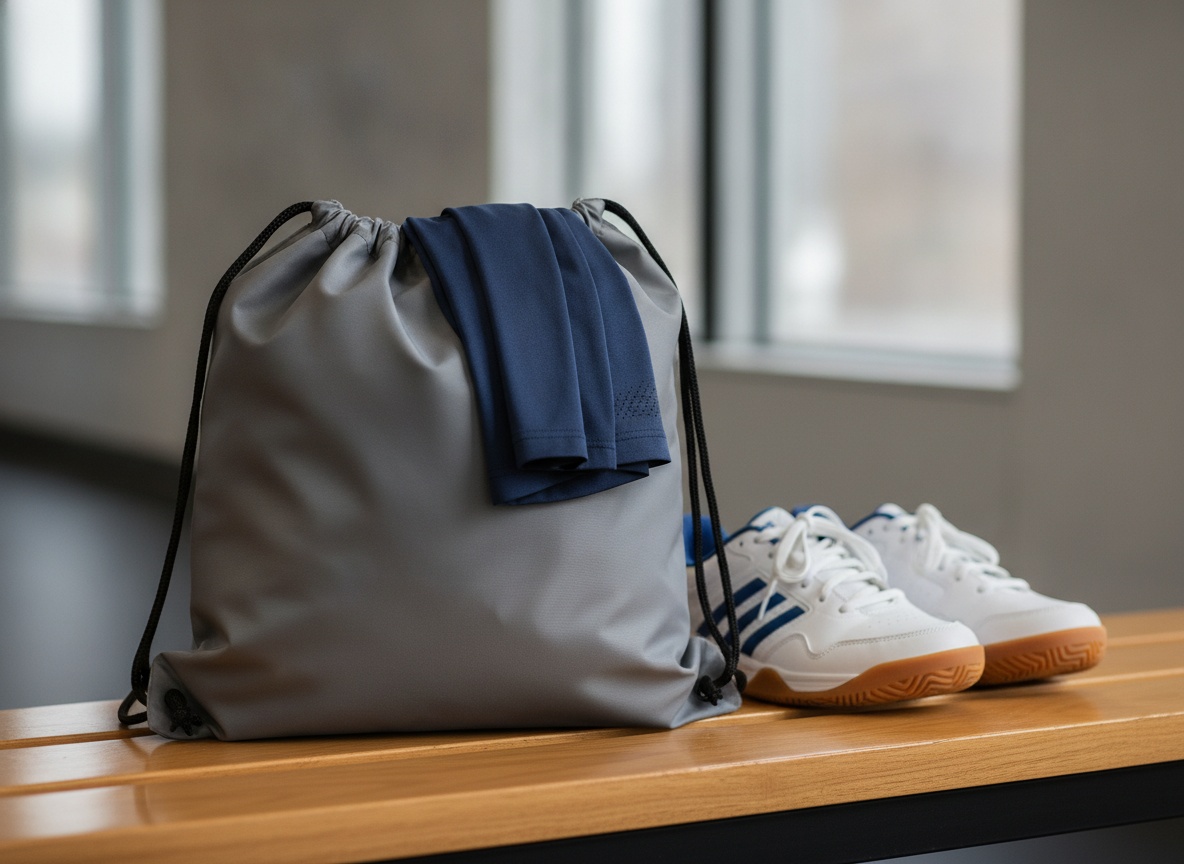
The simplest format: a lightweight waterproof pouch with a drawstring closure. Plenty of room for court shoes plus a wet towel, weighs almost nothing, and rolls up small enough to tuck into any bag pocket. Find waterproof wet bags at Pickleball Central.
Best for tournament travel: zippered wet-dry bag
Tournament play usually means 3–5 hours of court time, multiple clothing changes, and luggage that can't smell when you check into a hotel. A zippered wet-dry bag with separate compartments keeps soaked gear isolated while still giving you organized dry pockets for clean clothes or accessories. These pack well inside the Court Ranger V2's 16" main compartment.
Best budget option: reusable silicone bag
Reusable food-grade silicone bags — the kind designed for meal prep — work surprisingly well for wet court shoes and damp towels. They're watertight, machine washable, and cost under $15. The downside: they're stiff and don't compress as nicely as nylon options. Good for players who want a solution without spending money on gear-specific bags.
Best premium option: antimicrobial wet bag with ventilation
For players dealing with chronic foot odor or wet climates, antimicrobial wet bags with mesh ventilation panels are worth the $30–$40 price. The mesh lets moisture slowly evaporate while containing liquid splatter — so shoes dry faster and the bag itself stays fresher between washes. Shop antimicrobial gear bags at Pickleball Central.
What to look for in a pickleball sweat bag
Waterproofing method matters. Welded seams are more reliable than sewn seams with waterproof coating. Coating wears off; welds don't. For court shoes specifically — which carry the most moisture — welded or heat-sealed construction is worth prioritizing.
Size for your shoes, not your clothes. Most players underestimate how much space a pair of wet court shoes needs. Check internal dimensions: you want at least 12" x 8" x 4" for men's size 10+ shoes, including a bit of extra room so you can actually seal the bag after loading.
Easy to sanitize. The whole point of a sweat bag is preventing bacteria transfer. A bag you can't easily wash defeats the purpose. Look for machine-washable nylon or silicone options you'll actually clean weekly.
Minimal weight. You're already carrying paddles, balls, water, and a change of clothes. A sweat bag should weigh under 3 oz empty. If it's heavier than that, it's overbuilt for this use case.
How to set up your pickleball bag for zero odor
The cleanest setups follow a simple rule: wet things never touch dry things. Here's what that looks like in practice with a well-organized bag:
"After testing hundreds of bag configurations with real players, the biggest surprise was how many people were dropping wet shoes directly into the main compartment. You're paying $300 for a bag and then soaking the fabric from the inside. A $20 sweat bag changes the whole equation — the gear stays fresh, the bag stays clean, the system holds up."
— Grub, FORWRD co-founder
- Shoes go in the sweat bag immediately after play — not "when you get to the car." The first 10 minutes of trapped warmth are when bacteria multiply fastest.
- Sweaty clothes get a second sweat bag — or a large gallon-size silicone bag. Keep it separate from the shoe bag so odors don't cross-contaminate.
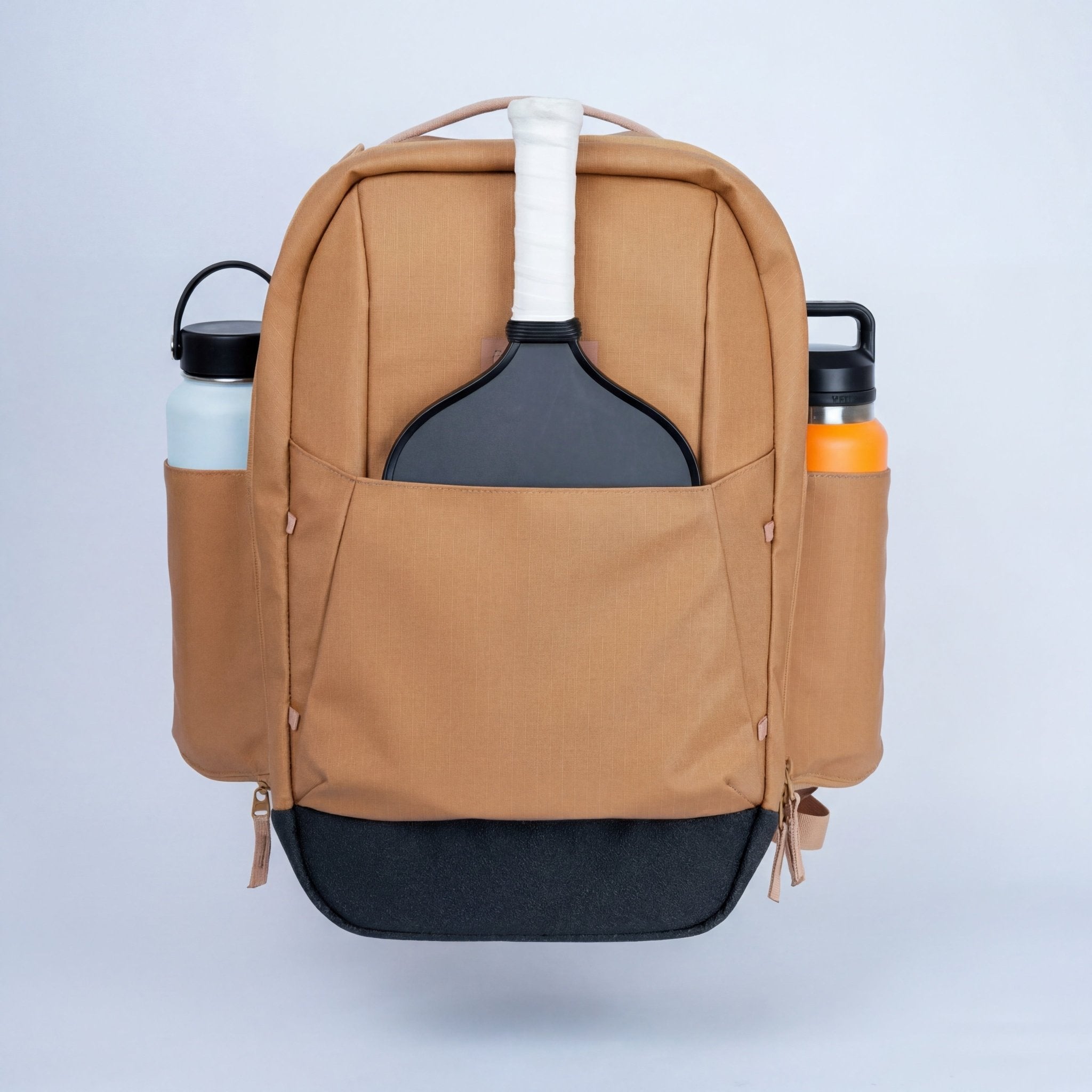
- Paddles stay in the modular sleeve, completely isolated from wet gear. The Court Caddy's dedicated paddle sleeve keeps your surfaces away from moisture, sweat, and towels that could compromise the face texture over time.
- Clean items stay in outer pockets — phone, keys, wallet, protein bar. These never share space with wet gear.
- Air out the bag after every session — unzip everything and let it breathe for 30 minutes before putting it away. Even waterproof bags need airflow to reset.

How often should you wash your sweat bag
Weekly if you play 3+ times a week. Biweekly for casual players. The telltale sign it's overdue: the inside smells even before you load anything into it, which means bacteria have colonized the lining itself. At that point, hot water with white vinegar is more effective than standard detergent.
Most nylon wet bags handle machine washing on gentle cycle. Let them air dry completely — a wet bag stored wet is just a larger sweat bag.
Sweat bag vs. the "just use a plastic grocery bag" approach
Players use plastic bags constantly because they're free and already in the car. The problem: they trap moisture with zero ventilation, they split under the weight of heavy shoes, and they absolutely cannot be sanitized. A cheap plastic bag from the grocery store is a bacteria greenhouse. After 6 months of doing this to a $300 pickleball bag, the damage is done.
The $20 investment in a proper wet bag pays for itself the first time it prevents odor from setting into your bag's fabric.
Frequently Asked Questions About Sweat Bags for Pickleball
Can I just use a Ziploc bag instead of a proper sweat bag?
Ziplocs work in a pinch but fail in two ways: they split at the zipper seam under the weight of wet shoes, and they have no ventilation. For a $0 solution they're fine occasionally. For 3x-a-week play, a dedicated wet bag rated for at least 1 liter will outlast a year of Ziploc bags and keep shoes fresher.
Do sweat bags cause shoes to smell worse because they trap moisture?
Only if you leave shoes sealed for 12+ hours. The goal of a sweat bag is transport containment, not long-term storage. Pull the shoes out when you're home, stuff them with newspaper or cedar shoe inserts, and let them breathe. Put the bag in the wash. Routine matters more than the bag itself.
What's the best way to remove pickleball shoe odor that's already set in?
Baking soda overnight — a tablespoon per shoe, 8 hours, shake it out. For odor set into the insole, replace the insoles and treat the shoe interior with white vinegar diluted 50/50 with water. Let it dry fully before wearing. Prevention via sweat bag use immediately after play is always easier than remediation.
Should a pickleball bag have a built-in wet pocket?
A separate sweat bag beats built-in wet pockets for most players. You can use it across multiple bags, wash it independently, and replace it when the lining degrades. A $20 external wet bag paired with the Court Caddy gives better total hygiene than most bags with integrated wet pockets — and you're not locked into one bag for life.
How many sweat bags should I own?
Two. One in active rotation, one in the wash. With a single bag you'll eventually pack it wet and forget to wash it before your next session. Two bags eliminate that failure mode entirely. At $15–$25 each, it's a cheap system fix.
The bottom line on sweat bags for pickleball
This is a $20 solution to a problem that ruins $300 bags and kills equipment longevity. The best sweat bags for pickleball players are waterproof, lightweight, machine-washable, and big enough for your court shoes. Everything else is preference.
Pair the right wet bag with a well-organized pickleball bag that keeps gear separated — the Court Caddy ($325) for players who carry everything, or the Court Ranger V2 ($195) for everyday pack-light play — and your gear stays fresh for years, not months.
Ready to upgrade the whole setup?
The Court Caddy is built with 500+ real players to keep paddles, gear, and a 15" laptop organized on and off the court. Add a $20 wet bag and your setup is complete.

Leave a comment
This site is protected by hCaptcha and the hCaptcha Privacy Policy and Terms of Service apply.