

Disclosure: This post contains affiliate links to Pickleball Central. If you purchase through our links, FORWRD earns a small commission at no extra cost to you. We only link to products we'd recommend regardless.
Last Updated: August 2026
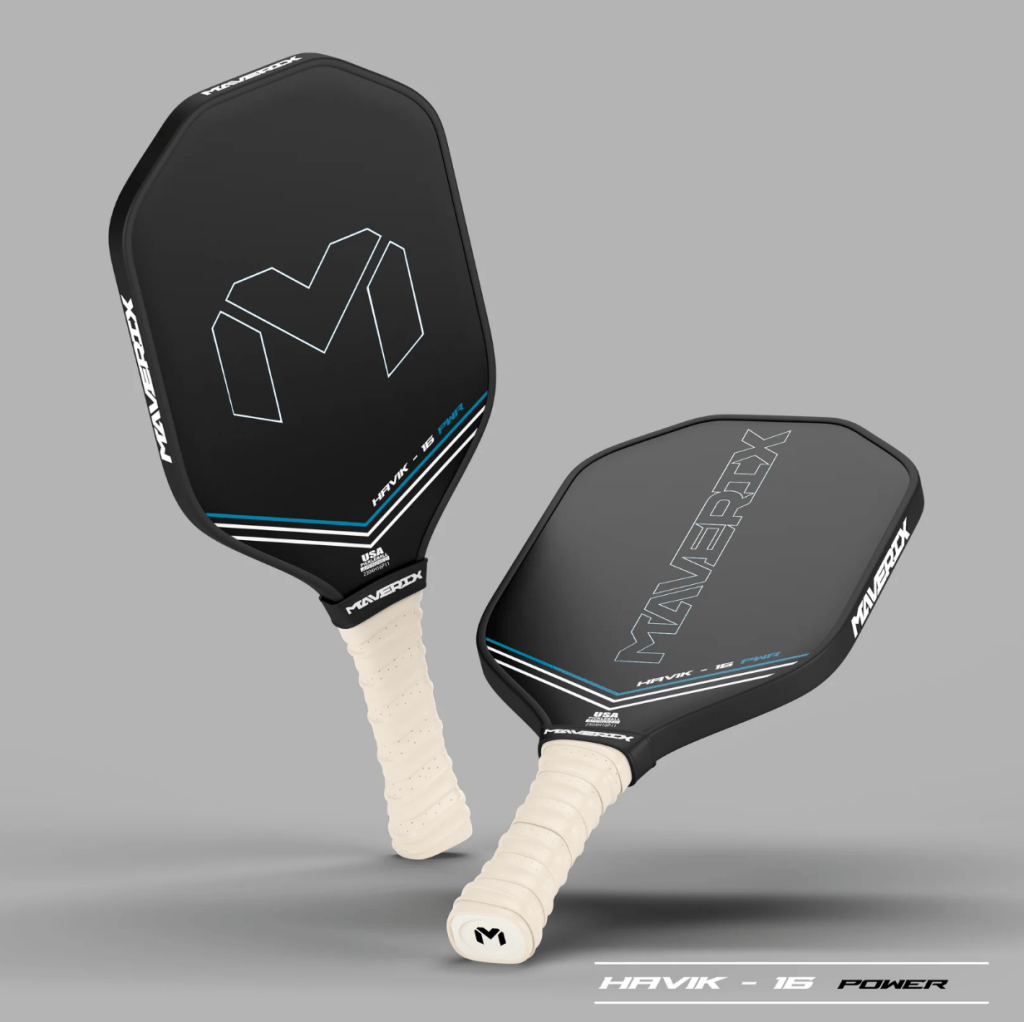
The Maverix Havik 16 Power has built a strong reputation among players who want more firepower from the baseline without sacrificing the control needed for kitchen exchanges. We tested it across multiple sessions at outdoor courts, covering drives, third-shot drops, resets, and dinking — here's an honest breakdown of what it does well, where it falls short, and who it's actually built for.
"The graphite face on a power-bias paddle is a real commitment — you're trading some softness at the kitchen for noticeably more pop on drives. Players who already have good hands can make it work. Players still developing soft game should look at something with a fiberglass face first."
— Topher, co-founder, FORWRD
Quick Verdict
Best for: Intermediate to advanced players who play an aggressive, power-first style and want spin without losing control at the net.
Not ideal for: Beginners or soft-game specialists who live at the kitchen and rely on delicate resets.
Price range: $120–$160
USAPA approved: Yes
Specs at a Glance
| Spec | Details |
|---|---|
| Weight | ~8.0 oz (mid-weight) |
| Grip Size | 4 1/4 inches standard |
| Paddle Face | Textured graphite |
| Core | Polymer honeycomb |
| Shape | Widebody |
| USAPA Approved | Yes |
| Warranty | 1-year limited |
Design and Build Quality
The Havik 16 Power is a widebody paddle — meaning a broader hitting surface that increases the size of the effective sweet spot. For players who don't always hit dead center, this forgiveness matters: off-center hits stay controlled more consistently than on narrower paddle shapes.
The textured graphite face is the standout construction choice. Graphite faces are stiffer than fiberglass, which translates to more power transfer on contact — but also less inherent softness for touch shots. The texture adds friction with the ball, which is the mechanism for generating topspin and backspin. On hard, flat drives, the textured surface grabs the ball noticeably better than a smooth composite face.
The polymer honeycomb core softens what would otherwise be a harsh graphite-face experience. It provides a cushioning effect that takes some edge off the power — you get punch without feeling like you're hitting a wall. Build quality feels solid; no flex in the paddle body during hard swings, and the edge guard is flush and well-finished.
The ergonomic cushioned grip is comfortable over long sessions. At 4 1/4 inches, it works for most hand sizes, and players who prefer more girth can wrap an overgrip over it without losing control.
On-Court Performance
Power and Drives
This is where the Havik 16 earns its name. Flat drives come off the paddle with noticeably more pace than midweight composite paddles at the same swing speed. The graphite face stiffness means energy transfers efficiently rather than being absorbed into the paddle — the ball goes where you send it with authority. Players transitioning from softer paddles will need a session or two to calibrate their swing speed down; the paddle punishes over-swinging more than forgiving setups do.
Spin Generation
The textured graphite face delivers above-average spin for this price range. Topspin drives curve down noticeably, which is useful for hitting aggressive third-shot attacks that still land in. Backspin slices sit low on bounce and give kitchen opponents trouble on low dinks. If spin is part of your game strategy, this paddle rewards it.
Kitchen and Dinking
The most important test for competitive players — and the area where the Havik 16 Power makes the biggest compromise. The graphite face and polymer core combination is not as soft as foam-core paddles purpose-built for touch play. Dinks stay controllable, but reset blocks on fast drives require more active hand softening than you'd need with a foam-core paddle. Players with well-developed soft hands will manage fine; beginners or players still developing kitchen technique will find it less forgiving than alternatives.
Third-Shot Drops
Serviceable but not exceptional. The paddle generates enough feel for quality drops when struck correctly, but the power bias means the margin for error is tighter than with a more touch-oriented setup. If your game is built around the soft third shot, look at a lighter fiberglass or foam-core option first.
That said, skilled players who invest time calibrating their drop shot with this paddle can get consistent results — the textured face actually helps impart light backspin on low drops, which makes the ball sit rather than pop up when it lands in the transition zone.
Serve and Return
The Havik 16 Power is excellent off the serve. Its power transfer and spin capability combine for flat, heavy serves that keep opponents pinned deep. Returns of serve benefit from the same spin versatility — you can redirect with pace or cut a sharp angle return more easily than with a soft-play paddle.
How the Havik 16 Power Compares
Players often compare the Havik 16 Power to paddles at a similar price point:
- vs. JOOLA Tour Elite: The JOOLA Tour Elite is more balanced — slightly more feel at the kitchen with less raw power. Players who split time between aggressive baseline play and dinking may prefer the JOOLA. For pure power and spin, the Havik 16 edges ahead.
- vs. Selkirk SLK Neo: The SLK Neo is lighter and better suited for finesse-first players. The Havik 16 outpaces it significantly on power and spin generation; the Neo is more forgiving for kitchen resets. Different tools for different styles.
- vs. CRBN 1X: The CRBN 1X is a foam-core paddle with excellent touch. The Havik 16 beats it on power; the CRBN wins on softness and dink control. If your game depends on resets and patient kitchen exchanges, the CRBN is the better fit. If you play aggressively and want to attack, the Havik 16 delivers more.
Pros and Cons
What works:
- Exceptional power output on flat drives — best in class at this price for aggressive baseliners
- Above-average spin from textured graphite face
- Widebody shape improves consistency on off-center contact
- Solid build quality; no flex or rattle after extended use
- Comfortable grip over long sessions
What to know before buying:
- Power bias creates a steeper learning curve for players used to softer paddles
- Not the best choice for kitchen-dominant players or those still developing soft game
- Graphite face is less forgiving on touch shots than foam-core alternatives
- Price point reflects serious-player positioning — not ideal for casual or beginner play
Who Should Buy the Maverix Havik 16 Power
Buy it if: You play an aggressive, power-first style from the baseline, you want spin as a tactical weapon, and you already have solid kitchen mechanics. Tournament players and 4.0+ recreational players will get the most out of this paddle.
Look elsewhere if: You're a beginner, you prioritize touch play and resets above all else, or you're coming from a very light paddle and don't want to adjust to more weight and stiffness.
Complete Your Setup: The Right Bag for Your Paddle
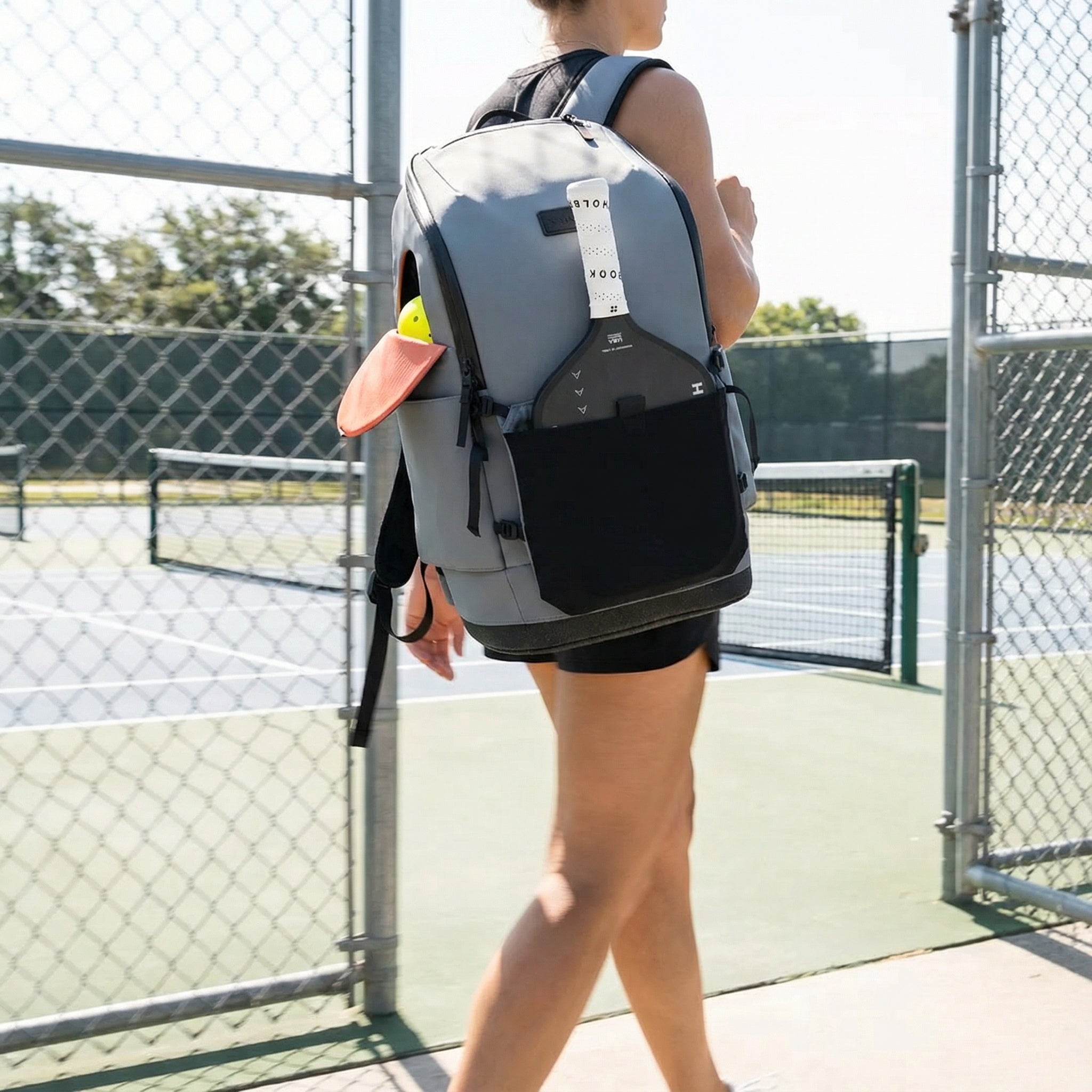
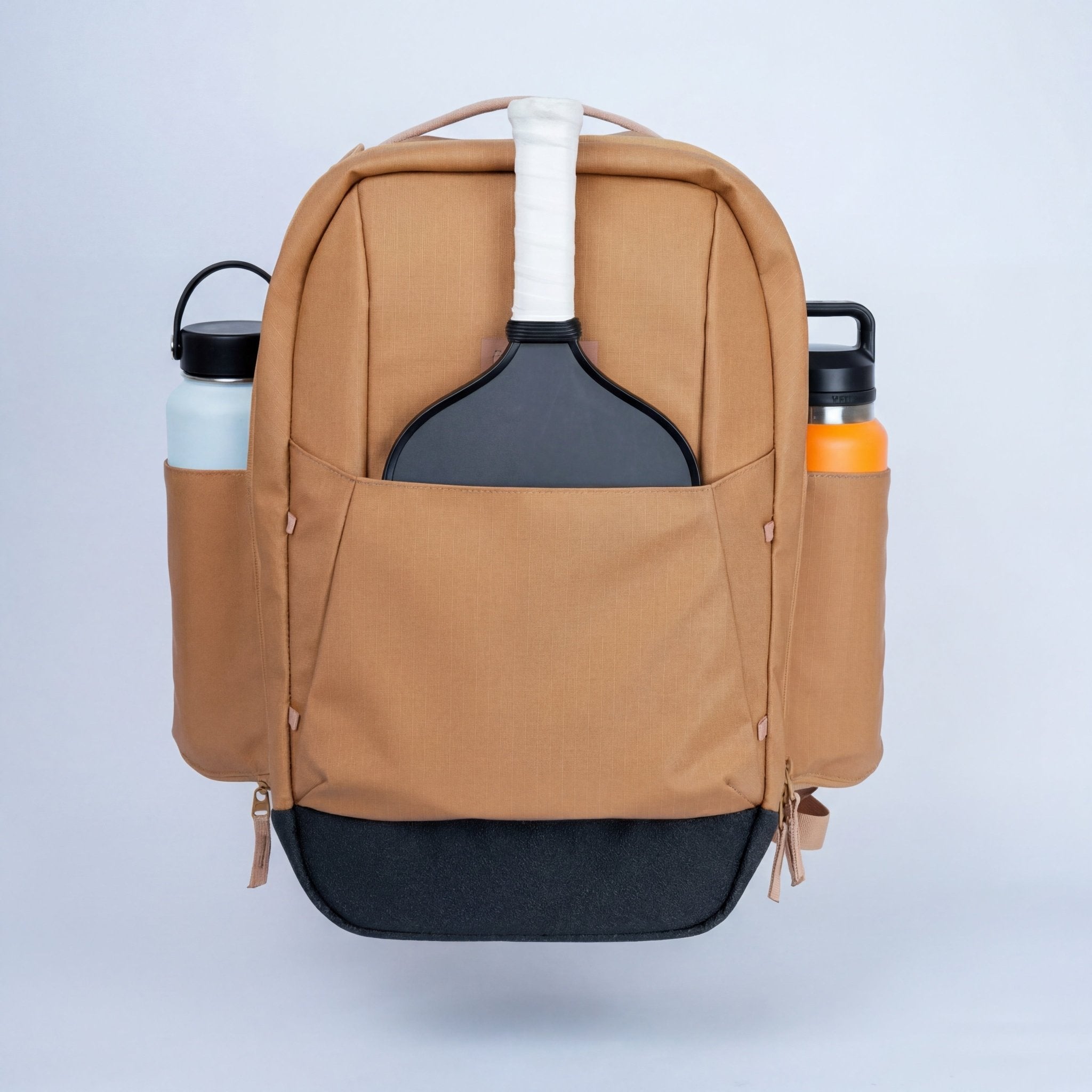
A paddle this well-engineered deserves to be carried properly. The FORWRD Court Caddy ($325) has a padded 15" modular paddle sleeve that holds 3–4 paddles without face-to-face contact — protecting the textured graphite surface that makes the Havik 16 perform. Designed with 500+ real players, built for outdoor courts, and featured in The Dink, Pickleball Effect, and The Kitchen.

If you prefer a slimmer carry, the Court Ranger V2 ($195) offers the same YKK AquaGuard zipper build quality with a 16" laptop sleeve in a streamlined backpack profile. Both bags are designed to protect paddles properly — no rattling, no scratched faces.
Ready to upgrade? Shop the Court Caddy — built with 500+ real players.
Frequently Asked Questions
Is the Maverix Havik 16 Power USAPA approved?
Yes, the Havik 16 Power is approved by USA Pickleball for sanctioned tournament play. That approval covers open, senior, and age-group events. Always verify your specific paddle against the current USAPA approved equipment list before a tournament, as the list is updated regularly and older model revisions can sometimes fall off.
Who is the Maverix Havik 16 Power best for?
Intermediate to advanced players who prioritize power and spin over soft touch. Its 8.0 oz weight and textured graphite face reward aggressive baseline play and topspin drives, but players who rely heavily on dinking and reset play may prefer a lighter, more maneuverable option.
What is the grip size on the Maverix Havik 16 Power?
The paddle ships with a standard 4 1/4-inch grip. Players who prefer a larger grip can add an overgrip — each wrap adds approximately 1/16 inch — or replace the existing grip with an aftermarket option. Most competitive players with medium or large hands run one overgrip on top of the stock grip.
Does the Maverix Havik 16 Power have a warranty?
Yes, Maverix offers a one-year limited warranty covering manufacturing defects and workmanship issues. The warranty covers delamination, core separation, and face cracking under normal play conditions. Cosmetic damage, edge guard wear, and impact damage are not covered. Contact Maverix directly to initiate a claim.
How does the Havik 16 Power compare to Selkirk or JOOLA paddles at the same price?
The Havik 16 Power outperforms most same-price Selkirk options on raw power output and spin generation. JOOLA paddles at this price tend to offer more balance between power and touch. If you want pure power and spin, the Maverix edges ahead; if you want a more well-rounded intermediate paddle, JOOLA is worth comparing directly.

Leave a comment
This site is protected by hCaptcha and the hCaptcha Privacy Policy and Terms of Service apply.