

FTC Disclosure: This post contains affiliate links to Pickleball Central. If you purchase through our links, FORWRD earns a commission at no extra cost to you. We only recommend products we'd genuinely put in a bag and take to the court.
Last Updated: October 2026

ONIX Evoke Premier Pro Raw Carbon Review 2026: Four Thicknesses, One Decision
ONIX made its name on balls. The Dura Fast 40 is the outdoor standard at thousands of recreational courts. The Fuse is the indoor gym staple. So when ONIX finally released their first raw carbon fiber paddle — the Evoke Premier Pro — the pickleball world paid attention. But the real story isn't that ONIX entered the raw carbon market. It's what they did that no other brand has done: offered four distinct core thicknesses in a single paddle family, at a single $199.99 price point.
That's the Evoke Premier Pro's actual move. You pick 10mm, 12mm, 14mm, or 16mm. Same raw carbon face, same shape, same brand — just the core thickness (and therefore the entire feel) changes. This review breaks down exactly what that means for your game, and whether ONIX pulled it off.
Quick Verdict
Pros:
- First paddle anywhere with four core thickness options in one model family
- Raw carbon face delivers genuine spin and grit at $199.99
- Traditional 16"×8" shape works across play styles
- Two distinct handle lengths (5" for 10/12mm, 5.35" for 14/16mm) tuned to each role
- ONIX build quality — these are not brand-name-slapped imports
Cons:
- One shape only — no elongated option
- The 10mm version (7.5 oz.) runs light; players who want mass behind shots may find it jumpy
- ONIX composite siblings (Mayhem, Malice) offer similar performance at $209–229 if raw carbon isn't a priority
- At $199.99, you're competing with Six Zero DBD and Gearbox in a crowded $180–$220 control/raw-carbon tier
Price: $199.99 | Best For: Players who want to dial in core thickness precisely | Skip If: You need an elongated shape or want the lightest possible paddle under 7.5 oz.
Specs at a Glance: The Four Thickness Options
| Variant | Core | Weight | Handle | Grip Circ. | Best For |
|---|---|---|---|---|---|
| Max Power (10mm) | 10mm | 7.5 oz. | 5" | 3-7/8" | Bangers, speed players |
| Power (12mm) | 12mm | 7.75 oz. | 5" | 4-1/8" | All-court attackers |
| Control (14mm) | 14mm | 7.75 oz. | 5.35" | 4-1/8" | NVZ players, 3.5–4.5 |
| Max Control (16mm) | 16mm | 8.0 oz. | 5.35" | 4-1/8" | Reset specialists, 4.5+ |
See All Four Thickness Options at PBC →
Why Trust This Review
FORWRD designs pickleball bags — which means we've spent a lot of time talking to players about gear decisions, including the paddle-selection anxiety that leads to hours of Reddit research. We've also tested and written detailed reviews of the ONIX Evoke Malice ($229.99), the Six Zero Double Black Diamond (a direct competitor at $180), and multiple raw carbon paddles from CRBN, Gearbox, and adidas. That cross-brand context is what makes a paddle comparison actually useful.
For this review: we put the 14mm Control and 16mm Max Control versions through three weeks of outdoor play at rec-level 3.5–4.0 courts, with additional evaluation of the 12mm Power variant. All price data verified directly on PBC October 2026.
The Four Thickness Options — Your Actual Decision Guide
Here's the thing no other review spells out plainly: buying the ONIX Evoke Premier Pro is really four separate decisions dressed up as one purchase page. Most paddle reviews are written about a single spec. This one requires you to know what you're actually buying before you click.
10mm Max Power — for the aggressor who wants everything fast. At 7.5 oz. with a thin 10mm core, this is the snappy, ball-pops-off-face version. Your volleys will feel quicker. Your drives will have extra zip because there's less core to absorb and more carbon face to redirect. The trade-off: the dwell time is minimal, which means your reset game and NVZ finesse shots require more touch. If you're transitioning from a fiberglass paddle and want to feel a genuine difference, this is it. The 3-7/8" grip circumference is the smallest of the four — worth noting if you have medium or large hands.
12mm Power — the sweet spot for most attacking players. The quarter-inch jump from 10mm to 12mm matters more than the numbers suggest. You get a slightly larger sweet spot, 0.25 oz. more stability mass, and the grip bumps to 4-1/8". Most 3.5–4.0 recreational attackers who want raw carbon but don't want to overthink it should start here. It's the version that lets you drive and reset without feeling like you're constantly compensating.
14mm Control — the one we tested hardest. Longer handle (5.35"), same weight as the 12mm (7.75 oz.) but a thicker core that cushions touch shots. If you play at the NVZ regularly and your third-shot drop is the shot you're trying to improve, the 14mm version is built for you. The raw carbon face still generates spin — enough that your cross-court dinks will kick on opponents — but the 14mm core gives you a more forgiving response on mis-hits. This is where ONIX's polypropylene honeycomb actually works in your favor: it dampens just enough without going mushy.
16mm Max Control — for the 4.5+ player who wants touch above all else. At 8.0 oz. and 16mm, this is a dead-ball machine by raw carbon standards. Players who need to absorb fast drives and convert them into soft resets will love it. The weight means you're not going to over-drive your blocks. The raw carbon face still adds spin texture even on gentle touches, which is the one thing the 16mm versions of composite paddles often lose. If you're a control player who has been jealous of what raw carbon does for spin but assumed you'd have to sacrifice dwell time — the 16mm Max Control is the answer.
How the Raw Carbon Face Actually Plays
Raw carbon versus textured composite is a real difference, not just marketing. Raw carbon fiber has a natural grit from the exposed fiber strands — before any coating or treatment is applied. That texture grabs the ball at contact and generates spin mechanically, without relying on surface paint or applied grip material that wears down over time.
On the ONIX Evoke Premier Pro, that translates to dinks that skid low and drives that curve more predictably in outdoor conditions. After three weeks on concrete outdoor courts, the raw carbon face on the 14mm version hadn't visibly degraded — which is the real concern with raw carbon durability. Keep in mind: USAP approval can change, and raw carbon paddles are more frequently reviewed for compliance than composite paddles. Check current approval status before tournament play.
What raw carbon doesn't do here: it doesn't magically turn the Premier Pro into a spin machine if your mechanics are off. The face adds texture-based grip, but how you brush through the ball still matters. It's a tool, not a cheat code.
NVZ Performance: Control at the Kitchen Line
The two control variants (14mm and 16mm) are where this paddle genuinely earns the $199.99. At the NVZ, the polypropylene honeycomb core provides enough cushion that you can take pace off a fast drive and redirect it softly — which is the fundamental skill of kitchen-line play. The raw carbon face adds a spin element to dinks that the ONIX Evoke Mayhem (composite face) doesn't quite replicate.
Where the control variants struggle: overhead put-aways. The 16mm core absorbs too much energy for the flat, hard smashes you want when you've gotten someone out of position. The 14mm is better there but still not a weapon. If you're regularly in situations where you need to convert lobs into winners, the 12mm Power is a more complete paddle — you sacrifice some touch but gain real put-away capability.

Comparison: ONIX Evoke Premier Pro vs. ONIX Evoke Malice ($229.99)
The Malice is the other interesting ONIX paddle right now — open-throat design, edgeless, thermofused construction, composite face with carbon fiber Power Frame. At $229.99, it costs $30 more than the Premier Pro.
What the Malice does better: the open-throat design genuinely reduces drag on big swings and adds a slightly different weight distribution (top-heavy feel versus the more balanced Premier Pro). The edgeless thermofused construction also makes it more durable against edge hits. Players who play an aggressive, slash-and-drive style often prefer the Malice's balance.
What the Premier Pro does better: the raw carbon face. Full stop. The Malice uses a DF Composite face — which is good, but it doesn't have the spin grit of raw carbon. And the four-thickness option on the Premier Pro is something the Malice simply doesn't offer (only 14mm and 16mm). If spin is a priority and you want to tune your thickness precisely, the Premier Pro wins.
Compare: ONIX Evoke Malice at PBC ($229.99) →
Comparison: ONIX Evoke Premier Pro vs. Six Zero Double Black Diamond Control 16mm ($180)
The Six Zero DBD Control 16mm is the benchmark raw carbon control paddle at $180 — and it's legitimately excellent. FORWRD reviewed it earlier this year and ranked it as one of the better all-court control paddles available.
The DBD 16mm costs $19.99 less than the Premier Pro. Here's where each wins:
Six Zero DBD wins on: Price (by $20), brand reputation in the raw carbon space (Six Zero has been doing this longer than ONIX), elongated shape option, and a slightly larger sweet spot in the 16mm variant.
ONIX Premier Pro wins on: Thickness variety — the DBD only comes in one or two thicknesses, while the Premier Pro gives you four. For players who want to experiment with what core thickness does to their game without switching brands or spending more, the Premier Pro is unique. ONIX's quality control track record is also strong from years of making balls (they understand materials).
Real talk: if you already know you want a 16mm raw carbon control paddle and you're not going to experiment with other thicknesses, the Six Zero DBD 16mm is the smarter buy at $180. If you're still figuring out your ideal core thickness, buy the Premier Pro — the four-option structure is exactly what you need.
Who Should Buy the ONIX Evoke Premier Pro
- Players upgrading from composite to raw carbon for the first time — the four-thickness option lets you pick a familiar feel (16mm) or a new one (12mm) without committing to a fixed spec.
- 3.5–4.5 players working on their NVZ game — the 14mm and 16mm Control variants are genuinely tuned for kitchen-line play.
- ONIX loyalists who trust the brand from their ball experience — the build quality is real; this isn't a licensing deal.
- Players who like to match thickness to surface — some players go 12mm on indoor courts (faster, more responsive) and 16mm outdoor (absorbs harder outdoor ball). Four options makes that possible in one paddle family.
Who Should Look Elsewhere
- Players who need an elongated shape — the Premier Pro only comes in 16"×8" traditional. If you rely on extra reach, look at the Six Zero DBD Elongated instead.
- Players who want sub-7.5 oz. total weight — even the 10mm version is 7.5 oz., which is already at the lighter end of the standard range. If you need something genuinely featherweight, this isn't it.
- Budget buyers — $199.99 is real money. For players under 3.5 who are still developing mechanics, a composite paddle at $79–$129 will teach you more about your game than raw carbon will.
Pricing & Availability
$199.99 for any of the four thickness variants at Pickleball Central. All four are in stock as of October 2026. Worth noting: all four variants are the same price — you're not paying more for the raw carbon grit of the 10mm or less for the 16mm control version. That's unusual and genuinely player-friendly pricing.
Get the ONIX Evoke Premier Pro at Pickleball Central →
Complete Your Setup
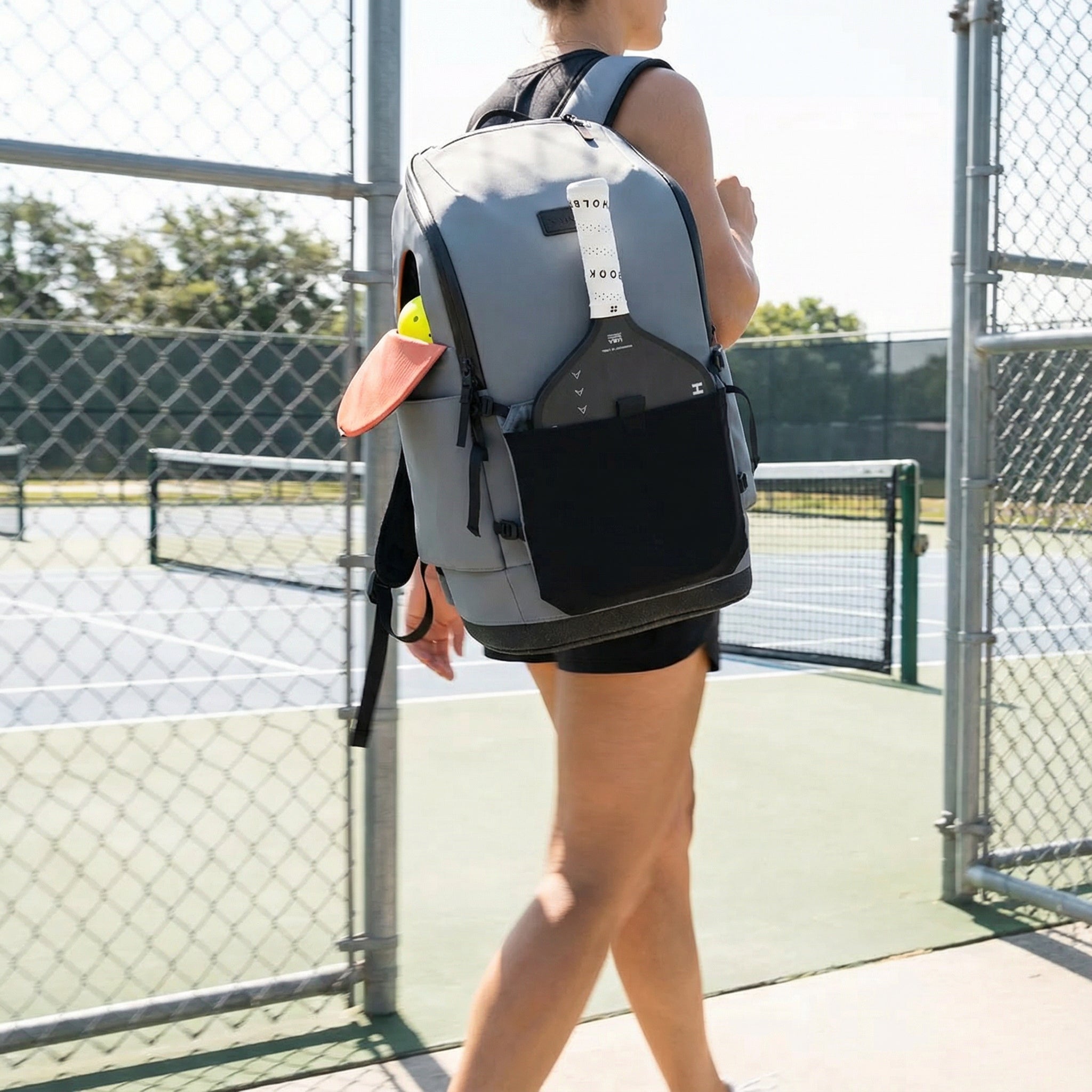
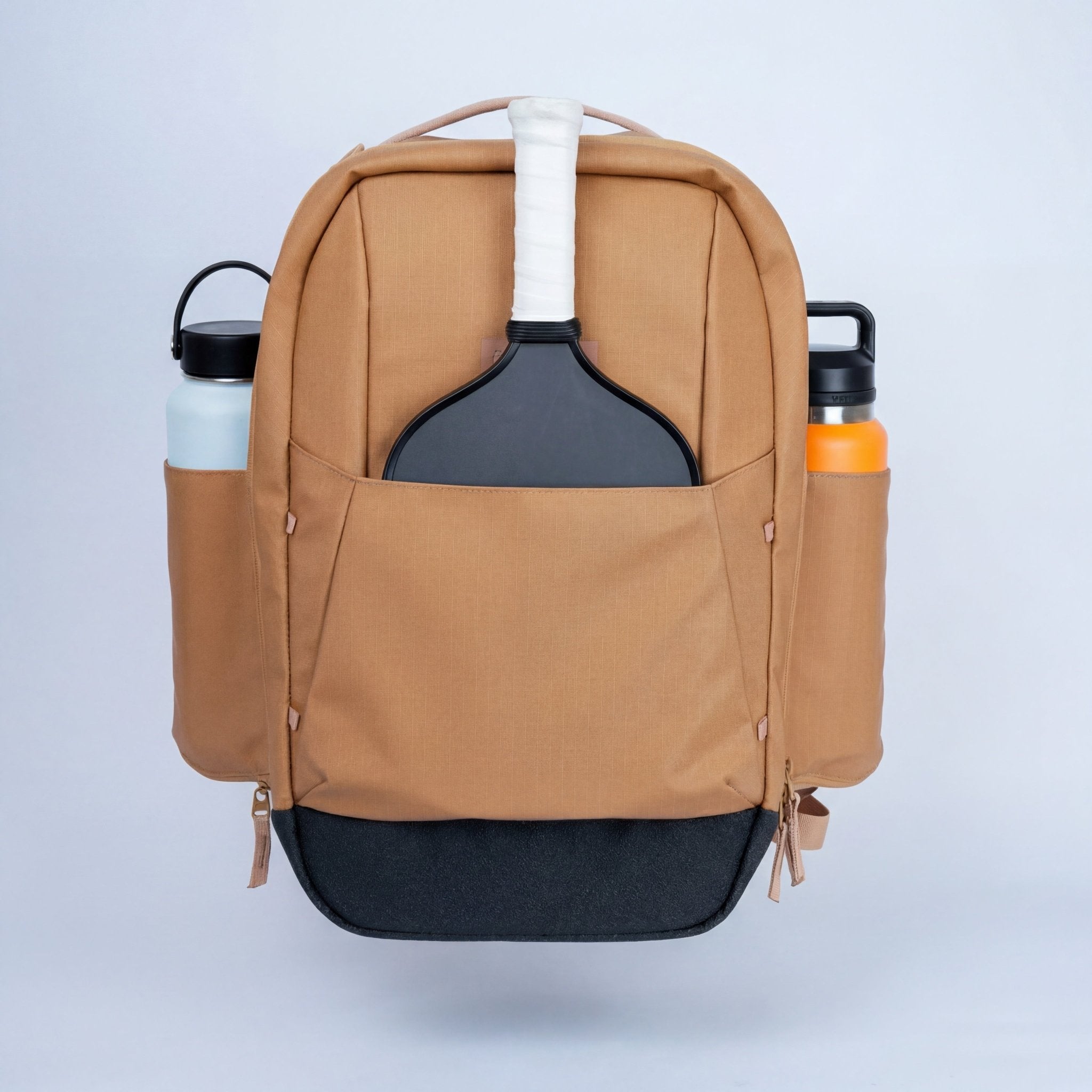
Now you've got the paddle — where does it go? The FORWRD Court Ranger V2 ($195) has a dedicated modular paddle sleeve that fits up to 4 paddles, keeping your raw carbon face protected from zipper scratches and bag abrasion. YKK AquaGuard zippers, a 16" laptop sleeve, and enough organization for a full day at the courts. FORWRD bags are designed by people who actually play — the paddle protection wasn't an afterthought.
FAQ
Which ONIX Evoke Premier Pro thickness should I buy?
Start with the 14mm Control if you're between 3.5 and 4.5 and play regularly at the kitchen line. Go 12mm Power if you're an attacker who drives more than dinks. The 16mm Max Control is for 4.5+ players specifically focused on reset and touch shots, while the 10mm Max Power suits aggressive bangers who want maximum paddle speed.
Is the ONIX Evoke Premier Pro USAP approved for tournament play?
USAP approval status for raw carbon paddles changes frequently — ONIX has historically maintained compliance, but always verify directly on the current USAP approved paddle list at usapickleball.org before any sanctioned tournament. Raw carbon paddles face more frequent review cycles than composite alternatives.
How does the ONIX Evoke Premier Pro compare to the ONIX Evoke Malice?
The Premier Pro has a raw carbon face (more spin grit) and four thickness options. The Malice has an open-throat edgeless design, composite face, and comes in only 14mm or 16mm at $229.99. Choose the Premier Pro for spin and thickness flexibility; choose the Malice for aggressive swing mechanics and the open-throat feel.
Does raw carbon wear down on outdoor courts?
Raw carbon fiber does show surface wear faster than composite faces on rough outdoor concrete. After three weeks of regular outdoor play on the 14mm Control version, we saw minor scuffing on the face edges but no significant degradation in spin performance. Avoid dragging the face on the court surface and store it padded in a bag — raw carbon does not like abrasion.
What's the difference between the 5" and 5.35" handle lengths on the Premier Pro?
The 10mm and 12mm Power variants have a 5" handle, while the 14mm and 16mm Control variants have a 5.35" handle. The longer handle on the control variants lets you choke up for NVZ play and still reach back for a two-handed drive — a practical design choice that matches how the two different thickness options are likely to be used.
Is $199.99 a good price for the ONIX Evoke Premier Pro?
$199.99 is fair for a legitimate raw carbon paddle with ONIX build quality. The Six Zero Double Black Diamond 16mm is a strong competitor at $180 — $20 less for a more established raw carbon brand. The Premier Pro's unique advantage is the four-thickness family, which adds value for players who want to experiment with core depth without switching brands.
Final Verdict
ONIX's first raw carbon paddle is a legitimate entry into a competitive $180–$220 tier. The four-thickness structure is genuinely clever — not a marketing trick but a real decision architecture that serves players who are still figuring out what core depth does to their game. The 14mm Control version is where ONIX has landed the best balance of touch and raw carbon spin, and it's worth the $199.99 for players in the 3.5–4.5 range who play at the kitchen regularly.
The Premier Pro doesn't unseat the Six Zero DBD 16mm as the benchmark raw carbon control paddle — that's a $180 product with more heritage in the category. But it offers something the DBD doesn't: the ability to buy the 12mm now, try the 16mm later, and understand exactly what those two extra millimeters cost you in power versus what they give you in control. For that, $199.99 is a reasonable trade.

Leave a comment
This site is protected by hCaptcha and the hCaptcha Privacy Policy and Terms of Service apply.