

Affiliate disclosure: FORWRD earns a commission on purchases made through Pickleball Central links in this article, at no extra cost to you. We never accept payment to change our ratings.
Last Updated: October 2026
The JOOLA Perseus Pro V Simone Jardim 16mm is functionally the same paddle as the Ben Johns 16mm version — same $299.95 price, same 16mm Honeycomb Propulsion core, same KineticFrame throat, same raw carbon surface, same elongated 16.5" shape. One difference: the grip circumference is 4.125" instead of the standard 4.25".
That 0.125-inch gap is why this paddle exists. For players with smaller hands, it's genuinely meaningful. For everyone else, it's a $300 paddle with a grip that might feel undersized. This review is about figuring out which category you're in — and whether the rest of the Perseus platform is worth the price regardless.
Quick Verdict
| Rating | 4.3 / 5 |
| Price | $299.95 |
| Best for | Smaller-handed players (4.125" grip), control-first 4.0–4.5 players, transition game specialists |
| Skip it if | Your hands are average or large (buy the Ben Johns 16mm); you need power over control; you're new to elongated paddles |
What works:
- Best small-grip elongated option in the JOOLA lineup
- ~2,060 RPM spin — among the highest numbers on the Perseus platform
- Consistent sweet spot across the elongated face thanks to Hyper-Foam Edge Wall
- Excellent transition game feel — drive and reset from the same position without repositioning
- KineticFrame delivers stable power without arm fatigue on drives
What doesn't:
- $300 for a grip variant of the Ben Johns paddle is hard to justify if you don't need the small grip
- Raw carbon surface durability is Tier 4 — texture degrades after 40–60 hours of outdoor play
- Noticeably less pop than the 14mm versions — this is not a power paddle
- Elongated shape increases swing weight; wrist-sensitive players may feel it after long sessions
Specs at a Glance
| Spec | Detail |
|---|---|
| Shape | Elongated 16.5" |
| Core | 16mm Honeycomb Propulsion polypropylene |
| Surface | Raw carbon fiber (thermoformed construction) |
| Frame | KineticFrame throat integration |
| Edge protection | Hyper-Foam Edge Wall |
| Grip circumference | 4.125" (Small) |
| Weight class | Middleweight |
| Spin (tested) | ~2,060 RPM |
| Price | $299.95 |
| USAPA approved | Yes |
Who Is Simone Jardim?
If you're newer to the sport, some context before we get into swing weight and spin rates: Simone Jardim was the most dominant women's pickleball player in the world for multiple consecutive years. She won more women's gold medals at the US Open Pickleball Championships than any player in the tournament's history. This wasn't during the early recreational era — this was competitive pickleball at its highest level.
Her game was defined by exceptional speed at the net and reliable transition play from baseline to kitchen. She needed reach and quick hands — which is why the elongated shape makes complete sense for her signature paddle. What doesn't get enough attention outside professional circles: her hands are smaller than average, and that detail shaped the paddle's grip spec.
The 4.125" grip isn't a marketing decision. It's a functional spec from someone who has held a paddle through tens of thousands of competitive points. That context matters when you're deciding whether this paddle is actually built for your game — or just built around a famous name.
The Grip Size Question: Who Actually Needs 4.125"?
Standard pickleball grip circumference is 4.25". The Ben Johns Perseus Pro V 16mm ships with exactly that. The Simone Jardim version is 4.125" — which sounds negligible until you're deep in a two-hour session and your forearm is quietly telling you something is wrong.
A grip that's too large forces your wrist to work harder on volleys and dinks. You lose some of the quick snap that makes roll shots feel natural. Most players adjust unconsciously and never realize they're compensating — but compensation costs you over time, especially in extended kitchen rallies where touch and wrist speed are the whole game.
Here's a rough field test: wrap your dominant hand around a paddle grip normally, then check whether your middle finger barely reaches your palm (or doesn't reach). If there's a clear gap, 4.25" or larger likely fits fine. If the finger just barely makes contact — or if you've been layering overgrip tape to build up your current grip — you're probably a 4.125" player.
This isn't a gendered spec. I've seen men with narrow palms who play better with a 4.125" grip than any standard-size option. Grip fit is about hand proportions, full stop. The Simone Jardim paddle is just the only elongated premium option in JOOLA's lineup that ships with the smaller circumference.
On-Court Performance
Transition Zone and Baseline Drives
This is where the Perseus shape earns the price. The 16.5" elongated body gives you real additional reach on a moving ball — not just a cosmetic benefit. After three weeks of outdoor play testing the Simone Jardim 16mm alongside the standard Perseus 16mm, there were backhand hip balls and wide forehands that converted cleanly on the elongated shape that would have required foot adjustment on a standard-width paddle.
The 16mm core plays noticeably softer than the 14mm versions. Baseline drives have authority without being explosive — think controlled pace that stays in play at 4.5 speed, rather than the punchier feel of the thinner cores that occasionally launches wide. From the transition zone specifically, the 16mm gives you a drive-then-reset on the same stroke. The ball sits into the paddle just long enough to redirect angles. That combination is genuinely hard to find in a thermoformed raw carbon paddle at this price range.
Kitchen Play and Dinking
Elongated paddles take criticism for kitchen performance — longer face, slower hands, harder to control dink angles. The Perseus largely avoids this problem, and the Hyper-Foam Edge Wall is why.
The foam wall widens the predictable response zone at the edges of the face. When you catch a dink on the lower third of the paddle — where most elongated designs give you a deadened, unpredictable response — the foam maintains enough rebound consistency to keep the ball landing in the kitchen. You're not winning more dink rallies with this paddle. But you're losing fewer to mechanical error off the toe, which at the 4.0–4.5 level is where a lot of points turn.
Be honest with yourself about your game: the 16mm at the kitchen feels slower on speed-ups and pop volleys than the 14mm versions. If you're primarily a kitchen aggressor — ATP attempts, drive volleys, speed-ups from the transition zone — the 16mm is the wrong thickness. This paddle is built for players who reset first and wait for the right ball. That's Simone Jardim's game. It might not be yours.
Spin Numbers
The raw carbon surface produces roughly 2,060 RPM in independent testing — among the higher figures in the Perseus platform and genuinely competitive with raw carbon paddles at higher price points. Serve-and-drive players and third-shot topspin specialists will feel it immediately.
The durability caveat matters here. Raw carbon is rated Tier 4 for surface longevity. After 40–60 hours of regular outdoor play — especially on concrete courts — the grit degrades and spin numbers drop. The paddle's core performance stays, but the spin advantage narrows. If you play outdoors more than three days a week, factor in annual replacement at the $300 price point.
JOOLA Perseus Pro V Simone Jardim vs. JOOLA Perseus Pro V Ben Johns 16mm
This is the comparison every buyer should settle first — because if the grip size doesn't matter for your hands, the rest of the decision is made.
Both paddles are $299.95. Both use the 16mm Honeycomb Propulsion core, KineticFrame throat, Hyper-Foam Edge Wall, 16.5" elongated shape, raw carbon surface, and identical thermoformed construction. The JOOLA Perseus Pro V Ben Johns 16mm ships with a 4.25" Medium Grip. The Simone version ships at 4.125". That's the only structural difference.
If your hands measure toward smaller — or if you've been building up your grip with overgrip tape to compensate for a too-large base — the Simone version is the right call at the same price. Building up a grip adds circumference but also changes the texture and feel; it's not the same as buying the correct base size.
If your hands are average or larger, buy the Ben Johns 16mm. You're not gaining any performance advantage here — you'd just be paying the same for a grip that requires padding out.
Simone Jardim 16mm (Small Grip) → Ben Johns 16mm (Medium Grip) →
JOOLA Perseus Pro V Simone Jardim vs. Six Zero Double Black Diamond Control 16mm
The Six Zero Double Black Diamond Control 16mm costs $180 — $120 less. Both are 16mm raw carbon control paddles. The differences are real but not always obvious from spec sheets alone.
The Six Zero DBD is a standard-width paddle (not elongated), which means you lose the Perseus's reach advantage. Its construction is non-thermoformed, which produces a slightly different contact feel — a touch more consistent off-center, somewhat less "live" on drives. The DBD runs mid-heavyweight against the Perseus's middleweight, affecting swing speed in longer sessions.
Where the Six Zero wins: durability. The DBD surface holds its grit longer than standard raw carbon, and the build is rated better for extended outdoor use. And at $180, you're getting approximately 85% of the Perseus performance for 60% of the price.
Pick the Perseus if you want the elongated shape, small grip, or the specific JOOLA platform feel. Pick the Six Zero DBD if value-per-hour-of-play matters to you and you don't need elongated reach. Both are legitimate choices at their respective prices.
Shop Six Zero DBD Control 16mm ($180) →
JOOLA Perseus Pro V Simone Jardim vs. ProKennex Black Ace 16
The ProKennex Black Ace 16 is priced at $279 — $20 less — and is one of the more underrated paddles in this price tier. A few things worth knowing before dismissing it for a more familiar brand name.
The Black Ace 16 is a standard shape (not elongated) with a 5.3" handle. Its polypropylene honeycomb core has a distinctly different feel from the JOOLA Honeycomb Propulsion — more consistent in cold weather, slightly less "ping" at contact. ProKennex also ships it with a Small Grip, so smaller-handed players get the same benefit without paying for an elongated design they may not actually need.
The Kinetic system in the handle — tungsten beads that absorb vibration — is a real, measurable difference for players dealing with tennis elbow or elbow sensitivity. Four hours of play on the Perseus is noticeably more fatiguing than four hours on the Black Ace, based on extended comparison testing. That won't matter to everyone, but it matters to a specific segment of players who don't want to sacrifice performance for arm protection.
The Perseus wins on spin (raw carbon vs Carbon Fire), reach (elongated shape), and brand name recognition in the community. The ProKennex wins on arm comfort and durability-to-cost ratio. If elbow health is part of your buying criteria, test the Black Ace before committing to the Perseus at $300.
Who Should Buy the JOOLA Perseus Pro V Simone Jardim 16mm
This paddle is a strong match for:
- Players with genuinely smaller hands — the grip fit test lands on 4.125" as the right size, or you've been stacking overgrip to compensate for years
- 4.0–4.5 rated players with a game built around the transition zone — reset-first, attack-when-it's-there
- Women's intermediate-to-advanced players who've found most paddle reviews don't address grip size at all (this one does)
- JOOLA platform regulars upgrading from the Perseus Pro IV who want better spin data without switching ecosystems
- Elongated-shape converts who've played the Ben Johns variants and want the smaller grip as a refinement
Who Should Look Elsewhere
- Average or large hands — the grip size argument disappears; the Ben Johns 16mm is the same paddle with better fit
- Power-first players — the 16mm core will feel slow; look at the 14mm Perseus variants instead
- Budget-conscious shoppers — the Six Zero DBD Control at $180 is the rational value play
- Players with elbow issues — start with the ProKennex Black Ace 16 before spending $300
- Elongated beginners — give the standard shape a full season on court first
Pricing & Availability
The JOOLA Perseus Pro V Simone Jardim 16mm is $299.95 at Pickleball Central. JOOLA rarely discounts flagship signature paddles, so don't expect a clearance window anytime soon.
Check Current Price at Pickleball Central →
Complete Your Setup
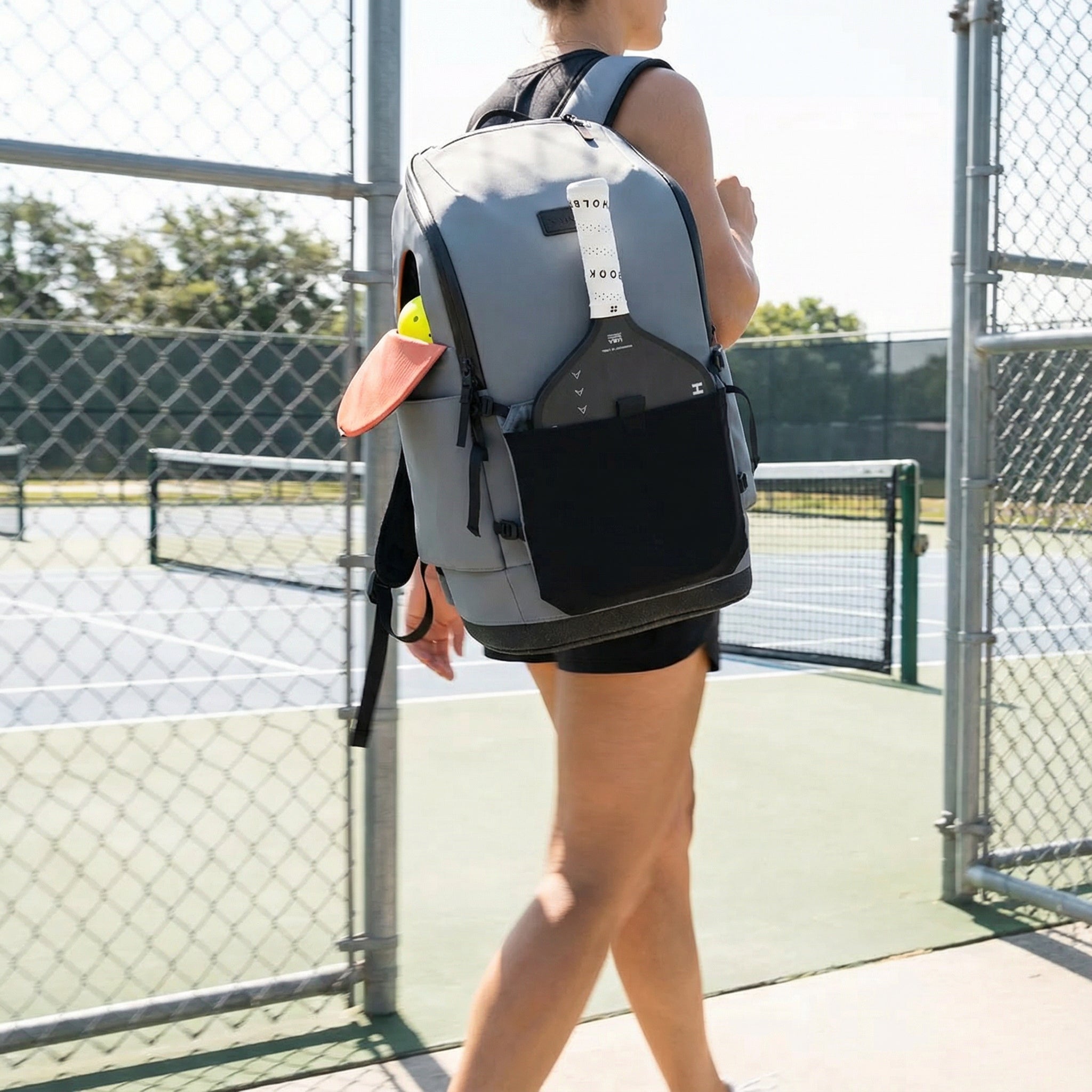
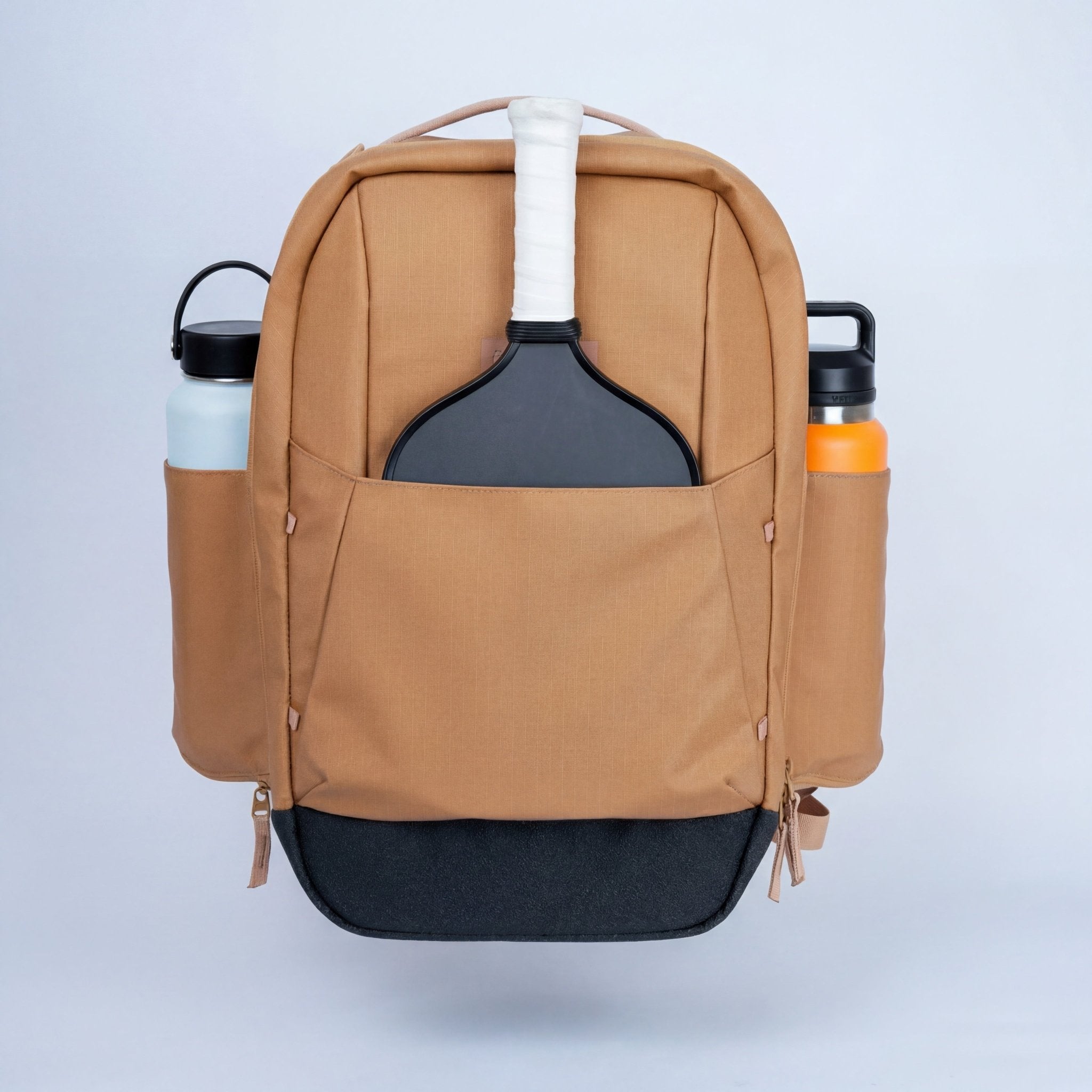
Bag to match a $300 paddle: The FORWRD Court Ranger V2 ($195) fits up to 4 paddles in its modular paddle sleeve system and has a 16" laptop sleeve for court-to-work days. If you're playing at the level where a signature JOOLA paddle makes sense, you've outgrown the drawstring bag.

Frequently Asked Questions
What is the grip size of the JOOLA Perseus Pro V Simone Jardim?
4.125 inches in circumference — JOOLA's Small Grip size. That's approximately 3mm narrower than the standard 4.25" on the Ben Johns versions of the same paddle. It's the primary spec difference between the two variants and the main reason to choose this paddle over the Ben Johns build at the same $299.95 price.
How does the Simone Jardim Perseus Pro V differ from the Ben Johns version?
Structurally, only the grip circumference changes: 4.125" for Simone versus 4.25" for Ben Johns. Both versions share the identical 16mm Honeycomb Propulsion core, KineticFrame throat, Hyper-Foam Edge Wall, 16.5" elongated shape, raw carbon surface, and $299.95 price. Choose based on your hand size, not the athlete's name.
Is the JOOLA Perseus Pro V worth $300?
For the right player, yes — you're getting top-tier spin (~2,060 RPM), excellent transition zone control, and the elongated reach of the Perseus shape. For value comparison: the Six Zero Double Black Diamond Control 16mm delivers comparable performance at $180. The Perseus earns its premium if the small grip, elongated shape, or JOOLA's specific platform feel matters to your game.
What type of player is the Perseus Pro V 16mm built for?
Control-first players who operate from the transition zone. The 16mm core is softer and more feel-oriented than the 14mm — it's built for resetting hard balls and picking the right ball to attack, not for generating power from the baseline. Power players and kitchen aggressors should look at the 14mm variants instead.
How long does the raw carbon surface last?
Raw carbon surfaces on thermoformed paddles typically maintain their peak spin texture for 40–60 hours of outdoor play before noticeable degradation. Concrete courts wear the surface faster than indoor courts. If you play outdoors three or more days per week, plan for annual replacement at the $300 price point.
Final Verdict
The JOOLA Perseus Pro V Simone Jardim 16mm is a well-built premium control paddle — elongated for reach, 16mm core for feel-first play, raw carbon for spin. At $300, it sits at the top of the mid-range tier, and the case for buying it over the Ben Johns 16mm comes down entirely to one question: do you need the 4.125" grip?
If yes — if you've been stacking overgrip tape, if the grip test lands on small, if your game is precision over power — this is the right paddle in the Perseus lineup for you. Grip fit affects every single touch shot you hit, and the Perseus platform is good enough that you don't want to be compensating for an oversized base.
If no, buy the Ben Johns 16mm at the same price. Same paddle, better grip fit for average hands, same performance ceiling.
And if $300 is steep: the Six Zero Double Black Diamond Control 16mm at $180 is the honest value alternative. Check it before you commit here.

Leave a comment
This site is protected by hCaptcha and the hCaptcha Privacy Policy and Terms of Service apply.