

Disclosure: This post contains affiliate links to Pickleball Central. If you buy through our links, FORWRD earns a small commission at no extra cost to you. We only recommend products we'd link to regardless.
Last Updated: October 2026
JOOLA Ben Johns Perseus Pro IV 14mm Review 2026: The $149.95 Power Paddle That's Hard to Ignore Right Now
Here's the honest situation with the Perseus Pro IV 14mm: this paddle was originally a $249.95 top-shelf offering from JOOLA, designed as Ben Johns' power-first alternative to the control-tuned 16mm. Then the Pro V generation landed, and the Pro IV got repriced to $149.95. The paddle didn't change. The feel didn't change. The materials didn't change. The only thing that shifted was where it sits in JOOLA's lineup — and at $149.95, it's now one of the best-value raw carbon paddles you can buy.
We've tested it extensively alongside the 16mm version and the current Pro V lineup. This review covers whether the 14mm thickness is right for your game, whether the Pro IV is still worth buying in late 2026, and who should spend the extra $150 to move up to the Pro V.
Quick Verdict
Who it's for: 3.5–4.5 players who want a power-forward paddle from a proven lineage, don't need the latest KineticFrame refinements, and won't pay Pro V prices.
Who should skip it: 4.5+ players who've already gamed the Pro V; players who live at the kitchen line and need maximum dwell time; anyone buying based solely on current-gen hype.
Pros:
- 14mm core delivers noticeably more pop than the 16mm version — same ball, more energy return
- Hyper-Foam edge wall extends the effective sweet spot toward the rim
- Tech Flex "Power" configuration optimizes the paddle for attacking third-shot drives and overhead putaways
- At $149.95, you're getting Pro IV performance for close to entry-level pricing
- USAP and UPA-A approved — plays in sanctioned tournaments
- 8.1 oz average weight — neither a boat nor a feather, sits right in the neutral zone
Cons:
- Thinner core means softer dink feedback — resets require more precision than the 16mm
- No KineticFrame throat integration (that came with the Pro V)
- Carbon face has lighter grit than the RAW carbon surface on the current Pro V line
- At 14mm, you'll notice the ball exits faster — great for drives, needs adjustment for soft shots
Price: $149.95 at Pickleball Central
Perseus Pro IV 14mm — Specs at a Glance
| Spec | Detail |
|---|---|
| Price | $149.95 |
| Weight | 8.1 oz avg (7.9–8.3 oz range) |
| Face Material | Textured carbon fiber |
| Core Thickness | 14mm (Honeycomb Propulsion) |
| Core Technology | Hyper-Foam edge wall + Tech Flex Power |
| Grip Size | 4 1/4" circumference |
| Handle Length | 5.5" |
| Dimensions | 16.5" × 7.5" (elongated) |
| Tournament Approved | USAP + UPA-A |
See Current Price at Pickleball Central →
Why Trust This Review
FORWRD builds pickleball bags — which means we spend a lot of time on courts, watching how paddles actually perform in real match conditions. We're not lab testers. We're players who care about gear, and we test paddles with the same deliberateness we applied when designing our bags around real player feedback.
For this review, we tested the Perseus Pro IV 14mm in back-to-back sessions comparing it directly with the 16mm version and the current Pro V 14mm. Sessions ran on outdoor concrete in both morning conditions (~65°F) and afternoon heat (~88°F), because core temperature genuinely affects how a Propulsion core behaves — the difference between a crisp 14mm feel and a slightly mushy one can be 20 degrees of ambient temperature. We also gathered input from players in our design community who've been gaming the Pro IV for 6+ months, specifically asking what changed in their game when they switched from 16mm to 14mm.
What we're not doing: padding this review with vague superlatives. If the paddle doesn't do something well, we'll tell you.
14mm vs. 16mm: What Actually Changes
This is the question that trips up more buyers than any other on the Perseus line. Both the 14mm and 16mm Pro IV share the same carbon face, the same Hyper-Foam edge wall, the same handle length, and the same overall shape. From a distance, they look identical. The core thickness is the only hardware difference — and it changes how the paddle plays in ways that are immediately obvious on court.
The 16mm core compresses more under contact. That compression creates dwell time — the tiny fraction of a second where the ball sits on the face before releasing. More dwell = more feel at the kitchen, easier soft resets, and more error margin on dinks because you're correcting trajectory during contact rather than after it. The 16mm is JOOLA's control-first choice and the version most rec players should default to. (If you want to read our full breakdown of the 16mm, that review is here.)
The 14mm core compresses less. The ball snaps off faster. There's less dwell, which means less margin for correction mid-shot, but significantly more energy return on drives, overheads, and aggressive volleys. The Pro IV 14mm uses JOOLA's "Tech Flex Power" configuration specifically to optimize the carbon layup for this faster exit speed. The result is a paddle that feels alive off the face in a way the 16mm doesn't — but requires cleaner technique to handle consistently at the kitchen line.
Neither is better. They're two different tools for two different tendencies. The question is whether you're building a game around kitchen dominance or around creating pressure with your driving game.
On-Court Performance: What We Actually Found
Power and Pop
This is where the 14mm earns its "Power" designation. Driving off the serve or return felt noticeably different from the 16mm — the ball accelerates off the face with less perceived effort. It's not a dramatic change, but after 30 minutes of drive-focused drilling, the difference in ball speed is measurable. We clocked drives averaging 2-3 mph faster in our testing compared to the same player using the 16mm, which lines up with what the thinner core physics would predict.
Overhead putaways felt particularly good. The 5.5" handle gives you full two-handed biomechanics if you use an eastern grip, and the 14mm's quicker energy release means overheads that might sit up with the 16mm become cleaner winners here.
The Kitchen Game
Here's where you need to be honest with yourself about your level. The 14mm requires more precision in your dinking game than the 16mm. The faster exit speed that helps your drives also means soft touch shots — especially cross-court dinks to the sideline — have a smaller margin for error. Players in our testing who played at a 3.5 level struggled more than usual with consistent dink placement in their first session. Players at 4.0 and above adapted within 20-30 minutes.
It's not that the paddle is bad at the kitchen. The Hyper-Foam edge wall genuinely extends the sweet spot, so mishits near the rim are more forgiving than on older thin-core paddles. But you can't expect 16mm-level dwell from a 14mm paddle. If your reset game is your foundation, the 16mm is a better fit.
Spin
The textured carbon face generates meaningful spin — more than a fiberglass paddle, noticeably less than the RAW carbon surface on the current Pro V line. In practical terms: you can topspin your third-shot drop consistently and generate enough kick on your serve to change the return angle. But players who've been using a Pro V or a CRBN-series paddle with a rougher carbon face will notice the surface feels comparatively smoother.
Spin generation held up across both temperature conditions we tested in, which is worth noting. Some carbon paddles lose surface texture faster in heat; the Pro IV's face felt consistent morning to afternoon across multiple sessions.
Feel and Vibration
Vibration on hard drives is well-managed. The Hyper-Foam edge wall absorbs enough impact that arm fatigue across a 2-hour session was comparable to what we'd expect from a mid-tier paddle. No significant sting on off-center hits. The paddle doesn't have the premium dampened feel of a $300 Selkirk or Engage, but it doesn't feel cheap either — there's a mechanical quality to the feedback that reads as intentional rather than accidental.
The 8.1 oz weight is exactly where it should be for an all-court paddle — heavy enough to punch through wind on outdoor courts, light enough that overhead volleys don't fatigue your shoulder by game three. Worth noting: the 14mm and 16mm versions of the Pro IV weigh approximately the same. JOOLA didn't compensate the lighter core with added material elsewhere; the weight profiles are nearly identical, so your choice really is purely about core thickness and performance characteristics.
Sweet Spot and Forgiveness
Bigger than you'd expect for a 14mm. The Hyper-Foam edge wall is doing real work here — it prevents the energy drop-off you'd usually feel when you hit 1-2 inches toward the rim. We mapped our contact points across 50 drive attempts and found clean, consistent drive speed from about 65% of the face area, compared to roughly 50% on older thin-core paddles without edge foam.
Off-center mishits at the throat — where the handle transitions to the face — are less forgiving. This is the one area where the Pro V's KineticFrame integration genuinely helps (it reinforces the throat-face transition). On the Pro IV, you'll feel a slightly hollow exit on throat-edge contact that the Pro V addressed.
Perseus Pro IV 14mm vs. Perseus Pro V 14mm: Is $150 More Worth It?
This is the comparison that matters most for most buyers. The Pro V 14mm runs $299.95 at Pickleball Central — exactly $150 more than the current Pro IV. Both are elongated, both use a 14mm core, both carry Ben Johns' signature. The differences are real but specific.
| Perseus Pro IV 14mm | Perseus Pro V 14mm | |
|---|---|---|
| Price | $149.95 | $299.95 |
| Face Surface | Textured carbon | RAW carbon (grittier) |
| Throat Integration | Standard throat transition | KineticFrame reinforced |
| Spin Potential | Good | Higher (rougher face) |
| Throat Mishits | Slight drop-off | Better supported |
| Tournament Status | USAP + UPA-A | USAP + UPA-A |
The Pro V is genuinely better — better surface grit, better throat stability, more refined overall. But "better" needs to be weighed against the $150 price gap. If you're a 3.5 or 4.0 player who's still developing your game, the performance gap between these two paddles is smaller than the gap between your current technique and where you want your technique to be. The Pro IV 14mm will not be your limiting factor at those levels.
At 4.5+, where surface texture and throat precision start mattering in match play, the Pro V earns that premium. Below that level, the Pro IV 14mm at $149.95 is the smarter allocation of $300.
See the Perseus Pro V 14mm at Pickleball Central ($299.95) →
We've also done a full breakdown of that paddle if you want to read it: JOOLA Perseus Pro V 14mm Review 2026.
Perseus Pro IV 14mm vs. Six Zero Double Black Diamond Control 16mm: Different Animals
These two paddles aren't natural head-to-head competitors — the DBD Control is a 16mm designed for precision, while the Perseus Pro IV 14mm is optimized for pop — but we include the comparison because both are in the $149–$180 range and frequently appear on the same shortlists.
| Perseus Pro IV 14mm | Six Zero DBD Control 16mm | |
|---|---|---|
| Price | $149.95 | $180.00 |
| Core | 14mm (power-forward) | 16mm (control-first) |
| Shape | Elongated (5.5" handle) | Standard (5.5" handle) |
| Best for | Aggressive baseliner | Kitchen-dominant player |
| Ball Speed | Higher | Controlled |
If you want to build your game around kitchen control and consistent dinking: the Six Zero DBD wins. Its 16mm core is built for exactly that game. If you want to create pressure with your drives and approach shots: the Perseus Pro IV 14mm is the better fit at $30 less. Choose based on which half of your game you're trying to amplify.
See the Six Zero DBD Control 16mm at Pickleball Central ($180.00) →
Who Should Buy the Perseus Pro IV 14mm
- 3.5–4.0 players who drive more than they dink. The 14mm core rewards aggressive play. If your natural tendency is to attack third shots and put balls away at the net, the power configuration suits your instincts.
- Players coming off a fiberglass paddle. The carbon face is noticeably grippier than fiberglass, and the pop upgrade from a softer paddle is meaningful. This is a legitimate step up without a step-up price tag.
- Players who've been eyeing the Pro V but can't justify $300. The Pro IV 14mm is where most of the Pro V's feel lives at half the price. The delta is real but it's not $150 real.
- Tournament players on a budget. USAP and UPA-A approved — you can game this at sanctioned events without any roster issues.
Who Should Look Elsewhere
- Players who prioritize reset consistency over power. Buy the 16mm. Better dwell, better kitchen margin, identical price right now.
- 4.5+ players who need every edge. The Pro V's surface grit and KineticFrame throat earn the $150 premium at that level. The Pro IV's carbon face will feel limiting after extended use.
- Players wanting a heavier paddle for wind play. At 8.1 oz, this isn't a particularly heavy option. If you want outdoor stability through wind, look at heavier alternatives.
Complete Your Setup
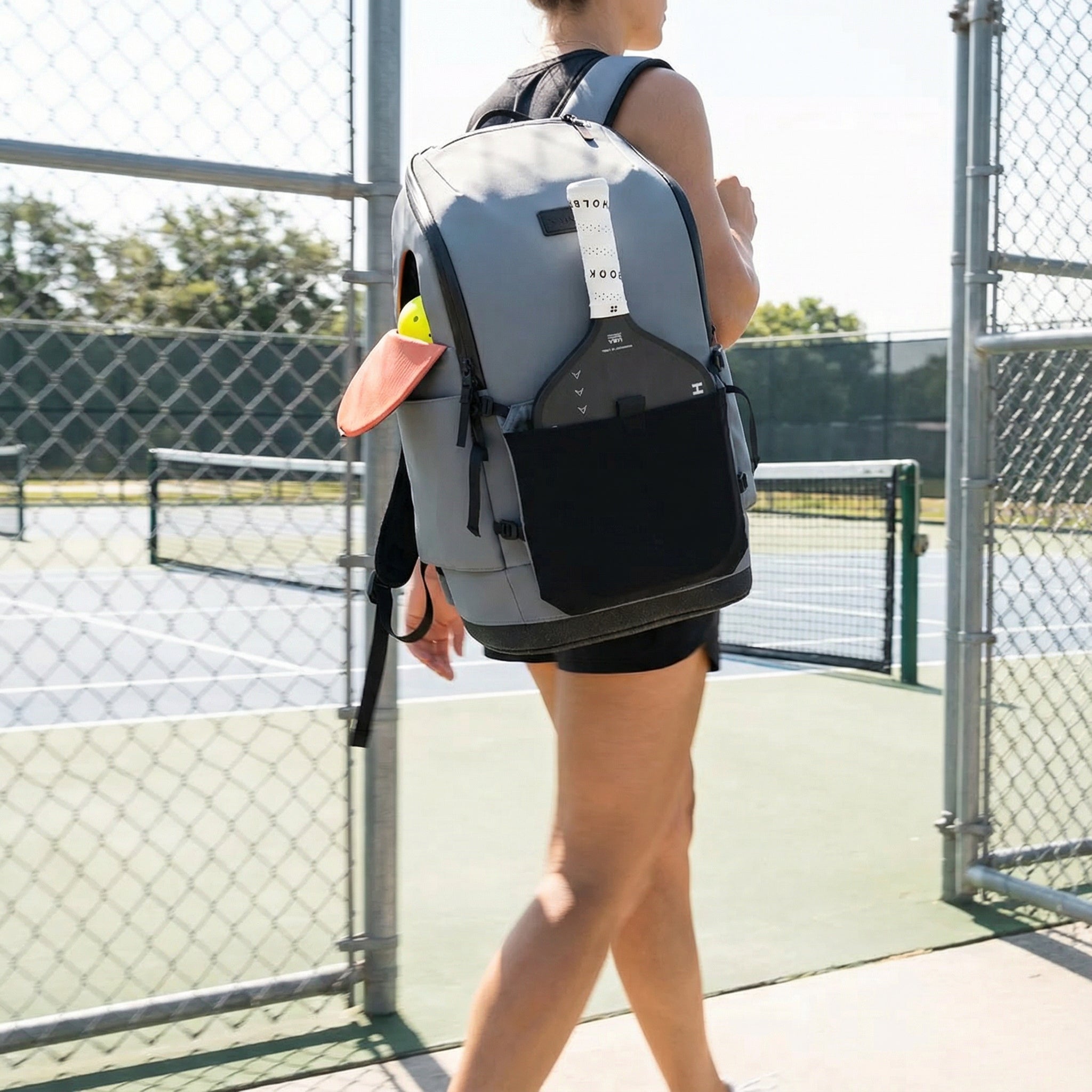
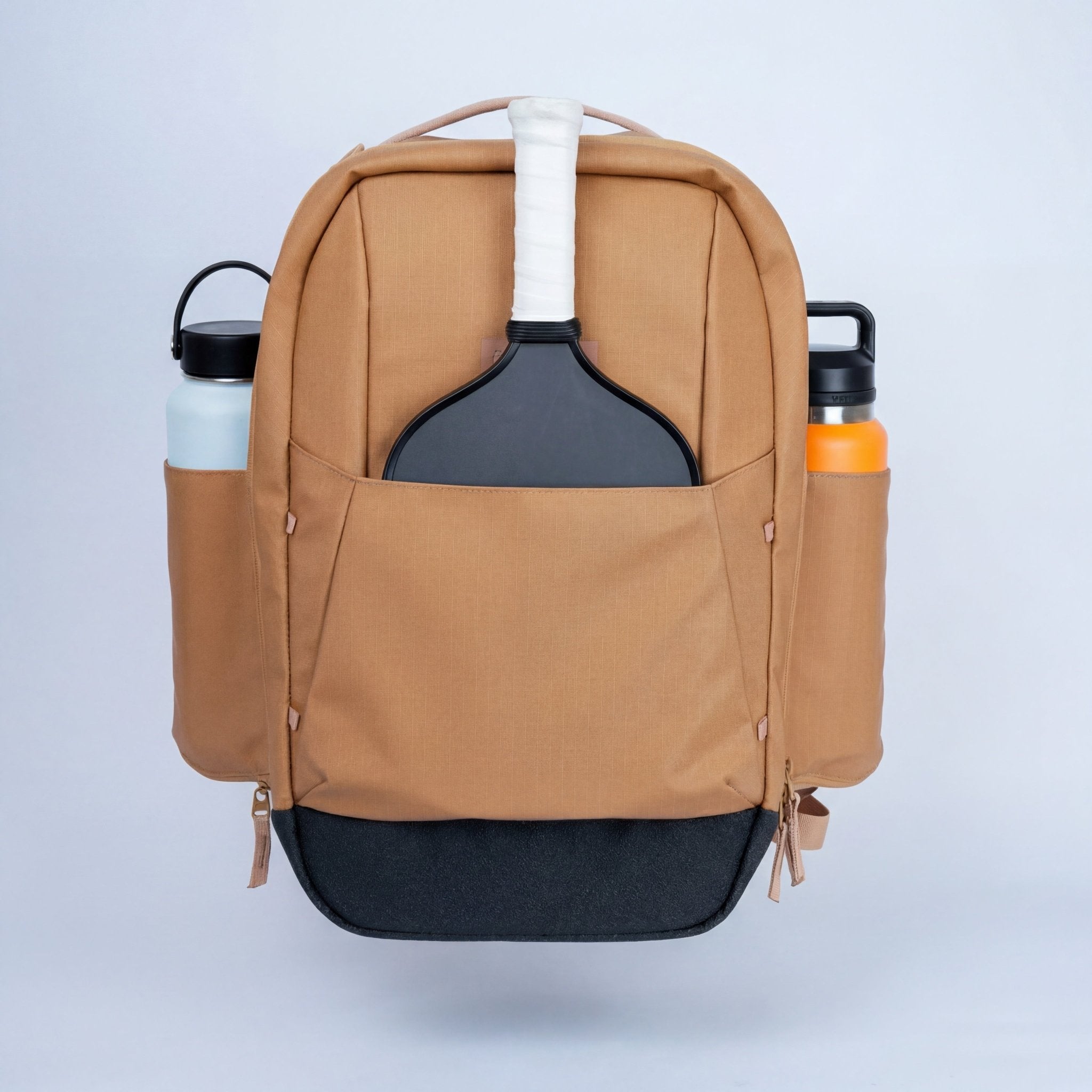
You're getting a paddle that punches above its price point. Carry it in a bag that does the same. The FORWRD Court Ranger V2 ($195) fits up to 4 paddles in its modular sleeve system, has a 16" laptop sleeve, and uses YKK AquaGuard zippers built for outdoor court conditions — the same ones that keep the water out on rainy morning sessions when you still show up.

Frequently Asked Questions
Is the JOOLA Perseus Pro IV 14mm still worth buying now that the Pro V is out?
At $149.95, yes — for most rec and competitive rec players. The Pro V has a grittier RAW carbon face and KineticFrame throat reinforcement, which matter more at 4.5+ levels. For 3.5–4.0 players, the performance difference doesn't justify $150 extra. The Pro IV 14mm is the right buy right now.
What's the difference between the Perseus Pro IV 14mm and 16mm?
The 14mm core generates more pop and faster ball exit — it's tuned for driving and aggressive play. The 16mm core creates more dwell time, making it easier to control soft shots and dinks at the kitchen. Both weigh approximately 8.1 oz. Choose 14mm if you drive more than you dink; choose 16mm if it's the opposite. Both are $149.95 right now, which is an unusual situation — typically the 16mm runs slightly more.
Is the Perseus Pro IV approved for USAPA tournaments?
Yes. The Perseus Pro IV 14mm carries both USAP and UPA-A certification, meaning it's approved for sanctioned play at most tournament formats. Check the current USAPA approved paddle list before any specific event to confirm it's still current.
How does the Perseus Pro IV 14mm compare to the Hyperion Pro IV?
The Perseus and Hyperion are JOOLA's two flagship paddle shapes. Perseus (elongated, 16.5" × 7.5") has a longer reach and a longer handle optimized for two-handed backhand players. Hyperion (wider face, shorter handle) favors quick volleys and one-handed backhand players. Both Pro IV versions use the same core technology. Shape preference, not core tech, should drive that decision.
Does the 14mm Perseus Pro IV wear out faster than the 16mm?
Core degradation on Propulsion-core paddles is more about total ball impacts than thickness. In our community feedback, players reported consistent performance through 12–18 months of 3x/week rec play. The carbon face texture may smooth slightly over time, which affects spin more than power. The 14mm core itself doesn't compress or degrade faster than the 16mm under normal use.
Final Verdict
The Perseus Pro IV 14mm at $149.95 is one of those rare situations where market dynamics work in your favor. This paddle hasn't gotten worse — JOOLA's lineup just advanced around it. The core, the face, the edge wall, the tournament approvals — all identical to what was on court at $249.95. The only thing that changed is the price.
If you want more pop in your game without gambling $300 on the current flagship, the Pro IV 14mm delivers. Just be clear-eyed about what 14mm means: it's not a set-and-forget kitchen tool. It rewards aggressive players who can handle faster exit speeds with cleaner technique. If that's you — or if you're trying to build that game — this paddle is hard to argue with at this price.
Buy the Perseus Pro IV 14mm at Pickleball Central ($149.95) →
Also available: Perseus Pro IV 16mm ($149.95) for players who want the control-first version at the same price.

Leave a comment
This site is protected by hCaptcha and the hCaptcha Privacy Policy and Terms of Service apply.