

Last Updated: May 2026
The official pickleball net height is 36 inches at the sideline posts and 34 inches at the center. Whether you're setting up your own court, converting a tennis court for pickleball use, or just want to understand the regulations, those two measurements define every legal game of pickleball.
The 2-inch dip from post to center is deliberate — and it shapes strategy in ways most new players don't think about. Here's everything you need to know about pickleball net height, from the official specs to court conversion tips to the best portable nets for public courts.
Disclosure: This post contains affiliate links to Pickleball Central. If you purchase through our links, FORWRD earns a small commission at no extra cost to you. We only link to products we'd recommend regardless.
Official Pickleball Net Height Requirements
According to USA Pickleball official rules, regulation pickleball nets must stand precisely 36 inches high at the sideline posts. The net then dips to 34 inches at the center court position, creating a deliberate two-inch height difference that's mandated across all competitive play.
This 2-inch variance isn't arbitrary — it's designed to encourage dynamic net play by making shots over the center slightly easier while maintaining challenge at the sidelines. The center strap plays a significant role in maintaining this proper 34-inch height at midcourt, preventing excessive sagging that could compromise gameplay.
The pickleball net width requirements are equally specific. Nets must span at least 21 feet 9 inches from post to post, extending beyond the standard 20-foot court boundary to ensure adequate coverage. Some installations use nets that measure 22 feet wide to provide additional margin.
Measurement Standards and Setup
When measuring net height, always measure from the top of the net straight down to the playing surface. The center strap attachment point becomes the critical reference for the 34-inch center measurement. For permanent pickleball court installations, these specifications must be maintained consistently, while portable net systems should be checked before each use to ensure regulation compliance.
Net posts must be positioned precisely at the sidelines, with the net extending beyond the court boundaries on both sides. The additional width ensures that balls hitting near the sideline posts don't escape around the net edges, maintaining fair play across the entire court width.
Why Pickleball Nets Are Lower Than Tennis Nets
The fundamental reason pickleball nets are lower than tennis nets lies in the distinct physical characteristics of the balls used in each sport. Pickleballs are lightweight, plastic, and perforated, resulting in significantly reduced bounce compared to pressurized tennis balls. When dropped from the same height, pickleballs retain only 38–44% of their original bounce height, whereas tennis balls maintain approximately 60% retention.
This dramatic difference in ball physics necessitates a correspondingly lower net for optimal gameplay. The predominant ball trajectory in pickleball peaks at 30–34 inches, closely aligning with the net's center height and creating the sport's characteristic rally patterns.
A higher net would make it exceedingly difficult for players to keep the ball in play, particularly during the sport's signature dinking exchanges near the net. The reduced net height accommodates pickleball's emphasis on placement and control over power, reflecting the strategic nature that makes the sport accessible to players of all ages and skill levels. See our complete pickleball rules guide for how net height factors into fault calls.
Ball Trajectory and Strategy Impact
The lower net height directly influences playing strategy, encouraging longer rallies and more precise shot placement. Unlike tennis, where players can rely on topspin to bring powerful shots down into the court, pickleball players must focus on hitting the ball with accuracy and finesse to clear the net while maintaining control.
This creates the sport's distinctive rhythm, where patience and positioning often triumph over pure athletic power. The net height sweet spot allows for aggressive net play without making baseline shots prohibitively difficult, striking a balance that defines pickleball's unique character.
Pickleball vs Tennis Net Height Comparison
The dimensional differences between pickleball and tennis nets are substantial and reflect each sport's distinct requirements. Tennis nets measure 42 inches at the posts and 36 inches at the center, making them 6 inches higher at the posts and 2 inches higher at the center compared to pickleball nets.
Tennis net width spans 42 feet for doubles courts, nearly double the pickleball net width. Both sports feature nets that dip in the middle, but tennis nets have a more pronounced sag due to their longer span and the greater forces involved.
| Specification | Pickleball Net | Tennis Net |
|---|---|---|
| Post Height | 36 inches | 42 inches |
| Center Height | 34 inches | 36 inches |
| Net Width | 21 ft 9 in | 42 feet |
| Height Difference | — | 6" higher at posts, 2" higher at center |
| Standard reference | USA Pickleball | ITF / USTA |
Gameplay Implications
These differences aren't merely dimensional — they reflect the contrasting demands and rhythms of each sport. Tennis serves and volleys benefit from a higher net to contain the force and spin generated by modern racquet technology and playing techniques. The tennis net's height helps manage the high-velocity shots that characterize competitive tennis.
In contrast, pickleball's softer gameplay and slower ball speeds would be stifled by a taller barrier. The lower net height enables the close-quarters exchanges and strategic positioning that make pickleball both challenging and accessible to players across different skill levels.
Net Materials and Construction Standards
Regulation pickleball nets utilize specific mesh materials designed to withstand outdoor conditions while maintaining consistent performance. The most common pickleball net materials include nylon, polyethylene, and polyester, each offering distinct advantages for different installation types.
Nylon provides excellent strength and flexibility, making it popular for indoor nets and portable systems. However, it offers less UV resistance, making it less suitable for permanent outdoor installations exposed to constant sunlight.
Polyethylene delivers superior weather and UV resistance, making it the preferred choice for permanent outdoor installations. This material maintains its integrity across temperature variations and resists degradation from prolonged sun exposure.
Polyester strikes a balance between durability and weight, often favored for high-end portable nets that need to withstand frequent setup and takedown while maintaining regulation specifications.
Construction Details
The net top features a 2-inch wide white tape made from fabric or vinyl, stitched over a cord or steel cable. This white tape increases visibility for players and creates a consistent, durable edge that withstands ball impacts and weather exposure.
Quality nets include adjustable straps or hook-and-loop closures at both the posts and center to ensure precise tensioning and height regulation. The center strap mechanism is particularly crucial, as it maintains the required 34-inch height and prevents the net from sagging below regulation standards during play.
Portable vs Permanent Net Systems
Portable pickleball nets have become essential for the sport's growing popularity, particularly in recreational settings and shared-use facilities. These systems typically weigh between 25–35 pounds, facilitating easy transport and quick setup for casual games or temporary court conversions.
Steel frame portable nets offer superior stability and longevity compared to lightweight PVC alternatives, though they add weight to the overall system. Advanced models now incorporate carbon fiber frames, providing an excellent strength-to-weight ratio for frequent transport, though at a significantly higher cost.
Permanent installations feature fixed net posts and tensioning systems that maintain regulation height with minimal ongoing maintenance. These systems are standard for dedicated pickleball courts but lack the flexibility needed for multi-use recreational spaces where courts serve multiple sports.
The choice between portable and permanent systems often depends on facility usage patterns, budget considerations, and the need for court flexibility. Many tennis courts now accommodate both pickleball and tennis through portable net systems that can be quickly deployed when needed. See our pickleball court dimensions guide for full layout specs.
Using Tennis Courts for Pickleball
Converting tennis courts for pickleball use is increasingly common due to facility constraints and pickleball's rapid growth in participation. Tennis nets, standing at 36 inches at the center, are only two inches too high for regulation pickleball play, making adjustment relatively straightforward.
The most direct approach involves tightening or adjusting the center strap to lower the net from 36 inches to the required 34-inch center height. This simple modification often provides adequate conversion for recreational play without requiring specialized equipment.
Net converter straps offer a more precise solution, with commercially available systems that attach to the net center and posts to facilitate exact height adjustments. Products like the ConvertaNet by On Court Off Court attach directly to the existing tennis net and lower it to regulation pickleball height in about two minutes — no tools required.
Many facilities opt for portable pickleball nets placed within tennis court boundaries, providing an ideal solution when permanent modification isn't feasible. For regular players heading to public courts, a quality portable net ensures regulation play every time:
- Rally Deluxe Portable Net System ($159.99) — the most popular entry-level portable net, USAPA-compliant, lightweight, quick assembly
- PickleNet Portable Net System (Oval Design) ($199.95) — sturdier oval-post frame, preferred for frequent outdoor use
- SwiftNet 2.1 Portable System ($369.99) — tournament-grade, tool-free setup under 60 seconds
Temporary Lines and Court Conversion
When using tennis courts to play pickleball, temporary lines become necessary to define the smaller pickleball court dimensions. Four pickleball courts can typically fit within a single tennis court, though most conversions focus on creating one or two properly sized courts with adequate spacing.
The process involves marking the pickleball court dimensions (20 feet wide by 44 feet long) within the larger tennis court boundaries. Removable tape, chalk, or portable line systems provide temporary court lines without permanently altering the tennis court surface.
Impact of Incorrect Net Height on Gameplay
Using tennis nets without proper height adjustment introduces several challenges that affect gameplay quality. The additional two inches at center makes serving from the baseline significantly more challenging, increasing the likelihood of serves hitting the net and disrupting game flow.
Shot trajectories must be higher and less aggressive when playing with an improperly adjusted net, detracting from pickleball's characteristic dinking and placement strategies. Players experience more net fouls and must adapt their stroke mechanics, often developing poor habits that transfer to regulation play.
For casual or informal matches, the slightly higher tennis net height remains workable, but serious or competitive play suffers in both quality and fairness. The two-inch difference may seem minimal, but it significantly alters the strategic elements that define proper pickleball gameplay.
Historical Origins of Pickleball Net Height
The unique pickleball net height specifications trace back to the sport's inventive beginnings in 1965 on Bainbridge Island, Washington. The first games utilized a badminton net set at its regulation height of 5 feet 1 inch (155 cm), which proved far too high for the emerging game's requirements.
According to historical accounts, co-inventor Joel Pritchard made the crucial decision to lower the badminton net substantially, reportedly adjusting it to match his waist height — approximately 34 inches. This pragmatic approach reflected the experimental nature of the early game development, where practical considerations guided rule formation.
Through informal play and continuous experimentation, the sport's founders gradually refined the specifications to the current 36-inch post and 34-inch center height. The slight elevation at the posts compared to the center evolved through trial and error, optimizing gameplay while maintaining reasonable installation requirements.
Standardization and Regulation Development
As pickleball transitioned from backyard recreation to organized sport, these empirically derived dimensions became codified through USA Pickleball (formerly USAPA) rule development. The specifications that began as practical adjustments to available equipment evolved into the technical precision required for fair, competitive play.
The historical progression from badminton net adaptation to purposefully designed pickleball net systems reflects the sport's organic development. Current regulation heights represent the outcome of decades of refinement, balancing the physical realities of the ball with the strategic gameplay the founders envisioned.
Setting Up Your Net for Optimal Play
Proper net setup ensures fair gameplay and helps players develop correct technique and strategy. Whether using portable nets or permanent installations, consistent attention to regulation specifications makes the difference between casual recreation and serious skill development.
Start by confirming the court lines are properly marked according to pickleball court measurements, with the net positioned exactly at the center line. The net posts should align precisely with the sidelines, ensuring the 36-inch height measurement is accurate at both ends.
Use a measuring tape to verify the 34-inch center height, adjusting the center strap as needed to achieve the proper specification. Many players underestimate the importance of this two-inch difference, but it significantly affects shot selection and strategy development.
For portable net systems, check the frame stability and ensure the net tension provides consistent bounce characteristics across the entire span. Loose or sagging nets create unpredictable ball behavior that detracts from skill development and fair play.
Maintenance and Longevity
Regular maintenance extends net life and ensures continued regulation compliance. Inspect the mesh material for tears or UV damage, particularly for outdoor installations exposed to constant sunlight. The white tape along the net top requires periodic replacement as it receives the most ball contact and weather exposure.
Check the center strap mechanism regularly, as this component experiences the most stress and directly affects the critical center height specification. Replace worn or stretched center straps promptly to maintain proper net geometry.
For permanent installations, verify that net posts remain plumb and securely anchored. Ground movement or settling can gradually alter post positioning, affecting net height and tension across the entire system.
Frequently Asked Questions
What is the official pickleball net height?
The official pickleball net height is 36 inches at the sideline posts and 34 inches at the center. This 2-inch dip from post to center is required by USA Pickleball rules for all competitive and recreational play. Always measure from the top of the net straight down to the court surface, and adjust the center strap to maintain the 34-inch midcourt measurement.
What's the difference between pickleball net height and tennis net height?
Tennis nets stand 42 inches at the posts and 36 inches at center — 6 inches taller at the posts and 2 inches taller at center than pickleball nets. Tennis nets also span 42 feet wide versus about 22 feet for pickleball. The lower pickleball net reflects ball physics: pickleballs are lighter and bounce less than pressurized tennis balls, so a lower barrier is needed for fair, competitive play.
Can you use a tennis net for pickleball?
Yes, with a small adjustment. Tennis nets sit at 36 inches at center — just 2 inches higher than regulation pickleball height. Tightening the center strap can bring it to the required 34 inches for recreational play. For precise compliance, a net adjuster or portable pickleball net will give you exact regulation dimensions. For serious or tournament play, a dedicated pickleball net is always recommended.
How do you properly measure pickleball net height?
Hold a standard measuring tape plumb from the top of the net straight down to the court surface. Check both sideline posts (exactly 36 inches) and the center (exactly 34 inches). Adjust the center strap until the midpoint hits 34 inches. For portable nets, check before every session — most portable frames shift slightly with assembly and temperature changes.
Why does the pickleball net dip 2 inches in the middle?
The 2-inch dip from posts (36 inches) to center (34 inches) is intentional. It makes shots over the center slightly easier than sideline shots, encouraging net play and longer rallies. It mirrors natural net sag under gravity, and creates the strategic dimension that distinguishes dinking down the middle from cross-court attacks. USAPA and IFP both require this specification at all competitive levels.
What portable pickleball nets work best for converting a tennis court?
For regular court conversions, the Rally Deluxe Portable Net ($159.99) is the most popular entry-level option — lightweight, USAPA-compliant, and quick to assemble. The PickleNet Portable Oval ($199.95) offers a sturdier frame for frequent use. For facilities needing tournament-grade speed, the SwiftNet 2.1 ($369.99) sets up in under 60 seconds.
Complete Your Setup
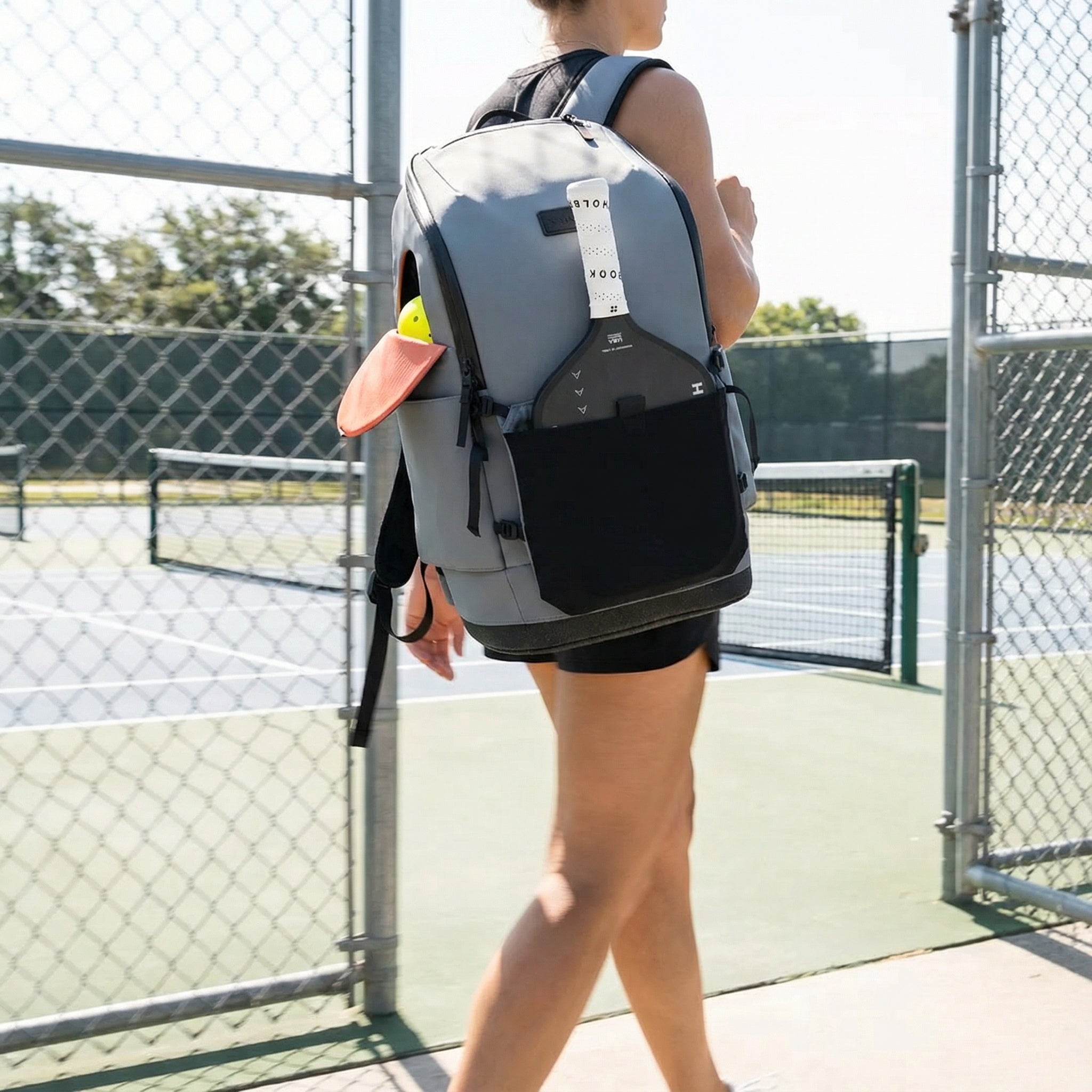
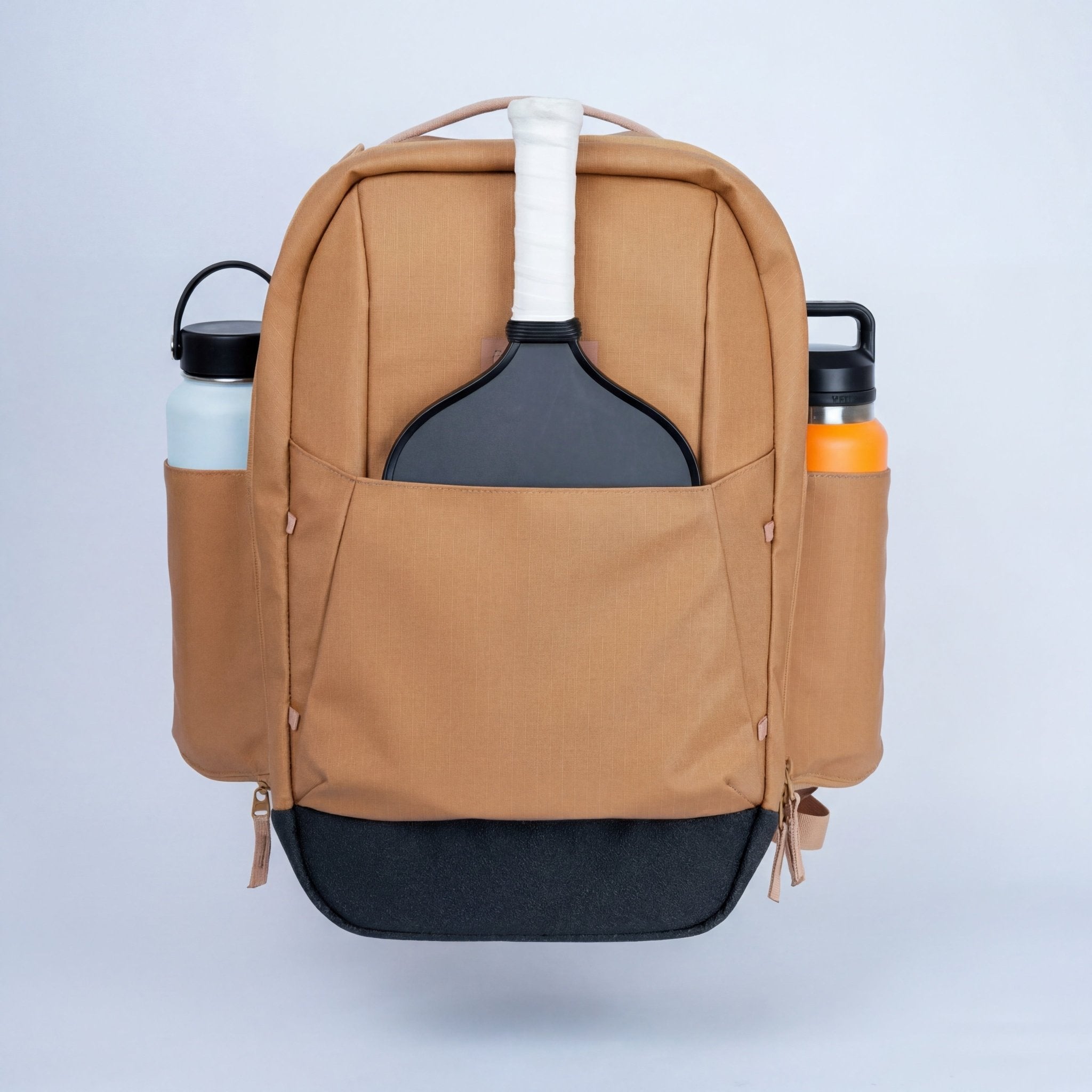
Once your net height is dialed in, the next thing that separates serious players from casual ones is what they carry to the court. The FORWRD Court Ranger V2 ($195) fits 2–4 paddles, a 16" laptop, water bottle, and all your court accessories in one bag — built by players who wanted something better than a tennis bag with extra pockets.

For players who carry two paddles, a 15" laptop, and change of clothes to morning sessions, the FORWRD Court Caddy ($325) adds a modular paddle sleeve, padded 15" laptop compartment, and YKK AquaGuard zippers — the upgrade from "fits everything" to "organizes everything."

Leave a comment
This site is protected by hCaptcha and the hCaptcha Privacy Policy and Terms of Service apply.