

Disclosure: This post contains affiliate links to Pickleball Central. If you purchase through our links, FORWRD earns a small commission at no extra cost to you. We only link to products we'd recommend regardless.
Choosing the wrong pickleball paddle costs you more than money — it costs you performance, comfort, and games. With hundreds of options across dozens of brands, most players spend too much time scrolling product images and not enough time understanding what separates a paddle that suits their game from one that fights it.
Last updated: June 2026
This guide cuts through the noise. You'll learn what a pickleball paddle actually is and how it works, the critical specs that affect your play (thickness, weight, shape), how to match a paddle to your skill level and style, and which brands and specific models deserve your attention in 2025. Whether you're deciding between a 14mm pickleball paddle and a 16mm pickleball paddle, weighing value against premium performance, or just trying to figure out why you keep shanking drives, you'll find a direct answer here.
What Is a Pickleball Paddle?
A pickleball paddle is a solid, smooth-faced racket used to hit a perforated plastic ball in the sport of pickleball. Paddles must conform to USA Pickleball regulations: combined length and width cannot exceed 24 inches, with no single dimension exceeding 17 inches. Modern paddles use polymer honeycomb cores and composite or carbon fiber faces to balance power, control, and feel.
Pickleball paddles sit at the center of how you play the game. Unlike tennis rackets, they have no strings — the face material and core thickness determine touch, pop, and forgiveness. A paddle that's right for a power-first player will frustrate a control-oriented dink specialist, and vice versa. Understanding construction is the first step to choosing well.
How the Core Thickness Changes Everything
Core thickness is the single most impactful spec on your paddle selection. The two dominant options on today's market are 14mm and 16mm cores, and they produce meaningfully different results.
14mm Pickleball Paddle: More Power, Less Margin
A 14mm pickleball paddle features a thinner polymer honeycomb core. That thinner core deflects more on impact, creating a trampoline effect that generates extra pop. Players who rely on drives, speed-ups, and hard resets from the transition zone often prefer 14mm paddles.
The trade-off: that same responsiveness makes touch shots less predictable. Dinks require more precise swing speed control. Mis-hits are more punishing.
Best for: Aggressive baseliners, power purists, players transitioning from tennis who want a more familiar pop.
16mm Pickleball Paddle: More Control, More Forgiveness
A 16mm pickleball paddle uses a thicker core, which dampens the ball's dwell time on the face. The result is a softer, more controllable feel — especially at the kitchen line. Dinks sit up where you want them, and the paddle absorbs hard incoming shots more consistently.
The trade-off: slightly reduced drive power compared to a 14mm. Players who need to generate pace through mechanics rather than the paddle's rebound will adapt quickly, but pure power players may feel the difference.
Best for: Kitchen-line specialists, control-oriented players, beginners learning touch, anyone managing arm fatigue or tennis elbow.
How to Choose a Pickleball Paddle
Choosing a pickleball paddle comes down to four variables: core thickness (14mm for power, 16mm for control), face material (carbon fiber for spin and touch, fiberglass for power), weight (7.5–8.5 oz for most players), and shape (standard for balance, elongated for reach and power). Match these specs to your playing style and physical needs before comparing brands or prices.
Step 1 — Identify Your Playing Style
Before you look at a single spec or product image, answer this: Are you a power player or a control player?
- Power players value drive speed, a fast pace game, and winning points outright. Look at 14mm cores, fiberglass or textured carbon faces.
- Control players value consistency at the kitchen, soft hands, and winning through placement. Look at 16mm cores, raw carbon fiber faces.
- All-around players sit in the middle. A 16mm paddle with a carbon face handles both roles without extreme trade-offs.
Step 2 — Choose Your Core Thickness
Use the 14mm vs. 16mm breakdown above. If you're unsure, start with 16mm. It's more forgiving while you develop technique, and control is a skill you can build faster than you can unlearn bad habits caused by an unforgiving paddle.
Step 3 — Select Face Material
- Carbon fiber: Excellent spin potential, defined feel, slightly stiffer. Best for advanced players who want feedback on every shot.
- Fiberglass (composite): More flex on impact, generates power naturally, slightly larger sweet spot. Good for intermediates and power-first players.
- Graphite: Lightweight, stiff, responsive. Less common in newer designs but still found in quality paddles.
Step 4 — Match Your Weight
Paddle weight runs from roughly 6.5 oz to 9 oz. Most competitive intermediate players land in the 7.5–8.5 oz range.
- Lighter paddles (under 7.5 oz): Faster swing, easier on the elbow, better at the net. Less plow-through on drives.
- Heavier paddles (8+ oz): More momentum on drives, better stability against hard shots. Higher fatigue risk in long sessions.
Step 5 — Evaluate Shape and Width
Paddle width matters for sweet spot size and reach. Standard shapes (roughly 8 inches wide) offer a centered sweet spot and balance. Elongated shapes (narrower, longer) push the sweet spot toward the tip, adding reach and more power on drives but reducing forgiveness on off-center hits.
Top Pickleball Paddle Brands in 2026: Who's Worth Your Money
The paddle market has exploded — hundreds of brands, most of them not worth your attention. These are the brands consistently earning trust among intermediate and competitive players. All are available at Pickleball Central.
1. Selkirk
Selkirk is the most trusted name among serious recreational players. Their LUXX Control Air InfiniGrit Epic is one of the most-played paddles at the 4.0–4.5 level. Carbon fiber face, 16mm core, excellent feel at the kitchen. Selkirk is the benchmark everyone else measures against. Best for: kitchen-line specialists, control players, serious intermediates.
2. JOOLA
JOOLA entered pickleball from their table tennis heritage and their Perseus Pro V Ben Johns 16mm has become one of the highest-profile paddles on tour. Carbon fiber face, excellent spin and touch. Available in 14mm and 16mm. Best for: players who want a tour-validated design without custom paddle prices.
3. CRBN
CRBN has a devoted following with clean construction and no-frills performance. The CRBN 1 TruFoam Genesis uses a proprietary TruFoam core — softer feel than standard polymer honeycomb, excellent for players who value touch over pop. Best for: steady kitchen players, players transitioning from tennis.
4. Six Zero
Six Zero built their reputation on carbon fiber performance at mid-range prices. The Double Black Diamond Control 16mm is a recurring recommendation for players who want legitimate raw carbon performance without a premium price tag. Best for: performance-focused intermediates watching their budget.
5. Franklin
Franklin is the entry-point brand most coaches recommend first — well-built for the price, widely available. Franklin paddles hold up well for beginner and casual play. Best for: new players, 2x/week casual players, gifts for someone just starting out.
6. Paddletek
One of the original premium paddle brands, Paddletek still earns respect from veteran players. They lean toward control with textured composite faces. Paddletek paddles are built in the USA, which matters to a segment of buyers. Best for: control-first players, veterans of the sport.
Best Pickleball Paddle for Beginners
The best pickleball paddle for beginners is a 16mm core, fiberglass-face paddle in the 7.5–8.0 oz range priced between 60 and 100 USD. This combination maximizes forgiveness, reduces arm fatigue during long learning sessions, and gives new players enough feel to develop touch without requiring perfect mechanics on every shot.
New players make a consistent mistake: buying a paddle marketed as "advanced" before their mechanics can use it. A stiff 14mm carbon paddle exposes every form flaw. A forgiving 16mm fiberglass paddle helps you develop fundamentals — footwork, dink consistency, third-shot drop mechanics — without the paddle working against you.
What to avoid as a beginner:
- Wood paddles (too heavy, no real feel)
- Super thin cores (14mm or less) before you've logged 20+ hours of play
- Elongated shapes before you understand your swing path
- Paying over 150 USD when you're still figuring out whether you prefer a two-handed backhand
A solid beginner paddle sits in the 60–99 USD range. You don't need to spend more until you know what you want to feel differently.
Understanding Pickleball Paddle Pricing in 2025
Paddle prices in 2025 range from under 30 USD for entry-level recreational options to over 250 USD for premium pro-level constructions. Here's how the tiers break down honestly:
Under 60 USD — Recreational Tier
Adequate for casual play. Typically graphite or composite construction with no advanced face texture. Fine for a few games a week with friends, but you'll feel the ceiling quickly if you start playing competitively.
60–99 USD — Serious Beginner to Intermediate
This is where the real value lives. At 99 USD, you're getting paddles with legitimate polymer honeycomb cores, composite or basic carbon faces, and proper weight distribution. Brands like Recess Pickleball and Warping Point Neon compete seriously at this price point.
100–138 USD — Intermediate to Advanced Value Range
The 138 USD bracket is a sweet spot for committed players. At 138 USD (or thereabouts — often written as 138 00 USD), you access paddles with raw carbon fiber faces, precision core construction, and professional-grade handle ergonomics. Most players who compete in local leagues and open tournaments live in this range.
150–250 USD — Premium and Pro
Top-shelf paddles from brands like Volair operate here. The difference between a 160 USD paddle and a 99 USD paddle is real but narrower than marketing suggests. If you're competing at 4.5+ or in sanctioned tournaments, the investment is justified. Below that level, the performance gap won't show up in your scorecard.
Key Paddle Specifications at a Glance
Use this reference when comparing paddles across brands and product images:
| Spec | 14mm Paddle | 16mm Paddle | |---|---|---| | Core thickness | 14mm | 16mm | | Power | Higher | Moderate | | Control | Moderate | Higher | | Best for | Power purists, aggressive players | Kitchen specialists, beginners | | Forgiveness | Lower | Higher | | Typical price range | 99–220 USD | 80–220 USD |
Face material quick reference:
- Carbon fiber: Maximum spin, excellent touch, firm feel
- Fiberglass: Power-forward, forgiving, wider sweet spot
- Graphite: Lightweight, responsive, stiff
What USA Pickleball Regulations Actually Require
According to USA Pickleball Official Rulebook (2024 edition), paddles must meet the following standards:
- Combined length and width: 24 inches maximum
- Maximum length: 17 inches
- No minimum width specified — but narrower elongated paddles must stay within the 17-inch length cap
- Surface must be smooth and rigid — no holes, rough textures applied post-manufacture, or anti-skid surfaces
- No electronic components
Equipment compliance has become a genuine purchase factor. Many competitive players now check USA Pickleball's approved paddle list before buying — the sport's growth has brought stricter testing standards, and brands that stay current communicate that clearly.
The Ref compliance question — whether a paddle meets current approved specs — has become a genuine purchase factor. Brands aware of this build their paddles to spec from day one and update customers promptly when testing standards change. Watch for brands that clearly state Ref compliance or USA Pickleball approval status on their product pages.
16mm vs. 14mm: Which Thickness Is Right for Your Game?
This is the question most intermediate players get wrong by defaulting to "the one the pros use." Pro players use 14mm paddles because they have the mechanics to control a responsive, power-forward paddle. They've logged thousands of hours of drilling. Their dink consistency doesn't depend on the paddle's forgiveness — it comes from muscle memory.
If you're playing 3–5 times per week and competing at the 3.5 to 4.0 level, 16mm pickleball is almost certainly the better choice:
- You'll dink more consistently with less mechanical perfection required
- Your third-shot drops will sit lower in the net more often
- You'll feel less arm fatigue over a full day of play
- You'll develop touch faster because the paddle doesn't punish slight mis-hits
Move to a 16mm pickleball paddle first, build your kitchen game, and only consider shifting to 14mm when your control is solid enough that you want more pop without sacrificing what you've built.
Shop Smart: How to Evaluate Paddles Before You Buy
With hundreds of product images and marketing claims across paddle brands, here's a practical checklist before you add a paddle to your cart:
Check these specs first:
- Core thickness (14mm vs. 16mm)
- Core material (polymer honeycomb is the standard)
- Face material (carbon, fiberglass, or graphite)
- Paddle weight (listed in oz — aim for your target range)
- Grip length and circumference (longer grips allow two-handed backhands)
- USA Pickleball approval status
Questions to ask:
- Does this brand have clear product specs, or is the listing vague?
- Is the price consistent with the construction claims? A "carbon fiber" paddle at 25 USD is not carbon fiber.
- Are there real player reviews — not just star ratings — from players at your level?
- Does the brand stand behind the paddle with a warranty or satisfaction policy?
The pickleball equipment market has grown dramatically — that growth attracted legitimate manufacturers and brands with impressive marketing but thin construction. Specs don't lie. Marketing copy sometimes does.
Complete Your Setup: Carry Your Paddles Right
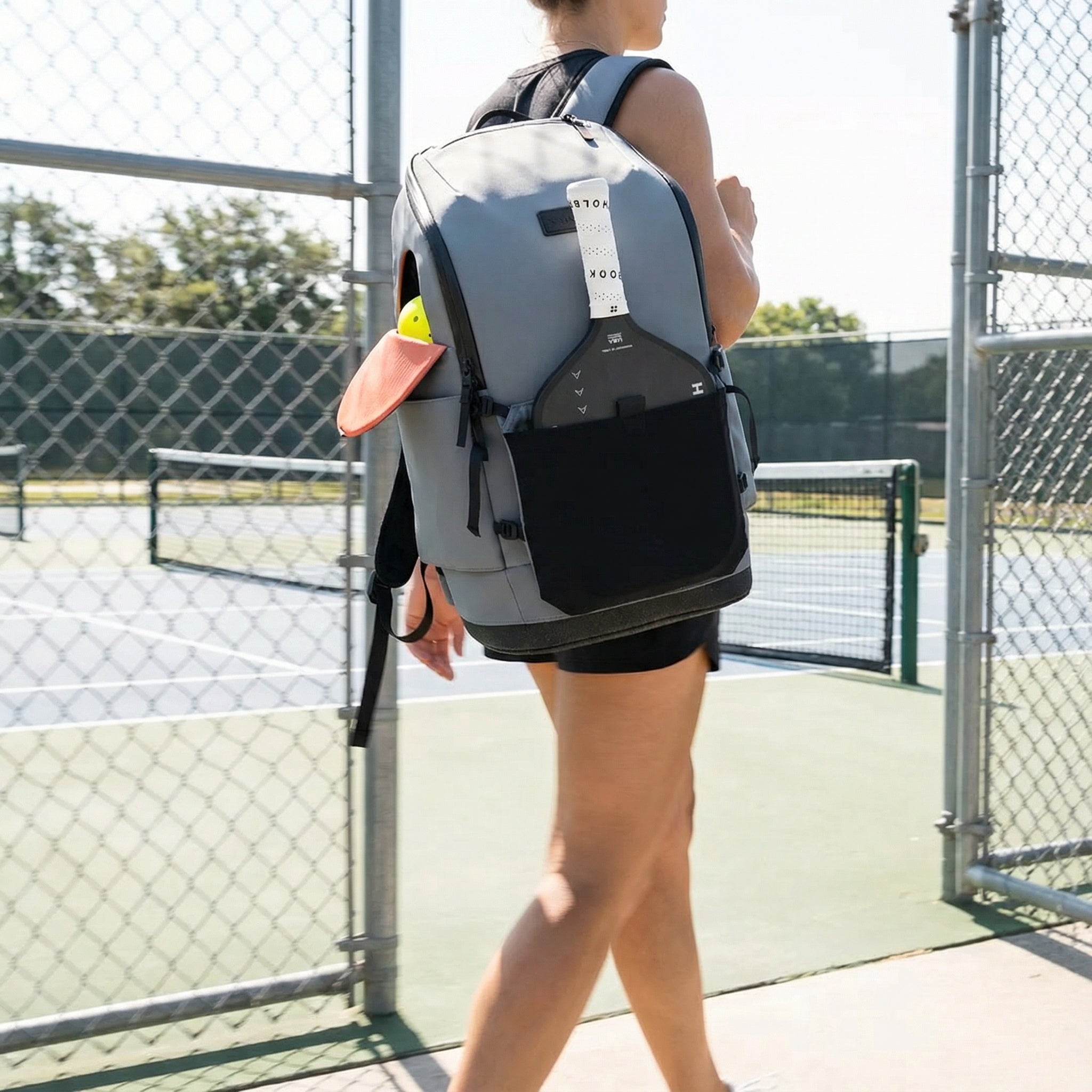
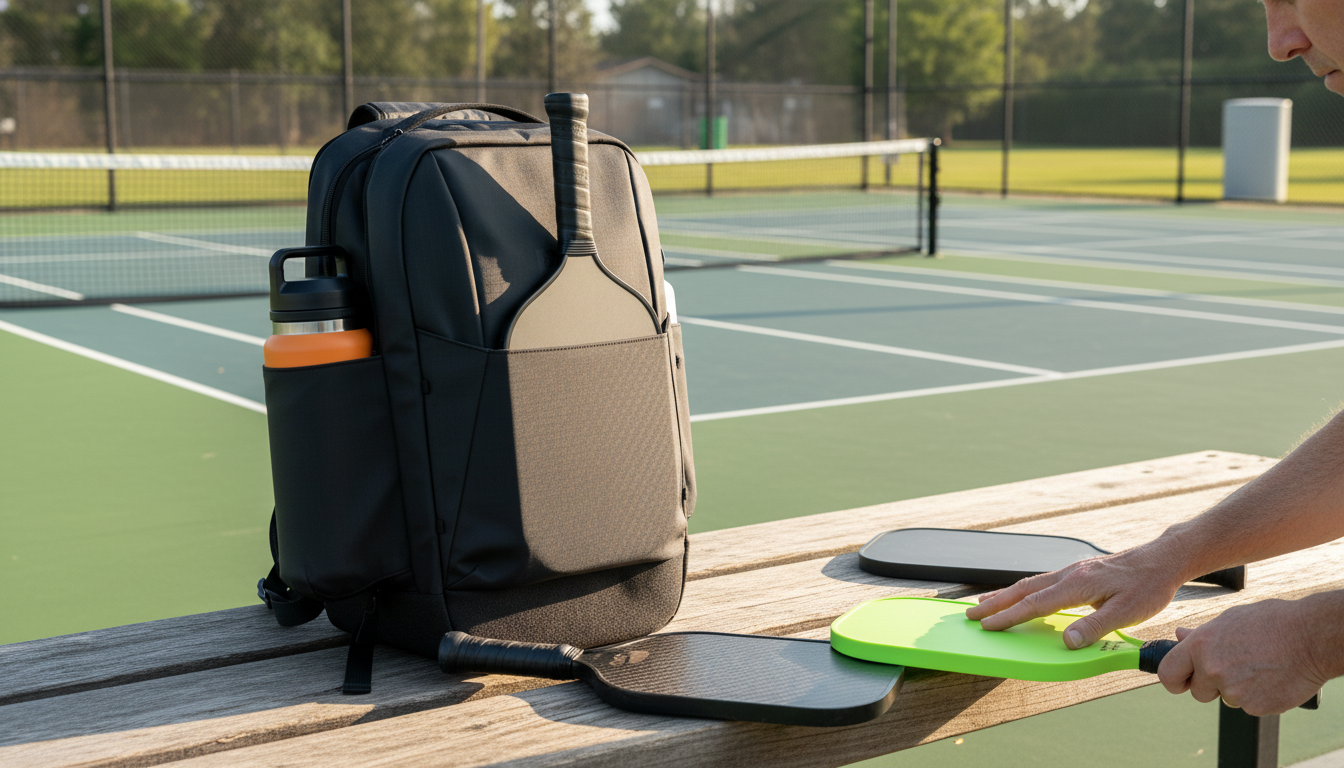
Once you've found the right paddle, you need a bag that protects it. A cheap bag throws your $150 paddle against your court shoes inside an unpadded sack. That's how paddle faces get scratched and grips get dirty between sessions.
"The paddle sleeve design was the first thing we focused on. We talked to 500+ players who told us their paddles were getting rattled around in their old bags. The Court Ranger V2's modular sleeve changed that." — Topher, FORWRD co-founder
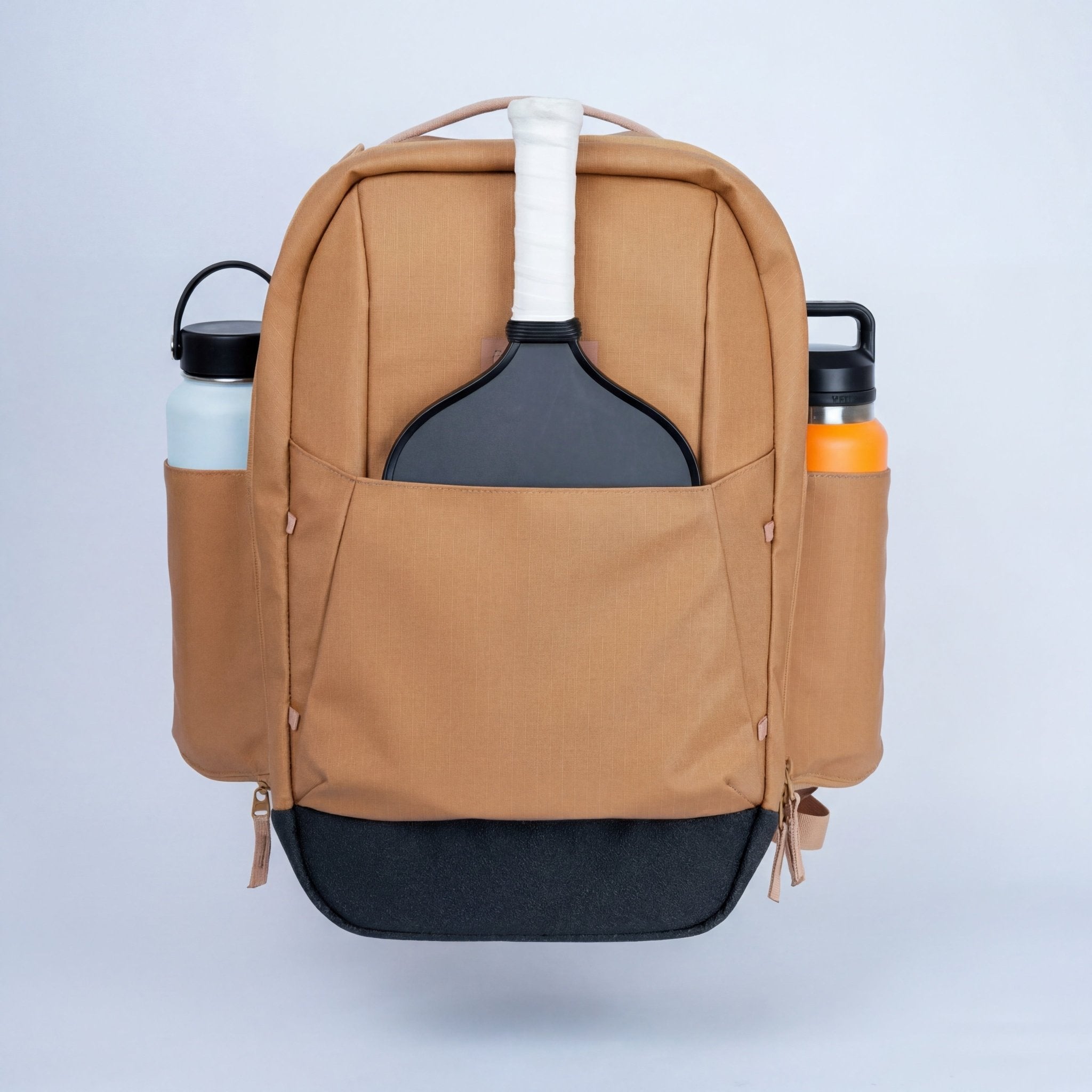
The Court Ranger V2 ($195) was designed for the 2–4x/week recreational player who needs a bag that handles the commute without treating their paddles like an afterthought. Modular paddle sleeve, 16" laptop compartment for work-to-court transitions, and YKK AquaGuard zippers that hold up through a full season of outdoor play.

Our Pick: FORWRD Court Ranger V2 — $195
Modular paddle sleeve, 16" laptop compartment, YKK AquaGuard zippers. Designed with 500+ real players for the 3x/week recreational schedule.
Conclusion: Stop Overthinking, Start Playing Better
The best pickleball paddle is the one that matches your game — not the most expensive one, not the one your favorite player posts about, not the one at the top of an Amazon Best Sellers list.
Here's the short version:
- New players: 16mm core, fiberglass face, 7.5–8.0 oz, 60–99 USD
- Intermediate control players: 16mm core, carbon face, 99–138 USD
- Intermediate power players: 14mm core, textured carbon or fiberglass face, 99–138 USD
- Advanced competitive players: Evaluate by feel and USA Pickleball approval status — spend where the specs justify it
Paddle brands like Selkirk, JOOLA, CRBN, Six Zero, Franklin, and Paddletek each serve specific player profiles. Know your profile before you browse product images and pricing. The right paddle won't fix your mechanics — but the wrong one will actively work against them.
A great paddle gets you on the court. A great bag gets it there safely. The Court Ranger V2 is built for players who take both seriously.
FAQ: Pickleball Paddle Questions Answered
What is the best pickleball paddle for intermediate players?
For 3.0–4.0 players, a 16mm core with a carbon fiber face is the best all-around choice. The Selkirk LUXX Control Air InfiniGrit Epic and JOOLA Perseus Pro V (16mm) are both strong options at the $130–160 range. Don't jump to 14mm until your kitchen dink consistency is solid under competitive pressure.
What's the difference between 14mm and 16mm pickleball paddles?
Core thickness is the most impactful spec you'll choose. A 14mm paddle produces more pop and responsiveness — better for power-first players but unforgiving on mishits. A 16mm paddle has a thicker core that absorbs impact, giving you more control and consistency at the kitchen line. Most intermediate players play better with 16mm.
How much should I spend on a pickleball paddle?
The $100–150 range is the sweet spot for recreational players who play 2–4x per week. You get legitimate polymer core construction, a real carbon or composite face, and proper weight distribution. Below $60 the specs fall short for anyone developing actual technique. Above $200 you're paying for premium materials that most players can't feel the difference from in a match.
What paddle do pro pickleball players use?
Most pros play 14mm carbon fiber paddles — brands like JOOLA (Ben Johns uses the Perseus Pro V), Selkirk (Anna Leigh Waters), and CRBN (sponsored tour players). Pros choose 14mm because their mechanics are tuned for a responsive paddle. Recreational players usually score more points with a 16mm despite what they see pros using.
Is a heavier or lighter pickleball paddle better?
Most players perform best in the 7.5–8.2 oz range. Under 7.5 oz: faster swing, easier on the elbow, better at the net, less plow-through on drives. Over 8.5 oz: more stability against hard shots, higher arm fatigue over long sessions. If you're prone to tennis elbow, start at 7.5 oz or lighter and add lead tape to fine-tune weight later.

Leave a comment
This site is protected by hCaptcha and the hCaptcha Privacy Policy and Terms of Service apply.