

Last updated: August 2026
Professional pickleball is real money now — the top 10 players earn six figures, franchise teams sell for millions, and the sport has gone from backyard novelty to nationally televised competition in under a decade. If you're trying to understand what the pro circuit actually looks like, how players get there, and what the career paths beyond competing look like, this guide covers it all.
What Is Professional Pickleball?
Professional pickleball is the highest level of competitive play — where athletes earn prize money, world rankings, and sponsorship income from the sport. It operates through structured tours, franchise leagues, and a global ranking system that didn't exist in any serious form before 2019.
USA Pickleball (USAP) serves as the national governing body, maintaining the official rulebook and sanctioning tournaments. The rules are tighter than most recreational players realize: paddles can't exceed 24 inches combined length and width, balls must weigh between 0.78 and 0.935 ounces with 26–40 evenly spaced holes, and net height is set at 36 inches at the ends and 34 inches at the center.
Two major professional tours dominate the domestic landscape — the APP and the PPA — plus Major League Pickleball's team format. Pickleball was named the fastest-growing sport in the U.S. by the Sports and Fitness Industry Association for four consecutive years (2021–2024), with participation growing 223.5% over a three-year stretch according to the 2023 SFIA report.
APP Tour vs. PPA Tour: What's the Difference?
The APP Tour (Association of Pickleball Professionals) is fully sanctioned by USAP and follows the official ruleset. Events span Austin, Phoenix, Orlando, and other major markets. The APP is broadly seen as the more open pathway — it runs amateur and pro divisions side by side, making it accessible to players climbing the competitive ladder.
The PPA Tour (Professional Pickleball Association) operates independently and has historically implemented some rule modifications at the elite level. It's attracted significant television coverage and high-profile sponsor partnerships, partly because of its production value and its roster of marquee names.
In 2023, the PPA and Major League Pickleball merged into the United Pickleball Association (UPA), an attempt to unify the professional ecosystem under one umbrella. The goal was a single ranking system and cleaner event calendar. The integration has been gradual, and both brands have retained distinct identities in the market.
Major League Pickleball: The Franchise Format
Major League Pickleball launched in 2021 and changed how the sport gets consumed. Instead of individual tournaments, MLP runs a team franchise format — 24 teams compete across regular season events in cities like Columbus, Dallas, and St. Louis, with team rosters that include both male and female players.
Each team match features men's doubles, women's doubles, mixed doubles, and a "dreambreaker" singles format when teams are tied at the end. The structure promotes gender equity in pay and airtime — male and female athletes compete equally within every team event.
Notable franchise names include the Florida Smash, California Black Bears, Las Vegas Night Owls, and Nashville Chefs. Players like Anna Leigh Waters, Ben Johns, and Pablo Tellez have become franchise cornerstones, developing real fan bases tied to their teams. MLP also expanded internationally — MLP Australia launched in 2023.
The team format solved a real problem for sponsors and broadcasters: individual pickleball tournaments can feel like a long weekend of bracket play. MLP gives you a team to root for, narrative rivalries, and a season structure that resembles other major sports leagues.
What Do Pro Pickleball Players Actually Earn?
The top tier is real money. Players like Ben Johns and Anna Leigh Waters earn an estimated $200,000–$500,000+ annually when you combine prize money, sponsorship deals, and appearance fees. That said, those numbers apply to a small fraction of the professional field.
Below the top 10, it gets thinner fast. Most professional pickleball players supplement tournament winnings with coaching, clinics, and brand partnerships. A mid-ranked professional might earn $30,000–$80,000 from prize money alone — not enough to sustain a full career without income from other sources.
The Pickleball World Rankings (PWR), launched in July 2024, provides a unified global system. Points are awarded based on tournament level and finishing position, creating clear financial stakes at each event tier. Major events like the US Open Pickleball Championships in Naples, Florida — which drew 55,000+ fans and 3,450 players from 40 countries — represent the biggest prize pool opportunities on the calendar.
Sponsorship is increasingly where the real money lives. Corporate partners including JOOLA, Margaritaville, and Minto Communities have brought mainstream brand spend into the sport. The demographic skews affluent and educated, which makes pickleball attractive to premium sponsors in ways the audience size alone doesn't fully explain.
How to Go Pro in Pickleball
The path is more structured than most people realize. Here's how it typically unfolds:
- Get a DUPR rating. The Dynamic Universal Pickleball Rating is the industry-standard skill metric. You earn a DUPR through rated matches at local courts and in registered events. It's the baseline credential for entering competitive circuits.
- Compete in USAP-sanctioned local and regional events. The APP and PPA both have amateur and senior divisions open to recreational players. You don't need to be a professional to enter a national tour event — you need a rating that places you in the right division.
- Accumulate PWR points. As you perform in sanctioned events, you build a world ranking. Consistent performance across multiple events throughout the year is how players break into professional divisions.
- Secure a sponsor or coaching income. Most players who make the jump to full-time professional play have at least one additional income stream lined up — whether that's a paddle brand deal, coaching clinics, or content creation.
Celebrity crossovers have raised the visibility of this pathway — Andre Agassi made his professional pickleball debut in 2025, drawing significant media attention and signaling to mainstream audiences that the sport is serious competition.
What Gear Do Tournament Players Use?
At the professional level, gear choices are deliberate. Carbon fiber paddles with thermoformed construction and polymer honeycomb cores are nearly universal — brands like JOOLA, Selkirk LABS, and CRBN dominate pro bags. Tournament-approved balls certified by USAP are mandatory at sanctioned events.
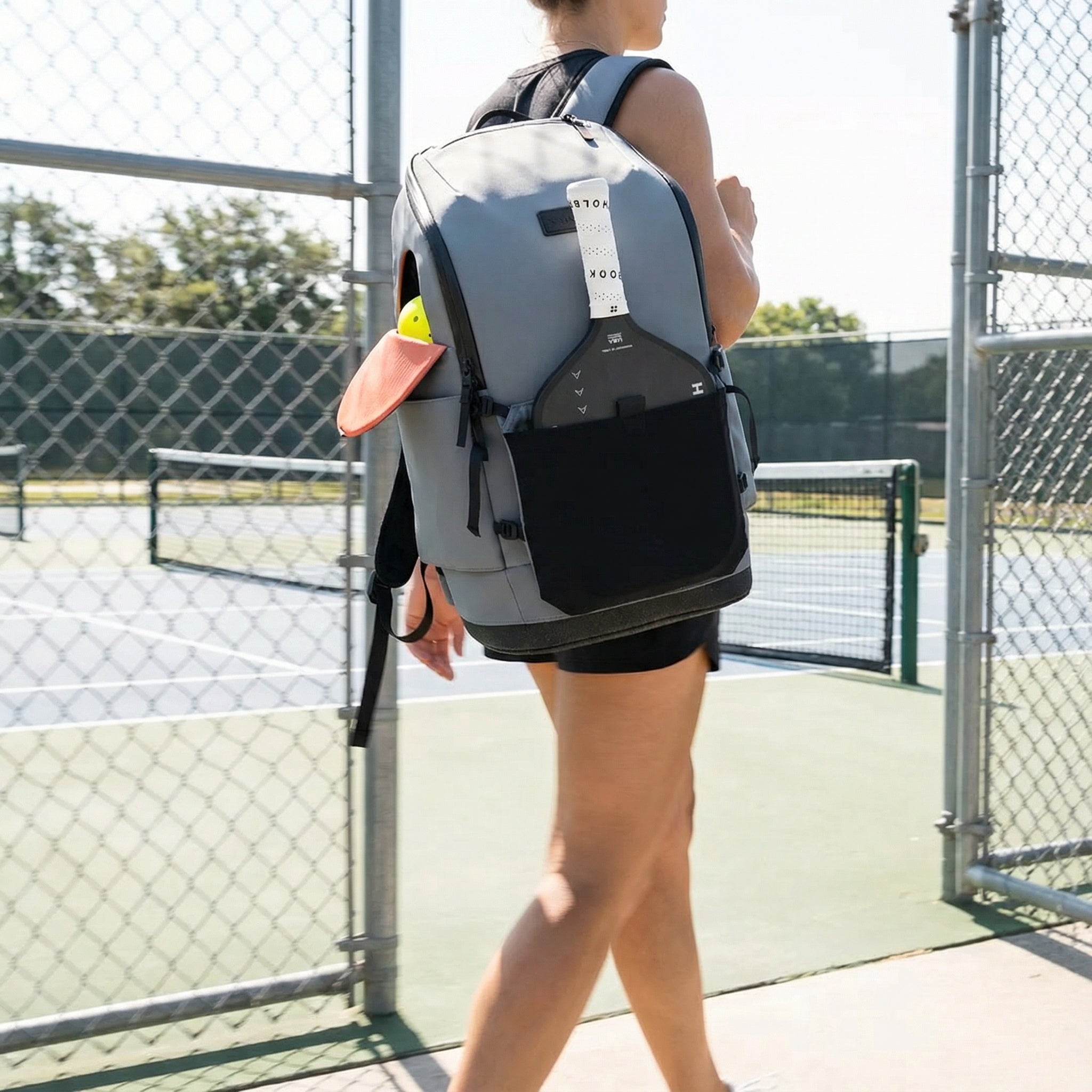
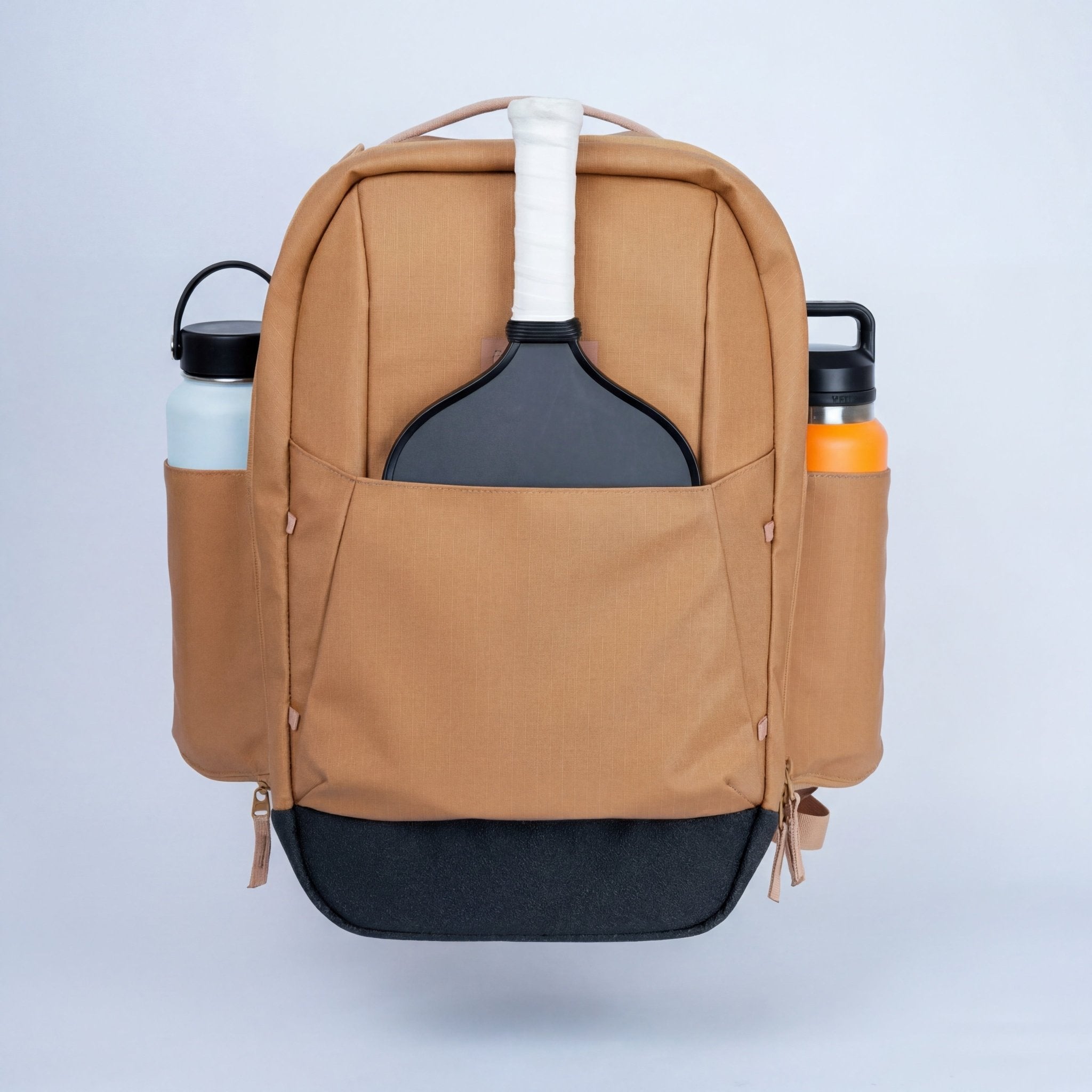
But what often gets overlooked is the bag. On tournament days — 3 to 5 matches, sometimes outdoors in August heat — your bag functions like a pit crew. You need paddles organized, grips accessible, a change of clothes ready, snacks, hydration, and if you're traveling in, your laptop and chargers too.
Tournament Players Trust: FORWRD Court Caddy
4-paddle capacity, 15" laptop sleeve, modular organization, YKK AquaGuard zippers, 30L main compartment, lifetime warranty. Built with input from 500+ real players. Featured in The Dink, Pickleball Effect, and The Kitchen.

Coaching Certification and Career Paths Beyond Playing
Playing professionally is one path. It's also one of the narrower ones. The professional pickleball ecosystem has created demand for qualified people across instruction, officiating, broadcasting, and tournament operations — and those roles don't require a top-50 world ranking.
Coaching and Instruction
The Professional Pickleball Registry (PPR) is the official certification standard for instructors in the U.S. Certification involves online coursework, on-court practical training, and a written exam. PPR members get access to equipment discounts, liability insurance, and a resource library that supports ongoing professional development.
USA Pickleball's Instructor Certification Program (ICP) runs parallel to PPR, with levels from recreational instructor to teaching professional. Certified instructors typically charge $50–$150 per hour for private lessons. At clubs with strong pickleball programs, lead instructors can build six-figure incomes from a combination of group clinics, private lessons, and program coordination.
Tournament Officiating
Referee certification for sanctioned professional events requires study of pre-course materials, attendance at a certification workshop, and a written test. Officials travel to professional tournaments nationwide. It's a pathway for players who love the competitive environment but want a career structure that extends past their playing years.
Broadcasting and Media
Networks like PickleballTV and the Tennis Channel's pickleball coverage have created real demand for knowledgeable commentators and analysts. These roles combine sports knowledge with on-camera communication skills. As the sport's television presence expands, so does the market for people who can explain the kitchen, the dink game, and the reset shot to a mainstream audience.
Business and Administration
Franchise operations, tour event management, equipment distribution, and sports marketing within the pickleball ecosystem have all expanded rapidly. The UPA, MLP franchises, and the growing network of pickleball-specific clubs represent real employer organizations with professional staff needs.
Olympics and Global Expansion
The World Pickleball Federation, based in Switzerland, is actively pursuing International Olympic Committee recognition. Professional pickleball is unlikely to appear at the Olympics before 2032 at the earliest, but the sport has made credible progress — demonstration appearances at the 2022 Maccabiah Games and the 2023 African Games are part of the formal IOC pathway. Expected inclusion in the 2027 Invictus Games further builds the case.
International professional development is accelerating regardless of Olympic status. MLP Australia launched in 2023. The PPA announced an Asia tour launch for 2025. The number of outdoor pickleball courts in major U.S. cities has grown 650% over seven years, totaling more than 3,000 courts across 100 of the most populated cities.
Wheelchair pickleball has formal professional recognition within this expanding ecosystem. USA Pickleball adopted modified professional rules in 2016 — a two-bounce allowance and stationary serving requirements — that enable fair competition while preserving competitive integrity. Adaptive athletes compete in dedicated divisions at major events, and many have gone on to build coaching and instruction careers.
Complete Your Setup
Whether you're competing or building toward competition, the Court Caddy is built for tournament-day demands — 4-paddle capacity, modular organization, 15" laptop sleeve, and YKK AquaGuard zippers that hold up in any weather. The Court Ranger V2 ($195) is the streamlined option for players who carry lighter. Both built with 500+ real players at FORWRD.
Frequently Asked Questions
How much do professional pickleball players make?
Top players like Ben Johns and Anna Leigh Waters earn an estimated $200,000–$500,000+ annually from prize money and sponsorships combined. Below the top 10, most professionals earn $30,000–$80,000 from tournament winnings alone and rely on coaching, clinics, and brand deals to make a full-time career work.
What is the difference between the APP Tour and PPA Tour?
The APP Tour is USAP-sanctioned and follows official rules, with events across Austin, Phoenix, Orlando, and other cities. The PPA Tour operates independently and has historically used some rule modifications at the elite level. In 2023, the PPA and MLP merged into the United Pickleball Association (UPA) to unify the professional landscape under one structure.
How does someone start playing pickleball competitively?
Start by earning a DUPR (Dynamic Universal Pickleball Rating) through rated matches at local courts. Then enter USAP-sanctioned local and regional events. Both the APP and PPA have amateur divisions — you don't need a professional ranking to compete in a national tour event. Consistent performance builds PWR points and moves you up the competitive ladder.
Is pickleball going to be in the Olympics?
Not before 2032, realistically. The World Pickleball Federation is actively pursuing IOC recognition and has made progress through demonstration events at the 2022 Maccabiah Games and 2023 African Games. The sport is expected to appear at the 2027 Invictus Games. Olympic inclusion would require further standardization across tours and broader international infrastructure.
What certifications do pickleball coaches need?
The Professional Pickleball Registry (PPR) is the primary certification standard in the U.S., combining online coursework with on-court practical training. USA Pickleball's Instructor Certification Program (ICP) offers a parallel path with levels from recreational instructor to teaching professional. Certified instructors typically earn $50–$150 per hour for private lessons.
What equipment do professional pickleball players use?
Carbon fiber paddles with thermoformed construction and polymer honeycomb cores are the professional standard — JOOLA, Selkirk LABS, and CRBN are widely used on tour. USAP-approved balls are mandatory at sanctioned events. Tournament players also invest in organized bags with dedicated paddle compartments and enough storage for a full day of competition.

Leave a comment
This site is protected by hCaptcha and the hCaptcha Privacy Policy and Terms of Service apply.