

Last updated: August 2026
The dog didn't name the sport. The dog was named after the sport. That single fact overturns the most popular origin story in all of pickleball — and once you know the real one, you'll understand why the name fits so perfectly.
Pickleball was invented in 1965. The Pritchard family dog, Pickles, arrived in 1968. Three years apart. That gap is all the evidence you need.
Here's the actual story of how pickleball got its name — a rowing metaphor, a sharp-eyed woman's intuition, and one of sport's most enduring myths.
The Bainbridge Island Origin
It started with a problem: three families, a summer afternoon, and nothing to do. Joel Pritchard — Washington state congressman — came home to find his wife Joan and their kids restless. The family property on Bainbridge Island had an old badminton court, but they couldn't find a full set of badminton equipment.
So they improvised. Joel, his neighbor Bill Bell, and friend Barney McCallum grabbed ping pong paddles and a perforated plastic ball — the kind that resembled a wiffle ball. They lowered the badminton net. They made up rules. By the end of the summer of 1965, they had something they'd never had before: a new game.
The three men deserve credit for inventing it. But naming it? That was Joan Pritchard's contribution — and it's the one that stuck.
The Pickle Boat Connection
Joan Pritchard wasn't just Joel's wife watching from the sidelines. She was a former crew racing participant who'd attended Marietta College in Ohio — home to one of the country's oldest and most respected rowing programs. She knew the sport's terminology the way a baseball lifer knows the infield fly rule.
In competitive rowing, a pickle boat is a crew assembled from leftover rowers — athletes who didn't qualify for the primary teams but were gathered together into a functional, if improvised, unit. The pickle boat isn't the first choice. It's whatever you cobble together from what's available.
Joan looked at what they'd built: a badminton court they happened to have, paddles borrowed from ping pong, a plastic ball that happened to bounce right. Leftover equipment, assembled into something new. The parallel was immediate — she suggested calling it "pickle ball" (originally two words), and it stuck.
That's it. That's the origin. A rowing metaphor applied to an improvised summer game by a woman who recognized the connection before anyone else did.
The Pickles Dog Myth — Debunked
Here's the competing story, and it's irresistible: the Pritchard family had a dog named Pickles who loved chasing the perforated ball across the court. The game got named after the dog. Cute, memorable, easy to repeat.
There's just one problem with it: the chronology is backwards.
Pickles — a cockapoo — joined the Pritchard household in 1968. Pickleball was named in 1965. That's a three-year gap that makes the dog-origin story impossible. Pickles was named after the game. The game wasn't named after Pickles.
Frank Pritchard, a direct family member, has said this clearly and repeatedly in interviews. Paul Brown and Jeannie Pritchard (Joel and Joan's daughter) discovered and adopted two puppies during a 1968 summer visit, naming them Pickles and Lulu. The name Pickles was inspired by the game that was already three years old and spreading among local families.
The dog did chase balls around the court. That part is true. But Pickles was the mascot of a sport that already had its name — not the inspiration for it.
Why the Myth Persisted
Joel Pritchard is partly responsible, and he knew it.
In an early media interview, Joel shared both explanations — the true pickle boat story and the dog story — almost as a throwaway. He reportedly said something to the effect that the dog story wouldn't go anywhere. He was wrong. The reporter, choosing between a rowing metaphor and a lovable family dog, went with the dog.
The rest is media dynamics. The dog story is more visual, more family-friendly, and easier to repeat without any background knowledge of crew racing. You don't need to know what a pickle boat is to enjoy the image of a cockapoo sprinting after a wiffle ball.
As pickleball grew — covered in Tennis Magazine, The National Observer, and eventually mainstream sports media — the dog narrative spread faster than corrections could follow. Bainbridge Island locals knew the truth. The Pritchard, Bell, and McCallum families knew the truth. But truth doesn't spread as fast as a good story, and "the dog named the sport" is a very good story.
The myth also reveals something honest about how sports history works. The charming version wins. It takes sustained effort from the people who were actually there to keep the accurate record alive — which is exactly what the Pritchard family has done, decade after decade.
How Pickleball Spread Beyond the Backyard
By 1967, the game had already outgrown its origins. The first permanent pickleball court was built in Bob O'Brien's backyard — two years after that first improvised afternoon on the Pritchard property. That's a meaningful milestone: the sport had become something people wanted dedicated space for.
From there, word spread through the networks you'd expect in the Pacific Northwest in the late 1960s — neighbors, school connections, local courts. Joel Pritchard's political career gave pickleball unusual visibility; it's not nothing that a Washington state congressman was publicly associated with a new sport. By the 1970s, the game was reaching beyond Bainbridge Island and into the broader Pacific Northwest community.
The name traveled with it — unchanged, despite the competing myth. "Pickle ball" eventually became "pickleball," one word, and USA Pickleball (then the USAPA) was founded to govern the sport officially. Today there are an estimated 50 million players in the United States alone, and the question why is pickleball called pickleball? is among the most searched sports-history questions online. If you're newer to the game and want to understand just how fast it's grown, these tips and drills are a solid place to start building your game.
The answer, as Joan Pritchard would tell you: leftover rowers. Leftover equipment. The same idea, two different worlds.
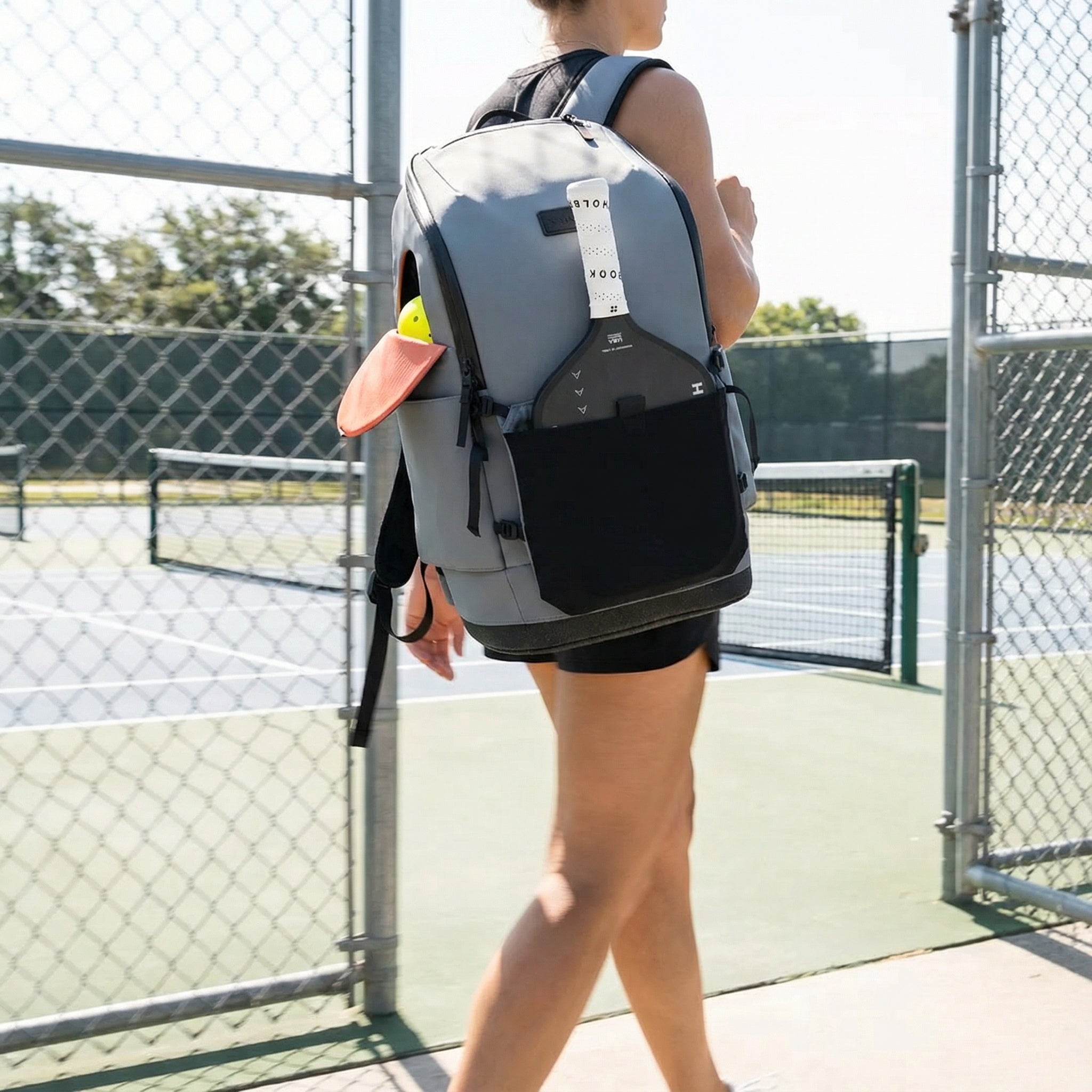
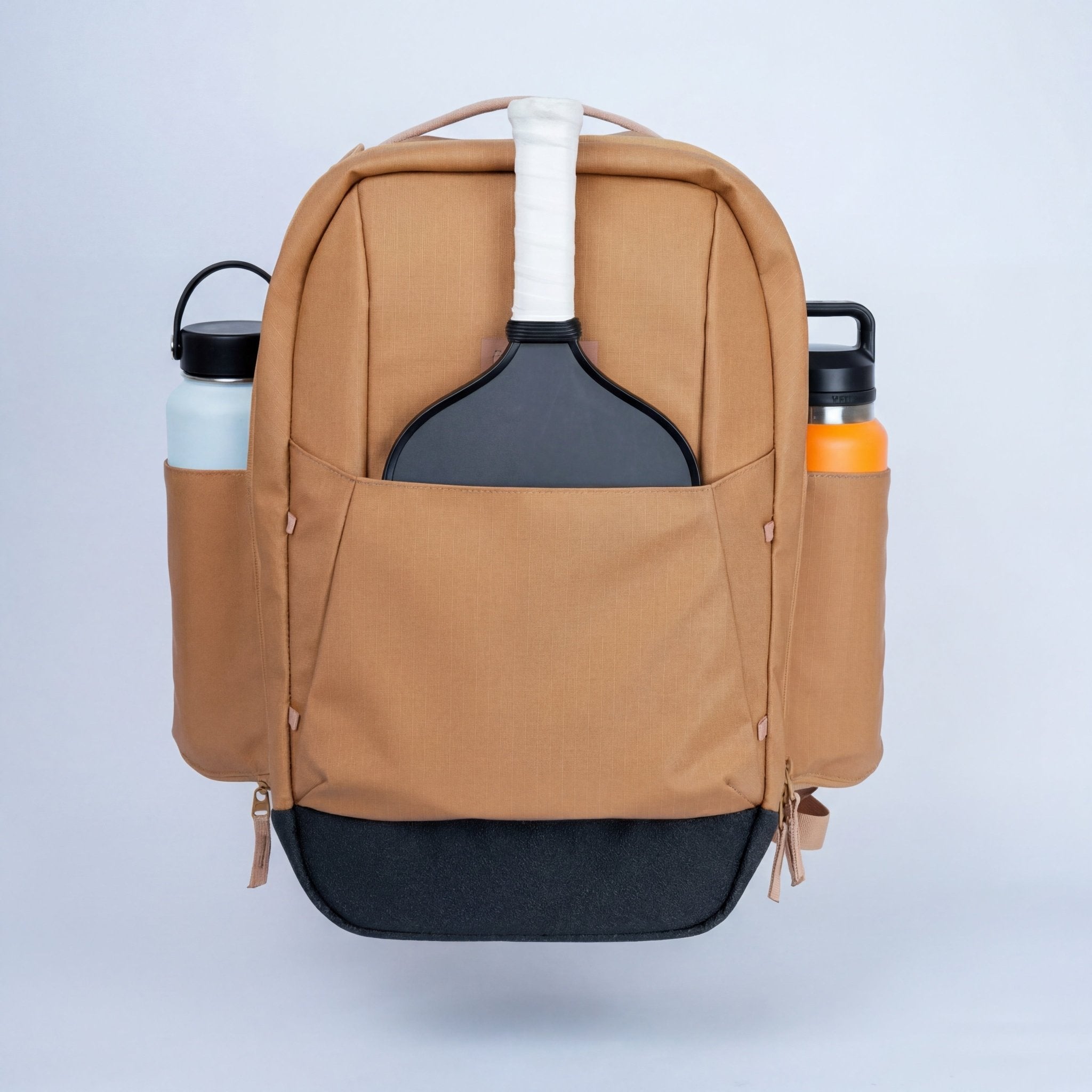
Today's pickleball bags have come a long way from the improvised gear used in Joel Pritchard's backyard. The Court Ranger V2 is built for the game pickleball has become — not the one cobbled together from what happened to be around.
Frequently Asked Questions
Why is pickleball called pickleball?
Joan Pritchard coined the name in 1965, inspired by the "pickle boat" concept from crew racing — a boat crewed by leftover rowers who didn't make the primary teams. Just as pickle boats were assembled from spare parts, the game was improvised from a badminton court, ping pong paddles, and a perforated plastic ball.
Is pickleball named after a dog?
No. The family dog named Pickles didn't join the Pritchard household until 1968 — three years after the game was already named in 1965. The dog was named after the game, not the other way around. Joel Pritchard once mentioned the dog story playfully to a reporter, and from there it took on a life of its own.
Who invented pickleball?
Pickleball was invented in the summer of 1965 by Joel Pritchard, Bill Bell, and Barney McCallum on Bainbridge Island, Washington. Joel was a Washington state congressman. His wife Joan Pritchard named the sport, drawing on her crew racing background from Marietta College in Ohio.
When was the first permanent pickleball court built?
The first permanent pickleball court was built in 1967 in Bob O'Brien's backyard — two years after the game was invented on Bainbridge Island. That transition from improvised play to dedicated infrastructure marked pickleball's shift from family pastime to something with staying power.
What does "pickle" mean in pickleball?
Pickle refers to a "pickle boat" from crew racing — a boat assembled from rowers who didn't make the primary crew teams. Joan Pritchard applied the term because pickleball was itself assembled from leftover equipment: a badminton court, ping pong paddles, and a wiffle-style ball. The parallel was immediate and perfect.
Complete Your Setup
Whether you've been playing since you first heard this story or just found the sport, your gear matters. The Court Ranger V2 ($195) was built with 500+ real players — a modular 16-inch paddle sleeve, separate shoe compartment, and YKK AquaGuard zippers made to outlast the court. Players who carry a laptop before heading to open play step up to the Court Caddy ($325) — 4-paddle capacity and a dedicated 15" laptop sleeve. Like pickleball itself, both were built around what players actually need.

Leave a comment
This site is protected by hCaptcha and the hCaptcha Privacy Policy and Terms of Service apply.