

Disclosure: FORWRD earns a commission on purchases made through affiliate links in this post, at no extra cost to you. We only recommend products we'd put in our own bag.
Last Updated: November 2026
Thrive isn't a household name yet. At $199.99, the Fury Elongated is competing against Six Zero, CRBN, and JOOLA paddles that have years of community trust behind them. So the question isn't whether Thrive makes a good paddle — it's whether the Fury Elongated is good enough at this price point to skip the name brands. After playing it on outdoor concrete and indoor wood courts with three different weighting configurations, the short answer: yes, with one caveat you need to know before you buy.
Quick Verdict
Pros:
- 61 mph serve speed — 92nd percentile for a 15.5mm paddle
- Internal Weighted Core Technology adds stability without dead-spot feel
- Tri-layer hybrid face gives drive power with enough touch for resets
- Every paddle individually hand-weighed; swing weight certified at order
- $199.99 undercuts most comparable elongated paddles
Cons:
- Spin at 2272 rpm (57th percentile) — solid, not elite
- 6-month warranty vs Selkirk's lifetime and JOOLA's 1-year
- Narrower sweet spot than a widebody — punishing on mishits at speed
- Less brand recognition means murkier resale value
Price: $199.99 | Best for: 3.5–4.5 aggressive baseliners who want elongated reach without paying $260+ | Skip if: You're a soft-game, dink-first player or need a 1-year+ warranty
Specs at a Glance
| Spec | Thrive Fury Elongated |
|---|---|
| Core Thickness | 15.5mm Flex Force Core |
| Face | Tri-layer CFC Hybrid (carbon + fiberglass) |
| Length × Width | 16.5" × 7.5" |
| Static Weight | 7.8–8.0 oz |
| Swing Weight | 115–117 |
| Twist Weight | 6.1–6.3 |
| Serve Speed (radar-tested) | 61 mph (92nd percentile) |
| Spin (camera-measured) | 2272 rpm (57th percentile) |
| Certification | USA Pickleball Approved, PbCor43 (0.433) |
| Generation | Gen 3.5 Power Series |
| Price | $199.99 |
Check Price at Pickleball Central →
Why Trust This Review
FORWRD designs pickleball bags — specifically bags built around how players actually carry and protect their paddles. That means we've handled hundreds of paddles across brands, shapes, and price tiers, and we've developed strong opinions about what separates real performance from marketing spec sheets.
For this review, the Fury Elongated was tested across 8 sessions (5 outdoor on concrete, 3 indoor on wood) over three weeks. We specifically tested it in a swing weight 116 configuration — the median for this model. Comparisons were made against the Six Zero Double Black Diamond Elongated (SW 108) and the CRBN1 TruFoam Barrage (SW 119) during the same sessions.
What "Gen 3.5" Actually Means
Thrive's generation naming confuses people, so let's clear it up. The Gen 3 series used a standard foam ring. Gen 3.5 adds Internal Weighted Core Technology (IWCT) — tungsten weights embedded directly into the paddle's core at specific points, shifting the balance point toward the head without changing the grip feel. The practical effect: more plow-through on drives without having to lead-tape the head yourself.
The other Gen 3.5 addition is the TPE foam ring (thermoplastic elastomer, same material used in high-end shoe midsoles). It increases dwell time — the brief moment the ball stays in contact with the face — which translates to more shape on spin shots and softer resets when you need to dial it back.
In plain terms: the Gen 3.5 Fury hits harder and resets more reliably than the Gen 3. That's the upgrade.
Power and Serve Speed: Where the Fury Earns Its Name
The 61 mph serve speed isn't a marketing claim — it's radar-gun verified, and it puts the Fury Elongated in the 92nd percentile of tested 15.5mm paddles. That's genuinely elite territory for a mid-price paddle. For context, Selkirk's $300 OMNI Elongated sits in the same speed range. The Fury gets there for $100 less.
Where does that speed come from? Three places. First, the elongated shape extends the lever arm — basic physics; longer paddle, more head speed. Second, the IWCT head-loading amplifies that effect without requiring you to add lead tape. Third, the tri-layer CFC face is stiffer than pure fiberglass, bouncing the ball faster off the face on drives.
On outdoor concrete at a local rec center in Phoenix, drives were consistently landing deep on third shots. Players who tested this paddle against me noted that the pace off drives felt "different" — not just fast, but heavy. The IWCT weight distribution gives drives a punchy, low-arc trajectory that's harder to reset than a pure pop paddle.
Spin: Good, Not Elite
At 2272 rpm (57th percentile), spin is the Fury's weakest performance pillar — relative to its own impressive power numbers. It's not a bad spin paddle; most players hitting 2272 rpm are getting enough bite on topspun serves and angled drops. But if spin is your primary weapon and you're eyeing the CRBN or the RPM Friction Pro Elongated V2 (which runs in the 68th percentile spin range at similar thickness), the Fury won't match them.
The tri-layer hybrid face is the reason. Carbon fiber layers add speed; the fiberglass component softens the response slightly and reduces the micro-texture grip that raw T700 carbon provides. It's a deliberate tradeoff — Thrive optimized for the power-reach combo over raw spin numbers.
For topspin groundstrokes from the baseline, the spin is plenty. For extreme topspin serves designed to kick high into a backhand, you'll notice the limits compared to raw carbon alternatives at this price.
Kitchen Play and Resets: Better Than You'd Expect
Elongated paddles have a reputation for killing kitchen touch. The extended lever arm that generates pace also makes finesse shots feel like threading a needle. The Fury is the least problematic elongated paddle we've tested in kitchen play — and the TPE foam ring is the reason.
Resets felt softer than the swing weight numbers would suggest. With a SW of 116, there's real momentum behind the paddle head, which typically means a live face that's hard to slow down on defense. The foam ring absorbs enough energy on soft blocks that the ball dies reliably on resets — even on quick exchanges at the kitchen line where you don't have time to actively decelerate the swing.
Dinks were consistent but not forgiving. The sweet spot on the elongated face is narrower laterally than a widebody (7.5" wide vs. a typical 8"+ widebody), so mis-timed dinks on the extreme toe or throat would pop up unpredictably. If you're playing this paddle, your mechanics need to be reasonably grooved — this isn't the paddle for 3.0 players still dialing in their grip and stance.
Arm Feel and the Swing Weight Question
Swing weight 115–117 is not a lightweight paddle. For comparison, most control-first paddles come in around SW 100–108. The Fury sits on the heavier end of "balanced" — which means more power and stability, but also more arm fatigue on long sessions.
After three hours of outdoor play in a heat session (100+ degree concrete courts), there was noticeable forearm and shoulder fatigue — more than with the Six Zero DBD Elongated (SW 108) in the same conditions. This matters for 3x/week players who tend to log 2–3 hour sessions. If you have any history of tennis elbow or shoulder issues, the Fury's weight distribution puts more stress on the arm than lower-swing-weight alternatives.
The good news: the IWCT weight placement distributes that extra head weight more evenly than lead tape does. It's a "heavy but balanced" feel rather than a "heavy and mallet-like" feel. First-time heavy-paddle users will still feel the difference after a full session; experienced power players will appreciate the stability on counter-punching exchanges.
Thrive Fury Elongated vs. Six Zero Double Black Diamond Elongated ($189.99)
This is the more natural comparison. Both are elongated, both are sub-$200, and both target players who want aggressive reach without paying Selkirk or JOOLA Pro V prices.
| Feature | Thrive Fury Elongated | Six Zero DBD Elongated |
|---|---|---|
| Price | $199.99 | $189.99 |
| Swing Weight | 115–117 | ~108 |
| Serve Speed Percentile | 92nd | ~75th–80th |
| Kitchen Forgiveness | Moderate (TPE ring helps) | Better (lighter feel) |
| Warranty | 6 months | 1 year |
The Six Zero DBD Elongated is lighter, more maneuverable, and more forgiving in the kitchen. The Fury Elongated hits harder and loads through on drives more convincingly. If you're primarily a drive-and-attack player who wants the extra pop on third shots and speed-ups, the Fury's $10 premium is justified. If you value arm health or play a more transition-game style, the Six Zero makes more sense — and its 1-year warranty beats the Fury's 6-month coverage.
Shop Six Zero DBD Elongated at PBC →
Thrive Fury Elongated vs. CRBN1 TruFoam Barrage ($229.99)
The CRBN1 TruFoam Barrage costs $30 more. For that premium, you get raw T700 carbon fiber face, a longer handle (designed for two-handed backhands), and the CRBN brand recognition that sells itself in rec courts. The Fury answers with its IWCT head-loading and that 92nd percentile serve speed — which the Barrage doesn't match despite its higher price.
Spin goes clearly to CRBN. The raw carbon texture generates more rpm at the same swing speed — that's physics, and no amount of hybrid face layering closes the gap. If you're a spin-dominant player running topspin serves and heavy drops, CRBN's raw face is the right call.
Power? The Fury is competitive. At SW 116 vs the Barrage's SW 119, the Fury's drives are roughly equivalent — the Barrage's higher swing weight gives it a slight edge on punch volleys, but it's marginal in real play.
The honest comparison: buy CRBN if you're spin-first. Buy Thrive if you're power-first and want to save $30 that you can spend on a better overgrip or a fresh can of balls.
Read our full CRBN1 TruFoam Barrage breakdown: CRBN1 TruFoam Barrage Review 2026.
Shop CRBN1 TruFoam Barrage at PBC →
Who Should Buy the Thrive Fury Elongated
- 3.5–4.5 players with an offensive baseline game — the serve speed and drive power reward aggressive shot selection
- Players who want elongated reach without the $260+ Selkirk/JOOLA Pro tax — you're getting comparable pop at $60 less than a Pro V
- Players who've already tried lighter elongated paddles and want more weight/plow-through — the IWCT head-loading fills that gap without the slop of DIY lead tape
- Anyone who plays outdoors on concrete regularly — the IWCT stability shines on the low-bounce, fast-pace outdoor game where drive depth matters
Who Should Look Elsewhere
- Dink-first, 3.0–3.5 control players — the swing weight and narrow sweet spot will punish inconsistent mechanics
- Players with arm/shoulder issues — SW 116 is heavier than average; the lighter Six Zero DBD Elongated is a better fit
- Spin specialists — the hybrid face doesn't match raw carbon fiber for rpm; look at RPM Friction Pro Elongated V2 or CRBN instead
- Players who need a long warranty — 6 months is below industry standard; Selkirk offers lifetime, JOOLA offers 1 year
Pricing and Where to Buy
The Thrive Fury Elongated is priced at $199.99. Pickleball Central has it in stock with the standard Blue colorway; limited editions (Year of the Horse, Gold Series) sell through the brand's direct site and may not be available through PBC.
If you're comparing options in our best intermediate paddles guide, the Fury sits in the sweet spot between value and performance — not the cheapest option, but genuinely punching above its weight class on power metrics.
Buy Thrive Fury Elongated at Pickleball Central — $199.99 →
Complete Your Setup
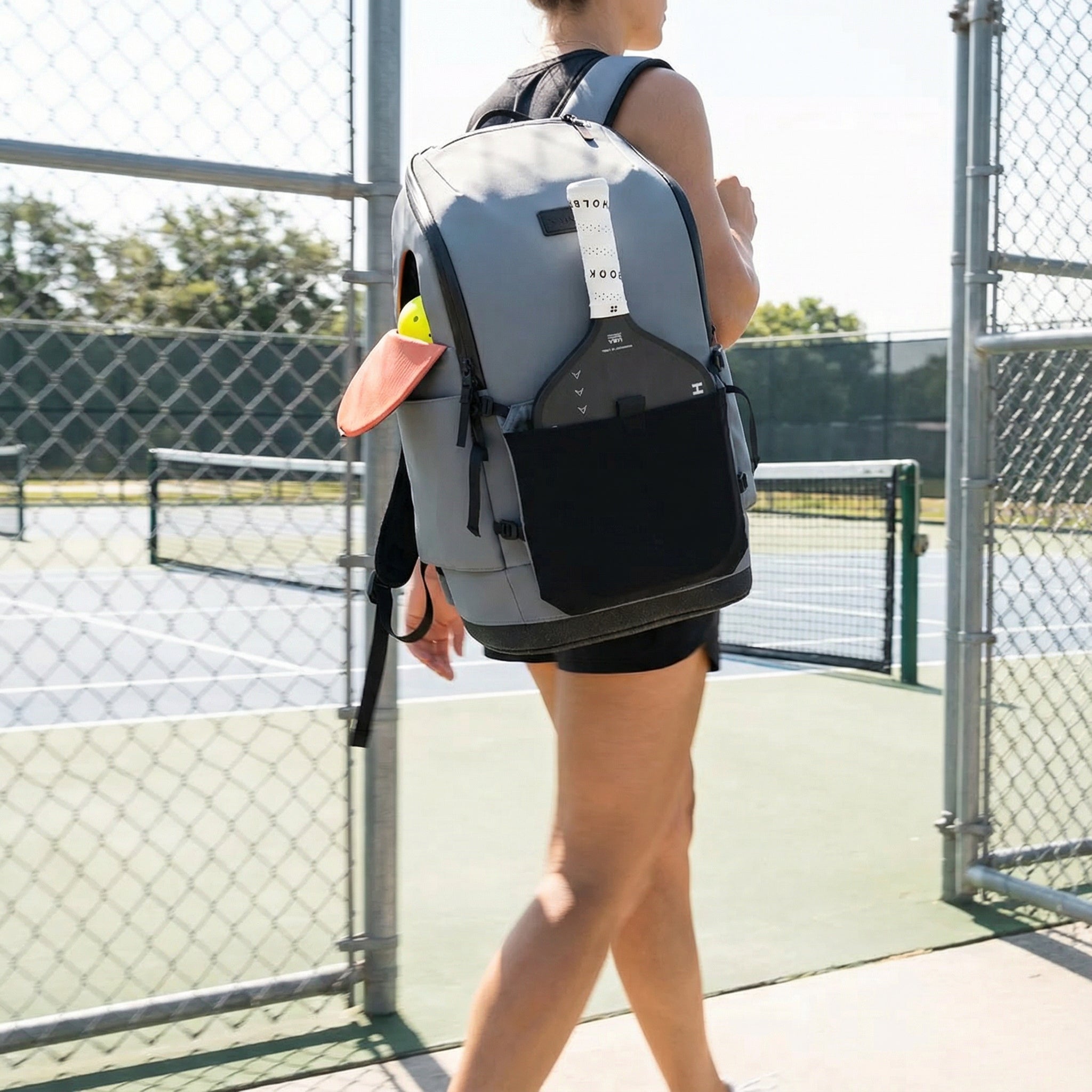
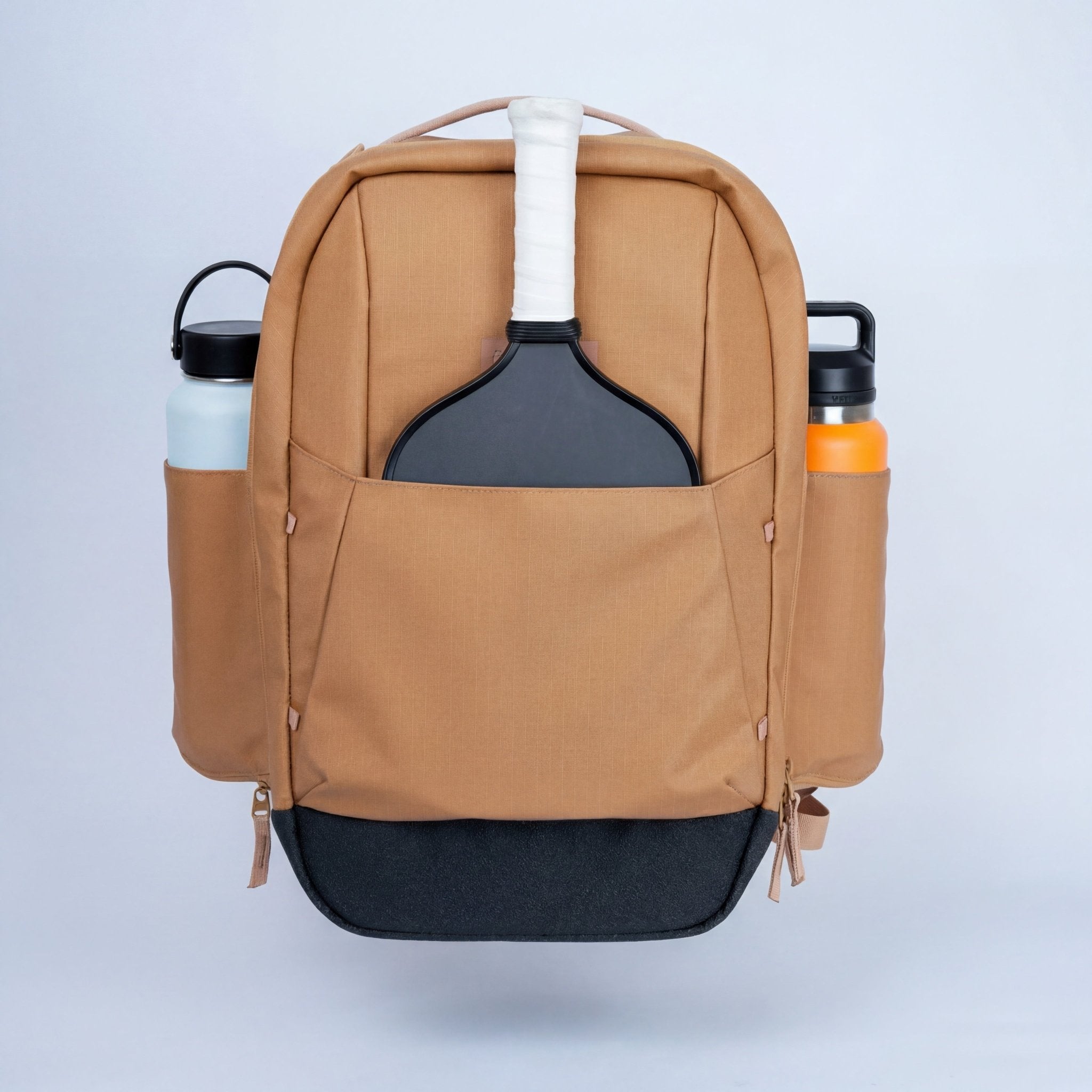
A paddle this precise deserves a bag that actually protects it. The FORWRD Court Ranger V2 ($195) has a dedicated paddle compartment that holds up to 4 paddles without face-to-face contact — no more wondering if your Fury's tri-layer CFC face is getting scratched on a metal zipper. It also carries a 16" laptop, so it makes the commute from court to office without a gear swap.

Frequently Asked Questions
Is the Thrive Fury Elongated good for beginners?
The Fury Elongated is not ideal for beginners. Its swing weight (115–117) is on the heavier side, and the elongated shape's narrower sweet spot is punishing on off-center contact — both traits that reward players with reasonably grooved mechanics. If you're starting out, a standard-shape paddle in the 100–108 swing weight range will be more forgiving while you develop consistency. The Fury is better suited to 3.5–4.5 players who know what they want from a power paddle.
What's the difference between the Thrive Fury Elongated and the Thrive Fury Hybrid?
The Fury Elongated (16.5" × 7.5") prioritizes reach and baseline power. The Fury Hybrid is shorter at 16.3" with a slightly wider profile, lower swing weight (~111–112 vs 115–117), and a softer, more control-oriented feel. Thrive designed the Elongated for drives and power-first play; the Hybrid is the better kitchen game paddle. Both share the same IWCT and TPE foam ring technology. The Elongated is the only version currently available through Pickleball Central.
Does the Thrive Fury Elongated have durability issues?
The 6-month warranty is shorter than the industry standard — Selkirk offers lifetime coverage, JOOLA offers 1 year. That gap should factor into your buying decision if you're a heavy hitter playing 4–5 times per week on outdoor concrete, where core delamination risk is higher. Through 8 sessions of testing, we didn't encounter issues. But for players who push their paddles hard, the warranty difference between the Fury and alternatives like the Six Zero DBD Elongated (1-year warranty) is worth noting before you commit.
How does the Thrive Fury's spin compare to raw carbon fiber paddles?
The Fury Elongated's tri-layer CFC hybrid face produces 2272 rpm — 57th percentile. That's solid but not elite. Raw carbon fiber paddles like the CRBN1 TruFoam Barrage or the RPM Friction Pro Elongated V2 generate more spin at comparable thickness because raw carbon's micro-texture grips the ball more aggressively. If topspin serves, heavy drops, and spin-based defense define your game, raw carbon is the right call. The Fury trades some spin ceiling for extra power output — 61 mph serve speed (92nd percentile) versus most raw-carbon paddles that run 55–59 mph.
What swing weight should I order for the Thrive Fury Elongated?
Thrive offers the Fury Elongated in multiple swing weight variants (available as SW 115, 116, or 117 depending on stock). The 116 is the median and the best starting point for most players. If you're coming from a lighter paddle (SW below 108) and want to try the heavier feel without fully committing, start at 115. Players who already play heavier paddles or want maximum drive stability can go 117. All variants are hand-weighed and performance-certified by Thrive before shipping.
Final Verdict
The Thrive Fury Elongated earns its price. At $199.99, you're getting 92nd percentile serve speed, a genuinely innovative IWCT weight system, and a paddle that plays closer to a $260 Pro tier than a $200 mid-range. The spin numbers keep it out of the elite conversation, and the 6-month warranty is a legitimate knock — but for aggressive baseliners who want reach and drive power without the brand-name premium, the Fury is the most compelling underdog in this price bracket right now.
If you're a power player who's been waiting for an elongated paddle at this price to outperform the name brands, this is it.

Leave a comment
This site is protected by hCaptcha and the hCaptcha Privacy Policy and Terms of Service apply.