

Disclosure: This post contains affiliate links to Pickleball Central. If you purchase through our links, FORWRD earns a small commission at no extra cost to you. We only link to products we'd recommend regardless.
Last updated: September 2026
Spin has become the central arms race in pickleball. Raw carbon fiber paddles changed the game — players who can generate heavy topspin on their third shot drops or slice their way through resets have a legitimate tactical edge. The problem is that "best spin paddle" has become a marketing claim rather than a meaningful distinction. This guide cuts through it.
We've organized the best pickleball paddles for spin in 2026 by use case — because the best spin paddle for an advanced 5.0 player is not the same paddle a 3.5 should be buying. Here's the breakdown.
Quick Picks: Best Spin Paddles by Player Type
- Best for Advanced Players: Selkirk LUXX Control Air InfiniGrit
- Best for Intermediate Players: Six Zero Ruby
- Best Budget Spin Paddle: Franklin Signature
- Best for Two-Handed Players: JOOLA Perseus Pro V (Ben Johns)
- Best Elongated Spin Paddle: Gearbox G2 Elongated
- Best for Speed + Spin: Selkirk Vanguard Power Air 2.0
- Best Arm-Friendly Option: ProKennex Pro Flight
- Best CRBN Spin Paddle: CRBN 1 TruFoam Genesis
1. Selkirk LUXX Control Air InfiniGrit — Best for Advanced Players
Selkirk LUXX Control Air InfiniGrit | Advanced players | $280+
The InfiniGrit surface is Selkirk's flagship spin technology — a textured carbon face that Selkirk claims lasts three times longer than standard raw carbon. In practice, that durability claim holds up: players who've used the LUXX for 6+ months report the grit still performs where other paddles would have dulled. The titanium mesh layer underneath gives it a livelier feel than a standard thermoformed paddle without sacrificing the control that advanced players need at the kitchen line.
The catch: The small sweet spot punishes off-center hits. This is a paddle that rewards precise mechanics. If you're a 4.0+ player who already makes consistent contact, this paddle delivers. The grit stays active; the shot variety opens up. Below that skill level, the inconsistency will hurt more than the spin helps.
Pros: Exceptional grit longevity, titanium layer for feel, lightweight swing weight
Cons: Small sweet spot, demands high skill level, premium price
2. JOOLA Perseus Pro V (Ben Johns) — Best for Two-Handed Players
JOOLA Perseus Pro V Ben Johns 16mm | Advanced-intermediate | $250+
Ben Johns plays with this paddle. That tells you something — not because brand endorsements automatically mean quality, but because Johns plays every shot with a two-handed backhand that generates significant spin, and he needs a paddle that can handle the torsional stress of that technique. The 16mm thermoformed carbon core gives it the dwell time needed for spin generation while the elongated shape adds reach for aggressive attacks.
The 14mm version is also available if you prefer a snappier feel. The 16mm is better for spin; the 14mm is better for speed. Most players who care about spin should go 16mm.
Pros: Proven in professional play, excellent spin + control balance, two handle lengths available
Cons: Higher price point, elongated shape requires adjustment period
3. Six Zero Ruby — Best for Intermediate Players
Six Zero Ruby | Intermediate | ~$200
The Kevlar face is Six Zero's spin differentiator. Kevlar generates spin differently than raw carbon — it's more of a "grab and redirect" feel than carbon's "brush and generate" feel. For intermediate players who aren't yet brushing the ball with advanced technique, Kevlar's inherent grit is more forgiving. You get more spin with less perfect contact than a raw carbon paddle demands.
The large sweet spot is a genuine intermediate-player advantage. The Ruby excels at generating spin on resets and drops where you're not swinging full speed — exactly the shots that 3.0-4.0 players practice most. The tendency to pop up drops is a real limitation; compensate by keeping your paddle face slightly closed at contact.
Pros: Forgiving large sweet spot, excellent spin generation, good power balance
Cons: Tendency to pop up drops, Kevlar face feel different from carbon
4. CRBN 1 TruFoam Genesis — Best CRBN Spin Option
CRBN 1 TruFoam Genesis | Advanced-intermediate | $220+
CRBN's TruFoam core is their answer to the "spin vs. feel" tradeoff. The foam layer between the carbon face and polypropylene core dampens vibration — which means less arm fatigue on heavy-spin shots and more control on touch shots at the kitchen. The T700 raw carbon face generates strong spin. Players who've been hesitant about carbon paddles due to elbow issues report CRBN's construction being significantly gentler.
The CRBN 1 shape is traditional (not elongated), which means players coming from standard paddles adjust quickly without re-learning reach and positioning.
Pros: Excellent arm-friendliness, strong spin generation, traditional shape
Cons: Less pop than pure thermoformed paddles, foam dampens some responsiveness
5. Franklin Signature — Best Budget Spin Paddle
Franklin Signature Paddle | Budget | ~$150
Endorsed by JW Johnson — one of the top pros in the world — and priced under $150. The Nitro Infused Carbon Fiber surface generates solid spin at a price point that makes it accessible for players who aren't ready to commit $250-300 to a premium paddle. The long handle is designed for two-handed backhand shots, making it a good fit for players influenced by watching the pro tour.
The small sweet spot is the honest tradeoff at this price. It's a real limitation on off-center hits. If you're making consistent contact — and you should be if you're buying a spin-focused paddle — it's less of an issue than it sounds. Average spin performance compared to pure carbon faces, but the best spin per dollar at this price.
Pros: Excellent value, pro-endorsed, long handle for two-handed shots
Cons: Small sweet spot, spin performance below premium carbon paddles
6. Selkirk Vanguard Power Air 2.0 — Best Speed + Spin
Selkirk Vanguard Power Air 2.0 | Advanced | $260-330
The aerodynamic cutout design is the headline feature — Selkirk's engineering team claims it increases swing speed measurably, which compounds the spin potential of the surface. Faster swing speed × grippy carbon face = more spin. The hybrid construction (fiberglass + carbon fiber) provides a feel that's different from pure carbon — a bit softer, more forgiving, with slightly less raw grit than the InfiniGrit surface.
Some players find the balance feels slightly off during slice shots — the cutout design shifts the weight distribution. It's worth demoing if you can before purchasing at this price point.
Pros: Aerodynamic design increases swing speed, good spin generation, distinctive feel
Cons: Balance can feel off on slice shots, premium price
7. Gearbox G2 Elongated — Best Extended Reach
Gearbox G2 Elongated Carbon Fiber | Intermediate-Advanced | ~$120
The best value elongated spin paddle under $150. The single-piece molded construction — unusual at this price point — creates a stiffer, more consistent feel than two-piece constructions that can flex at the join. The elongated shape adds reach for aggressive kitchen play and gives more head speed on drive shots.
Expect an adjustment period if you're coming from a traditional shape. The elongated format changes your sense of reach and positioning significantly. Players who've been playing with elongated paddles for a while will slot right in.
Pros: Great value, single-piece construction, extended reach, balanced spin + control
Cons: Elongated shape requires adjustment, not a max-spin option
8. ProKennex Pro Flight — Best Arm-Friendly Spin Paddle
ProKennex Pro Flight | All levels | $180+
ProKennex's Kinetic technology — small pellets inside the handle that absorb vibration — is specifically designed for players dealing with elbow issues or wanting to prevent them. It genuinely works. Players who've moved from standard paddles to the Pro Flight consistently report less hand/arm fatigue after long sessions. The carbon face generates respectable spin for an arm-friendly design.
The tradeoff is that vibration absorption reduces the "pop" you'd get from a stiff thermoformed paddle. For kitchen-focused players who prioritize soft touch over hard drives, this is actually an advantage — the dampened feel aids precision on drops and dinks.
Pros: Best arm protection in the category, solid spin generation, good for long sessions
Cons: Less pop than stiff thermoformed paddles, heavier feel
What to Look for in a Spin Paddle
Surface material matters most. Raw carbon fiber (C3, T700) generates the most spin. The USAPA approved equipment database lists approved paddle surfaces if you're playing in sanctioned events — check your paddle is listed before tournament play. Fiberglass generates less. Kevlar is in the middle with a different feel. If spin is your priority, look for raw carbon or grit-enhanced carbon surfaces explicitly.
Core thickness affects dwell time. 16mm cores keep the ball on the face slightly longer, which increases spin potential with proper brushing technique. 14mm cores are snappier and better for pure power. For spin-focused play, 16mm is generally better unless you play a fast-hands, two-handed style.
Swing weight matters for spin generation. Heavier swing weight generates more spin naturally (more energy transfer to the ball). The tradeoff is slower recovery at the kitchen line. Most spin paddles in 2026 are in the 110-125g swing weight range as a balance point.
"The biggest mistake I see players make is buying a max-spin paddle before their mechanics are ready for it. A raw carbon face amplifies whatever you're doing — good technique generates incredible spin, but poor contact generates just as incredible of a miss. Match the paddle to your current skill level, not the skill level you're aiming for."
— Topher, FORWRD Co-Founder
Complete Your Setup: The Bag Serious Paddle Players Use

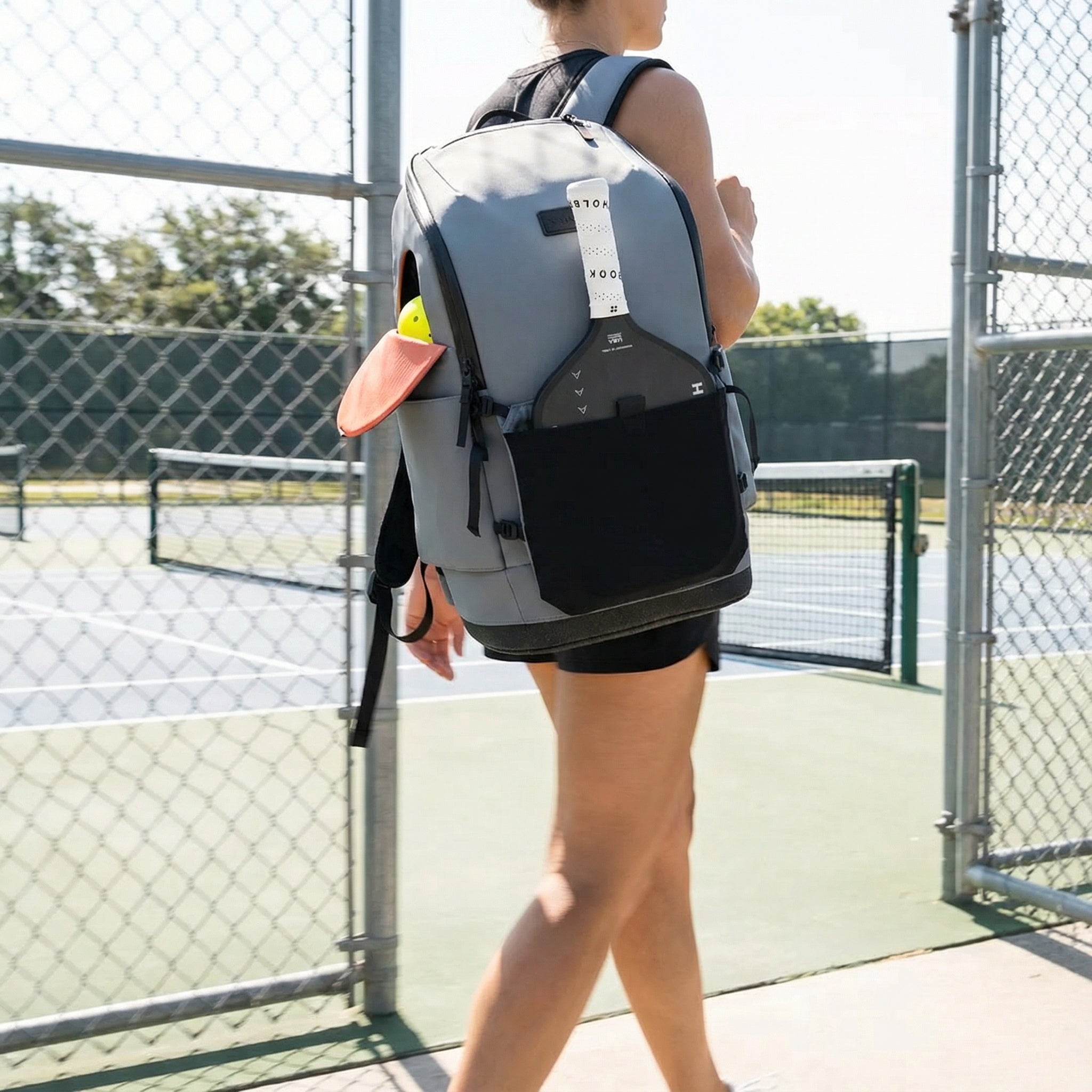
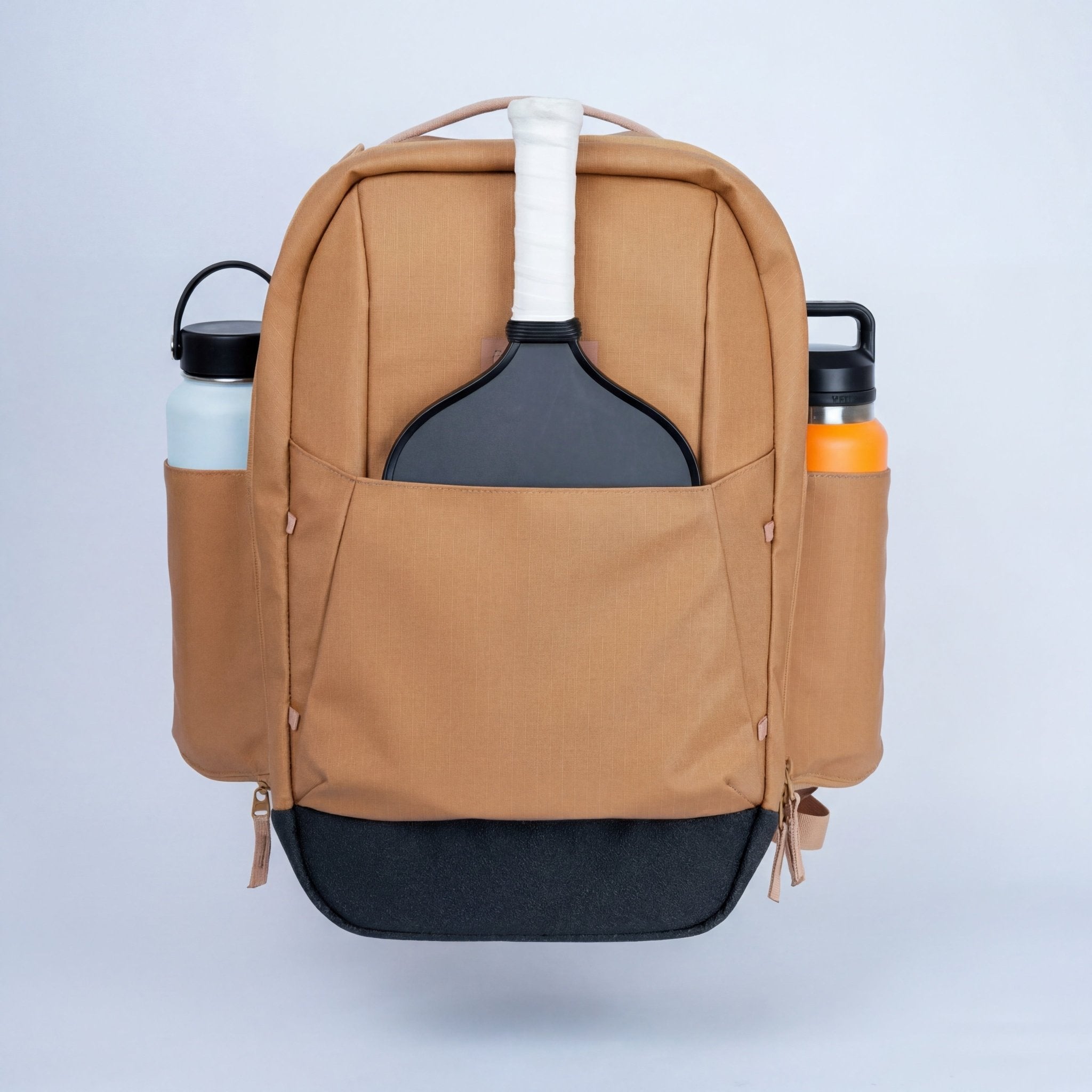
A $250 paddle deserves better than a nylon bag where it rattles around with your keys. FORWRD's Court Ranger V2 ($195) and Court Caddy ($325) both feature modular paddle sleeves that keep paddle faces separated and protected — critical for raw carbon surfaces that scratch easily. YKK AquaGuard zippers throughout. Featured in The Dink as a top pick for serious players.
Built for Serious Players: FORWRD Court Ranger V2
Modular paddle sleeve protects carbon surfaces. 16" padded laptop sleeve. YKK AquaGuard zippers. Built with 500+ real players.
Frequently Asked Questions
What makes a pickleball paddle good for spin?
Surface texture — specifically the grit or roughness of the paddle face. Raw carbon fiber (C3, T700) and textured grit coatings create friction between paddle and ball, allowing you to brush the ball and generate topspin, slice, or sidespin. Smooth surfaces (like older composite paddles) limit spin generation regardless of your technique.
Is more spin always better in pickleball?
No. High-spin paddles amplify both good and bad mechanics. If your technique is sound, a max-spin surface generates impressive shot variety. If your contact is inconsistent, the same paddle amplifies your errors. Intermediate players (3.0-3.5) often perform better on medium-grit surfaces. Save max-spin paddles for when your mechanics are dialed in.
How long does the spin surface last on carbon fiber paddles?
Typically 3-6 months of regular play (3-4 sessions/week) before the grit noticeably dulls. Outdoor play on rough surfaces accelerates wear. Selkirk's InfiniGrit surface is specifically marketed for longer grit durability. When spin performance drops significantly, the paddle hasn't "died" — it's just become a control-focused paddle with less surface grit.
What's the difference between 14mm and 16mm for spin?
16mm cores provide more dwell time — the ball stays on the face slightly longer — which helps spin generation through brushing. 14mm cores are snappier and more pop-focused. For spin-first players, 16mm is usually the better choice. Two-handed backhand specialists and players who generate spin through speed sometimes prefer 14mm's faster response.
What bag should I use to protect my carbon fiber paddle?
Carbon fiber faces scratch easily. Use a bag with a dedicated, lined paddle sleeve — not just a main compartment where the paddle rattles around with other gear. The FORWRD Court Ranger V2 has a modular sleeve specifically designed to keep paddle faces separated and protected.
The Bottom Line
For advanced players with solid mechanics: the Selkirk LUXX InfiniGrit or JOOLA Perseus Pro V are the top choices. For intermediate players: the Six Zero Ruby is the best blend of forgiveness and spin generation. Budget pick: Franklin Signature, full stop.
Ready to carry your new paddle the right way? Shop the Court Ranger V2 — built with 500+ real players to protect your gear on the way to every session.

Leave a comment
This site is protected by hCaptcha and the hCaptcha Privacy Policy and Terms of Service apply.