

Disclosure: This post contains affiliate links to Pickleball Central. If you purchase through our links, FORWRD earns a small commission at no extra cost to you. We only link to products we'd recommend regardless.
Last updated: May 2026
Most pickleball players don't wear protective eyewear. And most of those players haven't taken a ball at 40 mph directly in the face — yet. Eye injuries from pickleball are rising fast. The sport's speed, the close proximity at the kitchen line, and the fact that most beginners have no awareness of the ricochet risk add up to a real problem. The fix costs less than a decent paddle grip tape.
Here's the honest version: standard sunglasses don't protect you. Pickleball-rated eyewear meets ANSI Z87.1 impact standards — regular UV sunglasses don't. This guide covers what actually keeps your eyes safe on court and which glasses are worth buying in 2026.
What makes pickleball eyewear different from regular sunglasses
A pickleball weighs about 0.9 oz and travels at 30–60 mph in competitive play. Impact from a ball at that speed against an unprotected eye causes corneal abrasion at minimum, and can cause retinal detachment or lens displacement in harder impacts. Standard sunglasses — even quality ones — aren't rated to stop that kind of force.
ANSI Z87.1 is the safety standard that matters. Lenses certified to this standard must withstand a 1-inch steel ball at 150 feet per second. Your Oakleys or Costa Del Mars? Probably not rated. The American Academy of Ophthalmology reports sports eye injuries are among the most preventable — but only when players use rated protection. Frames labeled "impact resistant" without the Z87.1 certification are marketing language, not safety data.
Three things make sport pickleball glasses different:
- Polycarbonate or Trivex lenses — 5x harder to shatter than standard optics
- Wraparound or semi-rimless frames — reduce the chance of a ball sneaking around the edge of the lens
- TR90 Swiss Nylon frames — flexible enough to absorb impact without shattering
Every product recommended below meets these criteria. If a pair you're considering doesn't list ANSI Z87.1 on the product page, skip it.
Lens features worth paying for (and what to skip)
UV400 protection
Non-negotiable for outdoor play. UV400 blocks all UVA and UVB wavelengths — prolonged exposure to both accelerates cataract formation and macular degeneration. Every quality pair reviewed below includes UV400 as a baseline. Don't settle for anything less.
Anti-fog coatings
This is where quality separation happens. Cheap anti-fog coatings degrade after 30–40 cleaning cycles. Premium coatings from Gearbox and JOOLA hold up much longer. On humid outdoor courts — think Atlanta in July or Miami in August — fogging is the number one complaint among eyewear users. If you play indoors or in humid climates, prioritize this feature over aesthetics.
"I've worn a lot of glasses on court over the years and the difference between a pair that fogs and one that doesn't is the difference between winning and losing a rally at the kitchen. It's not subtle." — Topher, FORWRD co-founder, 3x/week competitive player
Photochromic lenses
These automatically darken in bright sunlight and lighten in shade. The technology works via UV-reactive molecules in the lens material. They're ideal if you play at courts with mixed shade coverage or transition between indoor warmups and outdoor match play. Worth the premium if your schedule varies.
COLORBOOST technology (JOOLA-specific)
JOOLA's RJX Enhance line uses proprietary COLORBOOST lenses that amplify the yellow-green wavelengths a pickleball reflects. This makes the ball easier to track against busy backgrounds — chain-link fencing, spectators, courts with poor contrast. It's a genuine performance feature, not just a marketing name.
Best pickleball protective eyewear in 2026
Best overall: CRBN Pivot ($95)
The CRBN Pivot earns the top spot because of its adjustable swappable lens system — you get three different tints with one frame purchase. Polycarbonate lenses, ANSI Z87.1 certified, TR90 frame. The interchangeable lens mechanism clicks in cleanly without tools. For players who move between indoor and outdoor sessions in the same day, this eliminates the need to pack two pairs.
Best for indoor play: JOOLA RJX Enhance ($119.96)
If you play indoors under artificial lighting, the JOOLA RJX Enhance is purpose-built for your environment. The COLORBOOST lens boosts contrast under gym lighting, which makes the ball pop against gym floors and net backgrounds. Anti-reflective coating on the inner lens surface eliminates the ghost reflections that show up under LED court lights. Heavy-duty hinges, comfortable fit, and a hard case included.
Best mid-range: JOOLA RJX Lite ($97.46)
The JOOLA RJX Lite is the lighter, less specialized version of the Enhance. Same TR90 Swiss Nylon frame, same impact rating — but without the COLORBOOST lens tech. Good for outdoor recreational players who want quality without spending on features they won't need. The Lite lives up to its name; it's genuinely comfortable for 2-hour outdoor sessions.
Best photochromic: CRBN Drift ($95)
The CRBN Drift uses photochromic lenses that transition from clear to dark in about 30 seconds under direct UV exposure. Transition back takes slightly longer (~90 seconds), which means moving from sun to shade mid-match you might be briefly over-darkened. Not a dealbreaker — but worth knowing. Solid wrap-around coverage and an anti-fog coating that holds up well through humid conditions.
Best lens-free protection: Kitchen Blockers ($79.95)
This is the most polarizing product on the list — literally no lenses. The Kitchen Blockers use military-grade ballistic-rated frames with an open lens cutout design that protects your orbital socket without any glass or plastic in your field of view. Zero fogging is physically guaranteed when there's nothing to fog. Clear downside: no UV protection, no tinting, no glare reduction. They're pure impact protection — useful for prescription eyeglass wearers who want to wear contacts and add orbital protection.
Best value: Gearbox Vision ($44.99)
The Gearbox Vision Eyewear is the best-performing pair under $50. Anti-fog AND anti-scratch surface coatings, adequate UV protection, polycarbonate lenses. The frame fits most face shapes comfortably. It doesn't have the premium fit of the JOOLA or CRBN options, but at under $50 it's an easy entry-level recommendation. Gearbox also makes a Slim Fit version at the same price for narrower faces.
Best budget: ONIX Eagle ($29.99)
The ONIX Pickleball Eagle is for players who want protection without spending $100. Impact-resistant lenses, wraparound fit, UV protection. The frame is less durable than premium options — the hinges are tighter and can stress-crack with rough handling. For casual recreational players who play once a week, it works fine. Pack them carefully.
Indoor vs. outdoor: getting the lens right
Playing indoors requires different lens tech than outdoor play. Gym lighting is typically 4000–5000K color temperature — blue-shifted compared to natural sunlight — which makes yellow pickleballs harder to track against light-colored gym floors. This is exactly what JOOLA's COLORBOOST addresses. Standard clear or gray lenses are neutral but don't compensate for the contrast challenges of indoor lighting.
Outdoors, the variables are sun angle, glare off court surfaces, and temperature changes. Gray and brown lenses perform well in direct sun. Amber and orange tints work better in overcast or dawn/dusk conditions. Photochromic handles the transitions automatically, which is why the CRBN Drift is a strong pick for players whose courts have varying tree coverage or east-west orientation that creates sun angle problems mid-match.
One thing most guides skip: lenses that work well at sea level in Colorado air feel different in humid Southeast or Gulf Coast conditions. Fogging is dramatically worse when there's 90% humidity outside and you're running hard. If you're based in a humid climate, anti-fog coatings and open-frame ventilation designs (Kitchen Blockers, Gearbox Vision) are worth prioritizing over lens tint.
Prescription eyewear options
If you wear corrective lenses, you have three routes:
Option 1 — Prescription sport lenses: Most optical labs can cut prescription lenses in polycarbonate for wraparound frames. This is the cleanest solution — no secondary frame, no fit issues. Works with the CRBN Pivot, JOOLA RJX Lite, and most semi-rimless designs. Budget $150–$250 for the prescription work on top of frame cost.
Option 2 — Over-glasses (OTG) style: Some players wear prescription glasses underneath larger protective frames. This works but adds weight and reduces peripheral vision. Not ideal for competitive play.
Option 3 — Contact lenses + protective eyewear: The simplest solution for contacts wearers. Any frame on this list pairs fine with contacts. Contacts dry out faster on windy outdoor courts — daily disposables are worth the convenience.
Most major vision insurance plans cover prescription sport eyewear under the same lens benefit as everyday glasses. Check with your provider before paying out of pocket — many plans cover the lenses fully, leaving only the frame cost.
How to keep your glasses in shape
Anti-fog coatings degrade faster than people realize. The main killer is cleaning with paper towels or rough cloth. Use a microfiber cloth only — every time. Paper towel micro-scratches are cumulative; after 50 cleanings with paper towels, you'll see a haze that doesn't wash off. Store glasses in their hard case, not loose in a bag pocket next to keys or paddle edge tape.
Salt from sweat corrodes frame hardware over time. Rinse frames (not lenses) with fresh water after sessions in hot weather. Let them air dry before casing. Frames that flex abnormally or feel loose at the hinges need adjustment at an optical shop — playing with a loose frame is a distraction and a fit failure waiting to happen mid-match.
Complete your court setup

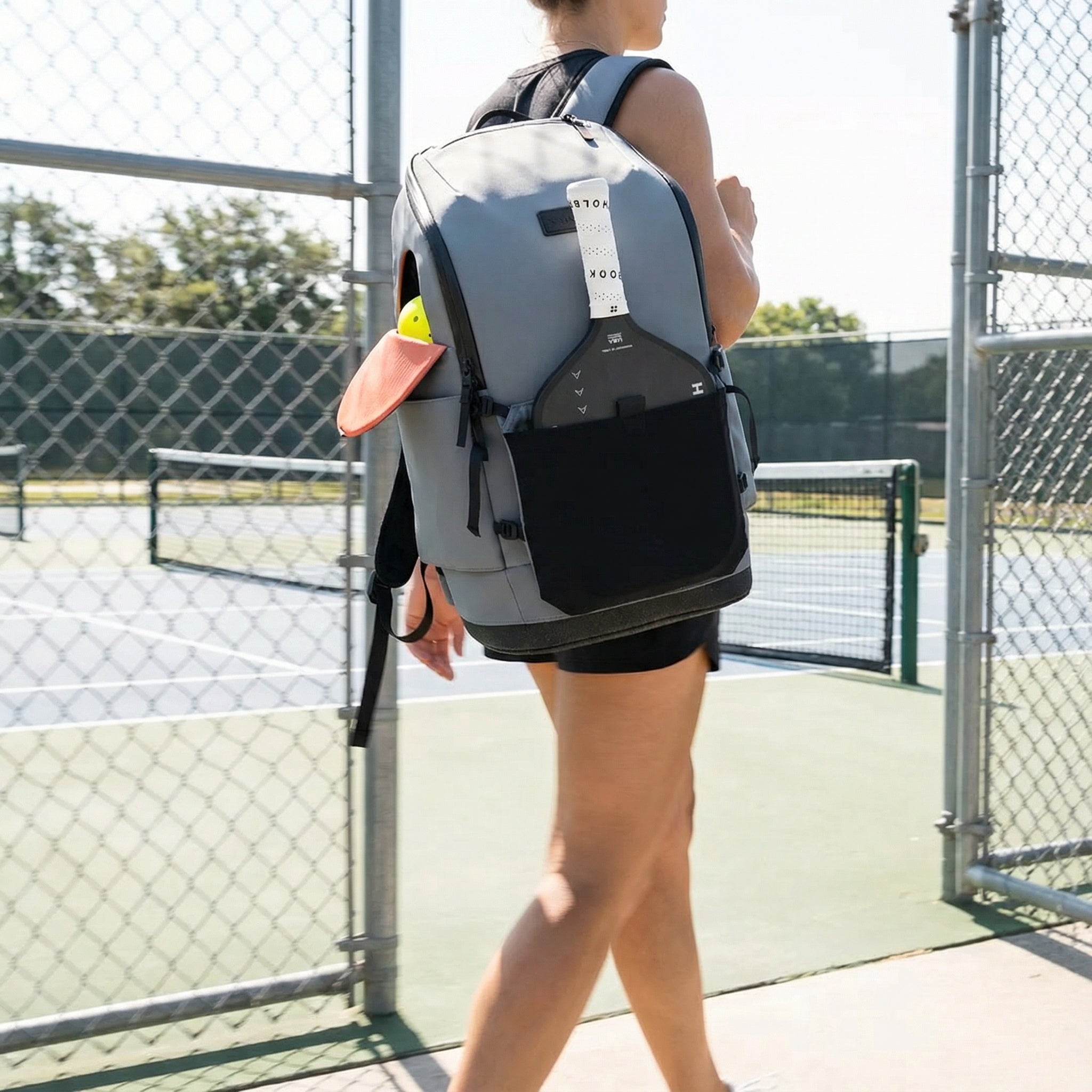
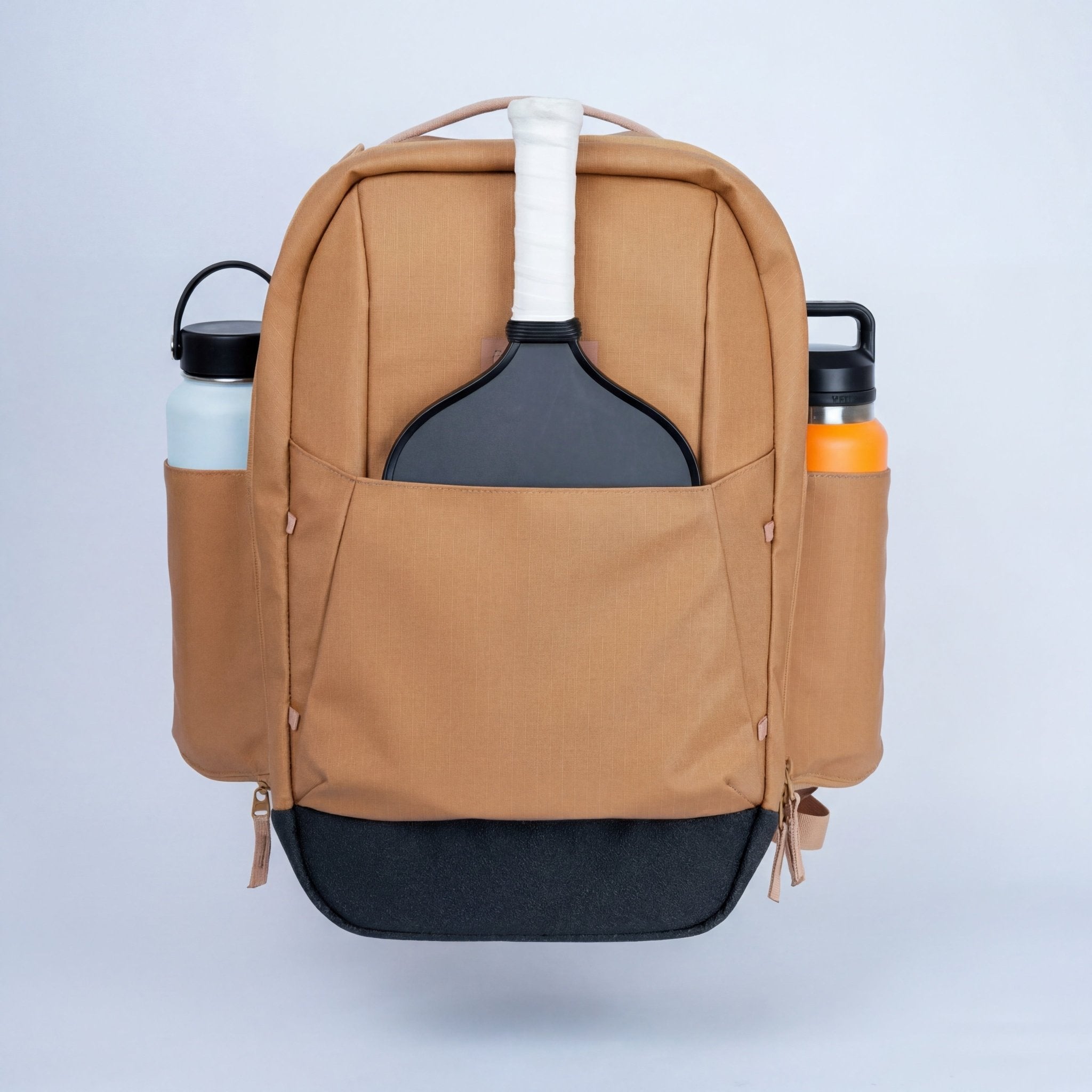
Glasses need to travel somewhere safe. The Court Ranger V2 ($195) has a dedicated accessory pocket deep enough for a hard glasses case, plus the 16" laptop sleeve doubles as a flat surface for storing them upright between sessions. Designed with input from 500+ real players who gave us the same feedback: gear that doesn't have a place gets damaged. The Ranger V2 gives every piece of kit its own spot.
Our Pick for Bag: FORWRD Court Ranger V2
Built-in organization for eyewear, paddles, and everything else you bring to the court — without needing to dig through a single main compartment.
Looking for more protective gear coverage? Read our complete pickleball glasses buyer's guide or check out the best court shoes for 2026 while you're gearing up. For training tools that work with protective eyewear, see our pickleball training aids guide.
Frequently Asked Questions
Do pickleball players actually need protective eyewear?
Yes — and it's not just precaution. A pickleball traveling 30–40 mph that catches the rim of a frame or comes in over the net at a bad angle can cause corneal abrasion, retinal damage, or worse. Eye injuries from pickleball have climbed sharply alongside the sport's explosive growth in participants. Most serious injuries happen during doubles rallies when players are crowded at the kitchen line.
What's the difference between pickleball glasses and regular sunglasses?
Standard sunglasses aren't rated for impact protection. Pickleball-specific eyewear meets ANSI Z87.1 standards, which require lenses to withstand a 1-inch steel ball traveling at 150 feet per second. That's the threshold that actually matters on court. Most fashion sunglasses offer UV protection but zero meaningful impact resistance.
What lens tint should I get for outdoor pickleball?
Gray or brown lenses work for most outdoor conditions — they reduce overall brightness without distorting color. Amber and orange lenses boost contrast and help track the yellow ball in overcast or early-morning light. Photochromic lenses adapt automatically, which is ideal if you play at courts with inconsistent shade coverage or transition from indoor warmups to outdoor play.
How do I stop my pickleball glasses from fogging up?
Two things cause fogging: poor airflow and temperature differential. Look for glasses with open-frame designs or ventilation slots — Kitchen Blockers and Gearbox Vision both do this well. Anti-fog coatings help in mild conditions but degrade over time with cleaning. On humid summer courts, glasses with a close wrap-around seal fog faster than semi-rimless designs.
Are prescription pickleball glasses worth it?
If you wear glasses to drive, you should wear prescription eyewear to play pickleball. Playing without correction slows your reaction time — you can't track what you can't clearly see. Most optical labs can fit polycarbonate prescription lenses into sport frames. Major vision insurance plans typically cover at least part of the prescription sport eyewear cost.
How long do pickleball glasses typically last?
Quality TR90 or polycarbonate frames typically last 2–4 years with regular play. Lenses scratch faster than frames, especially if stored loose in a bag pocket. When lens clarity starts to affect your vision or the frame loses structural rigidity, replace them — damaged eyewear gives false confidence and reduced protection.

Leave a comment
This site is protected by hCaptcha and the hCaptcha Privacy Policy and Terms of Service apply.