

Last Updated: May 2026
Affiliate disclosure: FORWRD earns a small commission on purchases through our links, at no extra cost to you.
Best Beginner Pickleball Starter Sets 2026: Honest Picks for Every Budget
You want to try pickleball. Your neighbor's been bugging you about it for six months. You finally caved. Now you're staring at Amazon search results at 11pm, confused about why some paddle sets cost $35 and others cost $300, wondering if the $80 bundle is a waste of money or if the $200 one is overkill.
Here's the short version: most beginner starter sets are fine. The gear won't be the thing that holds you back. But some are a lot better than others, the "all-in" cost is higher than whatever price you're seeing on the product page, and there are a few things you should absolutely not buy right now.
This guide covers all of it — what's in a starter set, what's missing, which ones to buy, and what the real cost of getting into pickleball looks like at every budget tier.
Quick Verdict
For most new players, a $80–130 starter set gets you paddles and balls that are genuinely playable. Spend below $50 and you're dealing with equipment that works against you. Spend above $150 on paddles before you know if you like the game and you're just burning money. The sweet spot is the middle — buy decent gear, add an overgrip, pick up a 6-pack of outdoor balls, and see if pickleball sticks. Most people are hooked within two sessions. Then you upgrade.
What's Actually in a Pickleball Starter Set (and What Isn't)
A typical pickleball starter set includes two paddles and two to four balls. That's it. Some include a carrying bag. Most don't, or they include a thin drawstring pouch that's more insulting than useful.
Here's what's usually included — and what the listing won't tell you:
Two paddles. Usually graphite face or fiberglass face over a polymer honeycomb core. Decent core, thin grip, no overgrip applied. They're fine to learn on. You'll likely swap them out within three months once you figure out what you actually want from a paddle. That's completely normal — it's how almost everyone starts.
Two to four balls. Almost always indoor balls. They're round and they bounce, but they're not what you'll use on an outdoor court, and outdoor courts are where 90% of recreational pickleball is played. This is the detail most buyers miss completely.
What's NOT included:
- Outdoor pickleballs (the ones with 40 holes, not 26)
- Overgrip for the paddles
- Shoes with lateral support
- A bag worth using
- Any instruction on how to actually play
None of that is a dealbreaker. But going in with eyes open means you won't be surprised when you show up to your first outdoor game and the four balls in your set aren't quite right for the surface.
For a full breakdown of every piece of gear you'll need when starting out, check out our Pickleball Starter Kit 2026 guide — it goes deeper on individual equipment than this post does.
Best Beginner Pickleball Starter Sets by Budget
There are three tiers worth talking about. Below $50, you're taking a gamble. Above $200, you're buying performance you can't use yet. Here's where the real decisions happen.
Budget Tier: $50–$80
Sets in this range are entry-level in the true sense. The paddles are playable. The grips are usually too thin, which is the first thing you'll notice. Cores are lightweight polymer. Face materials are fiberglass or composite. They don't punish beginners for bad swings, which is actually a feature at this stage.
What you get: two paddles, 2–4 balls, and enough to know within a week if pickleball is worth committing to.
What you don't get: spin-friendly surface texture, comfortable grip out of the box, or anything you'd want to keep when you hit your first tournament.
The beginner starter sets at Pickleball Central give you a solid starting point at this price range with better quality control than random Amazon bundles.
Worth the upgrade at this tier?
Improves: You have gear. You can play. That's the whole win.
Doesn't change: Your learning curve. You'll still mishit. The paddle isn't the variable yet.
Mid Tier: $100–$150
This is the sweet spot. Paddles here have better surface texture, more consistent cores, and grip sizes that don't feel like you're holding a pencil. You start seeing brand names that actually matter — JOOLA's beginner paddles at this price range give you a fiberglass or carbon face that's genuinely better for developing consistent shots.
The Selkirk SLK Halo sits in this conversation too — it's a paddle that serious players would actually use, and it's built for someone who's ready to commit rather than just dabble.
Sets at this tier typically include better-quality balls, occasionally outdoor balls, and sometimes come with a sleeve or bag that's at least functional.
Worth the upgrade at this tier?
Improves: Surface texture (more spin), grip quality, overall feel, durability.
Doesn't change: How often you win. Court sense. Your dink game. That's still practice.
Serious Starter Tier: $150–$200
At this price, you're buying paddles that intermediate players use — not just beginner-friendly gear. The Vatic Pro is a strong example: carbon fiber face, thermoformed construction, real spin potential. You're not overpaying for the brand name.
If you already know you're in — you've watched the games, you've been on the court a few times, you're buying gear to stick with it — this tier makes sense. If you're still figuring out whether you like pickleball, it doesn't.
Worth the upgrade at this tier?
Improves: Everything technical — surface, core, weight distribution, pop.
Doesn't change: Whether you'll like pickleball. You still have to play enough to know.
Total Cost of Starting Pickleball — The Real Numbers
Here's what nobody publishes. The set price is not your all-in cost. This table is.
| Tier | Set Price | Shoes | Bag | Outdoor Balls | All-In Total |
|---|---|---|---|---|---|
| Budget | $50–$80 | Borrow or use court shoes you own | Gym bag or nothing | ~$12–18 for 6-pack | $65–$100 |
| Mid | $100–$150 | $80–$120 court/tennis shoes | Basic backpack ~$30 | ~$15–20 for 6-pack | $225–$320 |
| Serious | $150–$200 | $120+ dedicated pickleball shoes | Dedicated bag $195+ | ~$20+ for quality balls | $485–$535+ |
The budget tier is genuinely that low if you're willing to borrow or already own athletic shoes with lateral support. The serious tier adds up fast once you factor in shoes and a real bag. None of those line items are optional once you're playing three times a week.
Honest "Do Not Buy" list for beginners:
- Random $20–35 Amazon bundles. The paddles are often unbalanced, the grip wrapping is paper-thin, and the balls are garbage. You'll spend the first month blaming your game for problems that are actually equipment problems.
- Novelty sets (matching paddle/ball sets in bright colors sold as gifts). They're packaged for people buying gifts, not for people who want to actually play.
- A $250+ single paddle as your first paddle. You don't know what you want yet. A high-performance paddle requires a swing you haven't developed. Buy mid-range, play 60 hours, then decide what you want.
The Gear You'll Want to Add After Month One
You've played a dozen sessions. You like it. You're not quitting. Here's what actually makes a difference next.
Outdoor pickleballs. This is the highest-ROI upgrade most beginners skip. The balls that come with most starter sets are indoor balls — 26 holes, softer, designed for gym floors. Outdoor balls have 40 holes, are heavier, and handle wind. If you're playing outside, you want outdoor balls. The Franklin X-40 Outdoor is the most widely used outdoor ball in recreational play, period. The Franklin Fuse G2 Outdoor is a newer option with better durability if you're going through balls fast.
An overgrip. The stock grip on most beginner paddles is too thin for most players. Adding an overgrip costs $5–8 and makes your paddle feel like a completely different piece of equipment. The Tourna Mega Tac XL is tacky and grippy — good for players who sweat. The Gamma Honeycomb Cushion Overgrip adds cushion and absorbs sweat differently — better for players who want a softer feel. Try both. They're inexpensive.
Shoes with lateral support. You can start in running shoes. You'll notice, fast, that running shoes aren't built for side-to-side movement. Court shoes, tennis shoes, or dedicated pickleball shoes protect your ankles and actually give you better footing on the court. Don't play on a cracked outdoor court in running shoes for six months because you're "not serious enough for real shoes yet." That's how people roll ankles.
A paddle you actually want. After 30–60 hours, you'll know what you want. More power? More control? Heavier? Lighter? That's the point to buy up. Not before.
Do You Need a Dedicated Pickleball Bag as a Beginner?
No. Not on day one.
If you're still figuring out if pickleball sticks for you, a gym bag or backpack works fine. Two paddles, a sleeve of balls, your water bottle. It all fits.
But here's the thing — once you're playing three times a week and your paddles are getting dinged from bouncing around in a regular backpack, once you're pulling your gear out of a tote bag on the court, once you've accidentally cracked a paddle edge because it had no protection — that's when a dedicated bag goes from "nice to have" to "I should have bought this a month ago."
The bags that come with starter sets are not the solution. They're thin nylon sleeves or drawstring bags. They're packaging, not gear.

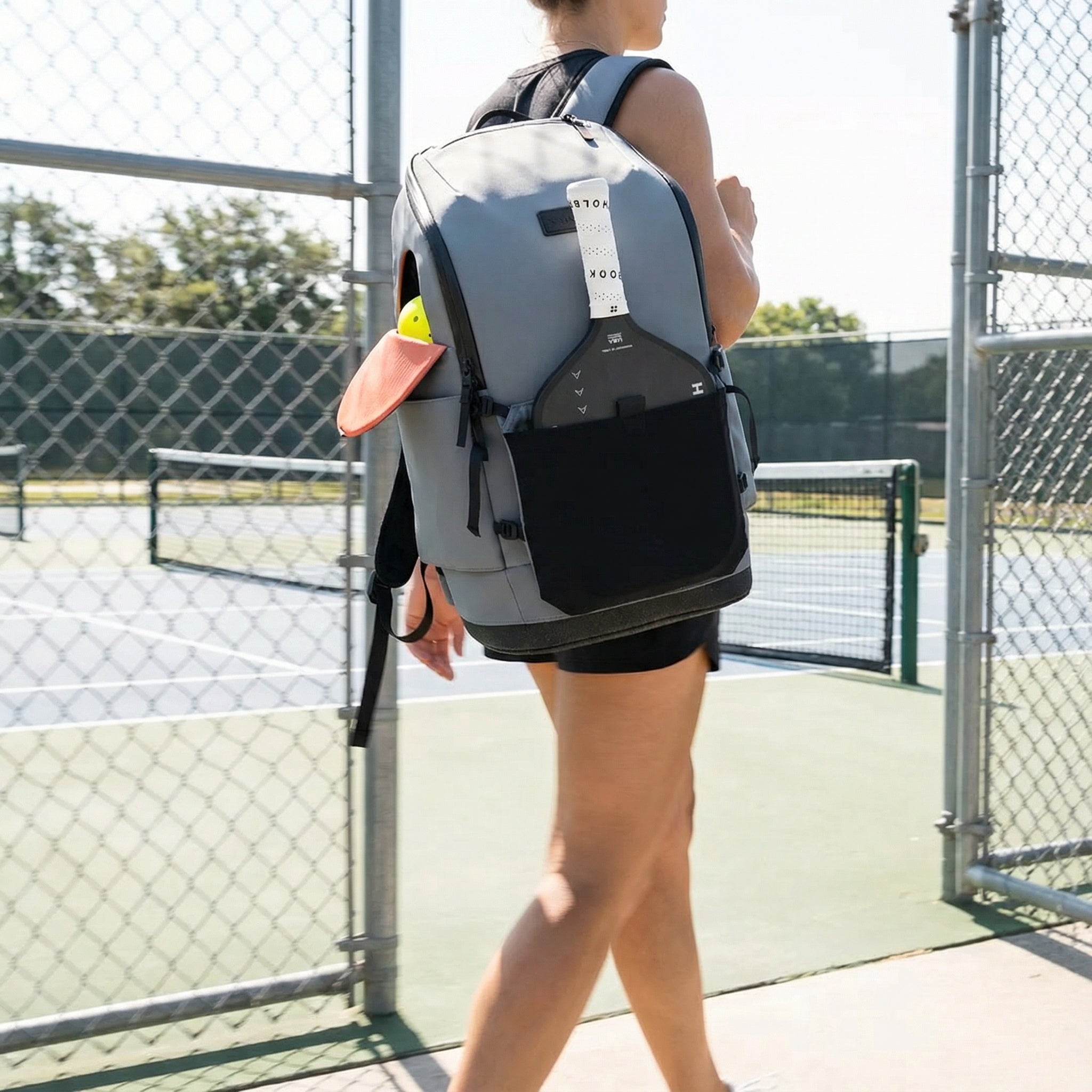
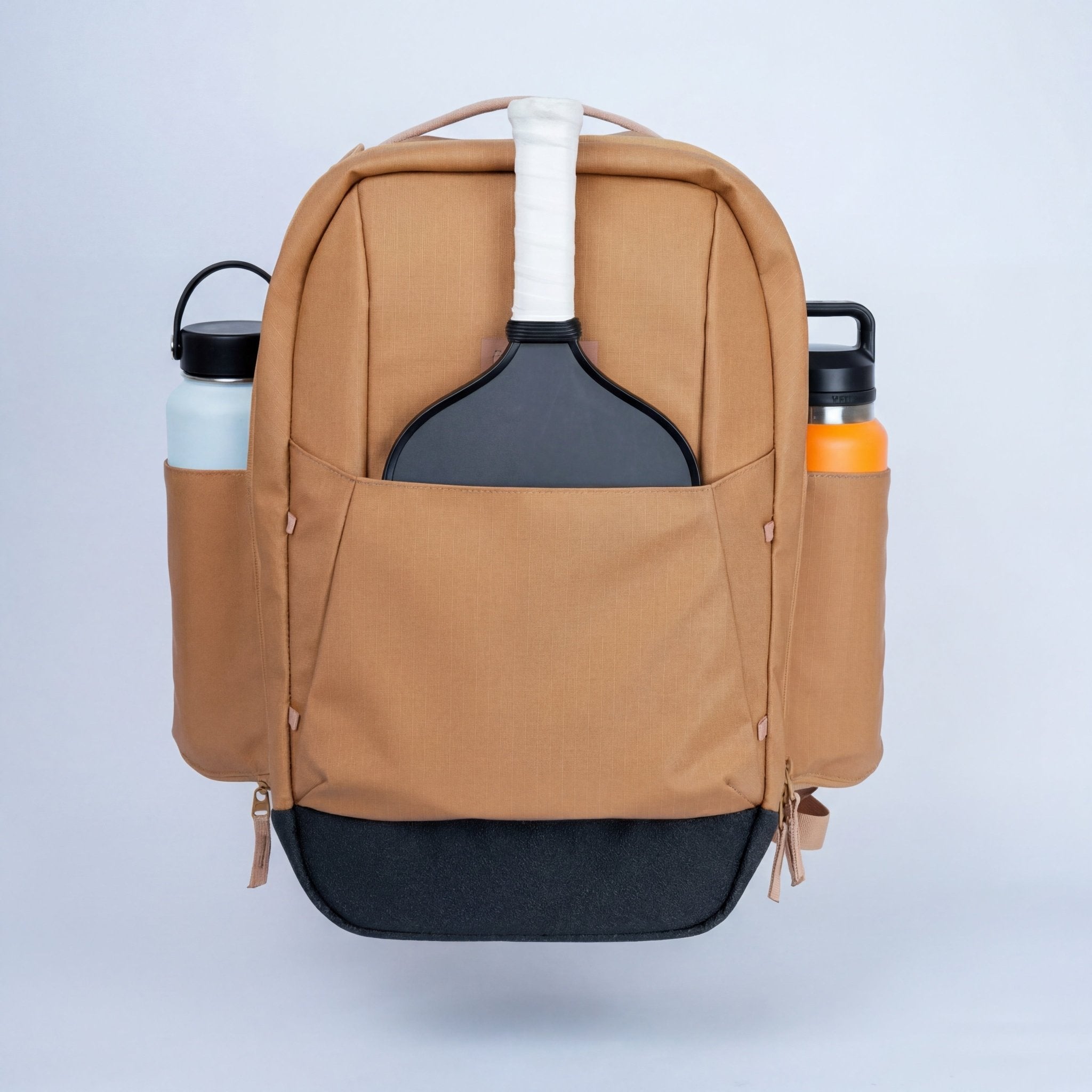
When you're ready to buy a real bag, buy one worth owning. The Court Ranger V2 ($195) is the first bag worth buying — not because it's premium-positioned, but because it's built right. Dedicated modular paddle sleeve so your paddles aren't rattling against your keys and water bottle. YKK AquaGuard zippers that don't fail in the rain. A 16" laptop sleeve if you're going straight from work to the court. It carries everything without being enormous, and it'll last years.
That's not a bag for someone who's played twice. That's a bag for someone who's in. If that's you, it's worth it.
Still deciding? Read our guide to the best pickleball bags for beginners — it covers every price point, not just the premium end.
How to Know When You're Ready to Upgrade Your Gear
Most beginners upgrade too early (new paddle after five sessions) or too late (still playing with the $60 starter set after two years). Neither is a disaster. But there's a better way to think about it.
Upgrade your paddle when your form is consistent. That means you're hitting the same shots the same way more often than not. You know what you're doing wrong and why. At that point, better gear will actually show you the difference. Before that, a $200 paddle is just expensive.
Upgrade your balls immediately. If you're playing outdoors with indoor balls, fix that now. It costs $15 and it actually matters.
Upgrade your grip on day one. Add an overgrip to whatever paddle you start with. Non-negotiable. It's an $8 fix that makes any paddle better.
Upgrade your bag when you're playing weekly. Not daily. Not twice a week necessarily. Once pickleball is a regular fixture in your schedule and you find yourself carrying your gear in a way that's annoying — that's the signal.
Upgrade your shoes before you get hurt. Don't wait for an ankle roll to tell you that running shoes weren't the right choice for lateral movement. Court shoes at the mid tier of your budget, after the first month, is the right call.
The gear progression is: start with a decent set, add outdoor balls and an overgrip immediately, get real shoes within a month, get a real bag when you're committed, then upgrade your paddle when your game tells you to.
Complete Your Setup
When you're ready to stop cramming paddles into a gym bag, the Court Ranger V2 ($195) is the first bag worth buying. Dedicated paddle sleeve. 16" laptop sleeve. YKK weatherproof zippers. Built for players who are serious about the game.
Shop Court Ranger V2FAQ: Beginner Pickleball Starter Set Questions
What do you need to start playing pickleball?
You need a paddle, outdoor pickleballs (40-hole, not 26-hole), shoes with lateral support, and access to a court. A starter set gets you the paddle and balls. Everything else you'll likely already own or can borrow. Total cost to get started is $65–100 if you're keeping it minimal.
What is the best pickleball starter set for beginners?
At the $80–130 price range, you're getting paddles with fiberglass or graphite faces and polymer cores — genuinely playable gear. Brands like JOOLA, Selkirk SLK, and sets from Pickleball Central's curated beginner line outperform most random Amazon bundles at similar or lower prices. Start there and you won't be fighting your equipment.
How much does it cost to start playing pickleball?
Budget players can start for $65–100 by borrowing shoes and using a gym bag. Mid-range setup with decent shoes and a basic bag runs $225–320. A full committed setup — quality paddles, dedicated shoes, proper bag — lands around $485–535. Most beginners land in the $150–250 range once you add outdoor balls and shoes.
Is pickleball equipment the same as tennis equipment?
No. Pickleball paddles are solid — no strings. Pickleballs are plastic with holes, not felt balls. Courts are smaller. You can wear tennis shoes for pickleball, but dedicated pickleball or court shoes are better. Racquets and balls are not interchangeable. The sports share court DNA but the gear is completely different.
Do pickleball starter sets come with everything you need?
Not quite. Most sets include two paddles and balls, but usually indoor balls rather than the outdoor ones most recreational players use. They don't include overgrip, shoes, or a real bag. You can start playing immediately with what's in a set — just pick up a 6-pack of outdoor balls before your first court session if you're playing outside.

Leave a comment
This site is protected by hCaptcha and the hCaptcha Privacy Policy and Terms of Service apply.